Large and mighty, like Rome itself. The History of the Battleship Roma (6 photos)
The battleship Roma was one of the most powerful ships of the Italian Navy during World War II. She embodied Italy's ambitions to become a full-fledged naval power and was intended to demonstrate its strength in the Mediterranean. But fate had in store for her a short and tragic service. 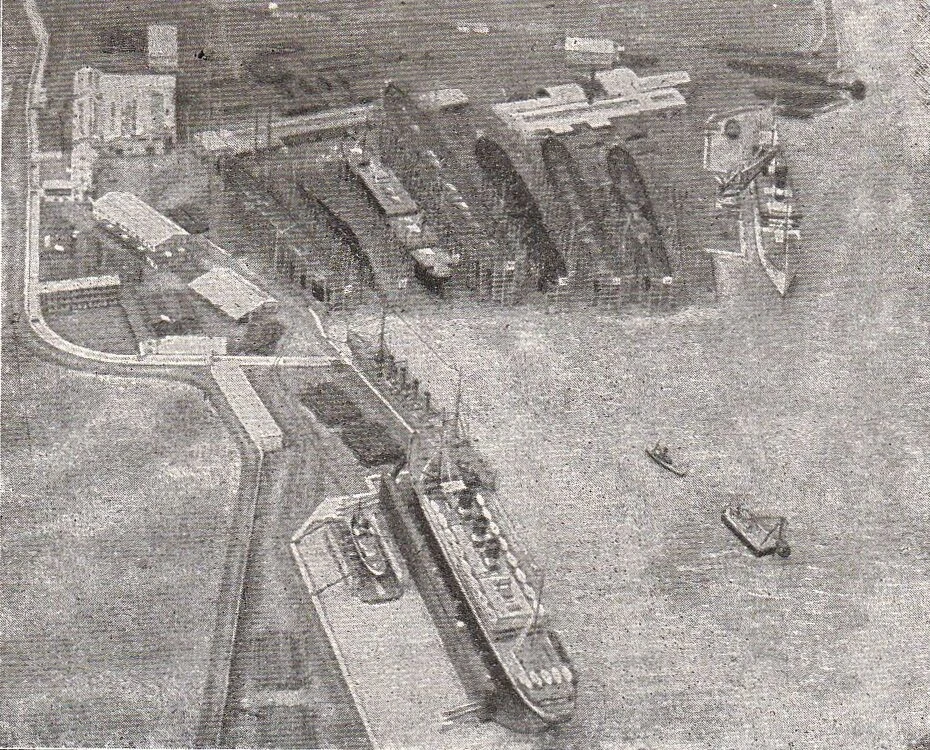
Aerial view of part of the Triestino shipyard
Construction
Construction of the Roma began in 1938 at the Cantieri Riuniti dell'Adriatico shipyard in Trieste. The keel was laid on September 18, 1938, with great fanfare, attended by senior naval officials, government representatives, and the press. The ceremony was accompanied by solemn speeches about the revival of Italy's naval glory.
The work was carried out in the strictest secrecy. Italian engineers sought to create a ship capable of competing with the latest battleships of other countries. The project was developed under the direction of chief designer Umberto Pugliese. He introduced a number of innovative solutions, including a torpedo protection system with a multi-layered hull structure.
The launch took place on June 9, 1940. The ceremony was modest, without pomp. The ship was launched using hydraulic trolleys greased with lard and soap—a traditional method in Italian shipyards. The next day, Italy entered World War II.
After the launch, fitting-out work began:
installation of power plants;
installation of gun turrets;
laying cable routes;
equipping fire control systems;
installation of auxiliary mechanisms. 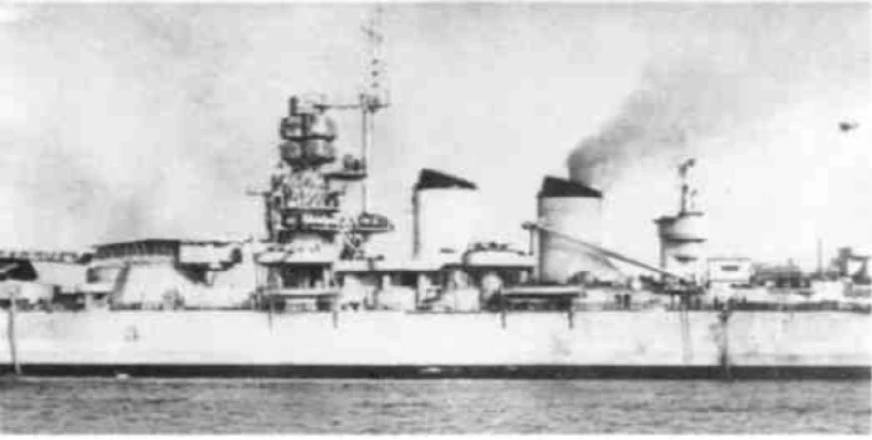
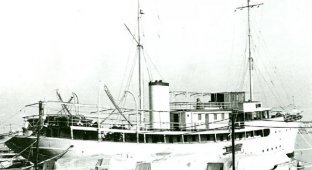
"Roma" during fitting-out. November 1941
Particular attention was paid to the armor. The main belt and second layer plates were manufactured at the OTO and Ansaldo factories. They were delivered by rail and installed using powerful cranes. The process required pinpoint precision—deviations of more than 2 mm were not allowed.
The armament was installed in stages. First, three triple-gun main battery turrets were installed. Each turret weighed approximately 1,600 tons. Then, the secondary artillery and anti-aircraft mounts were installed. Communications lines were laid simultaneously, and crew quarters were constructed.
Compared to her predecessor, the Vittorio Veneto, the battleship Roma received a number of improvements:
the freeboard was increased;
the anti-aircraft armament was reinforced. Thirty-two 20 mm Breda guns were installed instead of 24;
the fire control systems were modernized.
Trials and Commissioning
Trials began in May 1942. Sea trials were conducted in various modes, fire control systems were tested, and evasive maneuvers were practiced. The ship demonstrated good handling and reached the maximum speed specified in the design.
The commissioning took place on June 14, 1942. The fleet commander and ministry representatives attended the ceremony. Roma officially joined the active fleet and was assigned to the 9th Battleship Division.
Her technical specifications were impressive. Standard displacement was 41,000 tons, full displacement 45,485 tons. Her length was 240.68 meters, her beam 32.82 meters, and her draft 9.6 meters. The crew numbered between 1,830 and 1,950. Four Parsons steam turbines producing 128,000 horsepower and eight Yarrow boilers provided a speed of 30 knots. The ship's cruising range at an economical speed of 20 knots was 3,920 nautical miles.
The ship's armament was modern and quite powerful. The main battery included nine 381 mm Model 1934 guns with a 50-caliber barrel. The secondary battery consisted of twelve 152 mm Model 1934/35 guns in four triple mounts. Four 120 mm Model 1891-1892 guns were used for firing flares. 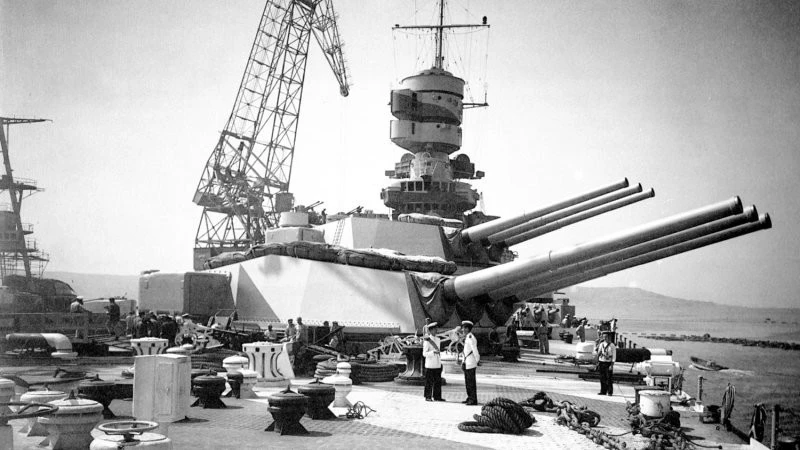
RN Roma
The long-range anti-aircraft armament consisted of twelve 90mm Model 1938 guns in single mounts. Light anti-aircraft artillery included twenty 37mm automatic guns in twin and single mounts and sixteen 20mm cannons in twin mounts. A catapult for three floatplanes was located at the stern.
The armor provided reliable protection. The main armor belt was 280 mm thick, with a secondary layer of steel 70 mm thick. The deck was 162 mm thick in the central portion, and 45 mm thick in less critical areas. The main battery turrets were protected by armor 380 mm thick, and the barbettes by 350 mm. The secondary turrets had 280 mm thick ends, and the conning tower was protected by a 260 mm thick belt.
After commissioning, Roma arrived in Taranto on August 21, 1942, and was assigned to the 9th Division. Due to fuel shortages, the ship saw little combat. She conducted training cruises and transits between bases—Taranto, Naples, and La Spezia. In June 1943, the battleship was twice damaged by B-17 and Lancaster bomber raids on La Spezia. After repairs in Genoa, Roma became the flagship of Admiral Carlo Bergamini.
Turning Point
The turning point came in September 1943. On the 8th, Italy signed the Armistice of Cassibile, a ceasefire agreement that effectively marked the beginning of the country's capitulation. The squadron departed La Spezia on September 9, 1943, at 3:00 AM. It included the battleships Roma, Vittorio Veneto, and Italia, six cruisers, and eight destroyers. Admiral Bergamini commanded the force. The objective was to transit to Malta for internment.
By the afternoon of September 9, the squadron was already off the coast of Sardinia. The weather was clear, and there were no signs of a threat. But in the afternoon, it was attacked by 11 German Do-217 bombers that had taken off from an airfield in southern France. The aircraft were carrying Fritz X-1400 guided bombs—a state-of-the-art weapon capable of hitting large ships from altitudes of 4–7 km.
The attack came as a surprise. The small size of the group and the high altitude of the Do-217s did not initially raise alarm. But soon the Dorniers opened their bomb bays and sent Fritz Xs to their targets. The first bomb struck the Roma's bow. The explosion caused destruction, fires, and flooding of the forward engine room. The ship lost power and lost propulsion.
A few minutes later, a second strike followed. The bomb penetrated the hull and exploded internally, detonating the ammunition magazines. Eyewitnesses saw the main battery turret thrown upward by the explosion. A column of black smoke hundreds of meters high rose above the bow. The battleship tilted by the bow, broke in half, and sank. 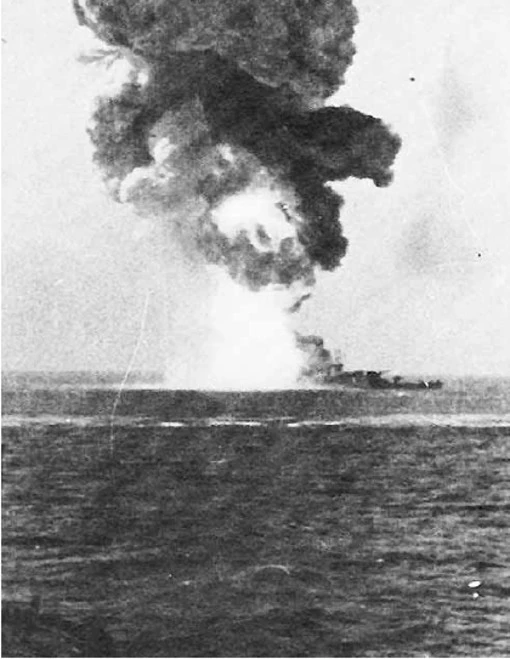
The Sinking of the Battleship Roma
1,393 sailors perished with the ship, including Admiral Bergamini. Only 596 were rescued. The squadron continued on and reached Malta the following morning. The battleship Italia sustained minor damage, but it was quickly repaired.
Conclusion
In June 2012, the remains of the Roma were found at a depth of approximately 1,000 meters, 30 km off the northern coast of Sardinia. The wreckage lies on the seabed in a severely damaged state and is scattered over a large area. Researchers discovered that the powerful explosion shattered the hull into several large pieces. 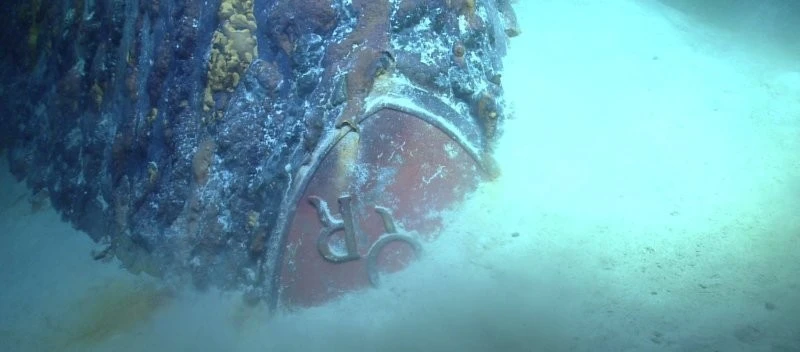
The bow emblem of the RN Roma. Footage from the underwater robot "PLUTO PALLA"
Commemorative ceremonies are held annually at the site where the Roma sank. They are attended by veterans of the Italian Navy, descendants of the crew, and representatives of naval museums. On September 9, the anniversary of the ship's sinking, wreaths are lowered into the water, and flags are lowered at naval bases.
Thus ended the story of one of the most powerful Italian battleships, which should have become the pride of the fleet, but instead became a testament to a changing era in naval warfare. She entered service in 1942, when hostilities were already in full swing. Her arrival was expected to change the balance of power in the region. However, reality proved harsher than expected. Roma spent less than two years in active service and was lost under dramatic circumstances. The power of armor and artillery gave way to speed and accuracy. This lesson was remembered by naval commanders around the world.