Planes Touch Down at 250 km/h: Why Tires Don't Blow Out on Landing (7 Photos)
Every airliner landing begins with a brutal ordeal for its tires. Watch it from the sidelines, and you'll see smoke billowing out on impact. 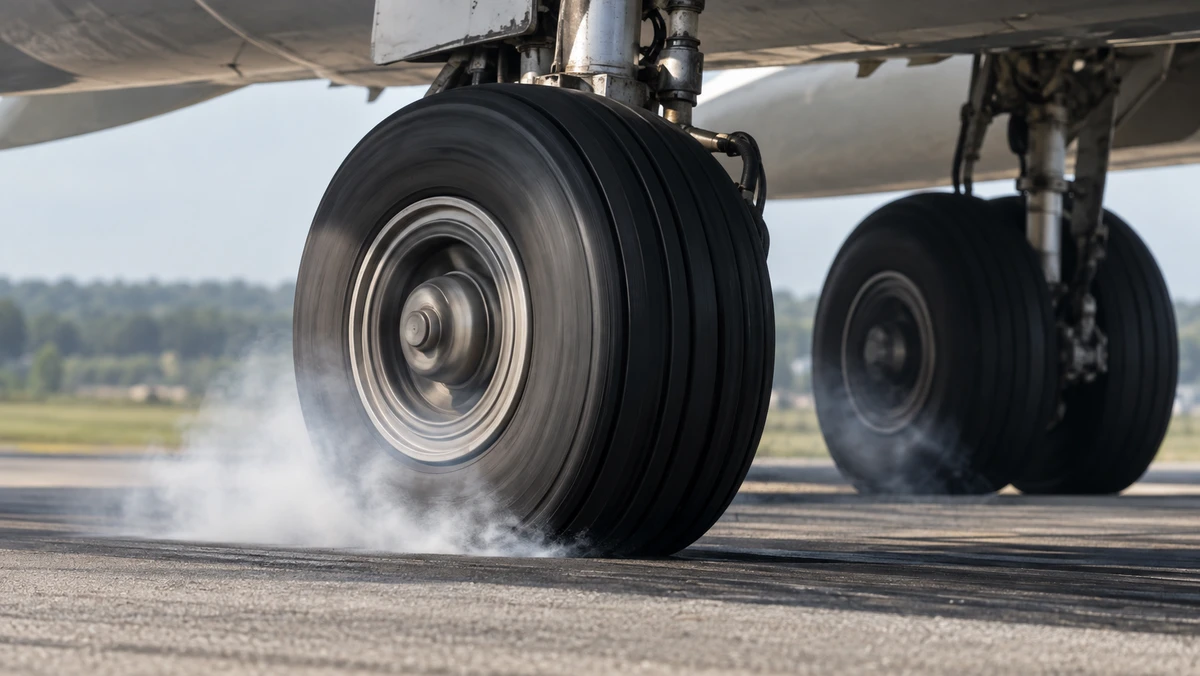
Just a split second ago, they were barely spinning. Suddenly, concrete is flashing beneath them at 250 km/h—and in the blink of an eye, the wheel has to spin up to nearly 1,000 RPM. Let's take a look at how this setup survives the shock without falling apart. 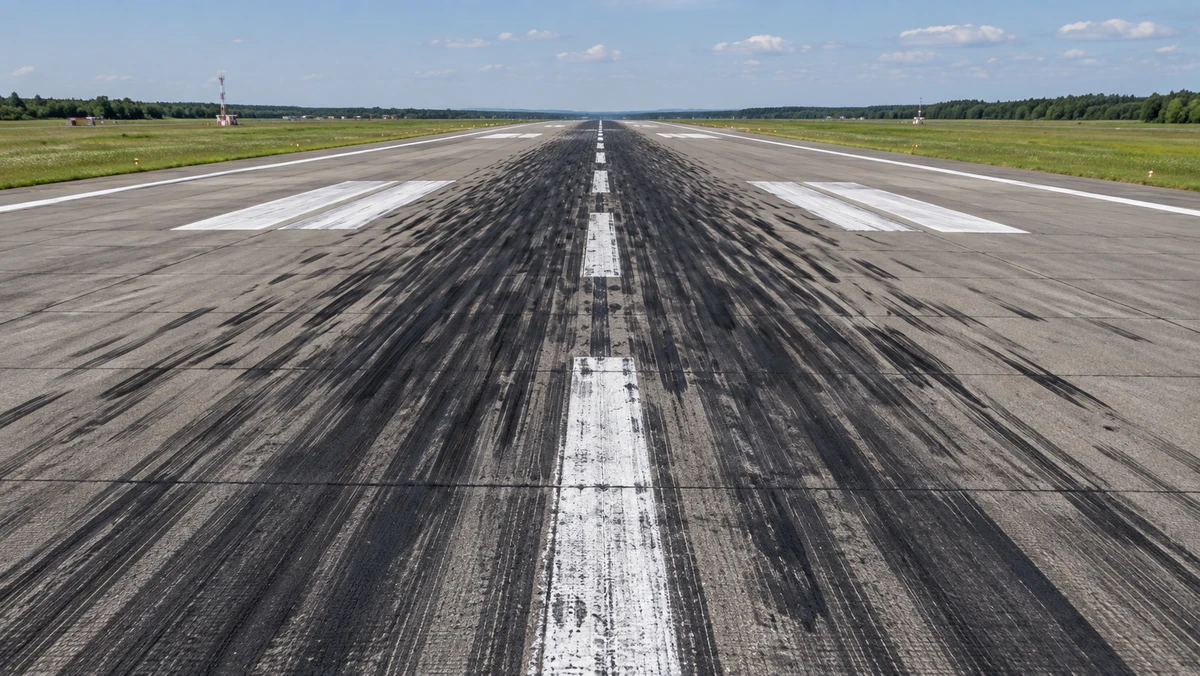
This is how much rubber gets left behind as black skid marks
Rubber shrieks, smokes, and leaves a dark streak on the tarmac. And that's just the start of what an aircraft tire has to endure.
First It Skids, Then It Rolls
Touchdown speeds vary across aircraft, so let's take a typical average of around 250 km/h. 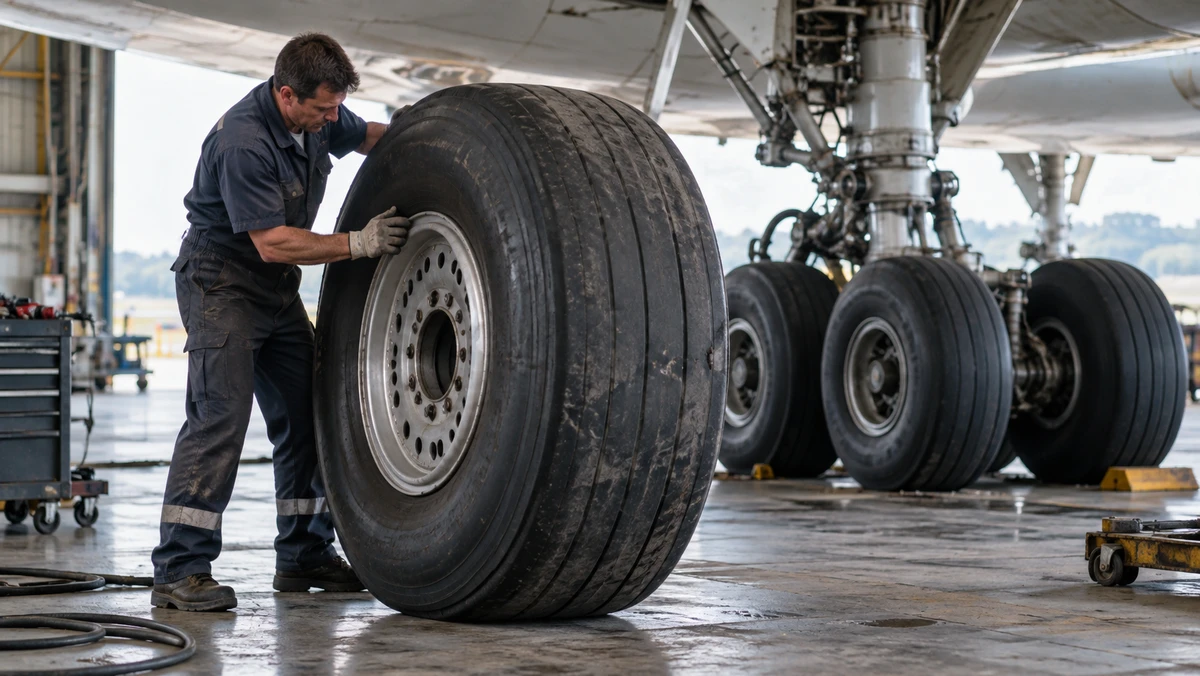
At that speed, a wheel with a diameter of about 1.3 meters needs to hit roughly 1,000 rpm. That happens to be the size of the main gear tires on a Boeing 777-300ER.
Before touchdown, the wheel is virtually stationary. Friction from the runway forces it to spin up, causing the rubber to skid across the surface for a split second. It heats up, burns off, and leaves a mark. It’s this rapid spin-up—not braking—that produces that signature puff of smoke on impact.
Luckily, the airplane doesn't slam straight down onto its tires at 250 km/h; its movement is mostly horizontal. As for the vertical impact, the tires don't bear it alone—the shock absorbers in the landing gear struts absorb the brunt of it. Compressed gas and hydraulic fluid forced through narrow orifices damp the impact, spreading the load over time rather than transferring a sudden shock to the airframe.
Holding Up Twenty-Four Tons
An aircraft tire isn't just a thick rubber shell. Beneath the tread lies a heavy-duty carcass made of multiple ply layers—rubber-coated cords, usually made of nylon. Steel wire beads reinforce the edges, anchoring the tire securely to the wheel rim.
The internal pressure is nothing like what you find in a passenger car, either. In the Boeing 777-300, for example, it reaches nearly 15 bar. At maximum takeoff weight, a single main gear tire can support roughly 24 metric tons. 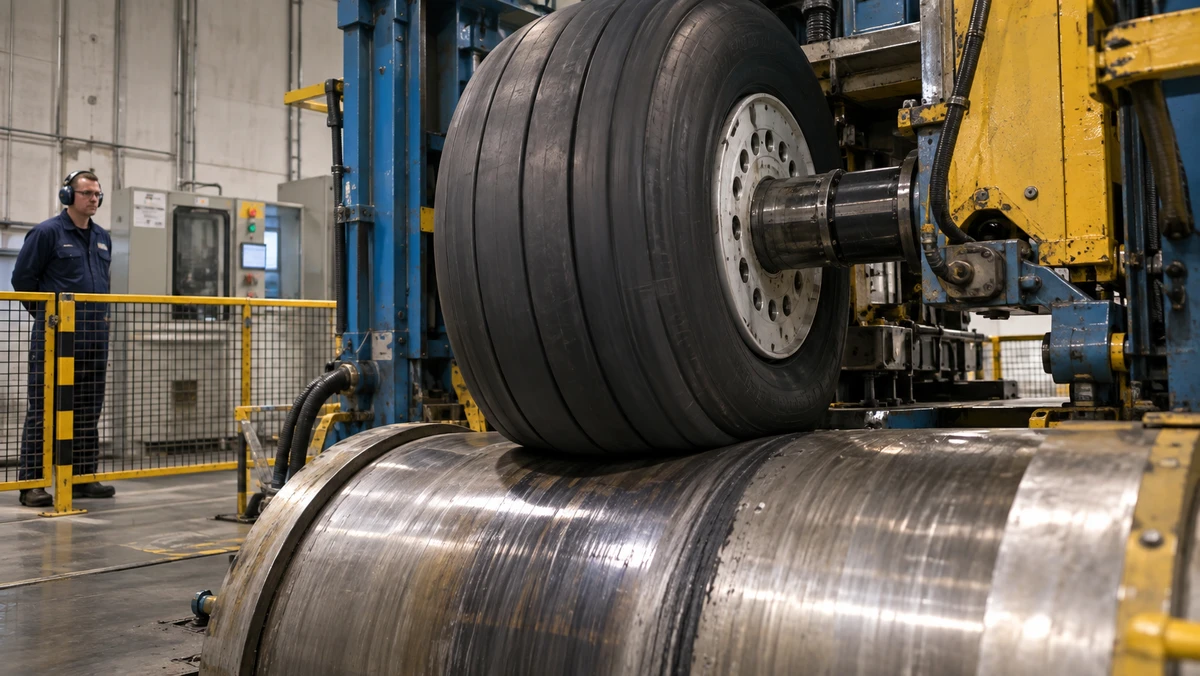
The contact patch—the area touching the runway—is only about the size of two and a half sheets of standard printer paper.
Yet despite high inflation pressures, these tires aren't rock-hard. Many aviation tires are engineered to flex by about 32% under load. That doesn't mean a third of the wheel's total diameter compresses; rather, it refers to the reduction in height from the rim edge to the tread under full load.
The goal of high pressure isn't to prevent flexing altogether, but to keep that deformation precisely within safe, calculated limits.
Where All That Rubber Goes
Those black skid marks in the touchdown zone are more than just visual evidence of past landings. Accumulated rubber reduces runway friction, making the surface slick—especially in the rain. 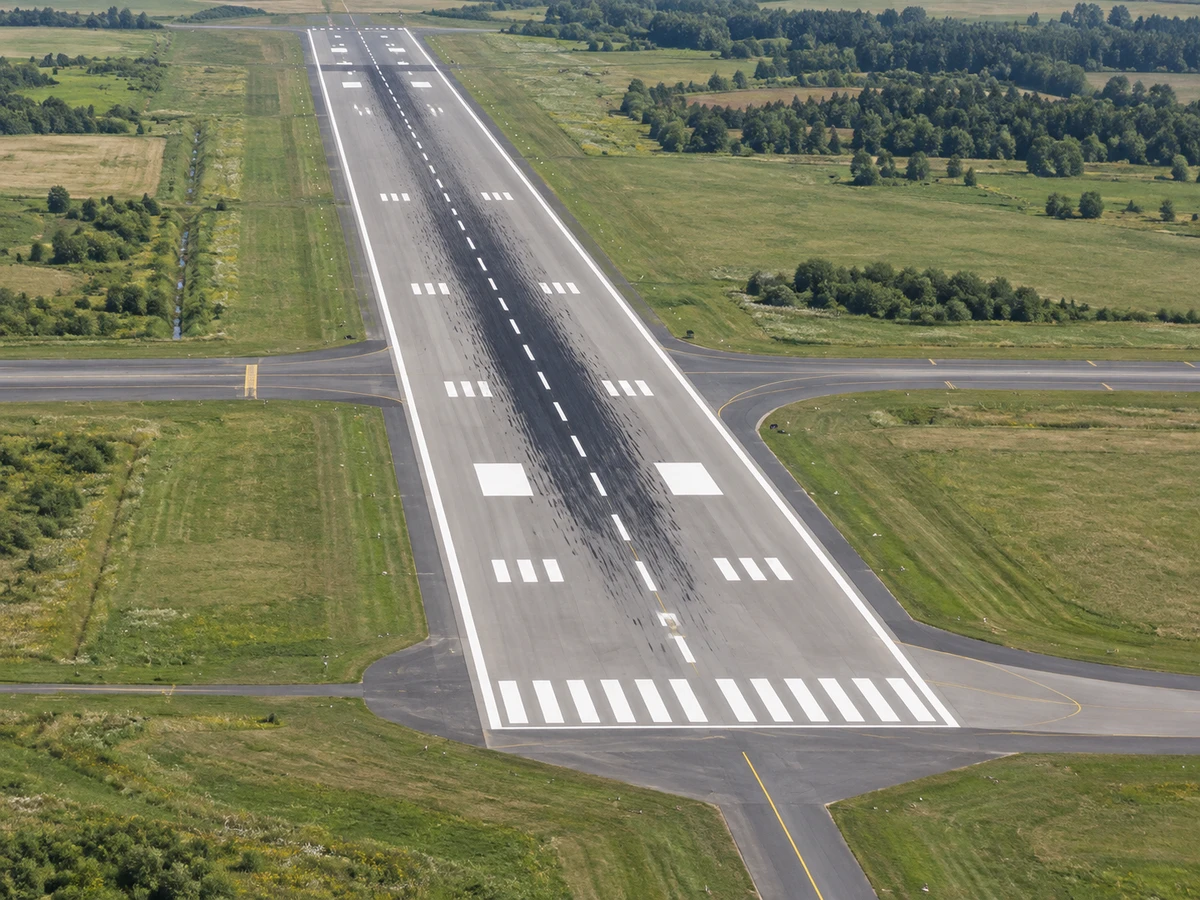
That’s why runways undergo routine rubber removal using high-pressure water blasters. The scale of this operation is staggering: in 2018, Amsterdam Airport Schiphol reported removing 6.5 metric tons of rubber from a runway during a single cleaning session.
The planes flew off, leaving a tiny fraction of their tires behind.
Underinflation: More Dangerous Than Smoke
A rugged tire can survive a high-speed landing only to suffer dangerous damage while merely taxiing across the tarmac. 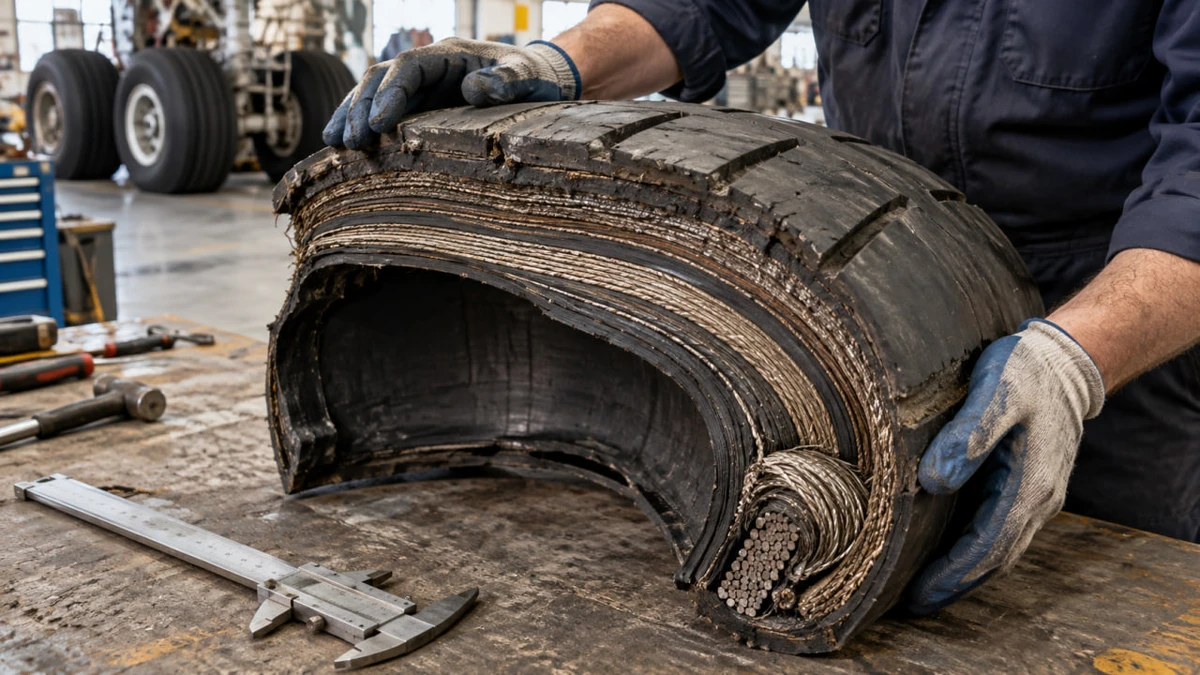
If pressure is too low, the tire flexes excessively with every rotation. This repeated flexing generates intense heat inside the carcass. Long or fast taxi runs compound the thermal strain. As a result, a tire can sustain internal damage before the plane even takes off, while taxiing to the runway with a full load of passengers.
Spotting an underinflated tire visually is nearly impossible because adjacent tires shoulder part of the load. That’s why manufacturers like Goodyear recommend checking tire pressures daily on cold tires using a calibrated gauge.
Everyone sees the dramatic puff of smoke at touchdown. But dangerous internal overheating happens silently, long before anyone notices a problem.
Why Nitrogen and Fuse Plugs Are Essential
Commercial airliner tires are inflated with dry nitrogen or another inert gas. Contrary to popular belief, this isn't because nitrogen doesn't expand when heated—it expands according to the same gas laws as regular air.
The primary reason is to eliminate oxygen. Extreme heat can cause the internal rubber to off-gas volatile compounds. In the presence of oxygen, this mixture can ignite spontaneously inside the tire casing. Nitrogen eliminates this hazard.
Another safeguard against thermal blowout is the fuse plug built into the wheel hub. If temperatures reach a critical threshold, a low-melting-point alloy core melts, safely releasing the gas. The tire deflates harmlessly rather than exploding like a high-pressure pressure cooker.
These plugs often trigger after the plane has already stopped, as heat continues to soak from the red-hot brakes into the wheel. A tire deflating at the gate after heavy braking usually means the fail-safe worked exactly as intended.
The Debris That Ruined Everything
Despite their rugged design, aircraft tires aren't indestructible. One of the most infamous tire failures occurred during the Concorde disaster on July 25, 2000—not during landing, but during takeoff. 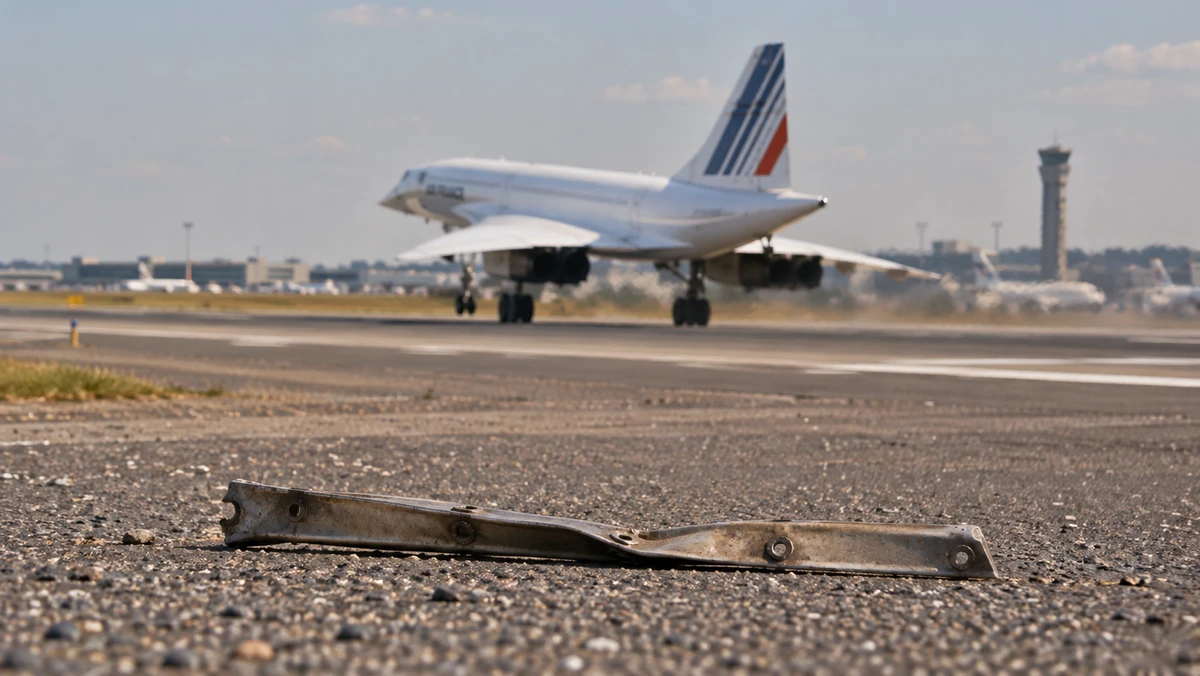
Just five minutes before the Concorde took off, a titanium metal strip fell onto the runway from a departing DC-10. The Concorde ran over the debris at high speed, causing a tire to burst violently.
What followed differs from common misconception. A large chunk of shredded tire didn't puncture the fuel tank directly. Instead, investigators found that it struck the underside of the wing with immense force, sending a shockwave through the fuel inside. The pressure spike ruptured the tank skin from the inside out, spewing fuel that quickly ignited. The crash claimed 113 lives.
In the wake of the disaster, vulnerable fuel tank areas were reinforced with special liners, and Michelin developed near-indestructible tires for the supersonic jet. The tragedy proved that heavy-duty tires alone aren't enough—airframes must be protected from tire debris, and runways must be meticulously cleared of foreign objects.
Ultimately, surviving a landing isn't about some miracle rubber that can withstand anything. It’s the result of clever engineering: reinforced tire carcasses, precise inflation pressure, robust shock absorbers, and rigorous maintenance. And as the outer tread layer wears away, an undamaged casing can simply be retreaded and returned to service.