Dead Man's Gold: What Really Happens to Gold Crowns During Cremation (3 photos)
Many people assume that when someone passes away, their gold crowns are handed over to their relatives. However, an investigation by online news outlet Grunde reveals that it is not quite that simple. As it turns out, any gold placed in a person's mouth by a dentist is as good as gone once they die—especially if the body is cremated. 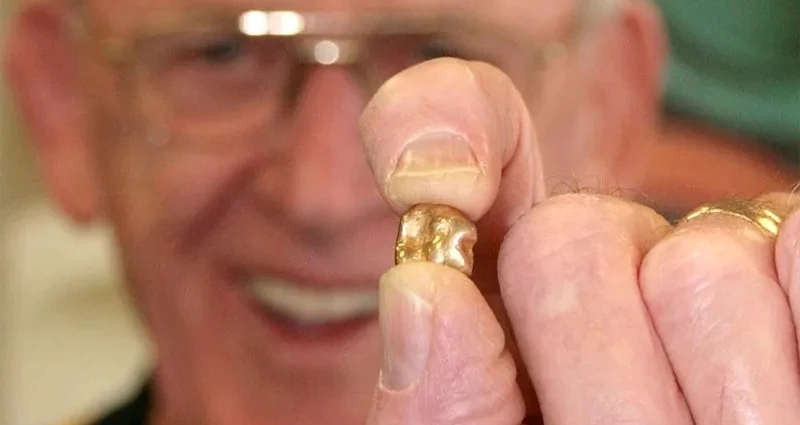
Dental crowns have a surprisingly long history. Archaeologists in present-day Italy have unearthed human remains with gold crowns dating back to 700 BC. While back then dental work was a luxury reserved exclusively for the elite, today almost anyone can get crowns—including gold ones. 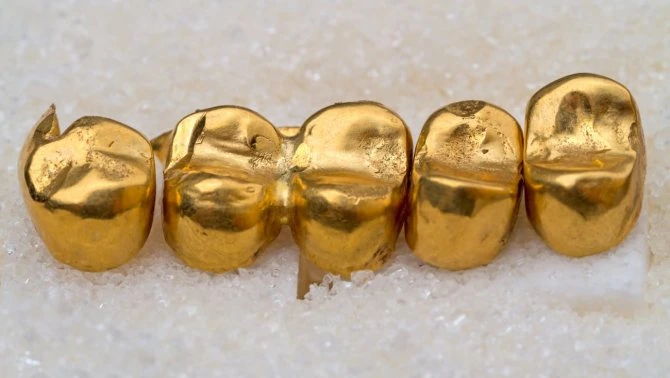
Traditional burials have been steadily declining in popularity. Cremation has become the go-to alternative as a faster, more affordable option—even in countries where religious traditions frown upon it. Modern cremation is now a streamlined, highly industrial process powered by high-efficiency retorts and specialized equipment.
Before a body enters the cremation chamber, staff remove any battery-powered devices, such as pacemakers. The body is then placed in a casket and cremated in a specialized furnace. Temperatures inside can reach up to 1,000°C (1,830°F), incinerating nearly everything. Larger bone fragments that survive the fire must later be mechanically processed into fine ash.
What Happens to Metal Implants During Cremation?
Before the cremated remains are placed in the processor, any non-organic materials are removed. This includes surgical pins, rods, joint implants, and dental bridges—essentially anything made of metal. Staff separate these items manually as well as with sieves and heavy-duty magnets. The recovered metal is sent for recycling, often containing valuable materials like titanium, cobalt, and palladium. These recycled metals are repurposed across various industries, though never for new medical implants. 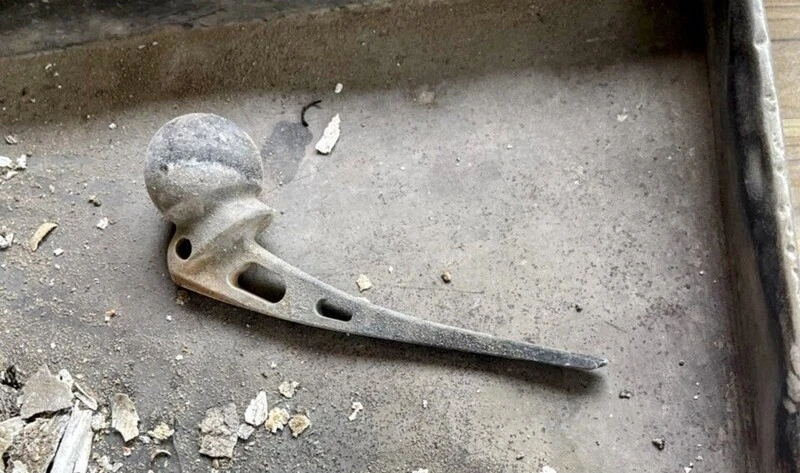
A metallic hip joint replacement recovered after cremation
So where does that leave gold crowns? Why aren't they returned to the deceased person's family? Industry experts explain that there is simply no pure gold left in the ashes. Cremation chambers operate at temperatures ranging from 760°C to 1,092°C (1,400°F to 2,000°F), while dental gold alloys melt between 870°C and 1,037°C. During cremation, the gold liquefies and fuses directly into the ash. Extracting and refining it back into pure metal is cost-prohibitive, making recovery completely impractical.
The only way for families to retrieve a loved one's gold crowns is to hire a professional beforehand. By law, only licensed dentists are permitted to extract gold from a deceased person's mouth. However, almost no one goes this route for two main reasons. First, hiring a dentist to make a home or morgue visit costs five to six times more than the value of the gold itself. Second, finding a dentist actually willing to perform the procedure is next to impossible.