In the 17th and 18th centuries, muzzle-loading muskets had a fire rate of, at best, two rounds per minute. Engineers tried various ways to overcome this limitation—such as adding more barrels to a single firearm. However, multi-barrel designs proved to be an evolutionary dead end, while more innovative approaches eventually paved the way for modern revolver-style weapons. 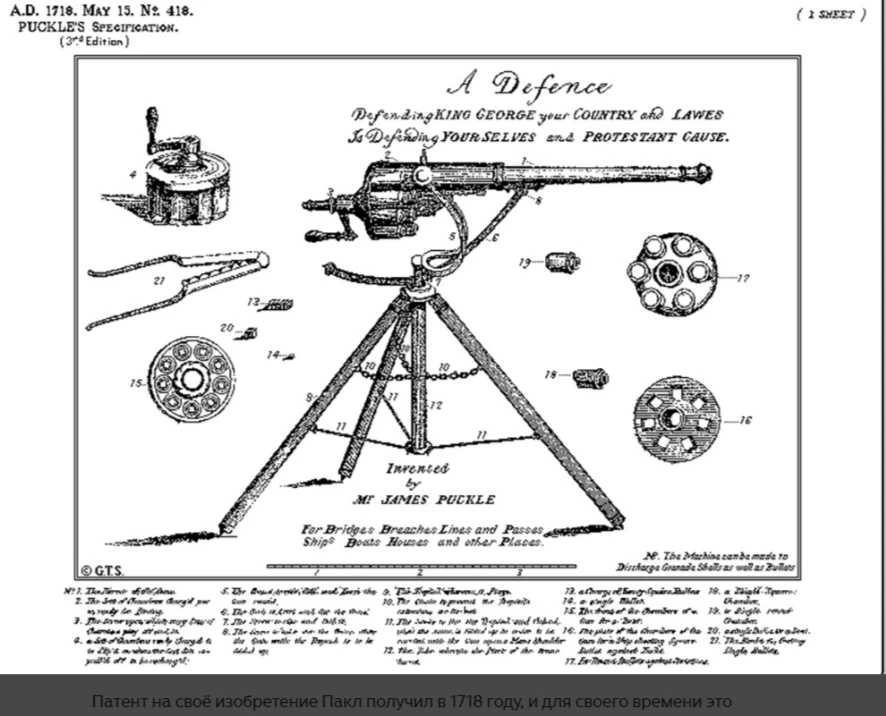
In terms of design, the weapon was a single-barrel flintlock gun with a caliber of roughly 32 mm, mounted on a heavy tripod. Its standout feature was a detachable 11-round cylinder, essentially a scaled-up revolver drum:
Operation: After every shot, the crew manually turned the cylinder to bring a fresh chamber into alignment with the barrel.
Fire rate: The design could achieve up to 9 rounds per minute. By contrast, a standard infantry musket of the era fired no more than 3 or 4 rounds per minute.
Crew operation: Running the gun took a small team. One person aimed, a second turned the cylinder crank, a third kept priming powder on the flash pan, and a fourth swapped empty cylinders for pre-loaded ones.
Swappable cylinders: Once all 11 shots were spent, the empty cylinder could be swapped out in just a few seconds, maintaining a virtually continuous barrage. During one demonstration, the weapon managed seven minutes of sustained firing.
Puckle created two distinct types of ammunition for his gun:
Round bullets — intended for use against Christian targets (allies).
Square bullets — designed to inflict far more severe wounds, intended specifically for Muslim Turks. Historians note that square bullets were almost certainly never manufactured, remaining a theoretical curiosity—or perhaps a clever marketing pitch—on paper.
The Puckle Gun was originally intended for use aboard Royal Navy vessels to defend against enemy boarding parties.
Despite its groundbreaking engineering, the gun saw no widespread adoption and was never officially fielded. Its failure came down to purely technical hurdles:
High production costs and complexity. Manufacturing precision-machined swappable cylinders was extraordinarily expensive.
Unreliable flintlock mechanism. Misfires were frequent, and manually re-priming the pan after every shot slowed down operation.
Excessive weight and bulk, making the platform far too cumbersome for general deployment.
Only a handful of Puckle Guns survive today, preserved in British museums such as Bude Castle in Cornwall. Though James Puckle’s name lives on through his unique gun, in his own lifetime he was known mainly as an author of moralistic self-help books for young men. 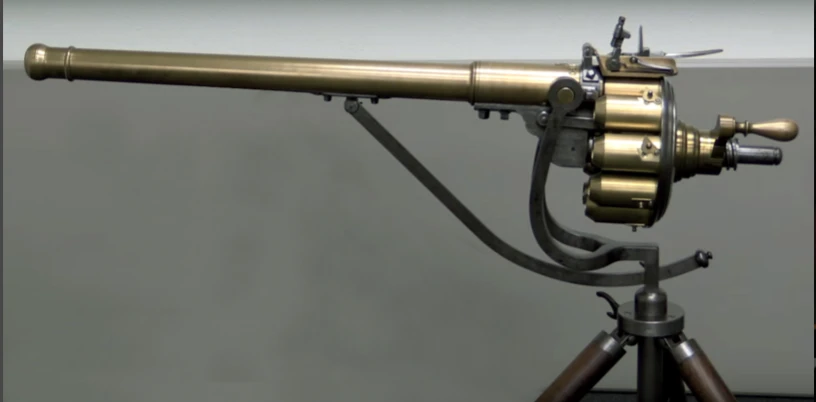
Only a few combat deployments were ever documented—notably during the 1722 expeditions to capture Saint Lucia and Saint Vincent. However, historical accounts offer little insight into how well the weapons performed in action.
Even so, Puckle left an undeniable mark on weapons history: nearly every subsequent revolver-style mechanism built upon the foundation of his early design.
It is also worth noting that James Puckle’s Patent No. 418, granted in 1718, was the very first patent requiring the inventor to provide a detailed written description of the design and its operating principles. This requirement ushered in a whole new era for modern patent law. 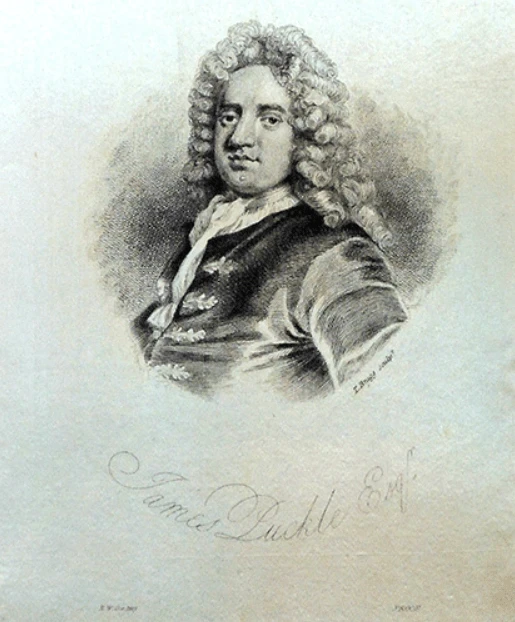
James Puckle (1667–1724) was an English inventor, lawyer, and writer based in London.
Apart from inventing his famous gun, Puckle was remembered by contemporaries for his book *The Club*, a popular work featuring moral dialogues between a father and son.
Add your comment
You might be interested in:











Volkswagen to restore famous minibus that survived

Vending machines with cartridges appeared in the USA (3

When Architects Are Out for Blood (19 Photos)
Dodge Charger 1971 with a 7-liter engine went under the

The best cars of 2025 in Europe and the USA have been named

Rusty 1936 Bugatti Type 57 Ventoux put up for auction (26

The Hyundai Inter meets many criteria, but not the most

Ken Block's Subaru Impreza rally car put up for auction (39

Space Storm: Crew Dragon Astronauts Retrieve Rare

Persistence in achieving a goal

A biker prevented a hit-and-run driver from escaping

Not everyone is having fun on the amusement ride

The cutest lunch delivery ever

A book titled "A Guide to Rebuilding

Young women, Dancing and George Michael: nothing superfluous

An apology delivered with a running start

A steam locomotive for "big boys"

Bollywood never ceases to amaze
