Mosh Pits, Fires, and Filth: Inside the Chaos of Woodstock '99 (14 Photos)
Held in Rome, New York, in the summer of 1999, the Woodstock rock festival was billed as a celebration of peace, love, and music—channeling the spirit of the iconic original event staged three decades earlier. Instead, it descended into absolute mayhem and madness.
Woodstock '99 left two dead and multiple women assaulted, while out-of-control rioters torched property and rolled around in human waste amid sweltering 100-degree heat. These striking archive photos capture the sheer nightmare that unfolded as clashes erupted among the crowd at the infamous event. 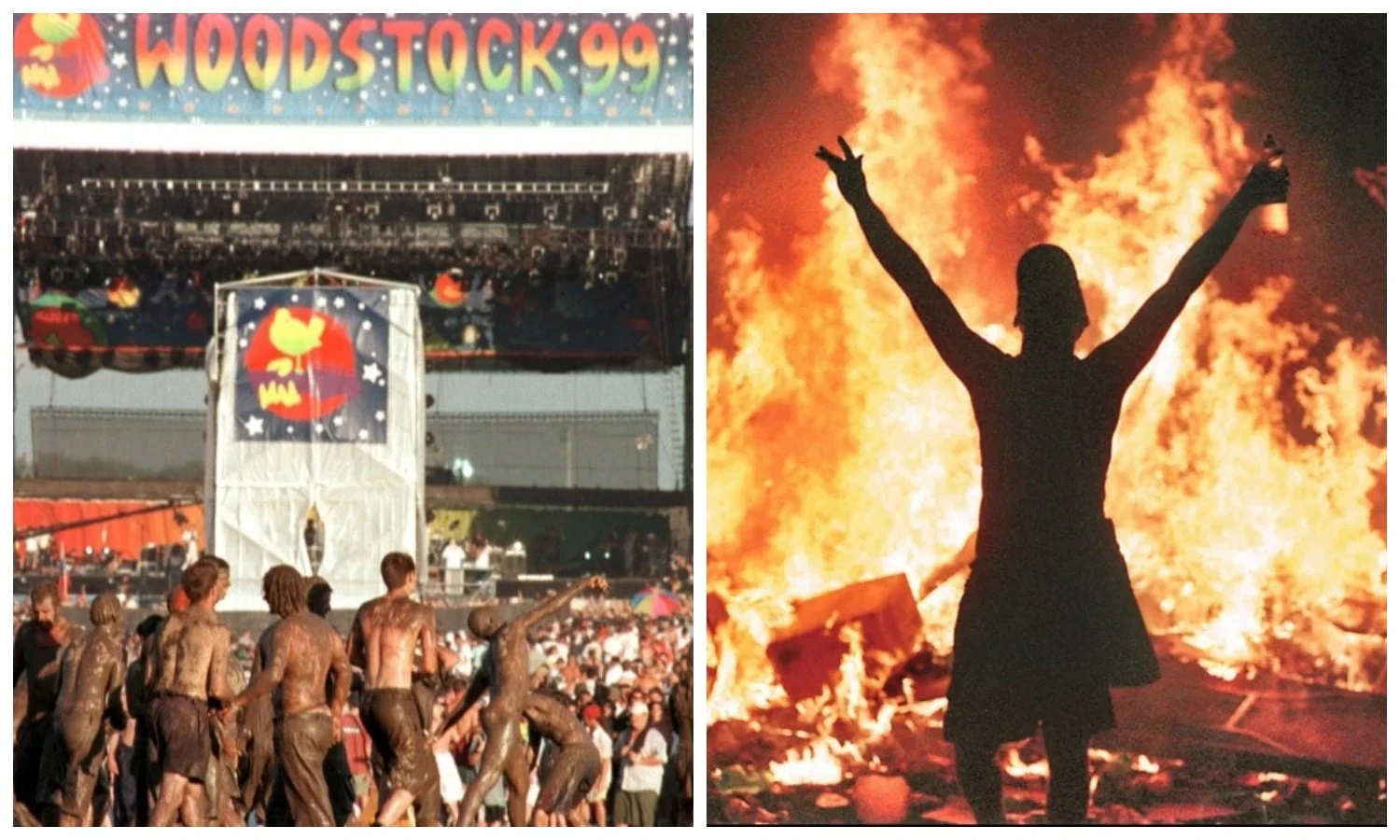
Caked in mud and sewage, revellers rampaged through the grounds of Woodstock '99. Law enforcement scrambled to contain the unruly crowd, but the situation quickly spiraled. Bonfires lit up the night sky as looters ransacked vendor trucks. The sheer terror that engulfed the festival grounds is hard to put into words, but harrowing archival images tell the story. 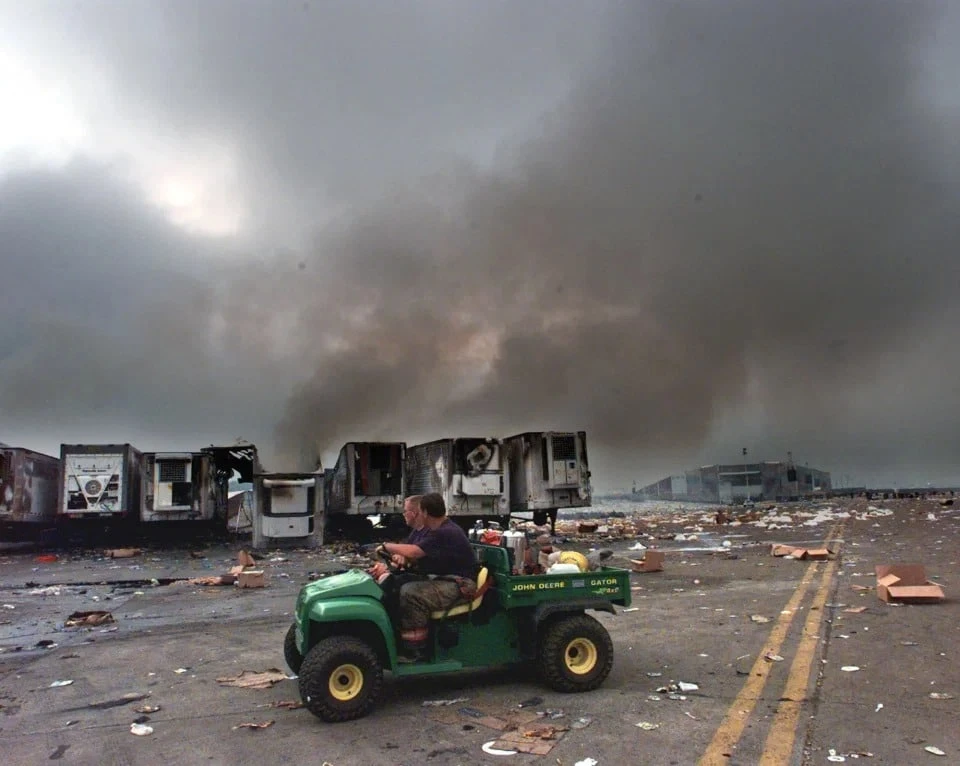
Staged on the tarmac of a decommissioned Air Force base, the festival saw crowds scaling speaker towers and light poles just to catch a glimpse of headliners like the Red Hot Chili Peppers and Metallica. 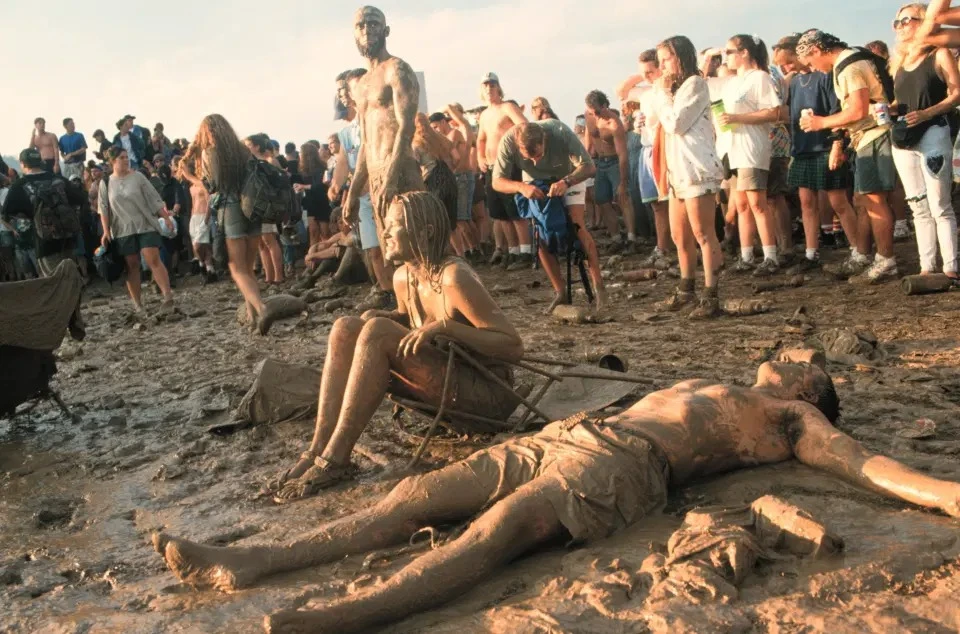
Among the festival's most horrific incidents was the gang rape of a woman in the mosh pit during Limp Bizkit’s set. 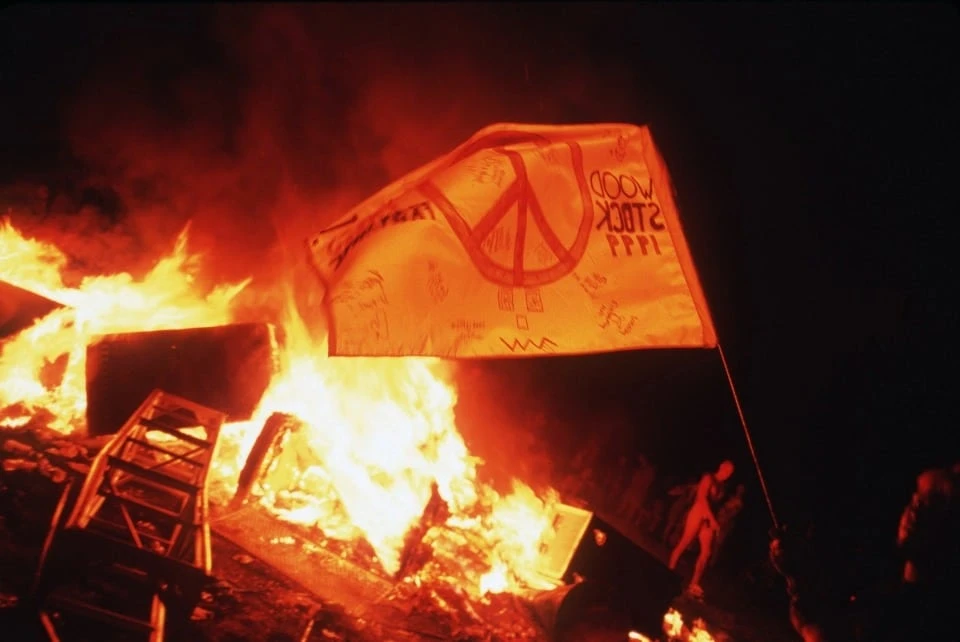
Eyewitnesses described the scene at Woodstock '99 as nothing short of apocalyptic. The sprawling venue lacked basic amenities and shade, leaving mountains of garbage piling up across the scorched asphalt. 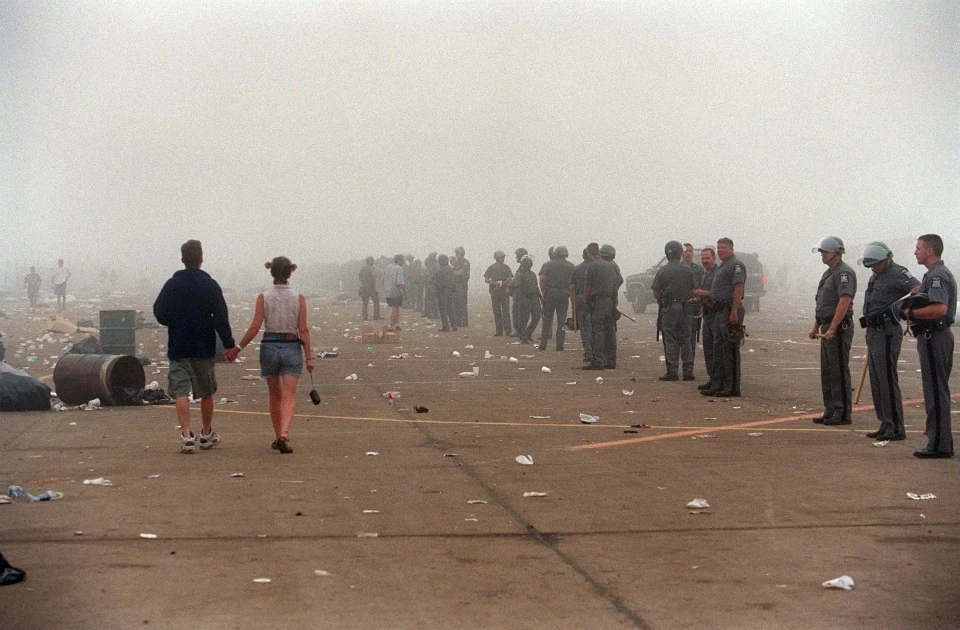
Festivalgoers were forced to pitch their tents directly on scorching concrete runways. 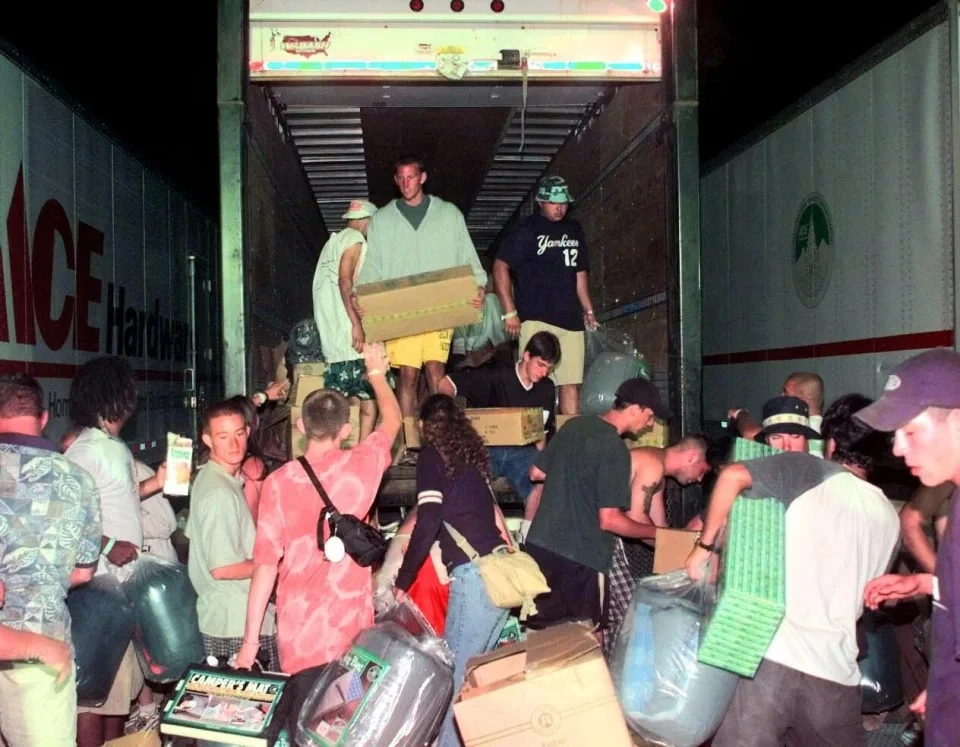
Conditions plummeted even further once basic sanitation collapsed. Organizers had set up communal water stations, but attendees soon began climbing into them to cool off. With the water quickly turned undrinkable, desperate crowds punctured the supply pipes. The rupture triggered a torrent of mud that mixed with overflowing waste from knocked-over portable toilets. 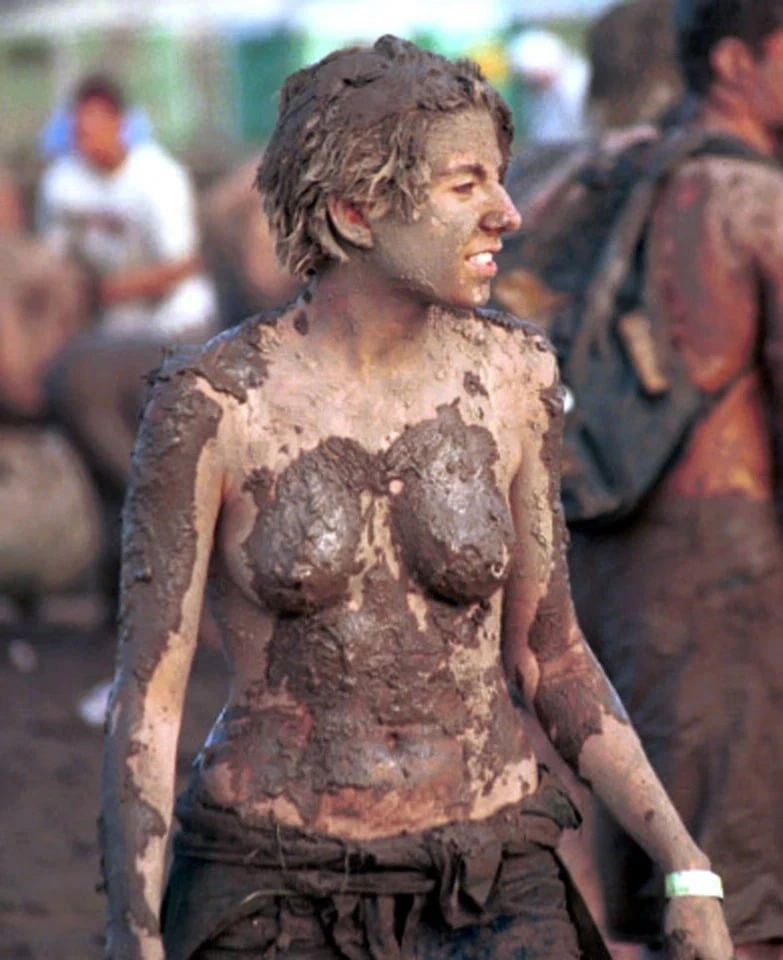
Before long, thousands were covered head to toe in a sludge of mud and raw sewage. 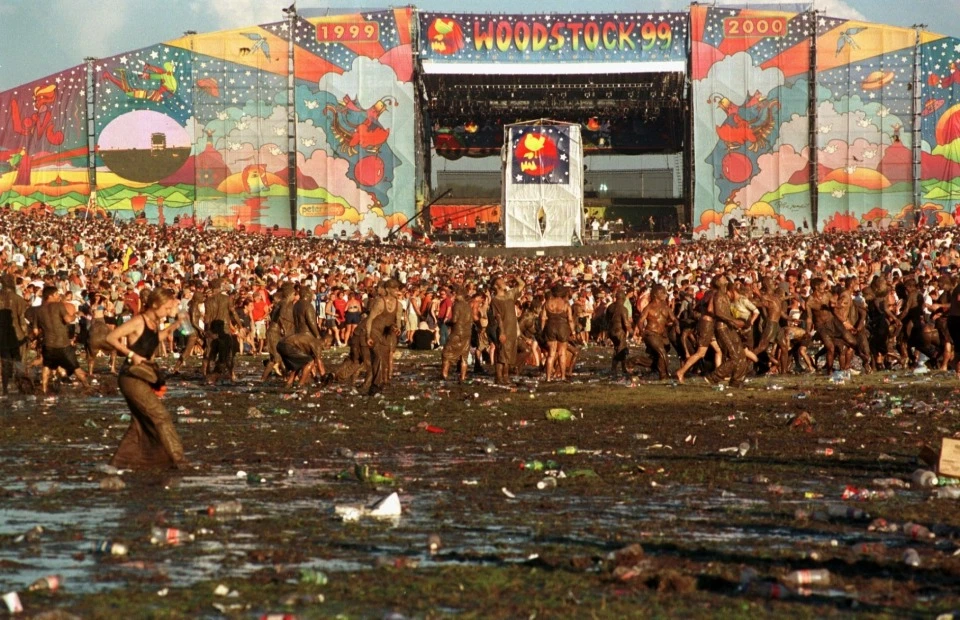
Potable water and cold drinks were in critically short supply. The 200,000 attendees were left with little choice but to pay gouged prices of up to $8 a bottle just to stay hydrated. 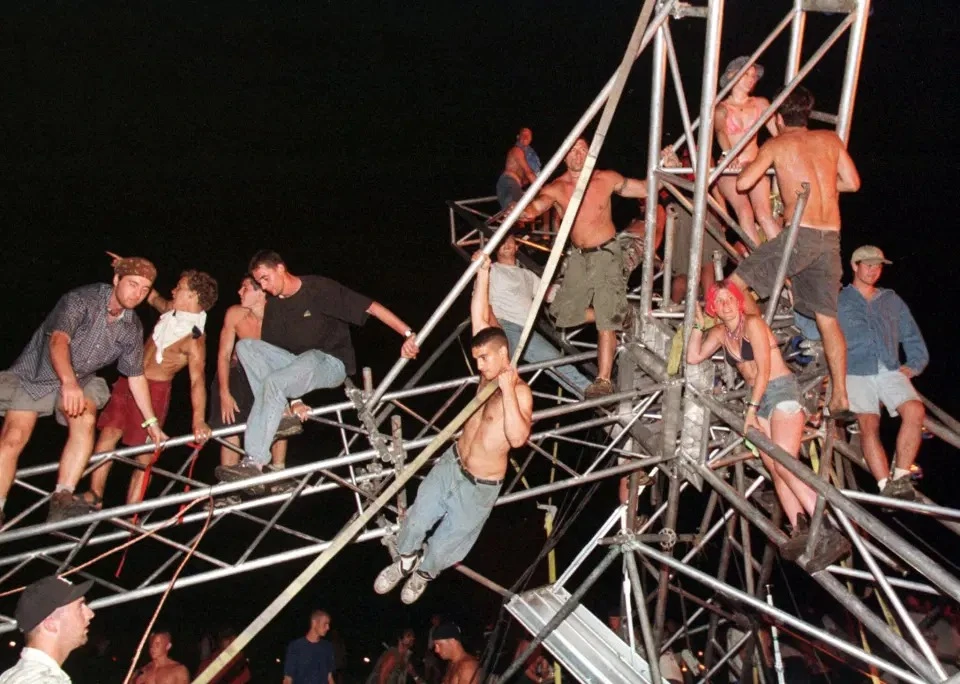
Soon, violent assaults, sexual violence, and brazen vandalism erupted throughout the venue. Overwhelmed security lost all control of the grounds. 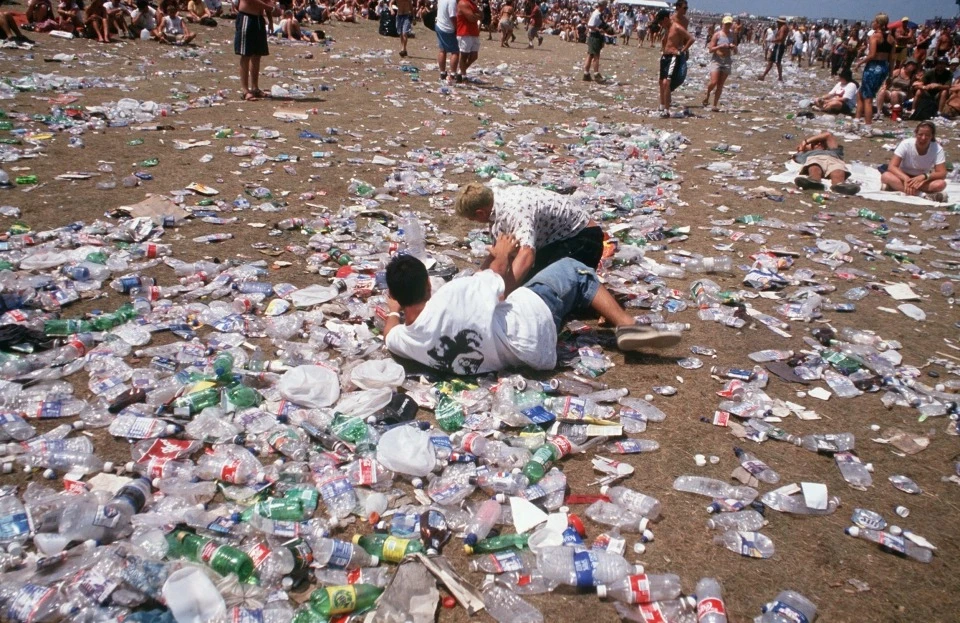
Debris and trash completely blanketed the area, and injured festivalgoers had to be carried out on stretchers amid the melee. 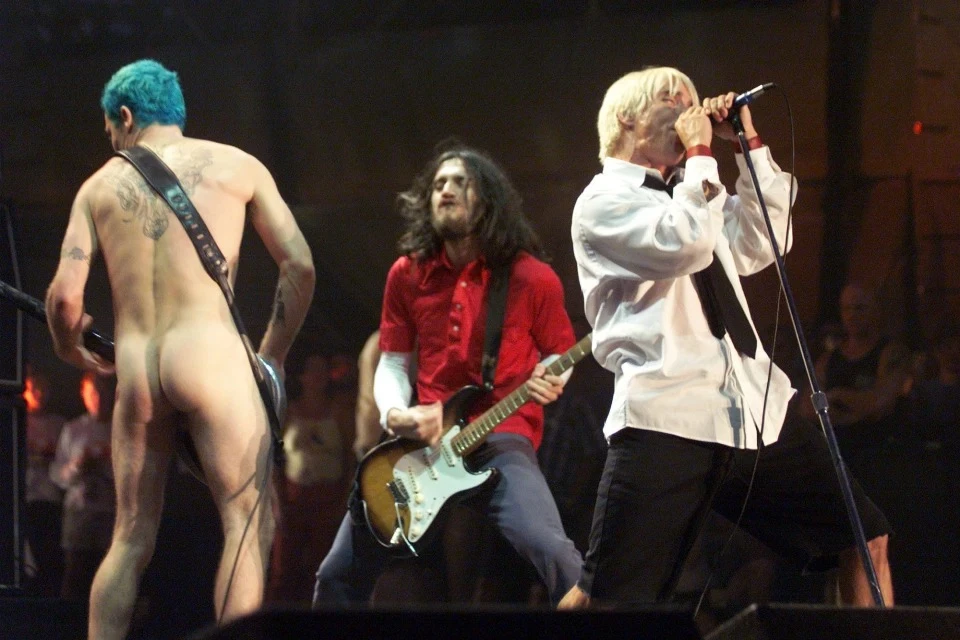
The unrest reached a boiling point during the Red Hot Chili Peppers' closing performance. As the band played, rioters fashioned makeshift torches out of plastic bottles, eventually setting an audio tower ablaze. 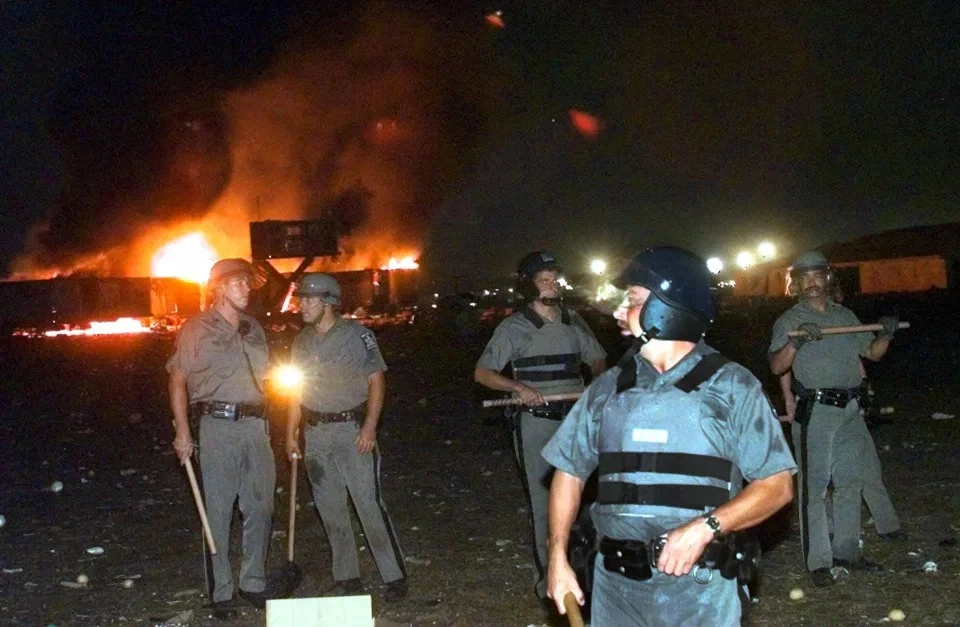
Hundreds of state troopers and riot police moved in to restore order, clashing with belligerent crowds deep into the night. 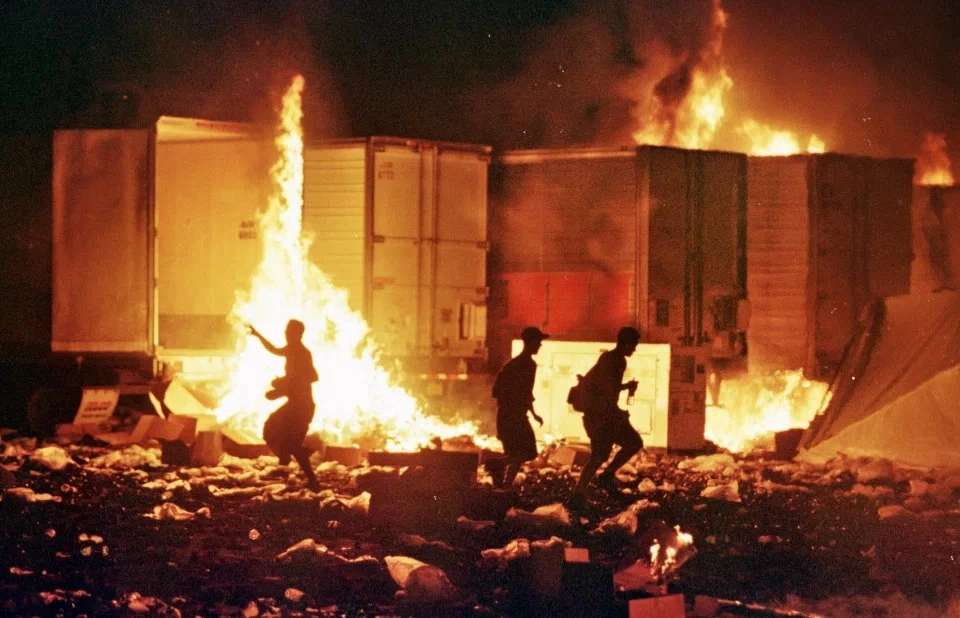
Dozens of sexual assaults and eight rapes were reported in connection with the event. Two people lost their lives due to the brutal heat. Around 10,000 attendees required medical attention, with 7,000 treated for heat exhaustion and dehydration alone. Police made 44 arrests. 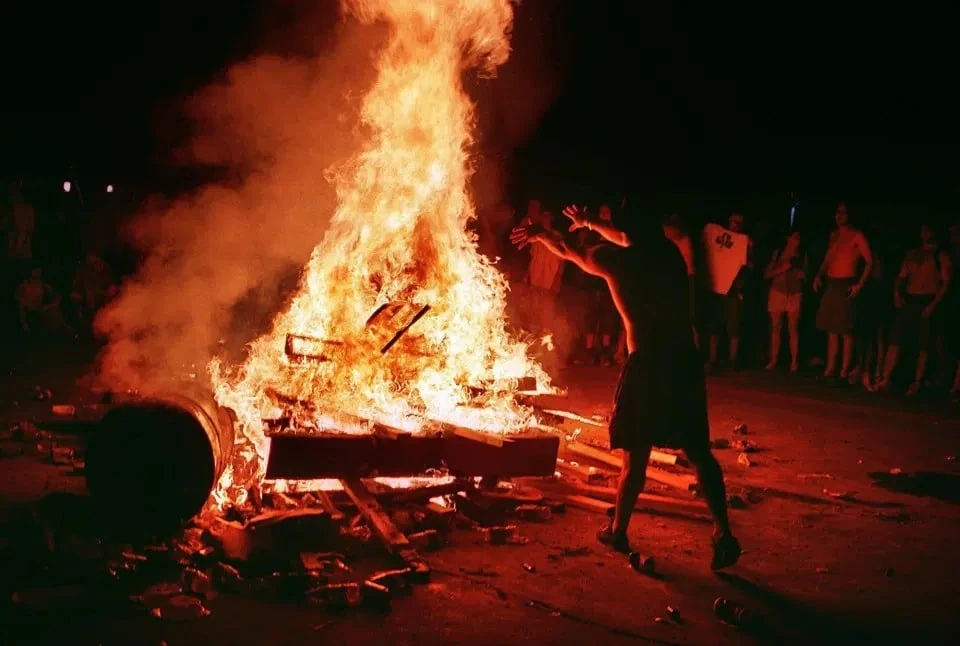
Woodstock '99 was branded by critics as "the day the music died"—a gathering that started with the promise of unity and ended in total destruction.
Up until that fateful weekend, the Woodstock name had stood as a universal emblem of peace, freedom, and the hippie ideal.