Screams of Agony and Boiling Blood: Archaeologists Reveal How the Victims of Pompeii Died (6 photos)
On August 24, AD 79, the sky over Pompeii and Herculaneum darkened as a torrent of ash and smoke erupted from Mount Vesuvius. It would become one of the most catastrophic volcanic events in human history, wiping out two thriving cities and preserving them in time for future generations. But what was the fate of their residents during those final, tragic moments? Modern archaeologists have revealed harrowing details about the last agonizing seconds of life in Pompeii. 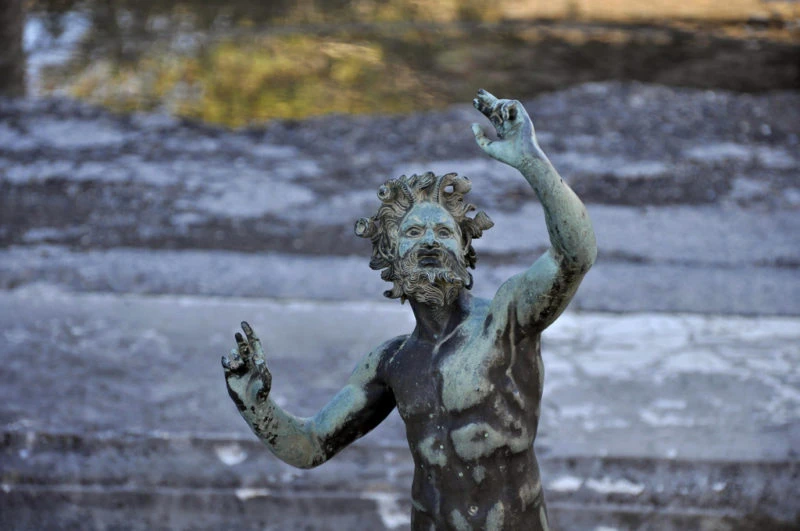
The city of Pompeii was located just 20 kilometers from the epicenter of the cataclysm. Many residents were burned alive, while others died in horrific agony. By examining the bone fragments and remains of the victims, Italian archaeologists have reconstructed the exact circumstances of their deaths—and the findings are truly nightmare-inducing. 
A team of Italian archaeologists published a research paper detailing precisely how the victims of Pompeii died. The full paper is available online in the scientific journal PLOS ONE.
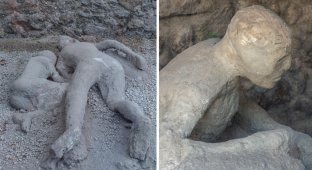
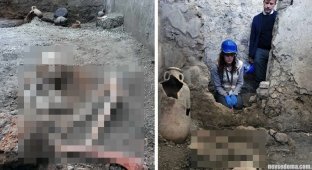
Their agonizing deaths were near-instantaneous: victims had no time to suffer prolonged death throes or react defensively, as everything unfolded in a fraction of a second. In their paper, the researchers included photographs of skeletal remains supporting these grim conclusions. 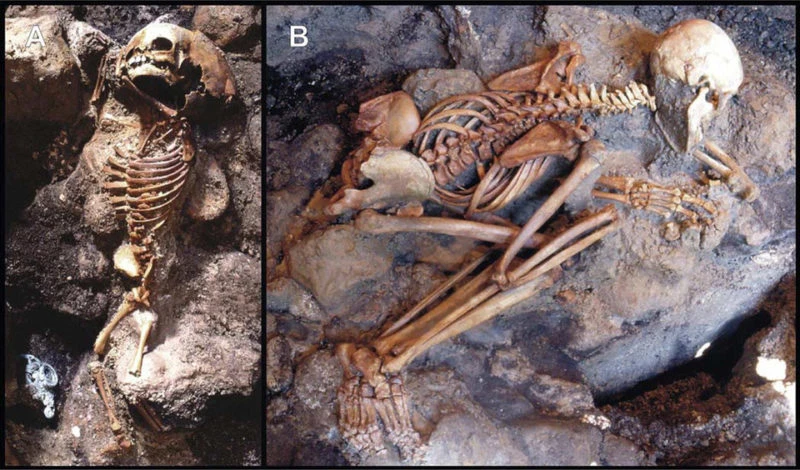
Chemical analysis of the bones revealed red and black mineral deposits—compounds rich in iron and iron oxides. These crystals are organic in origin. Put simply, the victims' blood boiled and turned to steam during the eruption. Later, as temperatures cooled, this bloody vapor condensed and crystallized. 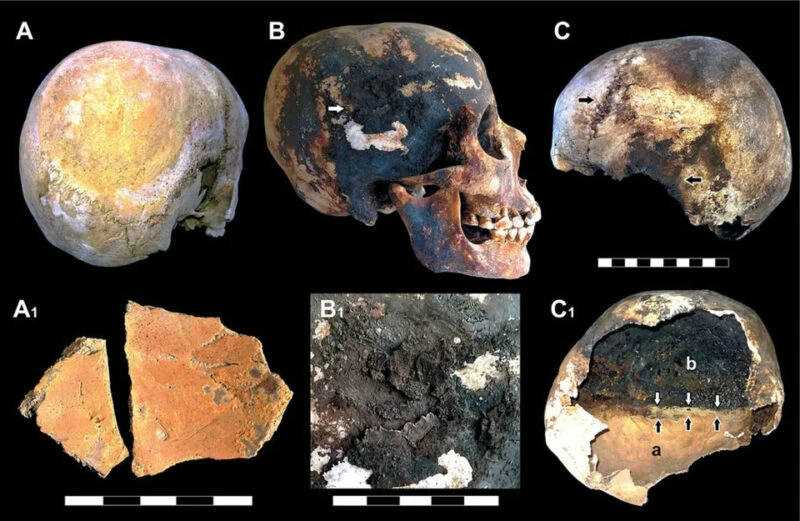
Many of the recovered bones were fractured and deformed, indicating that the victims' skulls burst from intense internal pressure. Death was instantaneous.
“Such an outcome is the result of a combination of extreme temperatures and intracranial pressure. Consequently, the human brain boiled, and the skull exploded,” the researchers noted in their study.
The blood and bodily fluids inside the skull boiled instantly, turning into steam until the skull shattered from the pressure, leaving behind only ash where the brain had been.
The catastrophe of AD 79 was colossal in scale. The eruption of Mount Vesuvius devastated three Roman towns: Pompeii, Herculaneum, and Stabiae. A towering plume of black ash and volcanic debris shot 33 kilometers up into the atmosphere above the epicenter. 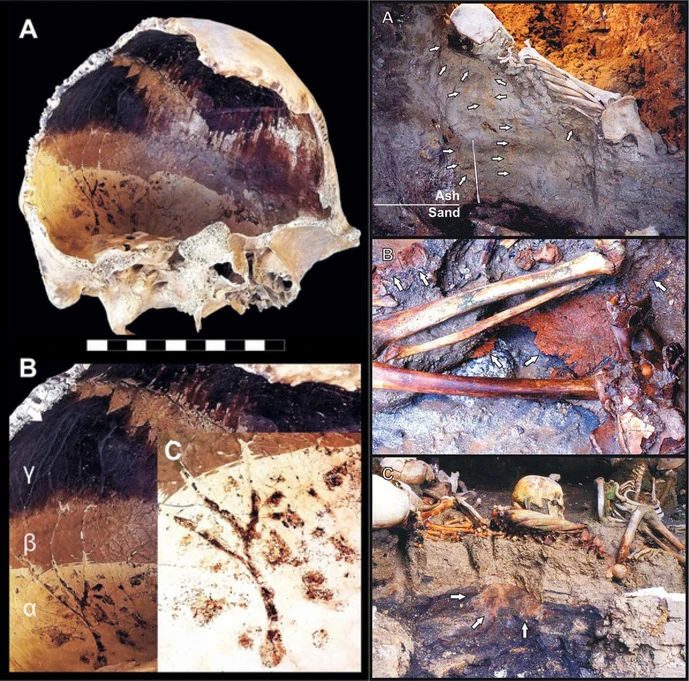
Estimates suggest that roughly 16,000 people lost their lives in the tragedy. 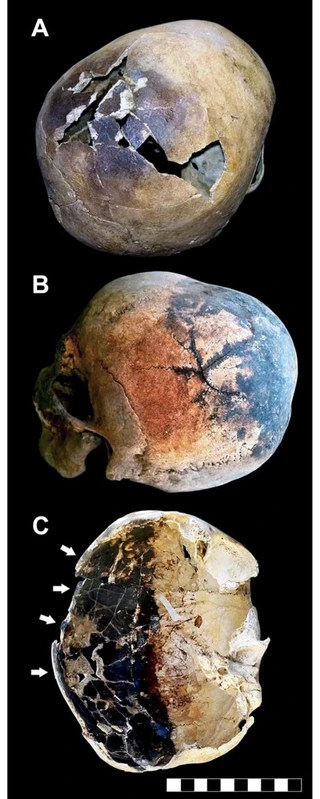
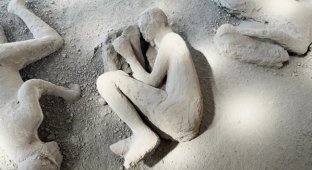
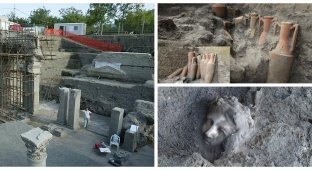
The remains discovered at the site were encased and remarkably preserved by layers of volcanic ash. Archaeological research at the site continues to this day.