What Carrying 5 Extra Kilos at Age 30 Does to Your Body (6 Photos)
When you’re in your thirties, young, and healthy, extra weight feels like nothing more than a minor cosmetic nuisance and a slight inconvenience when shopping for clothes. You don't give a second thought to where you'll be in ten years. You spend hours sprawling on the couch watching TV or sitting at your computer, unwilling to cut back on life's little pleasures and guilty indulgences. 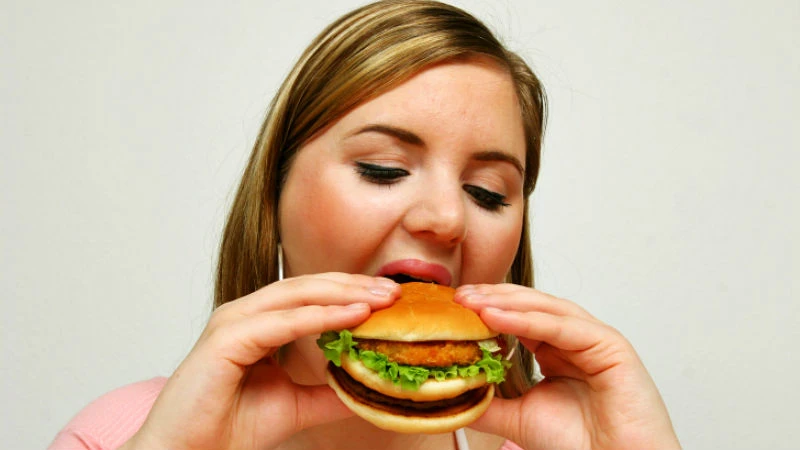
Dry statistics from anonymous researchers about increased health risks related to obesity mean very little to you. That happens to other people; you have everything completely under control! Meanwhile, with every passing year and every extra pound, your risk of developing these exact conditions climbs exponentially.
So why not take a look into the future? If you're a slightly overweight 30-year-old (give or take five years), here is what lies ahead...
AGE 35 
Up another 5 kg (11 lbs). You're still living on McDonald's burgers and giant sodas. And you can't figure out why you get frequent headaches, why running a few yards for the bus or chasing after your kid leaves you with spots in your eyes and dizziness, or why you suddenly feel weak or flushed when you get stressed. Out of curiosity, you check your blood pressure at the local pharmacy and are shocked to see 140/80 mmHg—or higher (the healthy baseline for your age is 120/80).
You visit the doctor, who prescribes blood pressure medication. They also offer a polite suggestion that you lose weight and get some exercise. You take the pills sporadically—only when you feel unwell. As for "exercise," yours is still limited to a quick trip down to the corner store for beer and chips.
AGE 40 
Up another 10 kg (22 lbs). Your first call for emergency medical help due to an unbearable headache. Your first hypertensive crisis—when the needle on the blood pressure monitor spikes past 180 mmHg. You are rushed to the ER, given a quick injection to bring your blood pressure down, kept under observation for a few hours, and sent home after signing a waiver refusing full admission.
At home, you spend three days flat on your back in bed, unable to move. You buy your own blood pressure monitor and start checking your readings regularly. It rarely drops below 140/90 mmHg now. Daily medication becomes mandatory. Blood tests reveal elevated cholesterol and blood sugar levels. Looking at your apple-shaped body (fat concentrated around the waist rather than the hips), the doctor warns of a high risk of cardiovascular disease, atherosclerosis, heart attacks, and strokes. You're prescribed a diet, which you attempt to follow for two weeks. But as soon as you start feeling better, the fear of another crisis fades. You relax and go right back to your old habits. You are a master of rationalization, convincing yourself of anything rather than accepting the need for a lifestyle change!
Before long, you notice that climbing stairs is getting harder and harder. Your knees ache, and by the third floor, you're short of breath with a stabbing pain in your chest. You read up online about osteoarthritis, spinal degeneration, and coronary artery disease—where the heart muscle is starved of oxygen and signals its distress through chest pain under exertion.
The realization that you need to do something crosses your mind more and more often. It comes... and goes...
AGE 50 
Up another 10 kg (22 lbs). Your blood pressure is higher than ever, and the stack of pills on your nightstand keeps growing. To keep your pressure manageable, you have to take 5 to 8 different medications a day. You can barely walk short distances without chest pain. Your knees ache and crackle constantly; you can no longer stand up from a chair without pushing off with your hands, and getting out of bed in the morning becomes a carefully choreographed ritual to avoid triggering back spasms, joint pain, or intense dizziness. Your blood sugar stays stubbornly high, leading to a formal diagnosis: type 2 diabetes.
Your doctor urgently advises weight loss and hands you a pamphlet of forbidden foods. Everything you loved snacking on during those long evenings—sweets, pastries, fried foods, sodas—is now strictly off-limits. You're put on cholesterol-lowering drugs. You become a regular fixture in the clinic waiting room, and the emergency call dispatcher recognizes your voice. You go on a strict diet, suffer through constant hunger, but shedding pounds feels almost impossible now.
The physician at the fitness club you finally decide to visit listens to your complaints, reviews your medical chart, and gently suggests a low-impact senior wellness class at your local clinic instead. An orthopedic surgeon recommends knee replacements for your stage-three osteoarthritis. A neurologist orders regular IV drips and adds a few more bottles to your bedside collection due to new symptoms and arterial plaque in your brain. You increasingly rely on family members to help you get dressed, put on socks (your belly gets in the way), and tend to skin folds. High heels are a distant memory for women, and taking a cane along—even for short walks—becomes a regular necessity.
AGE 60 
Myocardial infarction. A cholesterol plaque ruptures and blocks a key coronary artery. Unbearable chest pain, an ambulance ride, ICU, or an emergency operating table. Prolonged recovery, official disability. Your walks are now mostly limited to trips to the clinic. Constant headaches, shortness of breath, dizziness, burning pain in your feet, and non-healing diabetic ulcers on your legs. Medication is taken before, after, and instead of meals. At night, your sleep is broken by your partner's panicked voice: "You stopped snoring! What's wrong?"
The diagnosis: obstructive sleep apnea. Sometimes you go without breathing for a cumulative total of several hours a night! Frequent nighttime awakenings, oxygen deprivation, daytime fatigue, and memory loss become everyday reality for someone suffering from Pickwickian syndrome. Scheduled joint replacement surgery is canceled due to high surgical risk. Instead, you're offered joint injections—needles directly into your knees. The relief is brief; six months later, you're back for another round. As for the constant hospital stays, emergency calls, and home visits from doctors, it's best not to even mention them.
AGE 70 
At this point, the future of today’s slightly chubby 30-year-old is nowhere to be seen. In all likelihood, it simply doesn't exist.
You have passed away—decades short of the modern average life expectancy.
And that isn't even the worst-case scenario—it can happen much sooner and far more abruptly. A food industry that has lost touch with reality, combined with a sedentary lifestyle and a complete lack of exercise, can easily cut this timeline in half. When today’s 30- and 40-somethings were kids, there was usually just one overweight child per class who bore the brunt of everyone's teasing. Today, taking my child to first grade, I see that a third of the class is already overweight! For them, the story written above starts not at thirty, but at ten.
Three years ago in Thailand, I marveled at how lean and graceful the women were. Today, I'm shocked by how few of them are left. Thais embraced Western habits, adopting the same destructive lifestyle and diet.
I’ve seen American schools and their students: a third of the children are of a size unimaginable even for a large adult; another third are visibly overweight; and only one-third are healthy, average kids. Only one in three looks like what we see in Hollywood blockbusters. Sometimes you wonder where casting directors even find people like Megan Fox, Emma Watson, Brad Pitt, or Elijah Wood. It's frightening to think how these kids—facing chronic health issues before they even reach adulthood—will support our aging population in 40 or 50 years. Don't fall back on the comforting thought that this is about someone else's children. This is our reality. Just like it happened in Thailand in a span of three years, it is coming for us too. In fact, it's already here—just open your eyes and look around.
How can we rob ourselves like this? How can we squander the only life we are given—our one and only chance?