Pompeii (3 photos)
This Pompeian resident who died during the eruption of Vesuvius was likely a doctor and was attempting to flee the city with his surgical instruments. 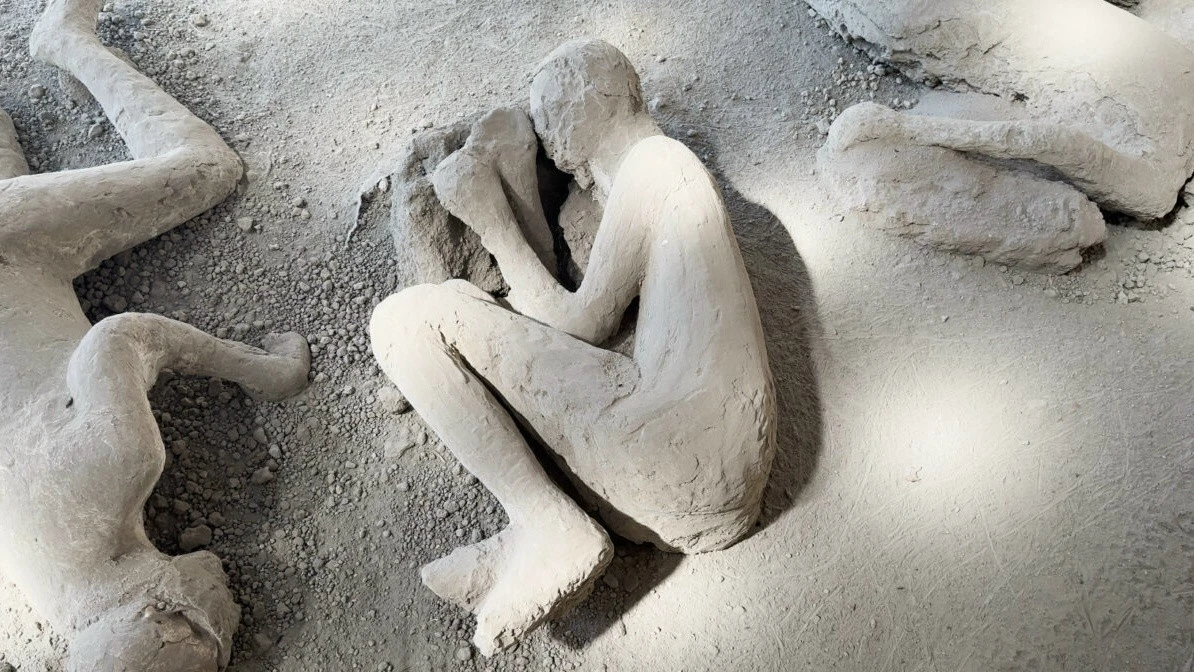
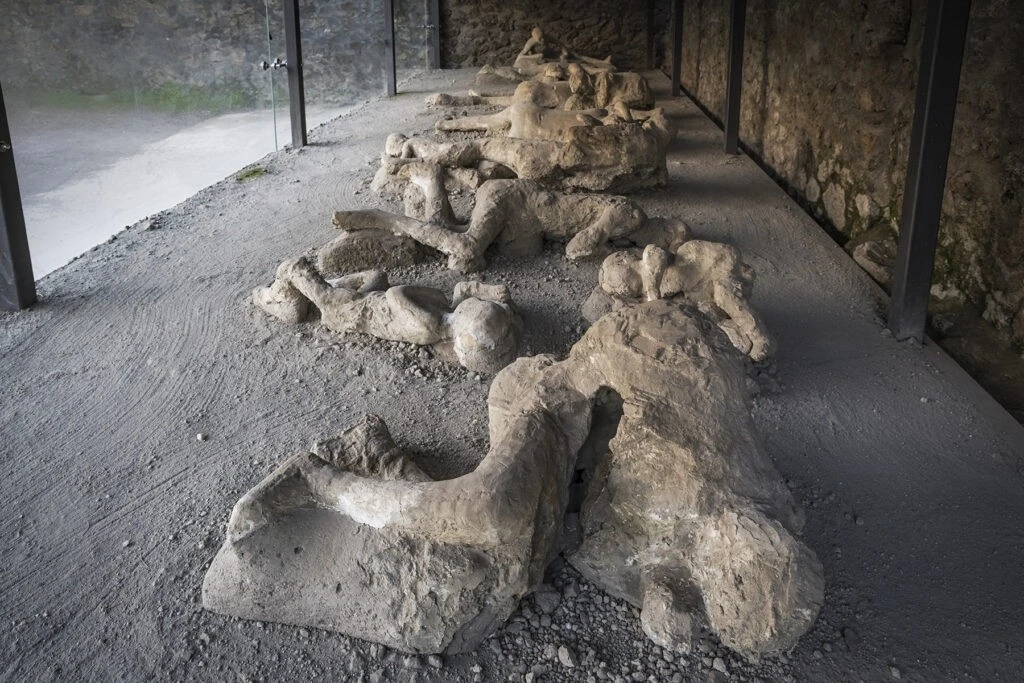
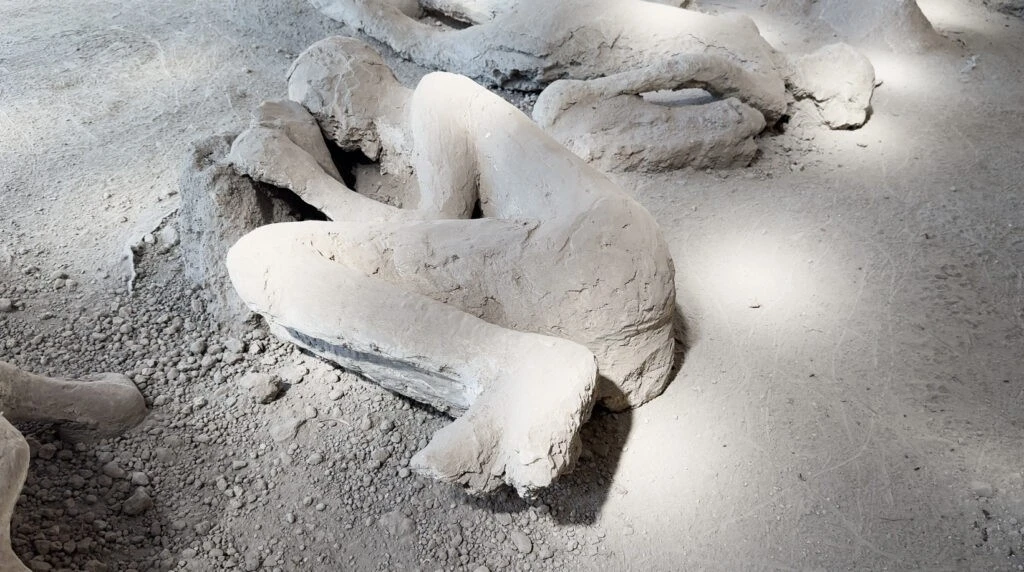
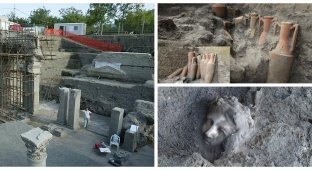
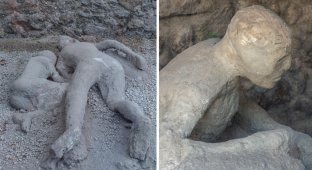
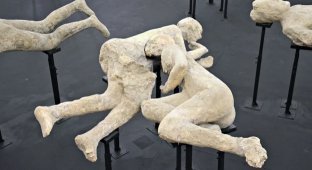
Despite centuries of study, Pompeii continues to amaze! According to new research, one of the victims of the eruption of 79 AD, discovered over 60 years ago, may be a Roman doctor. In 1961, archaeologists discovered 14 plaster casts of the bodies of unfortunate people who attempted to flee the dying city near Porta Nocera but were caught by a pyroclastic flow in the so-called "Garden of the Fugitives." But what exactly was revealed using new methods unavailable to scientists in the mid-20th century?
As a reminder, gypsum mortar is used to fill cavities left behind by the bodies of people, animals, or interior objects. Hundreds of such "sculptures," silent witnesses to the legendary catastrophe, have now been identified. A key piece of evidence for the current study was a small case, hidden in plaster for decades. Specialists from a local hospital came to the archaeologists' aid, taking X-rays and performing a CT scan of the cast using artificial intelligence. This allowed them to create a 3D reconstruction of the case's contents and study it non-destructively.
Inside was a small slate tile, apparently used for preparing medicinal mixtures or cosmetics. But most importantly, there were small metal objects that could be interpreted as surgical instruments. Fortunately, ancient Roman medicine has left us a rich archaeological heritage. Taken together, these findings suggest that the deceased was an ancient Roman physician. While this assumption is not 100% proven, it is still quite compelling. This is a remarkable precedent, as most remains of victims from Pompeii are known either by their location, or by the position of their bodies before death, etc. But now we have a rare case where we can, with a high degree of certainty, infer the lifetime occupation of a specific participant in these events.
We also learned some interesting things about the case itself, made of organic materials (apparently wood). Scans revealed a complex locking mechanism operated by a gear wheel—clear evidence of skilled craftsmanship. Also found near the supposed doctor were the remains of a cloth pouch containing bronze and silver coins, though their value is not particularly high.
Probably, in a desperate attempt to save himself, this man tried to carry off his most valuable possessions, which would later allow him to earn a living…