Jellyfish of the Black and Azov Seas: Rhizorostoma, Aurelia, and Ctenophora—who stings (13 photos)
Every summer, the same spectacle unfolds on the beaches of Anapa, Yeysk, and Feodosia. Something transparent floats past, and half the beachgoers jump out of the water with a scream, while the other half immediately picks it up to take a photo. 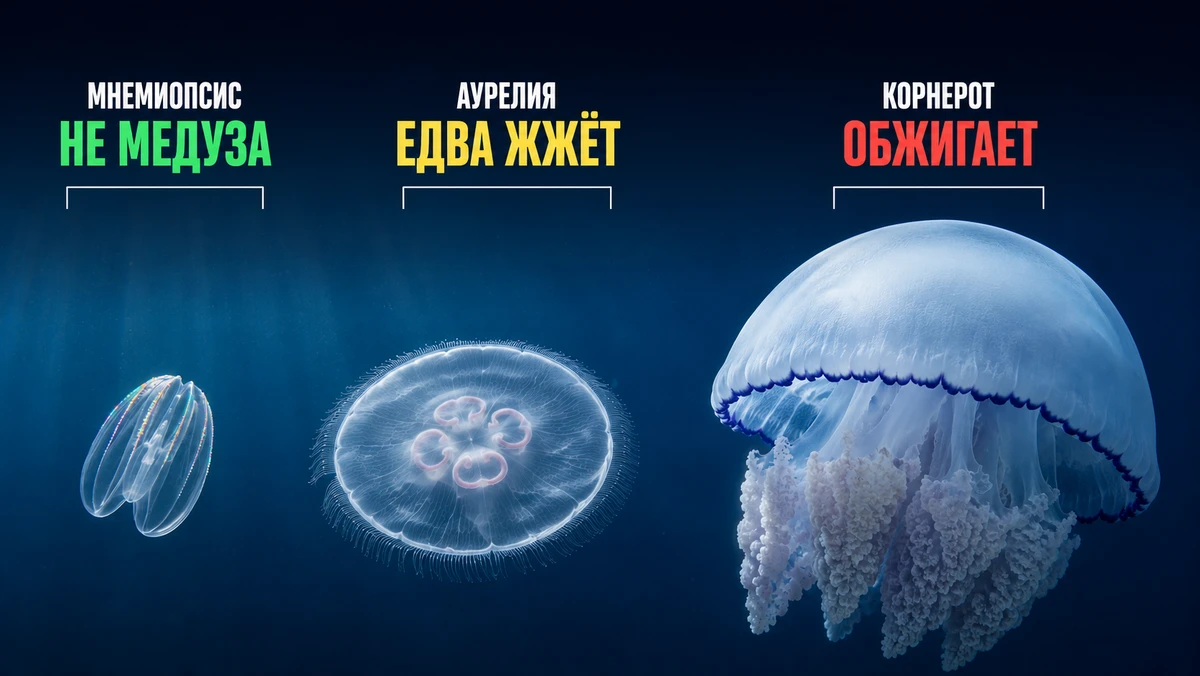
Both are mistaken
On our coast, the word "jellyfish" refers to three completely different creatures: one seriously stings, one barely stings, and the third isn't a jellyfish at all. Let's figure out who's to blame for the sting, how to distinguish a rhizostoma from a moon jellyfish right in the water, why Azov turned into jelly, and what to do if it's too late.
Jellyfish are 95 percent water.
They need the remaining five percent to ruin your vacation.
Three suspects and one culprit
The rhizostoma is a large jellyfish with a dense dome, a blue or purple border, and a heavy "beard" of oral lobes on the underside that noticeably stings. 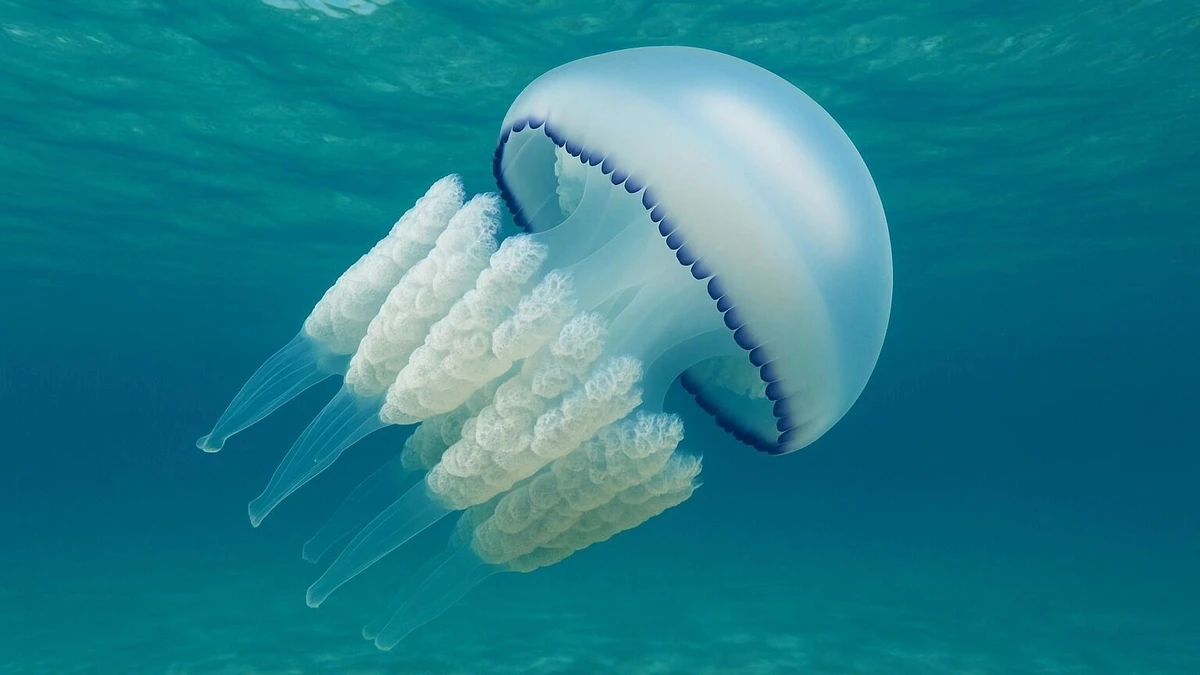
Aurelia—a transparent pancake with four horseshoes inside—has stinging cells, but is usually weak against adult skin. 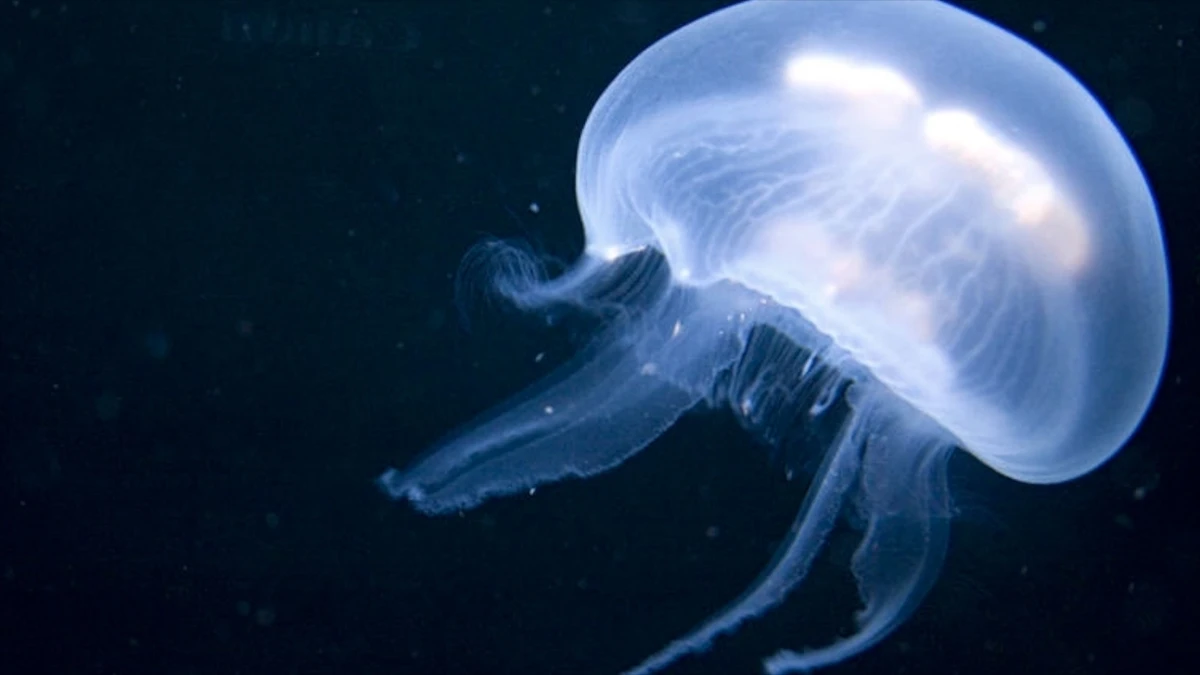
Mnemiopsis, an oval, transparent "cucumber" with iridescent stripes on the sides, doesn't sting at all: it's a comb jelly, not a jellyfish, and it doesn't have nematocysts at all. 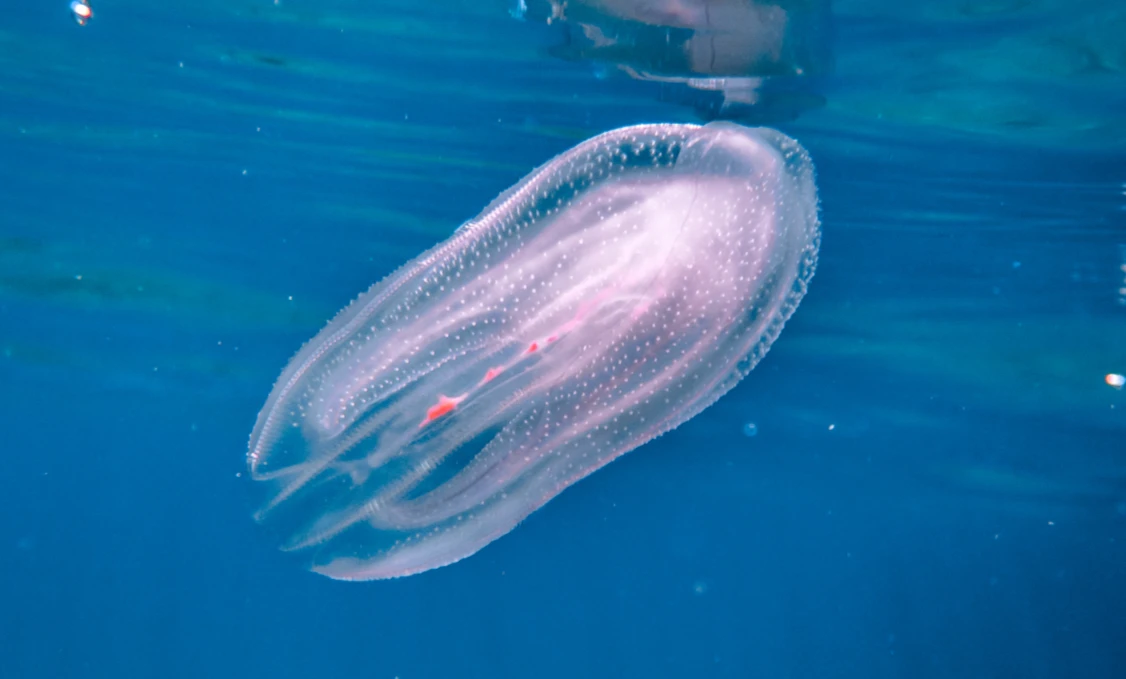
A formula you can tell your beach neighbors:
The rhizome stings noticeably, the aurelia stings barely noticeably, and the mnemiopsis stings not at all because it's not even a jellyfish.
And let's address the biggest resort fear right away. Are the jellyfish of the Black Sea dangerous enough to cancel your vacation? No. The infamous tropical box jellyfish, which can kill people in minutes, are not found here. But "not fatal" and "not painful" are two different things, and an allergic reaction is possible to the venom of any stinging insect.
To understand why the rootmouth stings and the mnemiopsis doesn't, you have to look under the skin for a second. Where the fastest weapon in nature works.
A harpoon is faster than a pistol bullet.
A jellyfish doesn't bite or sting like a wasp. It has no teeth or sting. It stings—and this is a fundamentally different mechanism. 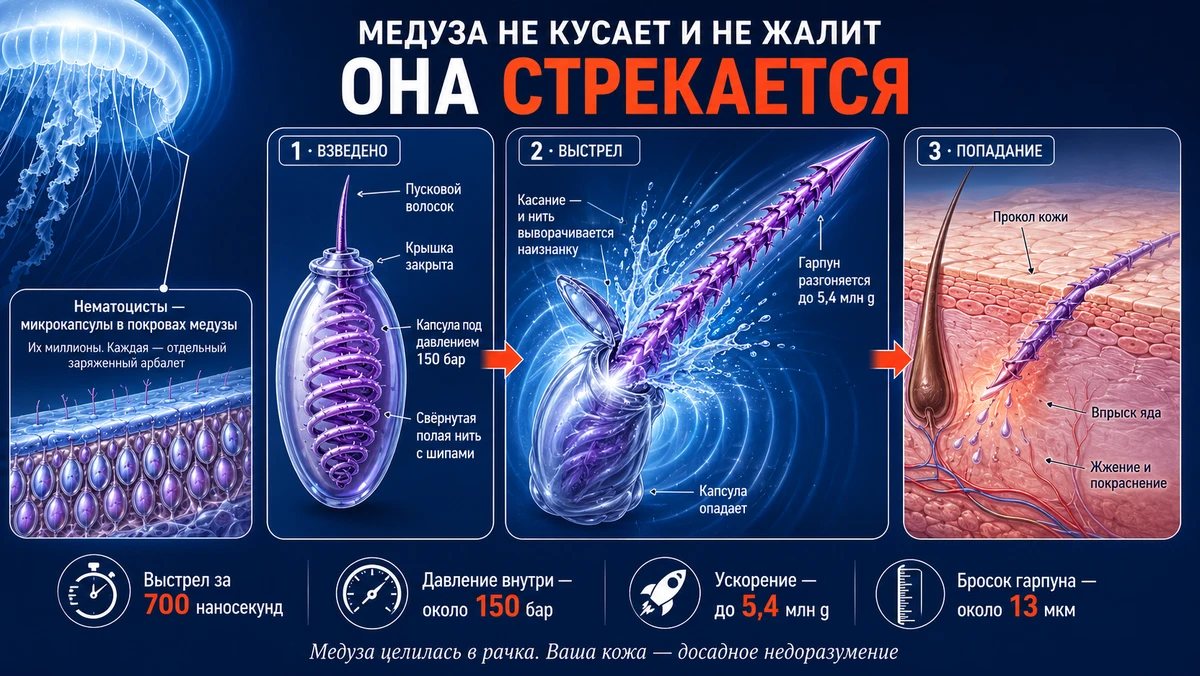
Millions of microscopic capsules, nematocysts, are scattered across the jellyfish's skin. Each one is like a loaded crossbow, a hundredth of a millimeter in size. Inside, a hollow, spiked thread is coiled, and the pressure inside the capsule is maintained at approximately 150 bar—almost seventy times greater than that in your car tire.
As soon as something touches the trigger, the capsule fires.
In 700 nanoseconds.
This is one of the fastest movements known to biology: the harpoon's acceleration reaches 5.4 million g. The thread travels only thirteen micrometers, but that's enough to pierce the crustacean's shell and inject a hellish cocktail of proteins.
Your skin is an unfortunate misunderstanding for a jellyfish. It was actually aiming for plankton.
This, by the way, is the main rule of first aid: do not rub a jellyfish sting. Tens of thousands of unfired capsules remain on the skin, and any pressure will worsen the situation.
But our three heroes have very different arsenals. Let's start with the one with the most.
Rhizostoma pulmo: ten kilograms of blue jelly
Rhizostoma pulmo, the rootmouth, is the most noticeable jellyfish in the shallow waters of the Black Sea. Its dome is up to 50–60 centimeters in diameter, with some specimens reaching up to 80, and it weighs up to ten kilograms. It is dense, fleshy, milky white or bluish, with a bright blue or purple border along the edge. 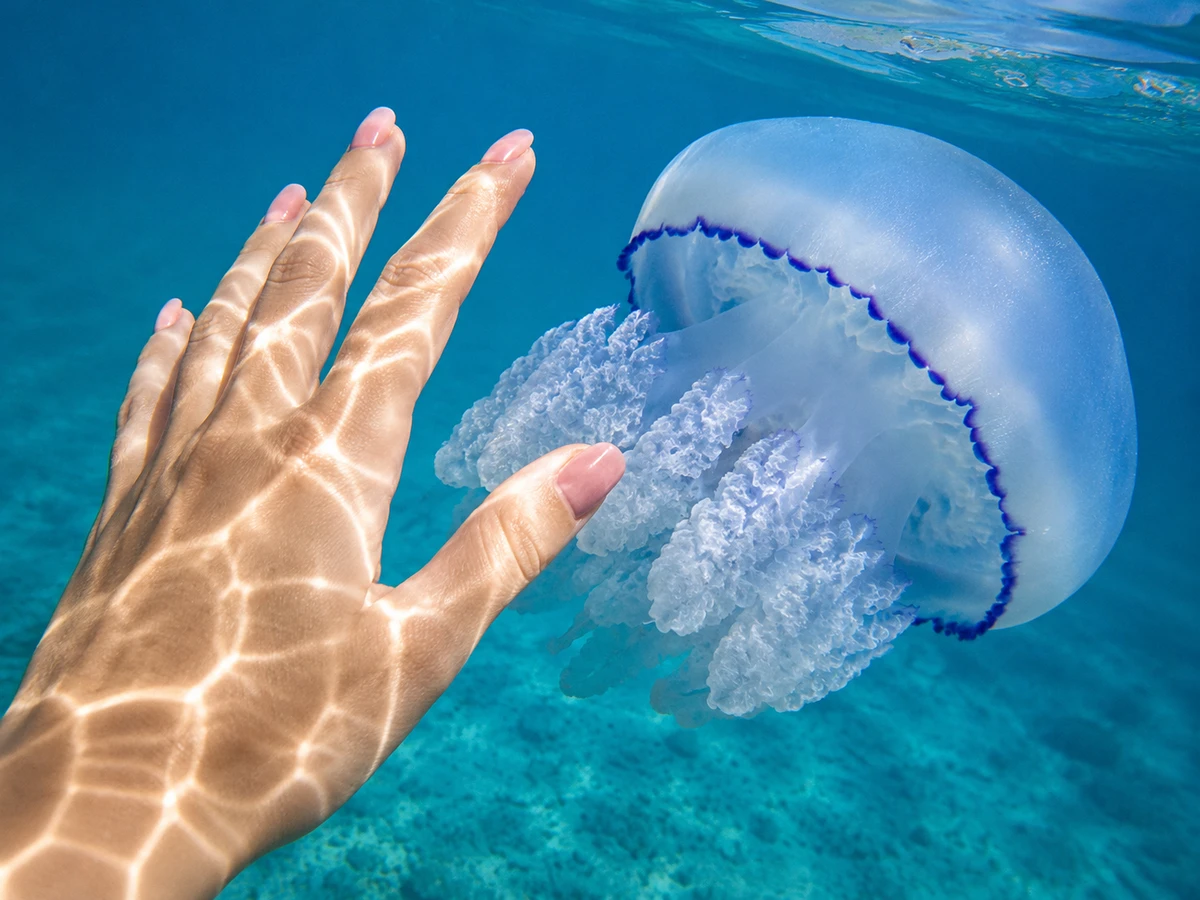
The main distinguishing feature: the rootmouth doesn't have long, thin threads under its dome. Instead, it's a heavy, branched structure—eight fused oral lobes, resembling a rhizome. Hence the name.
The strangest thing is that the rootmouth doesn't even have a mouth. Not a single one. Instead, it has thousands of microscopic holes scattered across the lobes. It's not a mouth, but an industrial filter with thousands of intake windows: plankton is sucked in and digested wherever it's caught.
Is the rootmouth dangerous or not? For a healthy adult, the reaction is local: burning, redness, itching, and sometimes a streak of blisters that lasts a couple of days.
Oral paddles, where the capsule density is higher, are the most effective. It's not considered fatal, but for those with sensitive skin and a tendency toward allergies, the reaction can be much more unpleasant, and on mucous membranes, it can be particularly severe. 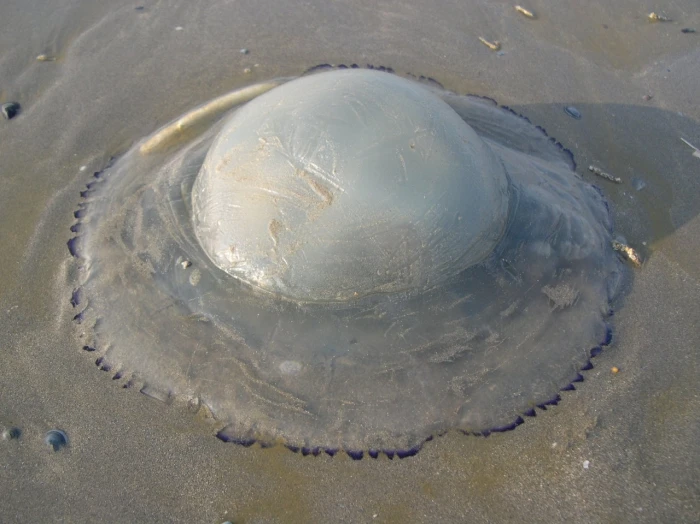
Another detail for vacation planning: the rootmouth is a heat-loving fish and thrives in water temperatures above 25°C. That's why its finest hour is the second half of summer.
The rootmouth's beach neighbor looks much more harmless. And the most lies have accumulated around it.
Aurelia: Four Horseshoes Under a Dome
You've definitely seen the eared moonflower (Aurelia aurita). It has a transparent, slightly milky disc with a thin fringe along the edge, and four neat horseshoes are visible inside. A common size on our shores is about the size of a palm. 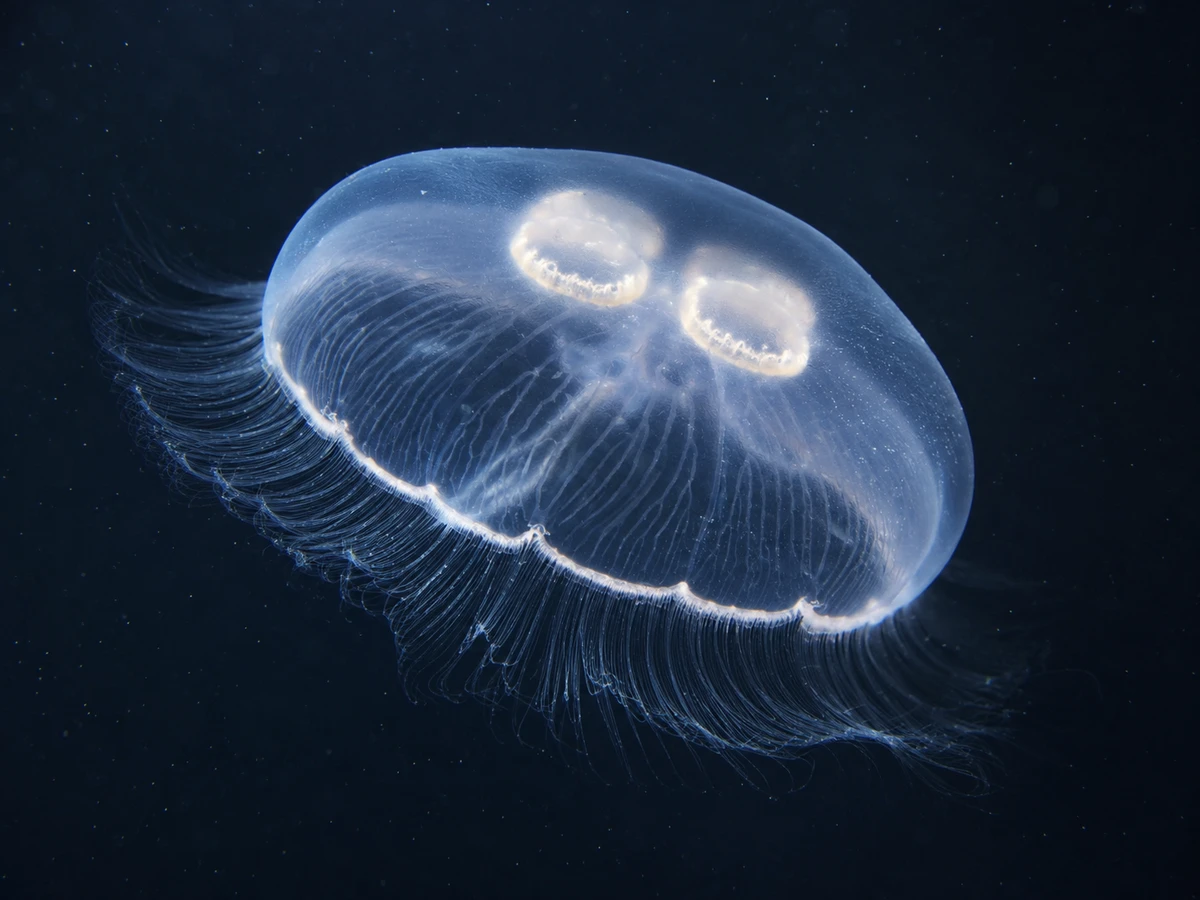
These four horseshoe-shaped ridges are the gonads. They're the reason the moonfish is nicknamed "eared moonfish."
I've heard many times that "moonfish don't sting at all," but that's a myth.
It does have stinging cells—without them, it wouldn't catch a single crustacean and would starve to death. Its harpoons are simply shorter and weaker: they usually can't pierce an adult's palm. Therefore, most swimmers catch moonfish with their hands and sincerely consider them to be a plush toy. 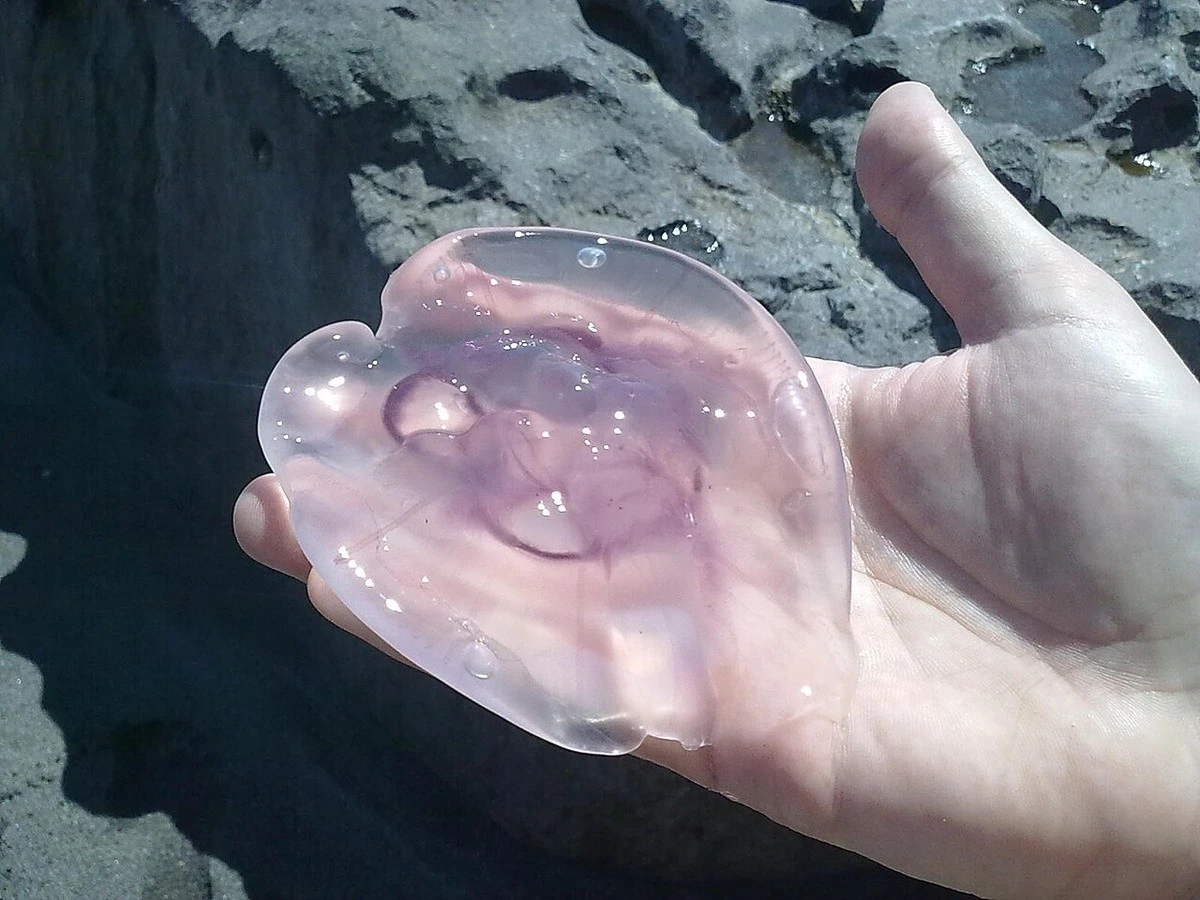
Aurelia is dangerous to humans precisely where the skin is thin: lips, eyelids, neck, and the inside of the forearm. Eyes and mucous membranes are a different story. And children: a child's skin is thinner and more sensitive, so the same contact produces a more noticeable reaction. The fact that Dad didn't feel anything on his palm means nothing to a five-year-old who pressed the same jellyfish to his cheek.
The third character doesn't sting at all. Not because he's kind—he simply has nothing to sting with.
A rainbow creature that's not a jellyfish
The Mnemiopsis leidyi resembles a transparent walnut the size of a fist: 7-12 centimeters, an oval body with two lobes, and no typical dome. Eight stripes run along its sides, which flash in the sun with all the colors of the rainbow.
People are sure it glows. They're wrong.
The eight stripes are rows of rowing plates, fused into paddles of cilia. The Mnemiopsis rows them like a tiny galley, and the light, refracted by the moving rows, breaks into a spectrum. It's the same physics as a soap bubble or a compact disc. During the day, it's not glow, but optics. 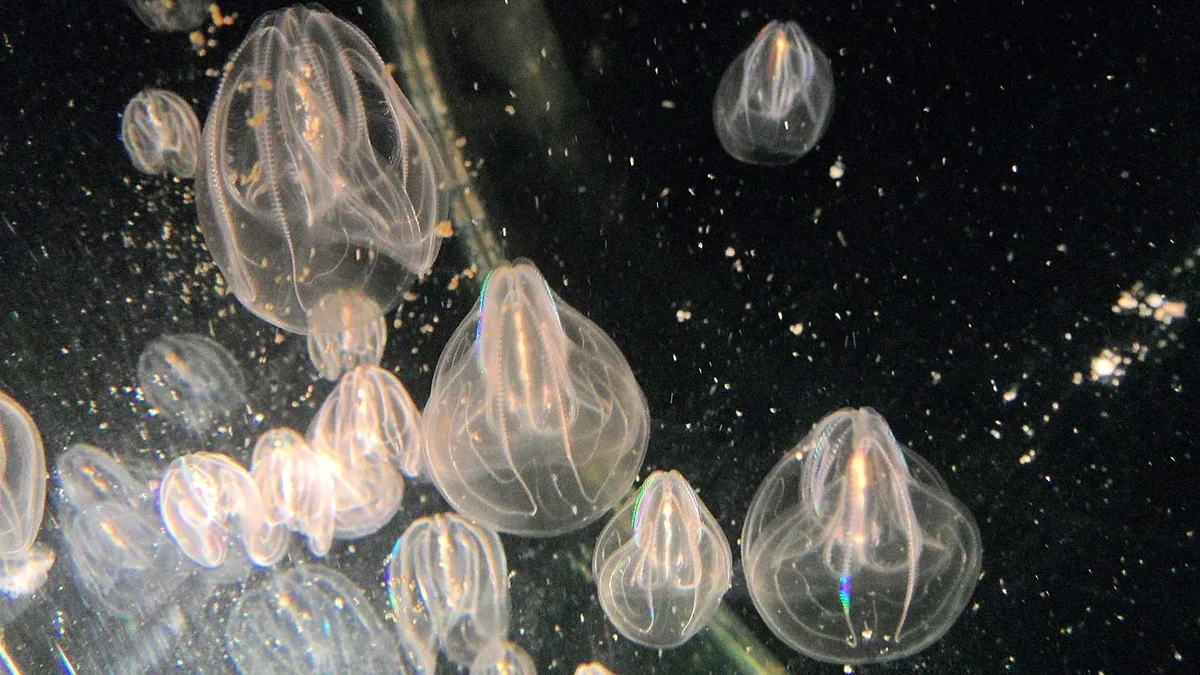
But at night, if disturbed, Mnemiopsis can actually glow—chemically, thanks to calcium and luminescent proteins in special cells. Swimmers who reach the buoys in the dark sometimes get a free light show and then talk about UFOs.
Now, the main thing. Is the comb jelly dangerous for the skin? No, and it's not a matter of dosage. Mnemiopsis belongs to a different type of animal—comb jellies—not to the cnidarians. It doesn't have nematocysts. Ctenophora don't hold their prey with harpoons, but with lobes, ciliated water currents, mucus, and adhesive cells called colloblasts. Plankton simply sticks and is pulled in.
Mnemiopsis is about as dangerous to humans as refrigerator jello.
The problem is that it has proven disastrous for the Black Sea.
How jello ate the Black Sea anchovy
In 1982, a strange, transparent comb jelly was first caught in the Black Sea. Mnemiopsis originates from the Atlantic coast of North America, and it arrived as a stowaway: in the ballast water of ships passing through the Bosphorus. Scientists recorded the find and didn't worry.
In vain.
By the late 1980s, it had multiplied so much that estimates of its biomass in the Black Sea reached hundreds of millions, and according to some calculations, up to a billion tons. The exact numbers are debatable: counting jelly in the sea is difficult, and different groups have obtained different results. But the scale of the outbreak is beyond doubt—in some areas, the invader has become the dominant part of the planktonic biomass.
The mechanics are simple. The comb jelly is a hermaphrodite, laying up to ten thousand eggs per season and tolerating desalination, mud, and temperature fluctuations. Under favorable conditions, it quickly consumes zooplankton, as well as fish eggs and larvae. 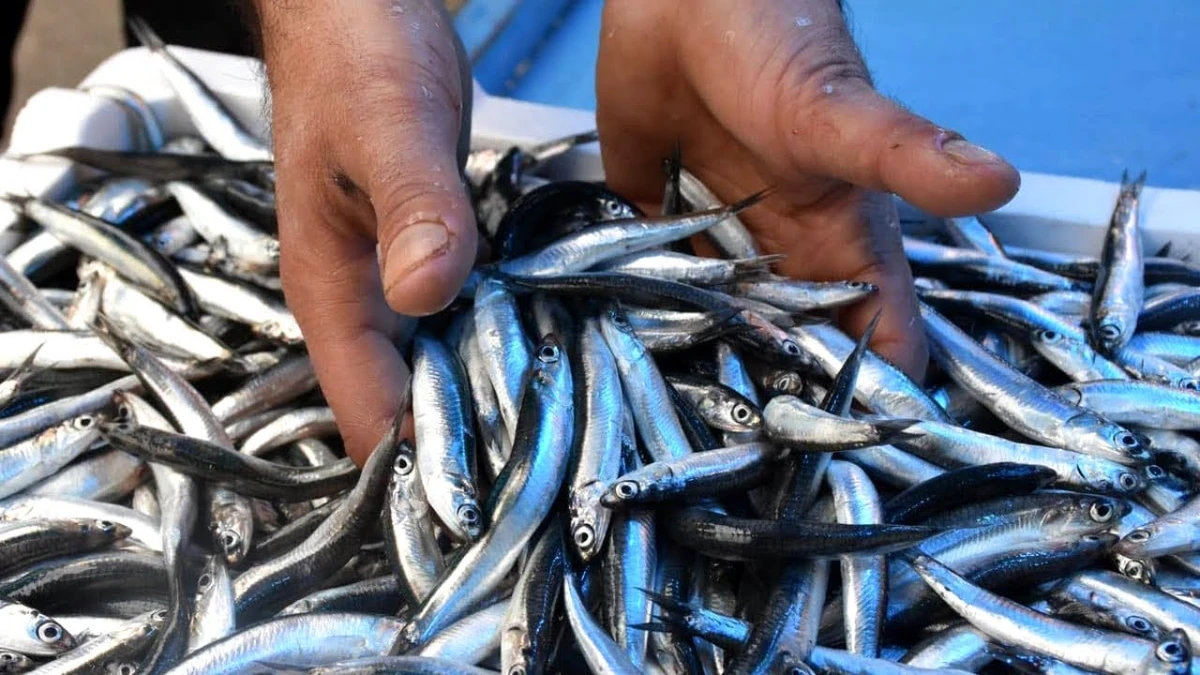
Anchovy suffered greatly from the invasion of a new guest.
Anchovy, horse mackerel, and sprat were left without food and without offspring. Catches plummeted. Those who ate anchovy followed suit: sturgeons, dolphins, and fishermen along the entire Black Sea coast.
Salvation came from the same source as the disaster. In 1997, the Beroe ovata, also a comb jelly, appeared in the Black Sea.
The Beroe resembles a pinkish, transparent cap without lobes or tentacles. It feeds on other ctenophores, but its local diet is almost monogamous: its main item is Mnemiopsis. It swallows prey as large as itself whole, after which it visibly swells. 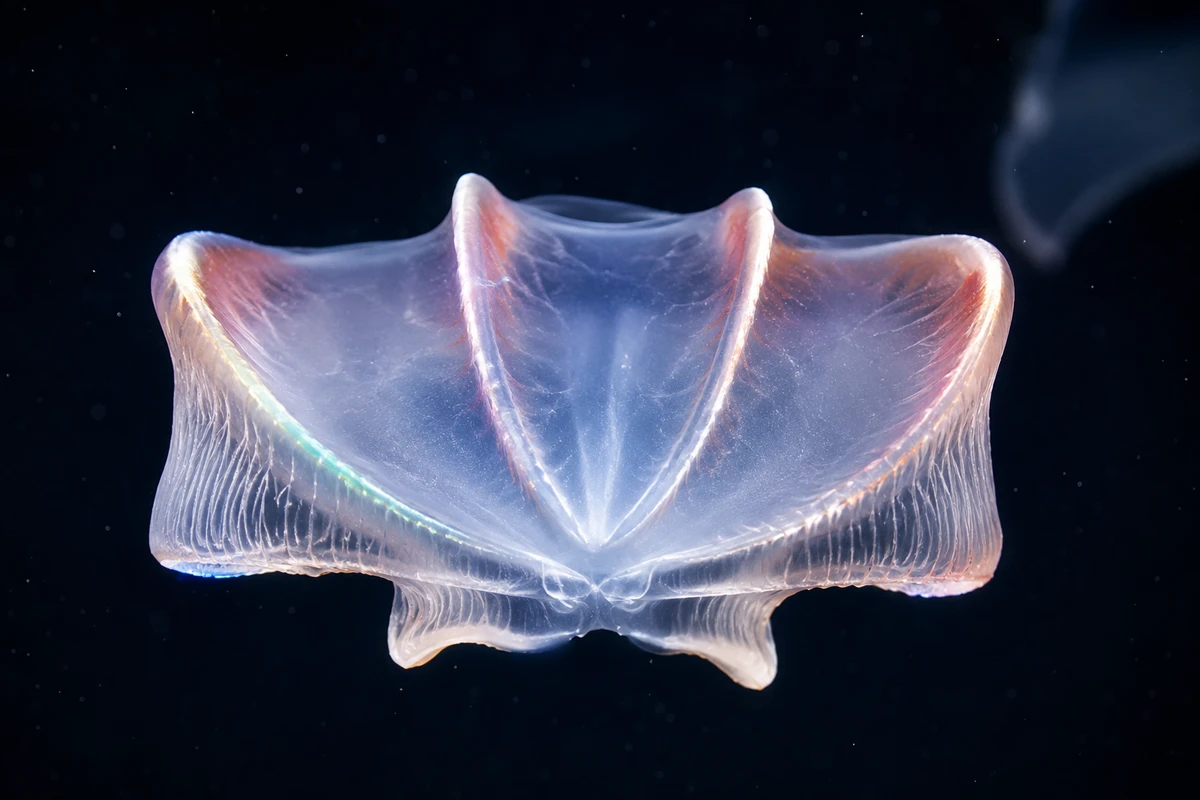
Over the course of several years, the Mnemiopsis population collapsed, zooplankton began to return, and so did the fish. The ecosystem recovered not thanks to science, but thanks to a second stowaway who arrived after the first.
For swimmers, the conclusion is short: there is not just one comb jelly in the Black Sea, but several species, and all of them are harmless to the skin.
The rootmouth is more dangerous to the skin. The Mnemiopsis is harmful to the food web. 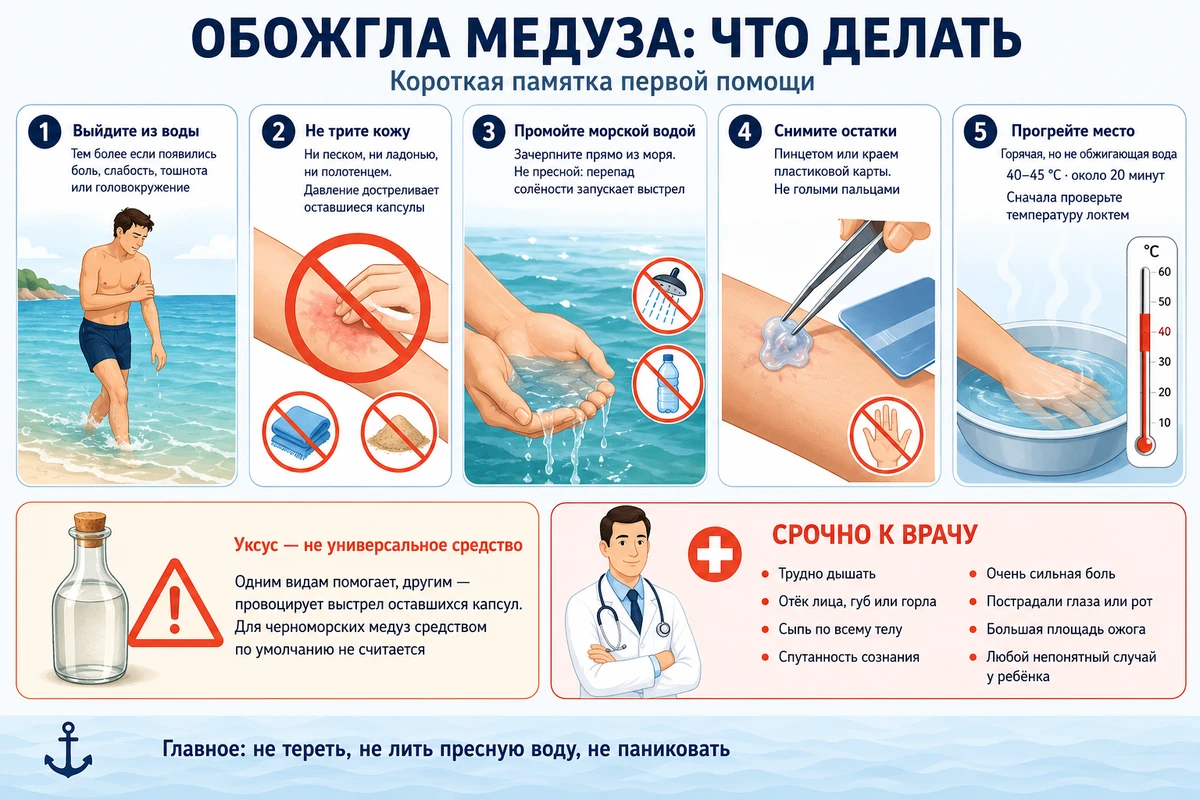
The procedure is short, and half of it is about what not to do.
Get out of the water. Especially if severe pain, weakness, nausea, or dizziness develop—at depth, this is more dangerous than the burn itself.
Don't rub your skin. Don't rub it with sand, your palm, or a towel. Mechanical pressure will destroy any remaining capsules.
Rinse with seawater. Not freshwater. A sudden change in salinity triggers the nematocysts—a shower on the beach will work against you.
Remove any remaining tissue with tweezers or the edge of a plastic card. Don't use bare fingers or rub.
Warm the area of contact. Systematic first aid reviews recommend immersion in hot, but not scalding, water (40–45°C) for about twenty minutes: some venom components are heat-sensitive. First, test the temperature with your elbow—the goal is to relieve pain, not to cause a second burn. If the pain increases or the area is large, stop experimenting and seek medical attention.
Vinegar is not a universal remedy. It works for some species, but for others, it triggers the release of the remaining capsules. It is not considered a default treatment for Black Sea jellyfish.
Seek medical attention immediately if you experience difficulty breathing, swelling of the face, lips, or throat, a rash all over the body, confusion, severe pain, if the eyes or mouth are affected, if a large area of skin is affected—or in any unexplained case involving a child.
A separate question: can you touch a dead jellyfish? No.
The stinging capsules are autonomous devices. They are not connected to the nervous system and are triggered automatically by touch. A severed piece of a rhizostome's oral lobe, lying on the sand, remains charged for a long time. The jellyfish may be dead. Its crossbows are not.