From Worthless Paper to Global Dominance: The History of the US Dollar (9 photos)
On July 6, 1785, the dollar officially became the national currency of the United States. Fresh off their victory in the Revolutionary War, using British pounds and shillings was seen as bad taste among the Yankees. Here is a look back at the history of the world's primary currency, which started out as virtually worthless junk paper. 
The US dollar is the world's dominant currency and a synonym for economic stability. Sovereign nations around the globe choose the greenback to hold their foreign reserves. Yet it was not always this reliable or universal. After becoming the official US currency on July 6, 1785, the dollar endured multiple crises and, for a long time, struggled to gain the trust of even American citizens. It took nearly 200 years to conquer the world and become the leader of the global financial system.
The Spanish Dollar 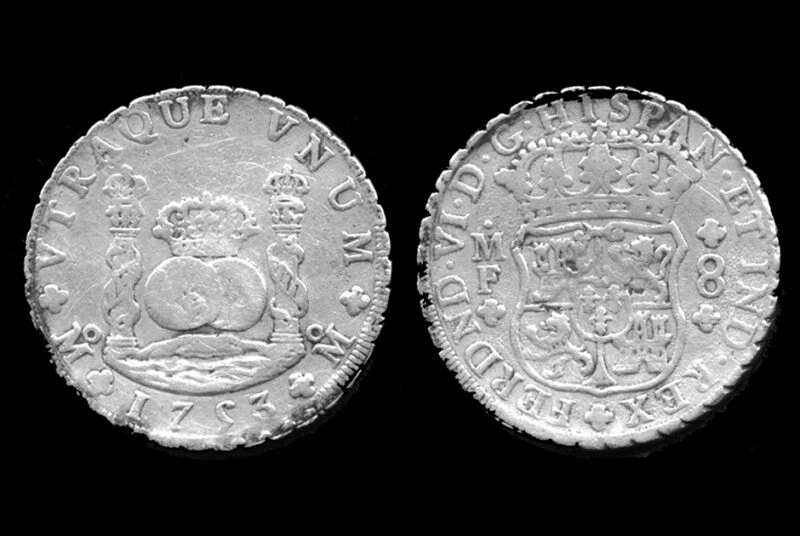
The name for the American currency wasn't invented in the United States; it has been around for nearly 500 years and crossed the Atlantic from the Old World. The word "dollar" comes from the silver "thaler" coin, which circulated widely across Europe starting in the 16th century. The coin originated in Bohemia (modern-day Czech Republic) after rich deposits of precious metal were discovered there.
Silver thalers quickly displaced low-purity coins on the European market. They became so popular that their name found its way into numerous European languages. As it adapted, the pronunciation shifted: in the Netherlands, it became the
daalder
, while in the English-speaking world, it took the form of the "dollar."
The name reached what would become the United States by way of Spain. During its colonization of Latin and North America, Spain tapped massive silver reserves in Bolivia, Peru, and Mexico. From the 1500s to the 1800s, Spain was the world’s primary silver producer, accounting for 85 percent of global output.
Over time, the Spanish silver peso surpassed European thalers in quality, as the silver content of the latter steadily declined. In North America, the peso became known as the "Spanish dollar" and enjoyed immense popularity during the colonial era. Before the Revolutionary War (1775–1783), the official currency across the 13 British colonies was the pound sterling.
Because Britain prohibited the colonists from minting their own coins, they suffered from a chronic shortage of physical money. Many commercial transactions were carried out in Spanish dollars. Their influence on the US monetary system was so profound that the peso symbol—a Latin letter 'S' crossed by vertical lines—remains the universal symbol for the dollar today.
The American Silver Dollar 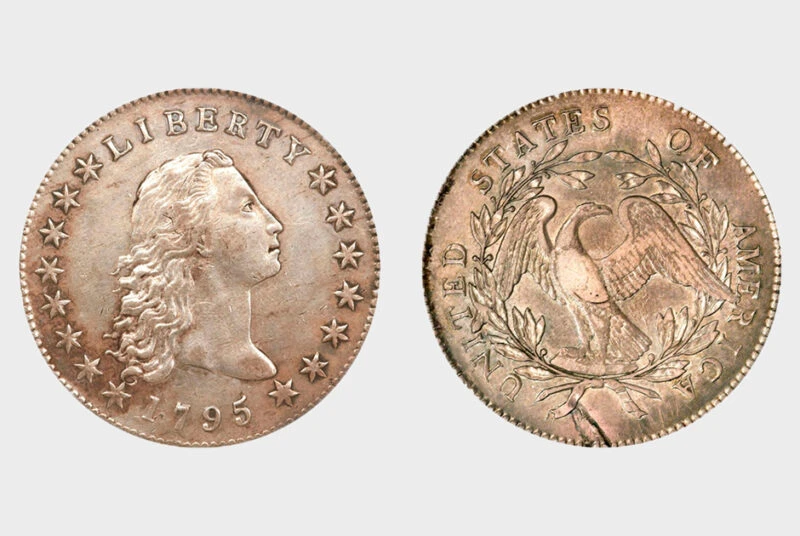
The tradition of writing the dollar sign as $ came from American merchants. When keeping ledgers in British currency, they relied on the familiar pound sign (£) for speed. But when bookkeeping in Spanish dollars, they had to write out the word "peso" over and over again. To save time, merchants began abbreviating it to the consonants "PS."
Over time, traders began superimposing the "P" over the "S." By the 1770s, they simplified the symbol even further, dropping the loop of the "P." What remained was the letter "S" slashed by a vertical bar. The alternative version featuring two vertical lines emerged by layering the initials of the "United States" (U.S.) on top of each other.
With the outbreak of the Revolutionary War, the 13 colonies rejected the pound sterling as the currency of the oppressor and outlawed it. Following their victory and the establishment of the United States, the new nation turned its attention to creating its own financial system.
Since the dollar had been the primary medium of exchange for decades—and its name was familiar to citizens—President Thomas Jefferson declared it the official currency of the United States on July 6, 1785. However, it took American lawmakers seven years to agree on the details of the new monetary system.
Finally, the Coinage Act of 1792 pegged the US dollar to gold and silver and established a decimal currency system. Yet paper dollars were not printed for another 70 years—the result of a disastrous experiment during the Revolutionary War that destroyed public trust in paper money.
The Continental 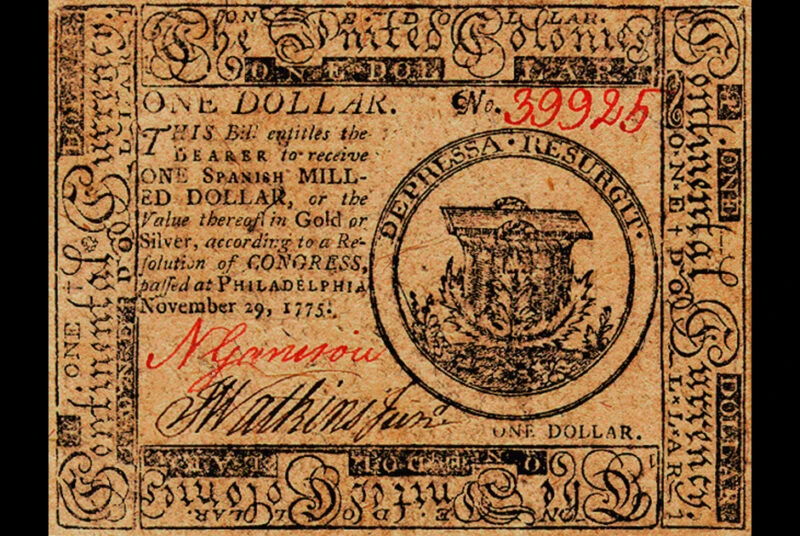
During the fight for independence, American authorities desperately needed money to fund military operations. Britain, then the world's preeminent superpower, cut off export channels for the rebellious colonies, depriving them of revenue and the ability to issue backed currency.
In response, the Continental Congress turned to a workaround: in 1776, it issued "continentals"—which were essentially zero-coupon bonds rather than true currency. Lawmakers tied the paper bills to Spanish dollars, anticipating that once the war was won and trade blockades lifted, they could quickly generate enough revenue to settle their debts.
Lacking an alternative, continentals were widely used as actual money, paying soldiers' wages and purchasing supplies for the army. But the public had zero trust in the notes: with no real backing, they depreciated before the ink on them even dried.
In 1776, one continental was worth one Spanish dollar; by late 1779, it took 42 continentals to buy a single dollar. Merchants refused to accept the government notes, forcing soldiers to confiscate food by force, leaving piles of worthless paper behind. Hyperinflation was worsened as individual states began printing their own unbacked money, and counterfeiters flooded the market.
After the war, the US government was unable to raise the funds to honor the debt. Government continentals and state-issued notes were simply retired from circulation, and the debts were written off.
Wildcat Banking and Private Banknotes 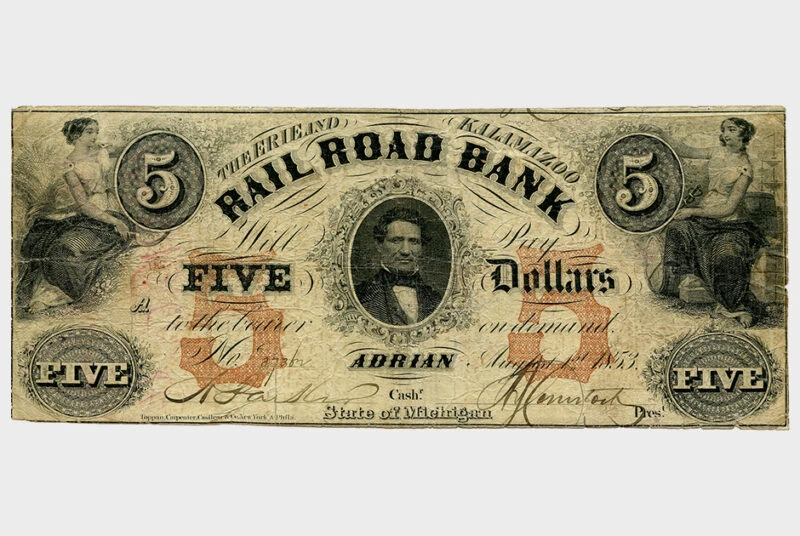
The experience of financing the Revolutionary War was deeply traumatic for both the US government and the public. As a result, the 1787 US Constitution effectively prohibited the issuance of paper money. The document allowed the federal government to coin metal money and issue treasury bonds, while explicitly banning individual states from issuing paper money as legal tender.
This attempt to avoid another default severely hampered the country's development for decades. Lacking substantial gold and silver reserves, the US could not mint coins fast enough to keep pace with its growing economy.
Furthermore, a loophole in the Constitution triggered a major crisis in the American financial system. The text never explicitly banned private banks from printing their own paper notes.
Crafty bankers jumped at the opportunity. In the first half of the 19th century, thousands of private banks sprang up, each issuing its own uniquely designed currency. These banks obtained charters to issue notes backed by gold or silver, promising to redeem their paper money for precious metal on demand.
However, fraudulent bankers issued vast amounts of paper despite lacking sufficient reserves. To make it nearly impossible for customers to redeem notes for hard currency, they opened their sole branches in remote, inaccessible locations where few could travel.
This practice became known as "wildcat banking." Paper money proliferated to such an extent—with over 7,000 distinct banknote designs in circulation—that special counterfeit detectors were published to help Americans verify bills. Wildcat banking shattered what little trust citizens had left in paper currency.
Order was not restored until the 1860s. Once again, war triggered sweeping reform, giving birth to America's first true national paper currency—and turning the dollar green for the first time.
The First Greenbacks 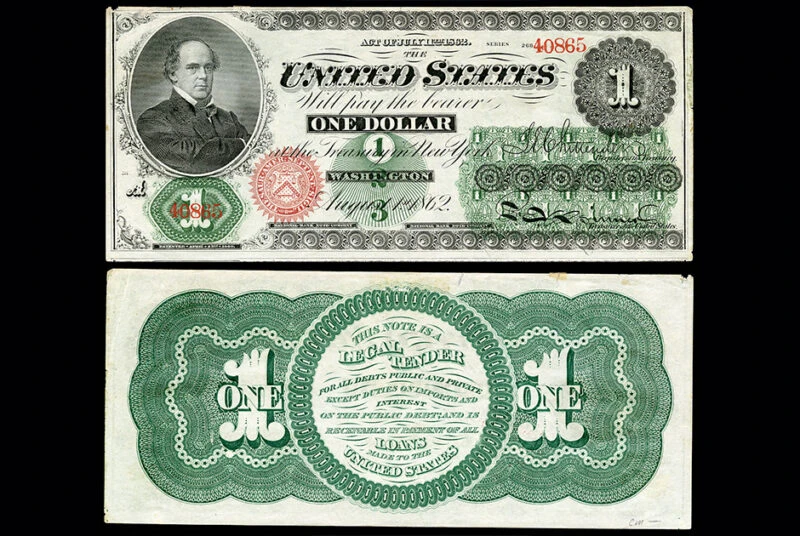
The US government fired up the printing presses once again during the Civil War (1861–1865). As in the Revolutionary War, the Union needed to borrow heavily to fund military operations. The federal government issued non-interest-bearing treasury notes backed by gold and silver. While the US had issued notes before, this was the first time they were designated as legal tender for all debts.
The new bills stated they were redeemable for precious metals "on demand." However, federal authorities realized they could not honor these obligations during wartime and began issuing notes without the "on demand" clause. While still backed by government credit and designated as legal tender, they could no longer be converted into hard metal.
Civil War-era currency laid the groundwork for the modern US dollar's appearance, as it was the first national currency printed in green. In the mid-19th century, black-and-white notes were standard. But with the advent of photography, counterfeiters easily reproduced black-and-white bills by taking photos and passing them off as originals.
Preparing to issue the new currency, the US Treasury contracted the American Bank Note Company in New York. The firm held the rights to a newly invented green ink from Canada specifically designed to resist photographic counterfeiting. As a result, the notes featured black-and-white fronts and green backs.
The public dubbed the new notes "greenbacks." According to one popular theory, this nickname gave rise to the slang term "buck" for a US dollar.
Yet Civil War currency still differed significantly from today’s dollar. Beyond the design, which underwent multiple overhauls, the banknotes were enormous—roughly 8 inches long by 3 inches wide.
They only shrank to their modern dimensions after 1929. Forced by the Great Depression—the worst economic crisis of the 20th century—the US government sought ways to cut currency production costs. Authorities decided to resize banknotes down to roughly 6.1 inches by 2.6 inches.
The Early 20th Century Dollar 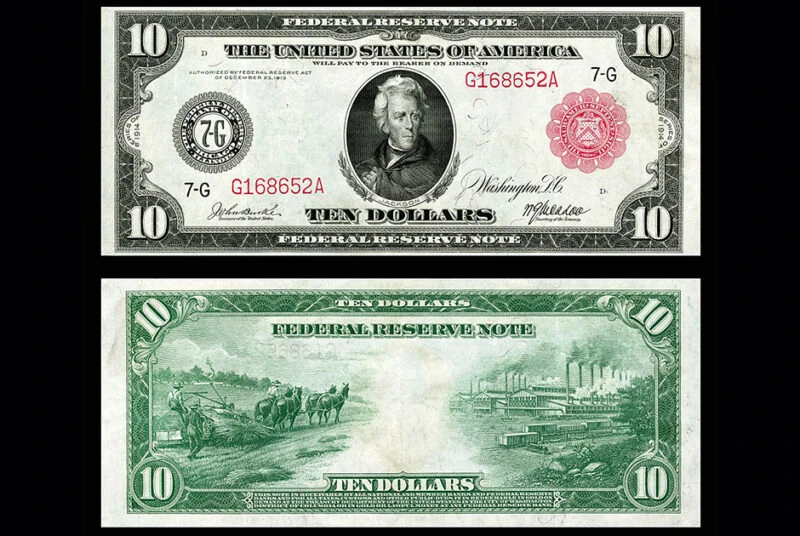
Following the Civil War, the US monetary system and economy expanded rapidly, and paper dollars were once again convertible into gold and silver. After 1900, convertibility was limited strictly to gold to deter speculators taking advantage of metal price volatility. Still, it would take another 50 years for the dollar to solidify its position as the premier global currency.
World War I (1914–1918) marked the first step toward global dominance. Leading European powers, including Great Britain—whose pound sterling had long been the world's primary reserve asset—were forced to abandon the gold standard to print money freely for war financing.
European nations eagerly borrowed from the United States, whose currency remained anchored to gold. By World War II, the US had established itself as the world's primary creditor nation, further cementing its financial dominance. This preeminent role was formalized in 1944 with the creation of the Bretton Woods system.
Under Bretton Woods, the dollar was designated the world's principal reserve currency, pegged to gold at a fixed rate of $35 per troy ounce. Other nations pegged their own currencies to the dollar. In theory, any central bank could present dollars to the US government and redeem them for physical gold.
Instead of hoarding gold, foreign governments increasingly chose to accumulate US Treasury bonds. For decades, this new monetary order served all parties well. Eventually, however, being the world's primary reserve currency backfired on the United States. In the 1960s, needing capital to fund the Vietnam War, the US dramatically expanded its money supply.
Firing up the printing presses sparked global fears that Washington could no longer back all its circulating dollars with gold. Foreign nations began cashing in their dollars for bullion, bringing about the collapse of the Bretton Woods system in the early 1970s.
The US Dollar and the Venezuelan Bolívar 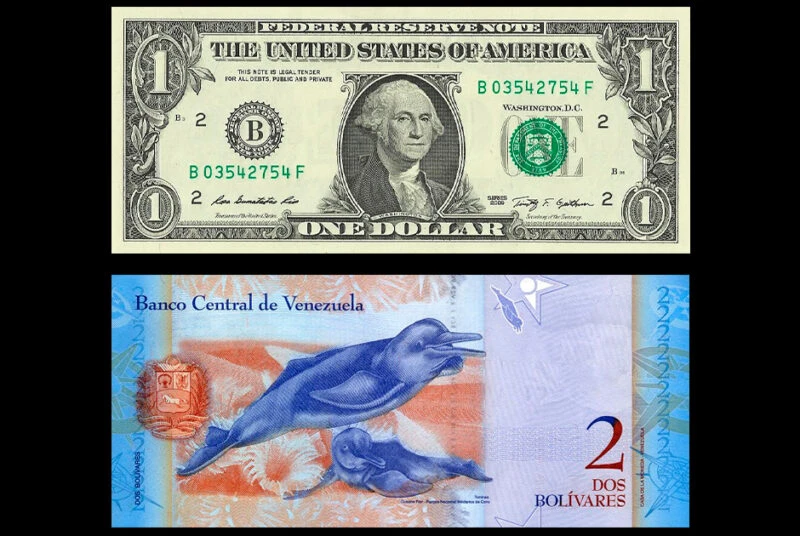
Despite the end of the gold standard, the fall of Bretton Woods, and the shift to floating exchange rates, demand for the dollar remains insatiable among governments and individuals alike. For ordinary citizens, the greenback remains the ultimate symbol of financial stability, often becoming a lifeline for people living through domestic economic collapse.
In the 1990s, for instance, citizens in troubled economies routinely converted their paychecks into dollars to shield themselves from hyperinflation. A recent example of the dollar's role in daily life is Venezuela, where citizens in the socialist nation effectively abandoned the local currency for dollar-based transactions. Since Nicolás Maduro took office in 2013, Venezuela's economy has contracted by more than half.
Plunging oil prices, plummeting oil production, and US sanctions accelerated the collapse. Driven by the relentless crisis, roughly 10 percent of the population—around 3.4 million people—has fled the country. With hyperinflation rapidly eroding the local currency, supermarkets switched to pricing items in dollars to maintain price stability.
Locals increasingly pay in US dollars supplied by relatives living abroad. Economists estimate that remittance inflows to the country have at least doubled.
The Modern US Dollar 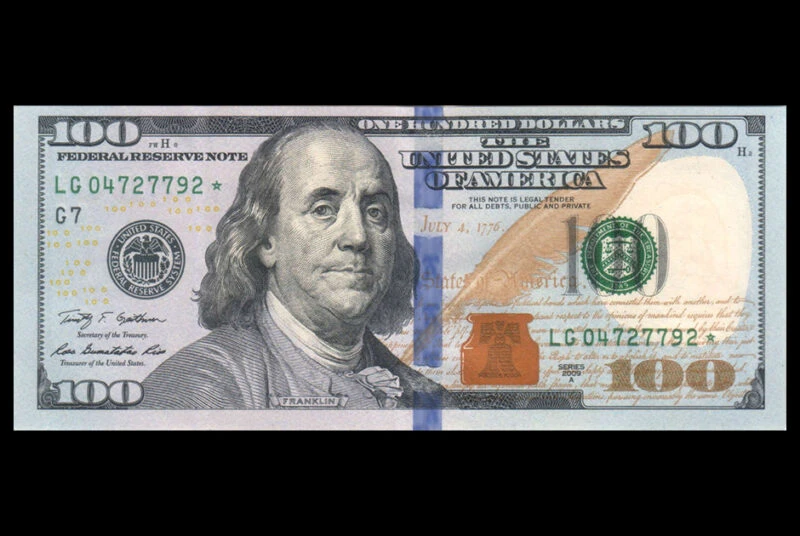
Half a century after severing its tie to gold, the dollar remains in demand among central banks stocking up their foreign exchange reserves. According to the International Monetary Fund (IMF), the dollar accounted for roughly 70 percent of global central bank reserves at the end of the first quarter of 2020.
By comparison, the second most popular currency—the euro—barely reached 20 percent. Federal Reserve figures show that as of June 2020, there were $1.91 trillion in circulation. Geopolitical friction has done little to weaken this economic reality.
China, despite strained relations with Washington and an intense trade war in 2019, holds massive dollar-denominated reserves running into the trillions and continues to manage the yuan relative to the US dollar.