Tiny Amphibian Bones Identified Nearly 30 Years Later (3 Photos)
In 1997, over 80 tiny bones and fragments were collected near the Spanish town of Arén. A re-examination of the collection in Zaragoza revealed that they belonged to a previously undescribed amphibian species. 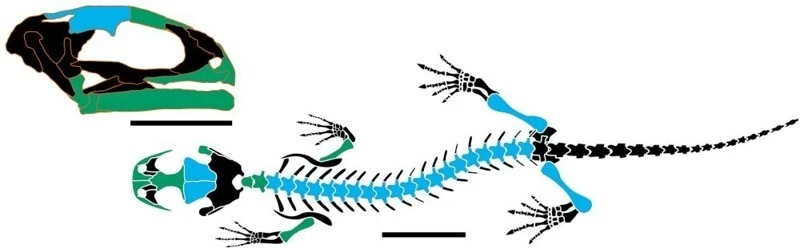
Bones from the Blasi site are highlighted on an albanerpetontid skeletal diagram. Scale: skeleton 1 cm, skull 5 mm. Credit: University of Zaragoza.
The species was named Synorerpeton ribagorzana. It belongs to the extinct group of albanerpetontids. Resembling tiny salamanders, these creatures are believed to have snapped up prey with a projectile tongue. Upon re-examining the fossils, scientists were able to match details of the skull and cervical vertebrae. 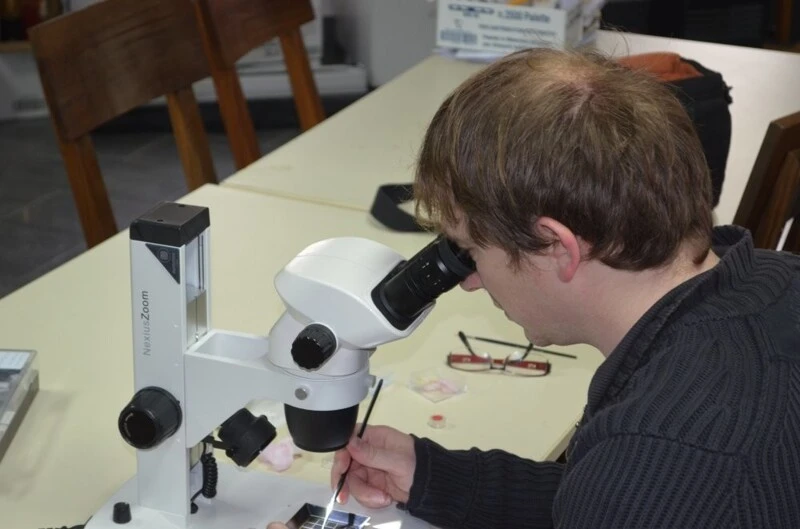
Excavation of albanerpetontid fossils. Photo: University of Zaragoza. 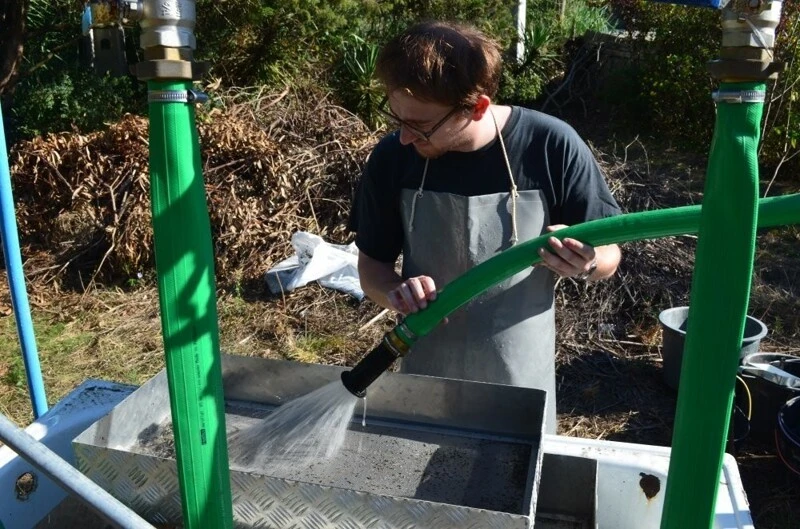
Alexandre Guillaume washing sediment in search of microvertebrate remains. Credit: University of Zaragoza.
The rock layer where the bones were discovered was deposited roughly half a million years before the end-Cretaceous asteroid impact. The first part of its name plays on two boundaries at once: the border between Aragon and Catalonia, and the transition between geological epochs.