Hirsutism is a condition in which women experience excessive growth of terminal hair, similar to the male pattern. History knows of several "bearded women"—some of whom appeared in freak shows in the 19th and 20th centuries; some considered their "hairiness" a curse, while others considered it a chance to achieve success and wealth. 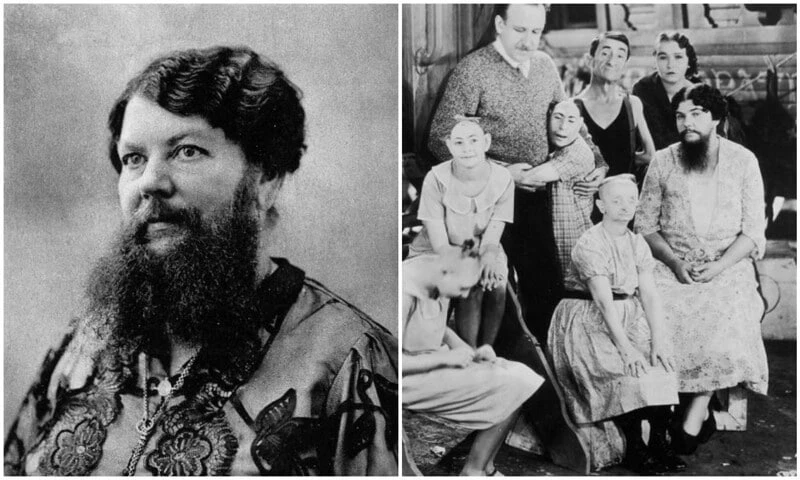
Wilgefortis 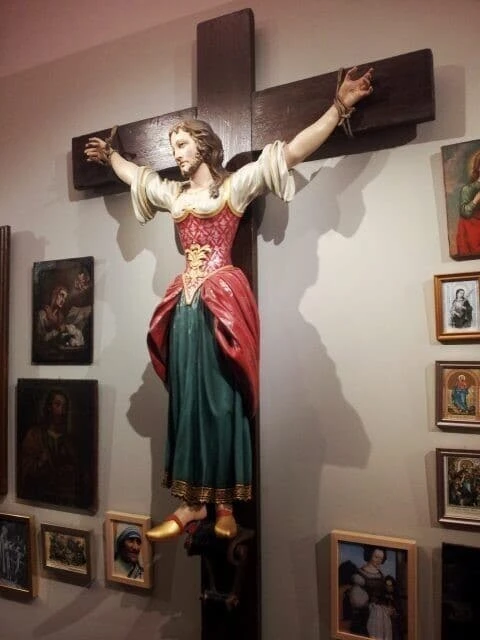
The Catholic saint Wilgefortis is considered the patron saint of young women who seek to rid themselves of persistent admirers. According to legend, she was a young noblewoman who, trying to avoid an unwanted marriage, took a vow of virginity and prayed to become ugly. When she grew a beard, the wedding was called off, but the girl's father was so enraged that he ordered her crucified. In the Middle Ages, wives prayed to Wilgefortis to rid themselves of abusive husbands.
Magdalena Ventura 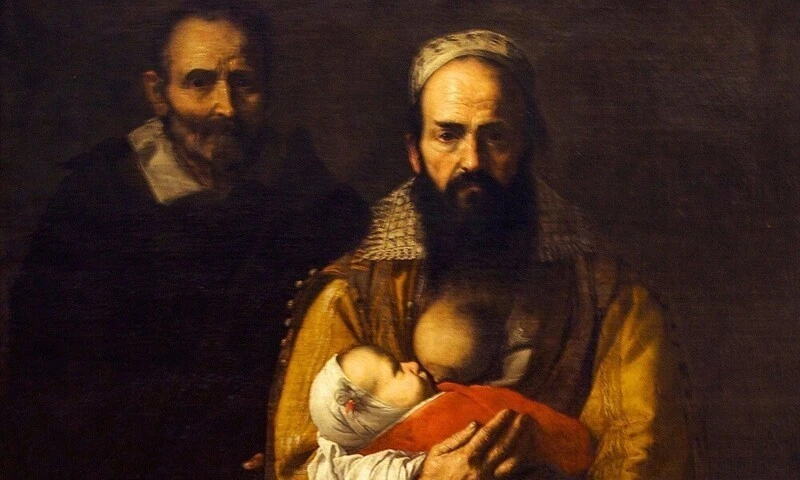
In 1631, the Duke of Alcalá commissioned a painting of a bearded woman, allegedly named Magdalena Ventura. The painting was executed by the artist José de Ribera. Little is known about Magdalena: when the painting was commissioned, the woman's sons were already adults, and she was 52 years old. Furthermore, it is known that her facial hair began to grow at age 37.
Josephine Clofullia 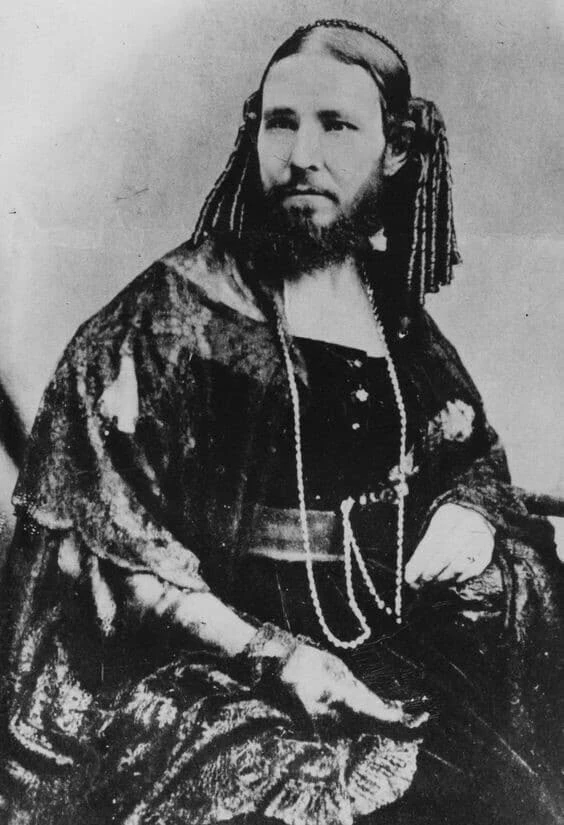
Josephine Clofullia was a famous bearded woman of Swiss descent. When she was eight years old, her beard was five centimeters long. At the age of 14, she began touring with a freak show, and then moved to the United States with her son, husband, and father, where she joined Barnum's American Museum. In 1853, rumors surfaced that Josephine was actually a man. Doctors examined her, but declared her to be a woman.
Julia Pastrana 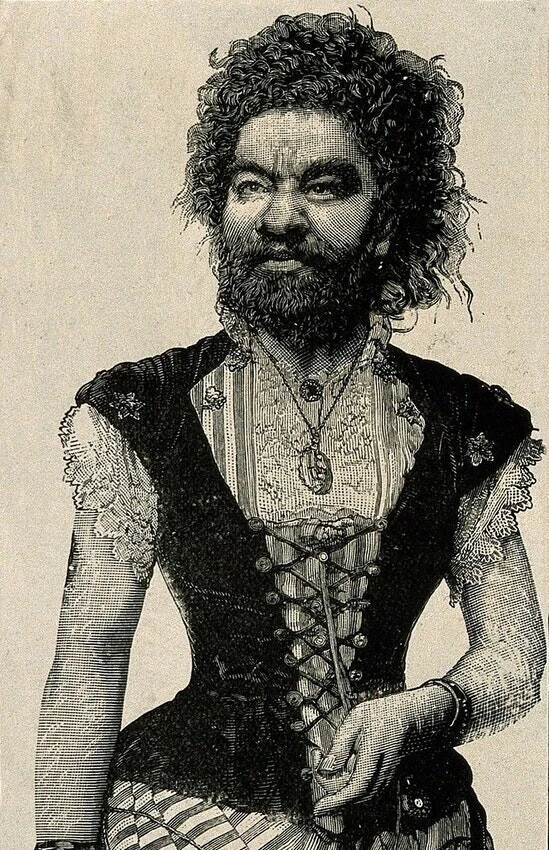
Facts about Julia's life vary in different sources, ranging from her belonging to a Native American tribe to her being a "wolf girl" from a village in Mexico. She suffered from congenital hypertrichosis—her entire body was covered in black hair. In 1854, Julia moved to the United States, married, and began performing actively in public—she sang, danced, and interacted with audiences, impressing them with her intelligence and wit.
Pastrana toured Europe, where she was greeted like a star. Moreover, the woman had crowds of admirers. While touring Moscow in 1859, Pastrana became pregnant. Her child, who resembled her, lived only three days, and Julia herself died of postpartum complications.
Jane Barnell 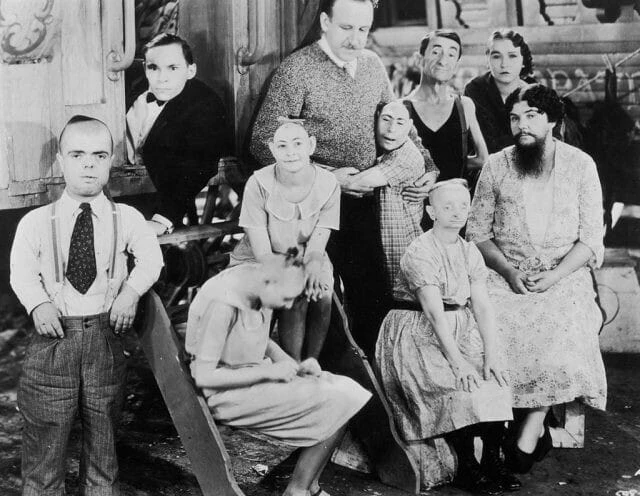
The mother of "bearded" Jane Barnell sold her daughter to a freak show when she was four years old. A year later, her father took her and moved her to live with her grandmother. In 1892, she joined John Robinson's Circus, choosing the stage name Lady Olga Roderick. Lady Olga's personal life was troubled for a long time: she married a circus musician and had two children, but both husband and children died a few years later. Her second husband was murdered a few months after their marriage. She divorced her third, alcoholic husband, and only found happiness with her fourth, who later became her manager.
Annie (Annie) Jones 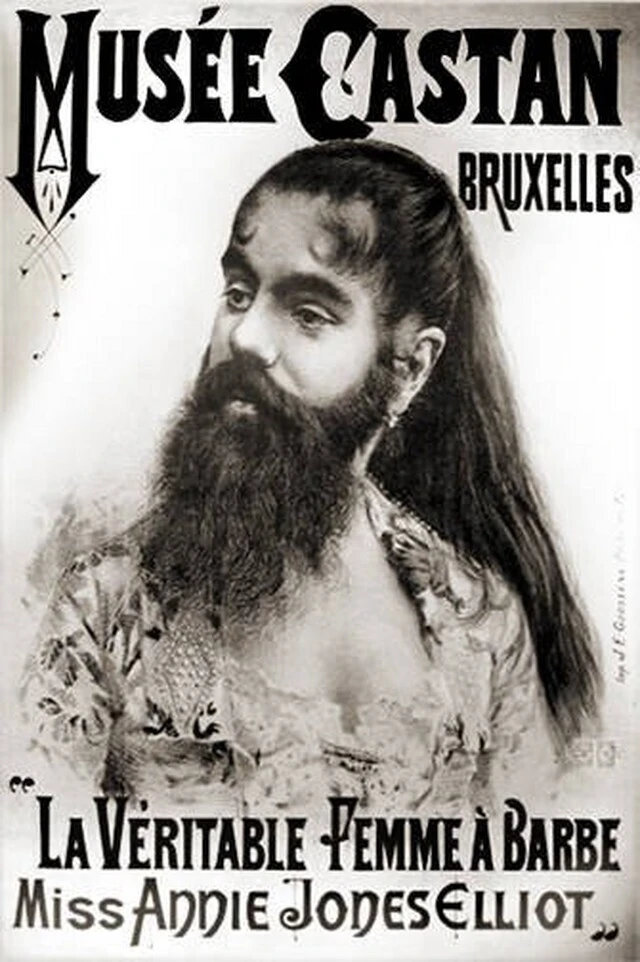
Annie Jones is another famous bearded woman from America, a participant in Barnum's circus. She participated in Barnum's shows from the age of nine months – in exchange, her parents received $150 a week. Annie later posed for many photographers and became the country's premier bearded lady. Annie also actively sought to ban the use of the word "freaks" in shows and exhibitions.
Clementine Dele 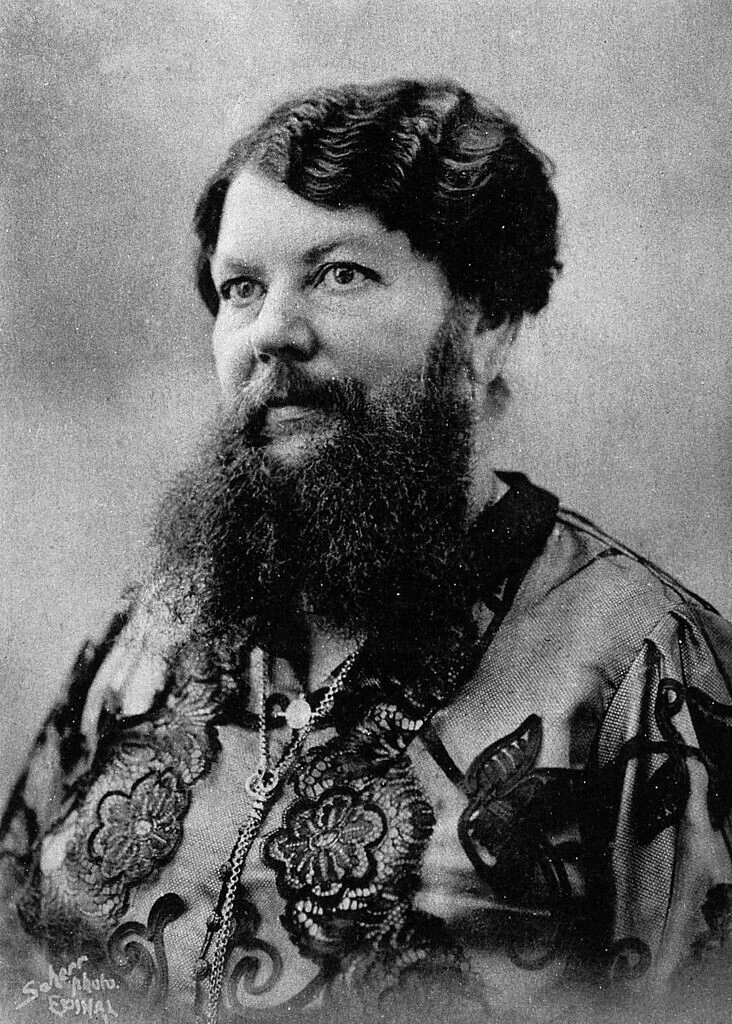
French bearded woman Clementine Dele was considered "the most celebrated bearded lady in France." Together with her husband, baker Paul Dele, she opened a café, which locals dubbed "The Bearded Woman's Café." Clementine sold postcards and photographs featuring her, and even began touring at one point. In 1904, she received permission to wear men's clothing, when women were officially prohibited from doing so.
Krao Farini 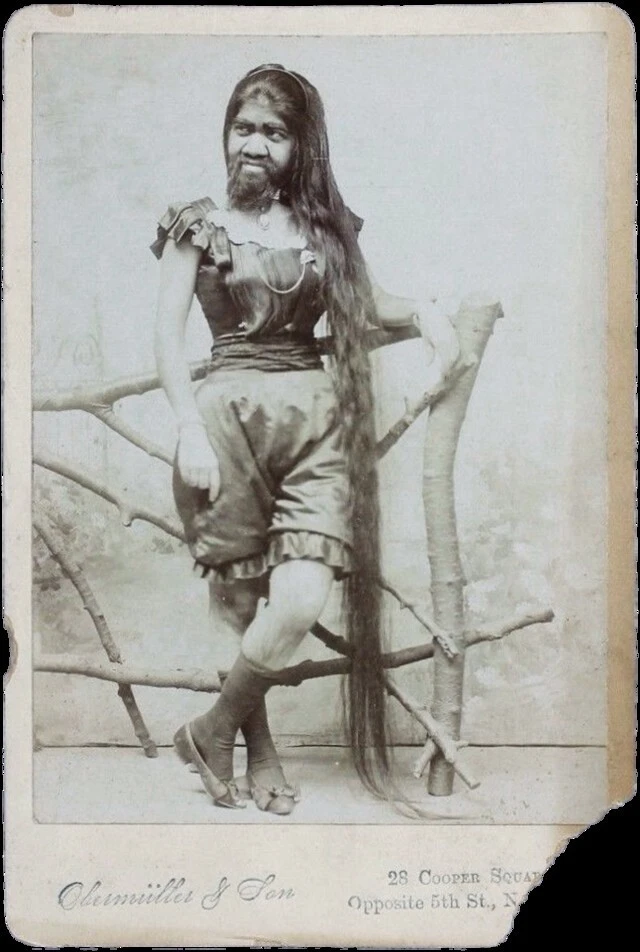
The bearded woman, Krao Farini, arrived in London in October 1882. At the time, she was accompanied by anthropologist George Shelley and explorer Carl Bock, but nothing is known about her early life. In Europe, she was taken in by showman Guillermo Antonio Farini. Suffering from hypertrichosis, Krao was studied for several years and presented as a "missing link" and proof of Darwin's theory of evolution. For several decades, she was exhibited in Europe and America.
Alice Elizabeth Doherty 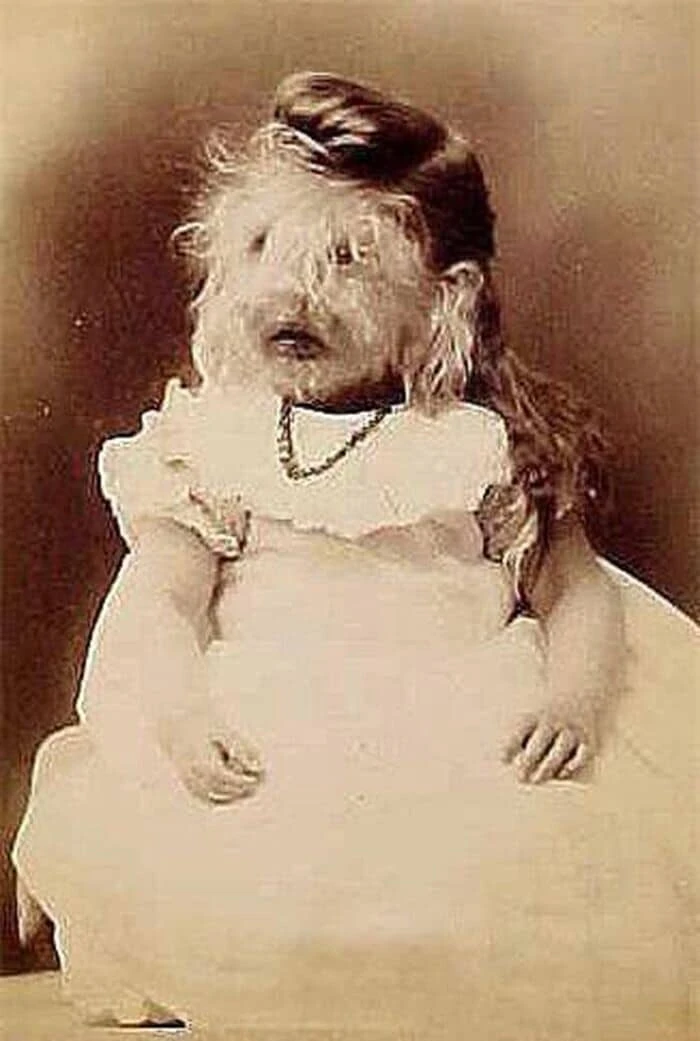
Alice Elizabeth Doherty was born in 1887 in Minneapolis, USA. At birth, she already had two inches of light-colored hair all over her body. At age five, her body hair was 4.5 inches long, and by adolescence, it was 8.5 inches long. She rarely participated in major shows or circuses—her parents rented commercial space and sold tickets so people could see her. In 1915, Doherty retired.
Add your comment
You might be interested in:














17 Photos That Will Stop You in Your Tracks (18 Photos)

Behind the Camera on 'Back to the Future' (45 Photos)

What Would Happen to a Human on Every Planet in the Solar

Stunning Views of the Martian Horizon from 400 Kilometers
20+ Fascinating Photos of Rare and Unusual Sightings (40
50 Incredible Treasures People Rescued From the Trash (51

22 Examples of Pure Design Genius That Deserve a Huge

Hard to Believe Your Eyes: 20 Unreal Photos With
The Sexual Customs of the Vikings: Why an Older Partner Was
