"How Terrible It Is to Be Married": The Strange Love Story of Daniil Kharms and Marina Malich (8 photos)
In 1938, Daniil Kharms wrote of his second wife: "I love her very much, but how terrible it is to be married." Marina Malich—the primary woman in the poet's life—could easily have said the exact same thing about their marriage. She put up with his wild antics and constant infidelities, served as a devoted audience for his work, and fought with all her strength to hold their family together, right up until she lost all hope. 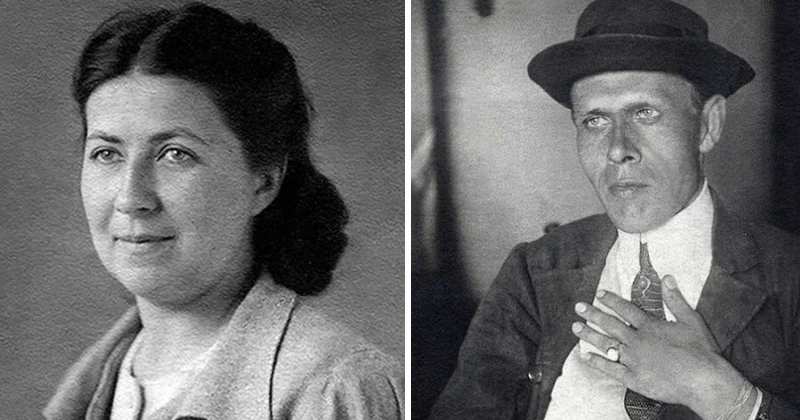
Marina Malich was born out of wedlock into the aristocratic Golitsyn family. As a result, she was given her grandmother's maiden name and her grandfather's patronymic. Shortly after giving birth, Marina's mother left for France, entrusting the child's upbringing to her married sister, Elizaveta. Her aunt had a daughter of her own, Olga, who would ultimately be the reason Marina met Kharms. 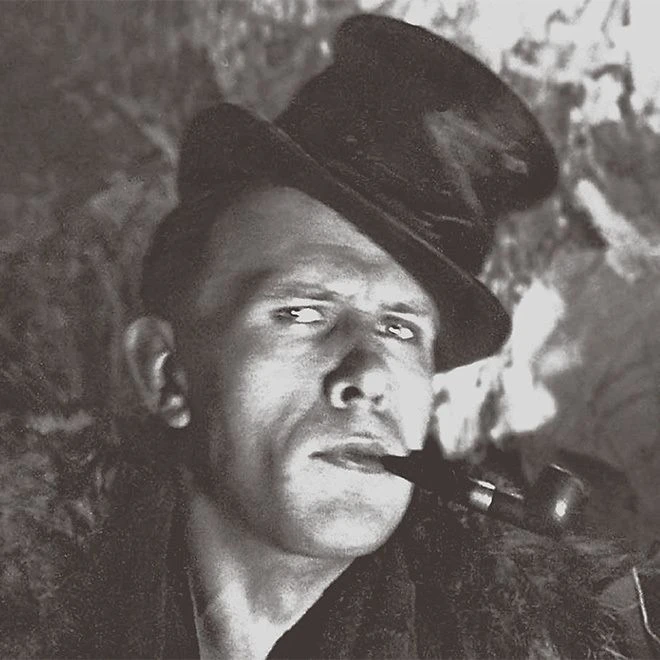
One day in August, an eccentric young man appeared at their apartment door. Dressed loudly and outrageously by Soviet standards, he cut a striking figure. Marina later recalled that in his plaid jacket, cropped trousers, and gaiters, he looked like an exaggerated foreigner straight out of a children's book. But it was his eyes that proved most striking—piercing blue, intense, and wary.
The guest was Daniil Kharms, and he had come to see Olga. Marina, as an illegitimate and unwanted child, was accustomed to staying in the background, but that very reserve may have been what caught the poet's eye. He began visiting frequently, and everyone assumed he would propose to Olga. Out of nowhere, however, Daniil asked Marina to marry him. She accepted, and events moved rapidly from there.
Life with Kharms
The young couple held no wedding ceremony and not even a celebratory dinner for friends. They were scandalously poor and simply registered their marriage at the registry office. Kharms advised his young wife against changing her surname, reasoning—quite sensibly—that keeping her maiden name would be safer. He assured her that life as Marina Malich would be far easier if he were ever arrested. Right after registering the marriage, Marina moved into her husband's room in a communal apartment. 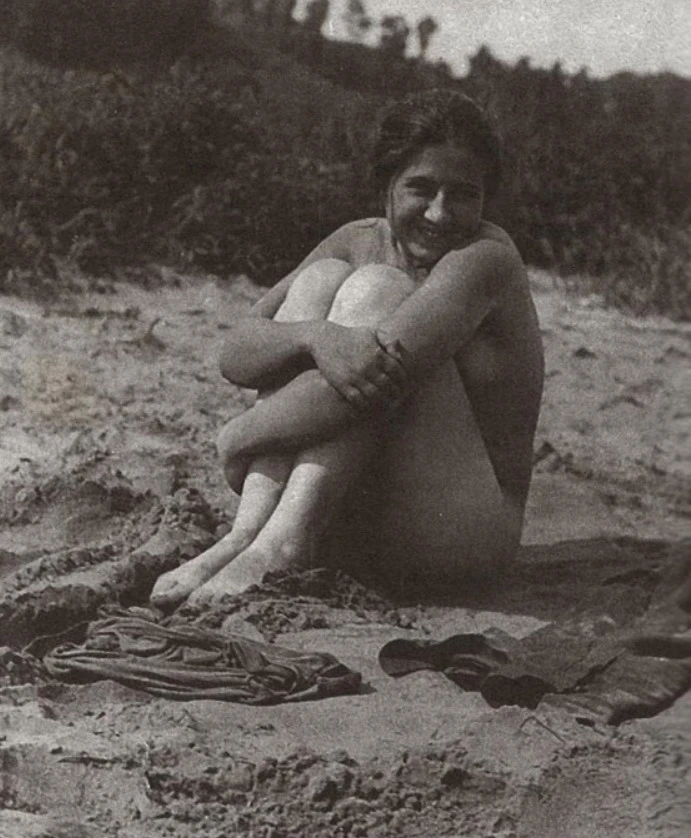
18-year-old Marina Malich, 1930
Her husband's dwelling was a chaotic madhouse. Separated only by flimsy partitions, Daniil's father, his sister with her Bolshevik husband—whom Kharms despised—and a young woman caring for her bedridden mother all lived side by side. Everyone lived in full view of one another, knew every detail of each other's lives, and harbored mutual contempt. Meanwhile, the door to Aunt Elizaveta's apartment, where Marina had grown up, was firmly closed to her due to Olga's wounded pride.
Life together was a whirlwind of escapades, odd schemes, and heartbreaks. In his wife, the poet found a true friend and a captive audience. She laughed when he read his poems, supported him when he engaged in the outlandish, and forgave behavior that no other woman would have tolerated.
Kharms treated his wife with the same eccentricity he displayed to the rest of the world. He might wake her in the middle of the night to paint the stove pink, or organize an absurd late-night hunt for rats—which, in the starving couple's bare room, had never existed in the first place. Once, Daniil demanded that Marina cut off her prized possession: her long braid. He claimed her hair was constantly floating in his soup. Without a word, she cut it off. 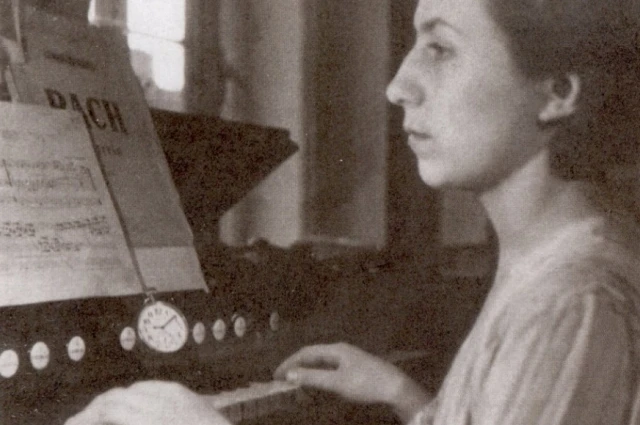
Marina Malich playing Bach in Kharms's room
The poet continued to lead a bohemian lifestyle. Dressed in his comical suit, he frequented parties and social calls while Marina waited at home. She could not even look for a job, lacking presentable clothes and shoes. Quite often, she starved; Kharms, who ate while visiting friends, almost never brought food home.
On one occasion, severe starvation left Marina bedridden and preparing for the end. But Kharms somehow managed to bring her a lump of sugar, pulling her back from the brink. The grievances inflicted by her husband were endless. Once, he managed to get ration coupons for a pair of women's shoes. Showing them to Marina, he announced that he would give them to his first wife, Esther. His rationale? Esther was living alone and miserable, whereas he and Marina had each other and were happy. Marina was left without shoes once again.
Daniil Kharms and Women
What brought Marina the greatest agony, however, was her husband's infidelity. She knew his first marriage had ended because of his womanizing and hoped things would be different with her. But Kharms was irredeemable. He seemed to fall in love several times a day and suffer just as many heartbreaks. He felt no shame in bringing mistresses straight to their room, making no effort to hide his affairs. 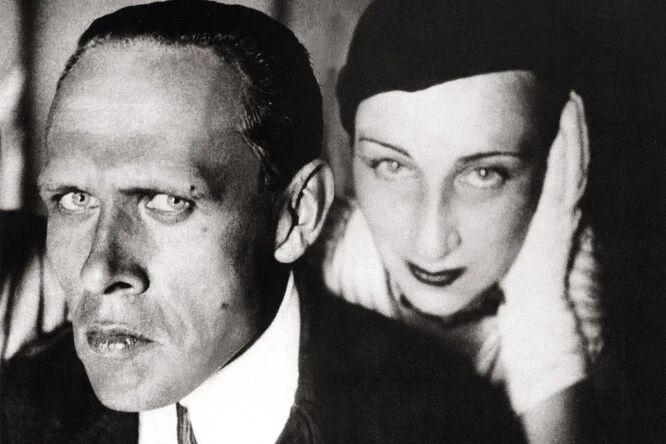
Kharms with one of his lovers, Alisa Poret
Sometimes Marina would return home only to find the door locked from the inside. Kharms would shout at her to go take a walk—a clear sign that he was not alone. On another occasion, he casually confessed to sleeping with her cousin, Olga. He even asked Marina not to let on that she knew, claiming Olga was fragile. That was easy enough to do, since the two women had stopped speaking long ago because of him.
Over time, Marina fell into deep despair. She contemplated divorcing the poet many times, but family and friends continually talked her out of it. On a couple of occasions, after catching strange women in their room, Marina headed to the train station intending to throw herself under a train. Yet she found herself unable to enact the fate of Anna Karenina. 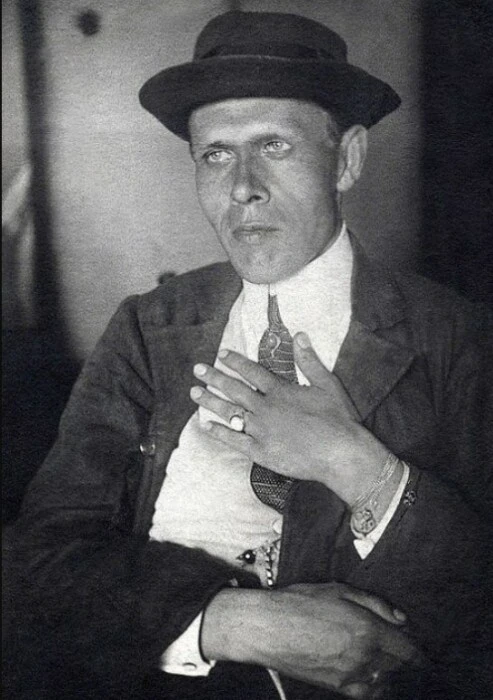
Each time a train approached, terror overtook her. Marina would simply sit on the bench for hours, watching trains come and go. Eventually, she would drag herself back home to hear about her rogue husband's latest adventures. She realized she no longer loved a man who valued her so little, yet she carried on living with him. Kharms seemed utterly oblivious to the toll his behavior was taking on her. One day, he dedicated a lighthearted poem to her:
If a wretched girl I meet
On my path, I'll strike her dead!
Only fish and blades of grass,
My true love, are loved instead.
Only you, my sweet Fefyulka,
Faithful friend, will understand,
Like a paper, like a whistle,
Never leaving from my hand.
Though my soul is meek and gentle,
Not for a hundred ladies grand,
Nor a thousand lovely beauties,
Would I trade Fefyulka's hand!
The End
At the very outbreak of World War II, the NKVD came for Kharms. He was arrested following a denunciation by a female informant who frequented Leningrad's literary circles. Kharms never served time in a regular prison, as he was declared mentally unfit. Sent to a prison psychiatric hospital, many believed he had cheated certain death. But that was far from the truth. 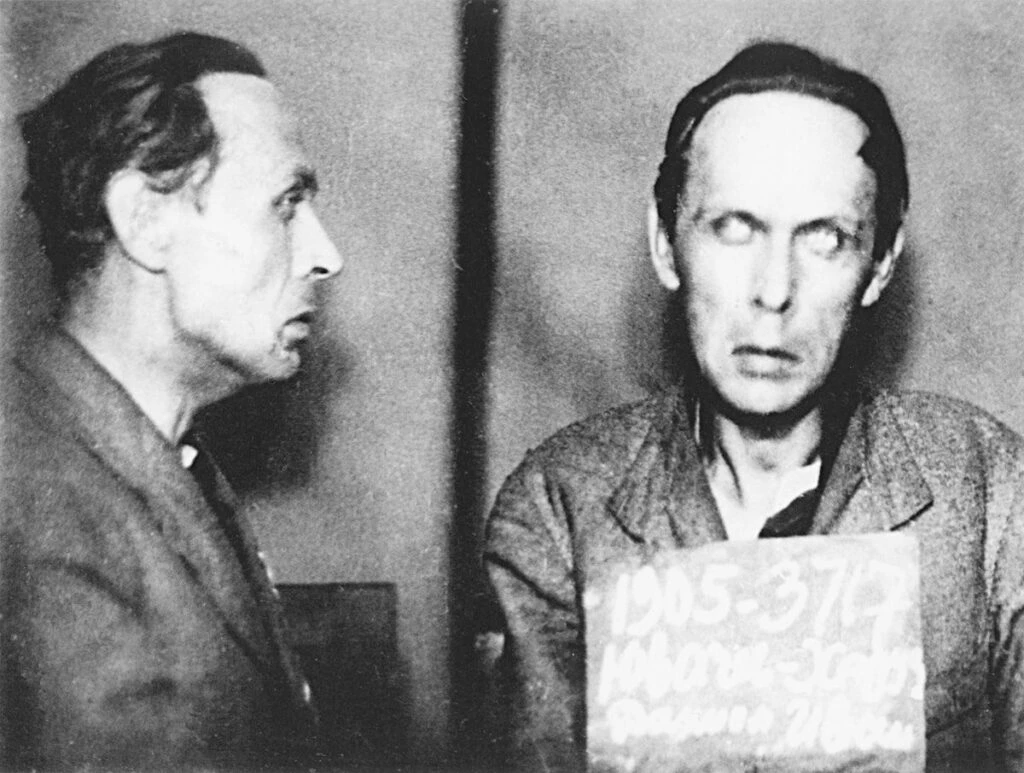
Mugshot from Kharms's case file, 1941
From day one, Marina began taking care packages to her husband, skimping on her own bare essentials. On her third visit to the psychiatric unit of the Kresty prison hospital, she was told he had been transferred to Novosibirsk. Soon after, however, she learned the truth: Daniil Ivanovich Kharms was dead. He passed away on February 2, 1942, during the deadliest, most famished period of the Siege of Leningrad. The poet was killed by cold and hunger.
Unexpectedly, having kept the marriage stamp in her passport offered Marina a chance at survival. As the wife of a recognized writer, she was evacuated from Leningrad. However, she soon found herself in enemy-occupied territory and was deported to Germany as forced labor. When the war ended, Marina chose not to return to the Soviet Union, where no one awaited her. She made her way to the Allied-controlled zone. Posing as a French citizen, she managed to travel to France to rejoin her mother.
In France, Marina remarried and gave birth to a son, though this marriage also ended in divorce. She later moved across the ocean to Venezuela, where she taught yoga and gave French lessons. In South America, she married for a third time—this time to a modest taxi driver and fellow emigré named Vasily Durnovo. After her husband's death, Marina moved to the United States to live with her son, Dmitry, where she passed away in 2002 at the age of 90. 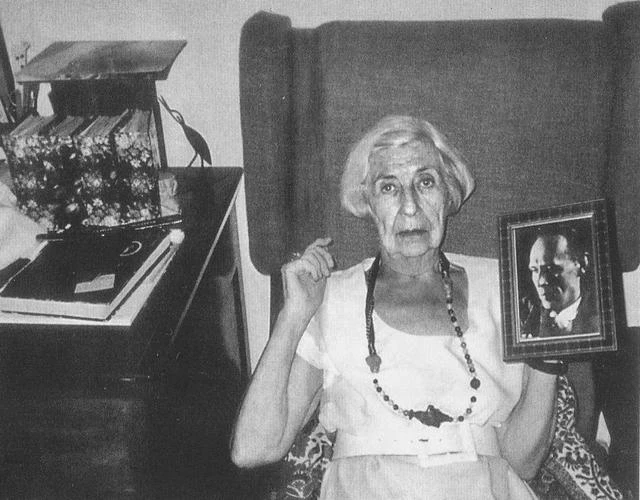
Marina Malich holding a portrait of Daniil Kharms
Shortly before her death, Marina Malich dictated her memoirs, offering the world a rare glimpse into her relationship with the poet Daniil Kharms. Despite all she had endured, she had long since forgiven Kharms and spoke of him with profound warmth.