On January 24, 1986, NASA's Voyager 2 spacecraft accomplished something no man-made object has yet accomplished—it flew past the mysterious planet Uranus and witnessed the astonishing cosmic drama unfolding around its closest moon, Miranda (mean diameter: approximately 470 kilometers). 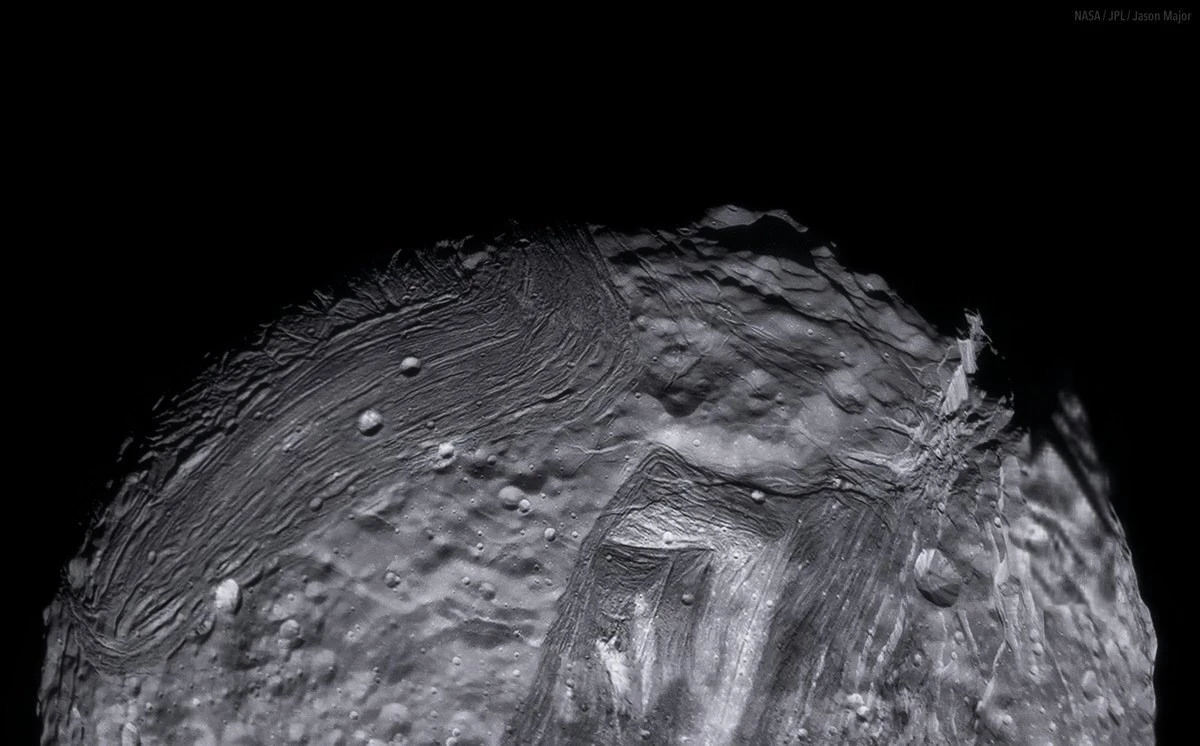
From a distance of 36,250 kilometers from this unusual celestial body, the probe transmitted images to Earth that astonished scientists with their uniqueness. Miranda's surface is a veritable geological chaos, unparalleled in the Solar System.
Miranda is riddled with numerous faults up to five kilometers deep, created by monstrous tidal forces. Particularly impressive is the Verona Escarpment (Latin: Verona Rupes)—the highest known cliff in the entire Solar System, rising 20 kilometers. In Miranda's weak gravity, a free fall from its summit would take about 12 minutes! 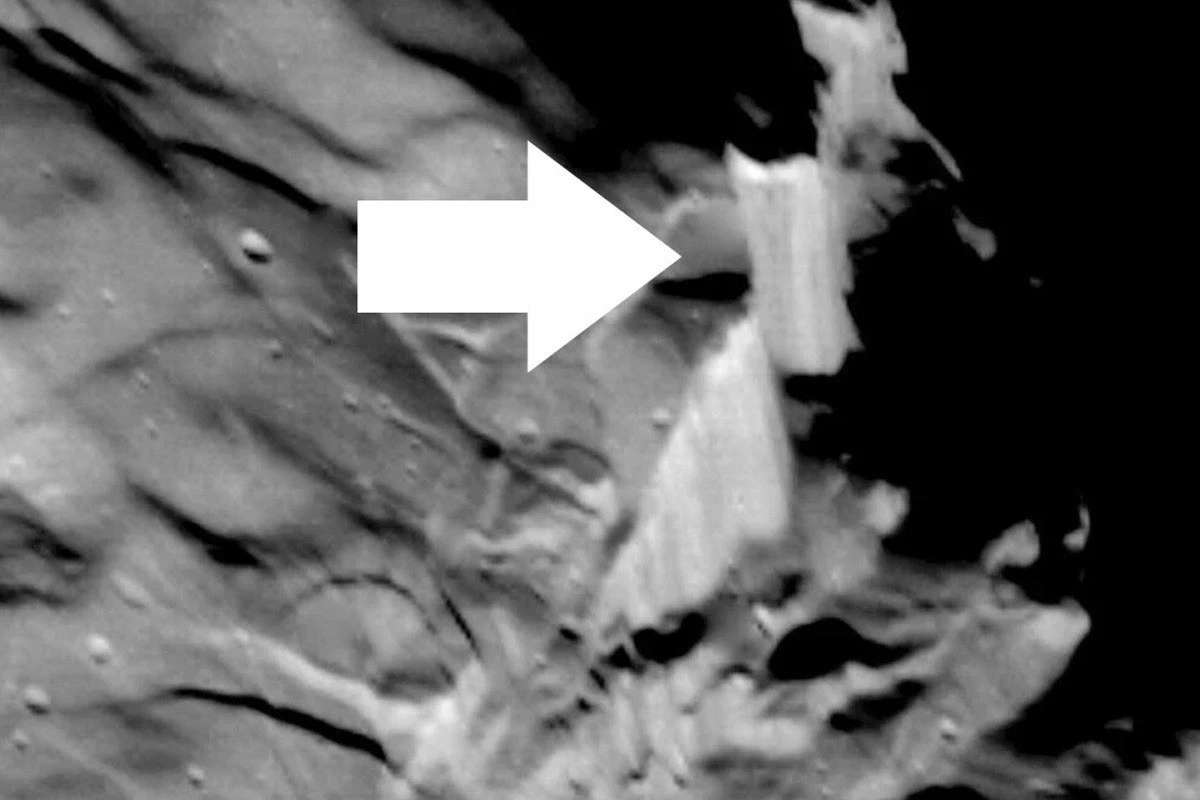
Verona Escarpment
These geological features were formed as a result of powerful tectonic processes, when enormous blocks of the moon's crust collided and slid over each other under the powerful gravitational force of Uranus. And like a cosmic sculptor, Uranus's gravity continues to "sculpt" Miranda's surface, causing some areas to sink and others to rise above the surface. The Verona Escarpment can rightfully be considered the main silent witness to these titanic processes.
But the most dramatic aspect of Miranda's history is its future. The moon's current appearance is only an intermediate stage in its evolution. Miranda's orbit is gradually declining due to tidal interactions with Uranus, and the satellite is slowly but steadily approaching the so-called Roche limit—the critical point where the planet's tidal forces exceed the satellite's own gravity. 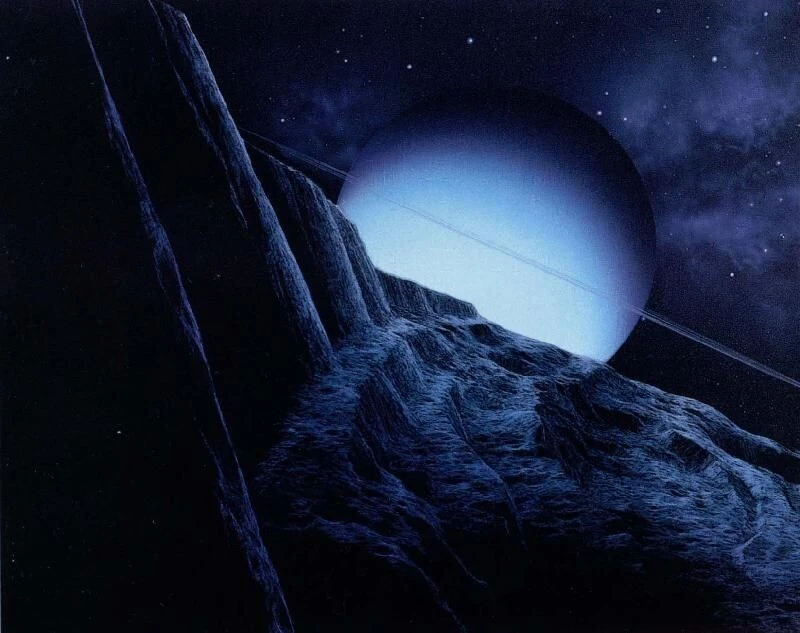
Artist's impression of Uranus from the surface of Miranda
In a few million years, when Miranda reaches this limit, the continued influence of tidal forces and orbital resonances with other moons will inevitably cause the satellite to break into several fragments, adding to the ice giant's ring system.
Almost four decades have passed since Voyager 2's historic flyby, but no Earth-based spacecraft has ever approached this mysterious world, which deserves close attention. Miranda remains one of the most intriguing objects in deep space, continuing to tell a story of continuous transformation and inevitable change in the universe.
Add your comment
You might be interested in:












Persistence in achieving a goal

A biker prevented a hit-and-run driver from escaping

Not everyone is having fun on the amusement ride

The cutest lunch delivery ever

A book titled "A Guide to Rebuilding

Young women, Dancing and George Michael: nothing superfluous

An apology delivered with a running start

A steam locomotive for "big boys"

Bollywood never ceases to amaze
