Neptune: Record-Breaking Winds at the Edge of the Solar System (4 photos)
Neptune is the farthest planet from the Sun in the Solar System and, as such, one of the least studied. However, thanks to NASA's Voyager 2 spacecraft, which visited the ice giant's system at the end of the last century, and observations by ground-based and space-based telescopes, we know many surprising things about Neptune. 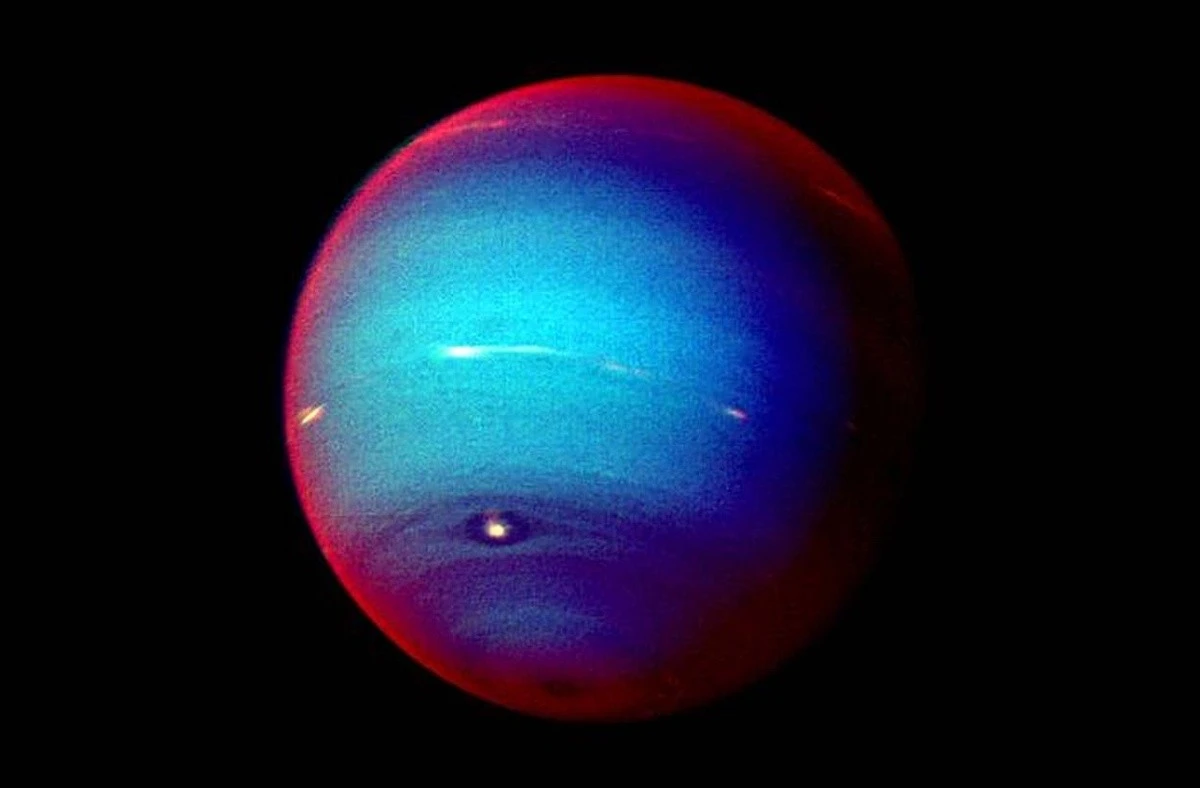
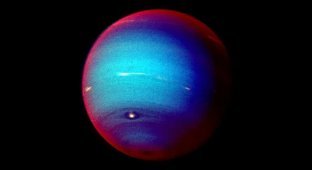
A false-color composite image of Neptune, stitched together from Voyager 2 images obtained through three filters. The white and bright red areas show sunlight reflected before passing through the methane layers; The red rim at the edge of the disk is caused by scattering in the upper haze. In the center, light penetrates deeper and is more strongly absorbed by methane, giving the disk a blue-blue hue.
For example, despite its serene appearance, Neptune's atmosphere is the most turbulent in the Solar System. Wind speeds there can exceed 2,100 kilometers per hour. For comparison, the highest wind speed ever recorded on Earth was "only" 408 kilometers per hour. Even in the atmosphere of giant Jupiter, which should hold the record for almost everything, the maximum wind speed reaches approximately 1,450 kilometers per hour.
This oddity of Neptune is explained by the fact that the main source of energy for its atmosphere is not the Sun, which, incidentally, is on average 4.5 billion kilometers away, but the internal heat of the planet itself. Neptune radiates into space approximately 2.6 times more energy than it receives from our sun. This heat, rising from the depths, intensifies convection and accelerates atmospheric currents. This effect is compounded by the planet's rapid rotation, the unique structure and composition of its gaseous envelope, and the absence of a solid surface that would inevitably cause wind to lose energy. As a result, powerful jet streams and vortices form in the thin upper atmosphere, capable of accelerating to record speeds.
Image with shadows
On August 25, 1989, NASA's Voyager 2 spacecraft transmitted an image to Earth showing white cirrus clouds in the planet's upper atmosphere. 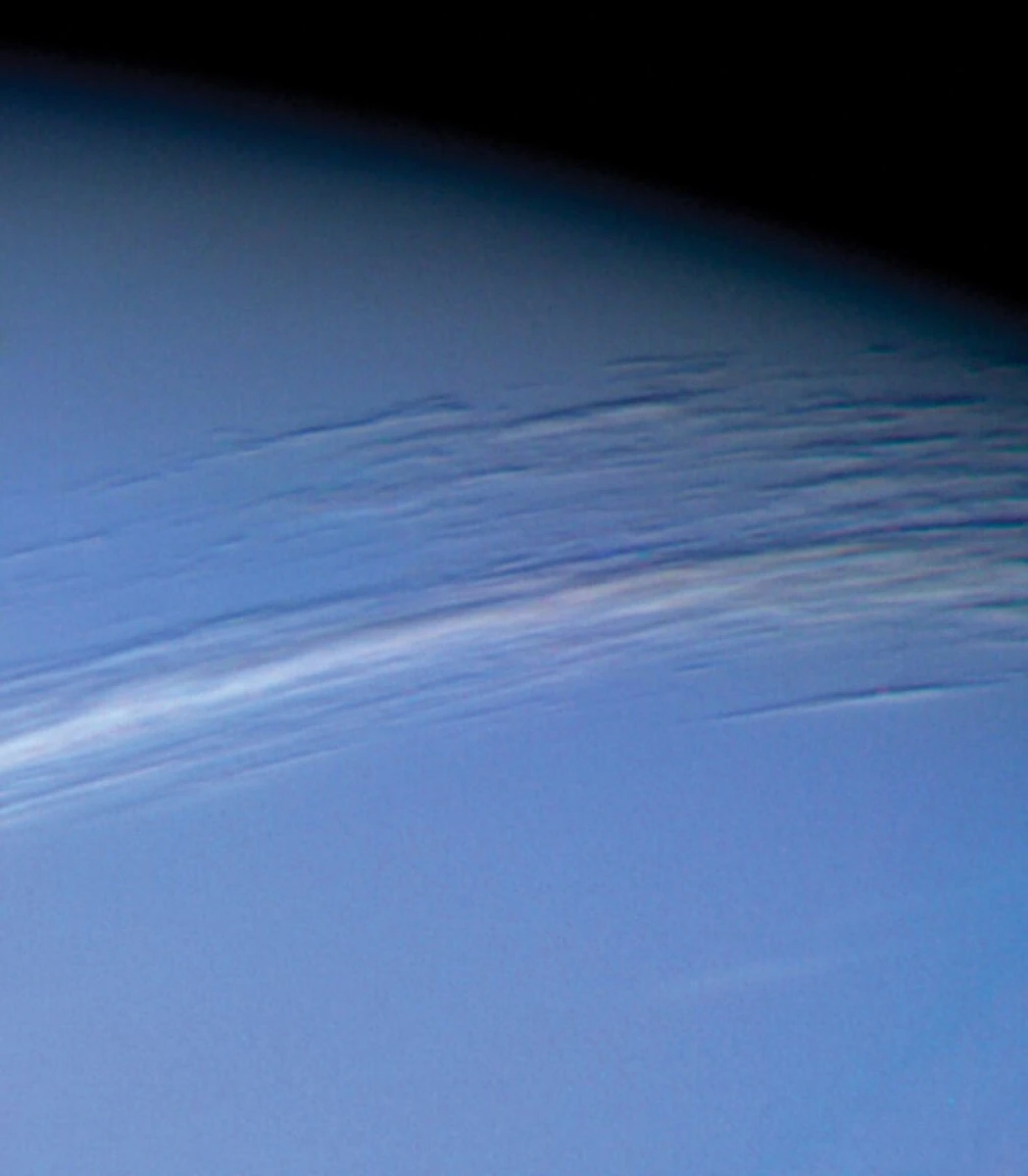
These clouds, composed primarily of frozen methane crystals, stretch for thousands of kilometers in bands ranging from 50 to 200 kilometers wide. These are impressively large formations even compared to the giant Neptune, which has an average diameter of 49,244 kilometers (the average diameter of Earth is 12,742 kilometers).
The unique feature of this historic image is its depiction of volume. The sunlight is angled, and the clouds cast sharp shadows on the underlying blue-blue atmospheric layer located almost 100 kilometers below.
Why is Neptune blue?
The planet's characteristic color is due to the presence of methane in its atmosphere: it intensely absorbs the red and yellow parts of the solar spectrum, while reflecting blue and light blue back into space. Therefore, the eighth planet from the Sun is "painted" in cool blue-blue hues. 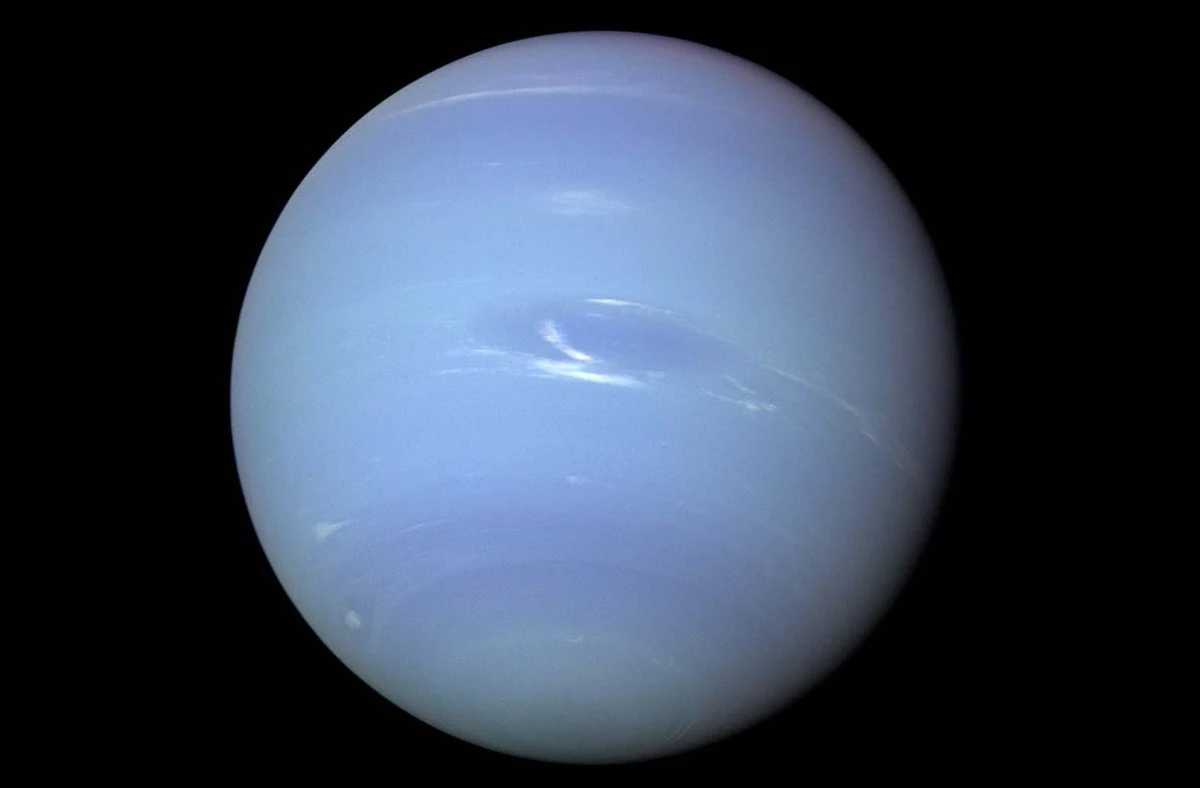
Composite and enhanced image of Neptune
However, Uranus, which also contains methane, appears much paler. This indicates that Neptune's atmosphere contains additional substances that enhance the blue tint. The exact substances are still unknown.
A Single Visit
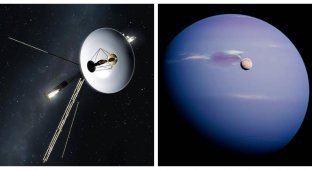
Voyager 2 remains the only spacecraft to have visited the Neptune system. Its closest approach to the ice giant occurred on August 25, 1989. On that day, the probe passed within about 5,000 kilometers of the upper atmosphere and transmitted data that enriched our knowledge of the planets of the outer Solar System.
Voyager 2 discovered the Great Dark Spot, a giant Earth-sized anticyclone that disappeared after a few years, as well as Neptune's dark ring system and six new moons. 
Neptune's Rings
The spacecraft then headed to the outer reaches of the Solar System, with the goal of one day escaping into interstellar space.
A Future Visit
Neptune remains poorly understood, but NASA is considering launching a full-fledged mission, tentatively dubbed Neptune Odyssey. If it is given the green light, it won't launch until the 2030s.
For now, scientists are making do with reviewing Voyager 2's archived data and observing with telescopes that can record atmospheric changes and study the mechanisms of the auroras.