Space Chronicle #1: A Review of Astronomical Images (5 photos)
Space Chronicle is a fascinating journey through space and time through astronomical images. This section features reviews of both legendary photographs from the era of the first space missions and the latest images from modern space telescopes and ground-based observatories.
A Hidden Supernova Explosion
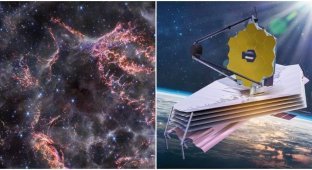
Cassiopeia A is a supernova remnant approximately 11,000 light-years away. 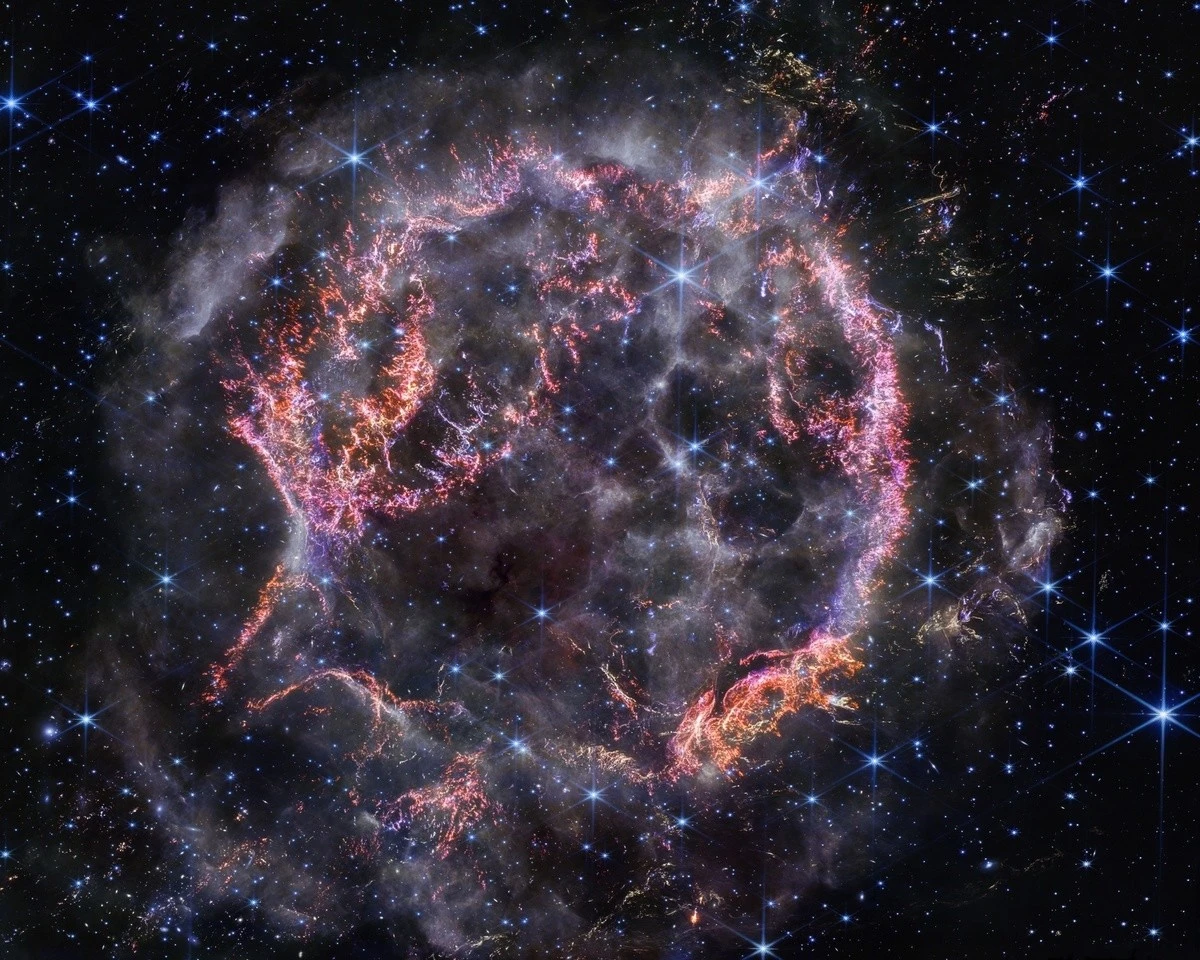
For observers on Earth, the explosion occurred about 300 years ago—that's when the light from the explosion reached Earth. However, no reliable historical records of this event survive, although it should have appeared as a bright flash in the sky. This astronomical gap is explained by the fact that this was an atypical stellar death: before the outburst, the star ejected a significant portion of its material, which enveloped the system in a dense shell. When the explosion occurred, the cosmic cocoon absorbed most of the radiation from the flare, concealing the catastrophe from witnesses.
This image was taken on December 11, 2023, using NASA's James Webb Space Telescope, revealing the remains of this silent apocalypse—an expanding cloud of heavy elements scattered across space by the explosion.
Former Dwarf Planet
Triton is Neptune's largest moon, with an average diameter of 2,707 kilometers. Scientists believe it was once a dwarf planet in the Kuiper Belt—the icy outskirts of the Solar System beyond Neptune, home to the well-known object Pluto. 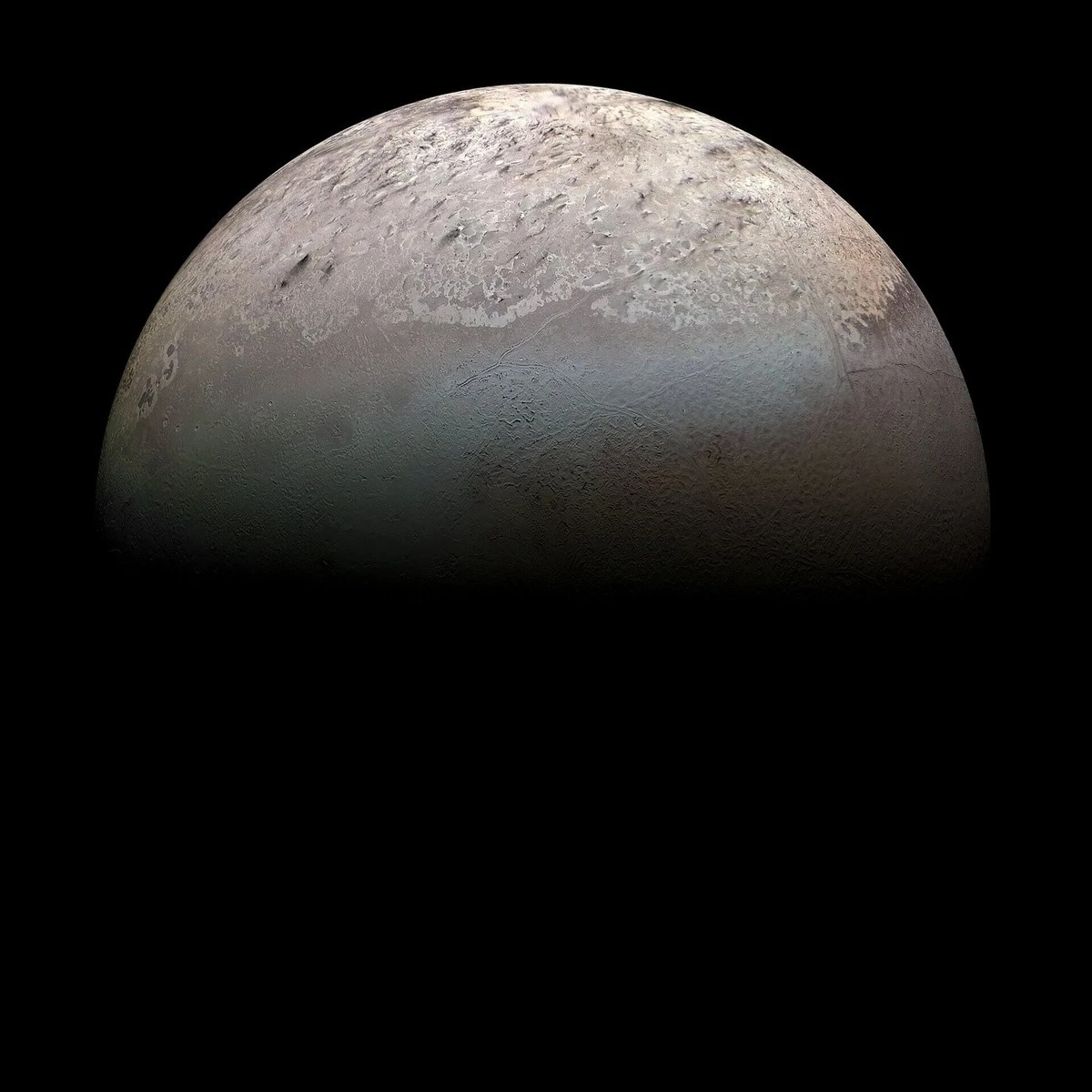
Triton's surface is one of the coldest places in the Solar System, with temperatures dropping to -235°C. In such extreme cold, nitrogen from the thin atmosphere condenses as frost and settles to the surface. Over billions of years, this has led to the formation of a thick icy crust.
This image was taken by NASA's Voyager 2 spacecraft on August 25, 1989. This is the only man-made object in recorded history to have visited Neptune and its mysterious captive from the Kuiper Belt.
A Complex Planetary Nebula
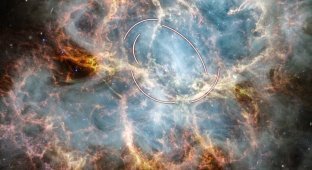
The Cat's Eye Nebula (NGC 6543) is a planetary nebula in the constellation Draco, located approximately 3,300 light-years away. Formed by the death of a star approximately five solar masses, this nebula has one of the most complex structures of its kind. 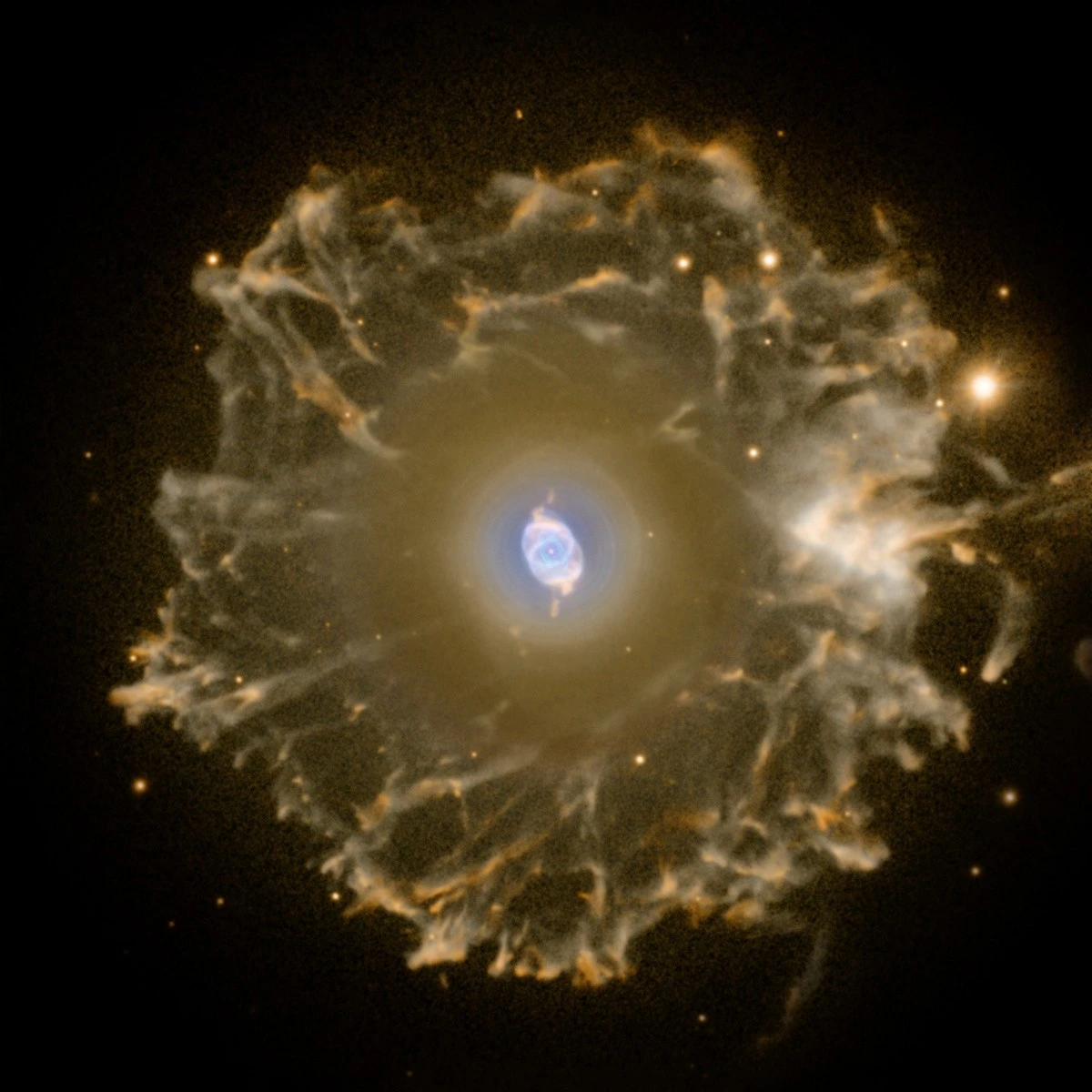
NGC 6543 displays concentric gas shells, jets of high-velocity gas, bipolar jets, and unusual shock knots. At the center of the nebula lies an extremely hot Wolf-Rayet star, with a temperature of approximately 80,000 K and a mass slightly greater than one solar mass (for comparison, the solar surface temperature is 5,780 K or 5,506 °C). Powerful gusts of its stellar wind, reaching speeds of up to 1,900 kilometers per second, have "blown out" the nebula's interior cavity and formed the visible structure through shock interactions with previously ejected material.
This image was taken using the Nordic Optical Telescope, located at the Roque de los Muchachos Observatory on La Palma Island (Canary Islands, Spain).
"Hellish" Aurora
This is the southern aurora on Jupiter, observed in infrared by NASA's Juno orbiter. The image was taken on August 27, 2016, during one of the probe's first flybys of the planet. As a reminder, Juno has been in the gas giant system since July 4, 2016, and is still operational. 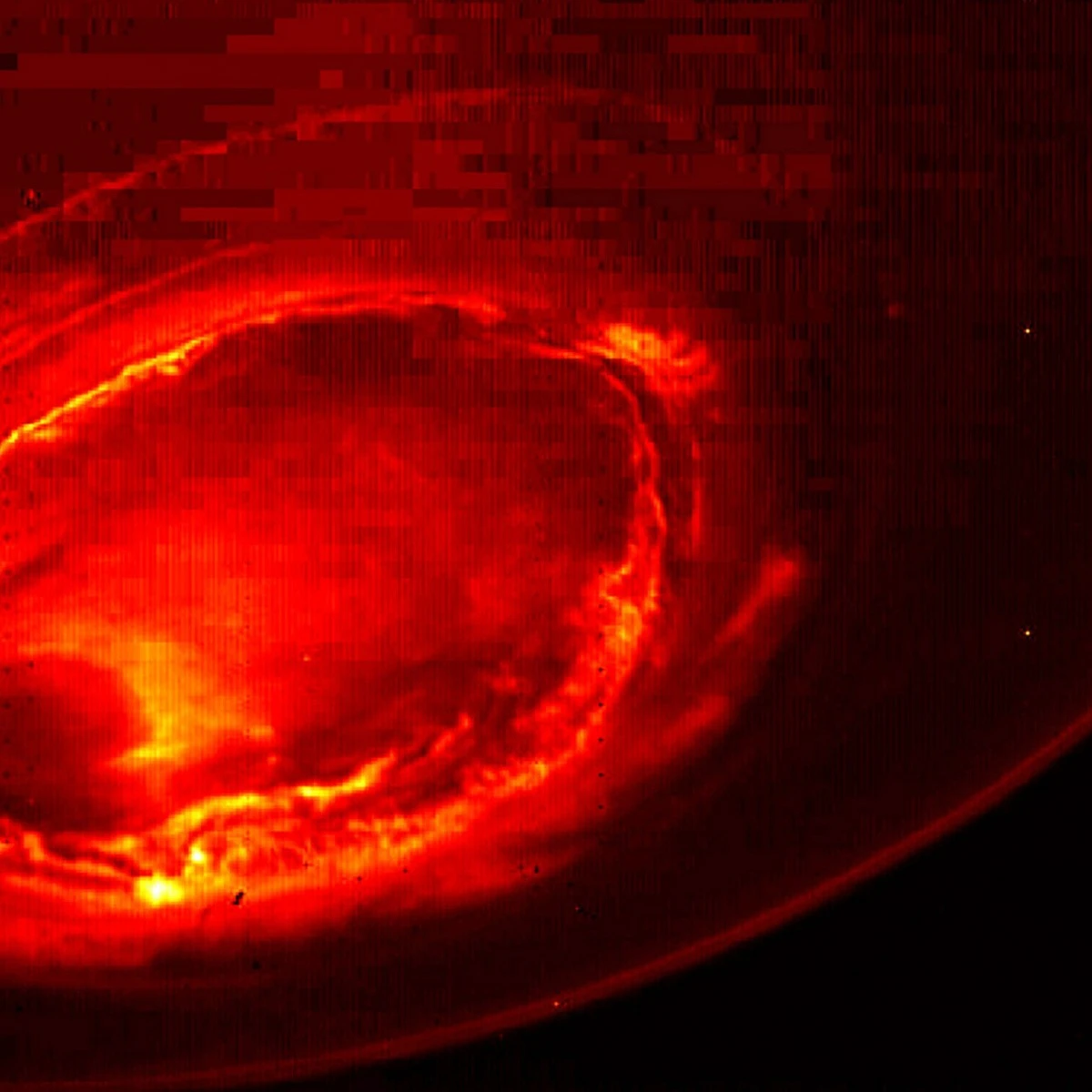
It has been established that Jupiter's auroras are hundreds of times more powerful than those on Earth and are never-ending. Unlike our planet, where the auroras form a ring around the pole, Jupiter's complex magnetic architecture allows charged particles to penetrate deep into the polar regions, forming unique dynamic structures: central cyclones, active regions on the dawn and dusk sides, and bright arcs of the main auroral oval (an elliptical zone where the maximum intensity and frequency of auroras are observed).
Mars and its Atmosphere
This historic image, taken by NASA's Viking 1 orbiter on July 30, 1976, shows the Red Planet's cratered surface and a thin layer of carbon dioxide atmosphere on the horizon. 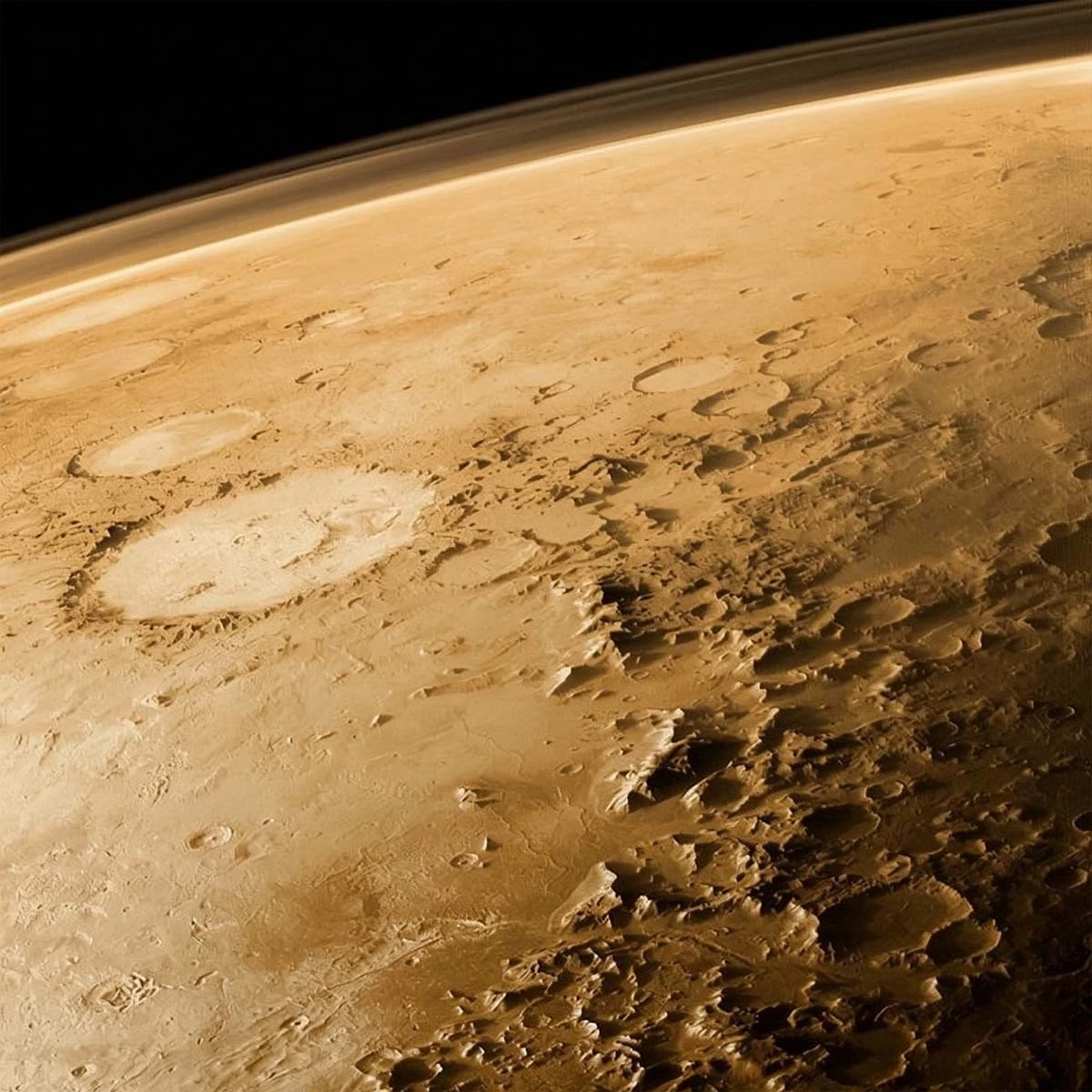
Visible to the left of center is the 230-kilometer-diameter Galle crater, located on the eastern edge of the gigantic Argyre Basin. This impact feature is informally nicknamed "the smiley face" due to its curved ridge and two smaller mountain clusters, which together resemble a smiling face—a striking example of pareidolia.
The Viking orbiters mapped the surface of Mars with a resolution of 150–300 meters per pixel, with some areas imaged at a resolution of up to 8 meters per pixel. Viking 1 orbited the Red Planet until August 17, 1980, transmitting invaluable data that paved the way for all subsequent Mars missions.
Read also:
Could there be another planet between the Sun and Mercury?
Huygens on Titan: the first landing in the outer solar system.
The comet explosion triggered an "impact winter" and wiped out megafauna from the face of the Earth.