Mysterious Europa Through the Eyes of NASA's Voyager 2 Spacecraft (3 photos)
Europa is one of the most intriguing moons in the solar system, with an average diameter of 3,122 kilometers. Named after a Phoenician princess from Greek mythology, this icy moon of Jupiter is the sixth-largest moon in our cosmic neighborhood. Beneath its glittering icy surface lies a global ocean of liquid water, which may be key to the search for extraterrestrial life. 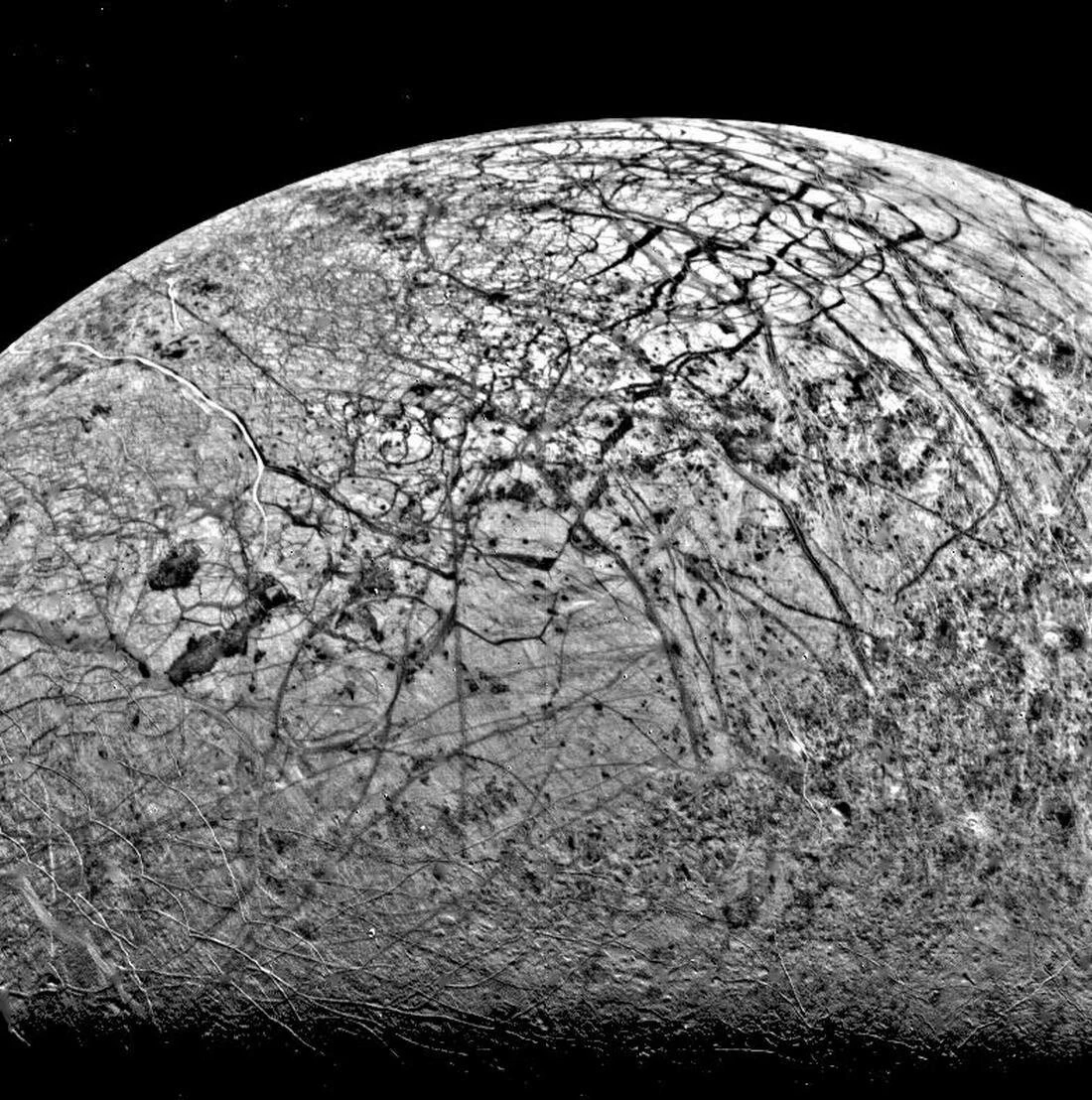
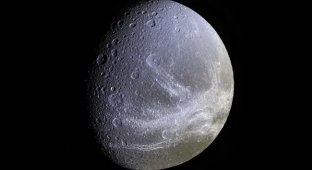
Image of Europa taken by NASA's Voyager 2 spacecraft on July 9, 1979. At the time of the photograph, the probe was approximately 241,000 kilometers from the moon's icy surface.
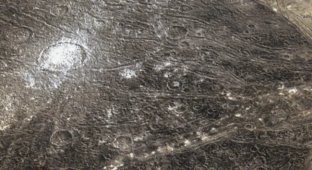
Images transmitted by NASA's Voyager 2 spacecraft in 1979 revealed a unique landscape: the moon's icy crust is crisscrossed by a network of intersecting cracks and fractures. These lines, filled with darker material, create the appearance of cracked glass or a broken eggshell.
Particularly notable is the almost complete absence of large impact craters. This suggests that Europa's surface is relatively young and is constantly being renewed by active geological processes. The Jovian moon's icy crust, thought to have an average thickness of 35 kilometers, is not simply a static layer—it is a dynamic system, constantly changing under the influence of internal forces.
Subglacial Ocean: Cradle of Life?
Beneath Europa's icy crust lies something that makes this moon particularly intriguing to scientists: a global ocean of liquid water. Researchers estimate that this ocean's volume could be twice that of all the water on Earth. The liquid state of the water is maintained primarily by tidal heating: Jupiter's gravitational pull creates tension in the moon's interior, releasing large amounts of heat. 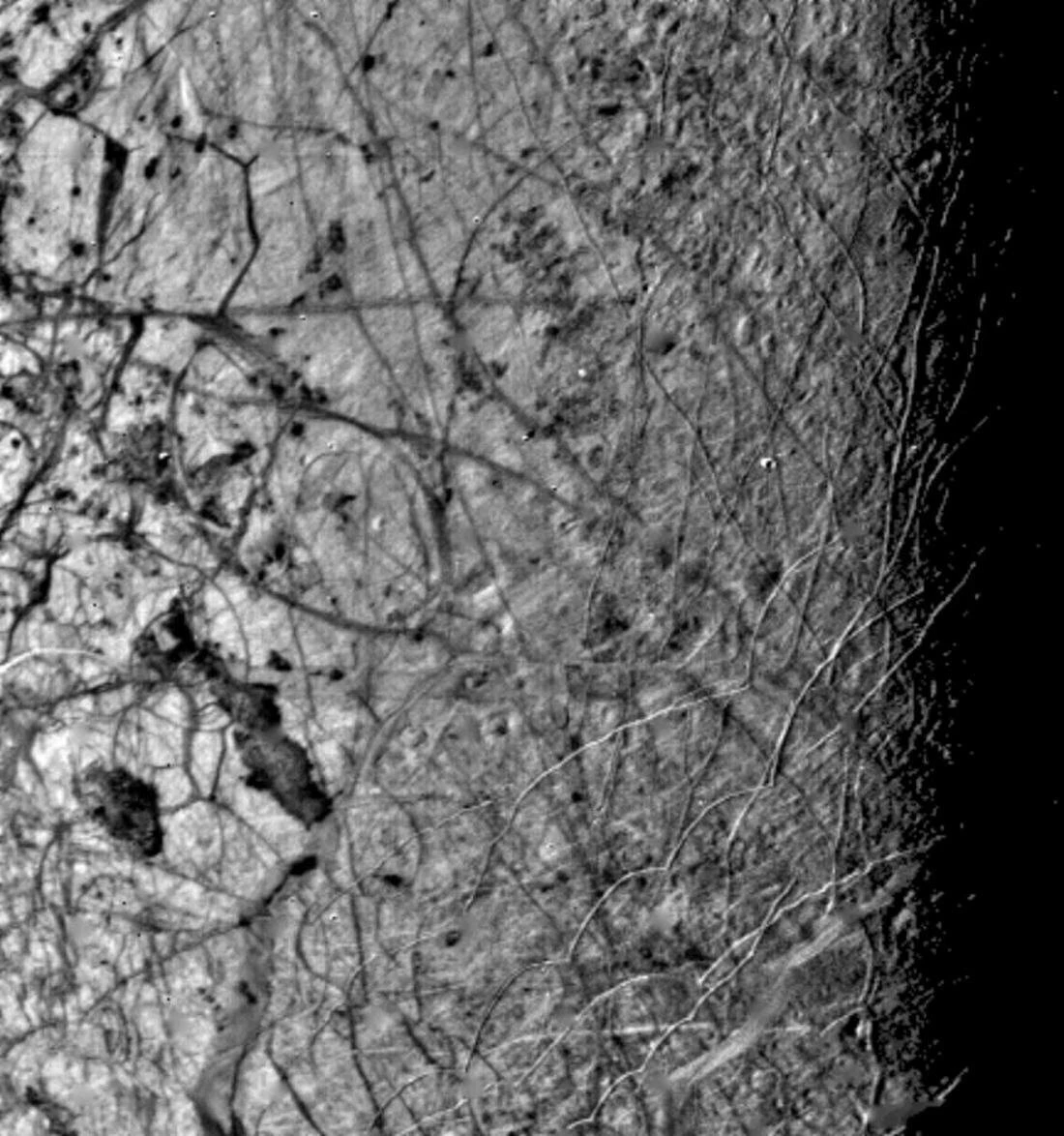
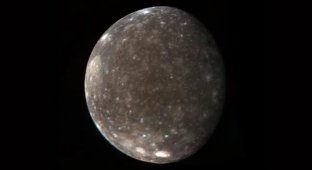
Image of Europa taken by Voyager 2 on July 9, 1979, from a distance of approximately 225,000 kilometers
Hydrothermal vents, similar to "black smokers" in Earth's oceans, may exist at the bottom of this ocean. On our planet, these vents are oases of life, where unique ecosystems flourish, independent of solar heat and light. It's possible that similar life forms could also inhabit Europa's ocean.
Mission to the Mysterious Moon
Two spacecraft, equipped with advanced scientific instruments, are currently en route to Europa:
The European Space Agency's JUICE (Jupiter Icy Moons Explorer), launched on April 14, 2023, will study Jupiter and its icy moons (Europa, Ganymede, and Callisto). While the mission's primary target is Ganymede, JUICE will also conduct detailed studies of Europa.
NASA's Europa Clipper mission, launched on October 14, 2024, is focused specifically on studying Europa. The spacecraft is equipped with nine scientific instruments that will help determine the thickness of the ice crust, the volume and distribution of subglacial water resources, and study the surface composition. Particular attention will be paid to searching for active geysers—water ejections through cracks in the ice crust, which were observed by the NASA/ESA Hubble Space Telescope.
Both probes will arrive in the Jupiter system in the early 2030s. 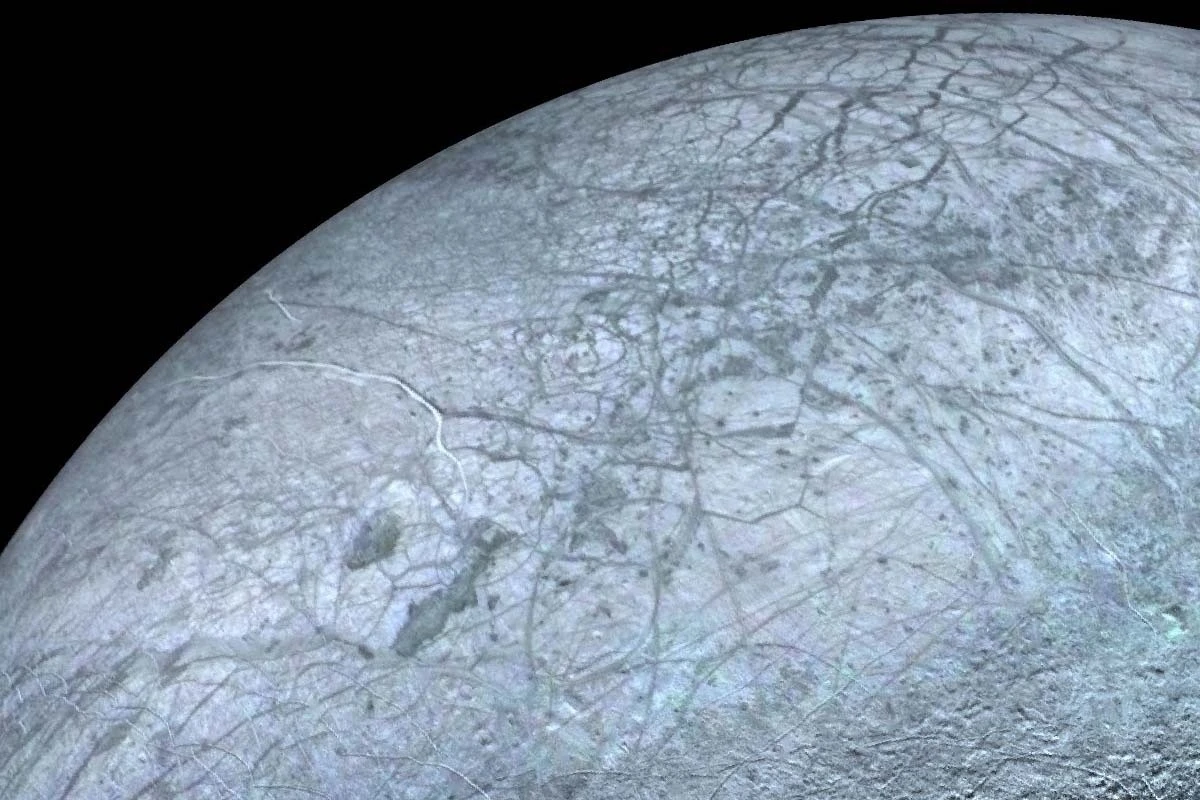
Composite image of Europa, stitched together from images obtained by Voyager 2 on July 9, 1979. Colorization was performed significantly later, after the launch of Hubble.
Prospects
Exploring Europa could be key to understanding the potential for life beyond Earth. If conditions suitable for life exist in Europa's subsurface ocean, it could revolutionize our understanding of the prevalence of life in the Universe.
Future missions to Europa could include landers or even subsurface probes capable of penetrating the ocean through natural fractures in the crust and directly exploring the moon's interior.
Europa remains one of the most promising locations in the Solar System for the search for extraterrestrial life. And while we can't yet say with certainty whether life exists in its subsurface ocean, each new mission brings us closer to solving this fascinating mystery.