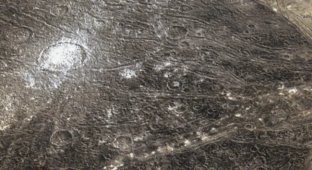
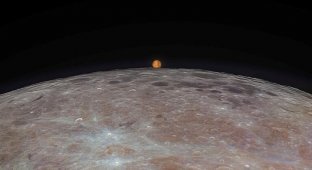
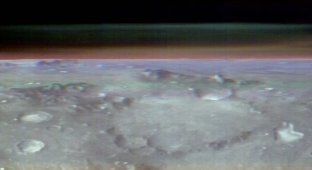
Admire Restored Images of Jupiter's Europa from the NASA Archive (10 photos)
NASA's Galileo spacecraft operated in the Jupiter system from December 1995 to September 2003. Over eight years, the probe made 11 close flybys of Europa, an icy moon with an average diameter of 3,122 kilometers, and returned the first detailed images of its surface. However, the image quality was limited by the technology of the time. 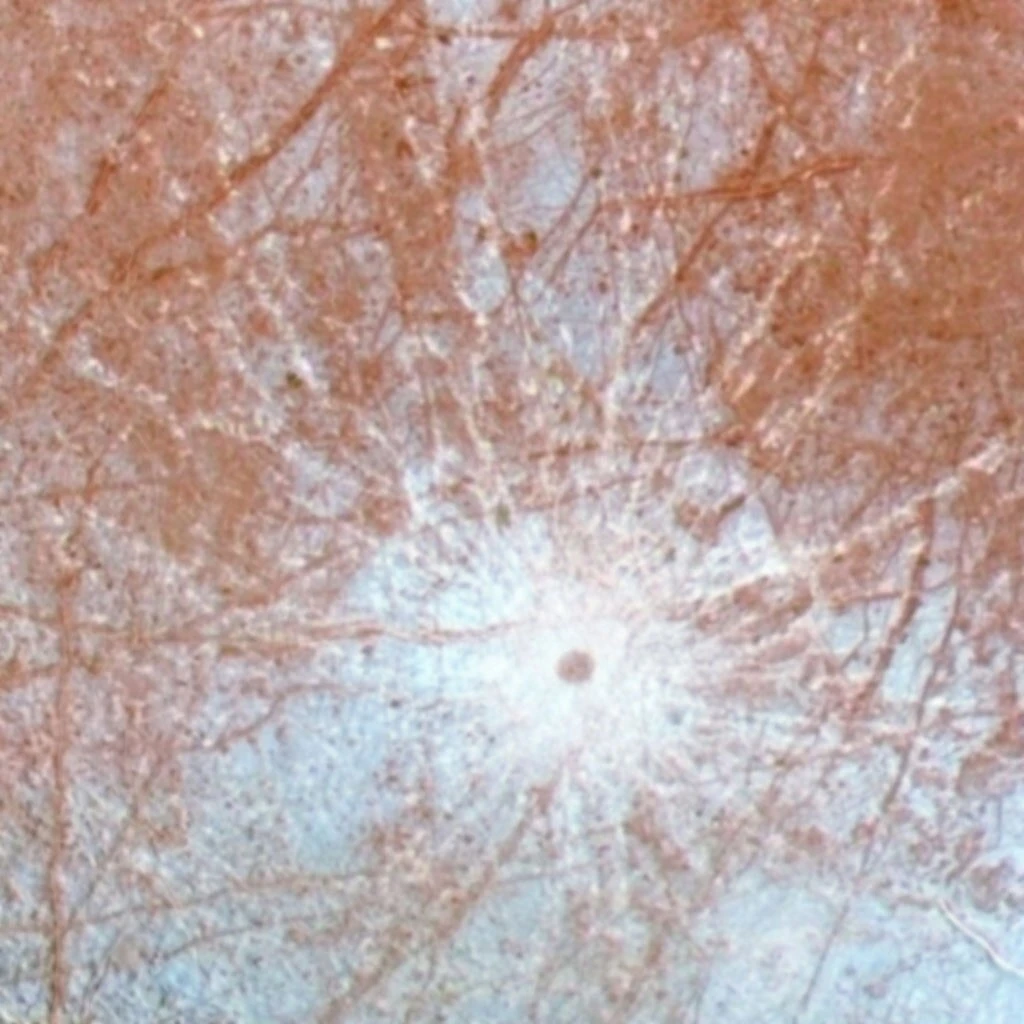
Original image
But why waste it?
Machine learning was used to enhance the archival images. I trained a neural network using hundreds of high-quality images of various celestial bodies and their artificially degraded versions, which included the addition of noise, artifacts, and blur. The goal is very simple: to teach AI to restore lost details, not invent them.
After numerous iterations, the model was applied to several archival Galileo images. The result: images of Europa became significantly sharper, revealing surface details that were previously lost in noise and artifacts. 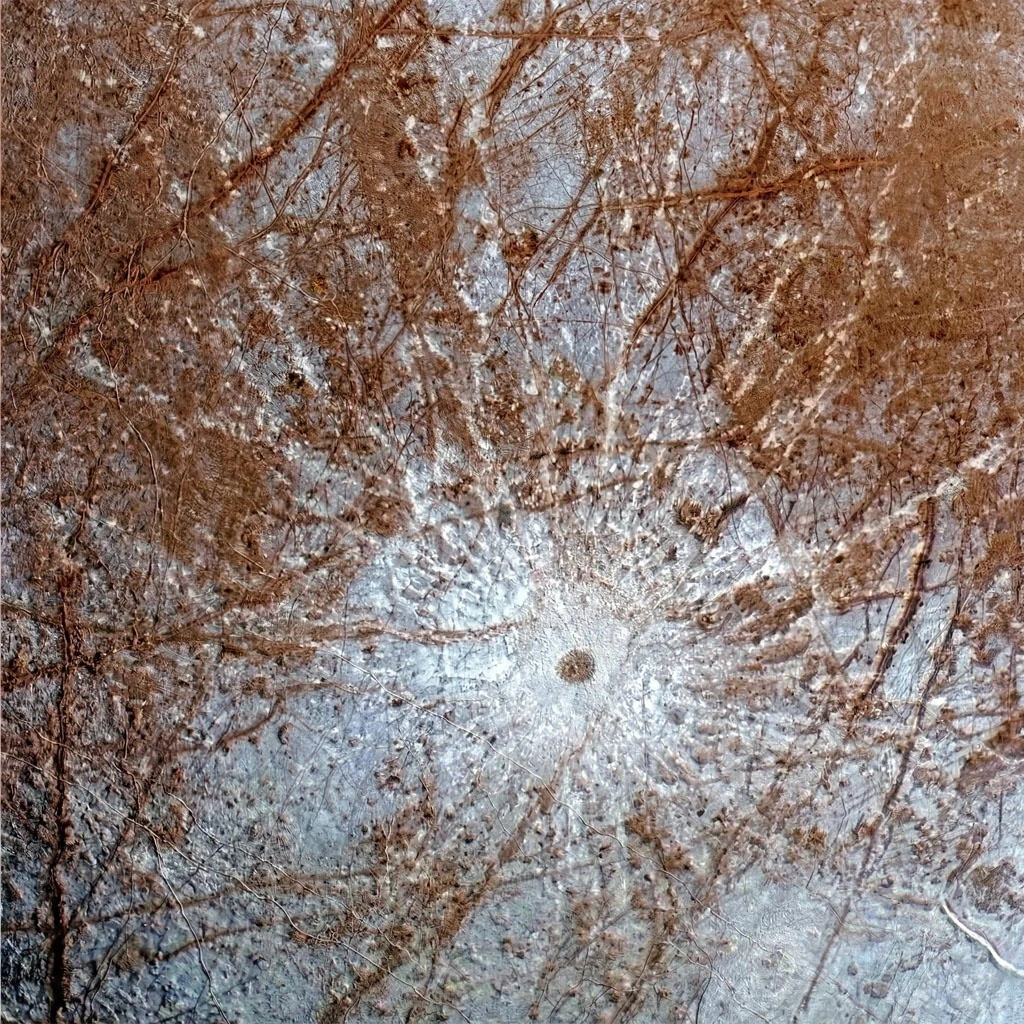
Enhanced image
What did Galileo discover?
The Galileo mission has obtained the first convincing evidence of a subsurface ocean on Europa:
The probe's instruments detected an induction response from Europa's magnetic field to changes in Jupiter's magnetic field. This is only possible if there is a conductive layer beneath the surface—most likely saltwater.
Europa has very few impact craters. This means its icy crust is rapidly and frequently renewed. Numerous cracks, ridges, and areas of "chaotic relief" indicate that the ice is moving above a liquid layer.
The thickness of the ice shell is estimated at 15-25 kilometers. Beneath this, gravity measurements suggest a global ocean 60 to 150 kilometers deep. If so, Europa contains more water than all the seas and oceans on Earth combined. 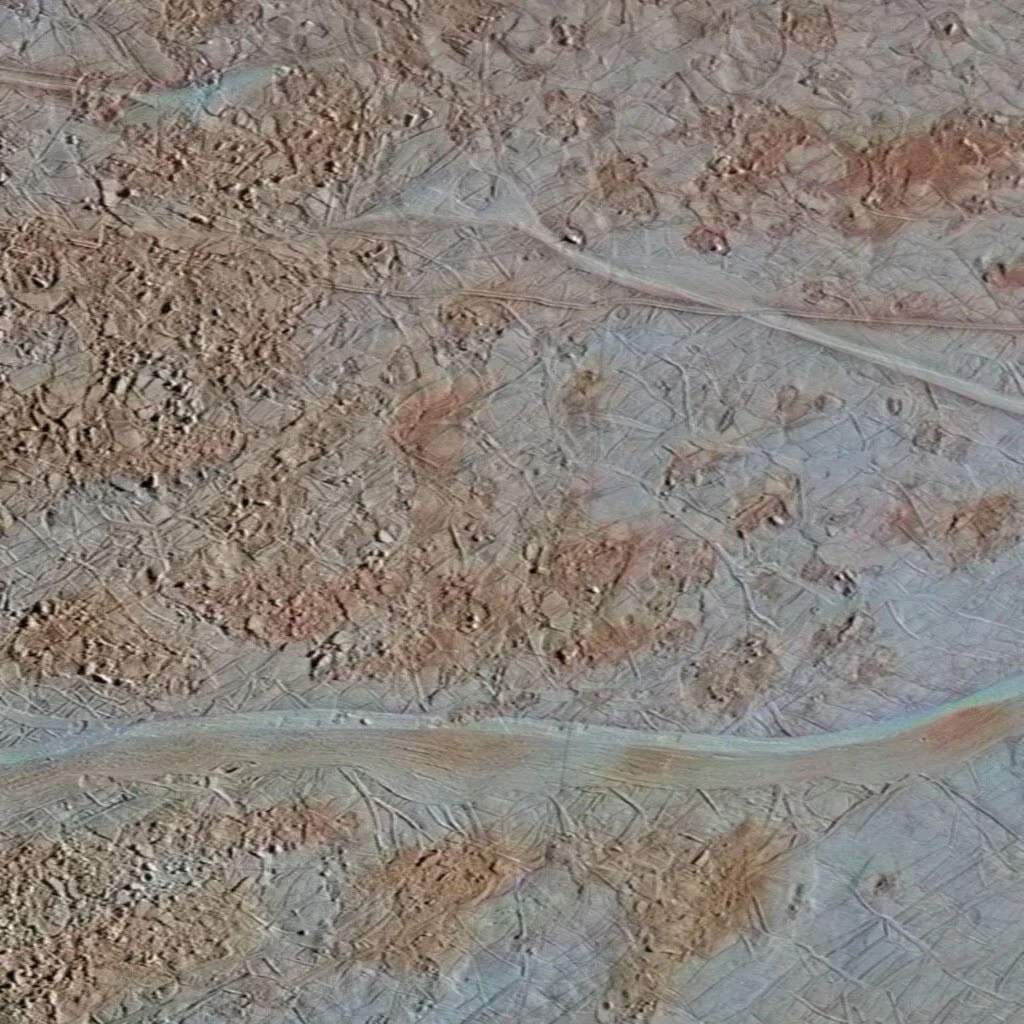
Original image 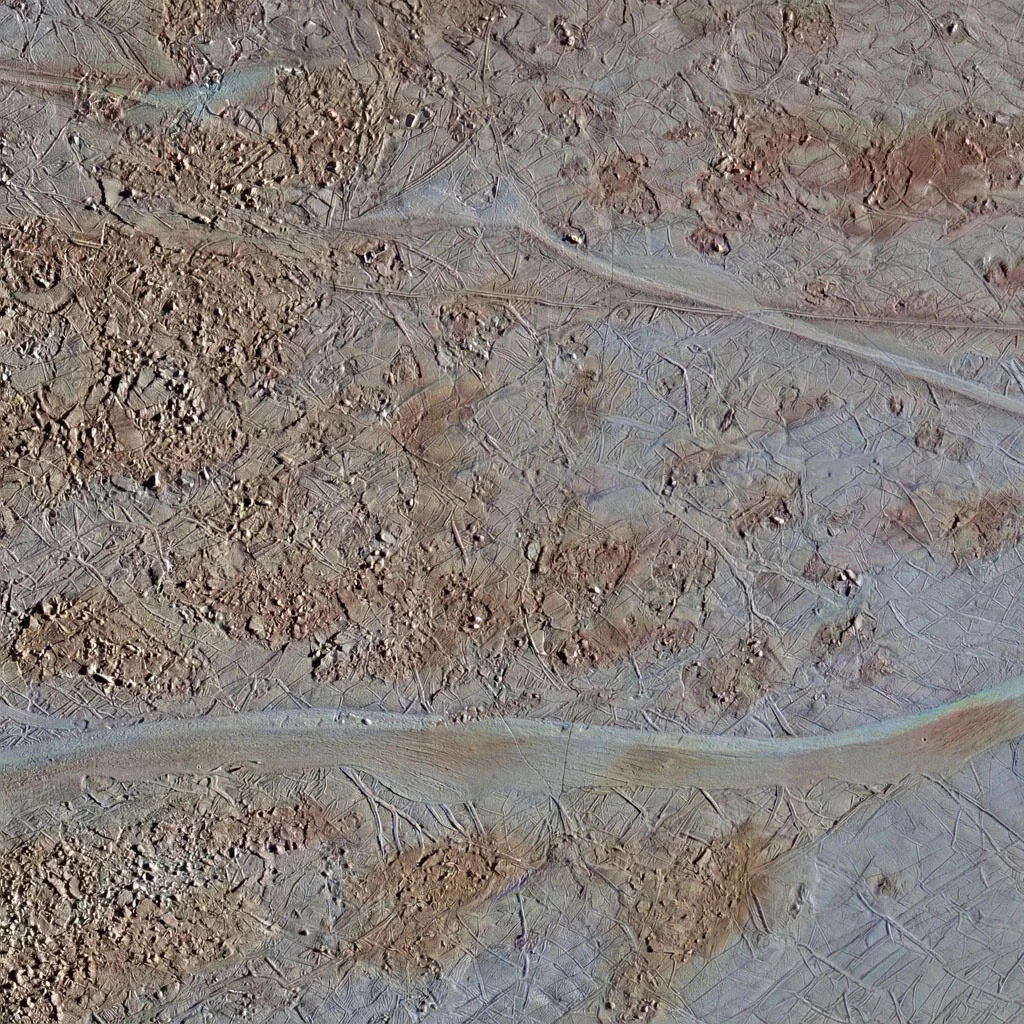
Enhanced image
Could Europa be a habitable world?
Based on experience on Earth, we know that life requires three components: liquid water, an energy source, and a diverse chemistry. And Europa has all of these.
The water beneath the icy crust exists thanks to tidal heating—Jupiter's gravity constantly compresses and stretches the moon, generating abundant heat.
The energy comes not only from the tides, but also possibly from hydrothermal vents on the ocean floor—they are fed by heat from radioactive decay in Europa's rocky core. Similar processes are observed on Earth near mid-ocean ridges. 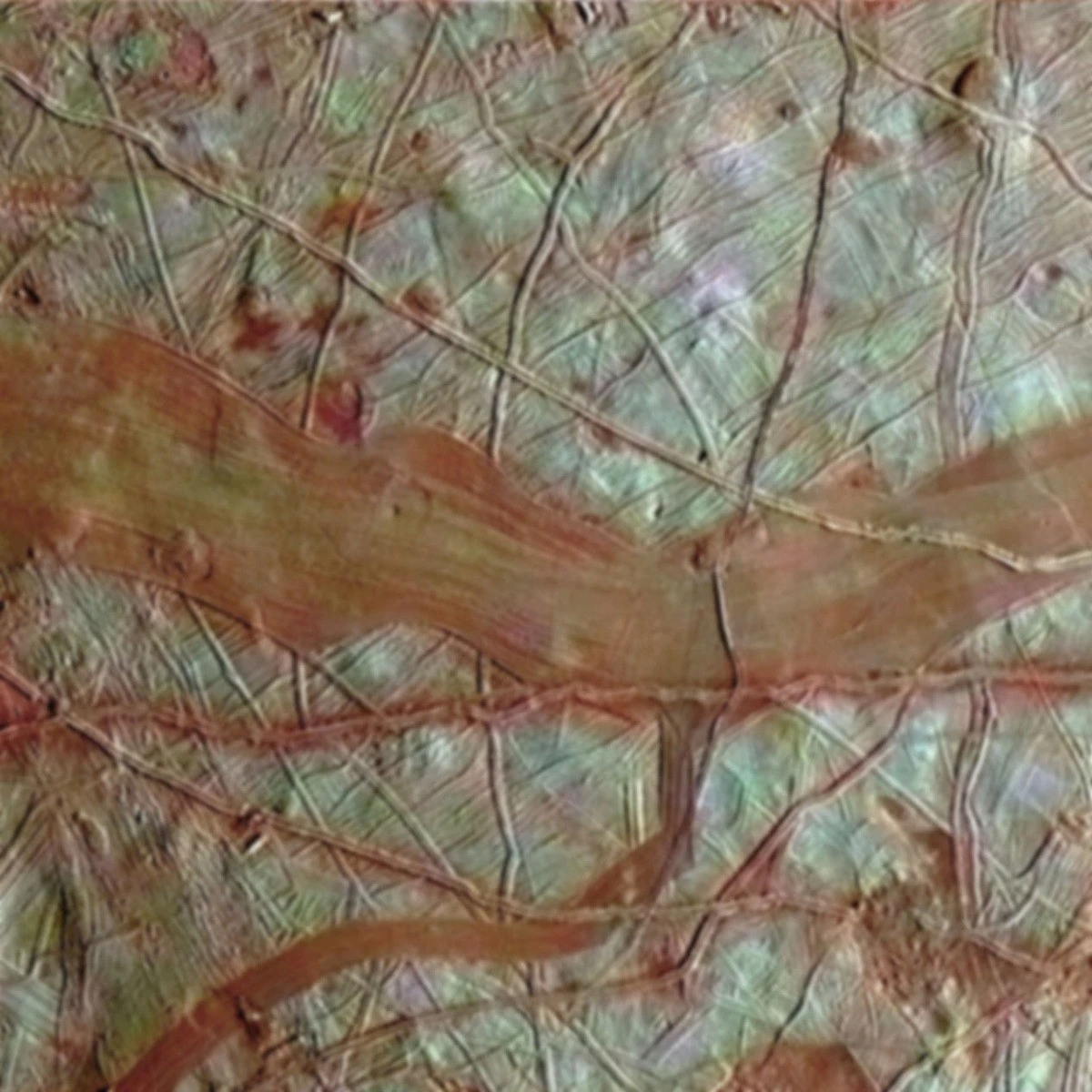
Original image 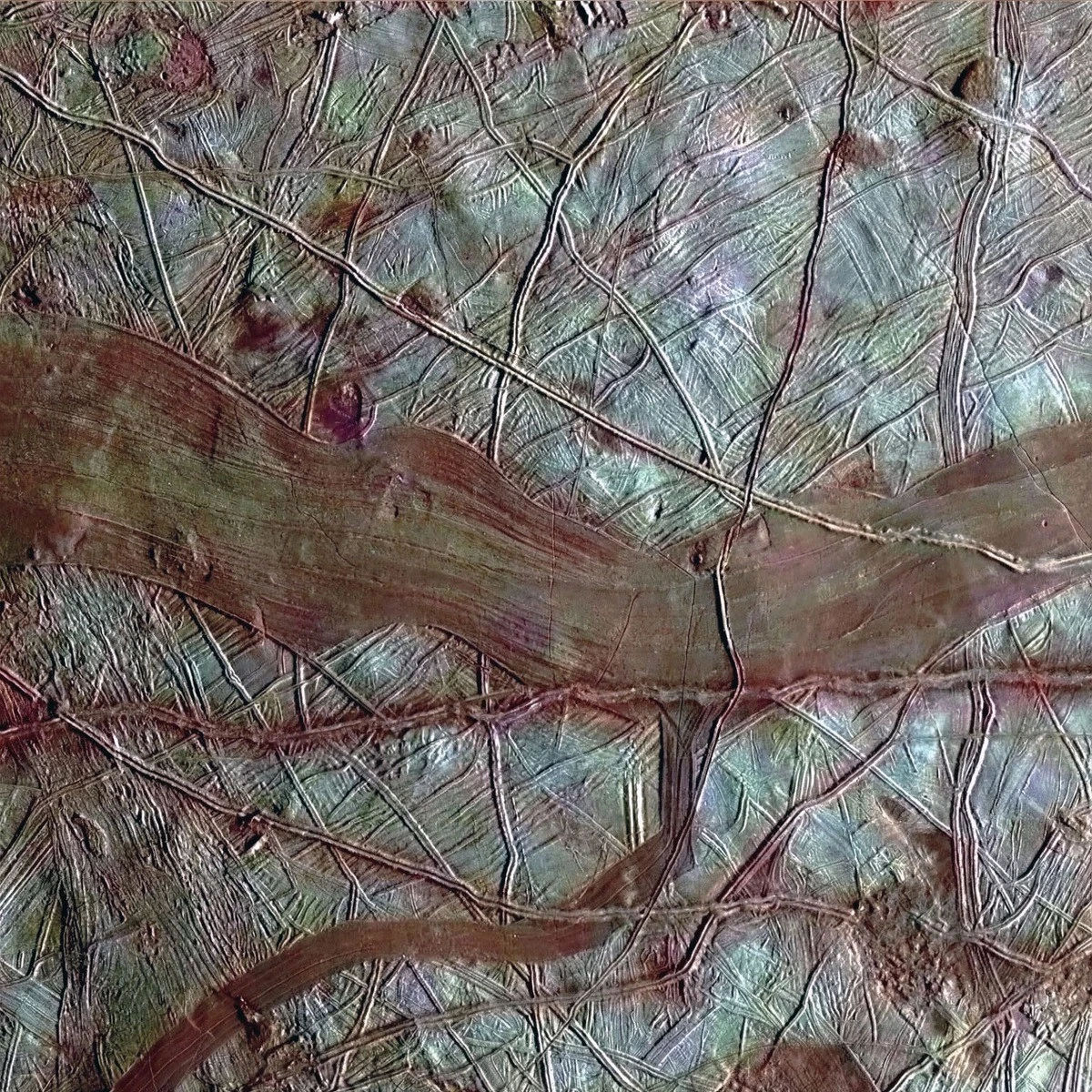
Enhanced image
Chemical elements, delivered, for example, by asteroids, can enter from the surface through cracks in the ice. In 2013 and 2016, the NASA/ESA Hubble Space Telescope detected plumes of water vapor reaching up to 200 kilometers in height—strong evidence that Europa's subglacial ocean may be in direct contact with outer space. 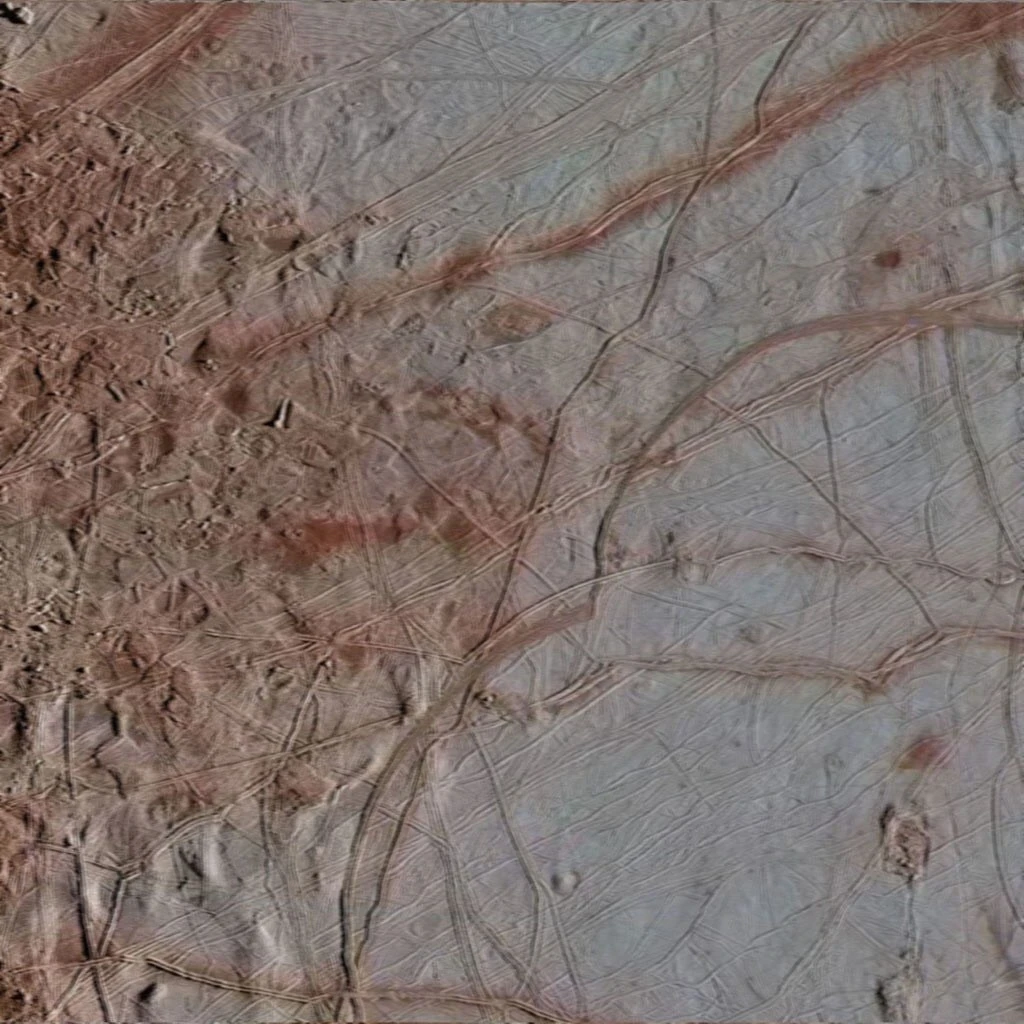
Original image 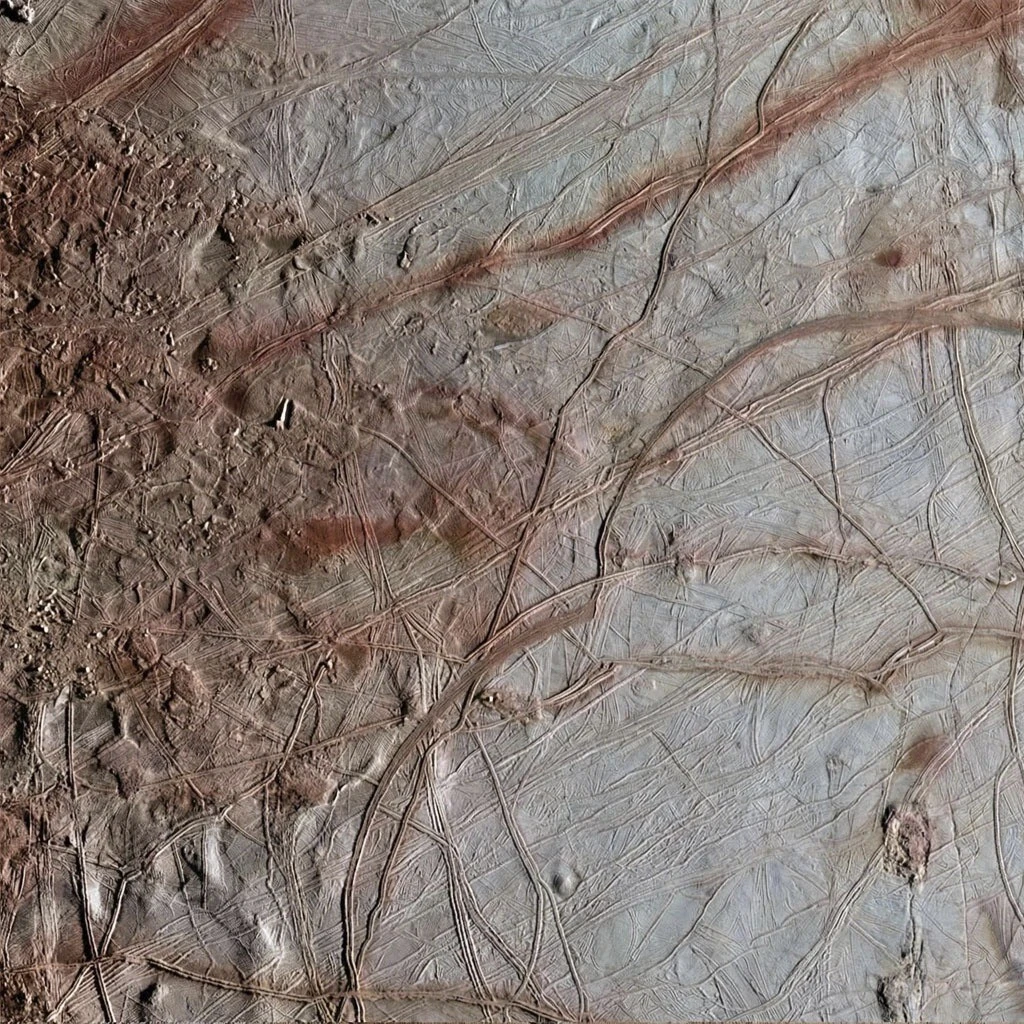
Enhanced image
Scientists believe that conditions in Europa's ocean are reminiscent of those in Antarctica's subglacial lakes, such as Lake Vostok, at a depth of over 3.7 kilometers, where life was discovered isolated from the outside world.
All this makes Europa one of the most promising targets in the search for extraterrestrial life within the solar system. 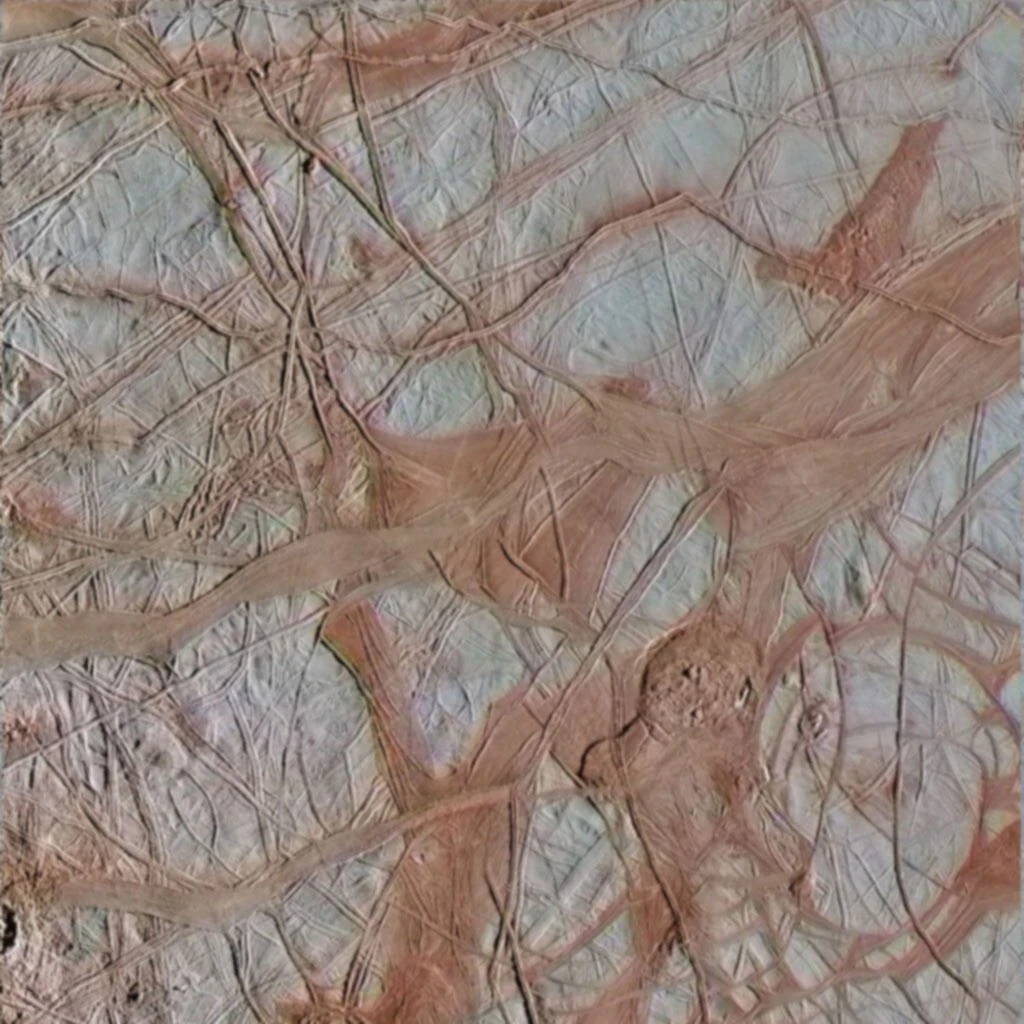
Original image 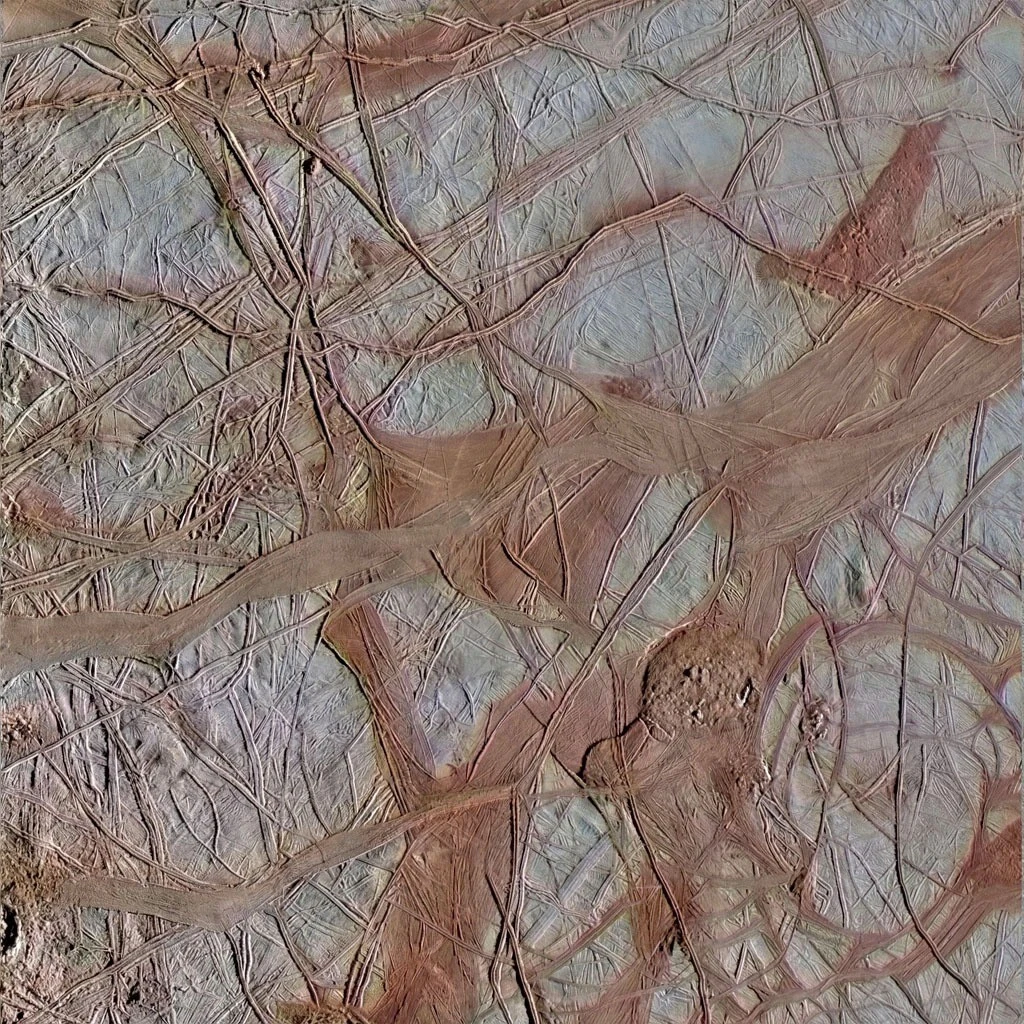
Enhanced image
Europa Clipper: A New Mission is on the Way
NASA's Europa Clipper mission launched on October 14, 2024, and is scheduled to arrive in the Jupiter system in April 2030. The spacecraft is planned to make at least 50 flybys of Europa, studying its icy crust, surface composition, and, if lucky, even fly through plumes of water vapor, as NASA's Cassini probe did with Saturn's Enceladus. Europa Clipper will also search for the most suitable sites for a future landing mission.
Archival Galileo images, reconstructed using machine learning, offer a new perspective on Europa and set the stage for discoveries in the coming decade.