5 real cases where the butler really turned out to be the killer (6 photos)
In the 19th and 20th centuries, butlers and valets occupied a special position in the homes of the aristocracy: they knew their masters' routines and had access to valuables, keys, personal papers, and even bedrooms. This is why, in rare but high-profile cases, these "invisible" figures proved to be the most dangerous people in the house. 
François Courvoisier 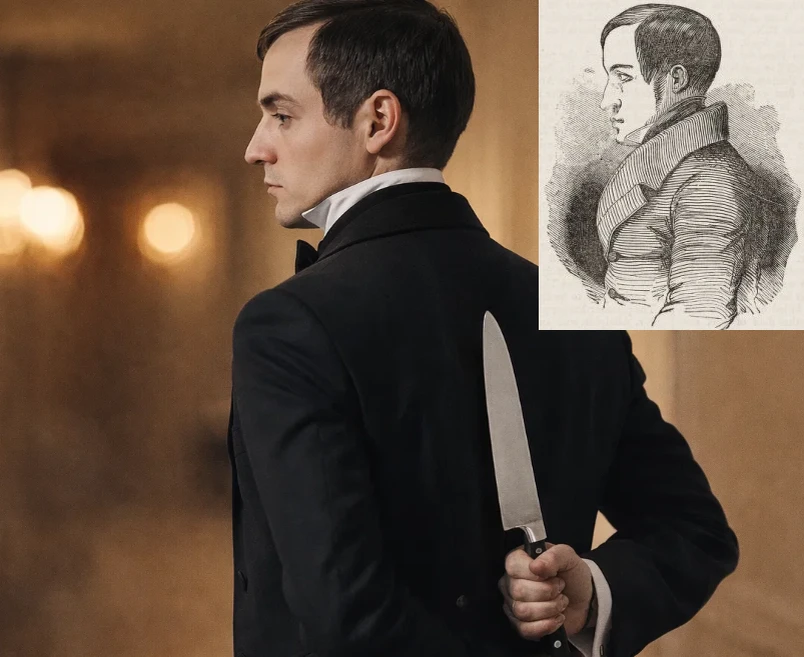
The most famous case in the history of "butler killers" is associated with the name of François Courvoisier. Many researchers believe it is his crime that is the source of the famous detective cliché.
Furthermore, there's even an interesting term in foreign criminology: "Courvoisier syndrome." It describes a situation where a crime is committed by a civil servant close to wealthy people, someone from whom society would least expect any aggression.
François Courvoisier himself served as a valet to the British aristocrat William Russell. His employer lived in London and belonged to the influential Dukes of Bedford. Courvoisier enjoyed trust in the household and had free access to the master's belongings.
In May 1840, he began secretly stealing silverware. But the butler soon realized that the theft might be discovered, as the master began asking him suspicious questions.
Then the butler decided to take extreme measures.
At night, he sneaked into the sleeping lord's bedroom and murdered him. Courvoisier then attempted to stage a robbery, hoping the police would blame the incident on an unknown criminal who had entered the mansion at night to steal money and jewelry.
However, the investigation quickly revealed contradictions. The evidence against the servant was overwhelming, and Courvoisier's own strange behavior raised questions among the investigators who questioned him.
The butler's trial became a true sensation in Victorian England. Newspapers described every detail of the proceedings in detail. When the criminal was brought to the scaffold in July 1840, a huge crowd—approximately 40,000 people—gathered in the square. Among the spectators were future literary celebrities Charles Dickens and William Makepeace Thackeray. It was after this case that the image of the "dangerous butler" began to take shape in popular culture.
Archibald Hall 
If the 19th century gave history the Courvoisier affair, the 20th century gave birth to a monster in an impeccably starched shirt—Archibald Hall. To the British aristocracy, he was Roy Fontaine: a charming majordomo (a senior butler for aristocrats, managing all staff), a connoisseur of antiques and wine. But behind the mask of the ideal servant lurked a recidivist who had turned a noble profession into a tool for his serial crimes.
Hall's childhood in the slums of Glasgow promised nothing but poverty. After a series of thefts and prison sentences, Archibald realized that to rob a castle, you don't need to force the door—just have it opened voluntarily. He learned etiquette, perfected a polite accent, and entered the homes of the British elite disguised as a "model British servant" with false documents and false letters of recommendation.
For a long time, his scheme consisted of quietly stealing jewelry from expensive homes. But in 1977, something happened to Hall's psyche. While working as a butler for 82-year-old MP Walter Scott-Elliott, and the old man and his wife, Dorothy, witnessed him stealing, the "perfect butler" resorted to drastic measures and murdered the couple. The butler didn't stop there. His next target was a chance accomplice and even his own brother, who knew too much.
Ultimately, Hall's undoing was a ridiculous accident—a suspicious hotel bill that led police to the trunk of a car containing yet another body. He then confessed to the remaining crimes. Archibald Hall ended his days in prison, leaving behind a chilling reminder that not always the person who makes your morning tea and prepares your breakfast truly wishes you bon appétit.
Giuseppe Mancina 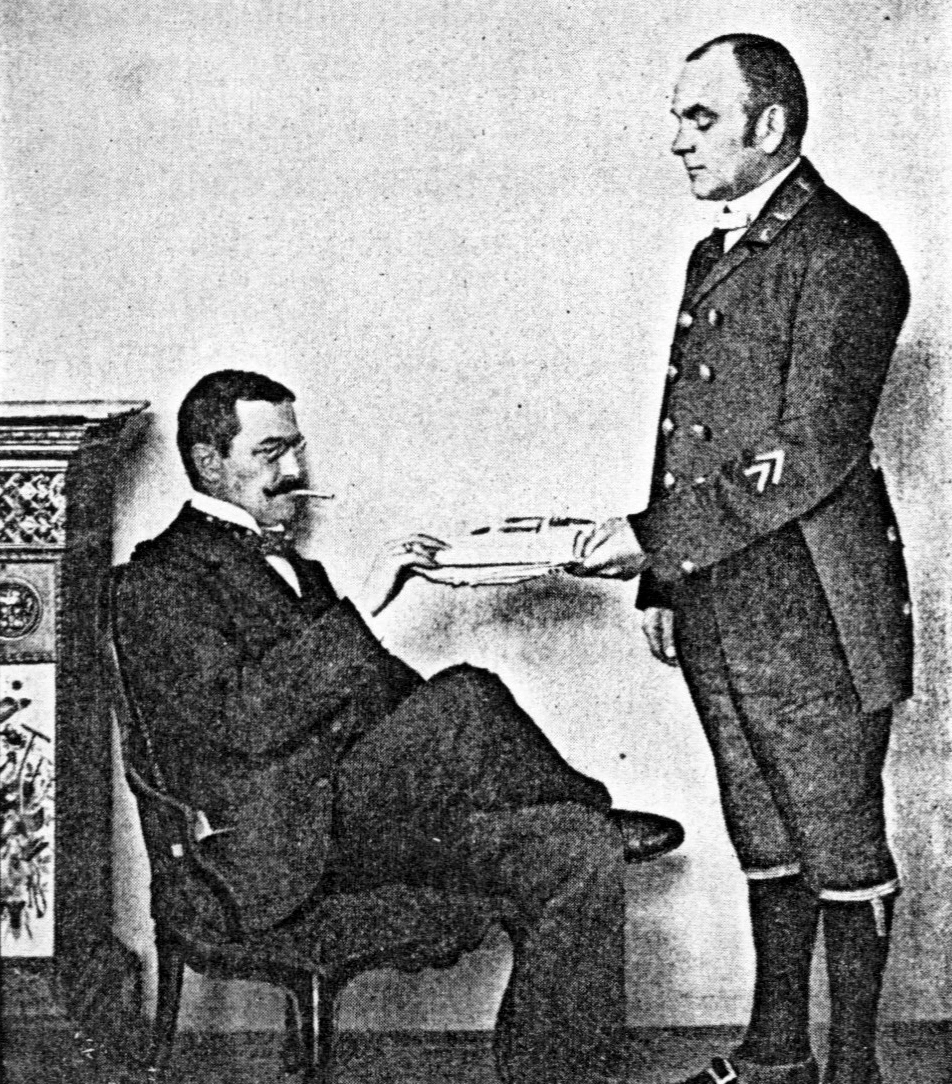
Another little-known but revealing story occurred in Sicily in the 19th century, when the body of a local nobleman, the Marquis of Casteldaccia, was found in an old aristocratic estate. The Marquis's house looked as if it had been robbed.
At first, the police did indeed believe that bandits had broken into the estate.
However, the investigation revealed that the burglars had acted too carefully. Many valuables were left in their original places.
Suspicion gradually fell on the man who knew the house best—a butler named Giuseppe Mancina. As butler, he managed the household, supervised the servants, disposed of the keys, and was familiar with virtually all the house's financial affairs. The Marquis trusted him so much that he practically considered him part of the family and promised him a share of his inheritance after his death.
But it was this promise that ultimately proved fatal.
Over time, the Marquis decided to revise his will. The previous version of the document had entitled several servants, including the butler, to lifelong payments after his death, a kind of pension for long service. However, the elderly aristocrat began to reduce these obligations, fearing that maintaining a large staff would ruin his heirs.
For Mancina, this meant poverty at the end of his life due to the lack of any plans or savings. And then his loyalty vanished.
The butler decided to take advantage of his connections with local criminal groups. At the time, numerous bandit clans operated in Sicily, which historians would later call early proto-mafia structures.
Mancina arranged for the bandits to attack the estate and kill the Marquis, making the crime look like a common robbery.
That night, the accomplices entered the house, created chaos, and committed the crime, attempting to create the impression of a robbery. At first glance, everything looked plausible: scattered belongings, broken-in cabinets, signs of a struggle. However, experienced investigators quickly noticed strange details.
For some reason, the "bandits" did not take the family silver and heavy jewelry—things that any real robber would have taken first. But the criminals knew exactly where the Marquis's cash and personal documents were kept. It looked as if someone from inside the house had told them exactly what to look for.
Suspicion gradually began to fall on the butler. But the case was finally solved by chance. One of the mercenaries involved in the attack drank too much at a local tavern and let it slip who had ordered the hit.
Afterwards, the police arrested Mancina. He was ultimately sentenced to hard labor, and his case became one of the most notorious criminal trials of the time.
Frank Miller 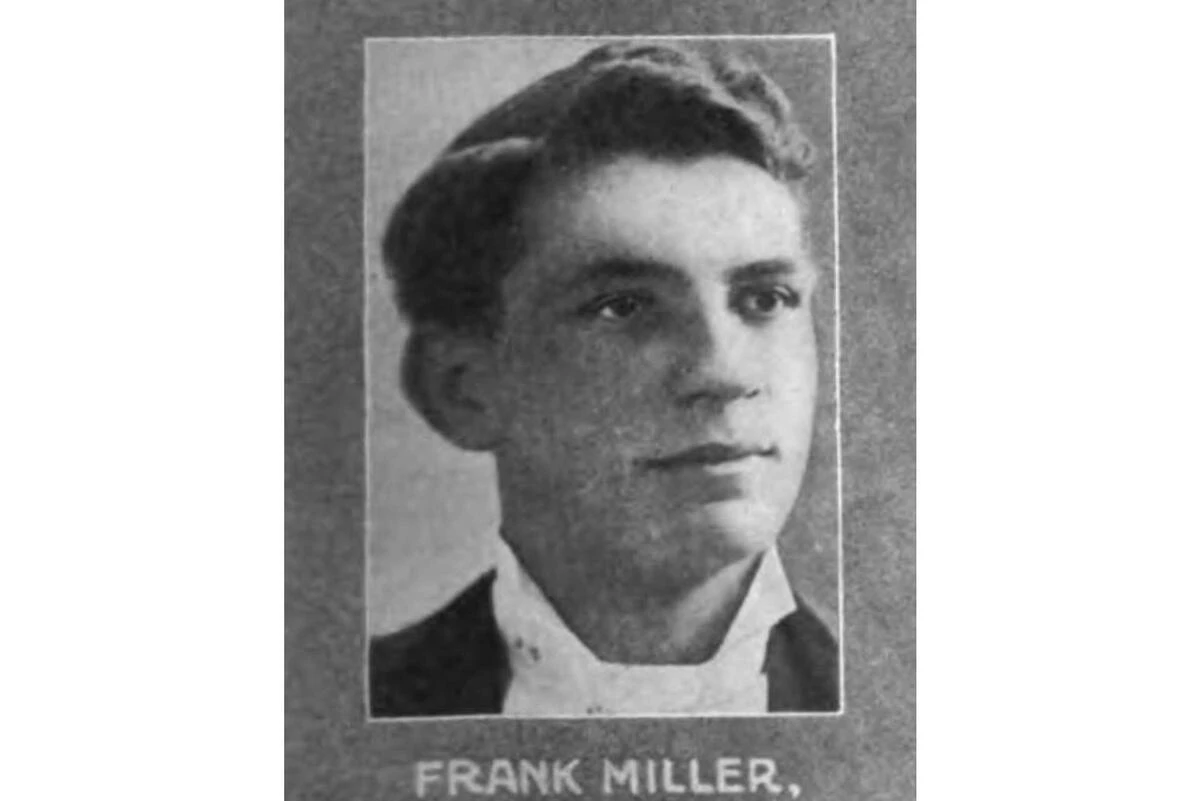
A young butler named Frank Miller served the wealthy industrialist Julius Franklin. He was considered a model servant: neat, calm, and loyal.
But Miller was very young, dreaming of money and a carefree life. So he hatched an unusual plan: to make his master remain in his debt, or at least incredibly grateful. So one night, Miller brought a homeless man into the house, promising him food and shelter. Miller then staged an attempted robbery and murdered the poor man.
After this, the butler raised the alarm, fired several more shots from his revolver, and declared to his terrified master, who had rushed to the scene, that he had heroically defended his home from a burglar.
Julius Franklin was so touched by the servant's devotion that he immediately proclaimed him his savior. For his courage, the master presented the butler with a truly luxurious gold watch and a substantial sum of money (approximately $1,000). By comparison, the average American worker at the time earned approximately $300-400 per year.
However, the butler was let down by the detectives' overconfidence and meticulousness. An examination of the "burglar"'s body revealed that he had no tools for breaking into a house, not even a weapon, and his clothing was too shabby even for a street thief. But the main evidence was the vagrant's position and the trajectory of the shots; they proved that the victim hadn't attacked, but rather was attempting to save herself and run away.
During interrogation, the butler's testimony became confused, and the truth came out. It turned out to be a cold-blooded, calculated crime, staged to stage a heroic act and receive a cash payment from his master.
In any case, Miller spent the remaining years of his life behind bars.
John Lee 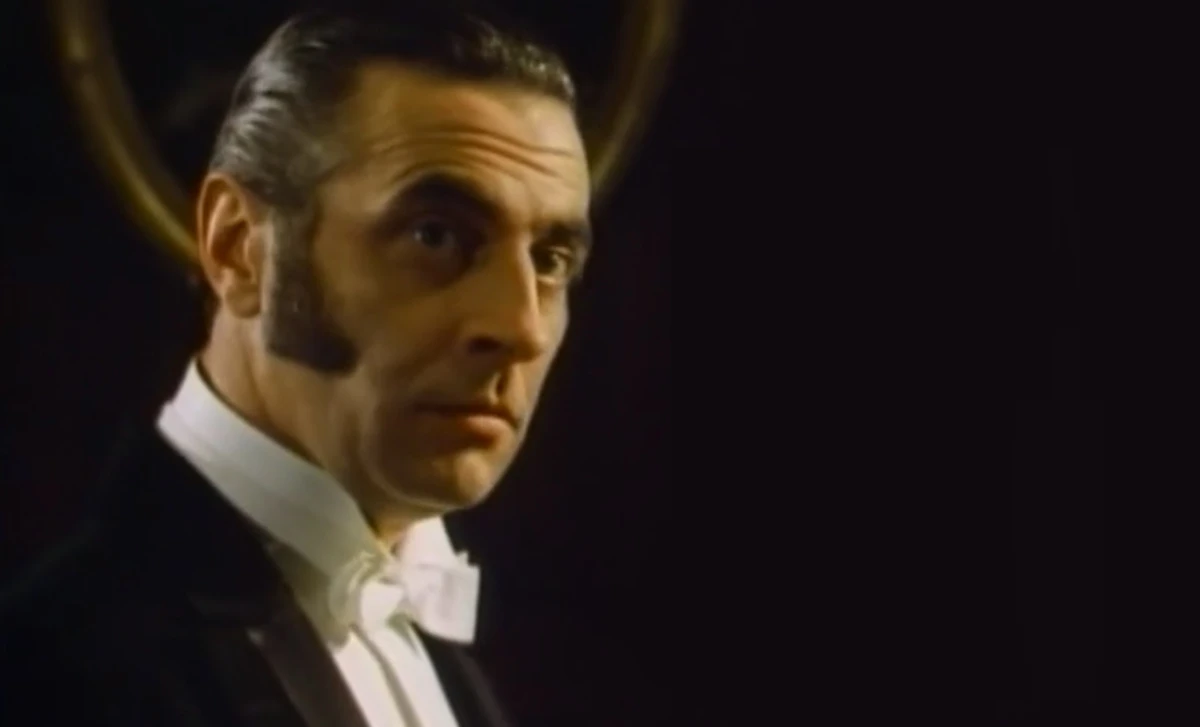
While most butlers were motivated by greed or fear of exposure, John Lee's story is a classic example of how wounded pride and a thirst for revenge can turn a devoted employee into an embittered man.
Before becoming a domestic servant, John Lee served in the Royal Navy but was invalided out due to a leg injury. He soon began working as a butler at the picturesque Glen Broom estate of the elderly and wealthy Lady Emma Case, who had aristocratic roots.
The relationship between mistress and servant seemed ideal for a long time, until a financial issue intervened. A conflict erupted over a trivial matter. Miss Case, a meticulous woman, decided to punish John for a minor disciplinary infraction by cutting his weekly wages by a few shillings. For Lee, who considered himself an exemplary worker, this was not just a loss of money but a personal insult. In his mind, his mistress became a "cheesy old woman" brazenly robbing an honest worker. The resentment festered for weeks, morphing into a plan for brutal reprisal.
On November 15, 1884, John moved from words to deeds. Waiting until the estate was asleep, he crept into Miss Case's bedroom and murdered her. To cover his tracks, Lee decided to set the house on fire. However, his hopes for a "purifying flame" were misplaced: the fire was noticed too quickly, and it failed to destroy the key evidence.
Investigators found John Lee suspiciously calm. Despite being the first to "rush to extinguish the fire," suspicious dried reddish stains were discovered on his clothing. An empty fuel can was found in his room, and his bedroom window showed signs of forced entry from the inside. The police soon extracted a confession from the butler.
At his trial, Lee acted defiantly. When he was sentenced, he uttered a phrase that became prophetic: "I am innocent, and God will not let me die on the gallows."
What happened on February 23, 1885, in Exeter Prison went down in criminology history as the "Miracle at Babbacombe." John Lee was led to the scaffold and the sentence was read. The executioner pulled the lever, but the heavy oak hatch beneath the condemned man's feet did not budge. The mechanism was tested—it worked perfectly without any load. The attempt was repeated. Again, failure. The third time, the executioner personally jumped on the hatch doors, testing them, but as soon as Lee stood on them, the mechanism jammed tightly.
The priest and prison guards were horrified, believing this to be a sign from God. The execution was halted. Under public pressure, the Home Secretary commuted the sentence to a simple life sentence. To the end of his days, he maintained that it was his righteousness, God's punishment, and his thirst for justice that saved him from the noose.