Feast your eyes on Callisto, the moon with the oldest surface in the Solar System (5 photos)
The moon Callisto (mean diameter 4,820 kilometers) orbits the mighty Jupiter—a cosmic chronicler preserving the memory of the Solar System's earliest times. This mysterious world possesses a unique feature: the oldest surface of any known celestial body in our solar system. 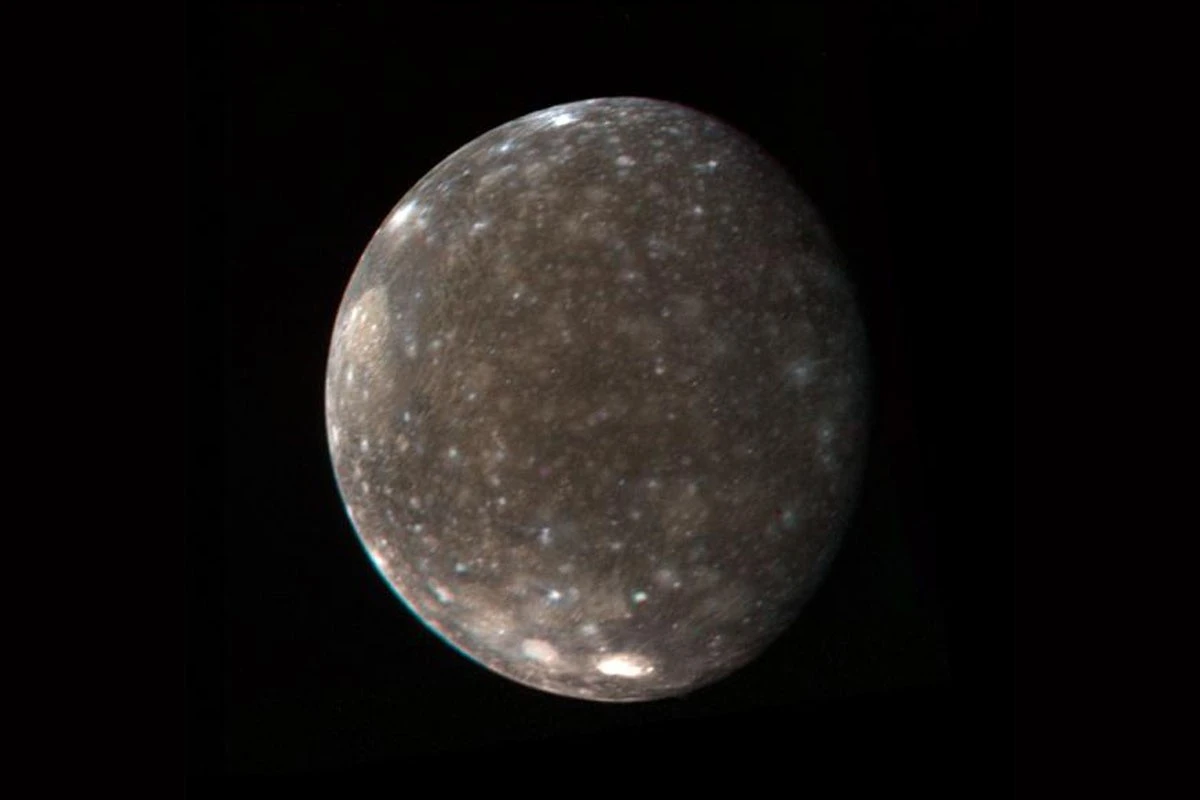
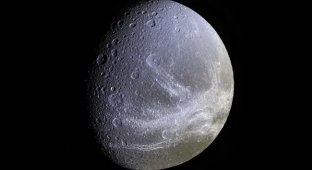
Color image of Callisto taken by NASA's Voyager 1 spacecraft on March 5, 1979, from a distance of 1.2 million kilometers. Impact structures and white areas of pure water ice are visible.
Imagine—the last significant changes here occurred more than 3.5 billion years ago, when life was just beginning to emerge on Earth.
Ice Spires—Guardians of Time
Callisto's surface is adorned with majestic ice spires, 80 to 100 meters tall. These gigantic structures, covered in a thin layer of dark dust, were formed at the dawn of the Solar System's formation as a result of collisions with other celestial bodies. 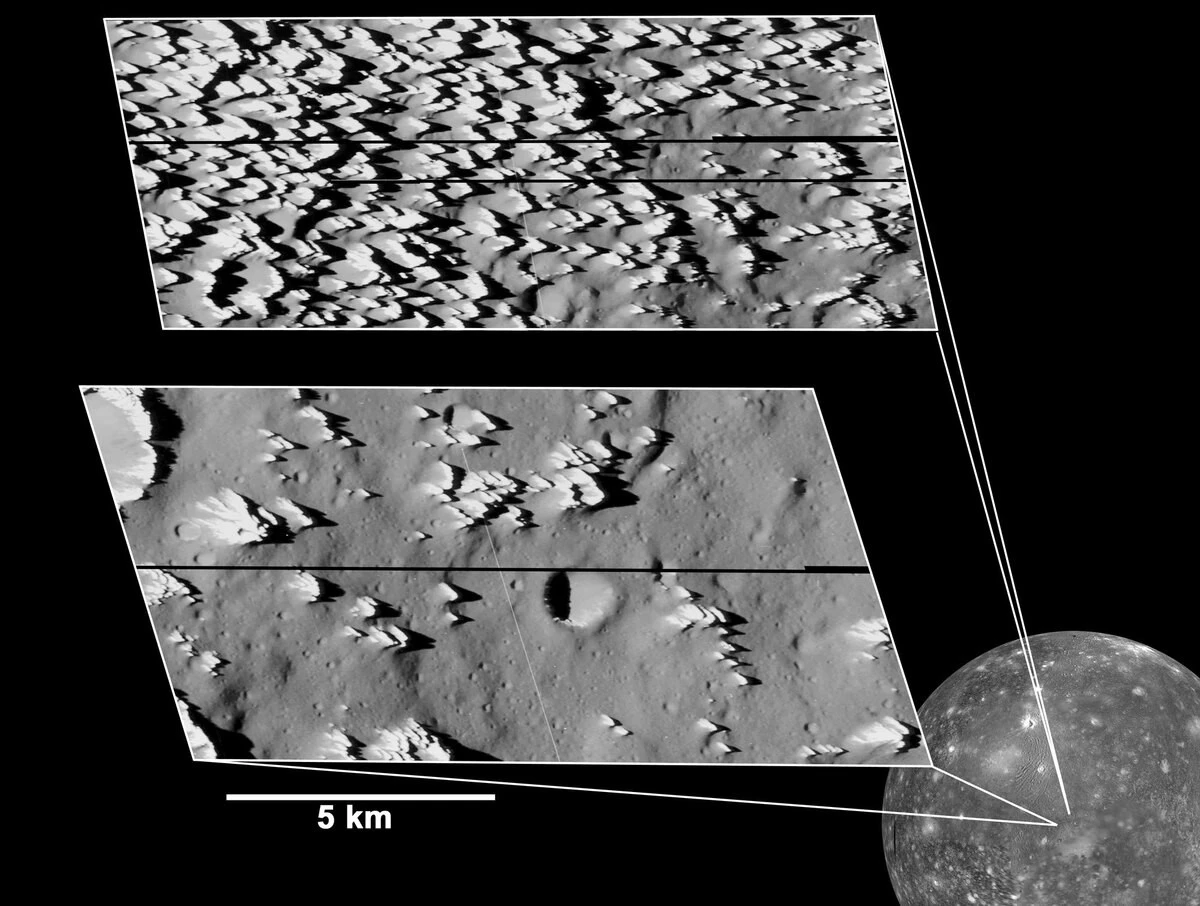
Ice spires captured by NASA's Galileo spacecraft in May 2001
The impacts were so powerful that they extracted ice from the moon's depths and scattered it across the surrounding area, creating these unique formations. However, the spires are slowly eroding, causing dust to roll and accumulate in the lowlands. In a few billion years, these majestic structures will become gentle dusty hills, but for now they stand as silent witnesses to the evolutionary history of our planetary system.
Frozen History
Unlike its turbulent neighbor Io, where extreme volcanic activity (more than 400 active volcanoes!) renews the surface at a rate of about a centimeter per year, Callisto retains a virtually pristine appearance. 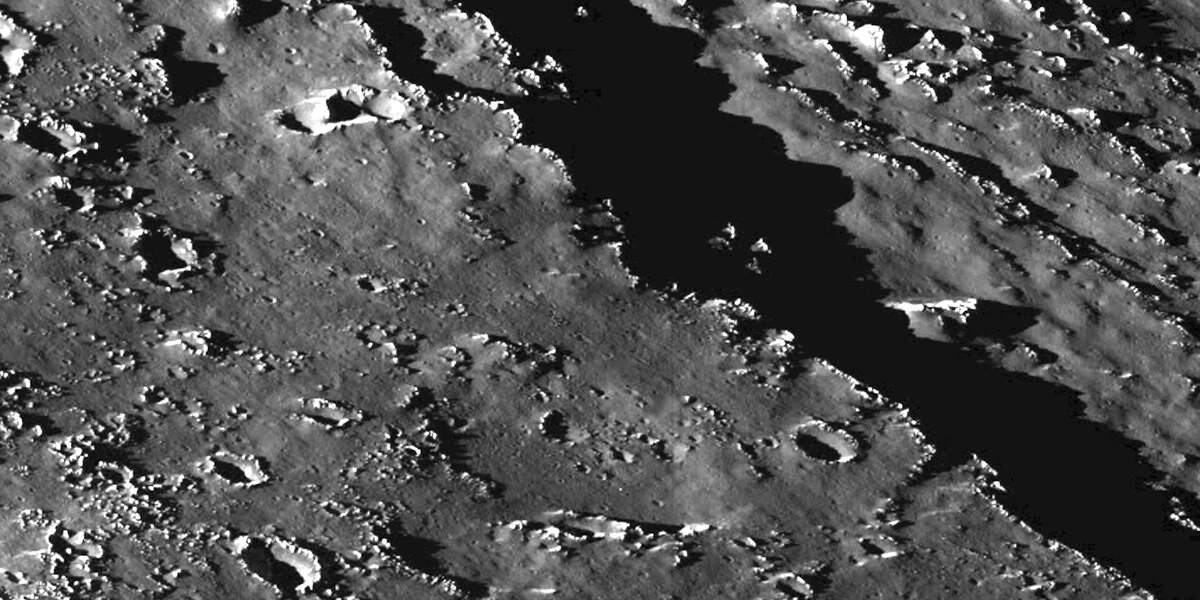
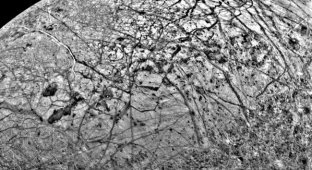
A mosaic of the Valhalla region, stitched together from images taken by NASA's Galileo spacecraft on November 4, 1996. Numerous hills, craters, and faults are visible.
The moon's surface is pockmarked with numerous impact craters, some over four billion years old! These ancient scars hold information about the early stages of the formation of our cosmic neighborhood, including the origins of Jupiter itself and the other planets.
Secrets of the Subsurface Ocean
Behind the frozen mask of Callisto's ancient crust lies a monumental mystery—an entire ocean of liquid water, spreading deep within the icy moon. 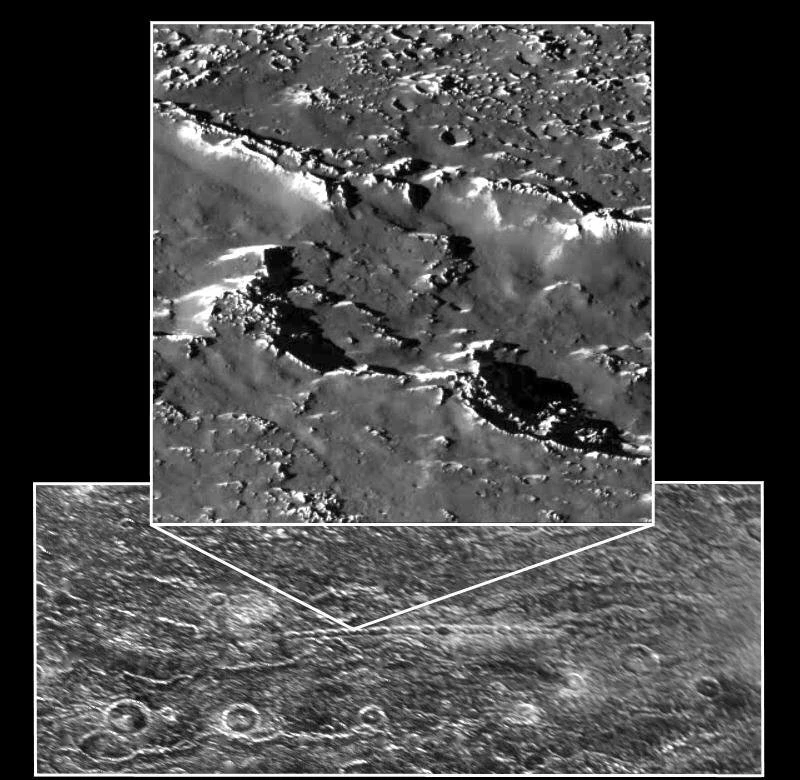
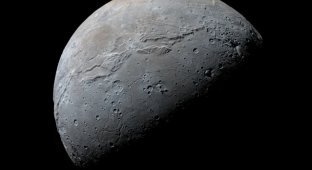
This image from NASA's Galileo spacecraft taken on November 4, 1996, shows a chain of impact craters formed by the impact of a fragmented object (most likely a comet that broke up on impact several billion years ago).
It lies so deep that it is impossible to reach with current technology. However, the very existence of this ocean makes Callisto an even more intriguing target for research.
Scientific Value
If humanity ever sends a probe to Callisto capable of collecting and returning regolith samples to Earth (especially those collected beneath the dust layer of one of the spires), we will gain invaluable data on the early history of the Solar System. 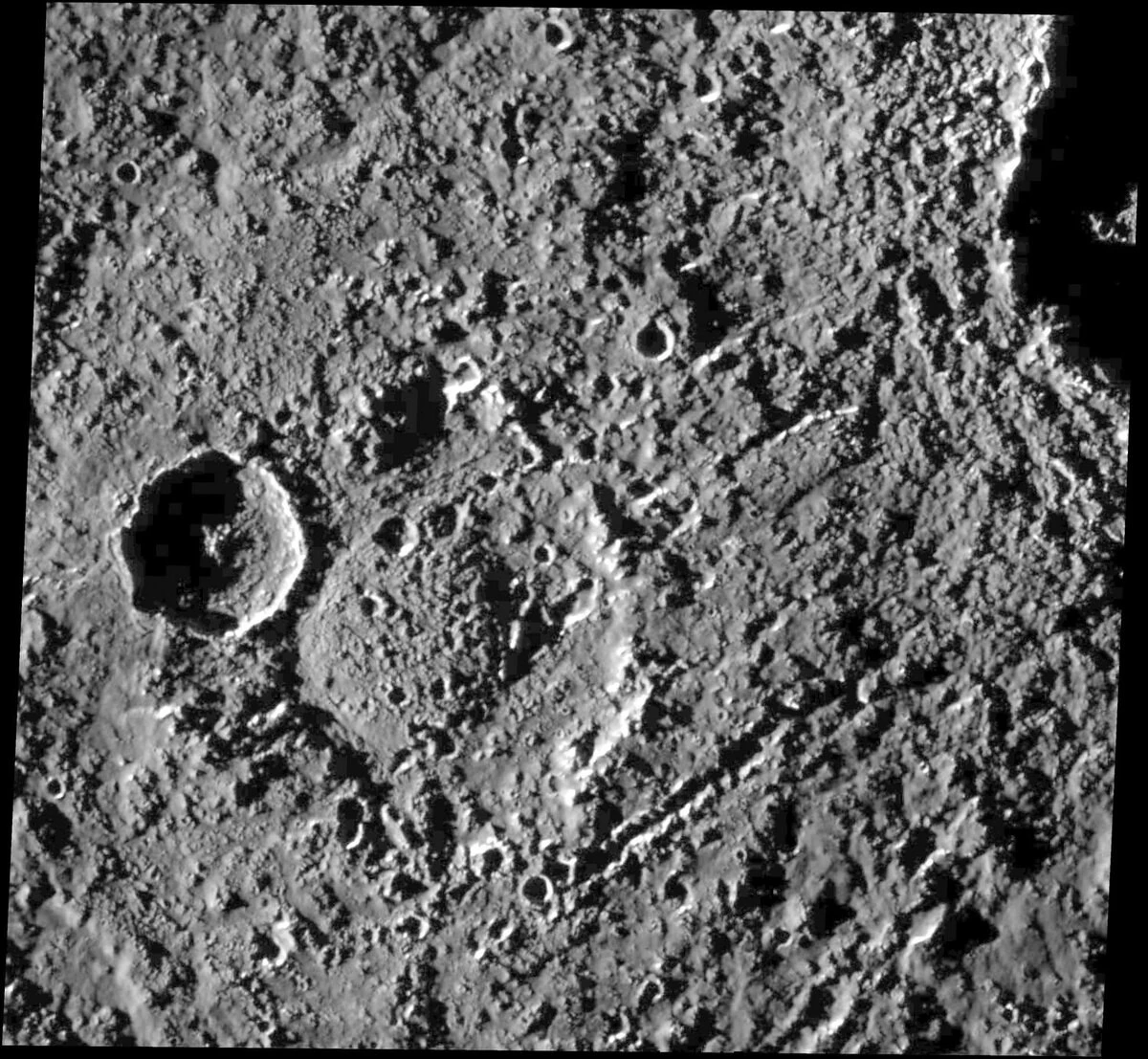
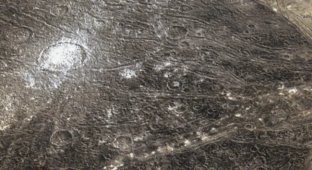
Image of a heavily cratered region near Callisto's equator, taken by NASA's Galileo probe on June 25, 1997. In the center is the 50-kilometer-wide Khar crater with an unusual rounded mound at the bottom.
It will be like reading an ancient chronicle, detailing events that took place billions of years ago. Every particle of soil can tell a story about cosmic cataclysms, the formation of planets, and the processes that shaped the modern appearance of our planetary system. Perhaps the ancient rocks of Callisto hold the key to unraveling the mystery of the origin of life on Earth.