Monster Gloucester: How One Serpent Divided Scientists and Inspired Mockers (8 photos)
In the summer of 1817, something unusual began to be spotted in Gloucester Harbor and along the coast of Cape Ann. Eyewitnesses described a gigantic, snake-like creature, its long body appearing and then disappearing underwater, leaving a chain of humps on the surface. 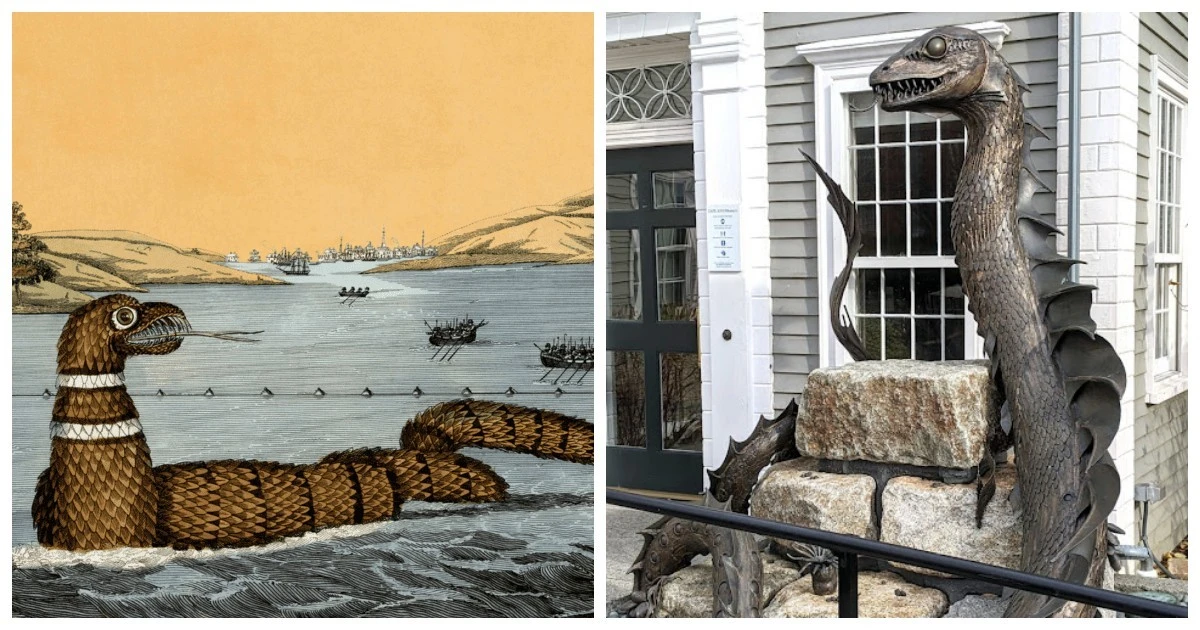
That season and the following year, fishermen and other reliable locals reported sightings of the mysterious creature one after another. The story captivated scientists, journalists, and the general public. The Gloucester Sea Serpent has become a legend and is still considered one of the most reliably documented cryptid sightings. 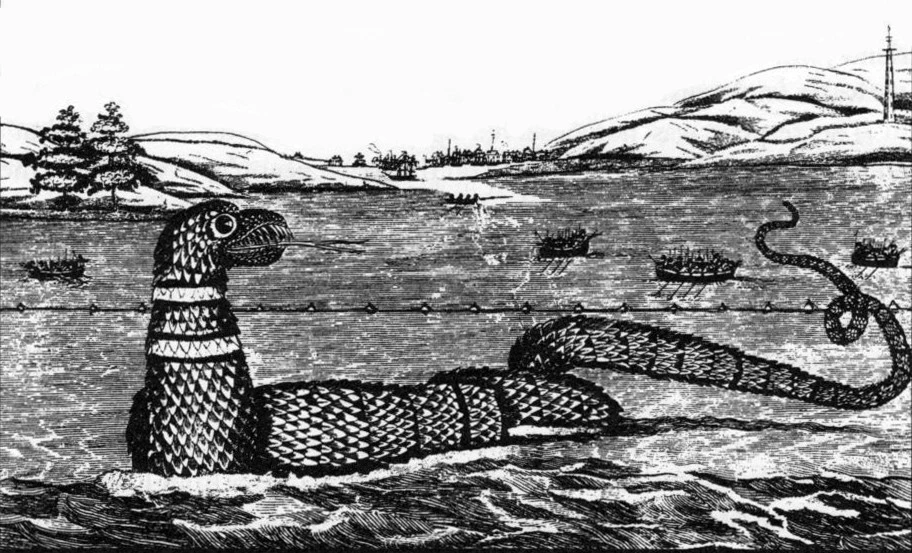
While the indigenous peoples of these areas have preserved legends of mysterious denizens of the deep for centuries, the first documented European sighting dates back to 1638. Explorer John Josselyn described a strange sea creature off the coast of New England. 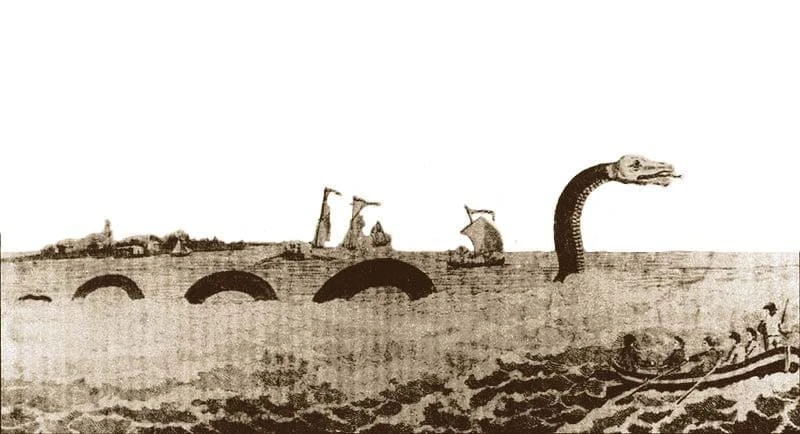
But the legend only took shape in August 1817. Hundreds of witnesses reported seeing a gigantic creature in Gloucester Harbor. Its length was estimated to be between 15 and 30 meters. Its head, reminiscent of a turtle or perhaps a horse, rose above the water. Its body seemed to be composed of segments (witnesses compared them to a series of floats or barrels) and moved in a wave-like motion, rising and falling vertically. 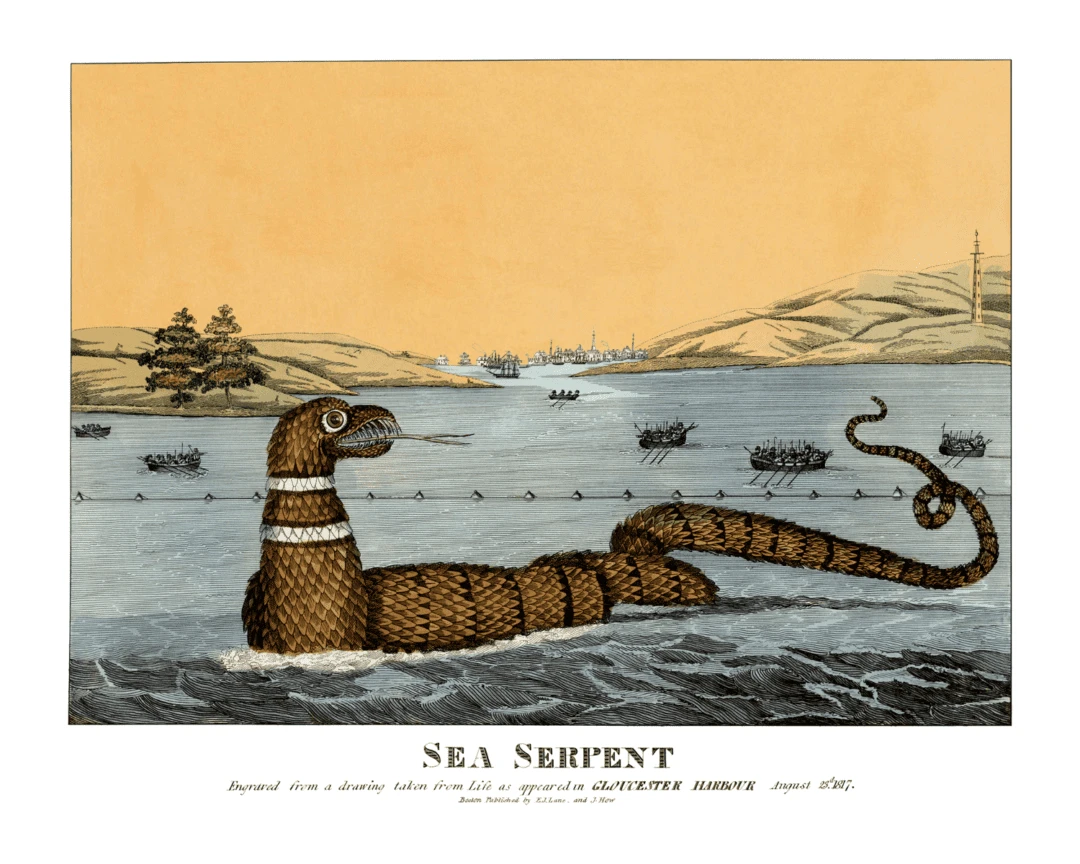
Witnesses claimed the creature possessed incredible speed. When swimming on the surface, its movements were slow, sometimes circling, and at other times moving almost in a straight line. When it disappeared, it seemed to dive straight down, reappearing two minutes later 200 meters from where it had disappeared. 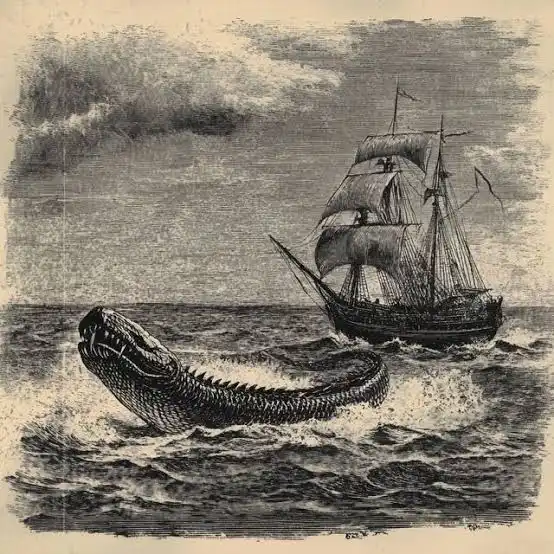
Reports of the snake sparked heated debate. Even the Linnean Society of New England weighed in. Within a week of the initial reports, it convened a special committee to "collect evidence regarding the existence and appearance of such an animal." The committee interviewed numerous eyewitnesses and prepared a report for publication and distribution to scientific societies worldwide. 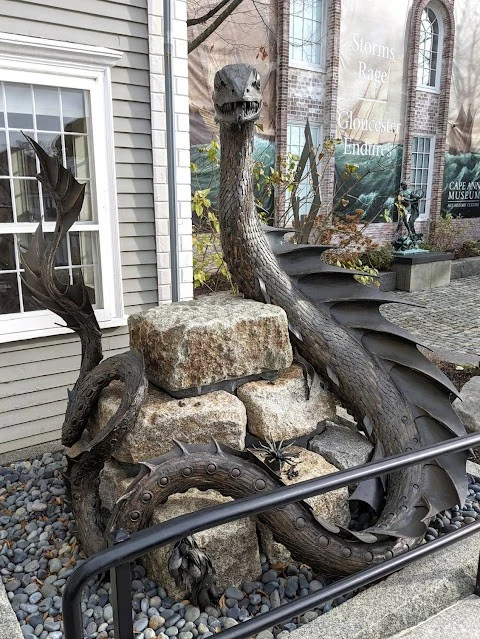
The Gloucester Sea Serpent statue, located near the Cape Ann Museum in Massachusetts, USA
In this report, the committee not only concluded that the creature was real but also declared it a previously unknown species, which it named Scoliophis atlanticus. The classification was based on a curious find: a meter-long snake discovered by a local resident on a nearby beach. The specimen had an unusually curved spine, and given its proximity to the observation site, scientists speculated that it was "an offspring of the great serpent." 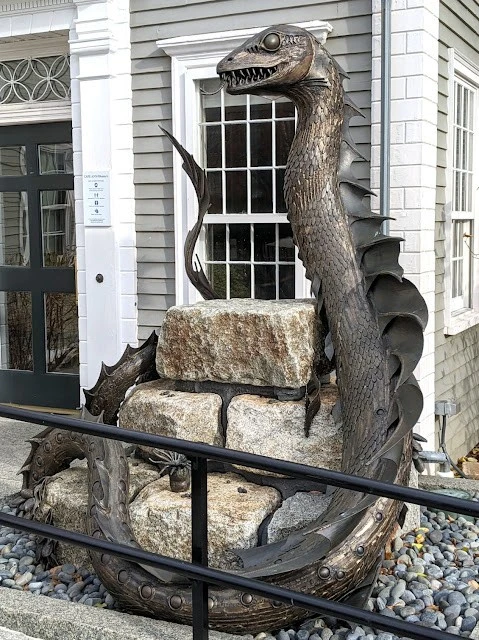
John Davis, the society's president, later acknowledged the boldness of this claim:
It was quite bold to propose a new genus in the current advanced state of natural history, but we felt the creature's characteristics warranted it.
However, the society's brochure was met with a wave of ridicule and even spawned a flood of false testimonies. The story was particularly ridiculed in the American South. Charleston playwright William Crafts wrote a satirical play, "The Sea Serpent; or, The Gloucester Hoax: A Dramatic Wit in Three Acts." The play posited that the serpent was nothing more than a practical joke designed to enhance Gloucester's reputation. 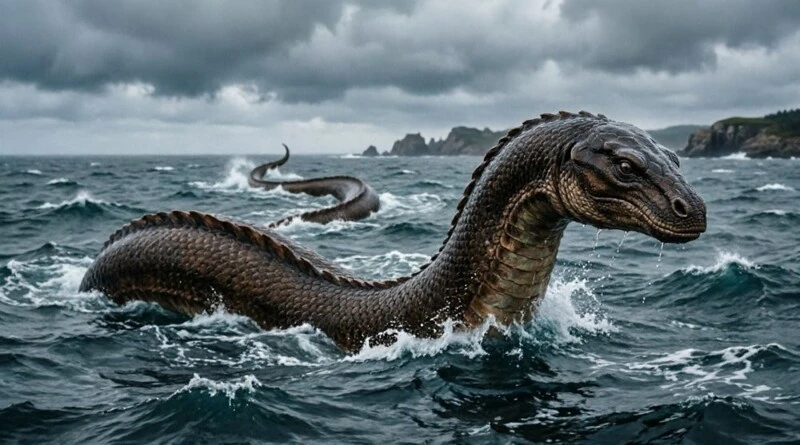
The Gloucester Serpent was finally debunked by the Boston Society of Natural History in 1863. Scientists examined the supposed "offspring" housed in the collection of the Linnean Society and discovered it to be a common black snake with a deformed spine. The sightings themselves were attributed to misidentification.
The most plausible theory was that eyewitnesses mistook a humpback whale (or several whales moving in a chain) feeding near the surface for a snake. Its moving back created the illusion of a multi-humped, snake-like body. Thus, Scoliophis atlanticus was finally declared a myth.