This image shows a fragment of the 383-kilometer-wide Goethe impact basin, located in Mercury's northern plains. 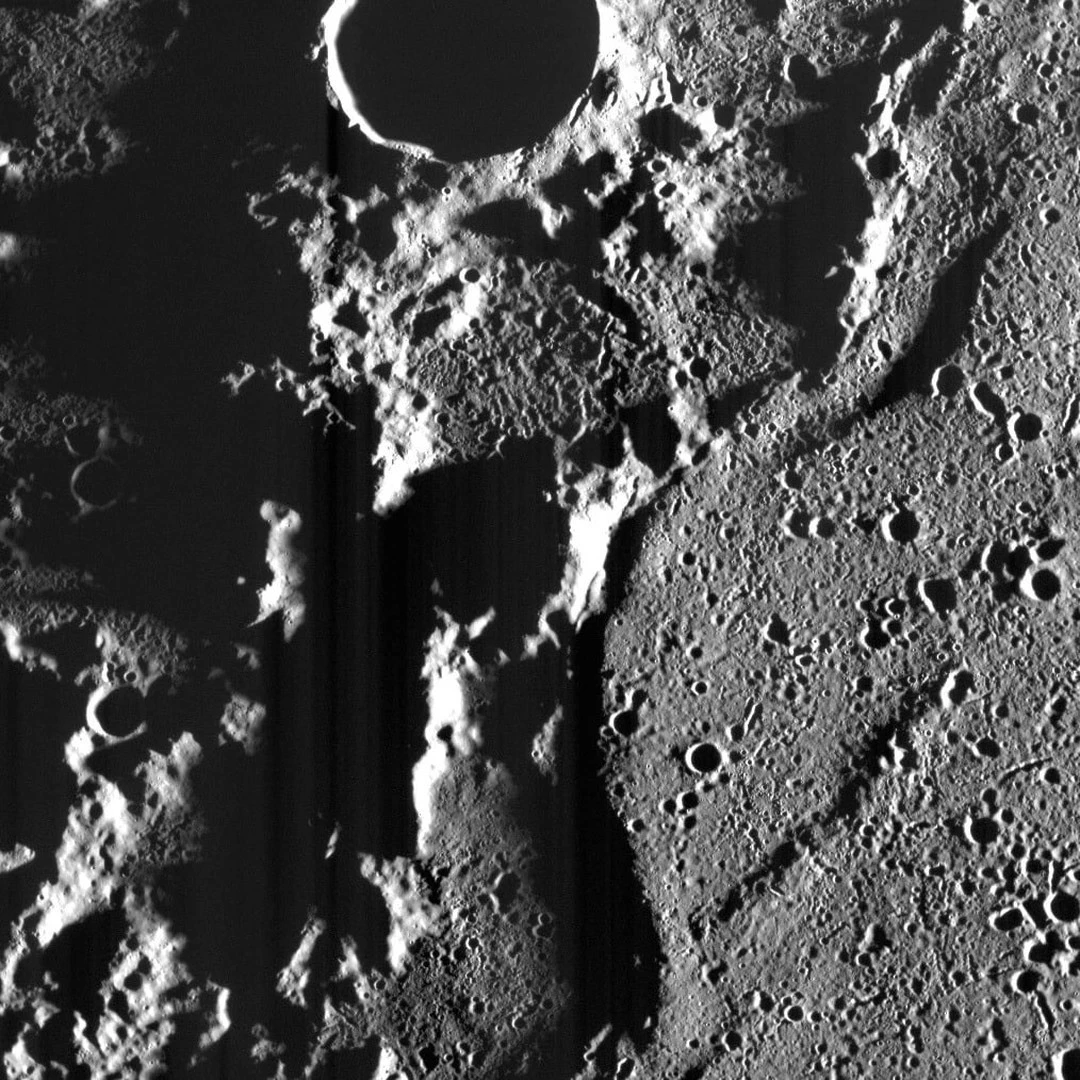
This image was acquired by NASA's MESSENGER spacecraft on March 29, 2012, as part of the High-Resolution, Three-Color Imaging (HRI) program during its extended mission.
The basin displays some of Mercury's most impressive deformations: numerous folded ridges, ridges, and lobate structures. The latter are likely tectonic in origin, but they resemble solidified lava flows—a mystery that scientists will have to solve.
The image was taken when the Sun was very low above the horizon, lengthening the shadows and highlighting the region's topographic features. This allows even the tiny craters that pockmark the relatively smooth plains of the basin to be seen in the image.
The large crater at the top of the image is in a zone of permanent shadow and contains radar-bright material, likely water ice.
Messenger orbited Mercury from 2011 to 2015, during which time it transmitted more than 270,000 images and terabytes of data, forever changing our understanding of this fascinating world.
Add your comment
You might be interested in:












An ordinary maid from a Chilean hotel has become famous

They want to sell a broken McLaren Senna for more than a

25 dogs that madly love their little owners!

View from the Sky (15 photos)

Emotional foal leads rescuers to help horse in distress

A Very Rare Ford Mustang by Zagato Is Up for Sale (29

Rolls-Royce during the war: 33 electric Spectres have been

Basketball player loses wig during match

The cat took a toy phone from a child and refuses to give

Protective film Removing it with a power screwdriver

Precision carpentry

Looks like it's time to buy WinRAR

When a child plays hide-and-seek at a professional level

Athlete in Bavarian dress flies over a lake on a hydrofoil

How to hang wallpaper neatly

Man sets up bedroom camera and discovers the reason for his

Super dads who swoop in to save the day

The Terminator's tears: Figure decides to scrap its old
