Tasmanian Devil: a violent predator with a host of oddities (13 photos)
The Tasmanian devil is the largest of the modern marsupial predators, and at the same time, the most fascinating. It manages to combine the size of a small lynx, the endurance of a wolf, a funny thick tail, and a downright obsessive attachment to burrows. 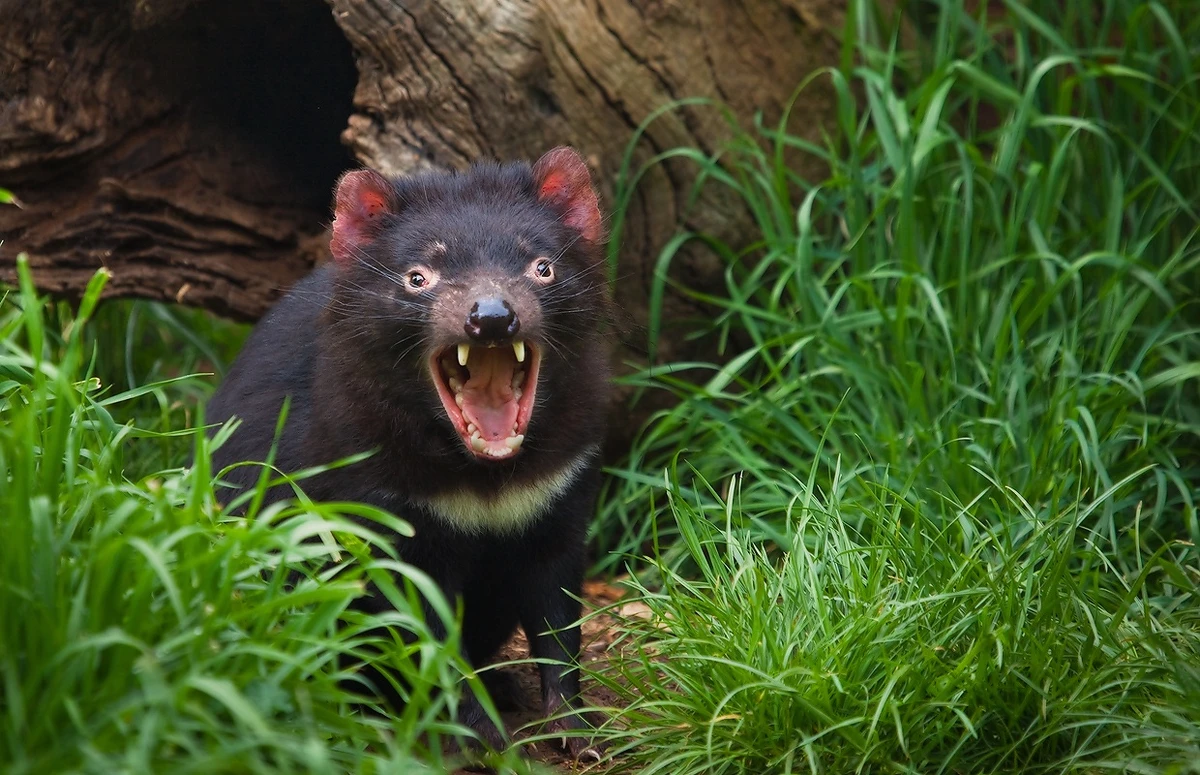
Small ears, sideways eyes. He's cute, not scary!
Although the devil is a relatively large predator—weighing up to 12 kilograms—it doesn't look particularly dangerous. Their massive, clumsy, short-legged bodies look more comical than dangerous. Moreover, during the day, devils hide in burrows, to which they have a comically strong affection. 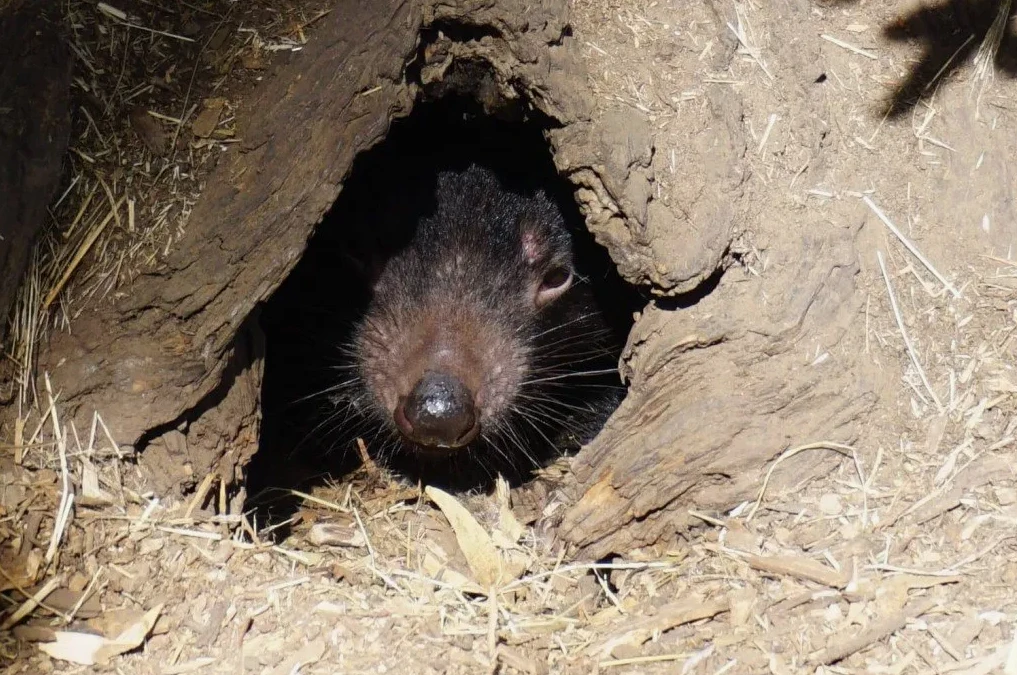
Go away.
Every self-respecting devil has 3-4 burrows, usually stolen from wombats, not dug themselves. And unlike other predators, which change their location at the first sign of danger, devils cling to their burrows to the last, never changing them throughout their lives. Particularly good and convenient burrows can even be passed down from generation to generation, remaining in use for centuries. 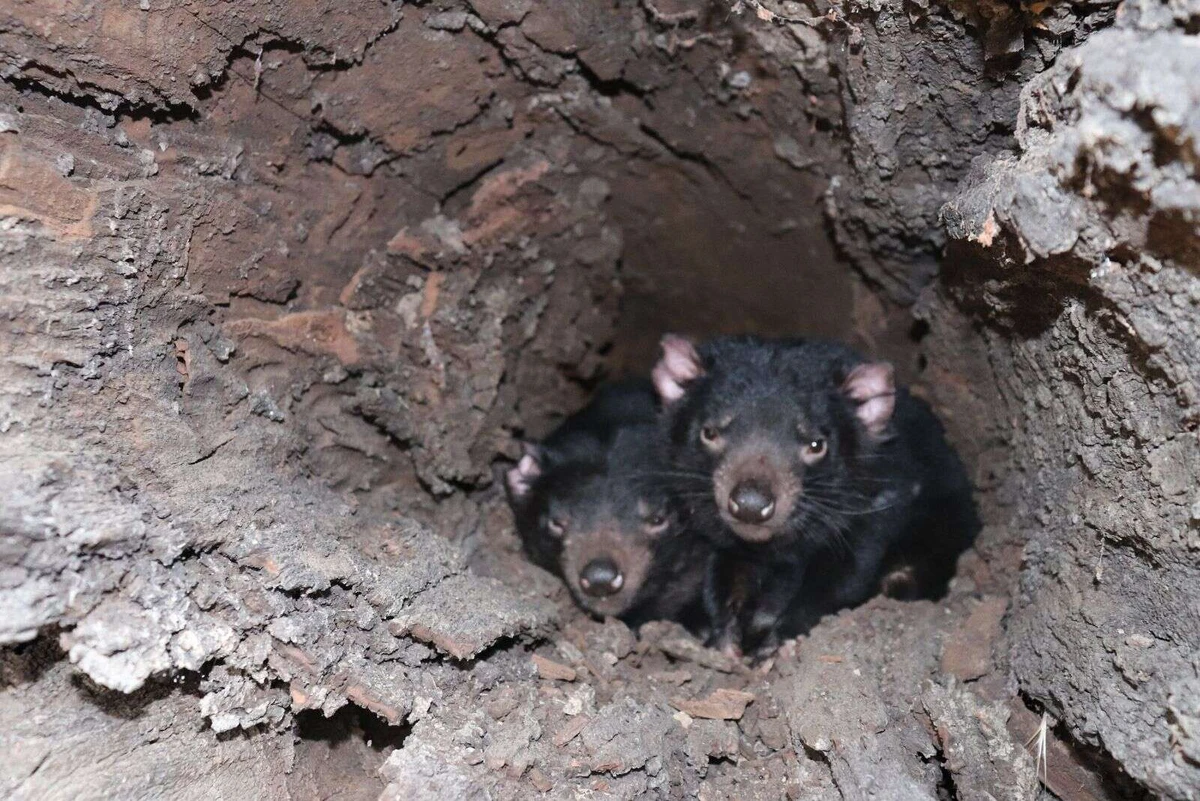
Each burrow belongs to only one devil. And while the young are still tolerant of each other, upon reaching adulthood, they lose all empathy for one another.
But all this is during the day; at night, these clumsy and entertaining homeowners transform into surprisingly agile and fast predators. Tasmanian devils can climb trees, swim well, run at speeds of 13 kilometers per hour, and cover 8-10 kilometers per night. And that's not the limit; some clever ones can cover up to 50 kilometers per night! The only thing that's unclear is: why? 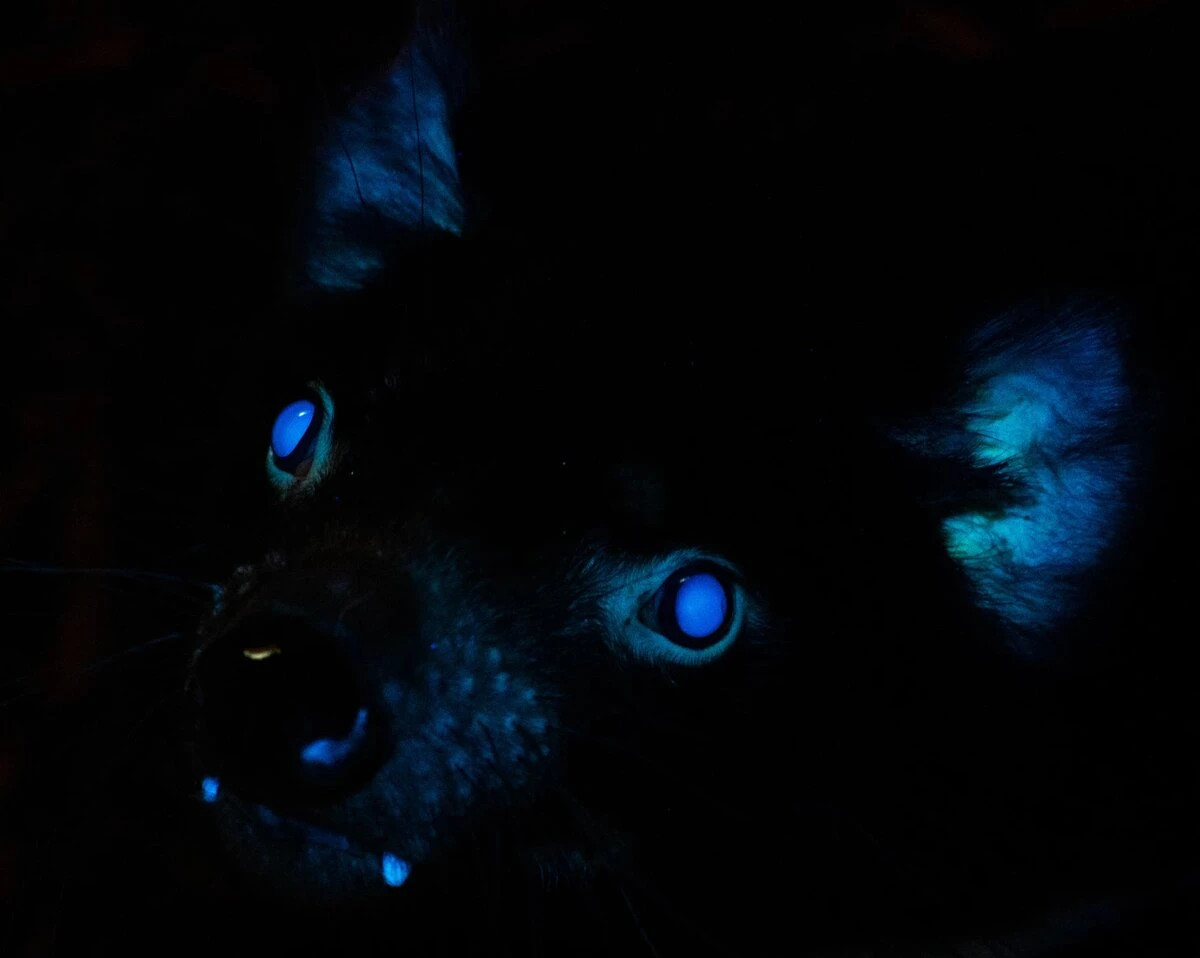
Tasmanian devils glow quite brightly under ultraviolet light, but the reason for this is still unknown. Perhaps the faint glow helps them detect each other. 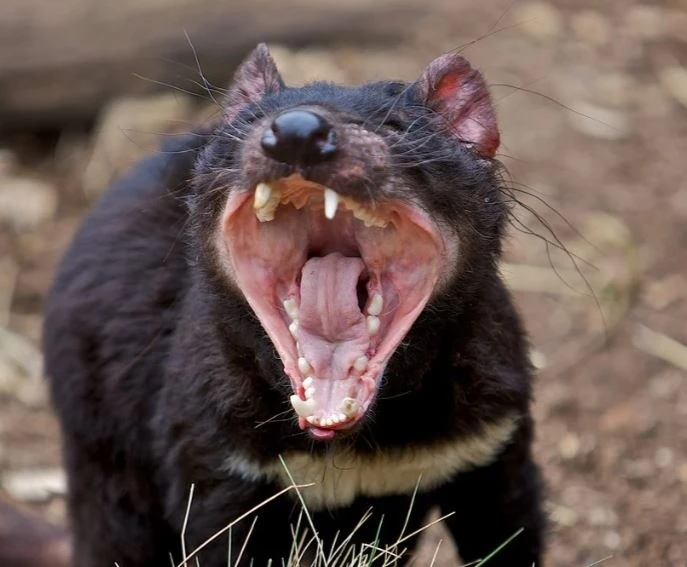
They also love to scream. The first settlers of Tasmania were greatly frightened by their infernal screams at night, which is where the animals got their strange name. Screaming, growling, and squealing are a way to intimidate competitors without engaging in combat.
Because food can be difficult to come by. Devils inhabit dry, sparse forests and moorlands, where prey is scarce, so they have to travel far to find it. Moreover, about half of the Tasmanians' prey are wombats, large and powerful animals that can be difficult to handle. However, these predators can feed on carrion, frogs, tree kangaroos, and small dogs—their choice depends on availability and, of course, their health. 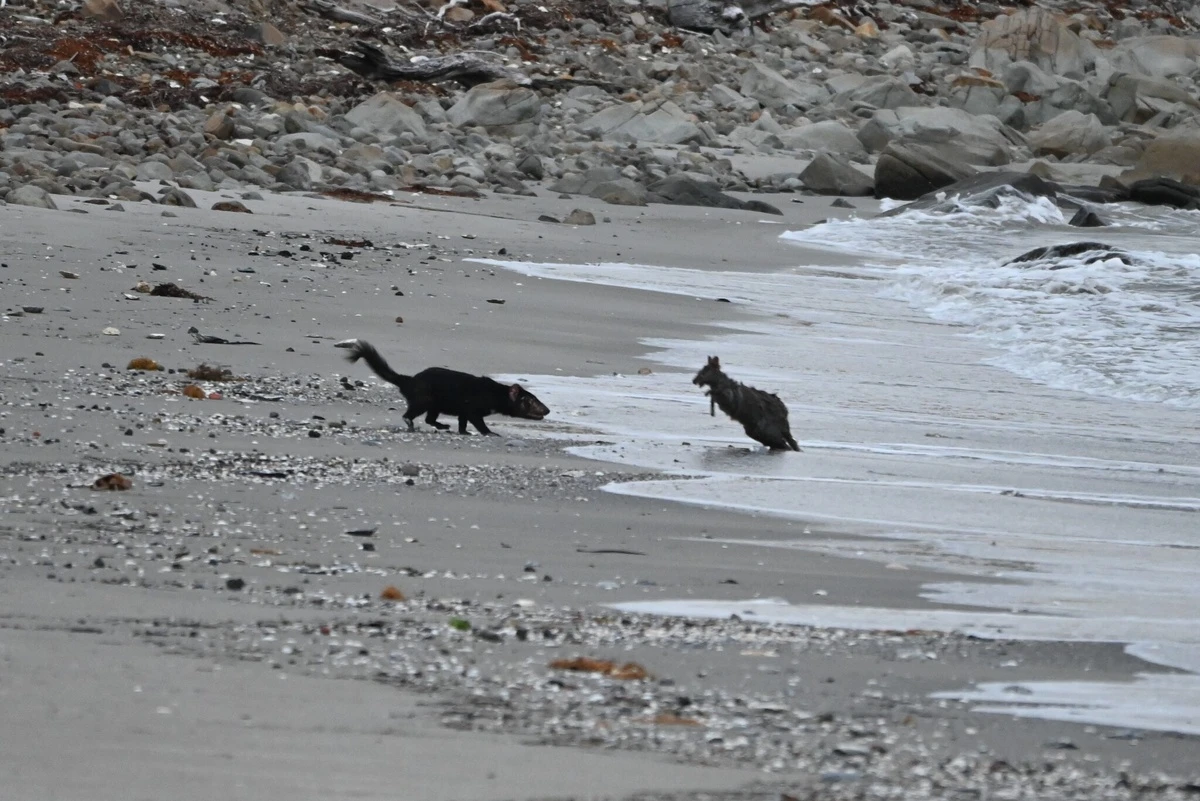
Of course, it doesn't look like an epic battle. But Australia has no larger predators (dingoes don't count). 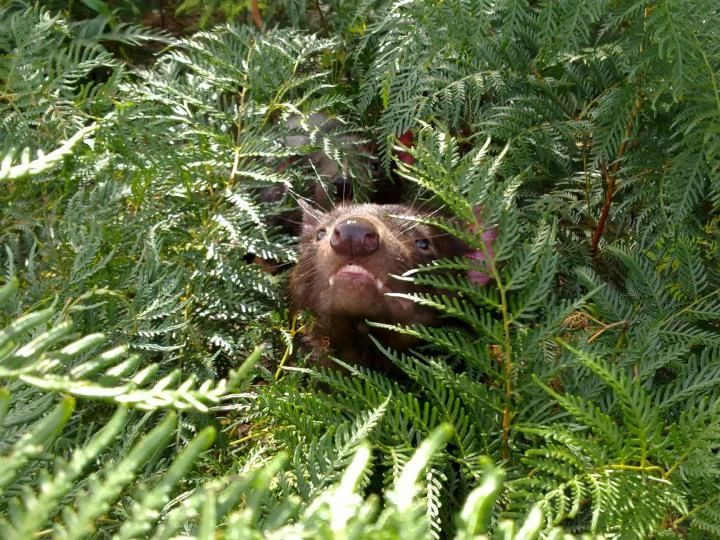
When hunting, the devil relies primarily on smell, then on hearing. Sight is much less important.
And here's what's interesting: you don't need to be a veterinarian to assess the health of a Tasmanian devil; anyone can do it. Just look at its tail. If the tail is plump, thick, and more like a sausage, it means the animal is eating well and is healthy. But if a sad string dangles from it, it's a clear sign of health problems and malnutrition. 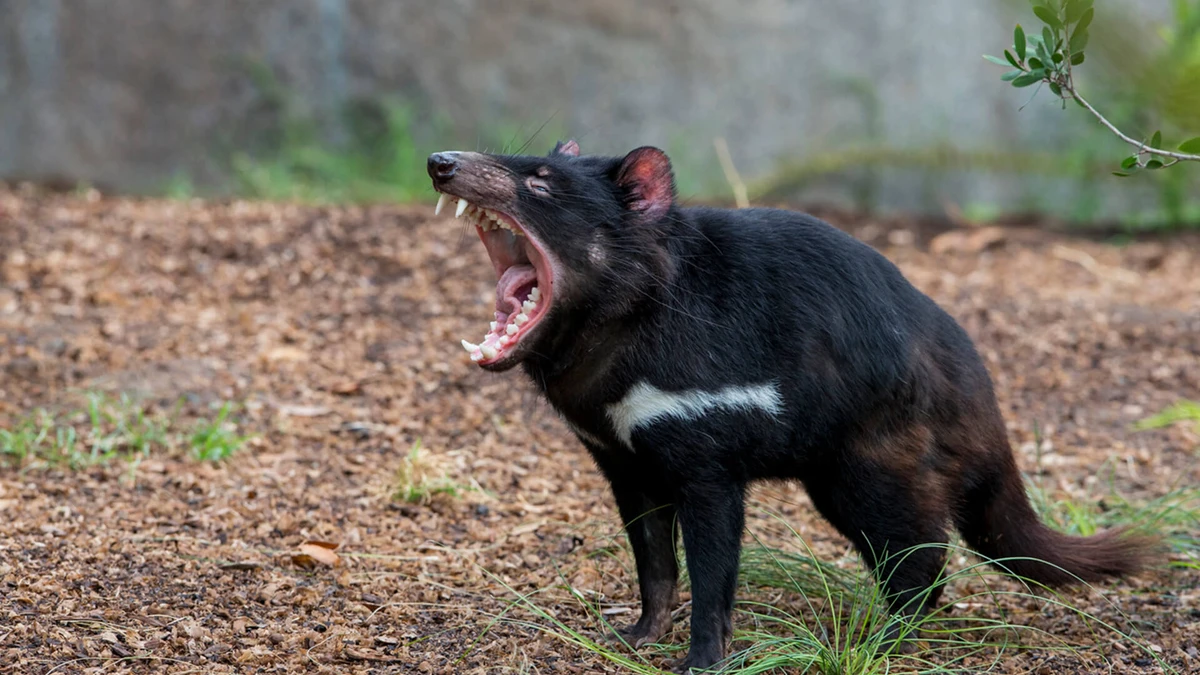
An extremely fat tail screams loudly. Which means everything's fine!
Not only biologists and ecologists, but also Tasmanian devils themselves monitor the condition of their tails during breeding season. Females, for example, aren't particularly concerned about relationships and choose the fattest male possible. Males, of course, don't appreciate this behavior. They have to protect their females from being stolen. 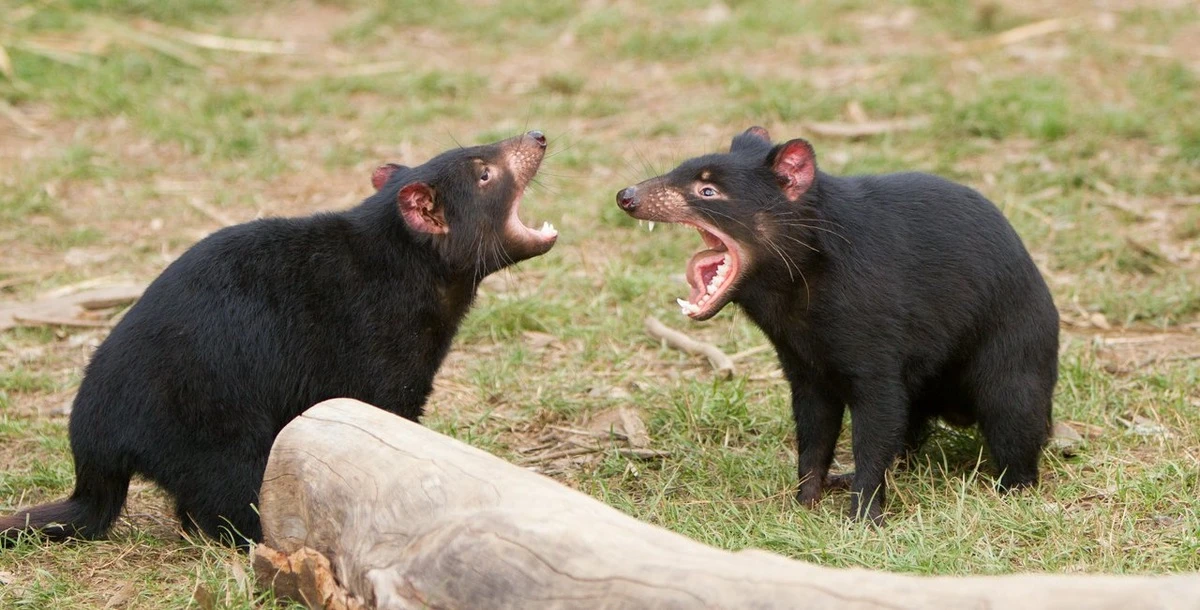
Tasmanian devils are known for their aggressive behavior during mating season and beyond. They bite each other—very hard. The Tasmanian devil's bite is one of the most powerful of any mammal relative to its body size. As a result, most adults have scars on their faces and necks. 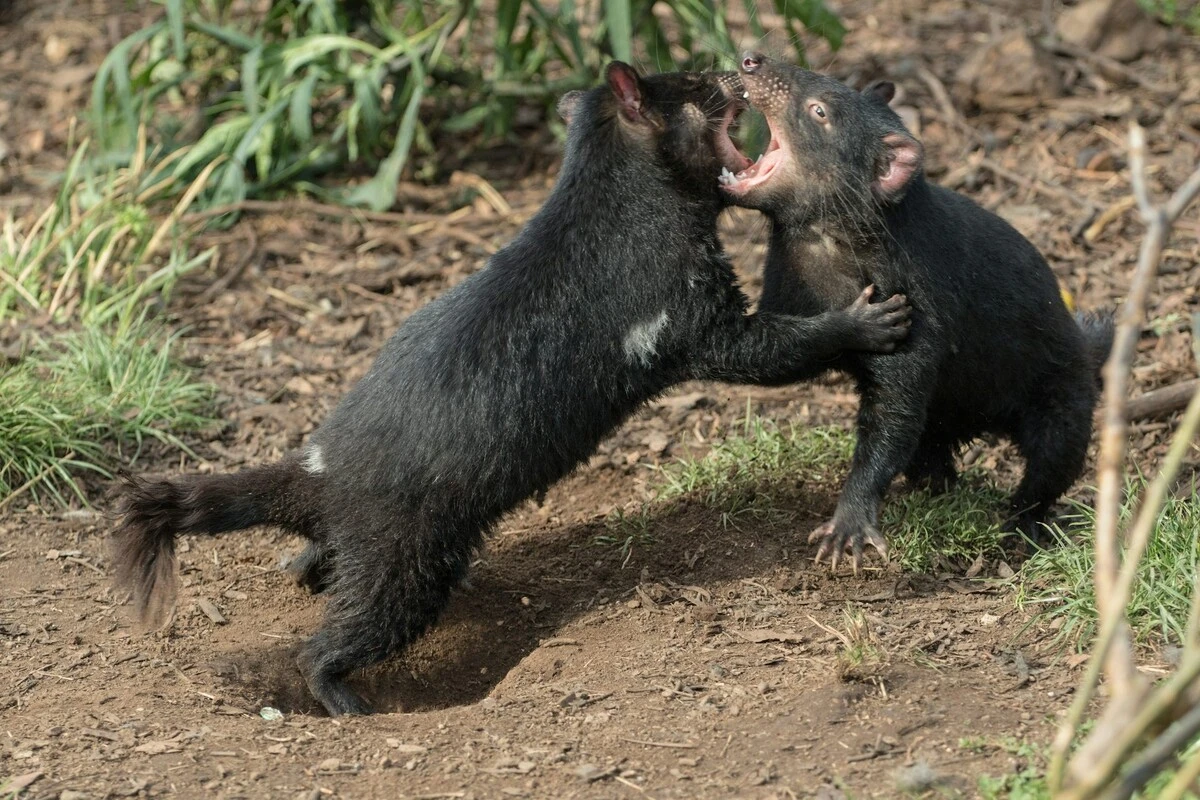
Naturally, the young practice small fights from an early age.
During the mating season, the female is ready to be fertilized up to three times, with a new batch of eggs being deposited into the uterus each time. They are born after just 21 days and in huge numbers—from 20 to 50 pups per season, which do not necessarily share the same father. 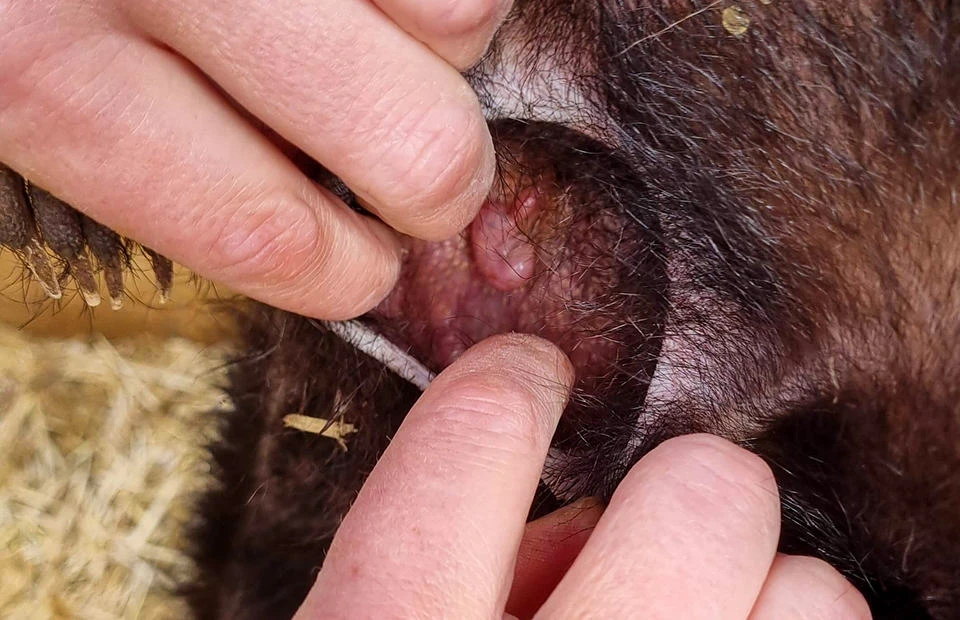
It's important to note that after 21 days, it's not a puppy that's born, but an embryo, barely mobile. It still has a lot of growing to do, gaining weight in the brood pouch.
The pups grow quickly and reach sexual maturity at two years of age. But only half of them will survive to their fifth birthday—the average individual faces so many dangers in life. However, thanks to their high reproductive rate, Tasmanian devils successfully resisted human intervention until the 1980s. And they did not become extinct, unlike the legendary Tasmanian wolves, which were completely wiped out by humans in the 1930s. 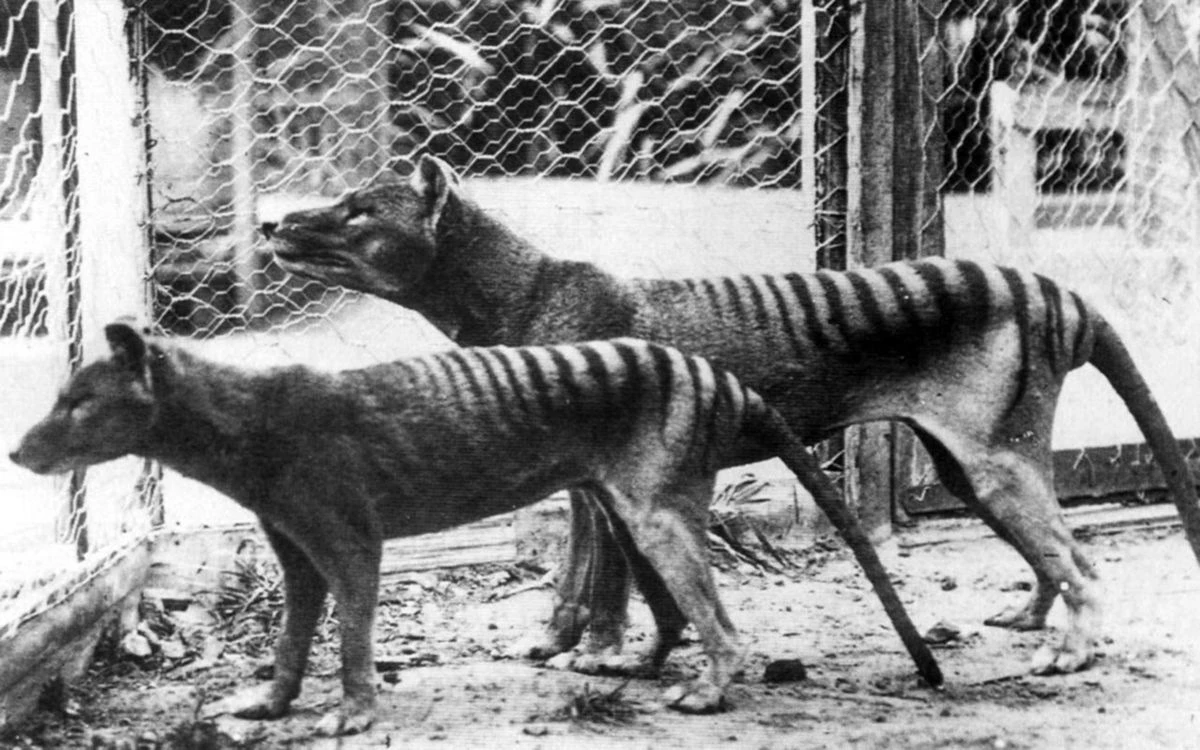
One of the last photographs of a Tasmanian wolf.
But now devils are on the brink of extinction for perhaps the most terrifying reason in Earth's history. At the end of the last century, the species was struck by a viral epidemic that provoked the growth of cancerous tumors and quickly brought the devils to their deaths. In just 40 years, their numbers have declined by 80%. Even the living devils suffer greatly and look so terrifying that we hesitate to show them to you. But people aren't abandoning these little devils to their fate; we're trying to figure out how to save them from the disease and stop their extinction. 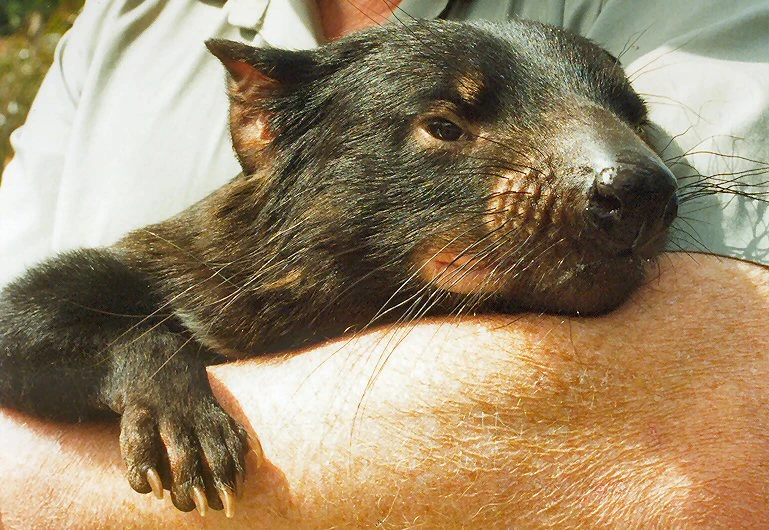
You will definitely survive, do you hear me?