Guianan cockerel: a bird without a face. Instead, it has an orange disk (6 photos)
The Guianan Cock-of-the-Rock lives in the jungles of South America and looks like nature drew it out of boredom, on the last day of creation. Its body is bright orange. The wings are black with white accents. 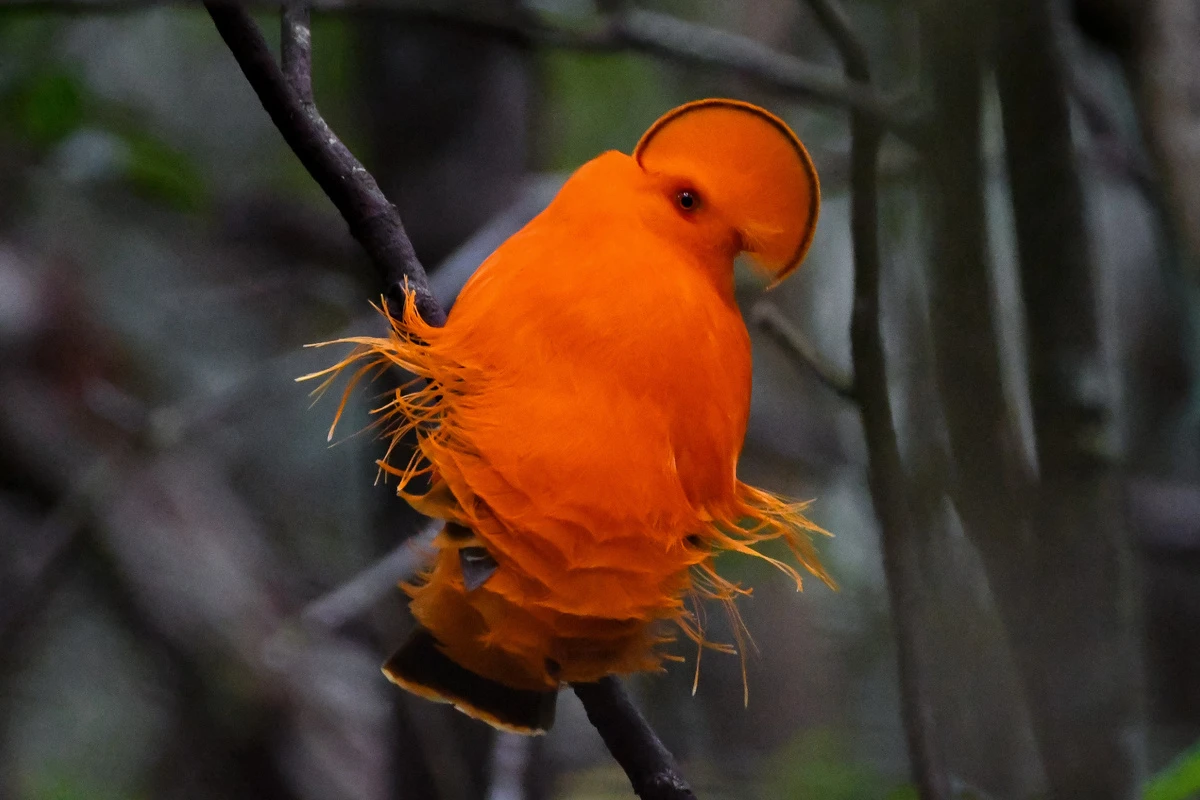
Hallucinations...probably the sun's baking...
And on its head is a huge fan-shaped crest that extends from the back of its head to the beak, completely covering it. The bird does have a beak, it's just not visible. It's unclear why they're designed this way, but it looks like someone put half an orange on their head. 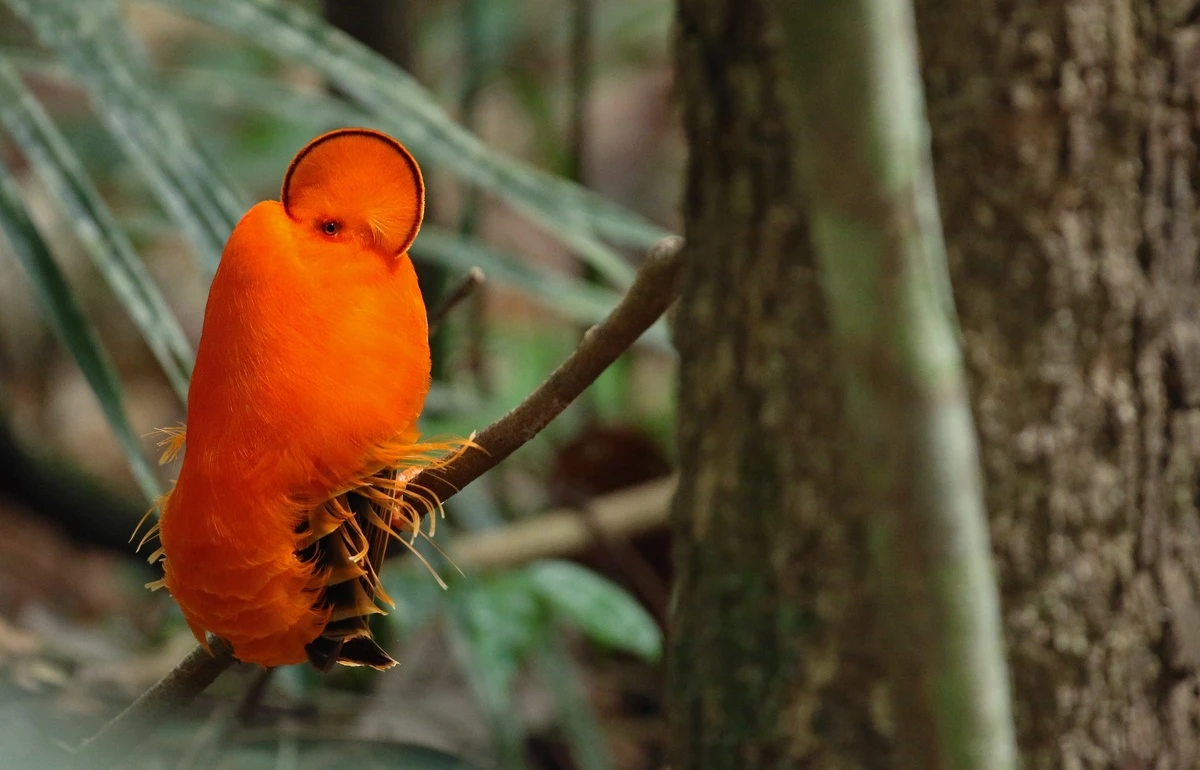
It looks rather sour!
The females, meanwhile, are gray-brown, unremarkable birds. A classic. 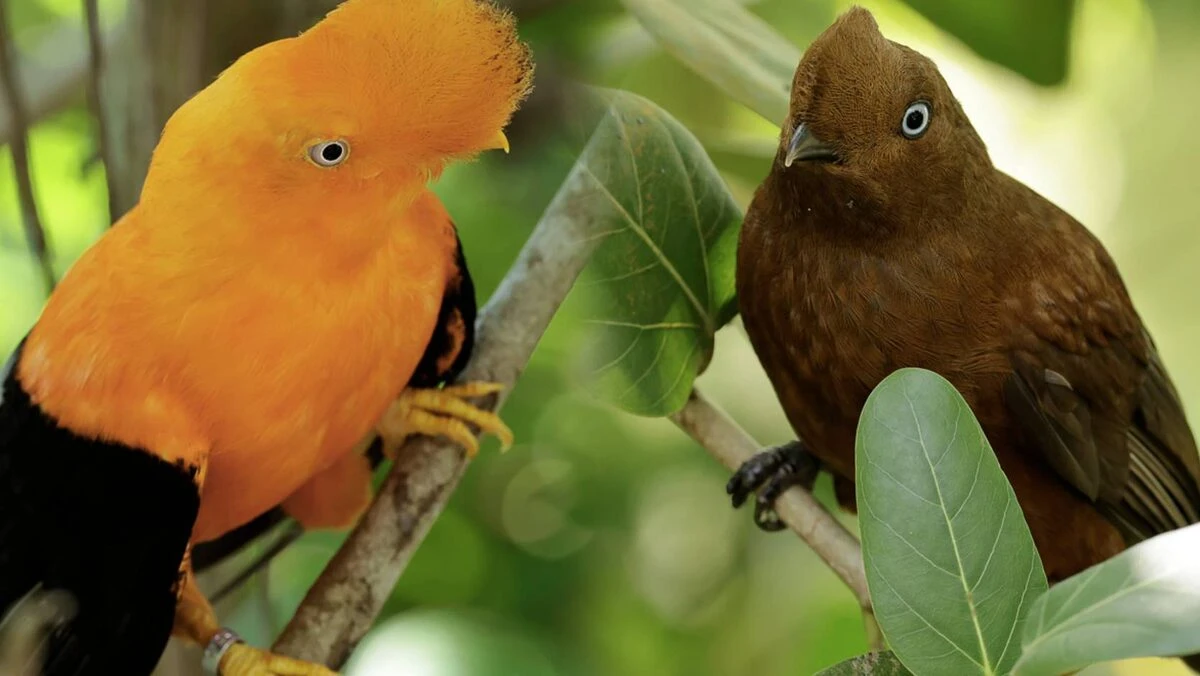
When you're an ordinary, nice girl from the provinces and decide to go on a date with a fashionable guy from the big city.
All this splendor exists for one event a year—the mating season. The males gather in special clearings, each taking their personal territory and beginning their performance. No fighting. Just a parade: the male slowly walks along the ground, turns his head, shows his profile, lowers his wings, spreads his tail like a fan, and makes occasional grunting sounds. The females sit on the branches around him and silently evaluate him. Then they choose the best one and fly away with him. After mating, the male loses all interest in the female. She builds a nest alone in a rock crevice, holding it together with her own saliva, and raises the chicks herself. Meanwhile, the male continues to circle and grunt. 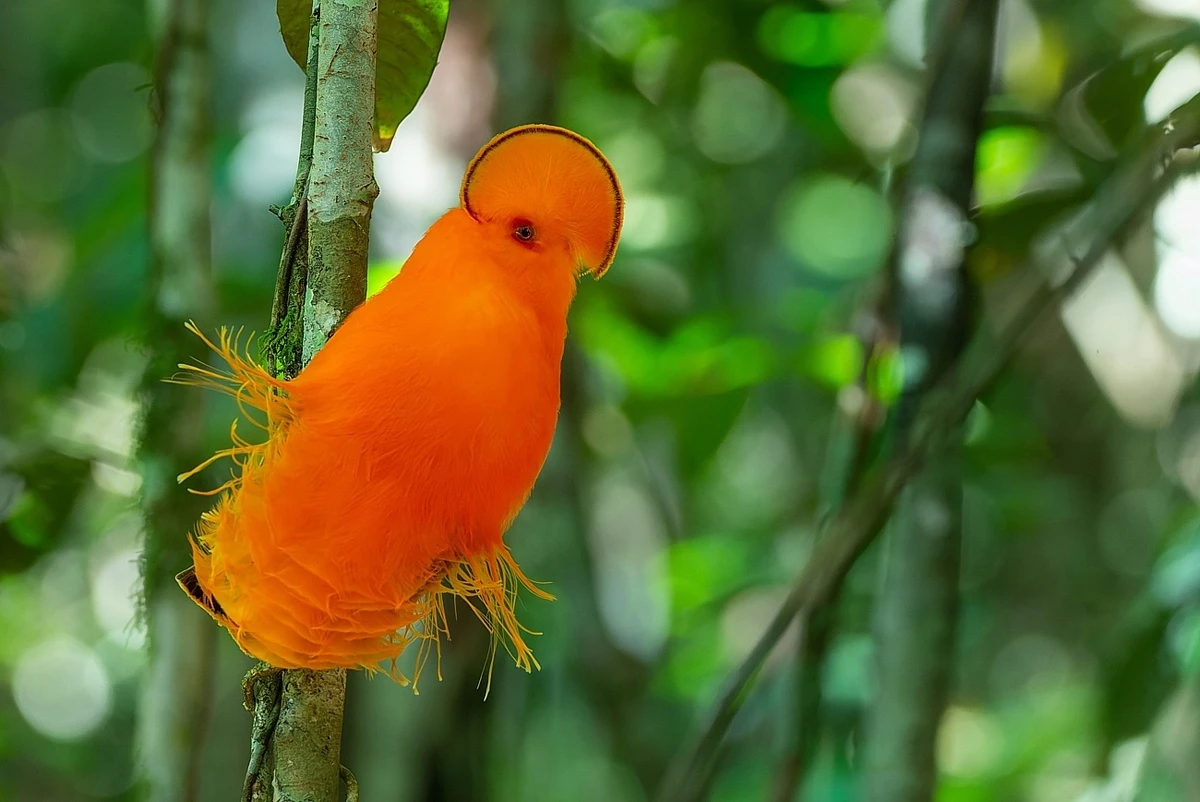
This isn't how I imagined a cocktail garnished with a slice of orange on vacation...
The betta feeds mainly on fruit—it's especially fond of palm fruits—but will occasionally eat an insect or a small lizard. It lives in the tropical forests of the northern Amazon. It prefers mountainous areas rich in water bodies, and is found at altitudes of 300 to 2,000 meters. Due to deforestation, the range of these birds is constantly shrinking. An additional threat is that Native Americans historically hunted them for their feathers: tribal leaders wore robes made from their skins. The cockerel is now protected, but the exact population size is still unknown. 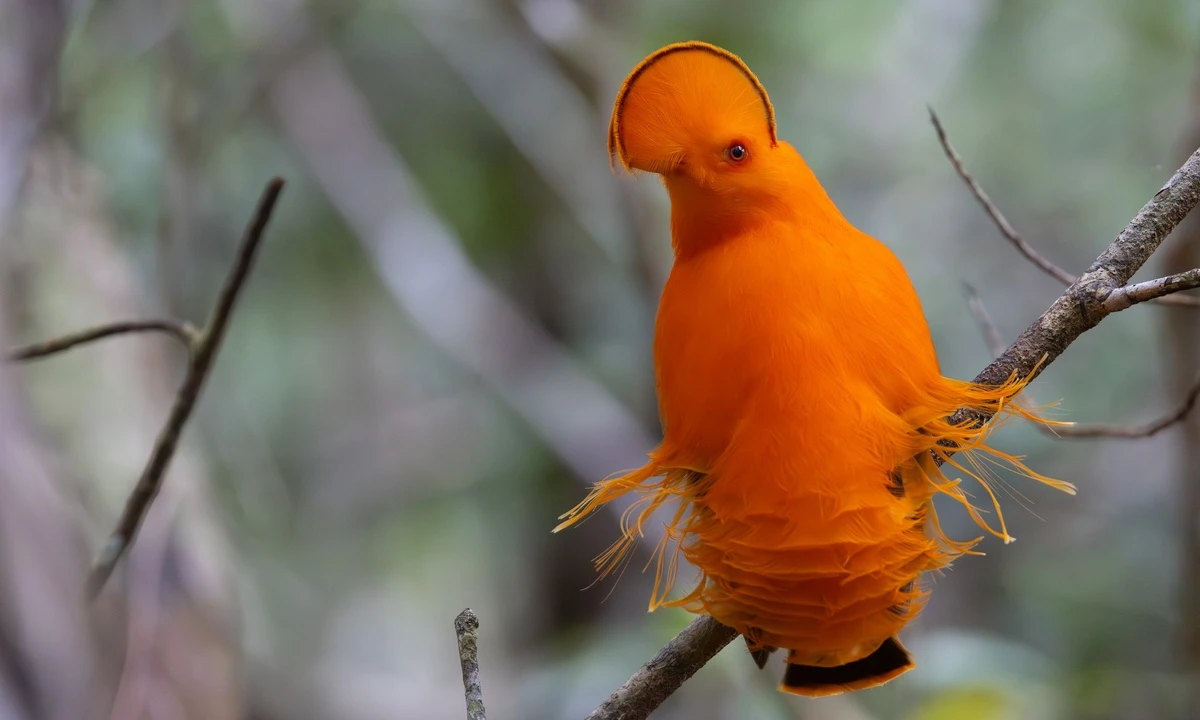
Boy. 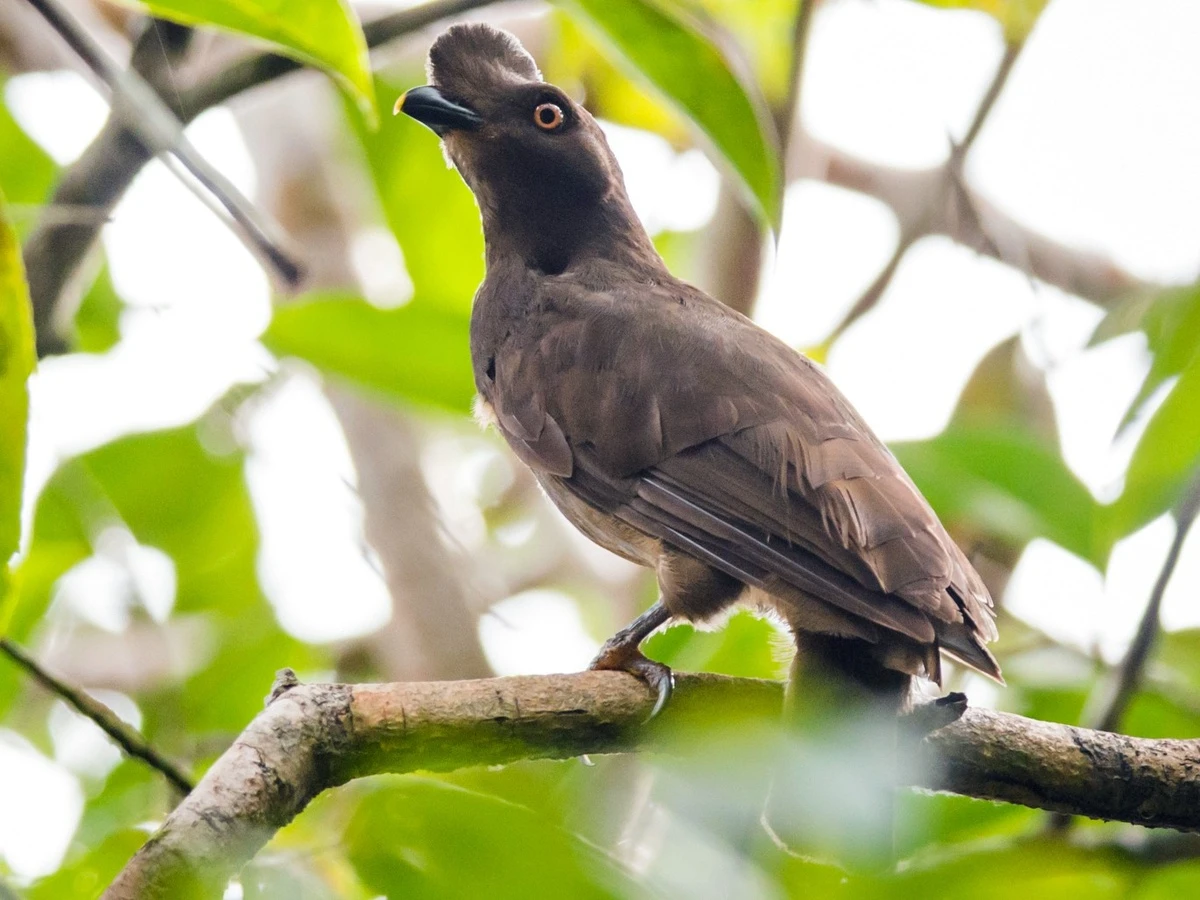
Girl.
That's all there is to know about this beautiful creature. Nature has divided the duties fairly: one is beautiful, the other does the work.