Fear of Poverty or Fear of Wealth: Two Strange Disorders That Prevent People from Living Normally with Money (8 photos)
We're used to thinking of money as the universal equivalent of happiness and freedom. From childhood, we're taught to strive for financial well-being: it seems to be the key to solving most of life's problems. But what if the very thought of a bank account can cause paralyzing terror? Psychology reveals a surprising paradox: while some desperately seek wealth, others subconsciously flee from it. For both, their relationship with money becomes a never-ending nightmare. 
Peniaphobia: When a Well-Fed Life Doesn't Save You from Panic
Most people quite logically fear being left without a livelihood. But for some, this natural fear develops into a clinical disorder—peniaphobia. The term comes from the Greek penia, meaning "poverty." It describes an irrational, obsessive fear of poverty. The paradox is that peniaphobia affects far more than just those who actually live in poverty.
Peniaphobia often affects people with comfortable and stable incomes. Even with a substantial safety net, a successful business, or real estate, peniaphobes live in constant anticipation of financial ruin. Clinically, this condition is classified as a specific phobia: it is not identified as a separate diagnosis by the American Psychiatric Association in the DSM-5, but doctors successfully treat it as part of the treatment of specific phobias and generalized anxiety disorder. 
Peniaphobia doesn't discriminate by budget: it affects rich and poor alike.
How exactly does it manifest? The first and most noticeable sign is obsessive checking: a person checks their bank card balances dozens of times a day. Next comes total frugality—forgoing basic comforts, decent food, healthcare, and vacations in favor of saving for a rainy day. The third trait is workaholism to the point of burnout: working themselves to the bone, fearing taking sick leave or vacation because it will temporarily reduce their income. 
Obsessive checking of bills is a typical way for a peniaphobe to cope with anxiety.
Somatic symptoms are added to this: chronic anxiety, insomnia, panic attacks. These are especially exacerbated during major purchases or the need to repay a debt. From a neuroscience perspective, the phobia activates threat circuits in the brain even where there is no real threat. The fear of poverty isn't about money per se. It's about the loss of dignity, social significance, and a sense of security. This is what makes it so persistent.
Plutophobia: The Mirror Fear of Success
While peniaphobia can be explained in some way, its "sister"—plutophobia—seems downright strange. It's a fear of wealth and financial success. The name comes from Pluto, the Roman god of the underworld and wealth. It would seem that who wouldn't want to get rich? Yet, it's one of the most common forms of psychological self-sabotage. 
For a plutophobe, money isn't a dream, but a source of anxiety and potential danger.
People with plutophobia subconsciously associate wealth with danger, envy, or the loss of loved ones. In their worldview, "being rich means being a bad person." Or: "You'll definitely have to pay for a lot of money with your health or family." This is often rooted in childhood experiences: a family where money was associated with conflict, or a cultural attitude in which wealth was equated with greed and dishonesty.
The primary behavioral manifestation is professional sabotage. A person unknowingly misses out on lucrative deals, "forgets" to submit a resume for a high-paying position, and turns down promotions under various plausible pretexts. 
A plutophobe literally burns through their resources—though not as literally as in this photo.
Another symptom is impulsive spending. As soon as a plutophobe has spare cash, they try to get rid of it. They pay off debts, buy unnecessary things, and give spontaneous gifts—all to return to their familiar zone of financial deficit. Finally, plutophobia is accompanied by social anxiety: the fear of being seen as arrogant, losing old friends, or becoming the target of envy and manipulation. Like peniaphobia, plutophobia is not identified as a separate diagnosis in the DSM-5, but is described under specific phobias.
Sudden Wealth Syndrome: A Bridge Between Extremes
A perfect illustration of how the psyche breaks under the pressure of money is Sudden Wealth Syndrome. The term emerged in the late 1990s. It was coined by American psychologists Stephen Goldbart and Joan DiFuria, founders of the Money, Meaning & Choices Institute in California. The syndrome describes the severe stress experienced by people who suddenly receive huge sums of money: through lottery winnings, inheritances, the sale of a startup, or a sports contract. 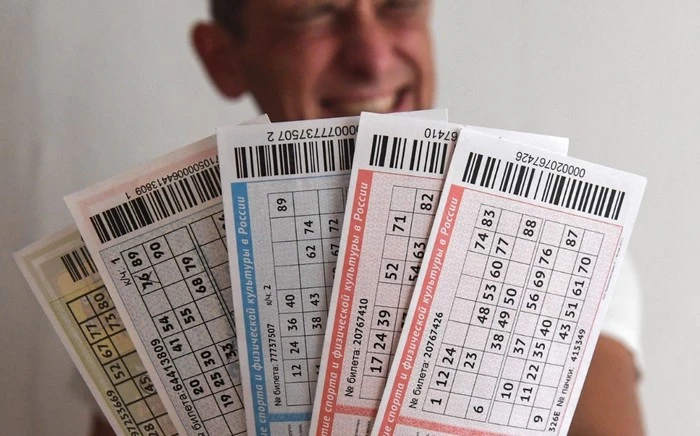
Winning the lottery is the most common trigger for Sudden Wealth Syndrome.
Instead of the expected euphoria, a person faces an identity crisis. The Goldbart-DiFuria Institute describes several characteristic symptoms: obsessive thoughts about money, anxiety from stock market fluctuations—so-called "ticker shock," an acute sense of guilt that interferes with decision-making, confusion ("Am I even the same person I was before?"), and depression from the realization that material desires have been fulfilled but happiness has not. Added to this are paranoia ("Everyone only wants my money"), social isolation, and, as a result, self-destructive behavior.
When Fortune Destroys: Numbers and Fates
The statistics are compelling. A study based on Illinois data showed that of 156 lottery winners who won $50,000 or more between 1973 and 1988, 44 declared bankruptcy within five years—roughly one in three or four. The financial planning organization CFP Board finds that lottery winners generally file for bankruptcy more often than the average American, especially within three to five years of winning. For many, their brush with fortune ends tragically. 
Empty pockets after winning millions are not the exception, but the norm.
Professional athletes are another classic example. A study by the National Bureau of Economic Research (NBER) surveyed nearly two thousand NFL players drafted between 1996 and 2003. The findings: 15.7% of them filed for bankruptcy within 12 years of retiring. Moreover, neither the size of one's income nor the length of one's career had virtually no impact on this indicator. The money came quickly—their psyche and habits didn't have time to adjust. The mechanisms of self-destruction of wealth were activated. And the person, returning to their usual poverty, sincerely thought that they would act differently next time. This is usually self-deception.
It's not about the money
Psychotherapists agree: neither peniaphobia nor plutophobia are connected to money as a physical object. Money is merely a projection of internal conflicts. Both fears are rooted in two fundamental experiences.
The first is the fear of losing control. The peniaphobe fears that without money they will become helpless. The plutophobe fears that big money will bring so much responsibility and attention that they won't be able to handle it.
The second is an identity crisis. The question "Who am I?" is the most frightening of all. "If I get rich, I'll lose my old self, my roots, my friends"—this subconscious fear drives people to sabotage their own success. This explains why sudden wealth syndrome affects lottery winners and sports stars alike: it's not the amount, but the speed of identity change. 
Financial phobias aren't based on money, but on the fear of losing one's identity.
Understanding these mechanisms is the first step to financial freedom, which is measured not by zeros in your account, but by inner peace. The same tools that help with any other phobia can help overcome both phobias: cognitive behavioral therapy, working with beliefs about money, and financial literacy. Knowing how to manage money gives you confidence—and gradually displaces fear.
How is your relationship with finances? Have you noticed signs of irrational anxiety about a lack of funds—or, conversely, have you caught yourself subconsciously sabotaging your career growth and significant earnings?