She rode a battleship cannon in a thong—and the US Navy still hasn't forgiven her (11 photos)
There are celebrities who follow fashion. There are those who create it. Cher did the third: she appeared in outfits that defied all fashion trends, and twenty years later, it turned out that they were the very thing that was trending. She turns 80 on May 20, 2026. We look back at ten looks, each a story in itself—from a sheer dress at the 1974 Met Gala to a feathered mohawk at the 1986 Oscars. 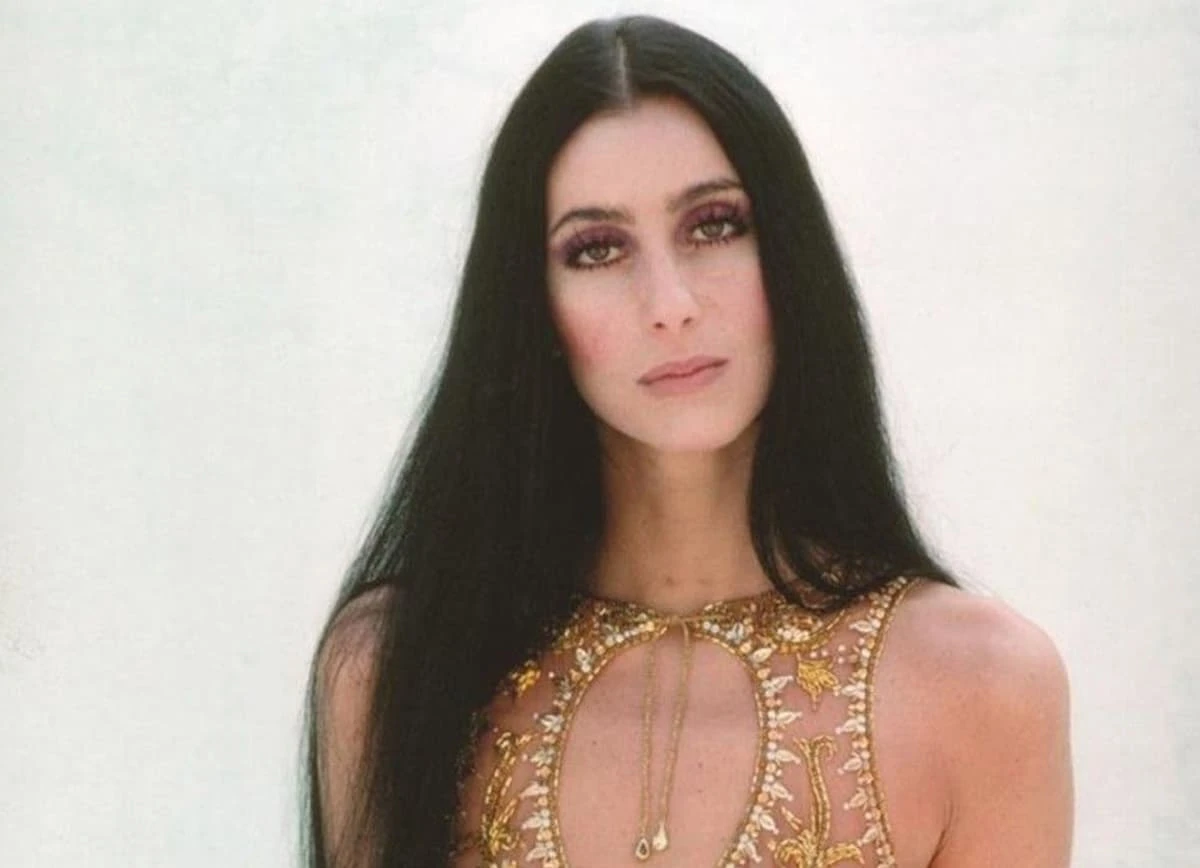
1967: A Fur Vest and the Beginning of a Legend
In 1967, Cher and Sonny Bono came to the set of "The Carol Burnett Show" as guest stars. It was there that costume designer Bob McKee first saw the 21-year-old singer, wearing a fur vest and flared trousers. He said he expected to see the gloomy girl from the photographs, but instead found "a charming ponytailed elf, like Audrey Hepburn." The show's producers were at a loss as to what to do with such a guest. McKee understood immediately.
It was then that a collaboration began that would change the history of stage costume.
"I said, 'She can be anything—and she'll look great in everything, because she loves to dress up. If anyone's going to be on the front page the next day, it's her,'" McKee recalled. 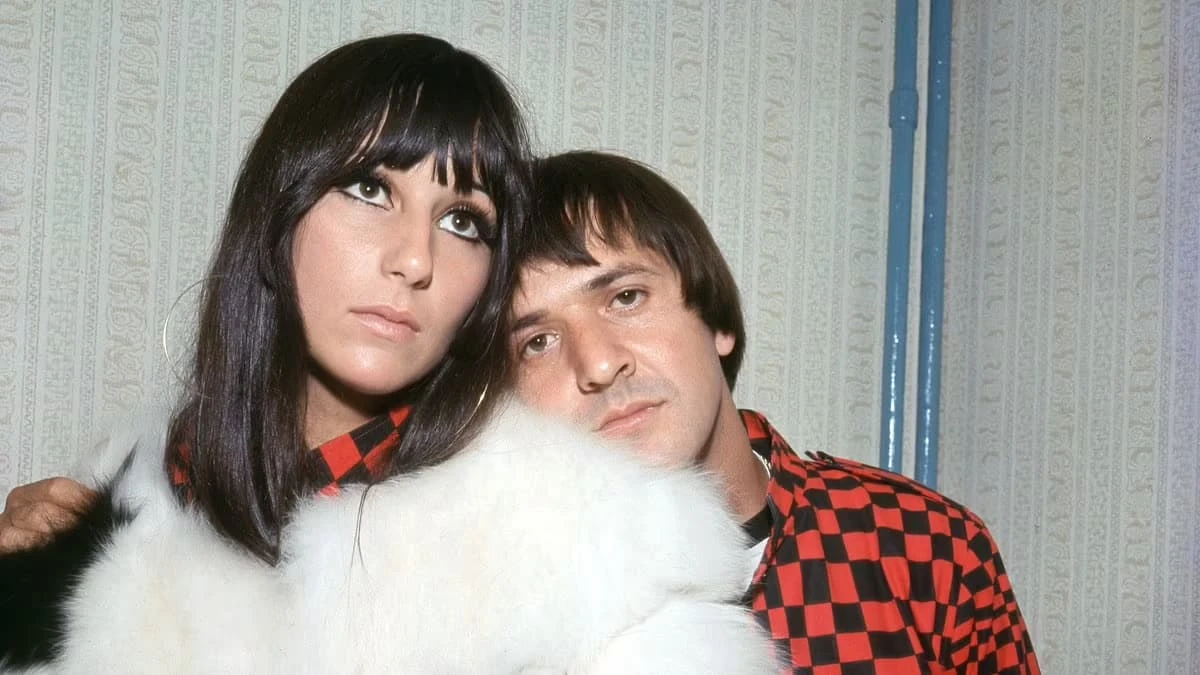
Cher on "The Carol Burnett Show," 1967. This is where her collaboration with Bob McKee began.
Their partnership spanned five decades. During this time, McKee created hundreds of looks for Cher, from television shows to concert tours and the Oscars red carpet.
1971–1974: "The Sonny & Cher Show" – Television as a Fashion Show
"The Sonny & Cher Comedy Hour" was intended to be a summer replacement for CBS, but the ratings were so high that the network made it permanent. Cher insisted that Bob McKee sew everything she wore on camera. The designer couldn't handle the entire production process, but he did take on the most important thing – her looks.
Each episode, Cher appeared in a new outfit: sheer bodysuits, feathers, rhinestones, exposed midriffs. McKee designed several looks for each broadcast. Cher became the first star to transform a television show into a runway show – twenty years before it became the norm. 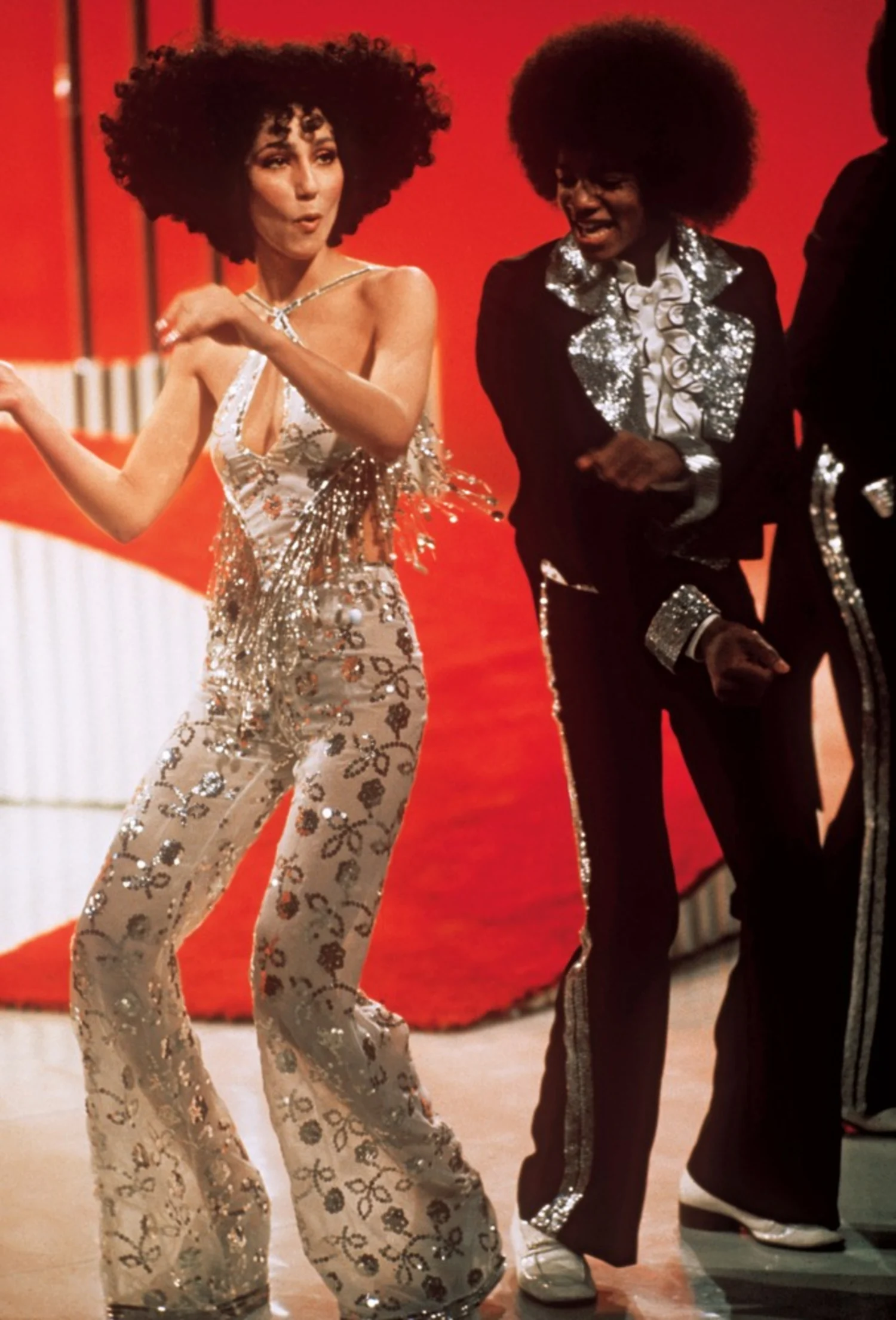
"The Sonny & Cher Show," early 1970s. Bob McKee created several looks for each episode.
It was here that Cher first showed her bare midriff on American television. McKee recalled that it caused a stir at the studio—but Cher already knew what she was doing.
1974: The First "Naked" Dress in Socialite History
At the 1974 Met Gala, Cher wore a sheer dress made of French chiffon—a fabric so thin and flammable that it was effectively banned in the United States. It was brought in specially: the same one Marlene Dietrich used for her concert dresses. Strategically placed rhinestones and white feathers on the sleeves and hem covered just enough to remain within the bounds of propriety, but created the complete illusion of nudity.
"You don't really see anything—but you think you see everything," McKee explained the dress's principle. 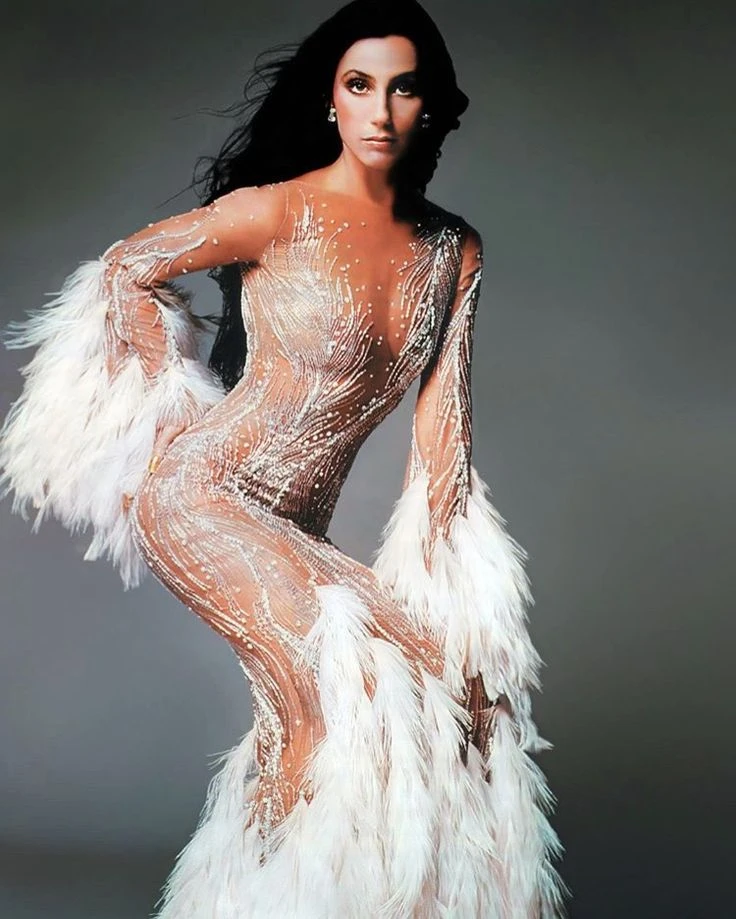
Met Gala, 1974. Bob Mackie's sheer gown is one of the first "naked" dresses in the history of social events.
In 1975, Cher appeared in the same dress on the cover of Time magazine—and the issue was banned in several American cities. This look is still considered the starting point for the "naked dress" trend: decades later, it was emulated by Kim Kardashian, Beyoncé, and dozens of other stars.
1973 and 1974: Oscars with a Bare Midriff
At the 1973 Oscars, Cher appeared with Sonny Bono in a gold chiffon McKee suit with oriental sleeves and an exposed midriff. She became one of the first celebrities to appear at the Oscars with a bare midriff. The fashion establishment was unsure how to react. The following year, she repeated the look, this time in a lilac gown with floral details. 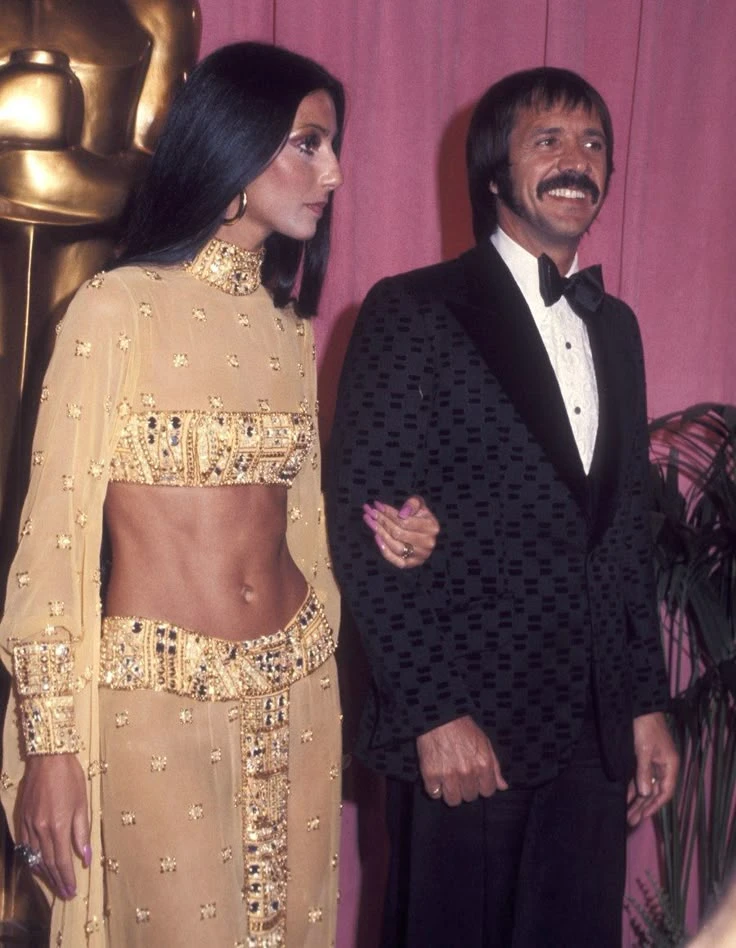
Oscars, 1973. Cher was one of the first stars to appear at the ceremony with her midriff exposed. Designer: Bob Mackie
The Academy was slow to warm up to Cher. She herself didn't speed up the process.
1986: A Feather Mohawk as a Response to Snobbery
In 1986, the Academy did not nominate Cher for an Oscar for her role in Mask, despite the singer winning Best Actress at the Cannes Film Festival. The Academy sent a letter to all invitees with dress code recommendations. Cher read it and went to see McKee.
The result was the most recognizable look in the ceremony's history. A black embroidered bustier, a slit skirt, thigh-high boots—and a huge headdress of exotic feathers, singed and treated to give them an otherworldly appearance.
"I wanted a Mohawk—but not an Indian one," Cher recalled in a 2019 interview with Vogue. "I wanted it to be so over-the-top that it seemed like it belonged next week." 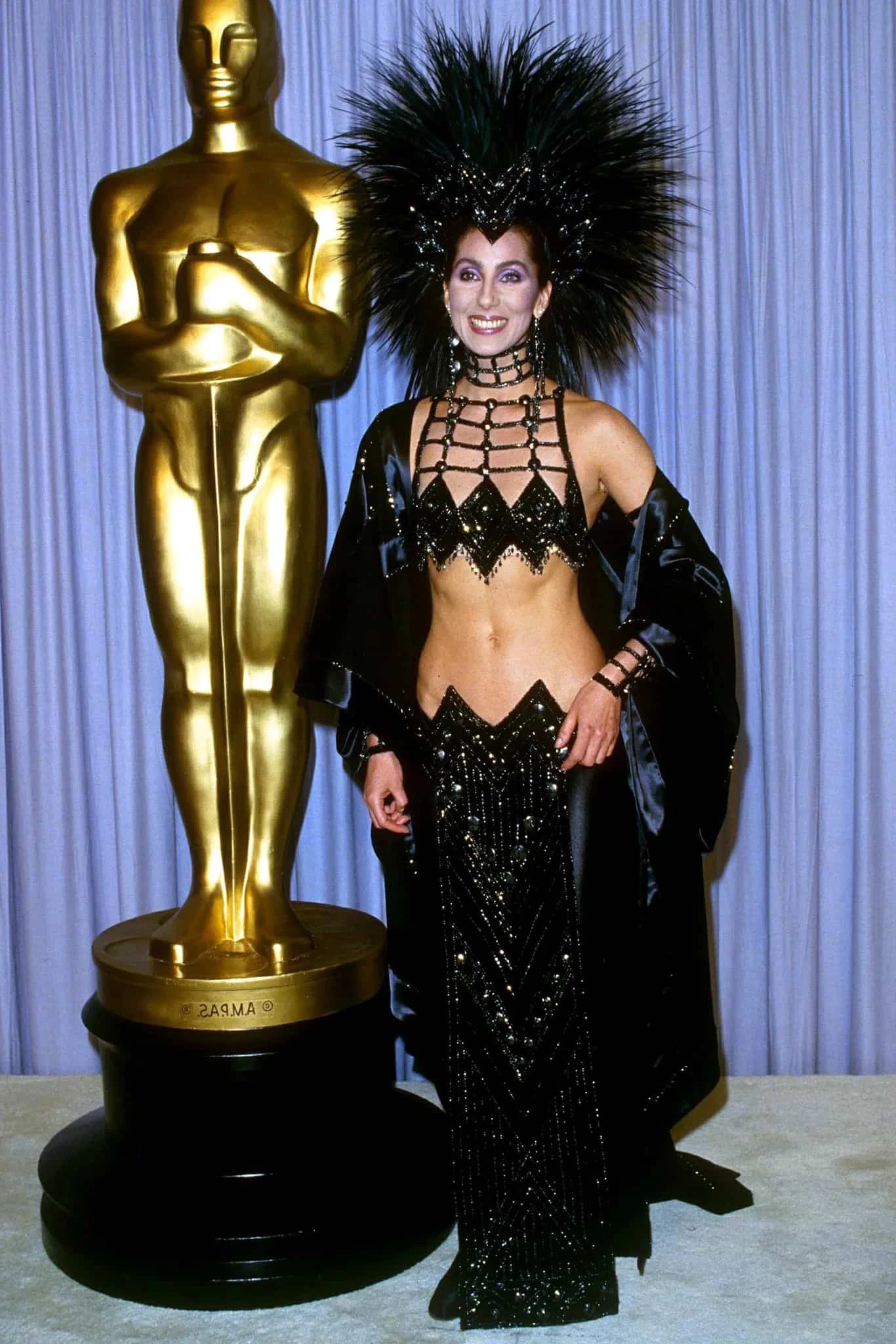
Oscars, 1986. Bob Mackie. A headdress of singed feathers was the Academy's response to Cher's failure to nominate her for "The Mask."
Taking the microphone, Cher said from the stage, "As you can see, I received a booklet with dress guidelines for a serious actress." The audience erupted in laughter and applause. Two years later, she returned to the same stage and won the Oscar for "Moonstruck."
1988: A Fringed Oscar for Best Actress
At the 60th Academy Awards on April 11, 1988, Cher beat Meryl Streep for Best Actress for "Moonstruck." She accepted her award in a black, sheer McKee gown with fringe and sequins. The dress was completely see-through. 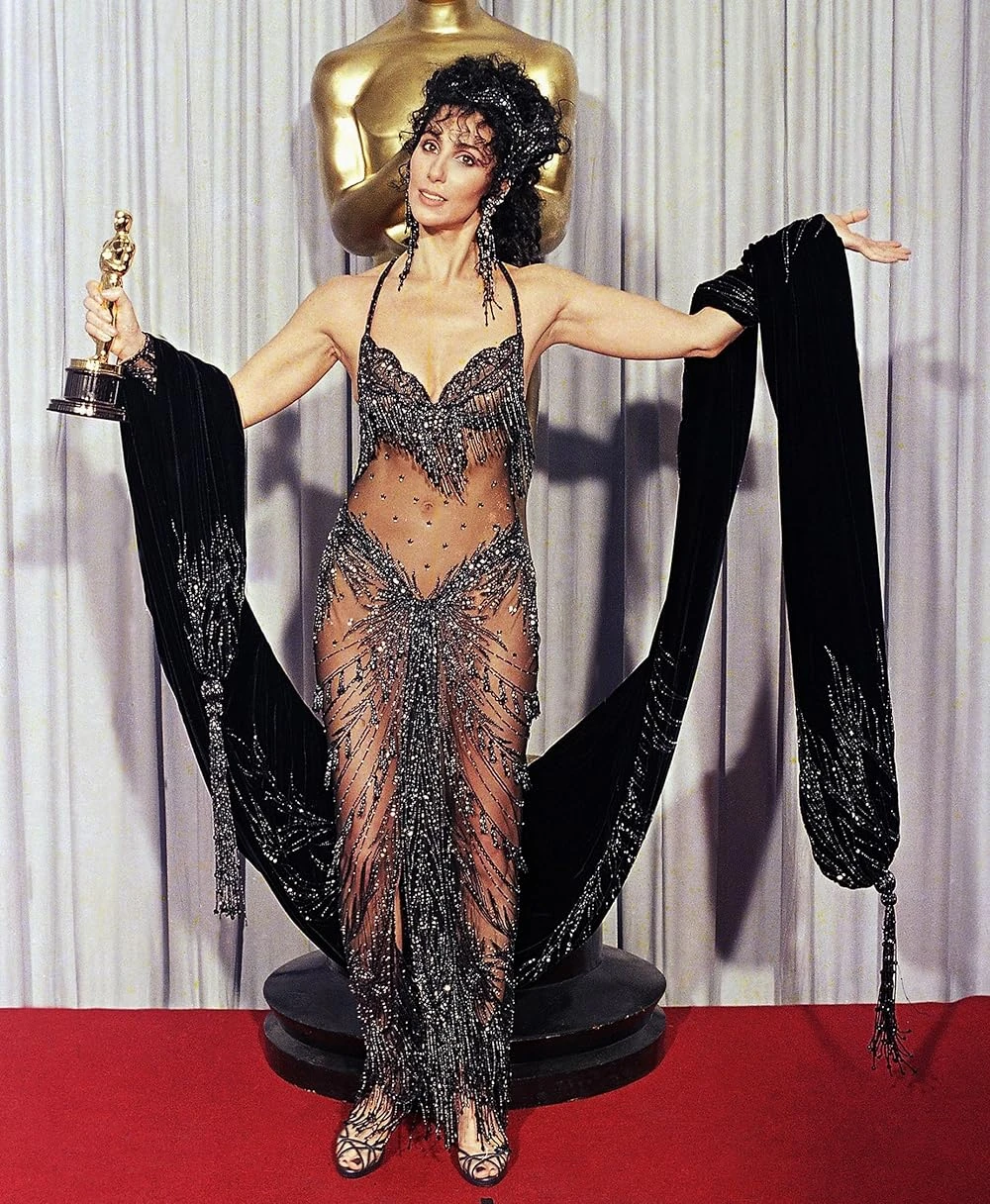
Oscars, 1988. Cher accepts her award for Moonstruck in a fringed Bob Mackie dress.
Critics who two years ago had topped their "worst" lists of her looks were simply silent this time. Cher offered no explanation.
1989: Scandal on Board a Battleship
The video for "If I Could Turn Back Time" was filmed over three days aboard the battleship USS Missouri—the very same historic ship where Japan signed the Instrument of Surrender on September 2, 1945, ending World War II. The US Navy granted permission for the filming, hoping for publicity and an influx of recruits among MTV's youth audience.
The sailors were assigned positions, the band began playing—and only then did Cher emerge onto the deck. She wore a black mesh jumpsuit, two pieces of fabric forming a V-neck in front, and a leather jacket. She straddled a gun barrel on the stern of the battleship. 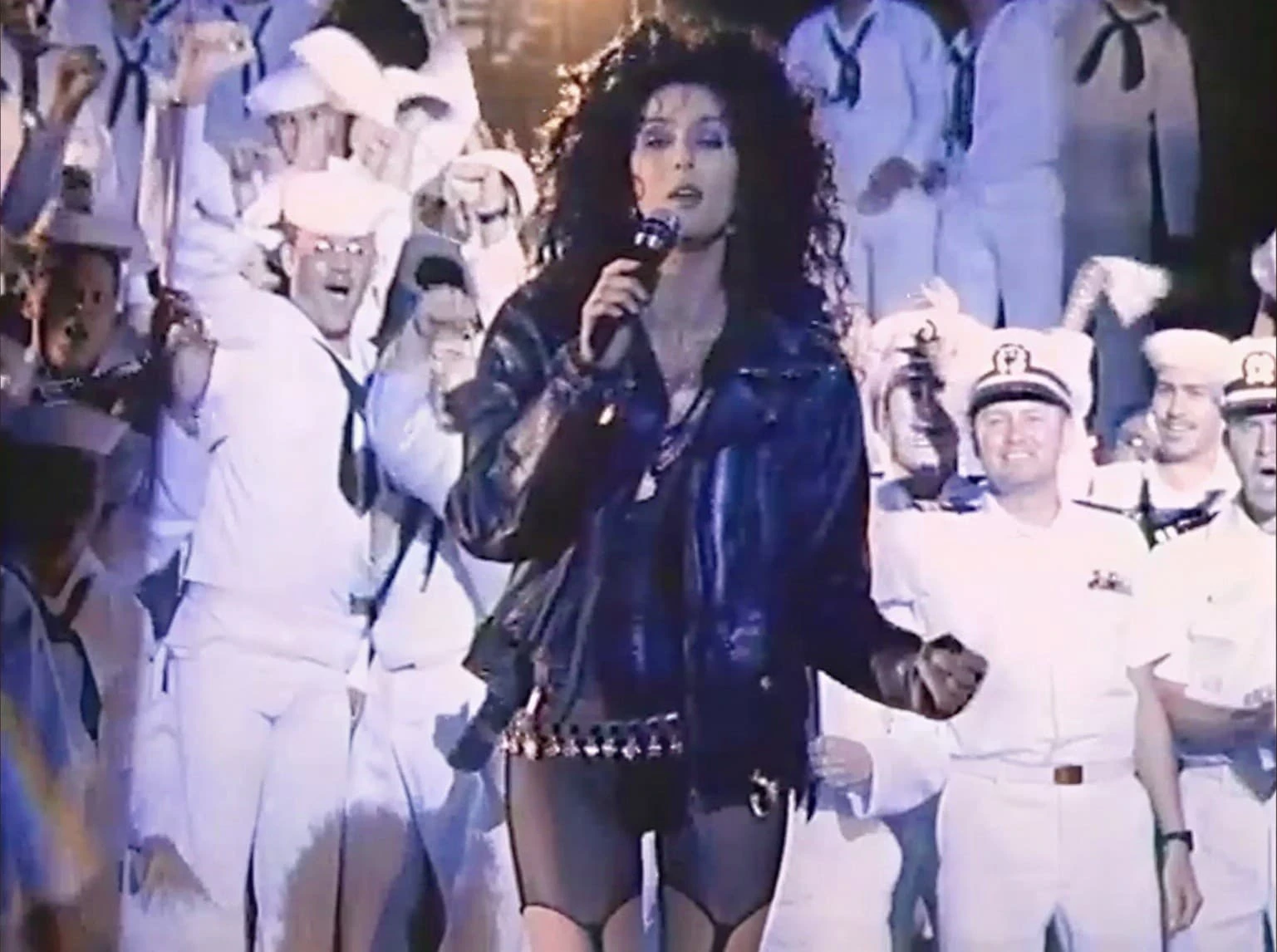
"If I Could Turn Back Time" music video, 1989. Battleship USS Missouri. Costume by Bob McKee, who was later embarrassed to admit authorship.
A Navy representative demanded that filming be stopped and that the singer's costume be changed. Director Marty Callner refused. MTV initially banned the video entirely, then allowed it to air only after 9:00 PM. The US Navy has since permanently banned naval ships from filming music videos. McKee himself admitted that for many years he was embarrassed to claim the costume as his own: "Please don't tell anyone I made this."
2002: Farewell Tour – Guinness Record for 12 Outfits
The Living Proof: The Farewell Tour began on June 14, 2002, in Toronto and concluded in April 2005 in Los Angeles – 326 concerts, over $200 million in box office receipts, and a Guinness Record for the highest-grossing tour in history for a female performer at the time. McKee created 12 costumes of varying extravagance – from Egyptian goddesses to biker outfits. 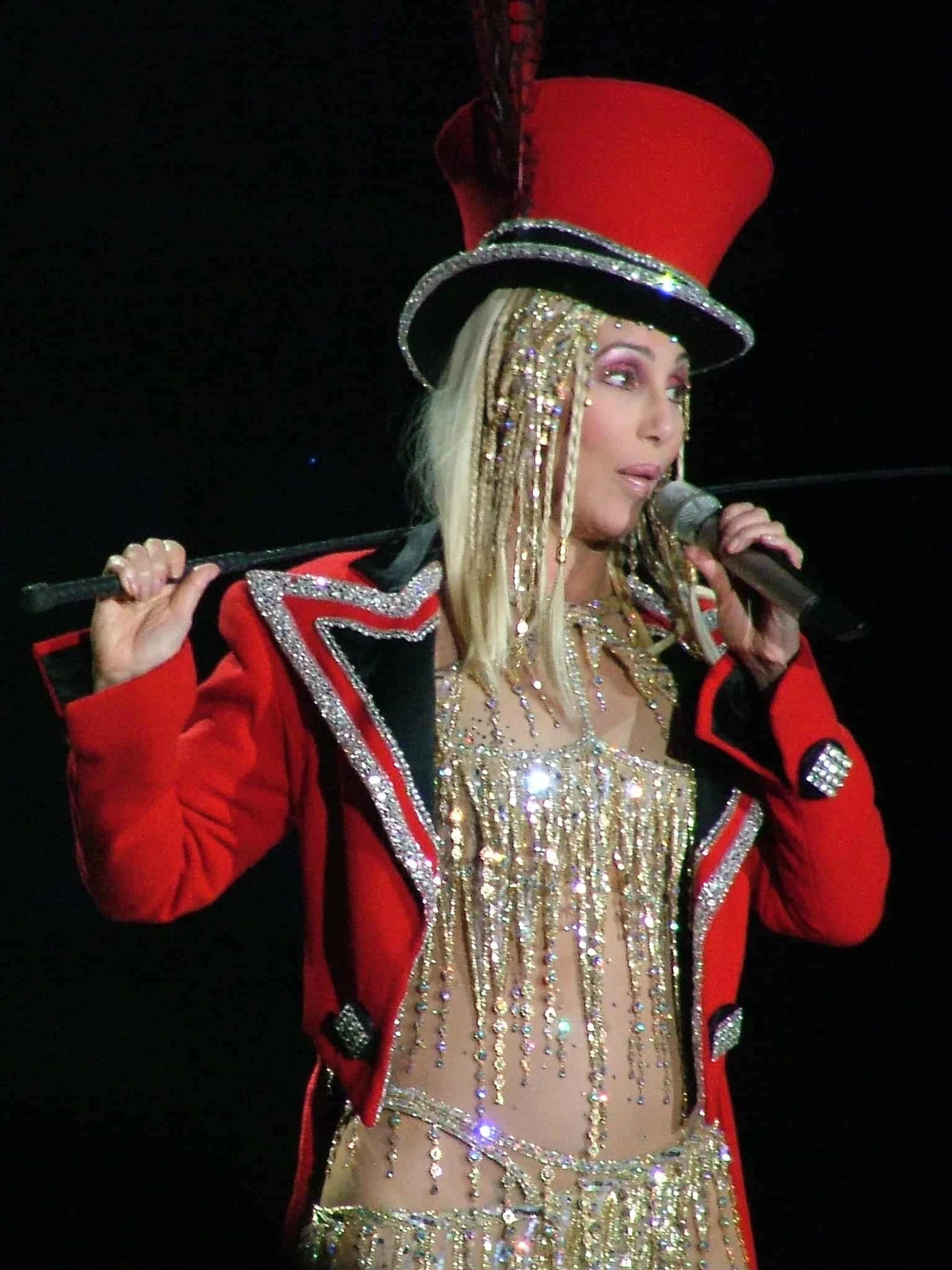
Farewell Tour, 2002. Bob McKee created 12 costumes for the tour, which set box office records for a female performer.
"I wasn't dressing an ordinary person, but a crazy goddess," McKee said of his task on the tour.
The tour was called a farewell. Cher toured for three more years. Then came Las Vegas, then another tour. Some things never change. 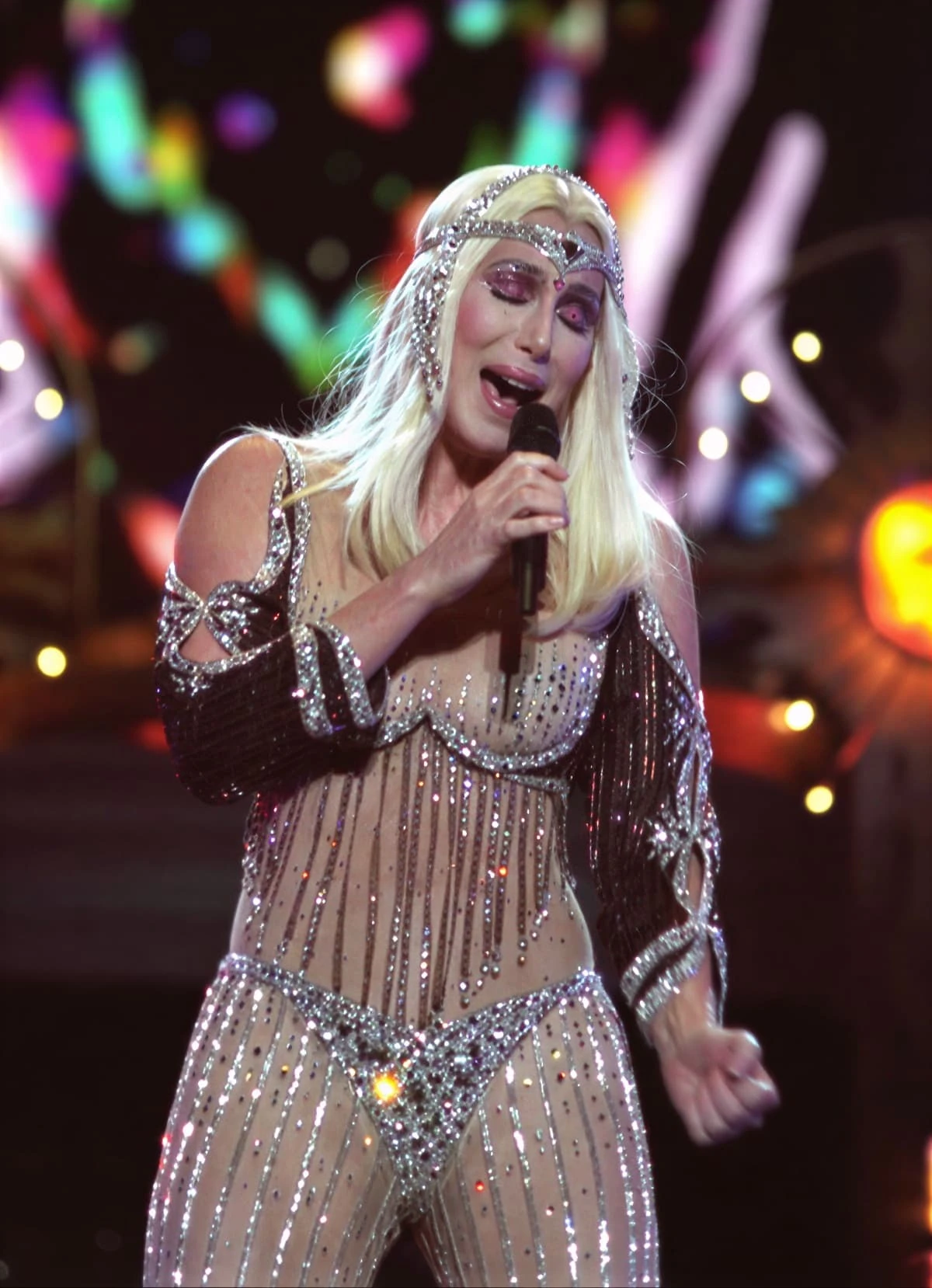
Farewell Tour Final Concert, Hollywood Bowl, Los Angeles, April 2005
Six Decades Without Explanations
Cher never explained her outfits or apologized for them.
"If I were dressing for other people, I would wear something completely different," she said.
Her style was decades ahead of its time: what she was criticized for in the 1970s is now considered a trend. Cher turns 80 on May 20, 2026—and none of her looks look dated. 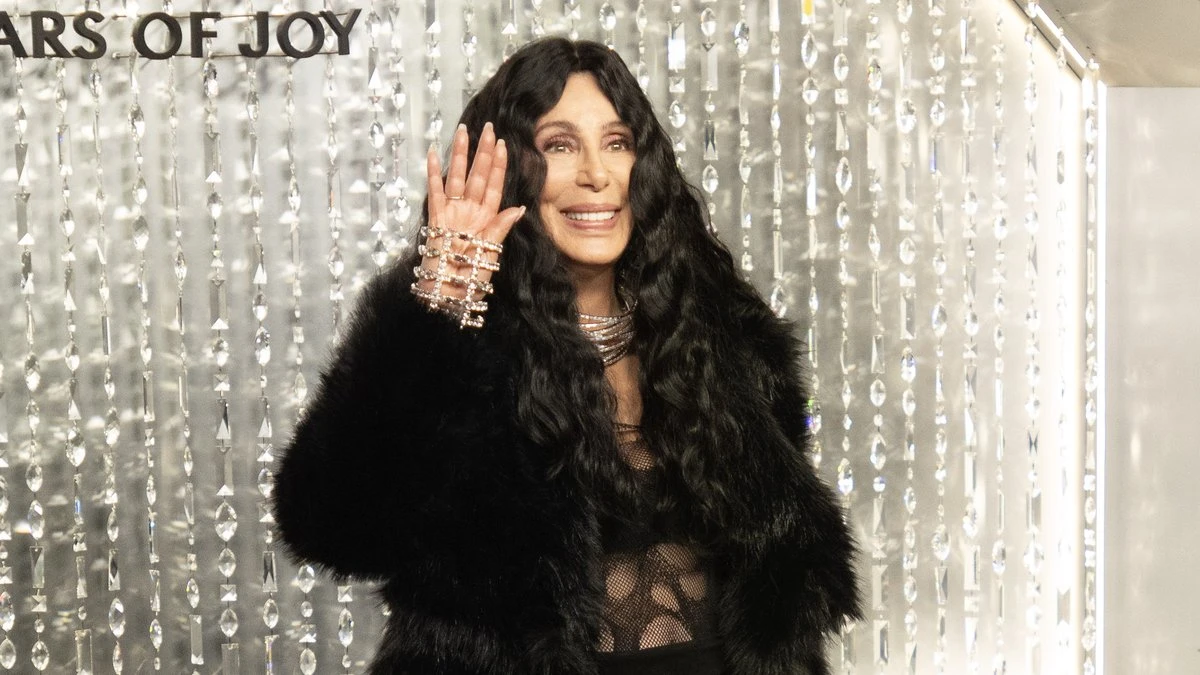
Cher in the 2020s. 80 years old—and none of her looks look dated.
Which of Cher's outfits do you think is the boldest—or the most underrated?