Dead Evita Was More Dangerous Than She Was Alive: How the First Lady's Corpse Terrified an Entire Army (9 photos)
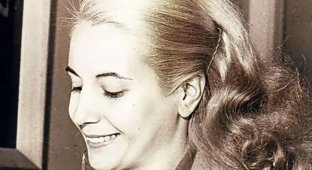
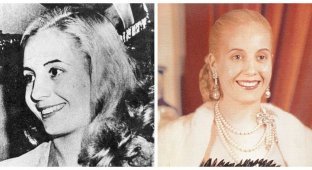
Eva Perón, the First Lady of Argentina affectionately known as Evita, passed away in 1952 at just 33 years old. Two million Argentines lined the streets to bid her farewell—an outpouring of grief unprecedented in the nation's history. But her funeral was far from the end of the story. Her body was stolen, hidden in attics and military offices, and secretly smuggled to Italy under an assumed name. Here is the extraordinary story of how Evita's embalmed corpse spent 24 years traveling across three continents before finally finding a resting place in La Recoleta Cemetery. 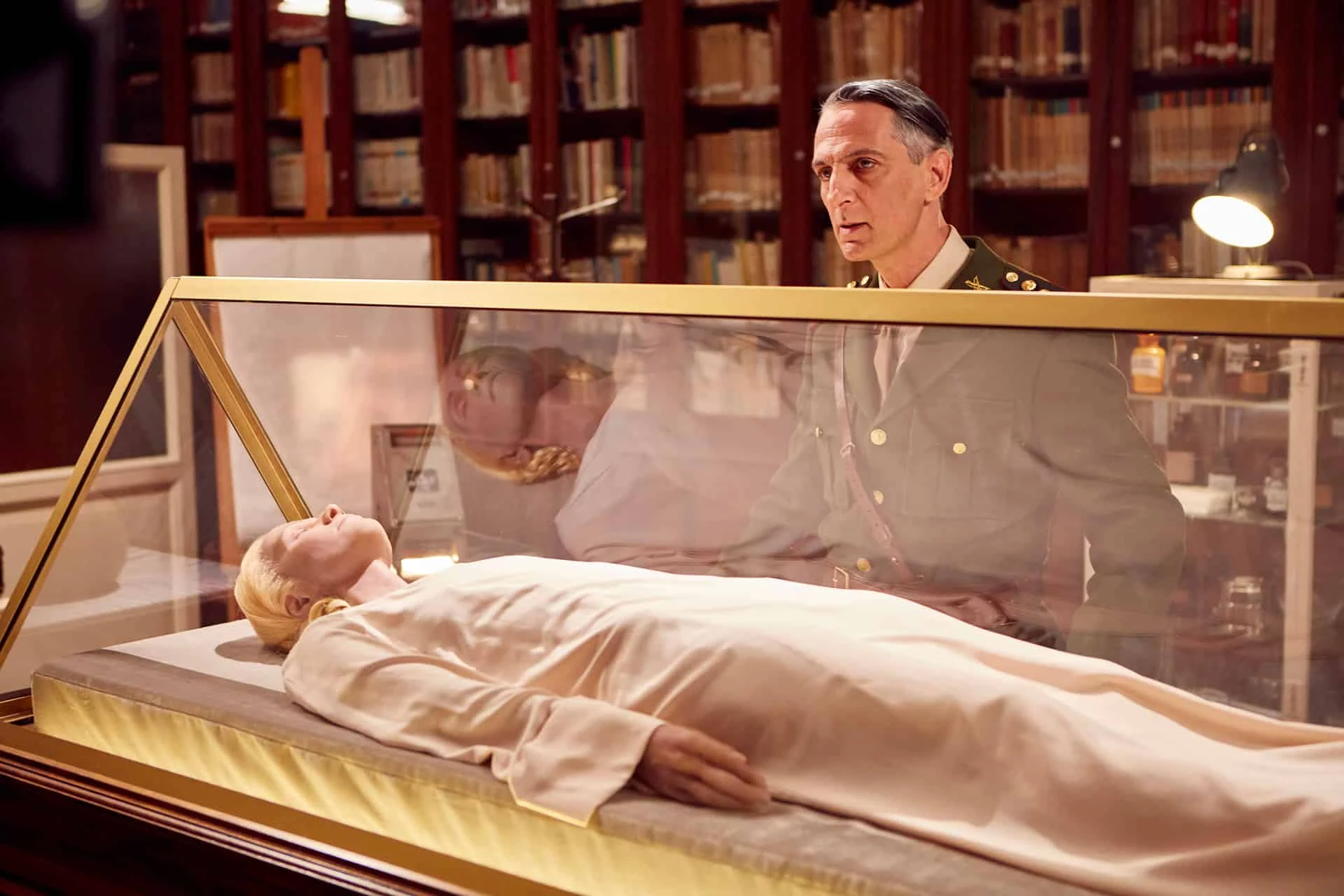
The Night Argentina Stood Still
On the evening of July 26, 1952, Eva Perón succumbed to cervical cancer at the presidential residence in Buenos Aires. The illness had ravaged her body—by summer, her weight had plunged to under 80 pounds. Beside her bed stood her husband, President Juan Perón, and another key figure: Dr. Pedro Ara, a renowned Spanish anatomist.
President Perón made up his mind immediately: the First Lady's body was to be embalmed and preserved for eternity. Dr. Ara was granted a private wing in the residence and complete freedom to perform his work. When he finished, the president personally inspected the corpse and expressed complete satisfaction with the result. 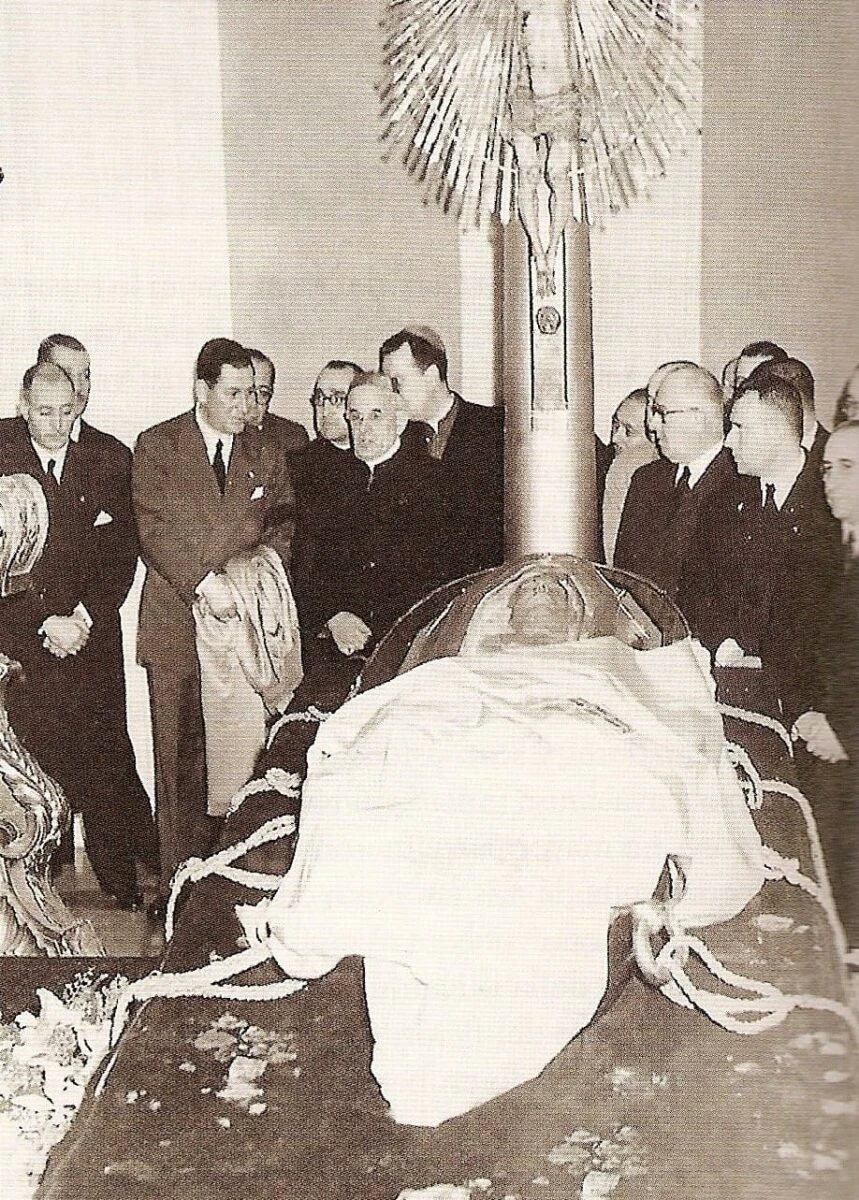
The First Lady's body was preserved almost flawlessly, thanks to an advanced embalming technique rare for its era.
That evening, Argentine radio broadcasts delivered a single solemn announcement: the nation had lost its "Spiritual Leader." Movie theaters halted screenings, businesses shuttered, and the streets of Buenos Aires filled with mourners—few of whom realized that this farewell would drag on for decades.
Dr. Ara’s "Art of Death"
Pedro Ara had arrived in Argentina in 1925 to establish an anatomical museum at a local medical college. Having studied embalming under Europe’s top specialists, he had preserved hundreds, if not thousands, of bodies by the time of Evita's death. He called his proprietary technique the "art of death"—replacing blood with a mixture of formalin, glycerin, and paraffin that penetrated every tissue cell.
Uniquely, Ara left her internal organs intact—a risk almost no other embalmer of the era dared to take. The result was so lifelike that observers frequently described her as merely sleeping. To ensure long-term preservation, Ara immersed the corpse in a bath of preservative solution for several weeks in his laboratory. 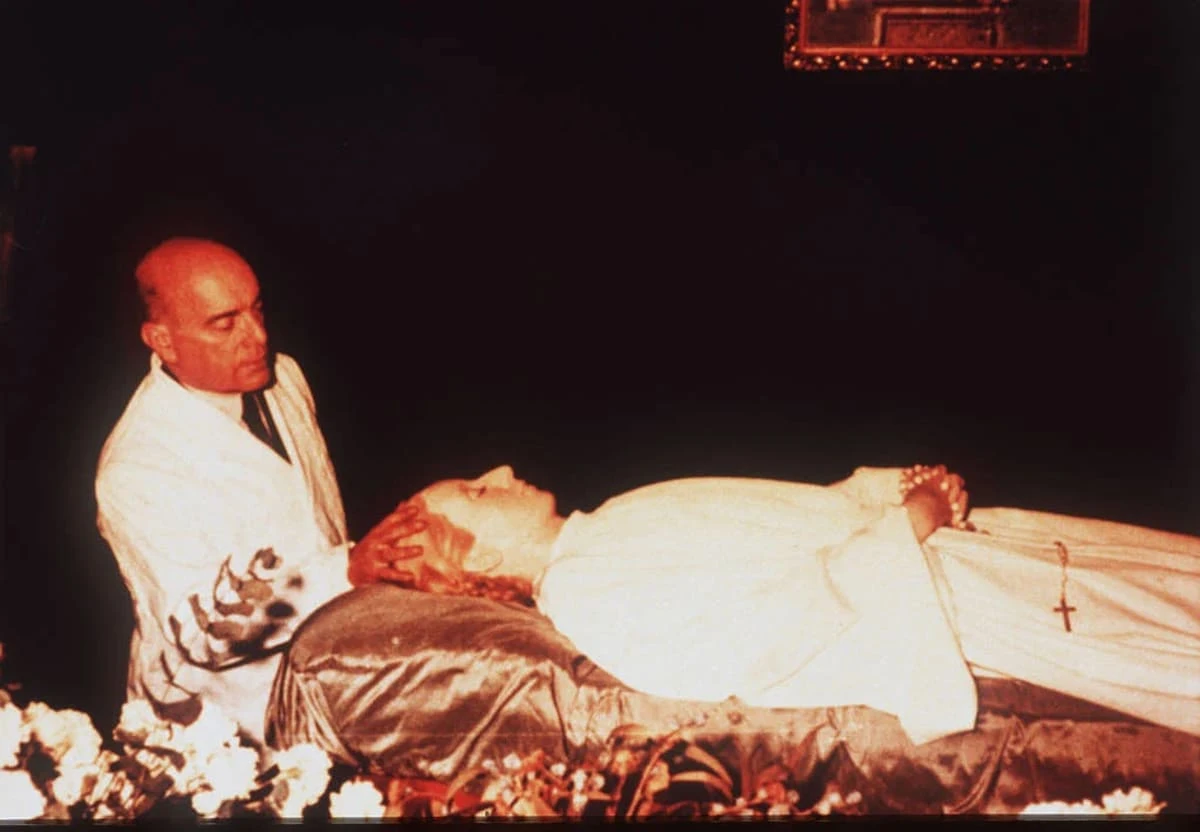
Dr. Ara beside the body of Eva Perón. He guarded his embalming technique closely, considering it an art rather than a craft.
She was placed in a mahogany coffin fitted with a hinged glass panel so the nation could continue to gaze upon their beloved Evita. Her personal hairstylist arranged her hair, and her manicurist painted her nails one last time.
16 Days of National Mourning
Her body was moved to the Ministry of Labor, where she lay in state awaiting the official state funeral. Lines stretched for city blocks as mourners queued continuously for 16 days. Over two million people—nearly a fifth of the population of Buenos Aires at the time—came to pay their respects. 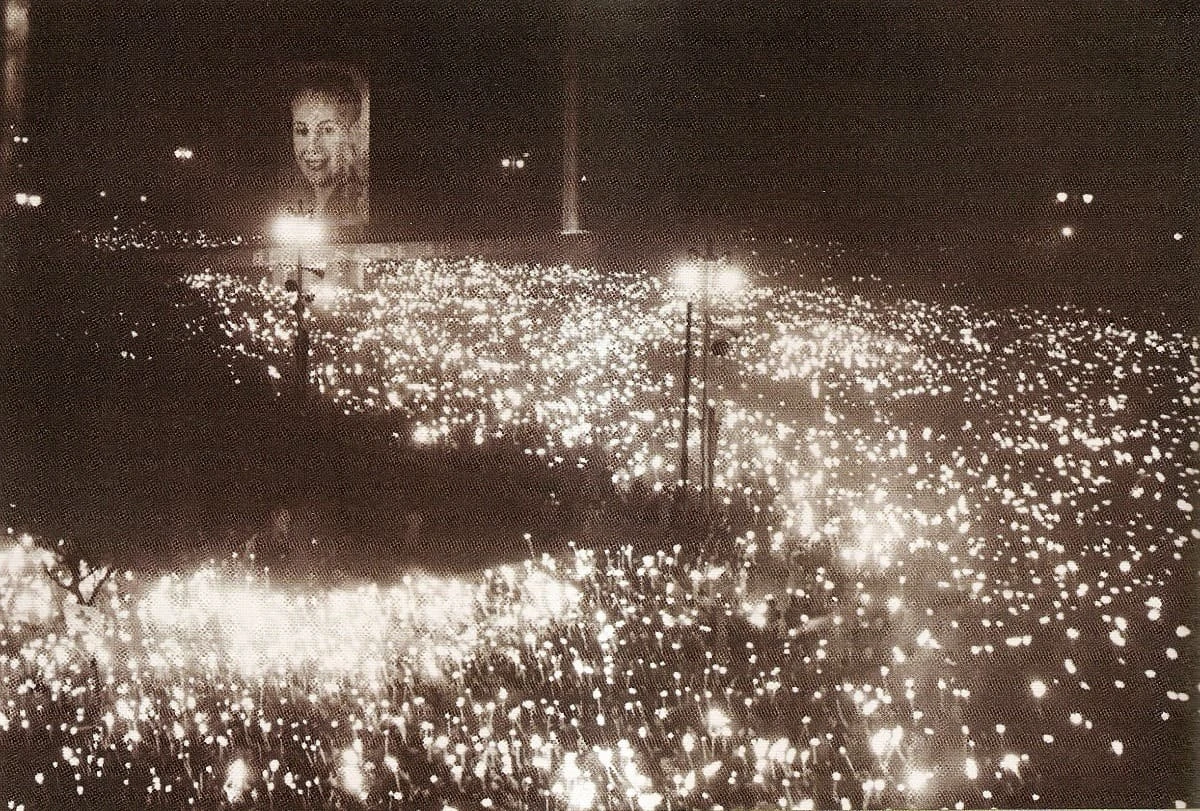
The funeral procession in Buenos Aires. Argentina had never witnessed such a massive public farewell before, nor has it since.
The crowds were so intense that several people were crushed to death and thousands injured. The government declared a month of official mourning. Juan Perón vowed to erect a monument to his wife taller than the Statue of Liberty, featuring a central sarcophagus open to the public, modeled after Lenin’s Mausoleum in Moscow. While construction began, her body remained under Dr. Ara’s watch in his laboratory, awaiting a final resting place it would never actually occupy.
The Abduction and the Secret Flight to Milan
The monument was never finished. On September 20, 1955, a military coup ousted Juan Perón, forcing him to flee to Paraguay. The new regime refused to tolerate the lingering cult of personality around the late First Lady. Suddenly, her body was a major political threat. 
The casket at the 1952 funeral. Three years later, it would vanish from Buenos Aires for 16 years.
Army Intelligence Colonel Carlos Moori Koenig was tasked with secretly disposing of the remains. Instead, he disobeyed orders. For years, he shuttled the coffin across Buenos Aires, stashing it in his office and hiding it inside radio equipment crates—even displaying it to guests like a trophy. The sheer psychological strain drove one officer assigned to guard the corpse to madness; mistaking his pregnant wife for an intruder trying to steal the body, he shot and killed her.
Once military superiors discovered Moori Koenig's bizarre behavior, they banished him to Patagonia and arranged to spirit the body out of the country. In 1957, the coffin was shipped to Italy disguised as ordinary cargo. It arrived in Milan on May 17, escorted by a nun who was led to believe she was escorting the remains of an ordinary Italian immigrant. The corpse was buried at the Cimitero Maggiore under the alias Maria Maggi de Magistris. 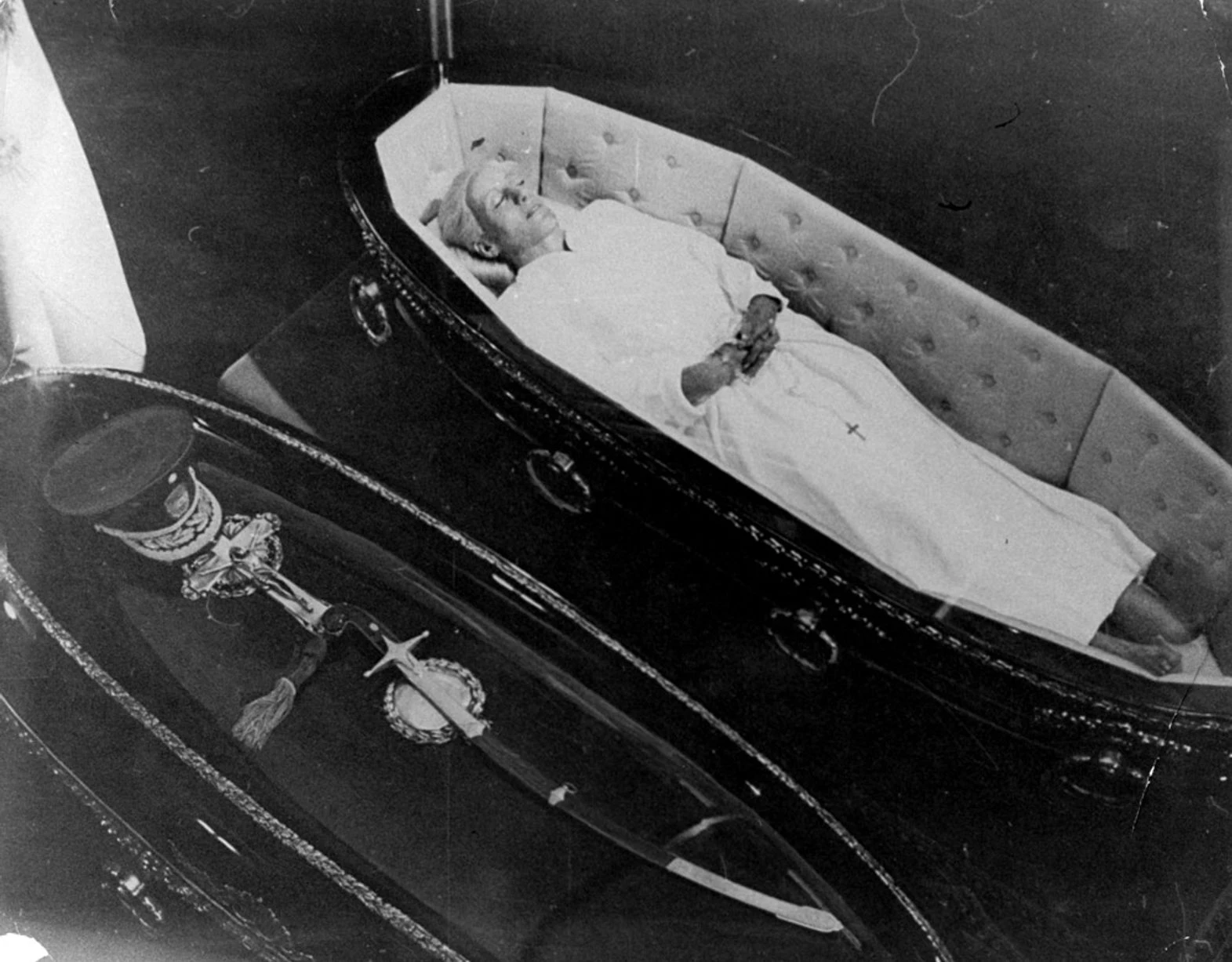
Evita's body lying in state—the very corpse that the military would soon transform into Argentina’s most guarded secret.
Fourteen years later, in 1970, Peronist militants kidnapped former President Pedro Eugenio Aramburu—the general who had been in power when Evita's body vanished. They demanded to know where her remains were hidden. When he failed to deliver, Aramburu was executed days later. His own body then vanished, becoming a bargaining chip in an even stranger political saga.
The "Sister" from Milan
The saga took another turn in September 1971. A man identifying himself as Carlos Maggi approached the Milan cemetery administration, claiming that the woman buried as Maria Maggi was his sister and requesting permission for exhumation. Approval was granted with surprising speed.
Beneath the weathered wooden outer casket, workers unearthed a second, silver casket with a glass viewing window. Inside lay Evita, remarkably preserved: 16 years after her public farewell and 19 years after embalming, her corpse showed virtually no signs of decay. 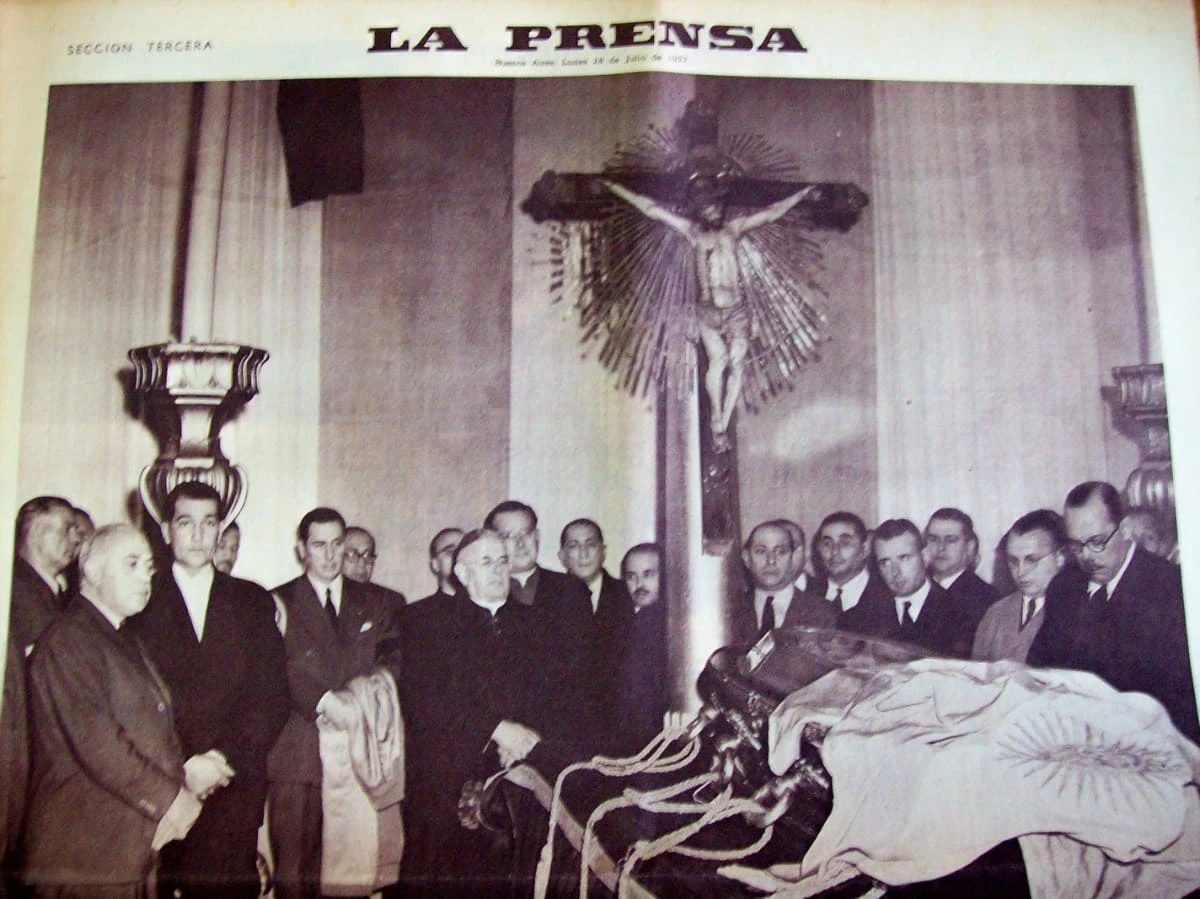
This 1952 photograph resurfaced across Argentine media 19 years later, when her corpse was discovered in Milan nearly untouched by time.
The remains were flown to Madrid to the home of Juan Perón, who was living in exile with his third wife, Isabel. Dr. Ara was urgently summoned from Argentina to repair minor damage the body had suffered over its years of wandering. Once restored, the coffin was placed in the villa's dining room, where the Peróns dined daily just feet away from Evita.
Repatriation and Final Rest
In 1973, Juan Perón returned from exile and was elected president of Argentina for a third time—this time without Evita by his side. He died a year later, leaving his widow, Isabel, to assume the presidency. She immediately ordered Evita's repatriation, placing her coffin beside her husband's at the Quinta de Olivos presidential residence. 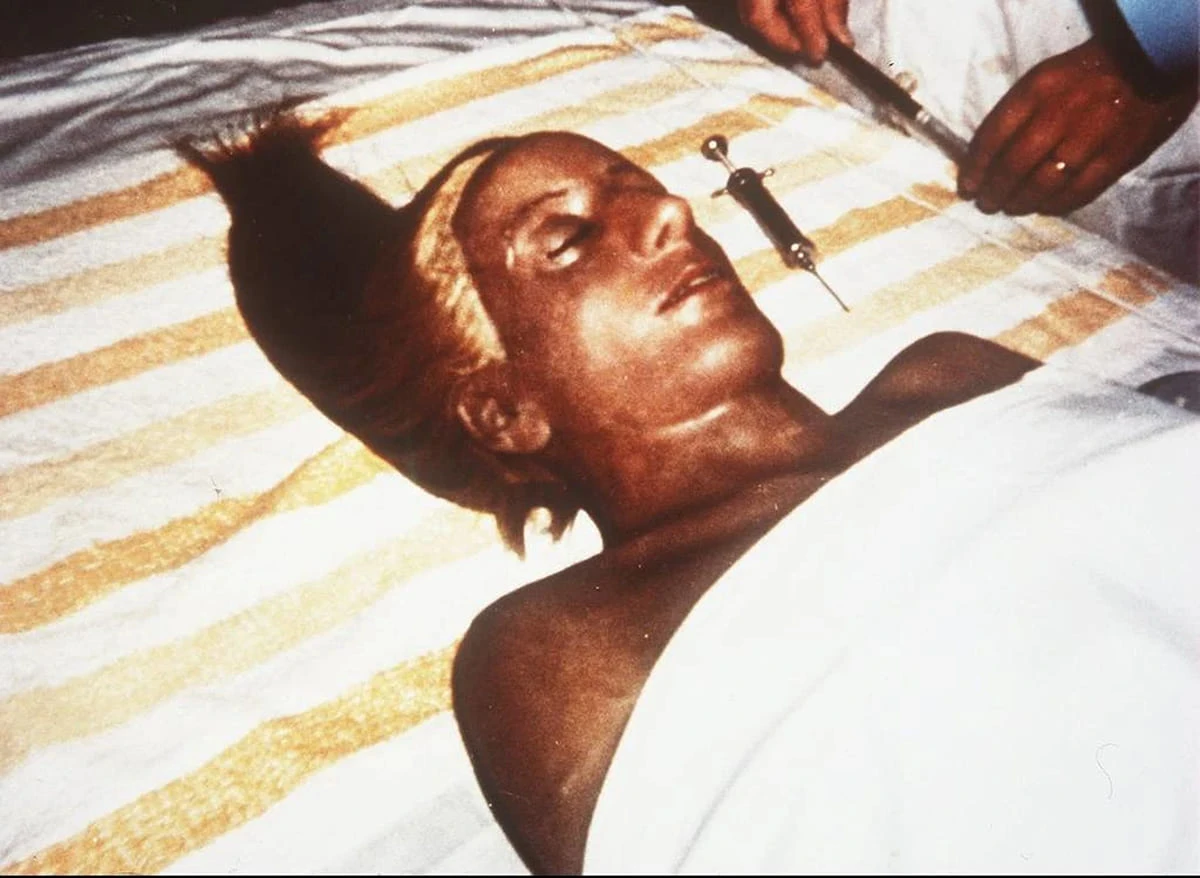
Eva Perón’s body back in Buenos Aires following its repatriation from Italy, 1974.
In October 1976, Evita’s bizarre odyssey finally came to an end. She was laid to rest in her family's mausoleum at La Recoleta Cemetery—in a crypt 16 feet underground, fortified so heavily that cemetery caretakers claim it could survive a direct bomb strike. Juan Perón was buried separately in La Chacarita Cemetery. Thus, 24 years after her death, Evita finally found peace in the very spot where hundreds of thousands of visitors still leave fresh flowers every year. 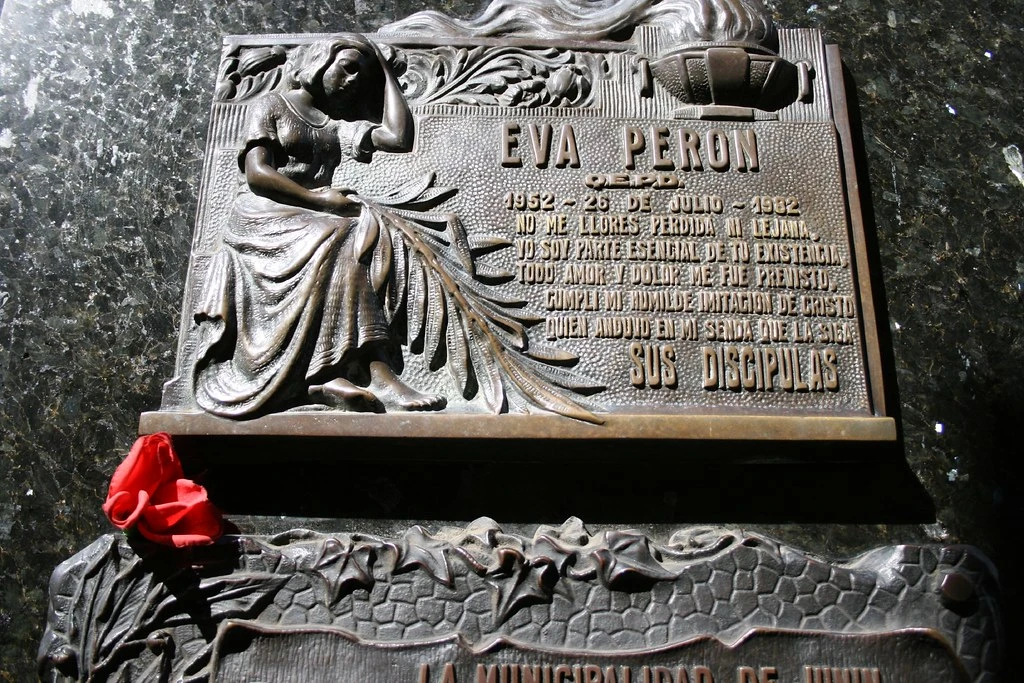
The Duarte family vault at La Recoleta Cemetery—the most visited site in all of Buenos Aires’ famous necropolis.
Over a quarter of a century, Eva Perón's body crossed three continents, moved through five hiding places, and spent years under a fake identity—a journey longer than most people undertake in a lifetime.
Why do you think the military junta didn't simply destroy the corpse, choosing instead to spirit it across the globe for two decades?