Polish Jews Through the Lens of Alter Kacyzne: Stunning Historical Photographs (27 Photos)
There was once a man with the peculiar name of Alter Kacyzne. He was a writer, a playwright, and something of a poet. A couple of his plays were staged in Warsaw, and he served as president of the Yiddish PEN Club. Yet photography was his true passion. His studio in Warsaw became a local landmark, housing an archive of hundreds of portraits—ranging from Polish celebrities to ordinary citizens—alongside stage photography and street scenes. Armed with his camera, he also traveled extensively across the country. Through it all, he enjoyed a quiet family life with his wife and daughter. 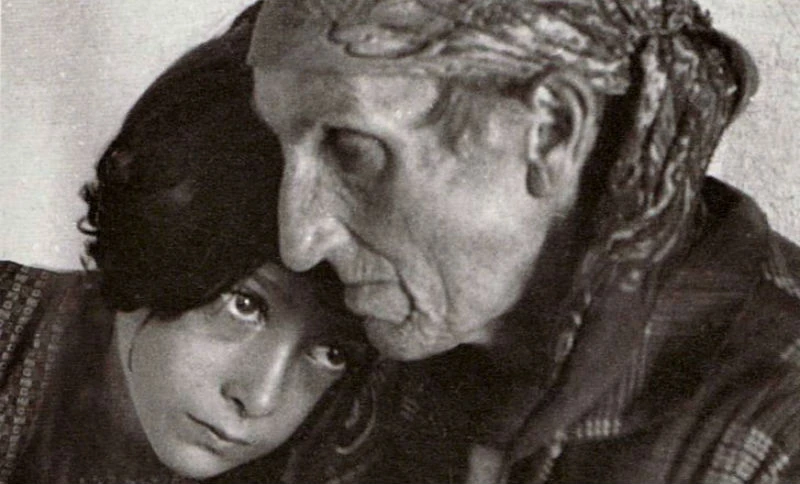
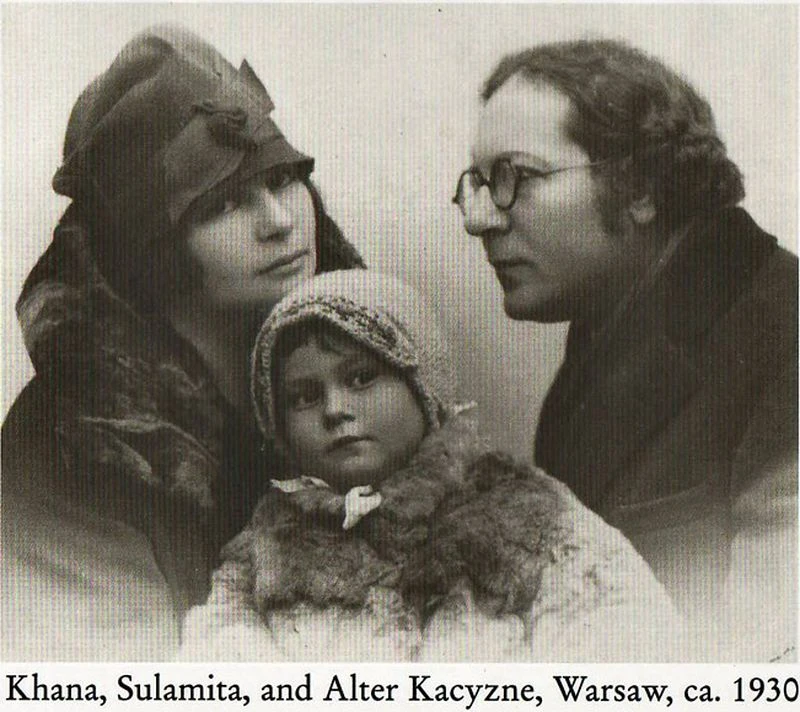
Kacyzne’s wife likely perished in an extermination camp, but their daughter, Shulamith, survived. Though details of her rescue remain unknown, she endured the occupation and went on to marry the Italian ambassador to Poland after the war. She later moved to Italy, where she lived until her death in 1999. 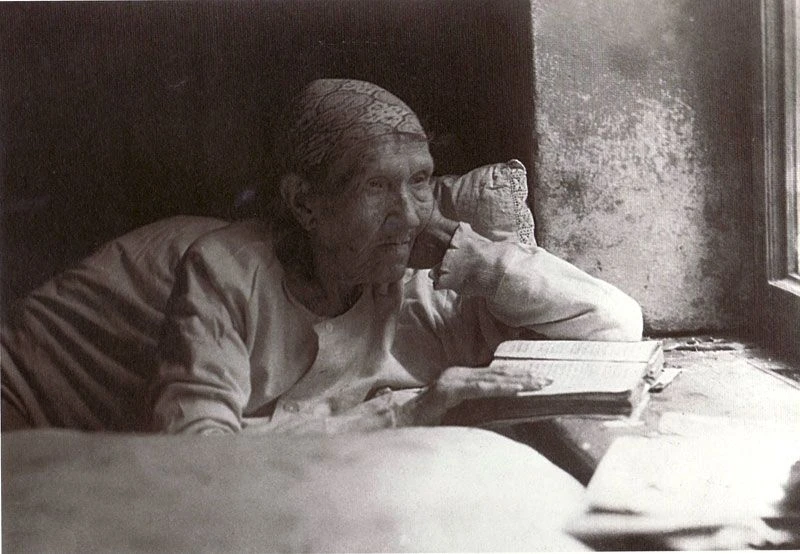
Chana Kolski is 106 years old. Every evening she confesses her sins and eats cookies. Her 80-year-old son in America refuses to believe she is still alive. Warsaw, 1925. (Reciting the Viduy daily for the sins of all Israel.) 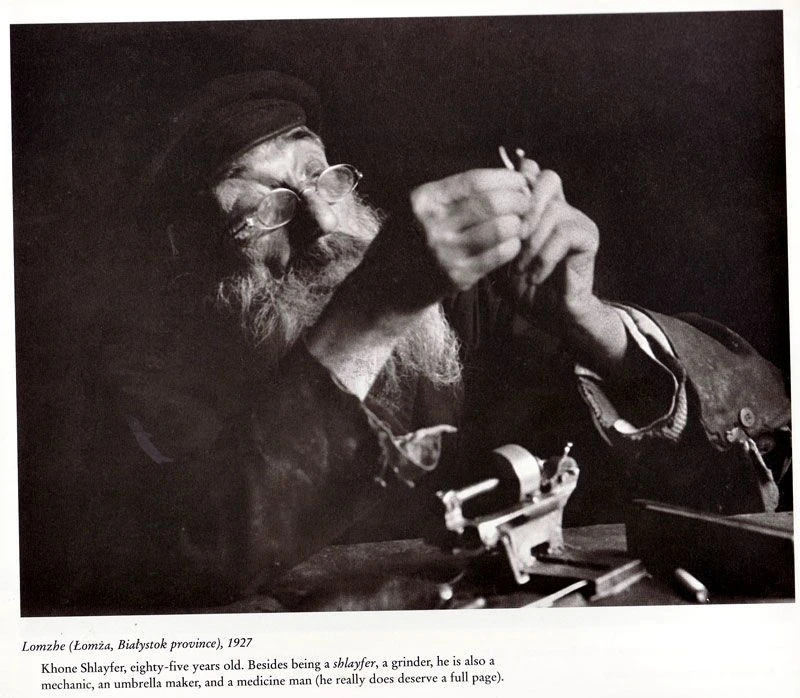
Chon Schleifer, 85 years old. Grinder, mechanic, umbrella maker, and healer. Łomża, 1927. 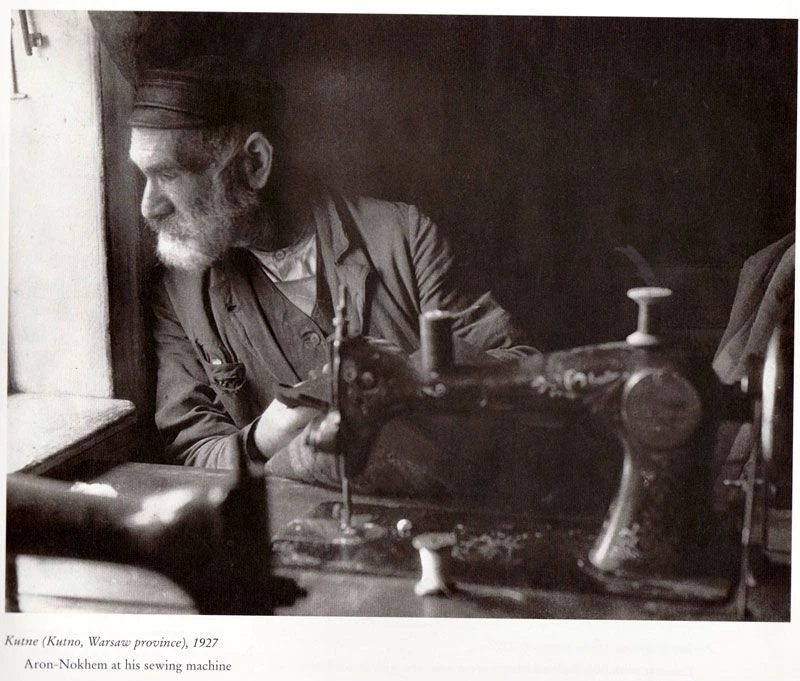
Aron-Nochem at his sewing machine. Kutno, 1927. 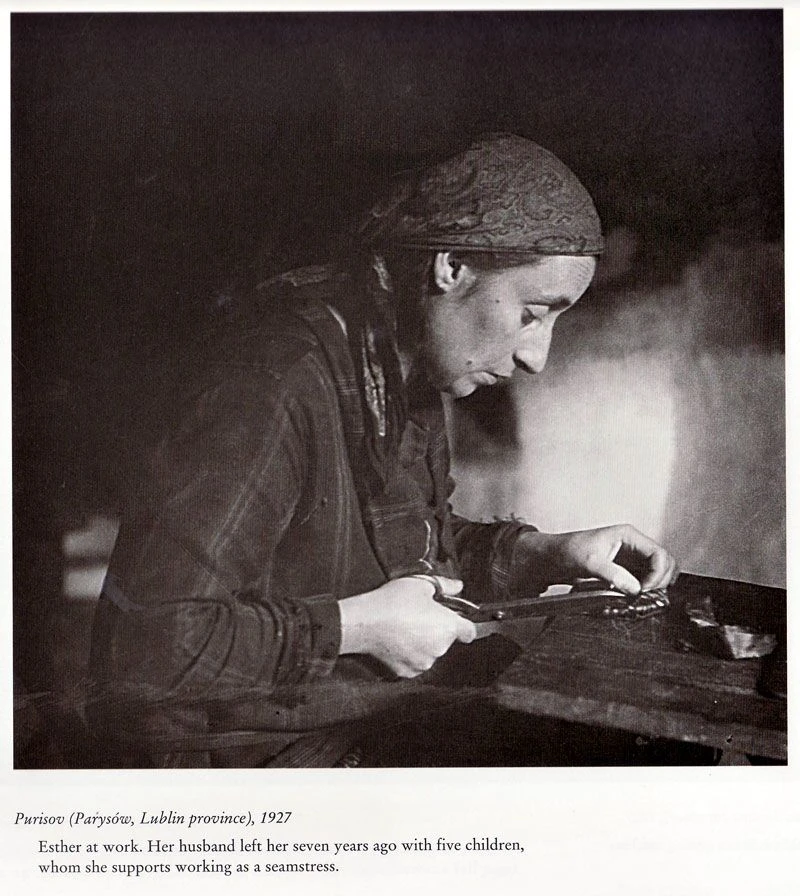
Esther at work. Seven years ago, her husband abandoned her and their five children. She supports her family working as a seamstress. Parysów, 1927. 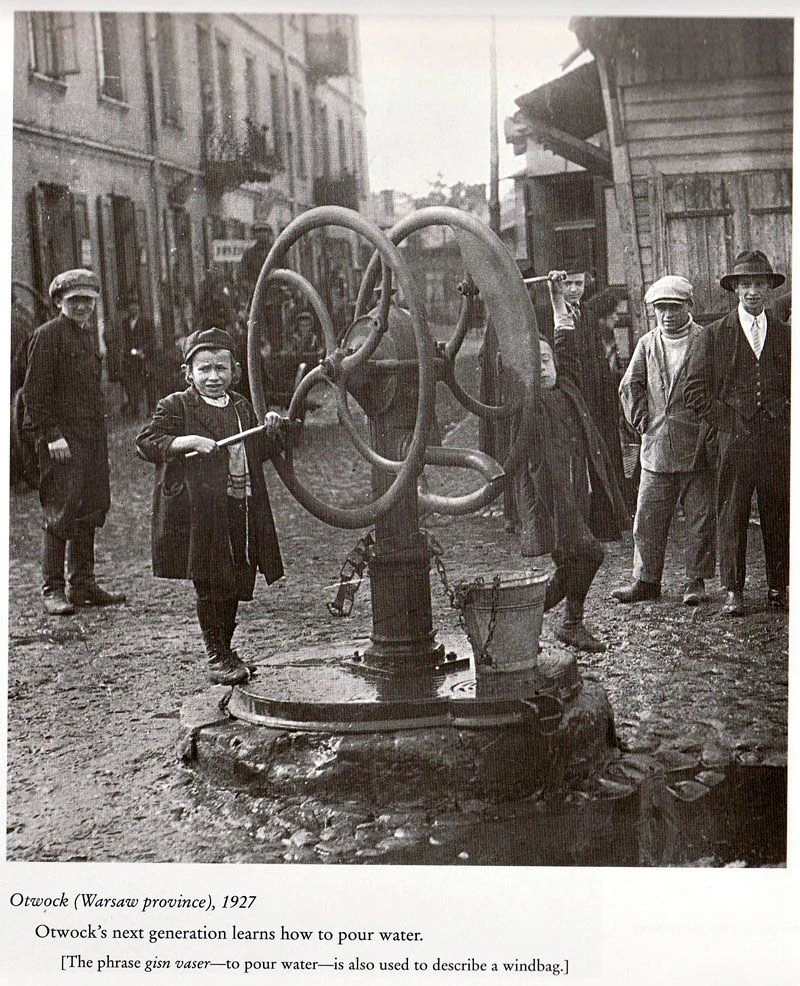
The new generation learns the art of carrying water. Otwock, 1927. 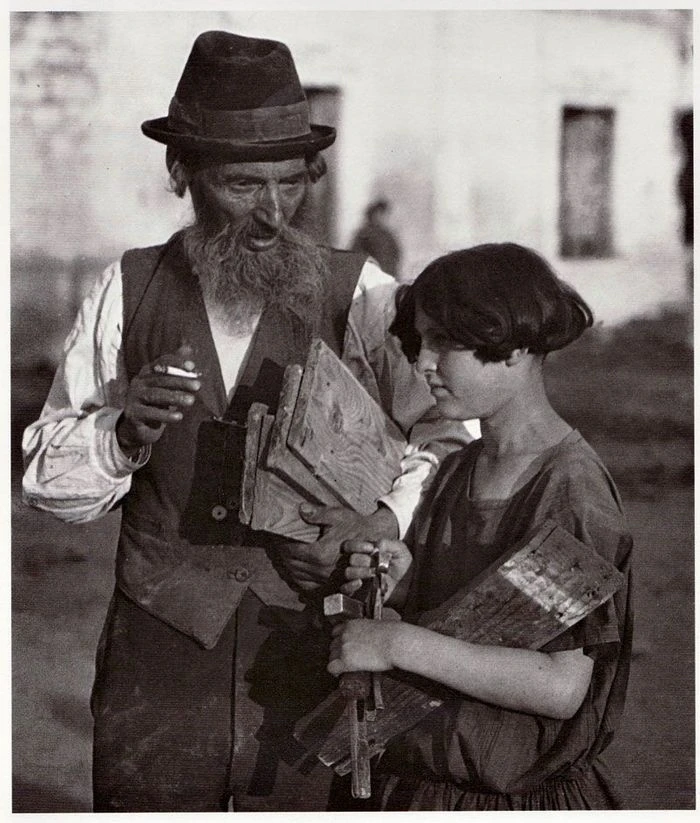
A carpenter and his granddaughter. Chortkiv, 1925. 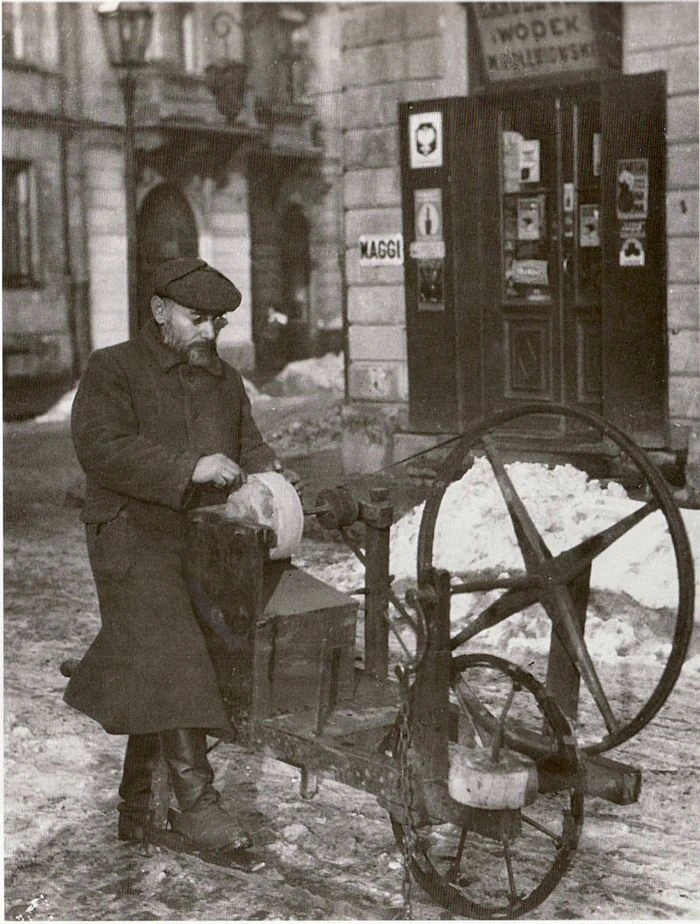
What did he fight for? Feivel Tabakman, a former political prisoner, cannot find work as a locksmith. Instead, he sharpens knives on the street. Warsaw, 1928. 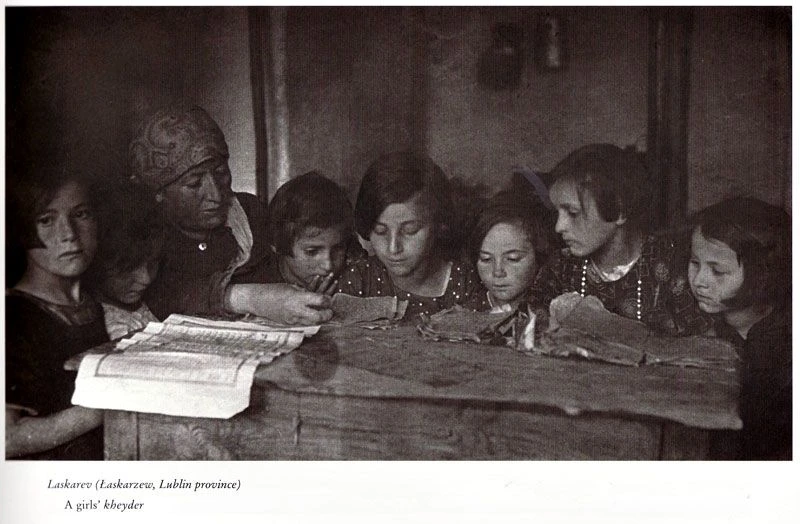
A religious school for girls. Łaskarzew. 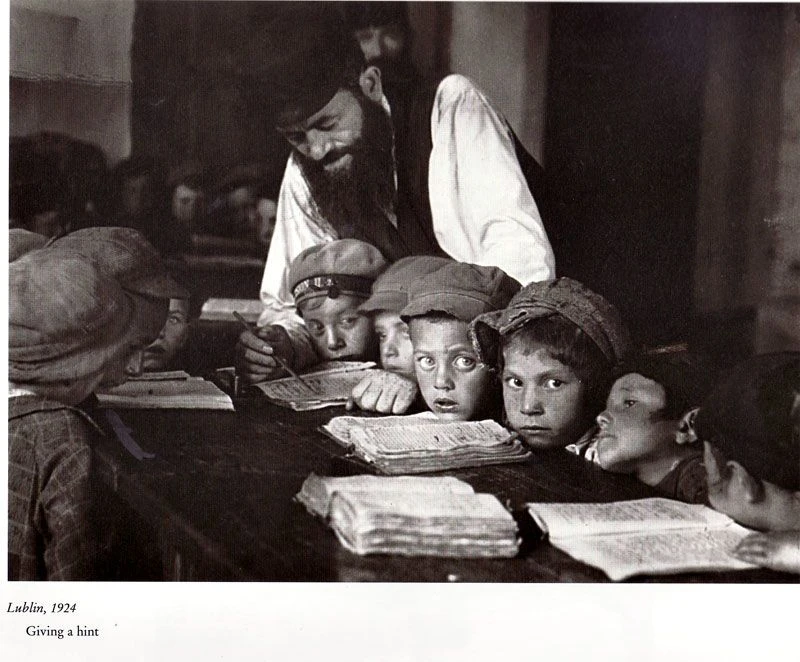
A subtle hint. Lublin, 1924. 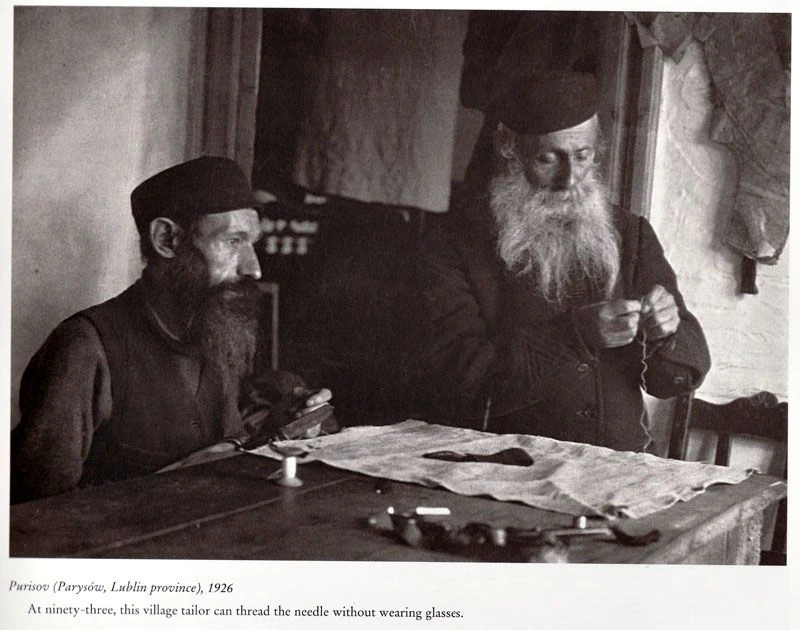
At 93 years old, this village tailor can still thread a needle without glasses. Parysów, 1926. 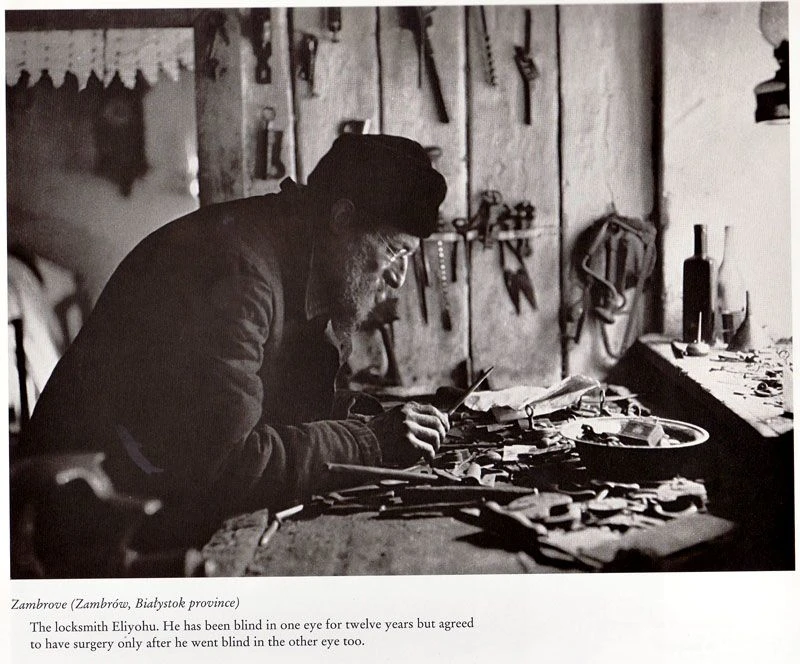
Eliogu the locksmith. He lost sight in one eye twelve years ago, but refused surgery until he went blind in both. Zambrów. 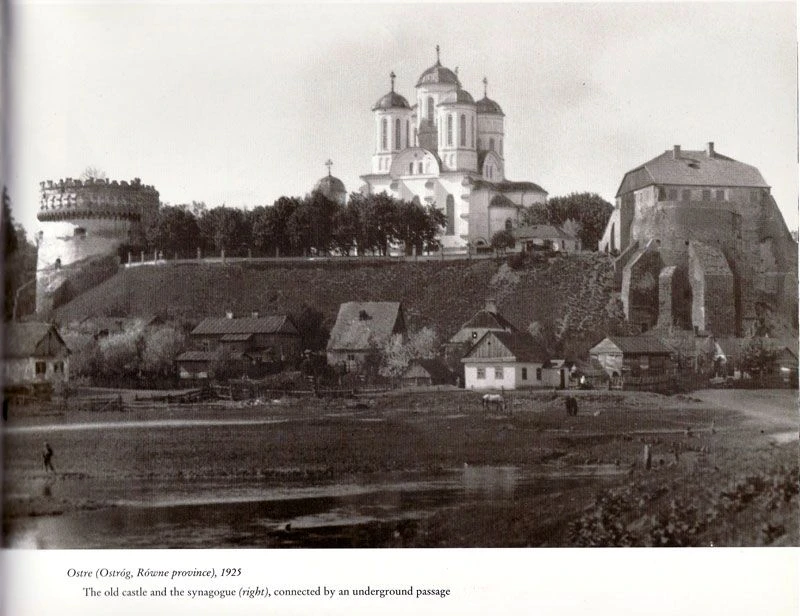
An ancient castle and a synagogue connected by an underground passage. Ostroh, 1925. 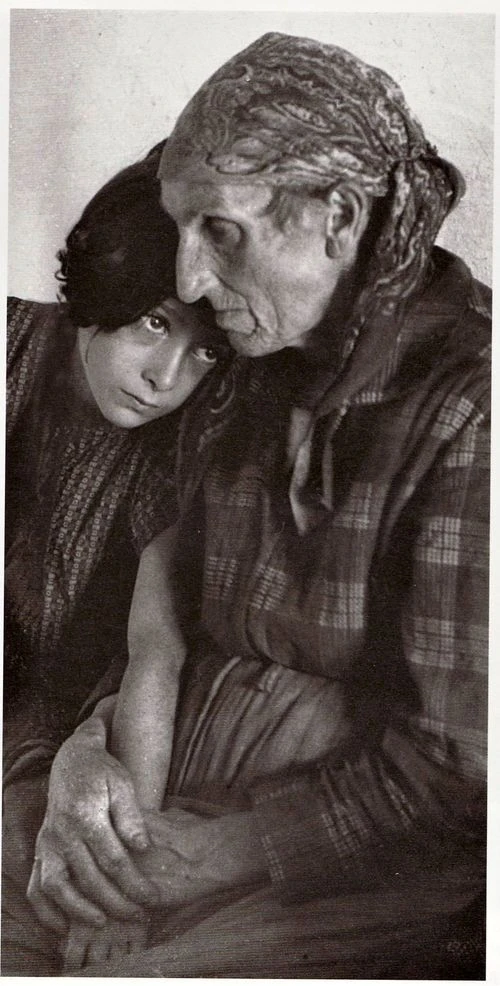
The wife and granddaughter of Meyer Gurfinkel. The girl's mother passed away, and her father lives in Washington. Karczew. 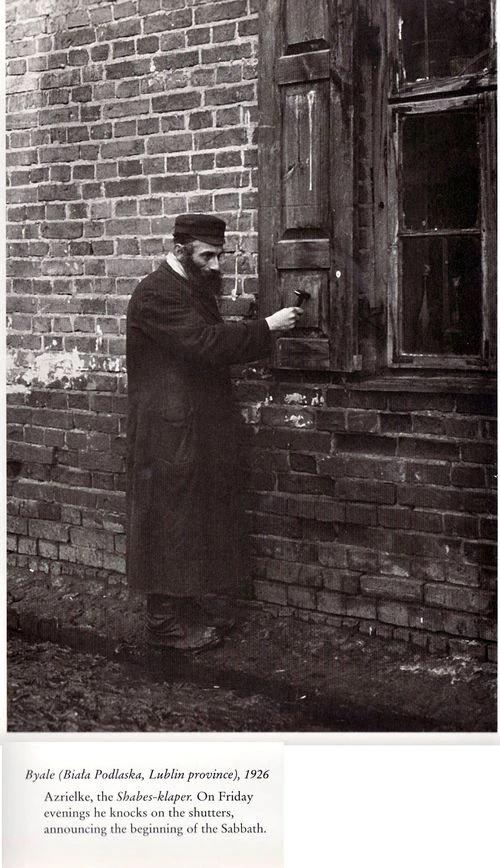
Azrielke, the Shabes-klaper. On Friday evenings, he knocks on shutters to announce the arrival of the Sabbath. Biała Podlaska, 1926. 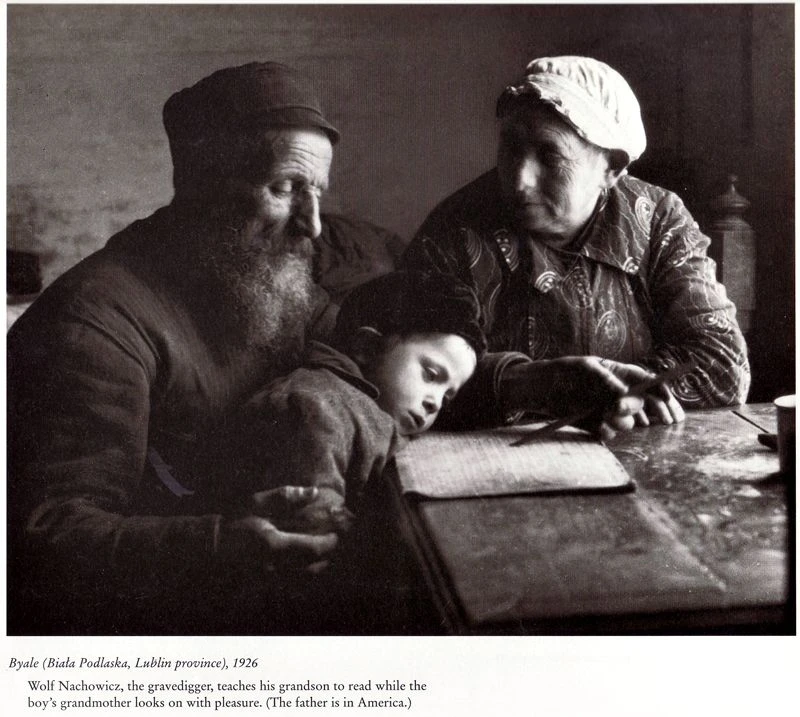
Wolf Nachowicz, a gravedigger, teaches his grandson to read while a pleased grandmother looks on. Biała Podlaska, 1926. 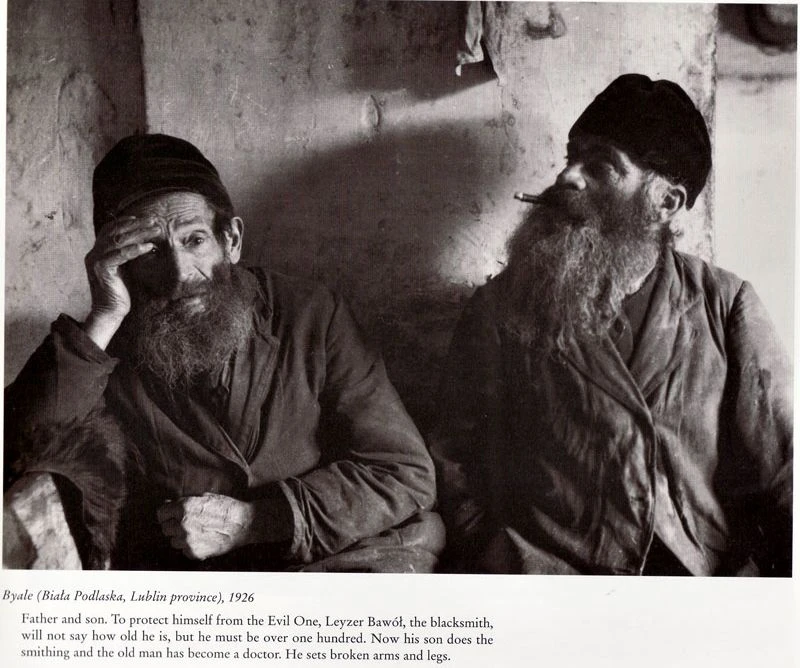
Father and son. Blacksmith Leizer Bavul refuses to state his age for fear of the evil eye, but he must be well over a hundred. His son now runs the forge, while the father works as a folk doctor, setting broken bones. Biała Podlaska, 1926. 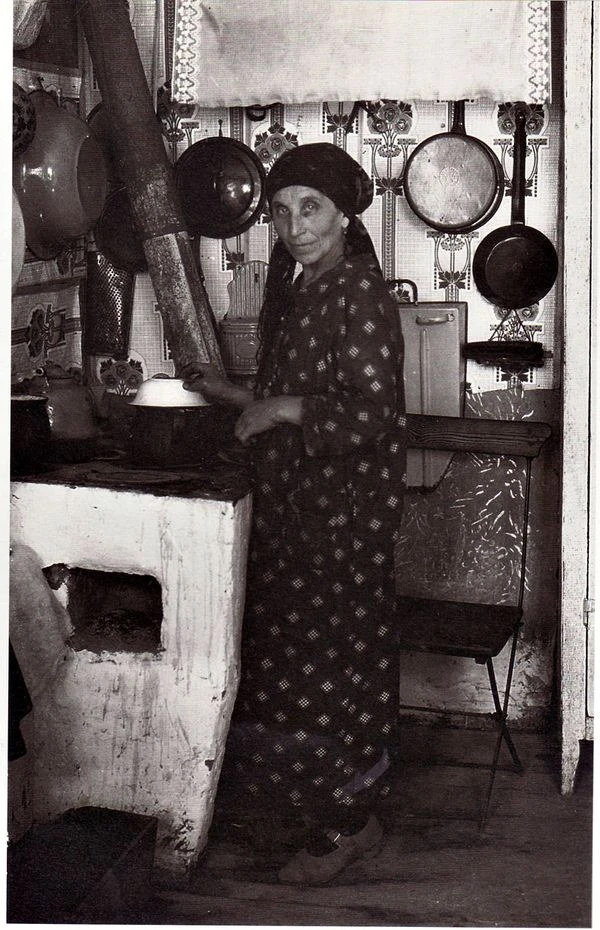
The saddler's wife. Wołomin. 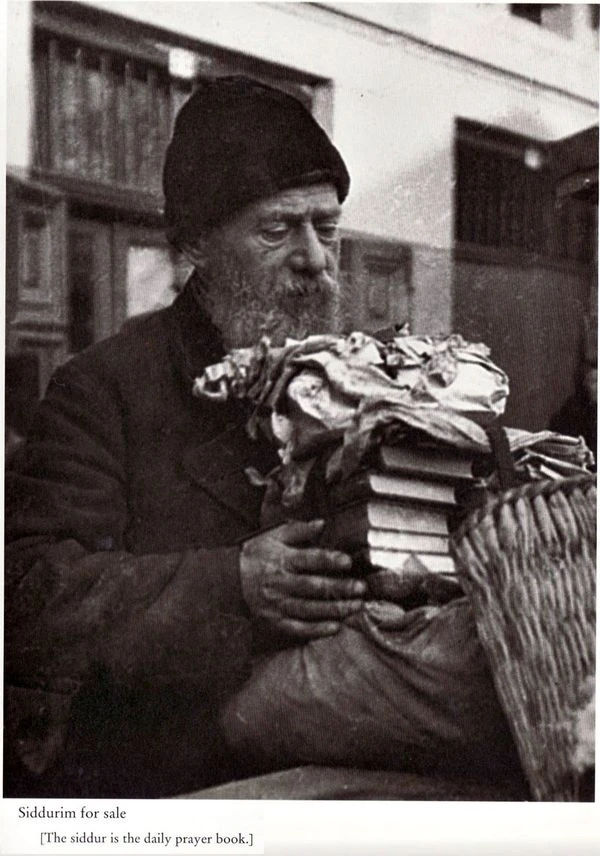
Prayer books for sale. 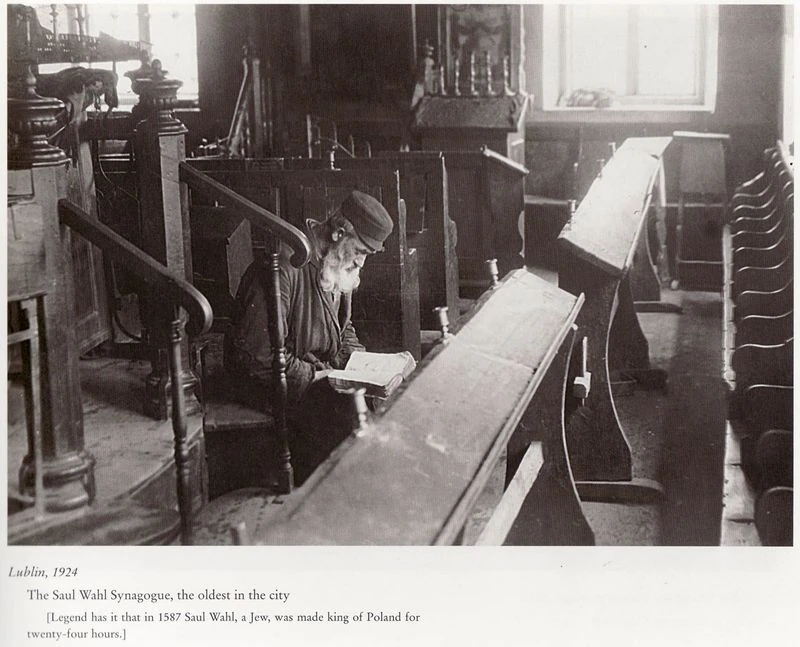
Synagogue. Lublin. 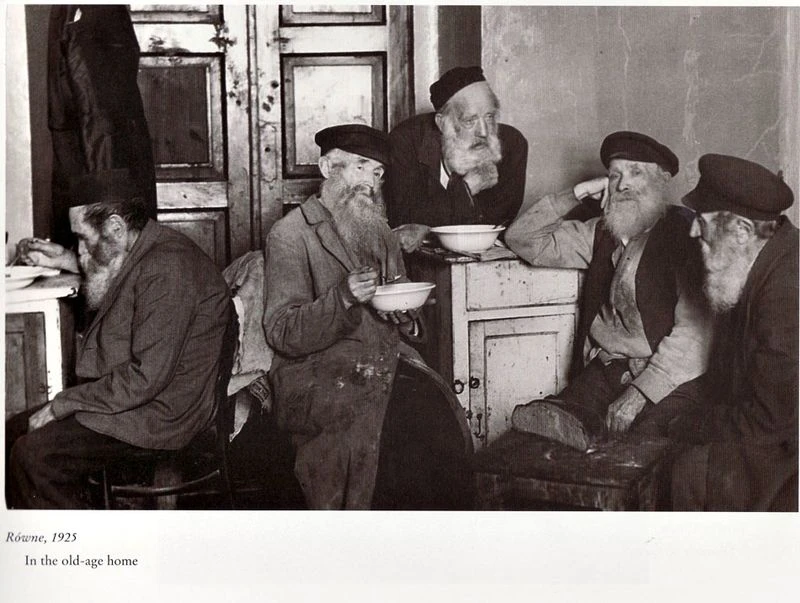
A retirement home in Rivne. 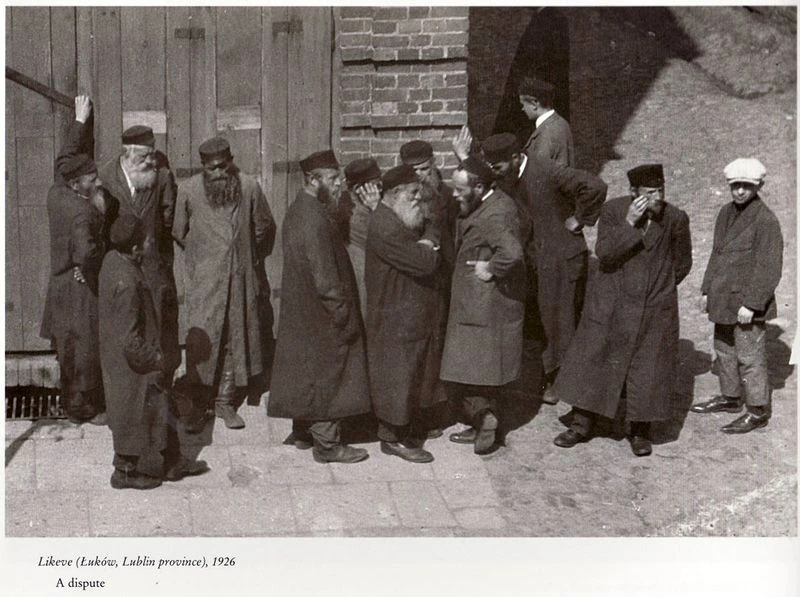
One wonders: is this debate theological? 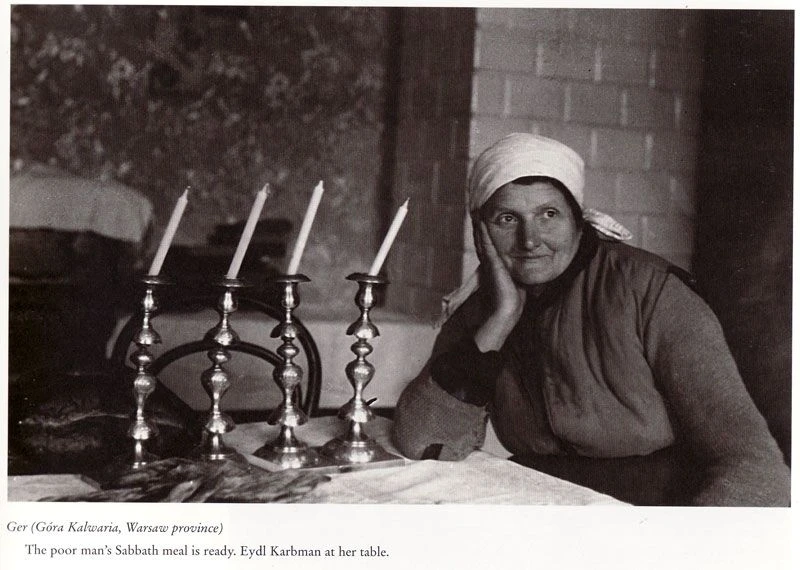
And this table is set for the Sabbath. 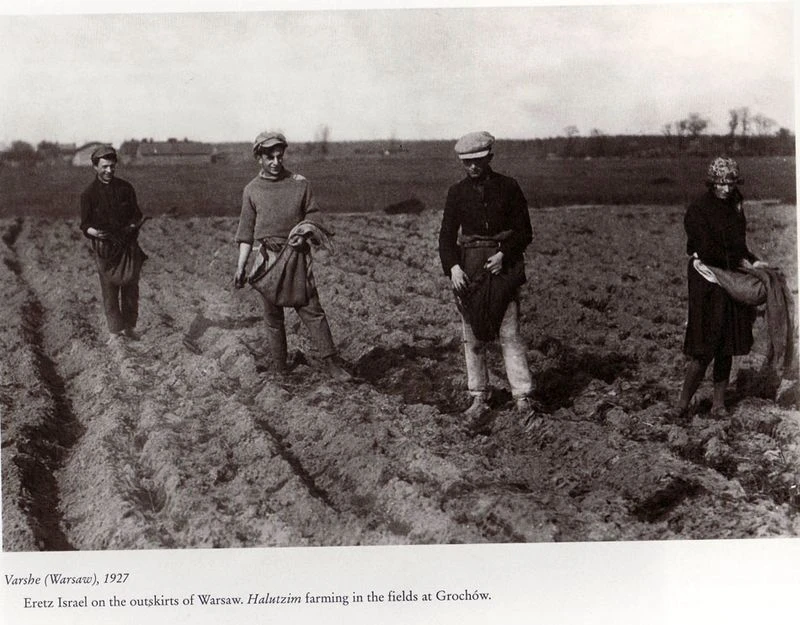
The Land of Israel in the suburbs of Warsaw: Halutzim (pioneers) farming the fields in Grochów.
This was a famous kibbutz. Historian Emmanuel Ringelblum told a curious story about it: A man once bought two movie projectors on installment. Before long, he went bankrupt and defaulted on his payments, losing both his money and the equipment. The manufacturer happened to be Jewish, leading the man to blame Jews for all his misfortunes. Years passed, and this hardened anti-Semite happened to visit the kibbutz in Grochów… and ended up staying forever. As it turned out, it was the only place where he felt at peace and found true satisfaction in his work. 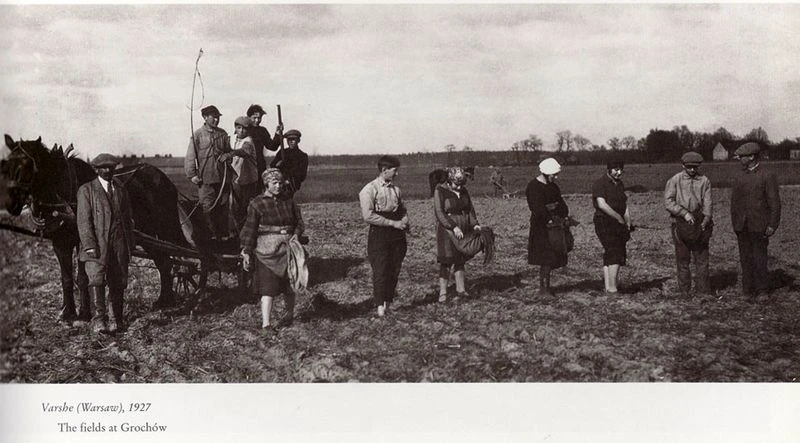
Also in Grochów. 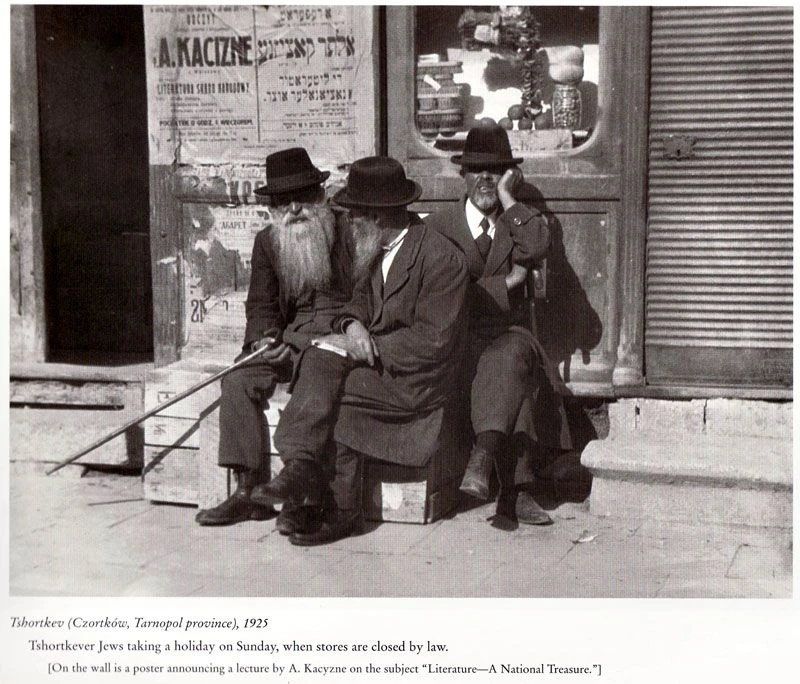
Sunday in Chortkiv is a day off. Local residents lounge beneath a poster announcing a lecture by Alter Kacyzne titled "Literature as a National Treasure."