Operation Finale: How Israeli Agents Abducted Adolf Eichmann, the World's Most Wanted Nazi (8 photos)
In the final days of World War II, countless Nazi war criminals scrambled to flee Europe, fearing—with good reason—for their lives. While many were captured and brought to justice at Nuremberg, a handful managed to vanish without a trace. Chief among these fugitives was Adolf Eichmann, the logistical mastermind behind the Holocaust.
For fifteen years, Eichmann successfully gave Nazi hunters the slip, but Israel's intelligence agency, Mossad, never stopped searching. Operation Finale, a brilliant covert mission executed by Israeli operatives, culminated in Eichmann’s abduction from South America, his transport to Israel, a historic trial, and his death on the gallows. Here is the remarkable story of how it unfolded. 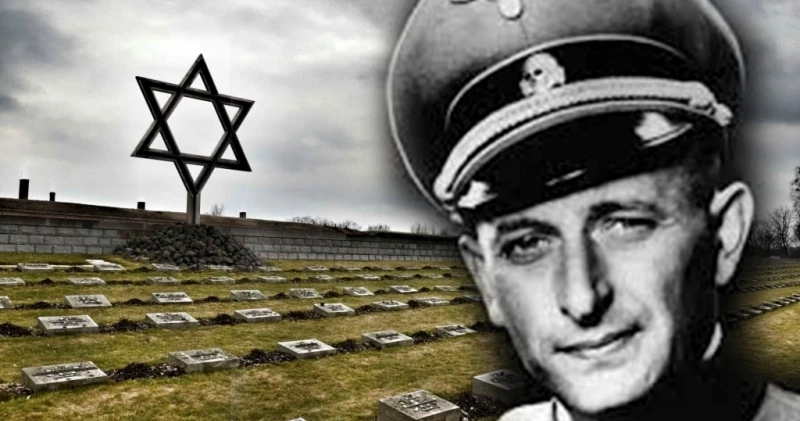
Beginning in 1939, Adolf Eichmann headed a specialized Gestapo division tasked with organizing ghettos, managing concentration camps, and orchestrating the systematic extermination of Europe’s Jewish population. It was Eichmann who recorded the minutes of the fateful Wannsee Conference, detailing the mass murder plan that came to be known as the Holocaust. 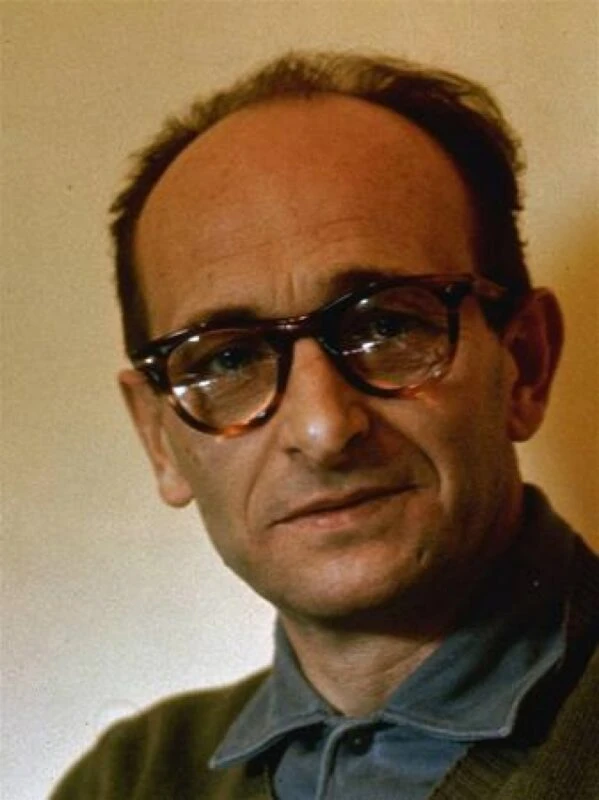
Unsurprisingly, Eichmann became the world's most pursued Nazi criminal, rivaled in notoriety only by "Angel of Death" Josef Mengele. While investigators searched for the "Architect of the Holocaust" across the globe—from Kuwait to Chile—he had quietly established a new life in sunny Argentina. Living among fellow ex-Nazis, he went completely unnoticed as an unassuming working-class man.
Tucked safely away on the far side of the globe, Argentina served as a sanctuary for thousands of fleeing Nazi criminals. Argentine President Juan Perón openly sympathized with Hitler and gave the green light for escaping war criminals to enter the country following Germany's defeat. Armed with forged passports, former Nazis and their families fled to South America, establishing a large and politically influential diaspora.
Under Perón’s administration, many Germans secured high-ranking positions in government and even joined the Argentine military. Eichmann was far from destitute—he had stolen more than enough money from his victims to comfortably support his family. To avoid attracting suspicion, the Holocaust organizer took a job at a local Mercedes-Benz plant and settled in a humble neighborhood of Buenos Aires under the alias Ricardo Klement, living with his wife and three sons. 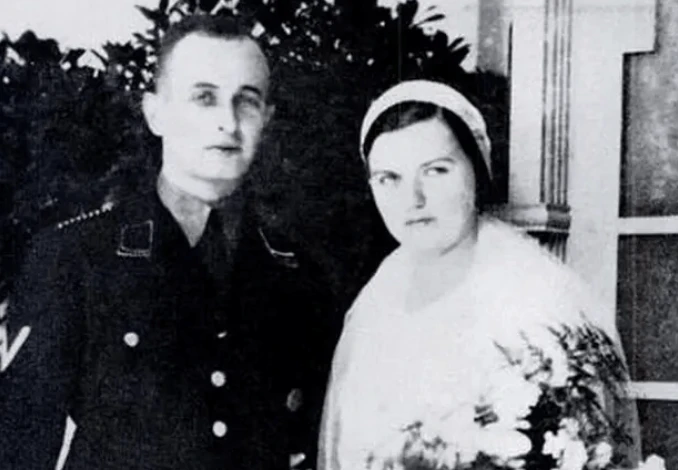
Adolf Eichmann with his wife
Ironically, it was one of the fugitive’s own sons, Nicholas, who unwittingly blew his elusive father’s cover. The young man fell for Sylvia Hermann, the daughter of another German immigrant named Lothar Hermann, and wanted to introduce her to his family. Although Hermann hailed from Germany, he was Jewish and had lost family members in the Holocaust.
The young suitor introduced himself openly as Klaus Eichmann and began bragging about his father’s role in "mass purges," instantly raising Hermann's suspicions. Though partially blind, the elderly German Jew needed only a few encounters to become convinced that his daughter’s boyfriend was indeed the son of Adolf Eichmann.
Hermann sent a letter to West Germany informing Fritz Bauer, the prosecutor general of Hesse, who promptly relayed the information to Israeli authorities. Mossad immediately opened an investigation, piecing together a comprehensive dossier on the Nazi fugitive's daily routine. 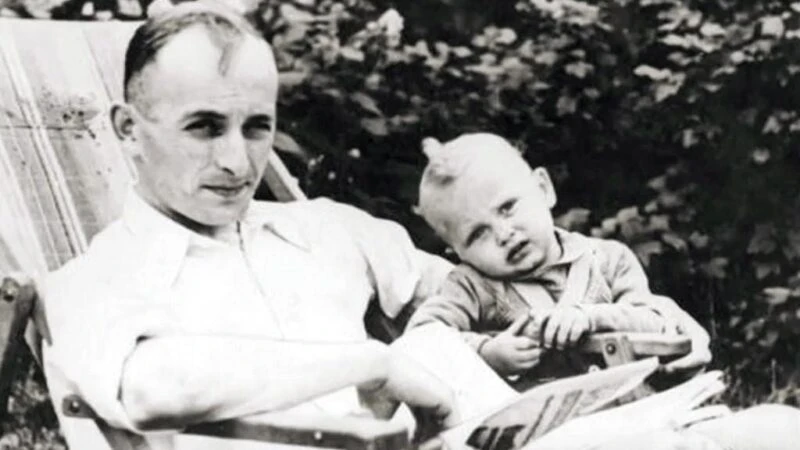
Adolf Eichmann with his son
When Eichmann originally fled Germany, he had left his wife and children behind in Europe. Later, operating under the persona of a German-Argentine named Ricardo Klement, he re-married his own wife and brought the family over to Buenos Aires. Despite the substantial wealth smuggled out of Europe, the family maintained a surprisingly low profile. They lived in a modest, aging house in a poor district, and Eichmann did not even own a car, relying instead on the public bus for his daily commute.
The high-stakes abduction mission, codenamed "Operation Finale," was personally led by Mossad Chief Isser Harel. Preparations began in the fall of 1959 and wrapped up in April 1960. A total of 30 operatives were mobilized—12 formed the physical capture team, while the remainder handled surveillance, communications, and logistical security. On April 29, 1960, Harel flew into Buenos Aires to take direct control of the operation.
For Operation Finale, the team rented multiple safe houses, apartments, and two getaway vehicles across the capital. Every possible contingency was mapped out, including potential interference by Argentine law enforcement. Killing Eichmann was strictly out of the question—he possessed invaluable firsthand knowledge of the Nazi regime's atrocities. If the capture team were blown, one operative was under strict orders to handcuff himself to the captive and throw away the key. 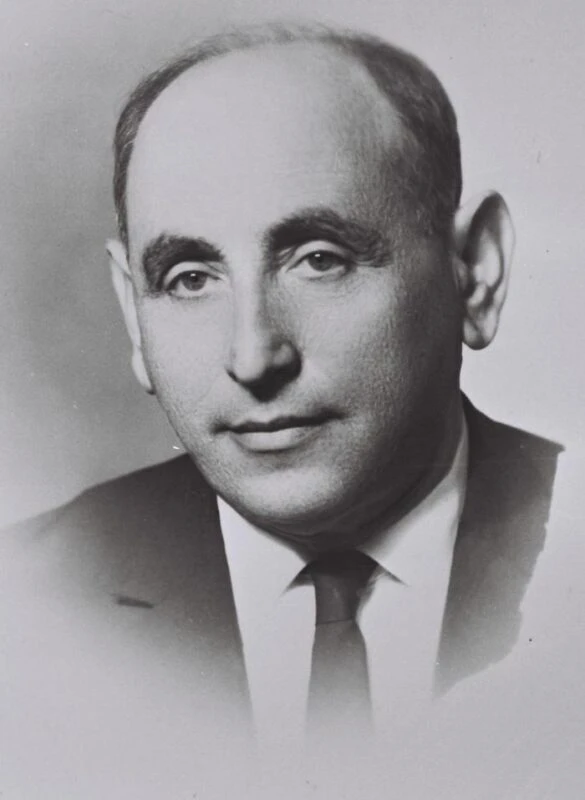
Mossad Director Isser Harel
Mossad's involvement had to remain completely secret to avoid an international diplomatic crisis. If caught, the operatives were prepared to pass themselves off as independent vigilantes. If the mission failed, their secondary task was to publicly expose Eichmann's true identity to the world press, making it impossible for him to slip back into the shadows.
On May 11, 1960, seven operatives in two vehicles staked out Eichmann’s route home after work. At 8:00 PM, the target stepped off the bus and began walking down the dimly lit street toward his house, using a pocket flashlight to illuminate his path. Mossad operative Peter Malkin called out softly, “Un momentito, señor!” (“Just a moment, sir!”). As Eichmann turned, Malkin locked him in a full-Nelson wrestling hold and brought him down to the ground.
Other operatives rushed over, grabbed Eichmann by his limbs, bundled him into the back of a car, and covered him with a heavy blanket. Rafi Eitan, another key operative in Operation Finale, later recalled that the Nazi put up no resistance whatsoever—offering only a faint whimper as they sped away to a rented safe house. 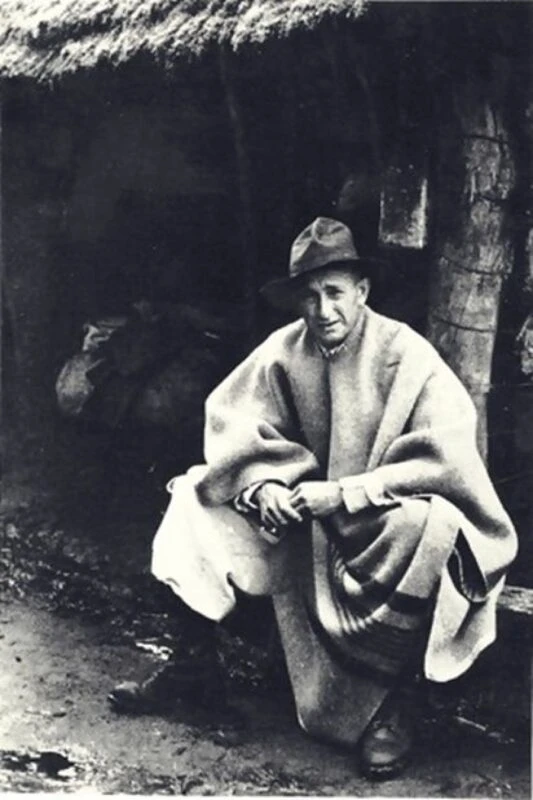
Eichmann in Argentina
Eichmann was held at the safe house for nine days, kept handcuffed to a bed while Mossad chief Harel conducted initial interrogations. The captive gave up any pretense almost immediately, confirming his real name along with his SS officer rank and Nazi Party membership numbers. With his identity established beyond doubt, Harel initiated the second phase of the operation: smuggling the war criminal out of Argentina and into Israel.
First, the team forced the Nazi to sign a written statement declaring his willingness to travel to Israel and stand trial for his crimes:
“I, the undersigned Adolf Eichmann, hereby declare of my own free will: now that my true identity has been revealed, there is no sense in attempting to evade justice. I declare my consent to travel to Israel and stand trial before a competent court. It goes without saying that I will receive legal counsel and, for my part, will disclose the facts regarding the final years of my service in Germany without concealing anything, so that future generations may know the true picture of those events. I sign this statement voluntarily. I have been made no promises, nor have I been threatened. I wish, at last, to find inner peace. Since I can no longer recall the past in every detail and sometimes confuse events, I request to be provided with documents and witnesses to help reconstruct what occurred. Adolf Eichmann. Buenos Aires, May 1960.”
Exfiltrating Eichmann from a country with openly sympathetic attitudes toward former Nazis proved far trickier than taking him into custody. On May 19, an El Al commercial flight carrying an official Israeli delegation landed at Buenos Aires Airport. That same day, operatives staged a minor traffic accident in the capital involving an Israeli flight crew member. 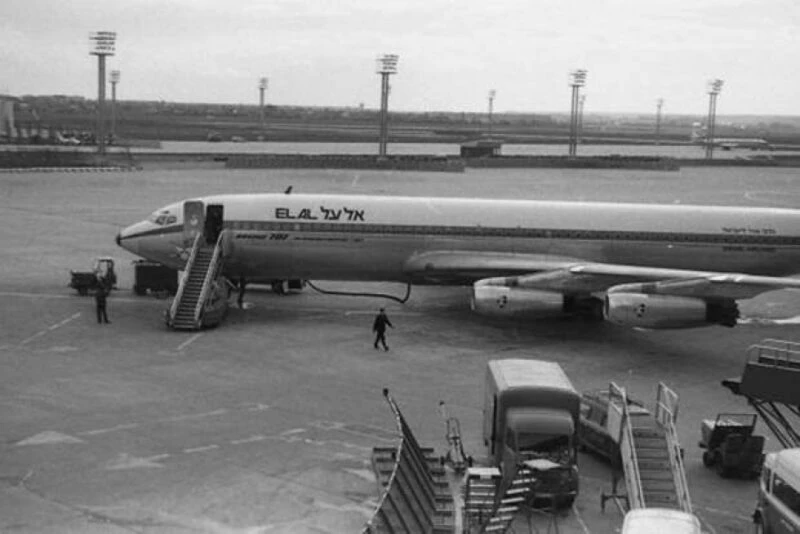
The aircraft used to fly out the "Architect of the Holocaust"
Eichmann was brought to the airport dressed in an El Al pilot’s uniform, heavily sedated, and with his head wrapped in bandages. The Mossad escorts presented medical paperwork to border officials indicating that the injured man was a commercial flight officer named Rafael Arnon who had suffered a severe concussion but was clear to fly. After briefly reviewing the passport under Arnon's name, Argentine authorities cleared the bandaged man and his escorts to board the aircraft. The plane took off immediately.
It later emerged that while Eichmann was being held in the safe house, nearly 300 local ex-Nazis had joined the police in sweeping Buenos Aires for him. They were overcome with both rage and terror—realizing that if Mossad could snatch Eichmann from their midst, none of them were safe.
Shortly thereafter, the Israeli government announced to the world that Eichmann was in custody to face justice, while offering an official apology to Argentina for violating its territorial sovereignty. The historic trial opened in April 1961 and concluded in December. Hundreds of Holocaust survivors delivered crushing eyewitness testimony, leading to the ultimate verdict: death by hanging. 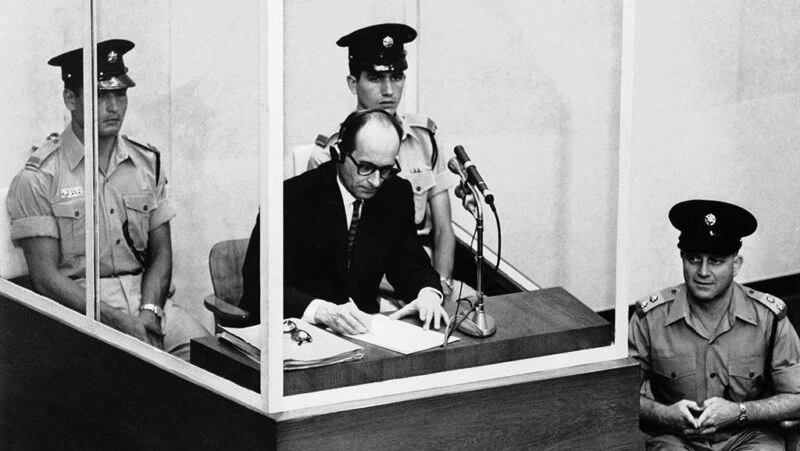
Adolf Eichmann was hanged at Ramla Prison on the night of May 31, 1962, and his body was cremated immediately afterward. Deemed undeserving of a resting place on Israeli soil, the architect of mass murder had his ashes scattered over international waters in the Mediterranean Sea.