Behind the Scenes of ‘Ghostbusters’: Seven Takes to Build a Single Frame (17 Photos)
In 1984’s *Ghostbusters*, New York City was saved by a ragtag crew wearing bizarre gear on their backs. Behind the camera, the setup was just as extraordinary: a massive rooftop built on a soundstage, a hand-painted skyline, animatronic monsters, and a man in a Stay Puft suit. These archival photos offer a rare glimpse into the sheer number of workshops that had to collaborate to bring a single comedy to life. 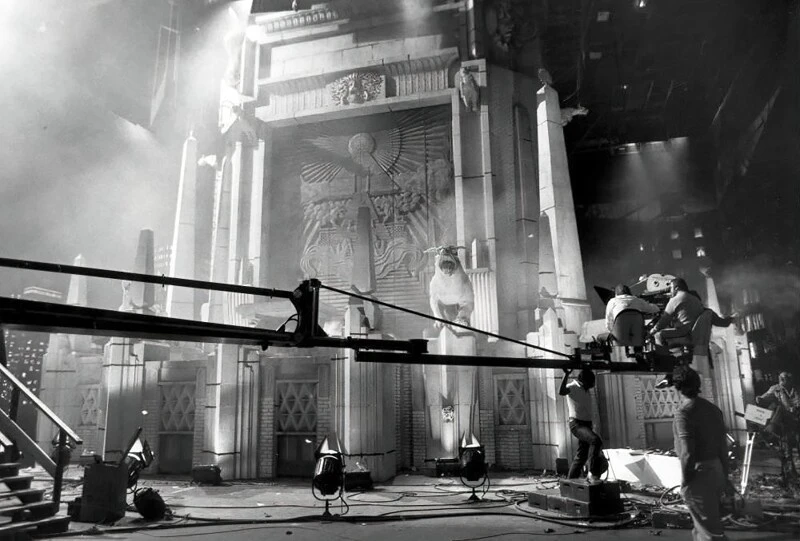
The rooftop set featuring the Temple of Gozer, designed by John DeCuir.
Director Ivan Reitman told cinematographer László Kovács right from the start to treat the material seriously. The bright, high-key lighting typical of comedies wouldn't work here—audiences had to genuinely buy into a world where a ghost could haunt a public library. The actors could crack jokes, but the visuals couldn't let the audience in on the gag. 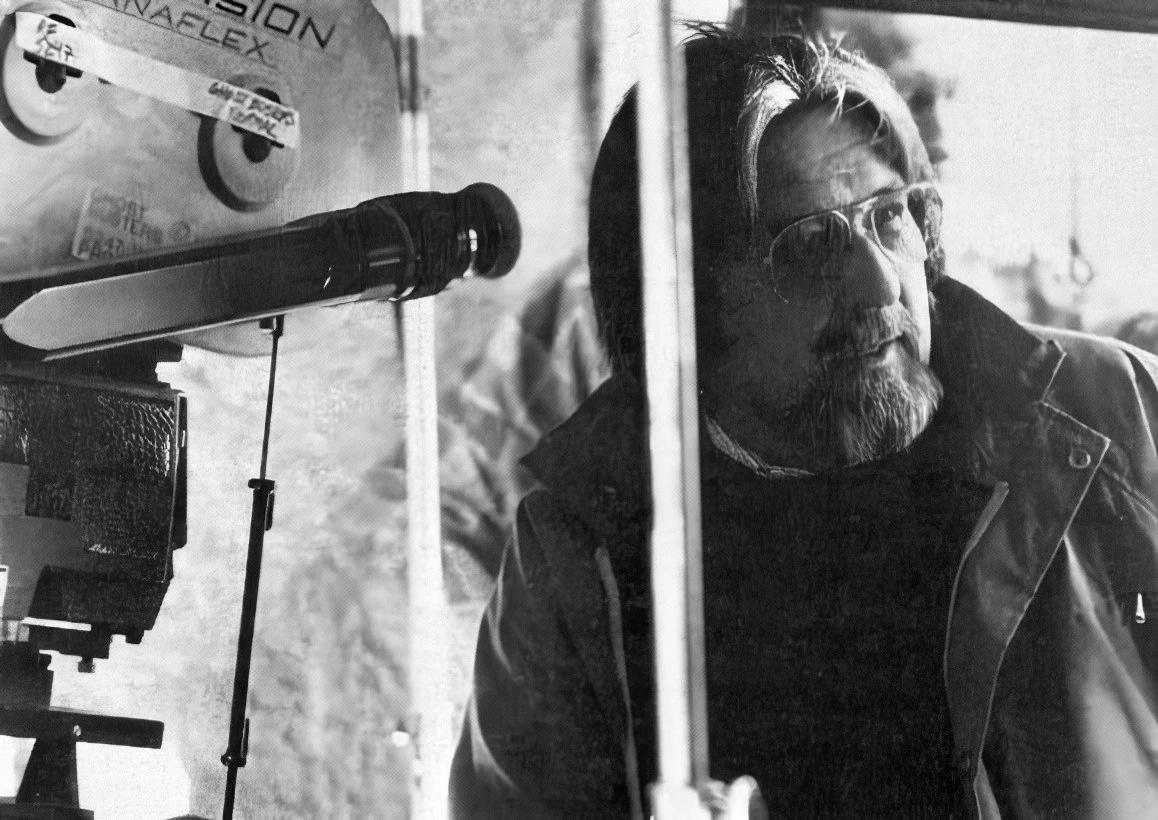
Cinematographer László Kovács.
Principal photography kicked off in New York in the fall of 1983 before moving to California. By February 1984, live-action shooting had wrapped. With the summer release date looming, Richard Edlund’s VFX team was left with around two hundred visual effects shots to complete. Storyboards were vetted for feasibility on the spot—a cool idea was useless if it couldn't be delivered on deadline. 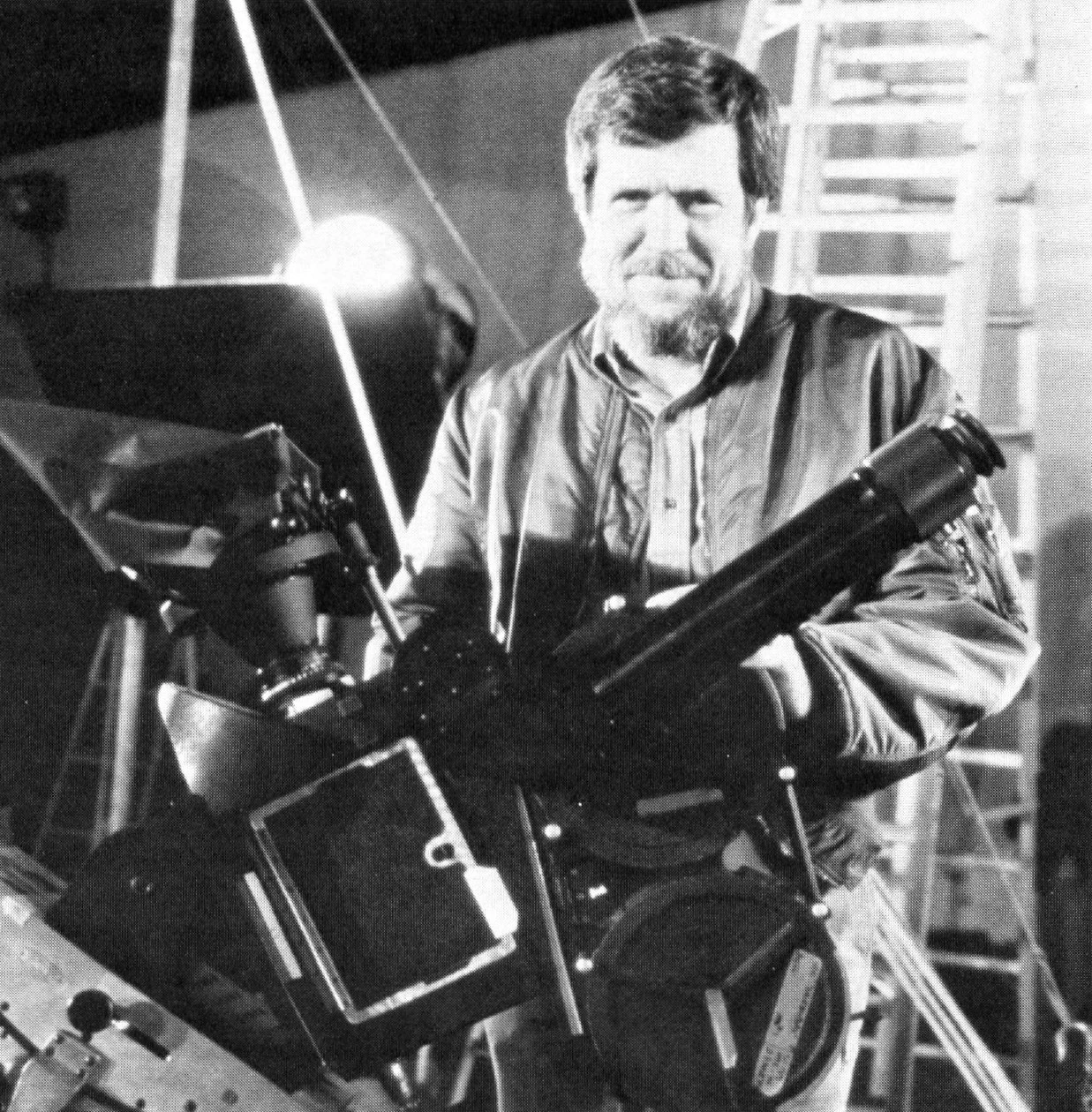
Richard Edlund with a 65mm camera. Photo: Virgil Mirano/ Columbia Pictures, 1984.
Production designer John DeCuir constructed the Temple of Gozer rooftop on Stage 16, backed by a painted New York skyline spanning over 400 feet. Kovács recalled stringing up 7,500 lights behind the painted windows to make the static backdrop feel like a living, breathing city. 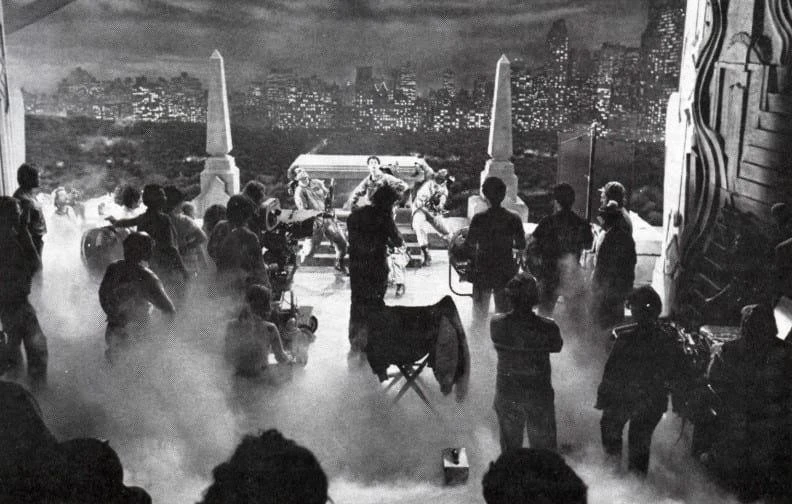
Powering the lights required twelve generator trucks parked outside the stage. While the film itself was shot on 35mm, elements meant for complex optical compositing were captured on 65mm. Kovács had to carefully balance the lighting for multiple camera formats while anticipating where ghost effects would later be inserted. 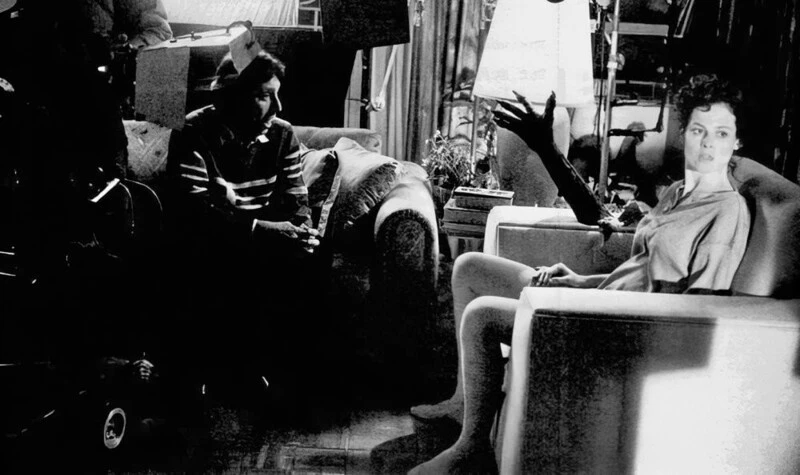
The attack on Dana: Sigourney Weaver with an animatronic creature. Director Ivan Reitman is on the left. 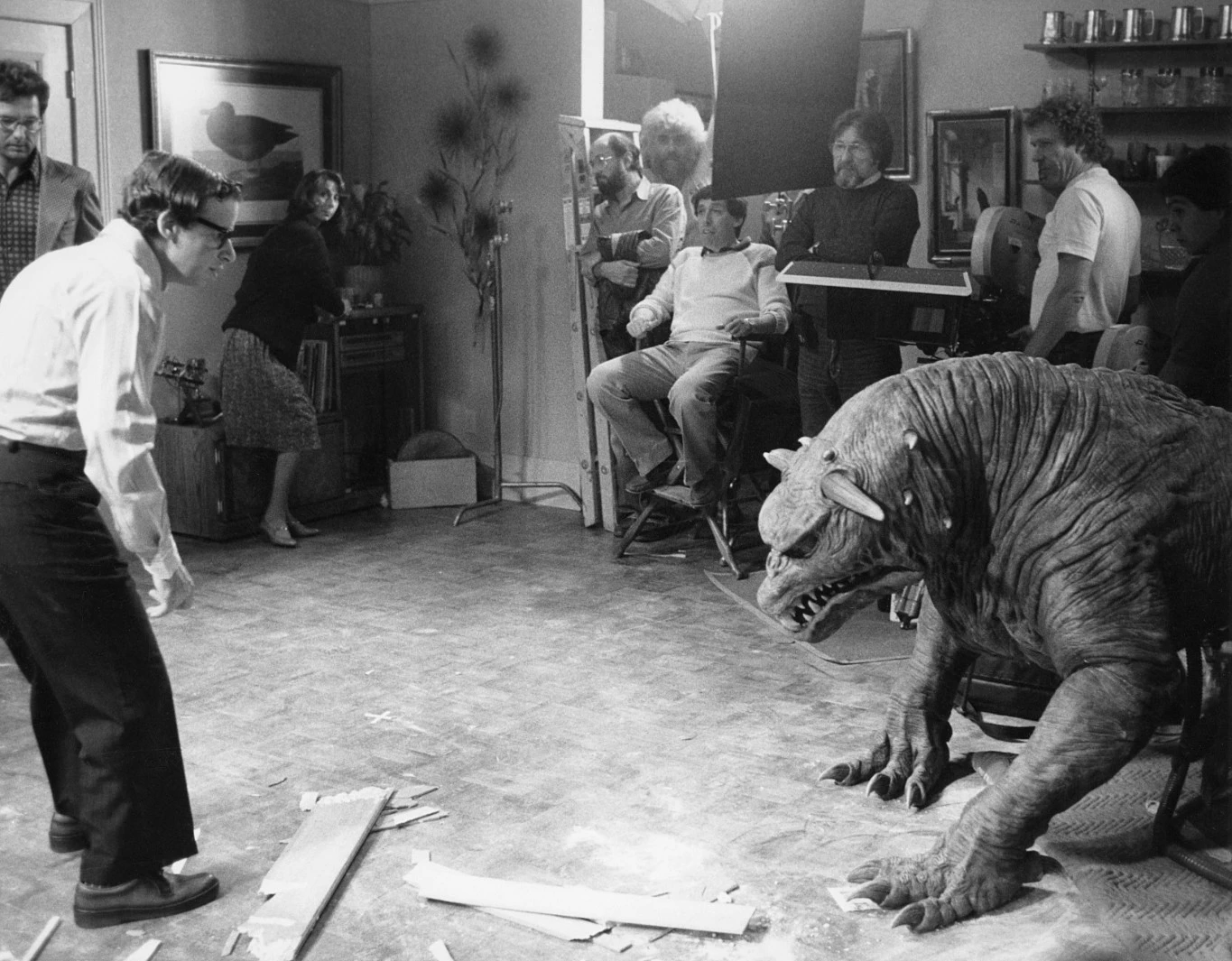
Prepping the scene with Rick Moranis and a full-scale Terror Dog puppet.
The monsters were brought to life using a mix of techniques. Full-scale mechanical dogs shared the frame with the actors, while miniature stop-motion puppets were used for wider action shots. These photos document the process across various stages—from initial sculptures and internal armatures to bluescreen shoots. 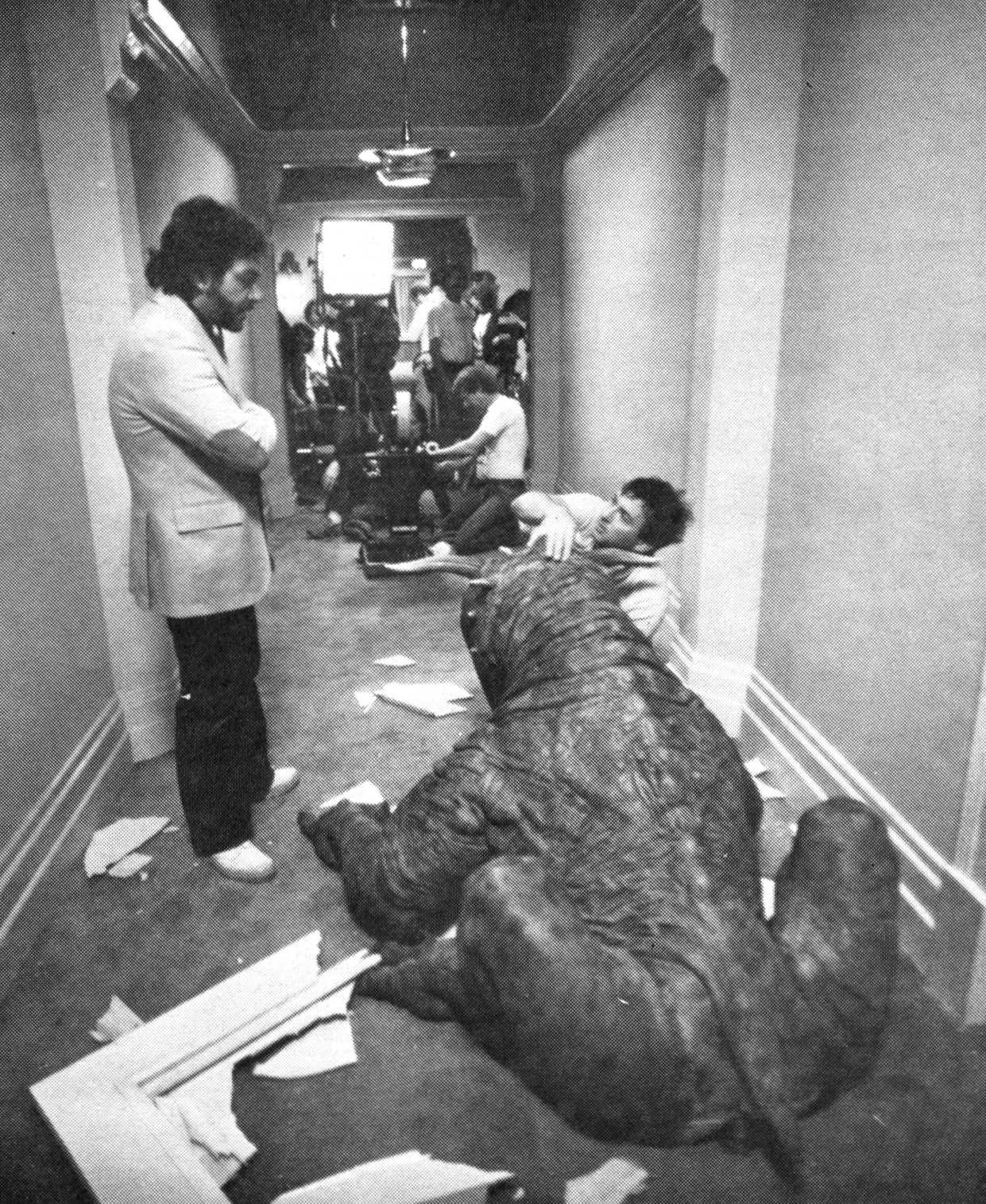
John Bruno (left) alongside an animatronic model. 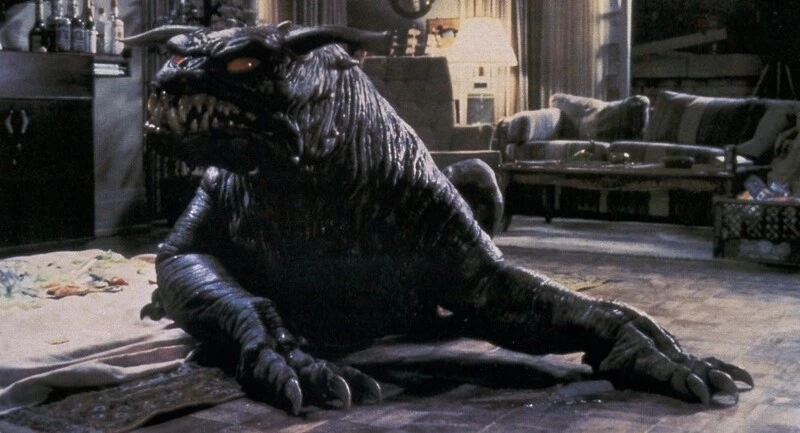
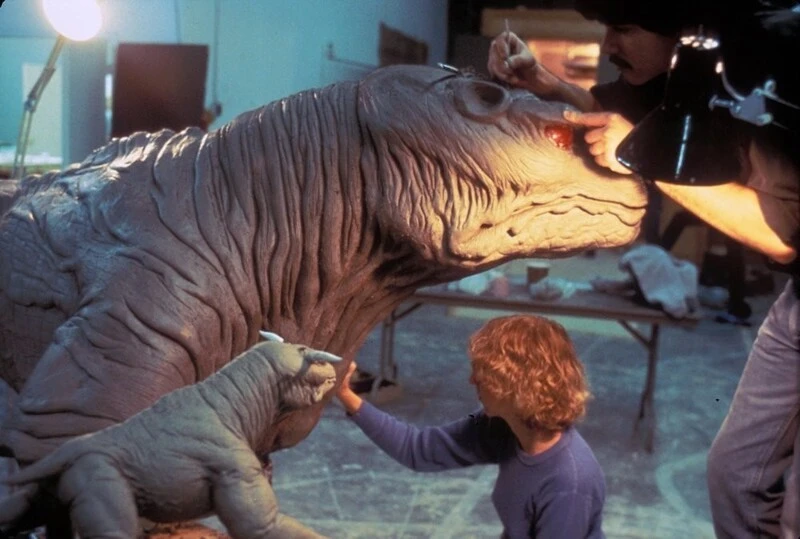
Cross-referencing the full-scale sculpture with a miniature model. 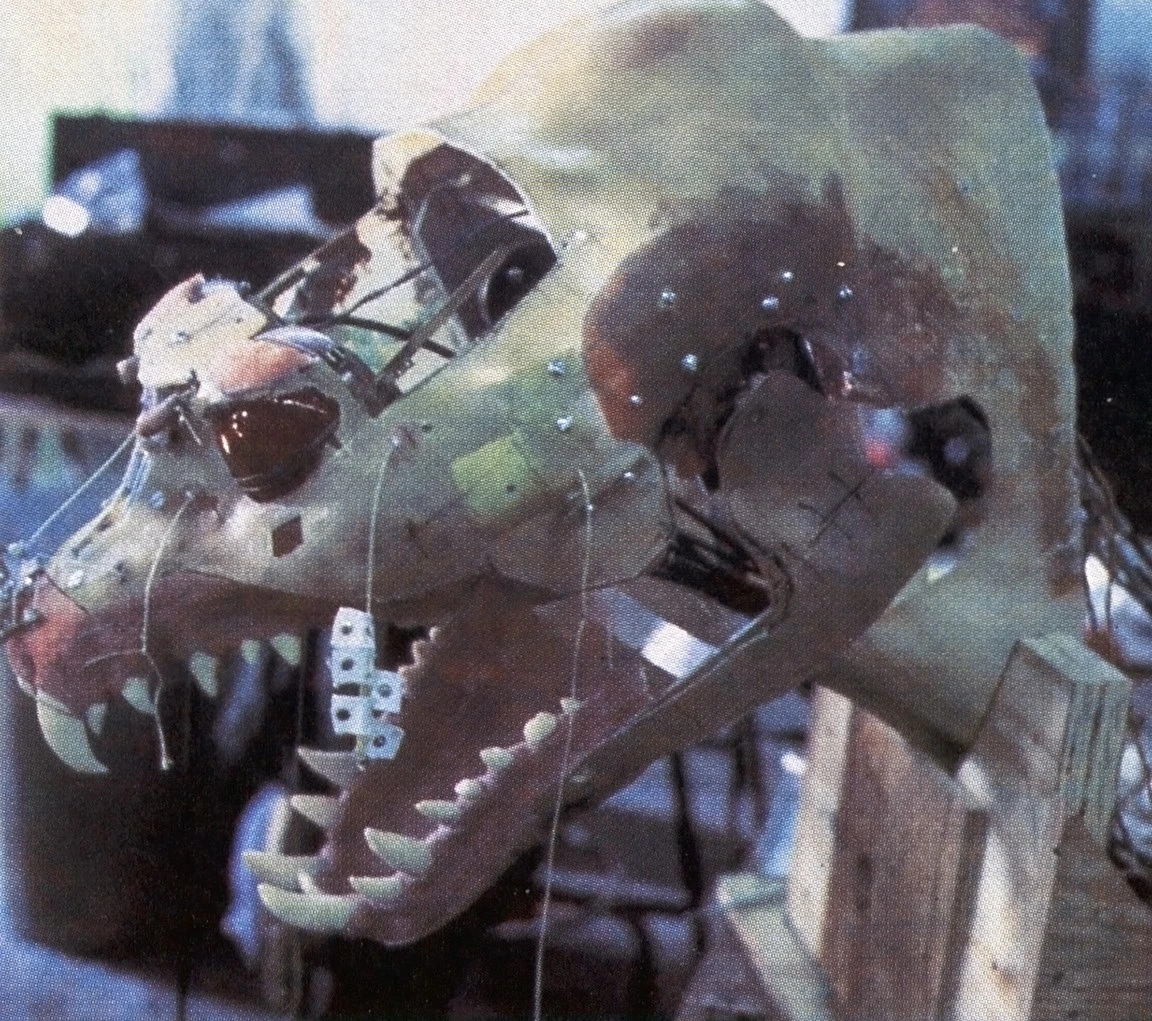
The internal mechanical rig used to control movement. 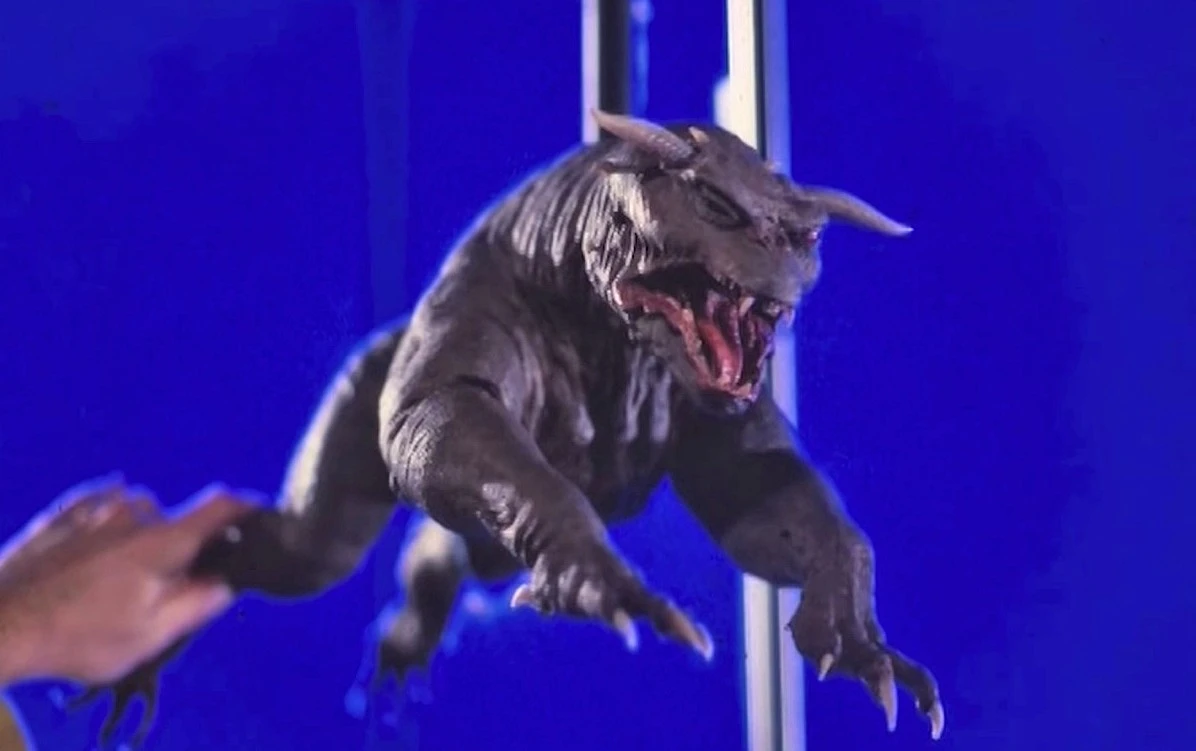
Filming a stop-motion miniature against a bluescreen.
Meanwhile, painter Matthew Yuricich was reshaping Manhattan by hand, painting extra stories onto existing buildings and altering the city skyline. Matte paintings bridged the gap between real location footage, stage sets, and scale models, while VFX cinematographer Neil Krepela shot these plates to seamlessly integrate into the final composite. 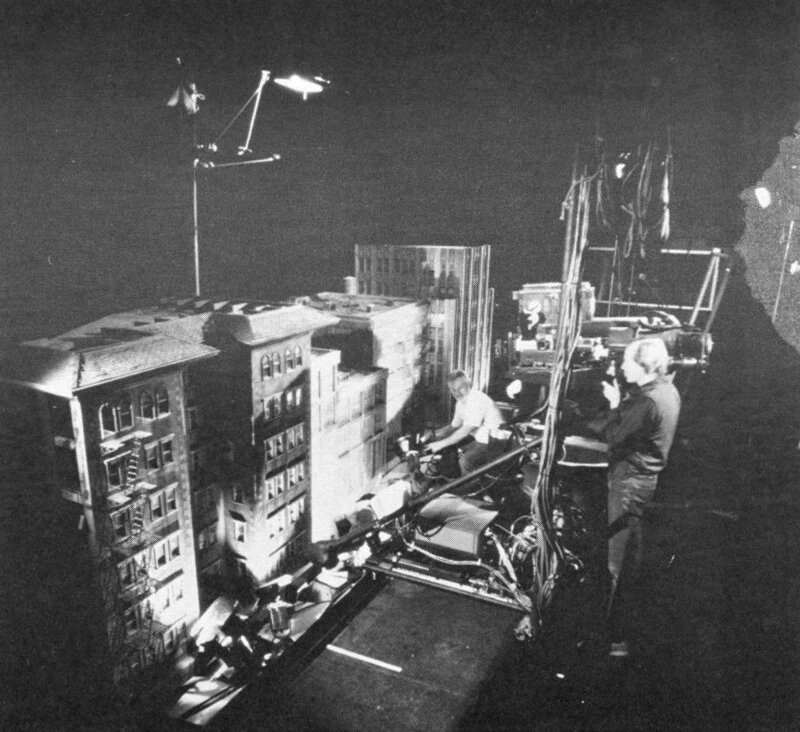
Neil Krepela shoots miniature buildings using a motion-control camera rig. 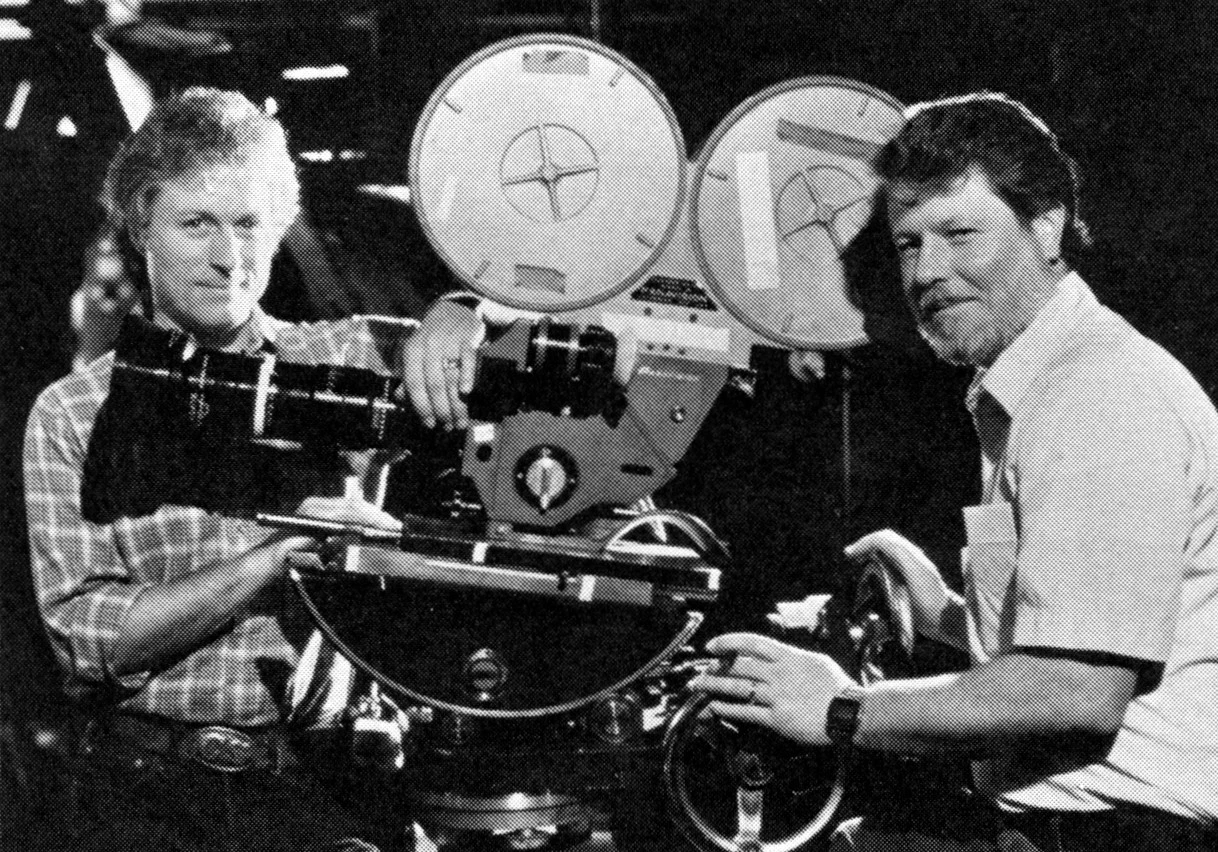
Assistant Clint Palmer (left) with VFX cinematographer Bill Neil (right). 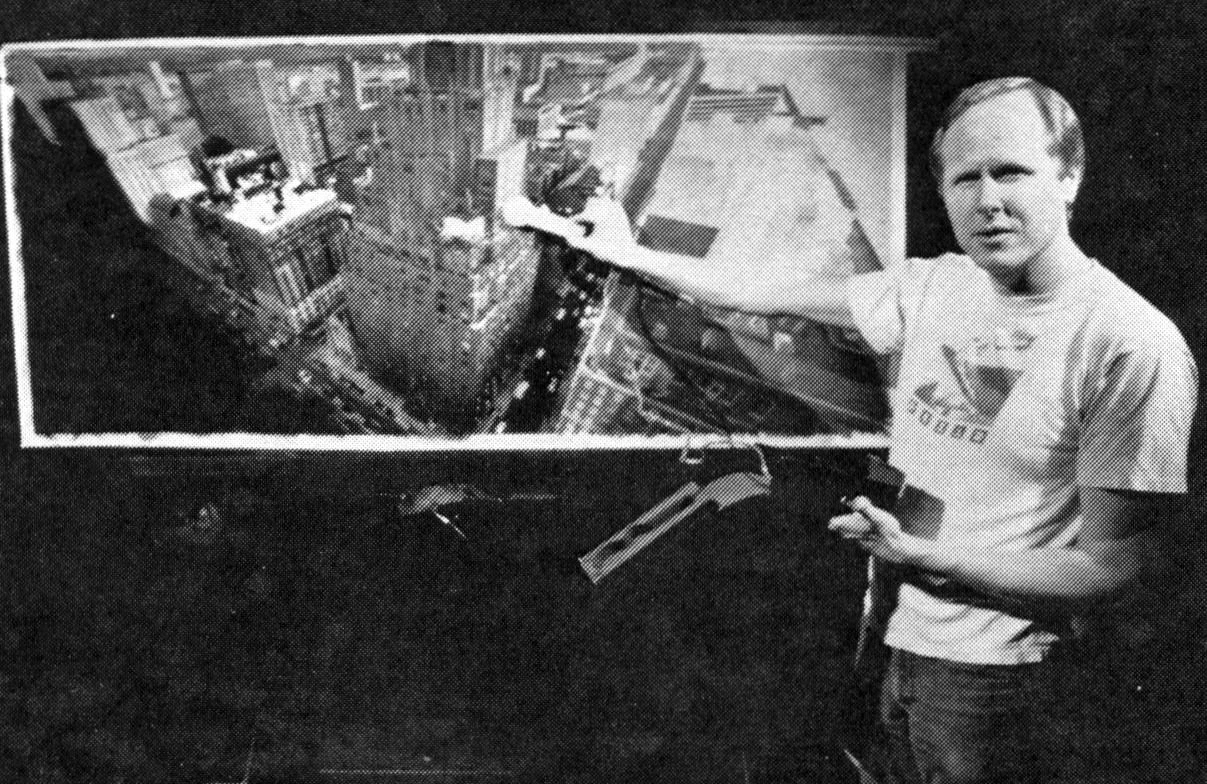
Krepela prepares a test shot for a matte painting composite. 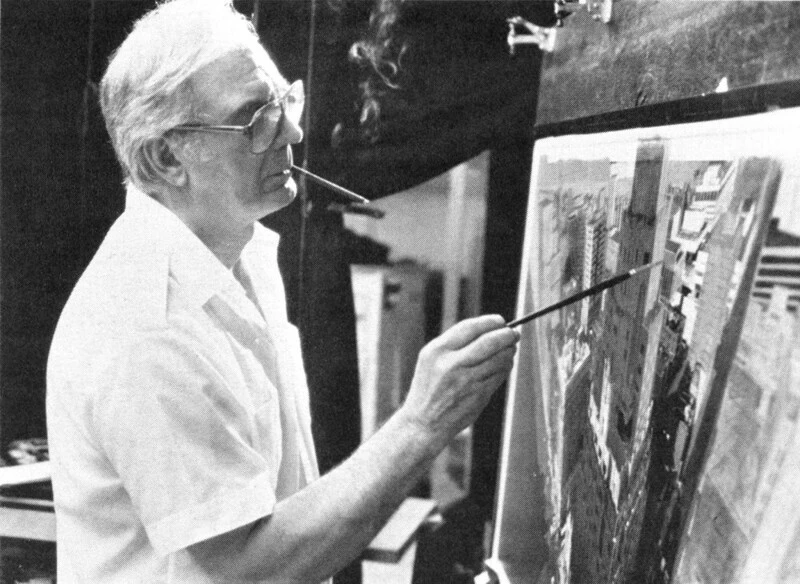
Matthew Yuricich working on the matte painting of the building following the explosion in Dana's apartment.
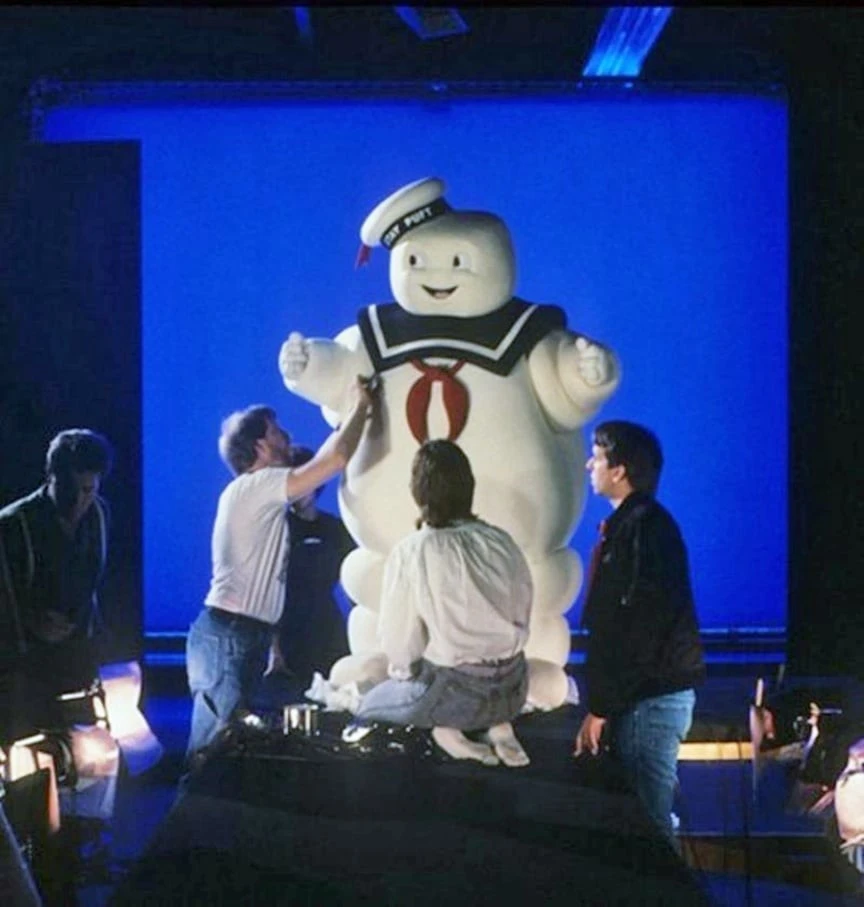
The Stay Puft Marshmallow Man was played by Bill Bryan, who also helped construct the suit. Multiple versions were crafted for different camera angles, including one with oversized arms designed to force perspective. To make the behemoth feel genuinely massive on screen rather than just a guy hustling in a padded suit, Bryan’s movement had to be carefully choreographed for high-speed photography. 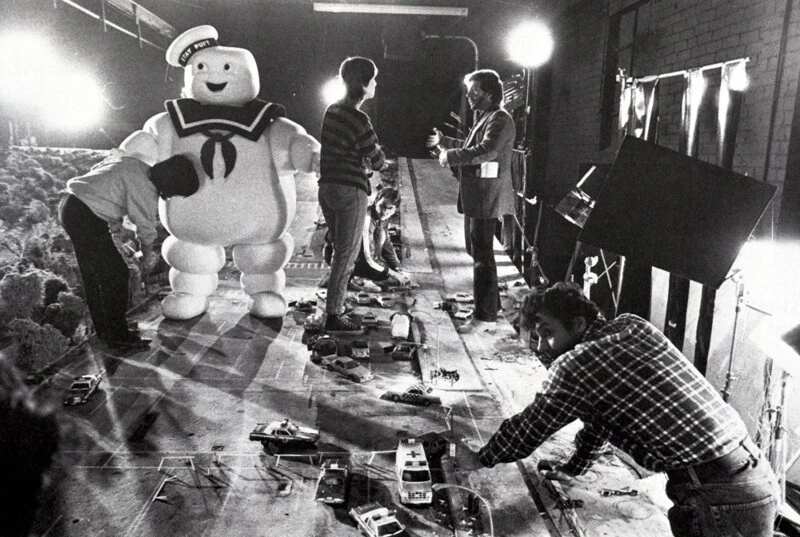
Even with all the components ready, composite shots were far from guaranteed. Optical printer supervisor Mark Vargo recalled that getting Stay Puft’s walk down Broadway right took seven attempts. Film shrinkage on intermediate elements, color matching issues, specs of dirt on matte layers, and a stubborn transparent spot near the character's knee all plagued the shot. What ends up on screen as a brief sequence was, behind the scenes, a painstaking battle of precision.