Mysterious "Hornet's Nests" Used for 19th-Century Gold Mining in America (8 Photos)
History is packed with detailed records of events, famous figures, and landmarks, but every so often, it throws us a curveball—leaving behind perplexing artifacts whose original purpose has faded with time. Here is one such intriguing mystery. 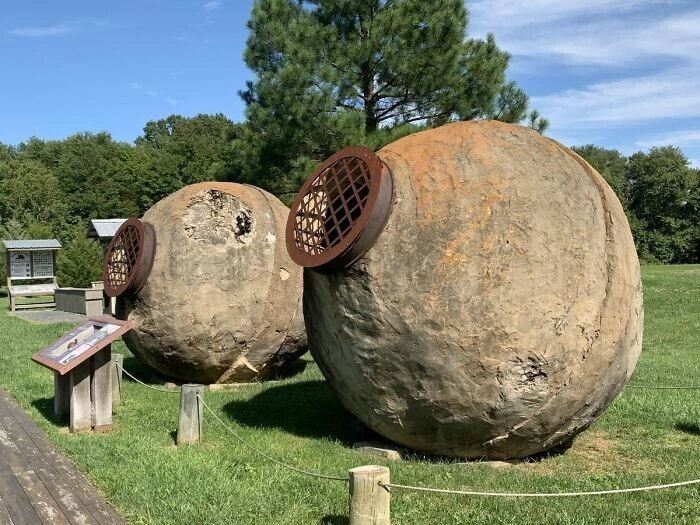
Meet the "Hornet Balls"—hollow reinforced concrete spheres built over an iron mesh frame, looking remarkably like giant medieval incendiary weapons. These unusual relics were uncovered among the ruins of the Liberty Mine in Virginia.
Standing six feet tall and measuring over twenty feet in circumference, each sphere weighs more than seven tons. What makes them so fascinating is that even historians and experts aren't entirely sure what they were used for, how they functioned, or where their unusual name came from. 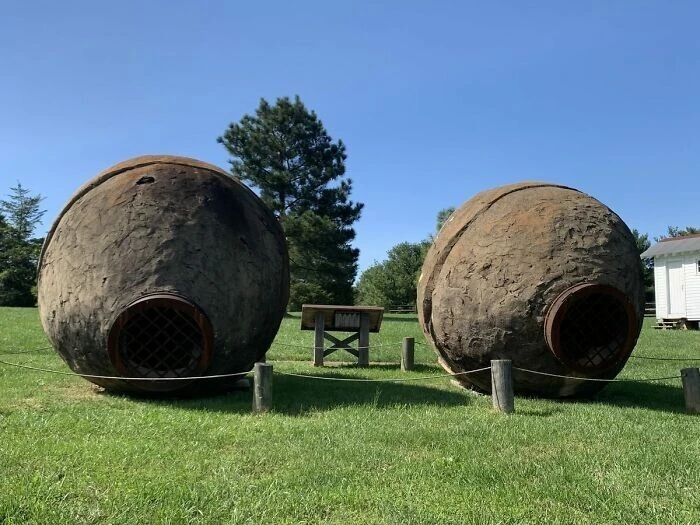
These two relics from Virginia’s gold mining past are on display at the Gold Mining Camp Museum in Goldvein. Few realize that Virginia was actually one of the first American states where gold was discovered, dating back to 1782 when Thomas Jefferson found gold-bearing rock along the Rappahannock River. 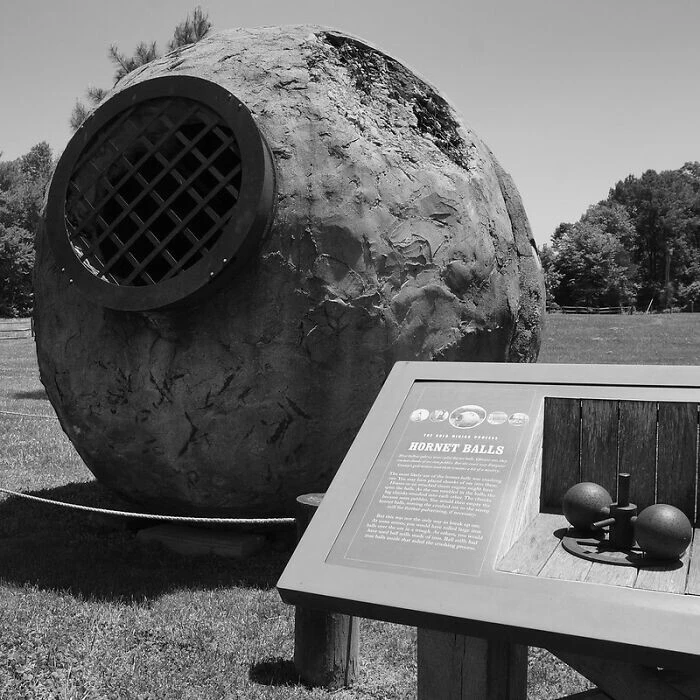
By 1804, prospectors and small mining operations were in full swing. Most of these ventures were concentrated in the "Gold-Pyrite Belt"—a strip of land 15 to 25 miles wide that stretches nearly 200 miles along the eastern side of the Blue Ridge Mountains. 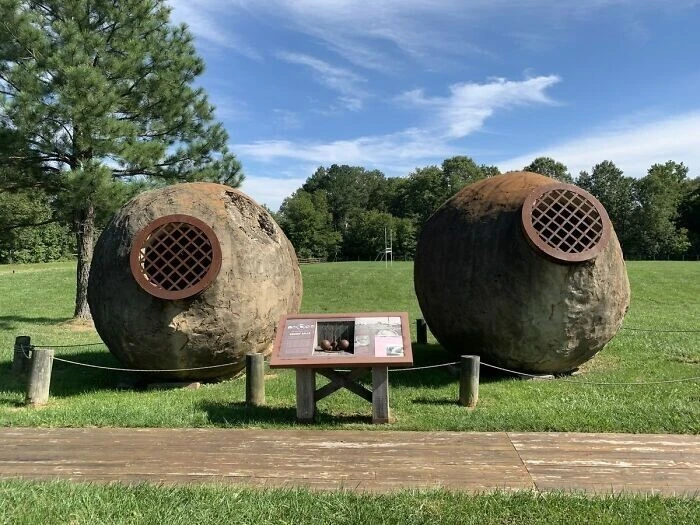
Gold production in Virginia peaked in the 1840s before grinding to a near-halt by 1849, when miners headed west drawn by the California Gold Rush. Interest in Virginia gold flared up again in 1934, when the price of gold jumped to $35 per troy ounce. However, the revival was short-lived: mining wrapped up in the late 1930s, with the state's very last gold extracted in 1947. 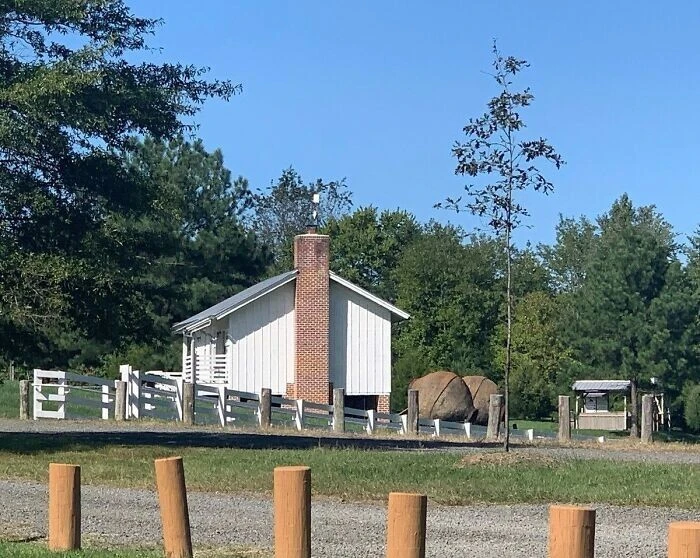
In October 1998, Monroe Park and the Gold Mining Camp Museum opened in Goldvein. Today, it serves as an educational hub exploring Virginia’s mining heritage. Nearby Fauquier County is home to 18 abandoned mines, and the museum itself recreates a typical 1930s mining camp. 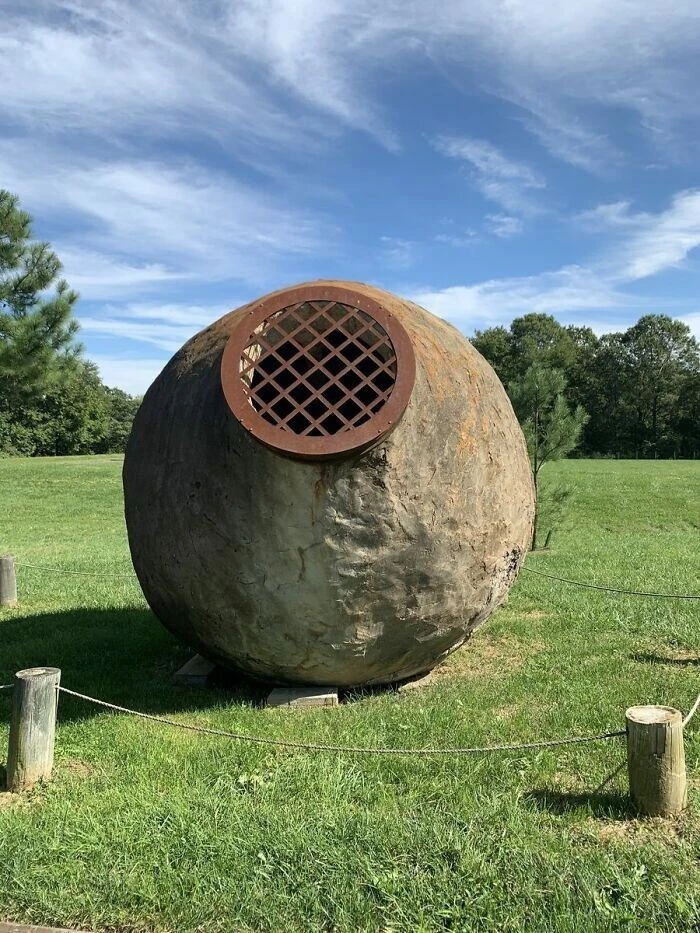
Returning to the mysterious giant "Hornet Balls," while discovered at a mine site, their exact function remains a matter of debate. The general consensus is that they were used to crush ore into gravel to separate gold from surrounding rock. They were likely mounted on an axle and revolved around a central point, powered by horses or steam. 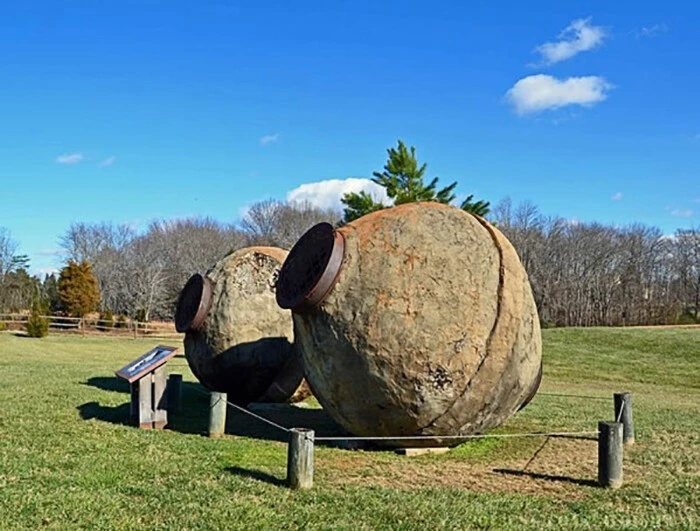
Experts also disagree on whether the ore was crushed inside the spheres or beneath them as they rolled through a trough. 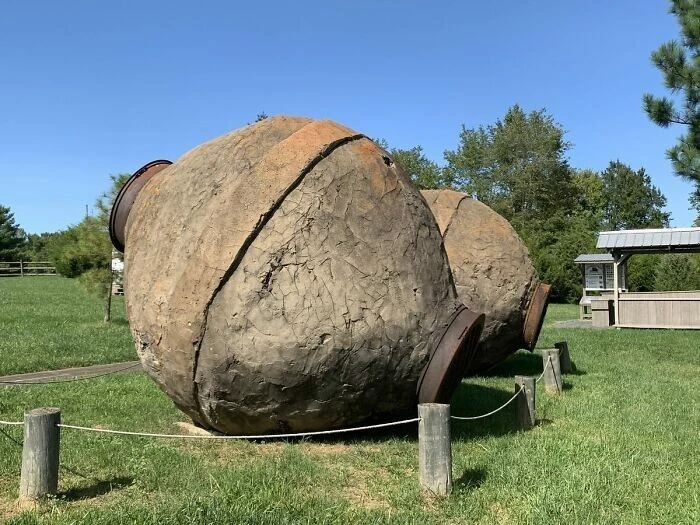
The origin of their name is equally cryptic. Some believe it came from the loud buzzing sound the spheres produced during operation, while others think it was inspired by their striking resemblance to hornet or wasp nests. Either way, historians agree the nickname is truly one-of-a-kind.