The European proteus is perhaps the most mysterious animal in Europe. In the 17th century, people believed that proteuses were baby dragons, sometimes washed out of their secret underground lairs by floods where the dragon eggs hatch. In the 19th century, the Southern Slavs called them "human fish" because of their pale, thin skin, through which blood vessels are visible. Today, scientists know that they are almost completely ordinary amphibians. 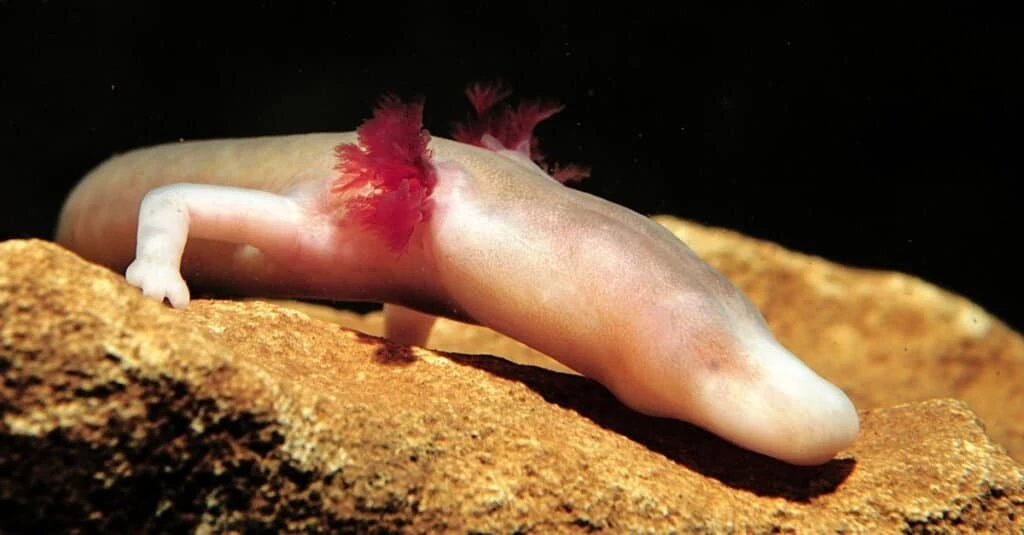
No scales, eyes sealed shut...
Once upon a time, 8 to 20 million years ago, proteas, colloquially known as olms, were ordinary tailed amphibians living in the Dnaric Highlands, a mountain range in the northwest Balkan Peninsula. But a few of them found their way into limestone caves, into lakes of clean, oxygen-rich, but very cold water. There they settled. 
Whatever you say, the olms have chosen a picturesque place to live!
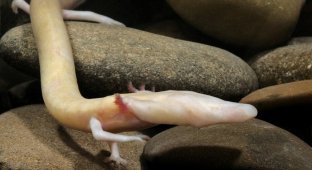
Time and habitat have not been kind to the Proteus, and these otherwise ordinary salamanders have transformed into something with a snake-like body, a short tail, thin limbs, and deathly pale skin. Bright red gills have also blossomed around their necks, which provide these subterranean amphibians with oxygen. The strangest thing is, this isn't an adult. The Proteus spends its entire life as a larva, and, by the way, it can live up to 100 years! 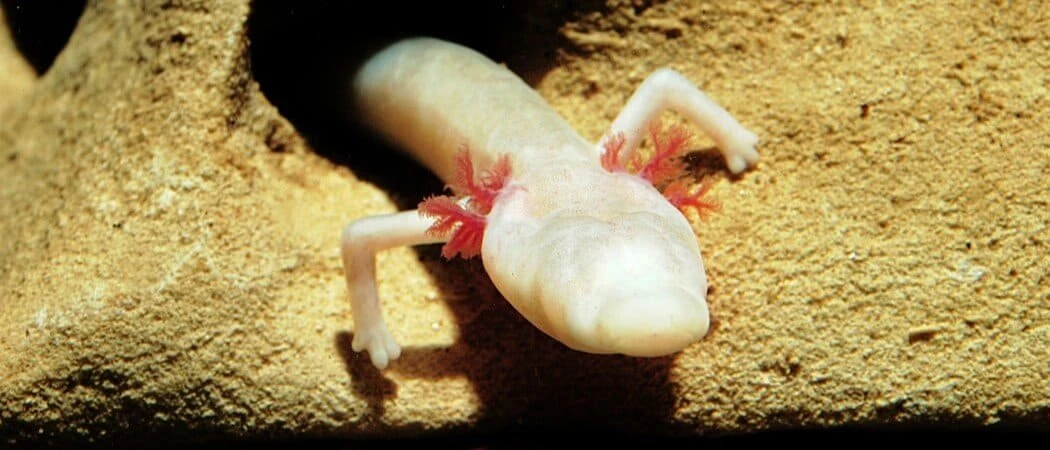
External gills in amphibians are a sign of the larval stage. Adults switch to pulmonary and cutaneous respiration. But not our hero. 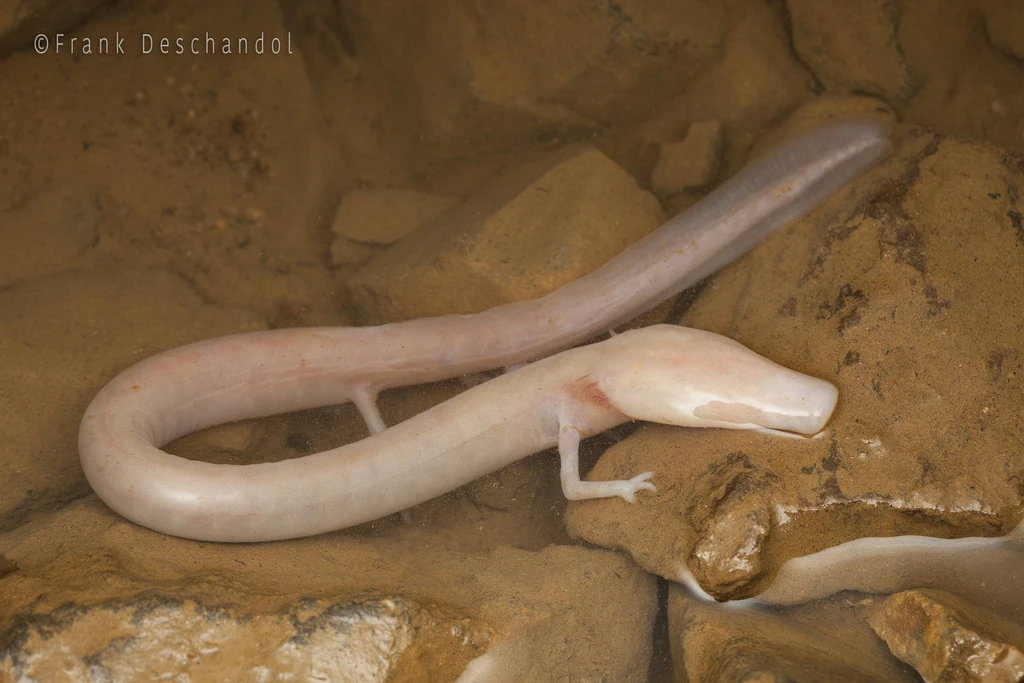
I need a couple more years, and I'll definitely be an adult!
This phenomenon is called neoteny, and it's very rare, though not unique. Due to a random mutation, olm larvae learned to reproduce independently within their juvenile bodies, eliminating the need for adults. This need disappeared so long ago that it's no longer possible to induce them to metamorphose into adults. 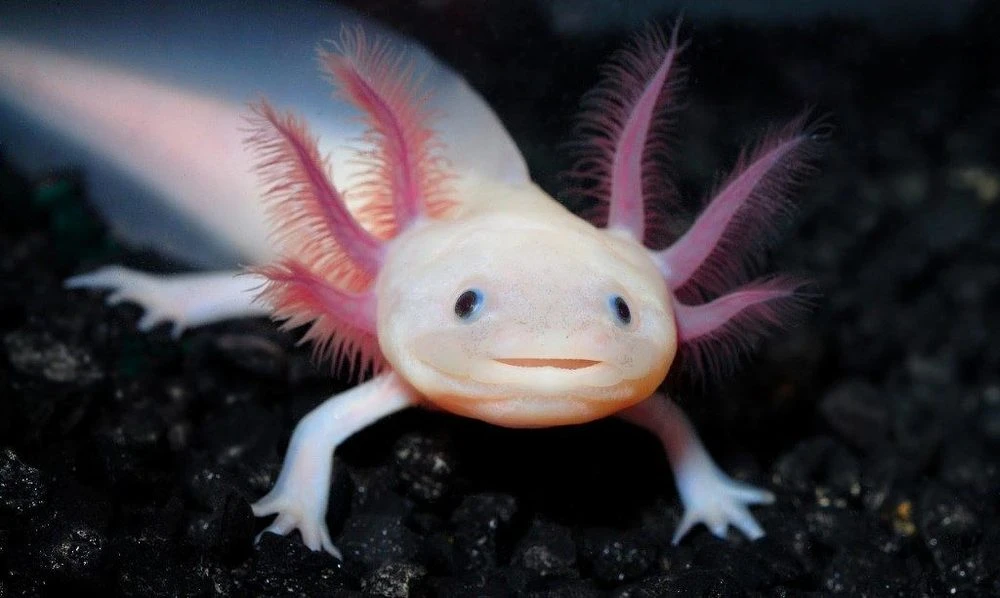
The internet-favorite axolotls are also neotenous animals. But unlike the proteus, they can still be transformed into adult salamanders, although their mortality rate during this process reaches 30%. 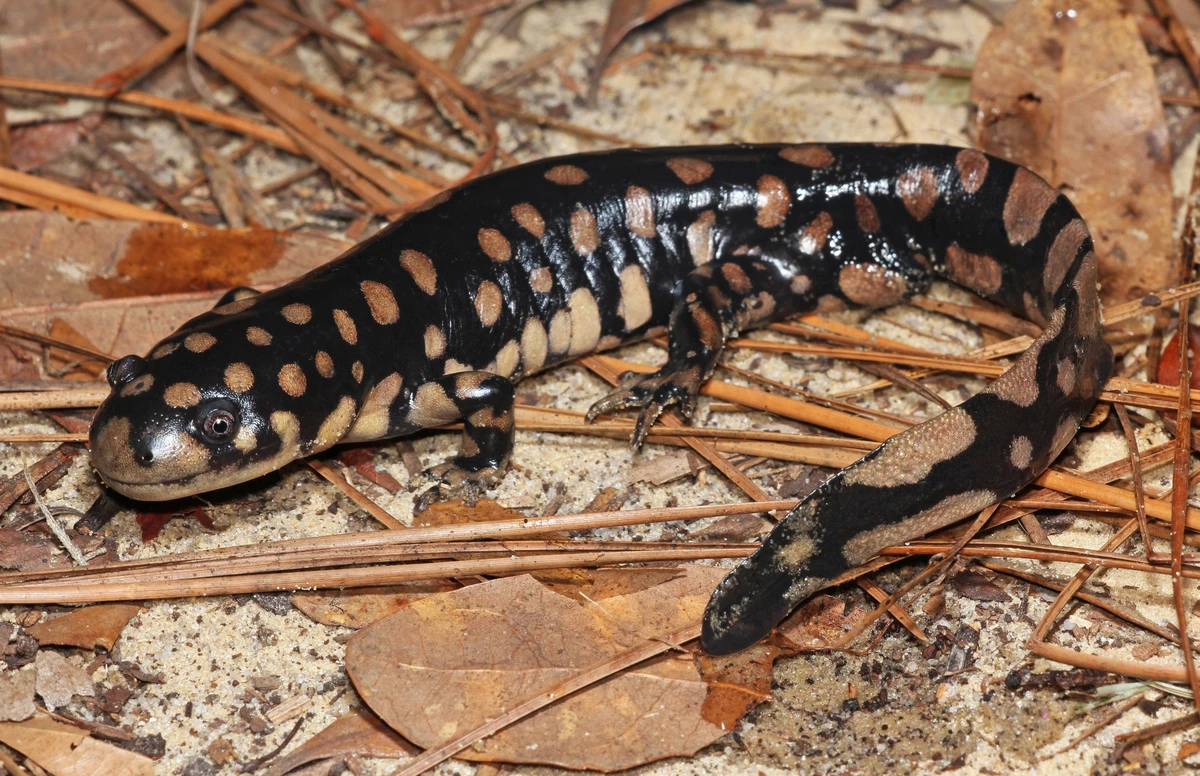
Here's what happens if you let an axolotl mature. Tiger salamander (species name).
European axolotls, like surface salamanders, feed on snails, insect larvae, shrimp, and small crustaceans. However, finding food in the poor caves is very difficult. So much so that they have developed an abnormal resistance to hunger. A few weeks after their last snack, their already slow metabolism slows down to an extreme. Observations conducted from 2010 to 2018 clearly showed that a fasting axolotl can sit in one place for up to 7 years! Without the risk of death from exhaustion. 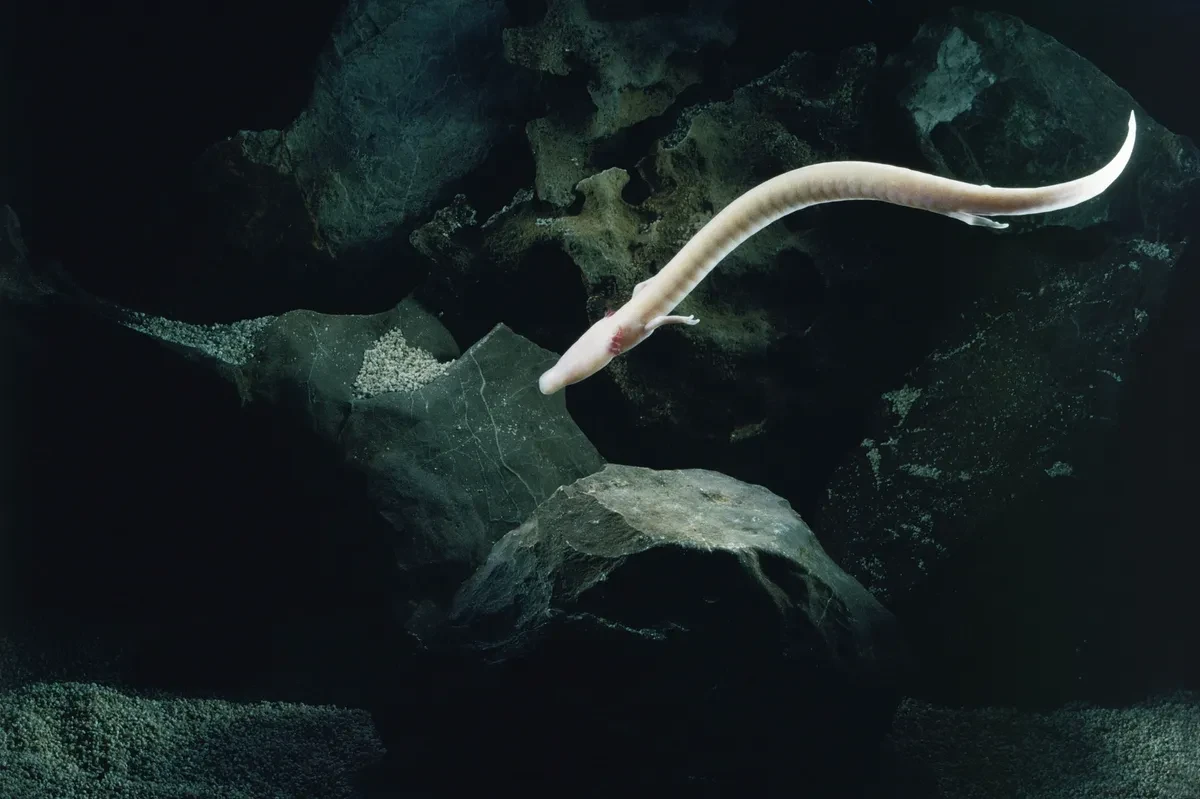
Protei swim like eels, arching their entire bodies. But it's almost impossible to see them swimming. They're very passive creatures.
If you don't believe this figure, that's okay; I can't wrap my head around it either. And I also don't think it's the limit. In a controlled experimental environment, protei can survive without food for up to 10 years. Just imagine: you were born, learned to walk and talk, finished kindergarten, went to school for three years, and a protei hasn't even had breakfast yet. 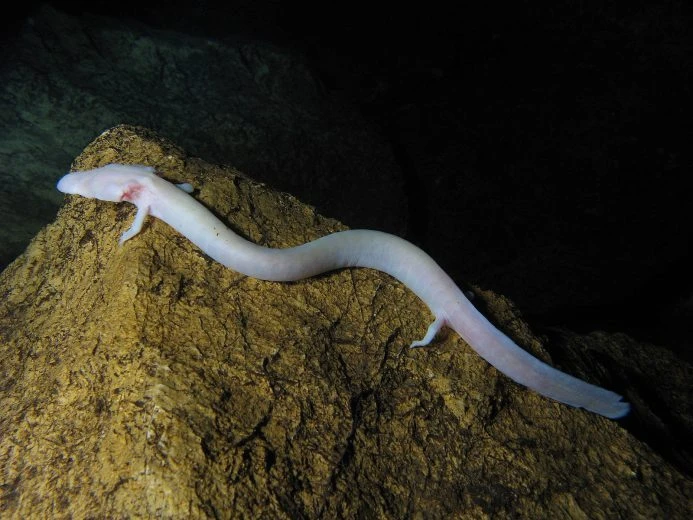
How I wish my afternoon nap lasted seven years...
You might think that their low hunting activity is due to their complete blindness—the eyes of these strange creatures have long since grown over with skin—but this sentence is twofold. Proteus don't need eyes to hunt, and they are not blind, although they don't see as we know it. 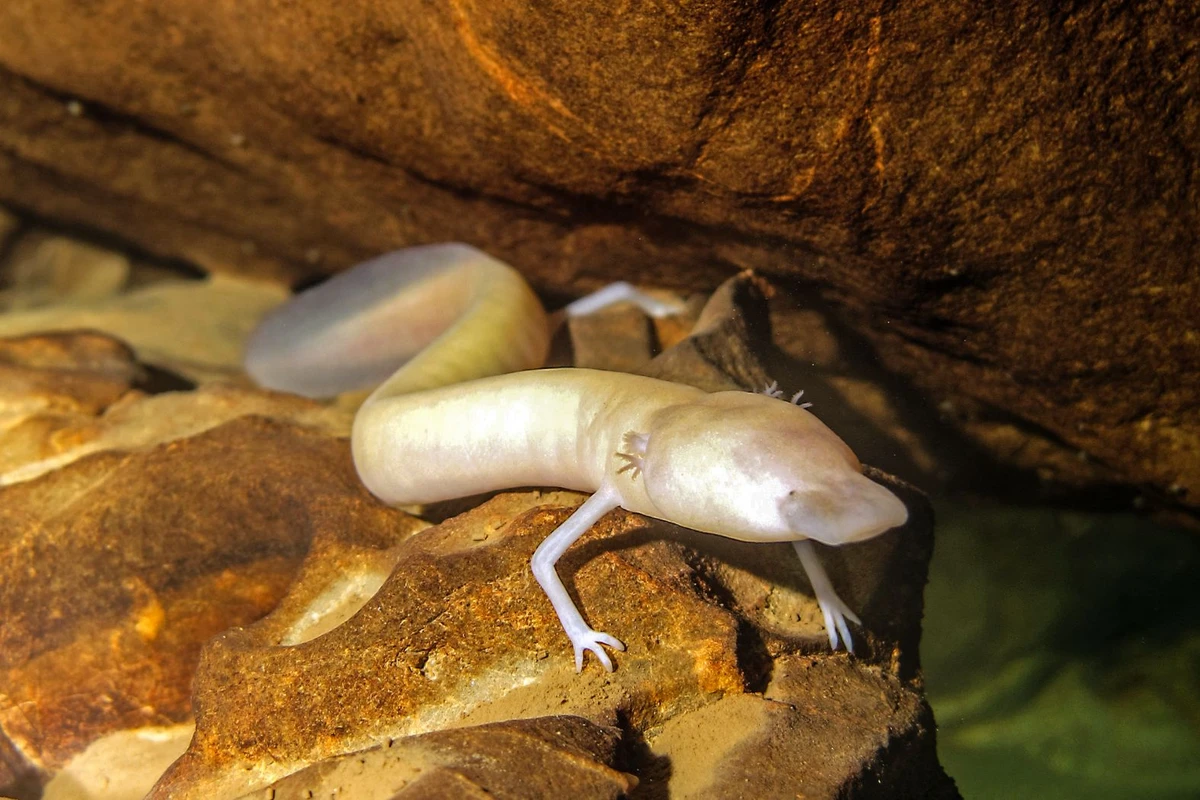
Notice the number of toes on the proteus. Don't you think they're a bit small? Well, there are only two left on their hind legs!
Despite the complete deterioration of their eyes, amphibians are still able to distinguish light from dark using their tails, paws, or any other surface of their bodies. After all, their pale, soft skin contains melanopsin, a light-sensitive pigment. This allows them to avoid ultraviolet radiation, which is dangerous to their thin skin, and to remain in the cool depths of caves. 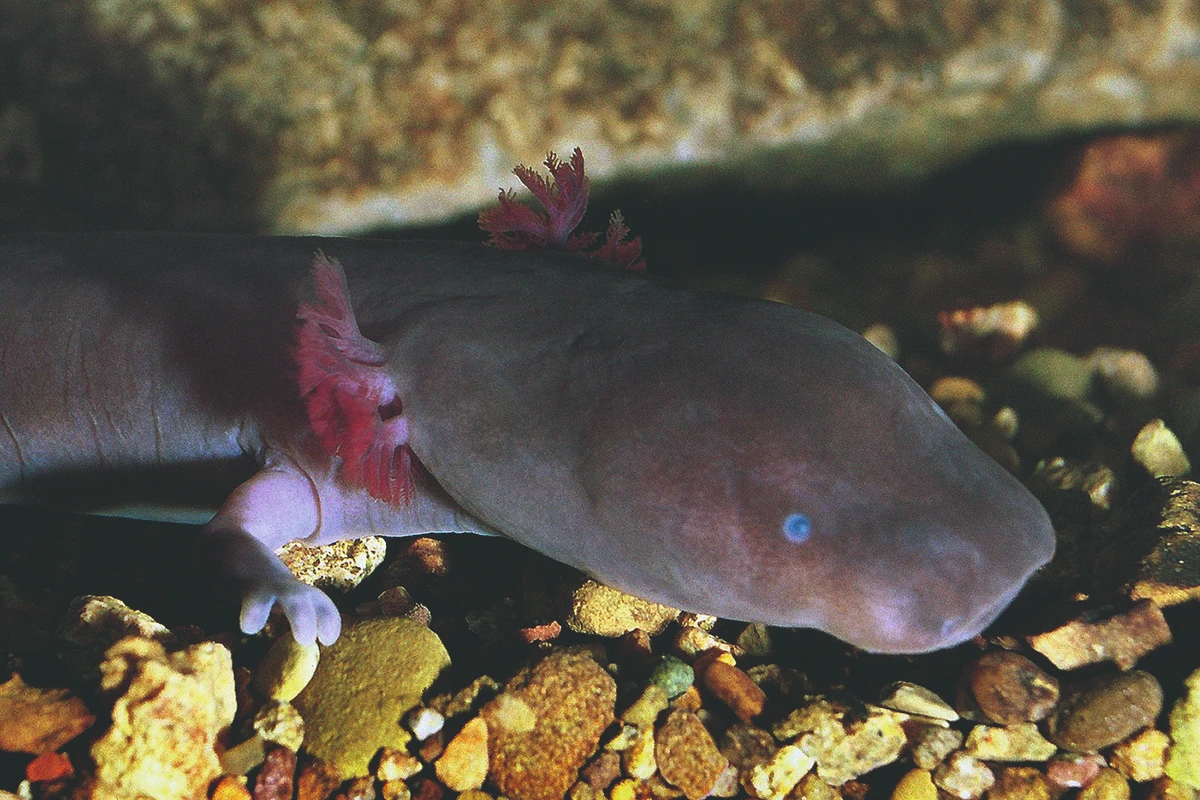
However, there is also a small population of black olms, which are not afraid of sunlight and even have working eyes. Black olms were discovered only recently, 30 years ago. They are found in underground springs in Slovenia.
And finding food for olms isn't all that difficult, as all their other senses are cranked up to the max. Even those that humans don't have. Olms' senses of touch, hearing, and vibration are better developed than those of terrestrial amphibians, allowing them to navigate caves without any difficulty. 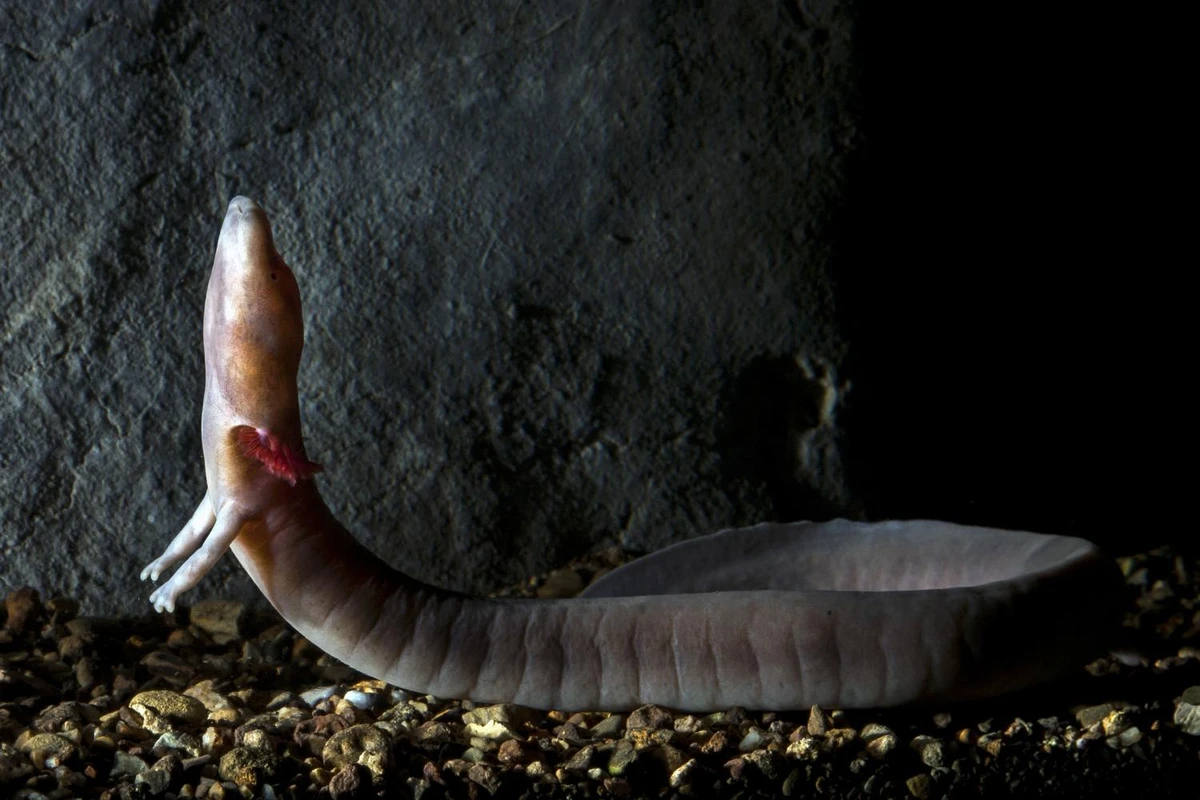
I feel like someone's watching me...
They also rely on a much more exotic sense—electroreception. The olm's head contains complex receptors, the sensitivity of which has not yet been precisely determined. They may be able to sense the bioelectricity of nearby large animals. Or maybe even the Earth's magnetic field! 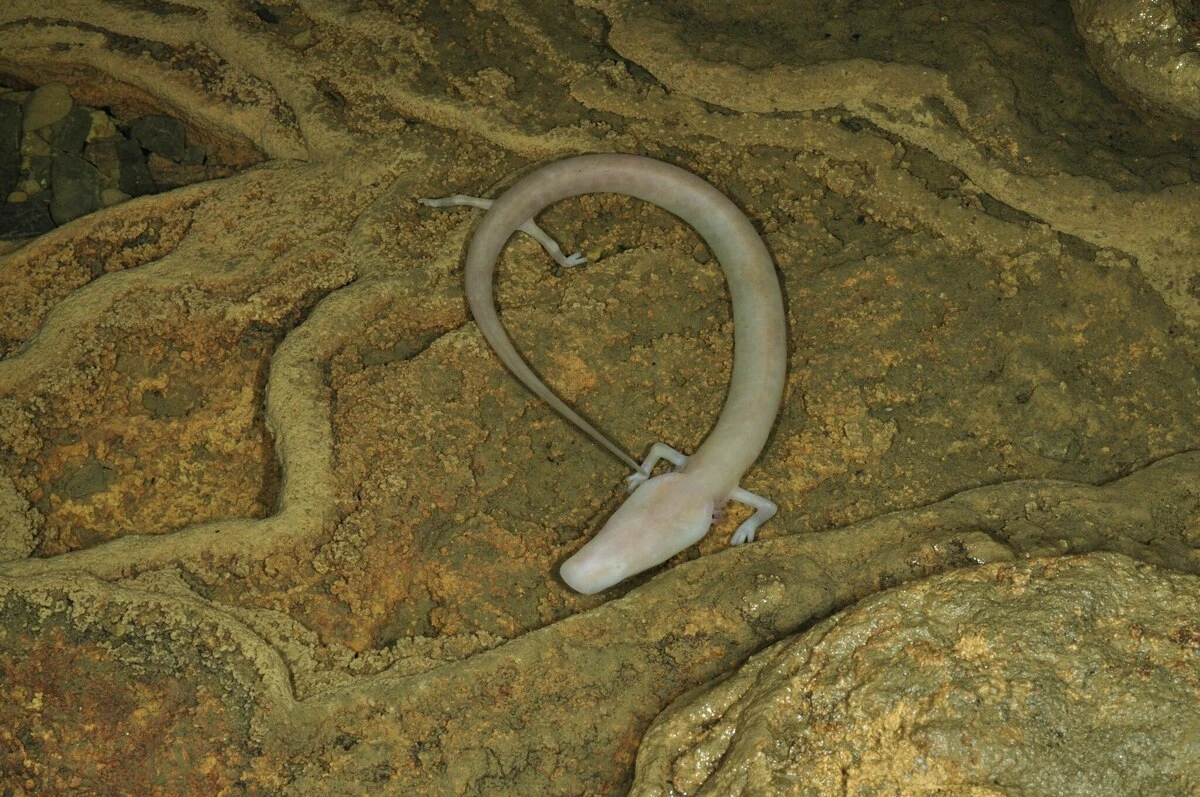
In seven years of sitting in one place, you can learn telepathy and predict the future, never mind some magnetic field.
Olms also have a well-developed sense of smell, which is normal for mammals but practically impossible for amphibians. Olms can detect prey weighing as little as 0.1 grams by scent, and when searching for breeding partners, they seem to rely on pheromones more than any other means of finding a soulmate. 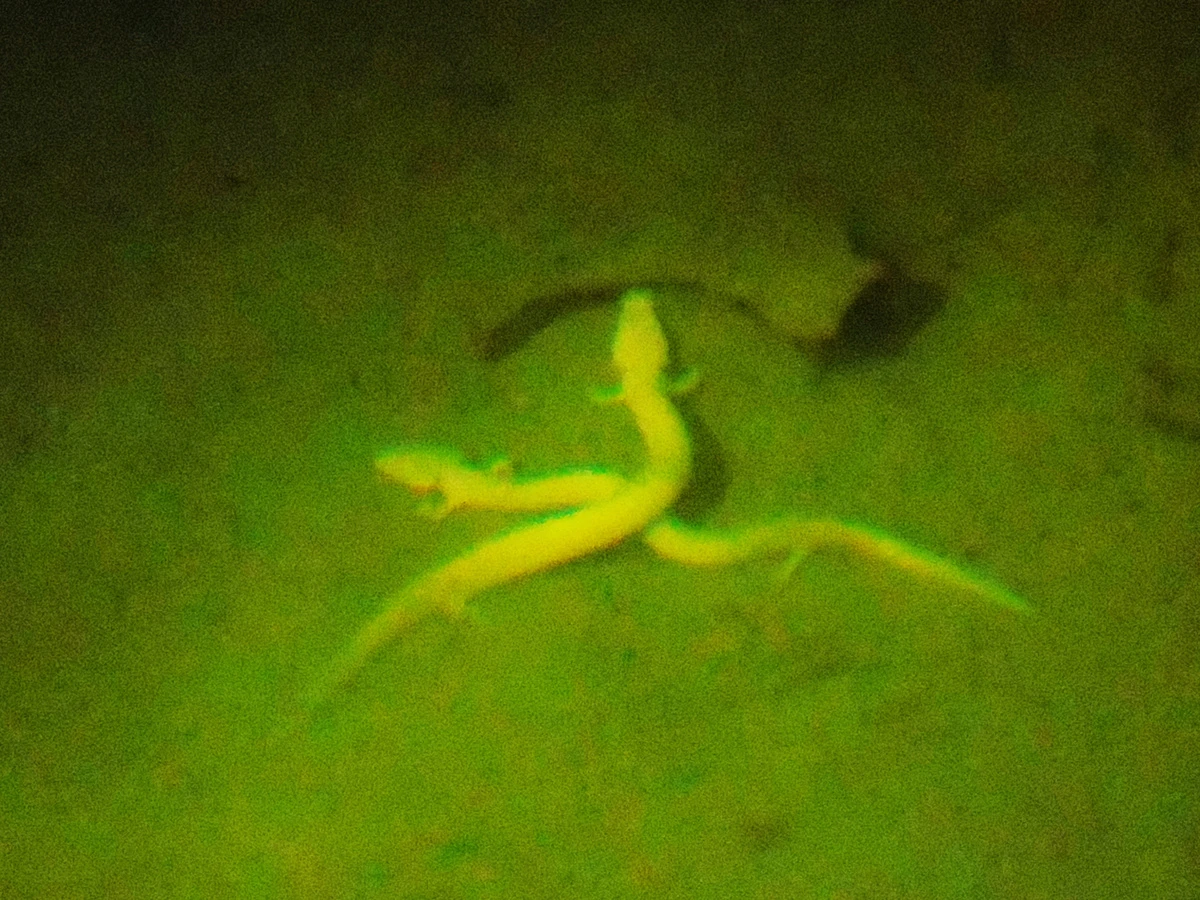
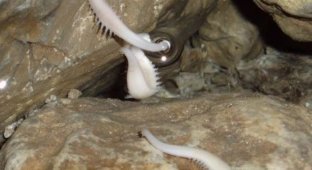
A typical photo of paranormal activity. The quality is terrible, nothing makes sense!
Male leopard seals are territorial and emit pheromones during breeding season. The stronger the pheromone trail, the further away competitors retreat and the closer the females approach. A seduced female receives a spermatophore (a capsule containing genetic material) from the male and lays 70 eggs. Afterwards, she retires for about 12-13 years. After all, why rush when you're going to live a century? And in their exotic leisurely pace, they truly resemble mythical dragons, who exchanged years like small change. I wouldn't be surprised if scientists one day discover that proteas aren't amphibians at all, but neotenic dragon larvae that forgot how to metamorphose into adults to escape humans with their fire, knights, and castles. 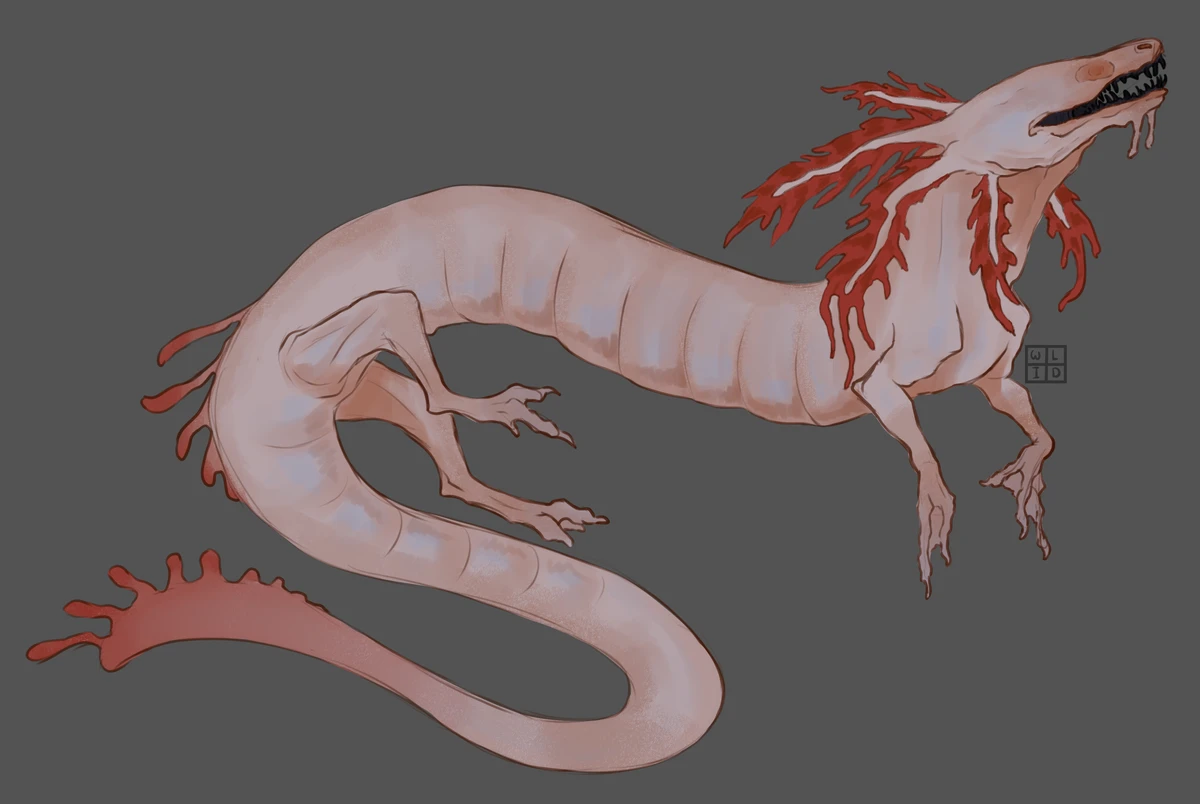
What if an adult olm dragon looked like this?
Add your comment
You might be interested in:











Persistence in achieving a goal

Not everyone is having fun on the amusement ride

A biker prevented a hit-and-run driver from escaping

Absolute perfection

The cutest lunch delivery ever

17 Photos That Will Stop You in Your Tracks (18 Photos)

Young women, Dancing and George Michael: nothing superfluous

A steam locomotive for "big boys"

What Would Happen to a Human on Every Planet in the Solar
