It may sound strange, but finding an elephant is harder than it seems. Two hundred years ago, no one even suspected that forest elephants existed. A hundred years ago, everyone was sure they were just a subspecies of savanna elephants. It wasn't until 2010, thanks to the advent of advanced genome analysis, that we finally discovered that they are a fully fledged species of elephant, very different from their African relatives! 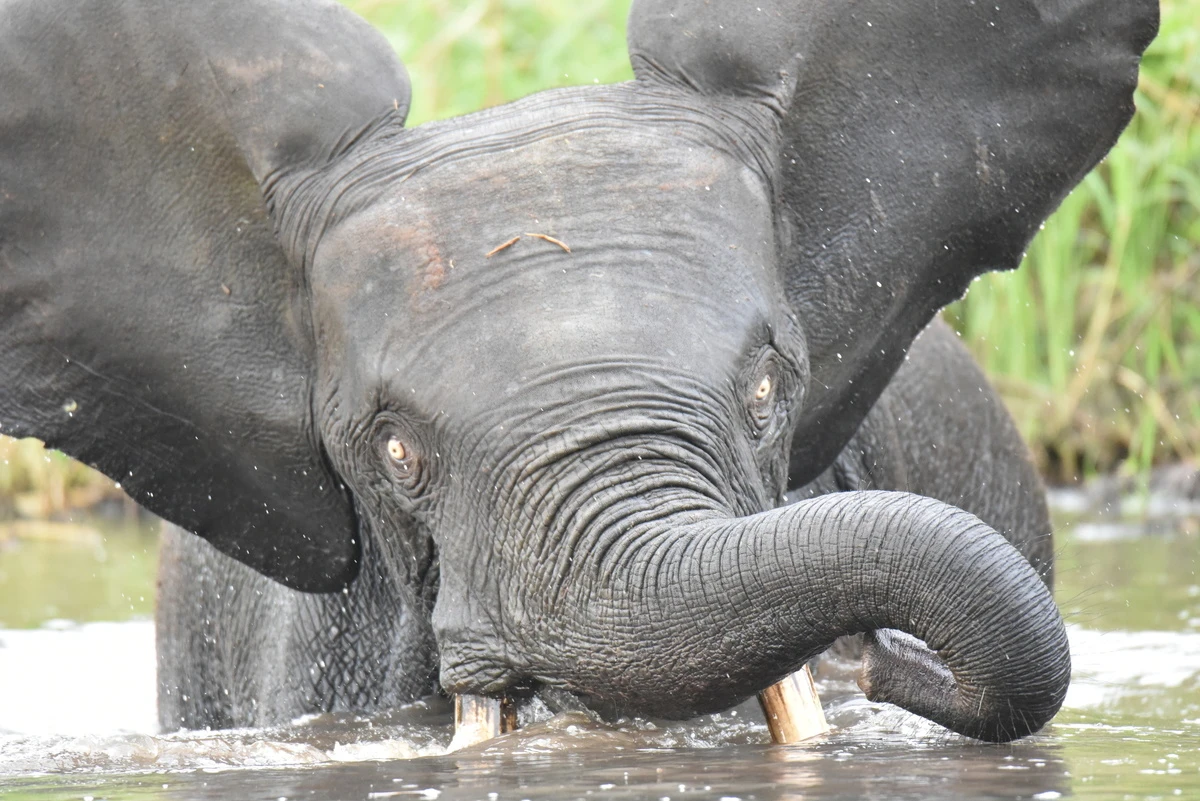
The spirit of the swamp awaits offerings.
First of all, they differ in size. Forest elephants are the smallest living elephants. A large adult forest elephant stands just over 2 meters tall and weighs between 2 and 4 tons. Yes, by human standards, they're simply enormous. But by African savannah elephant standards, they're puny teenagers! After all, an adult savannah elephant is a meter taller and weighs 6 tons. And record-breaking elephants weigh up to 10 tons! 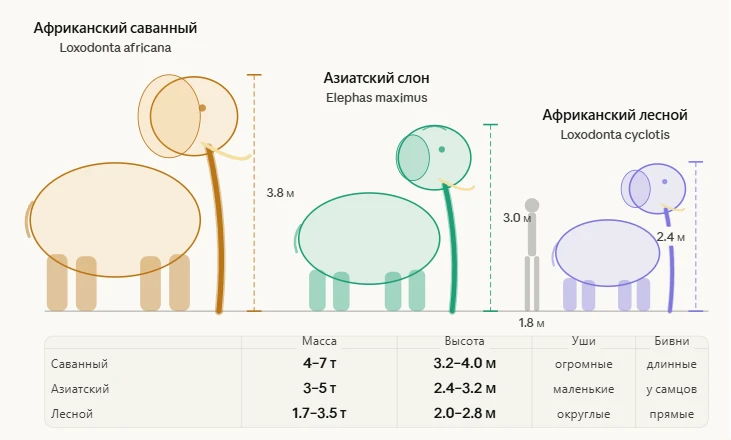
A slightly odd, but fairly straightforward comparison chart of the three elephant species.
But we're not going to run around with rulers around elephants, are we? So, I have a simple life hack for you on how to distinguish a forest elephant from a savannah elephant. If the elephant's tusks are thick and curved, it's a savannah elephant. But if they're thinner and almost straight, you're looking at a forest elephant. 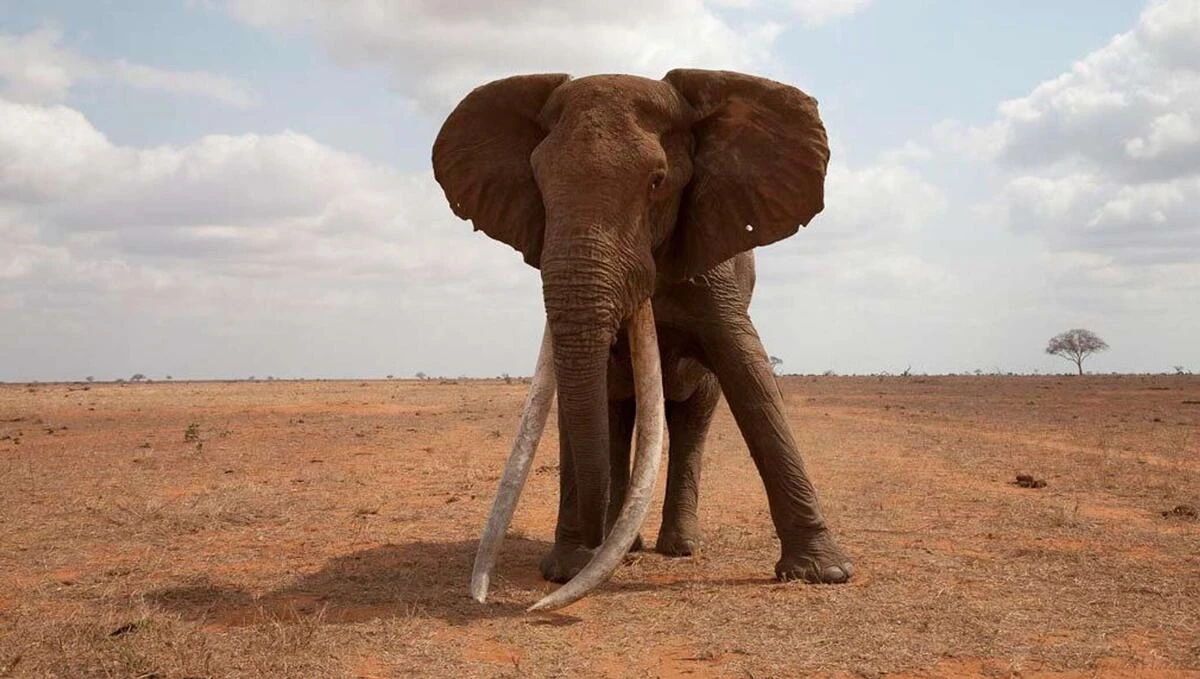
Savannah elephant. Thick, curved tusks. 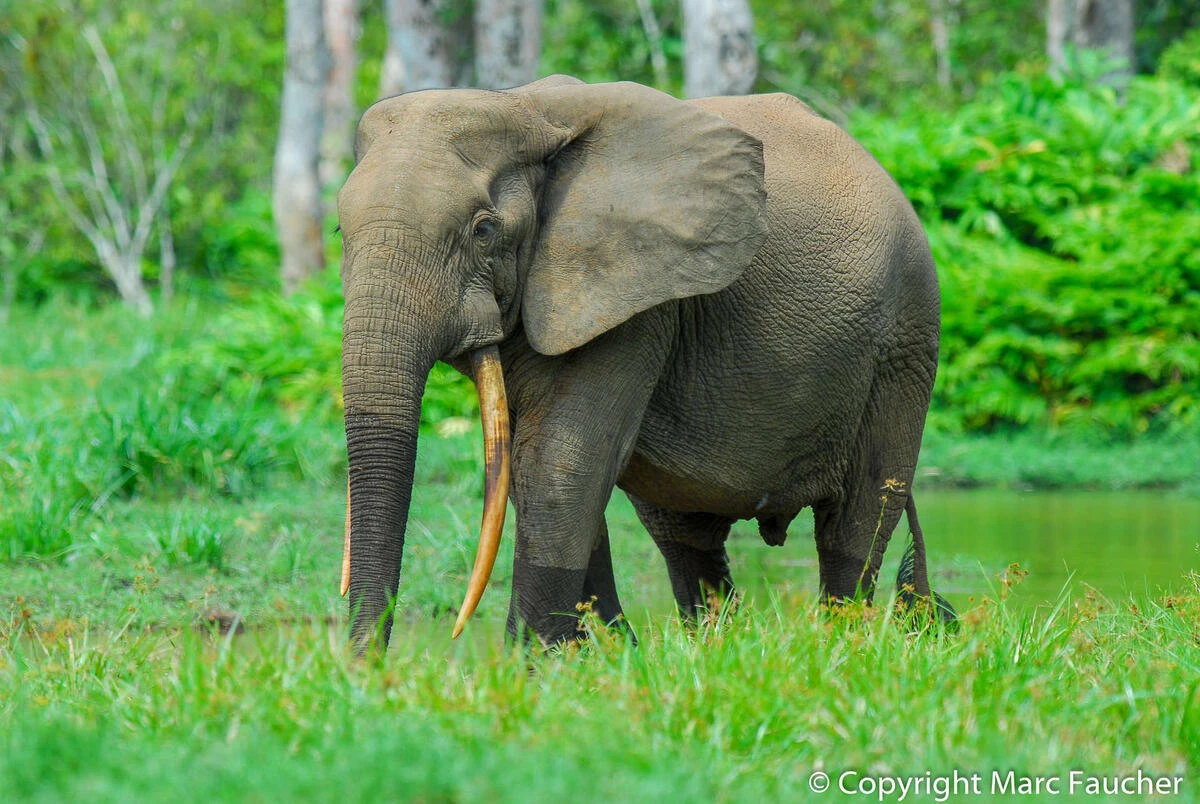
Forest elephant. Straight and slender tusks.
This size difference has a logical explanation – it's hard to be big in the forest. Especially in the dense tropical jungles of Central Africa. An overly large animal will spend a lot of time in places where smaller elephants can easily navigate. 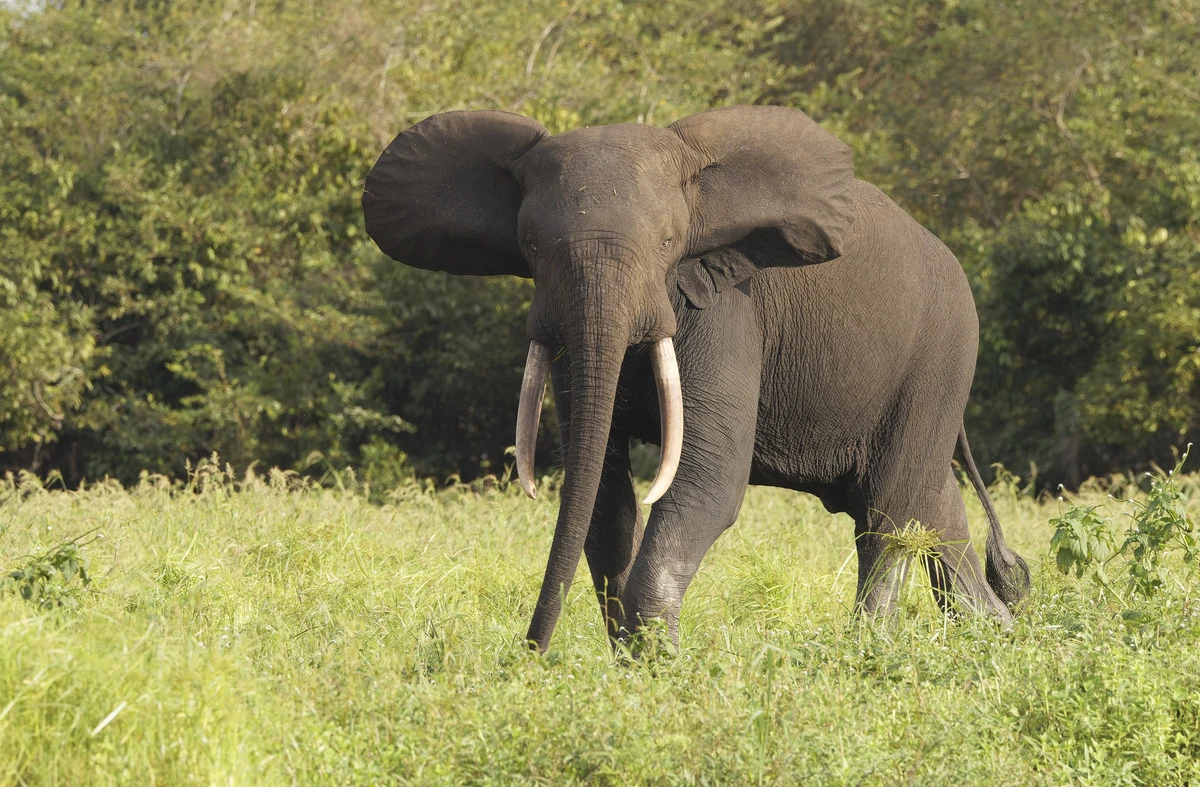
What grace and toned form, just look at this forest athlete.
But even a relatively small elephant needs to eat up to 100 kilograms of fruit and fresh greens daily. Even the jungle can't provide that much food in one place, so herds constantly move from place to place, trying to snag the fresh fruit harvest before other frugivorous animals. A herd of elephants migrates at least 2,000 kilometers a year! 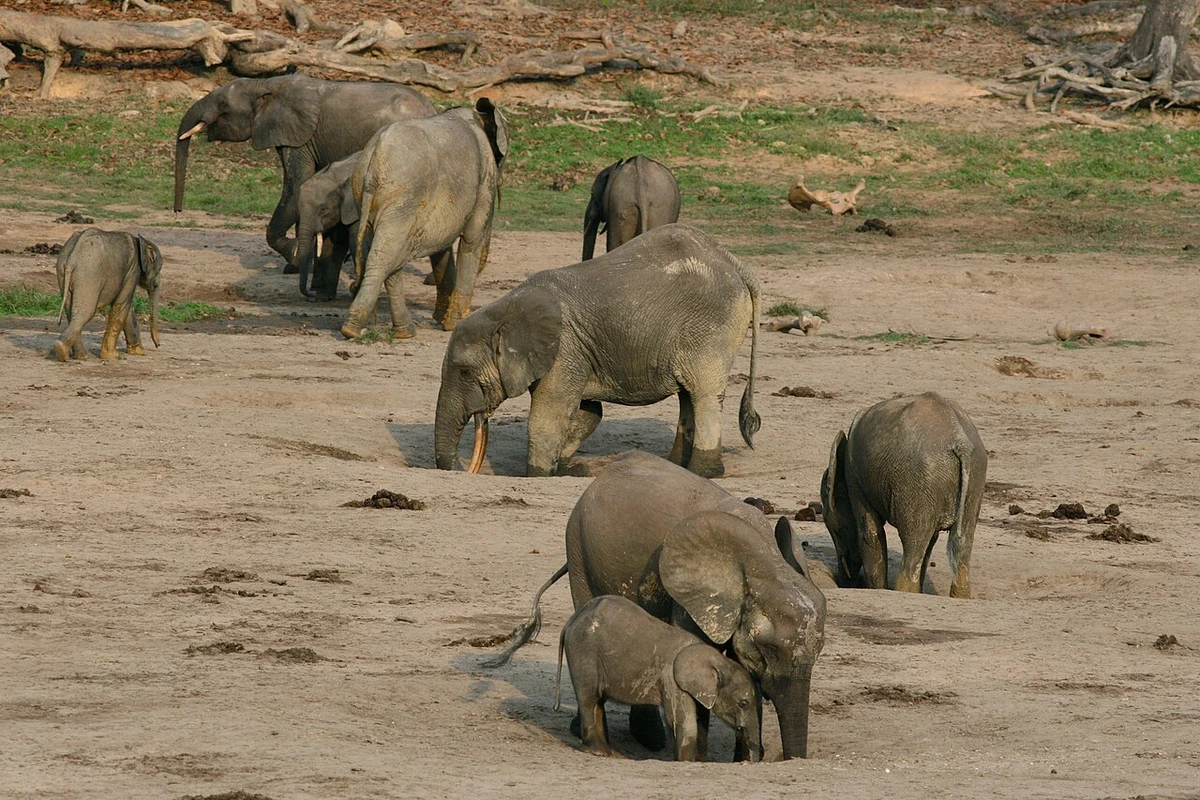
One of the regular stops along the route of each herd is salt marshes, sources of salt, which these giants sorely lack.
In their herd structure, forest elephants are no different from herds of other proboscideans. The leader is always an experienced matriarch, followed by adult females and a pack of their offspring of both sexes. During this time, adult males either wander alone or stick together in small bachelor groups. 
A child, mother, and grandmother—a typical elephant family. 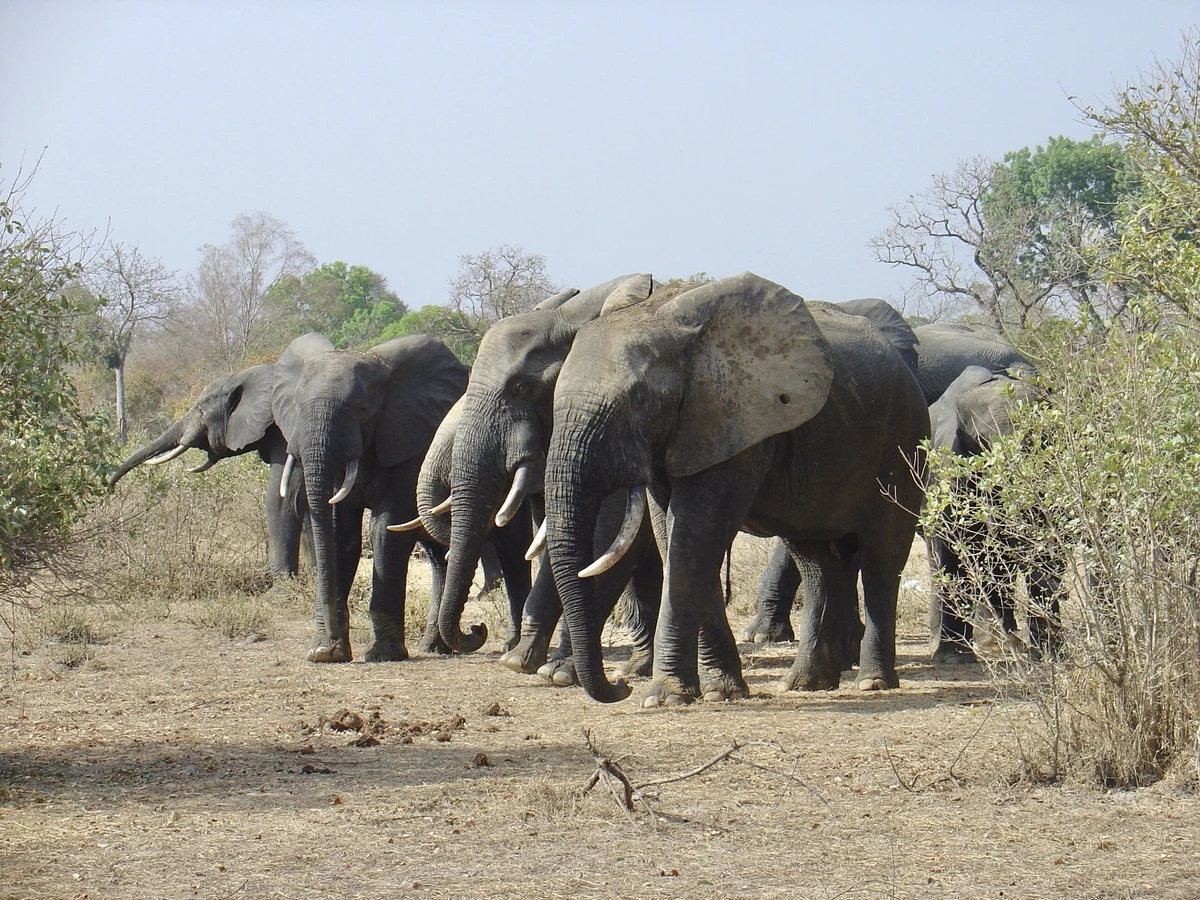
A combative and quite aggressive group of males.
But there are also differences: forest elephant groups are much larger, sometimes numbering up to 20 individuals. They are also much more talkative. Their vocal range is greater than that of their savannah relatives, and they communicate with each other more frequently. Apparently, their incessant chatter allows them to hang out in such large groups. This sociability greatly simplifies life for elephants and reduces the risk of their offspring being killed by large predators. 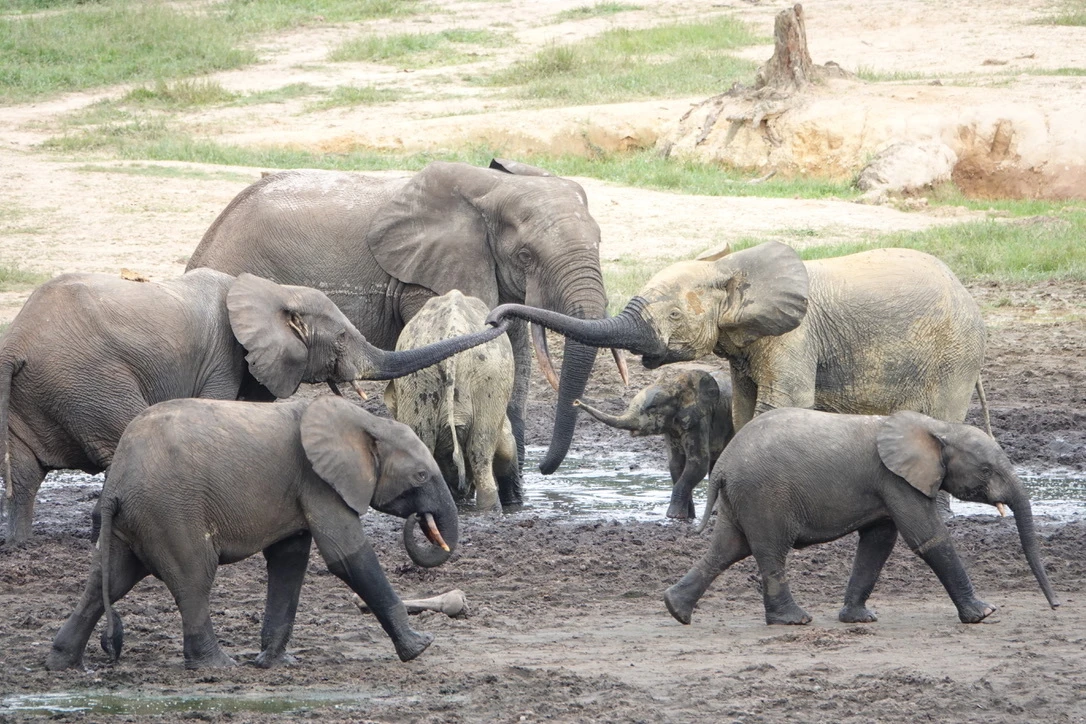
Family picnics in the mud are a very important part of the life of forest elephants. After all, the mud protects them from midges and parasites.
However, despite their close-knit communities and mutual support, even in an ideal year their numbers only grow by 5%. After all, females give birth to one calf every 5-6 years, and the new generation reaches adulthood at 12 (females) and 15 (males). They reproduce more slowly than any other elephants. And this is a very big problem. 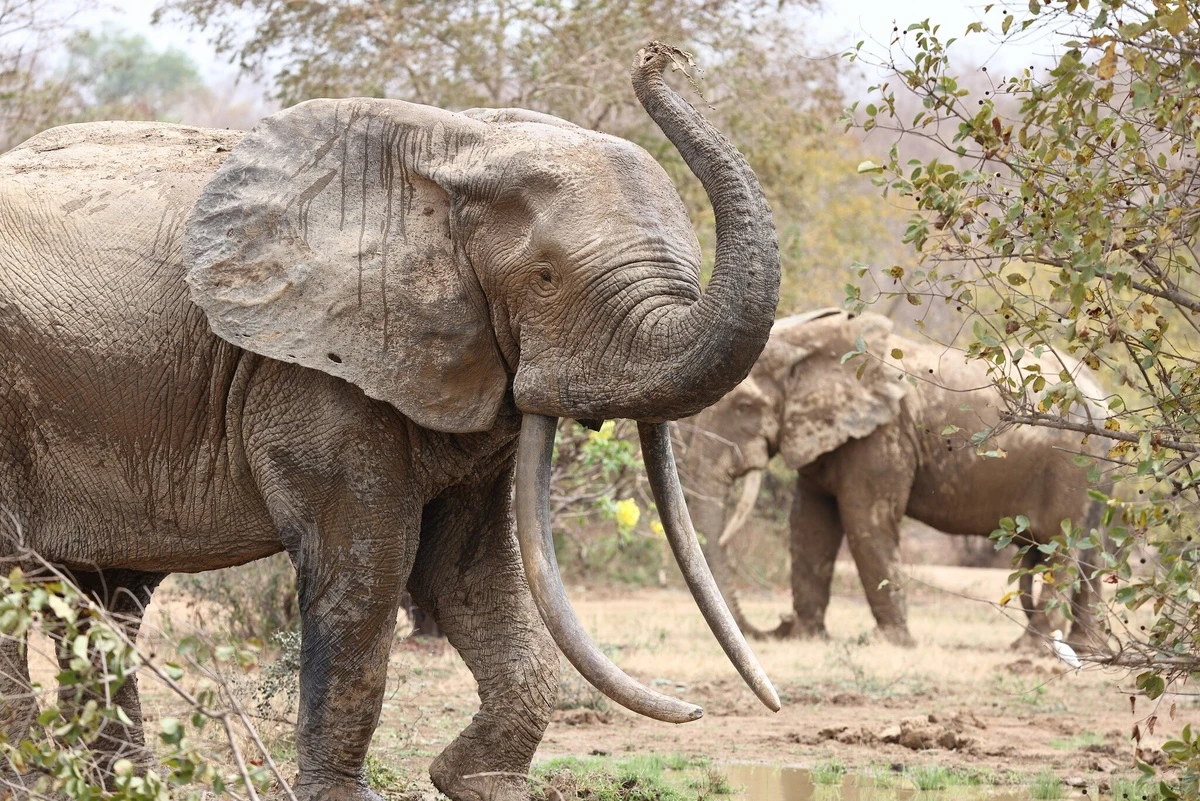
Oh, when will Tanya finally send her brat to school so I can hook up with her...
Even in the best years, the birth rate doesn't cover the decline in the elephant population due to habitat destruction and poaching. Although forest elephants are still numerous, with a population estimated at 130,000-140,000, their numbers have declined by 60% over the past 20 years and continue to decline. Males are particularly hard hit, as during musth—outbursts of aggression in elephants—they often attack people. Naturally, they are killed by traps or gunfire. 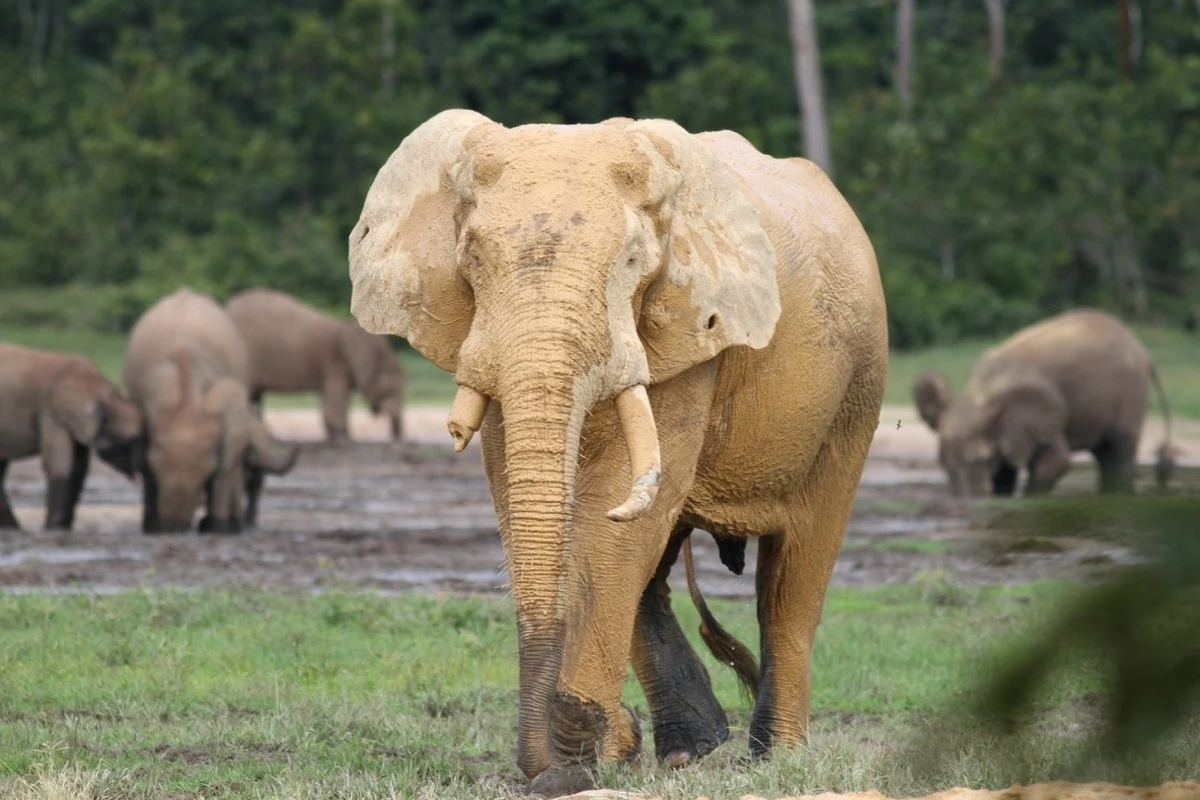
Notice the holes in the mature male's ears. These are signs of fights with other males, with enemy tusks piercing the ears.
However, living in dense forests has its advantages in terms of protection from humans. Not every poacher will wander through the impenetrable jungle with a gun. After all, even researchers only seriously studied these beauties at the beginning of the 21st century, identifying a new species of elephant.
Add your comment
You might be interested in:













A herd of elephants saved a baby elephant from death in the

In Bali, an elephant broke a tourist's arm with one bite (3
After 80 years of slave labor, a female elephant named

A Family Discovers a Stranger in a Coffin at a Relative's

Paradise for an introvert: a ghost town in Malaysia (5

Abandoned "paradise" worth $100 billion (7 photos

A powerful cyclone exposed the fossils of giant sea

Hyundai sets record sales thanks to unexpected models (2

More than 100 elephants had to be urgently evacuated in

"What Is This Thing?": 20+ Bizarre Objects That

Margaret Hamilton Dies at 90: The Story of the Moon

13 "Healthy" Habits You Should Actually Quit (14

Hypnotic and Oddly Satisfying GIFs That Show How Food Is

25 Incredibly Beautiful and Rare Stones (26 Photos)

Soldiers in Lace, a Bowling Geisha, and 20 More Rare Photos

Outmaneuvering Terrorists: How Pilot Uri Bar-Lev Saved a

16 Fascinating and Surprising Facts About Life in Sweden

Forbidden Fruit Is Good for You: Bad Habits That Might
