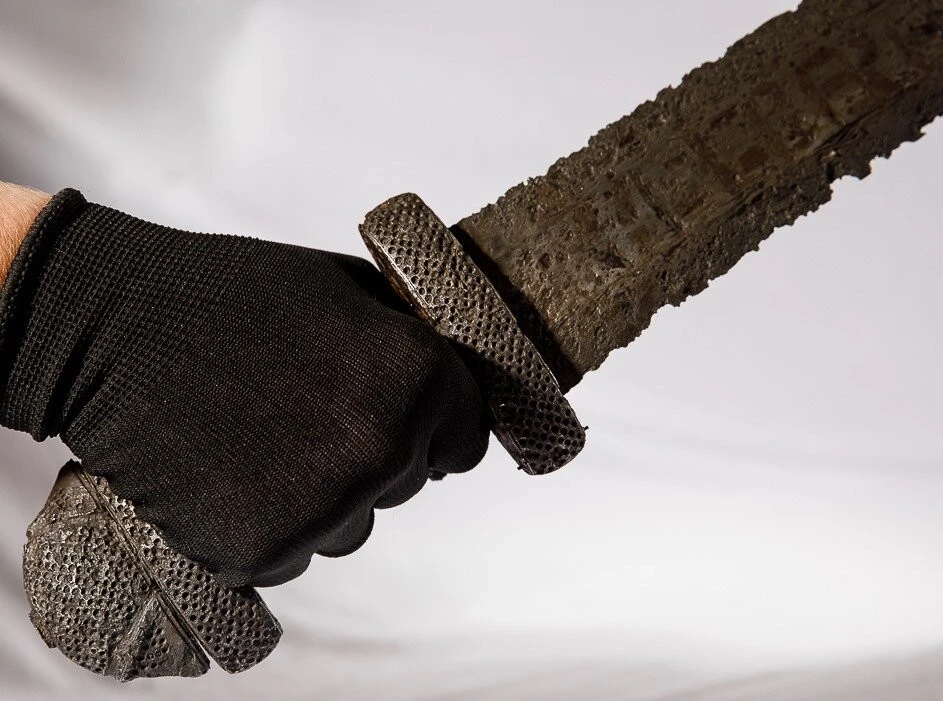
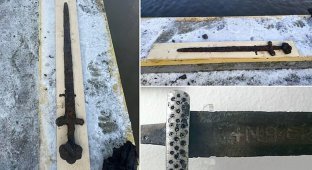
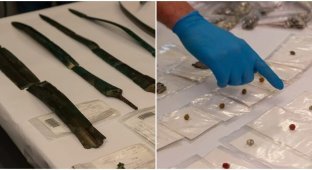
A close-up of the most famous Viking sword from Gnezdovo (9 photos)
This sword was found in 1874 as part of the burial goods of a double cremation burial during excavations at Gnezdovo, a world-famous archaeological complex consisting of at least 5,000 burial mounds and several settlements (eight mound groups, two settlements, and a fortified settlement). 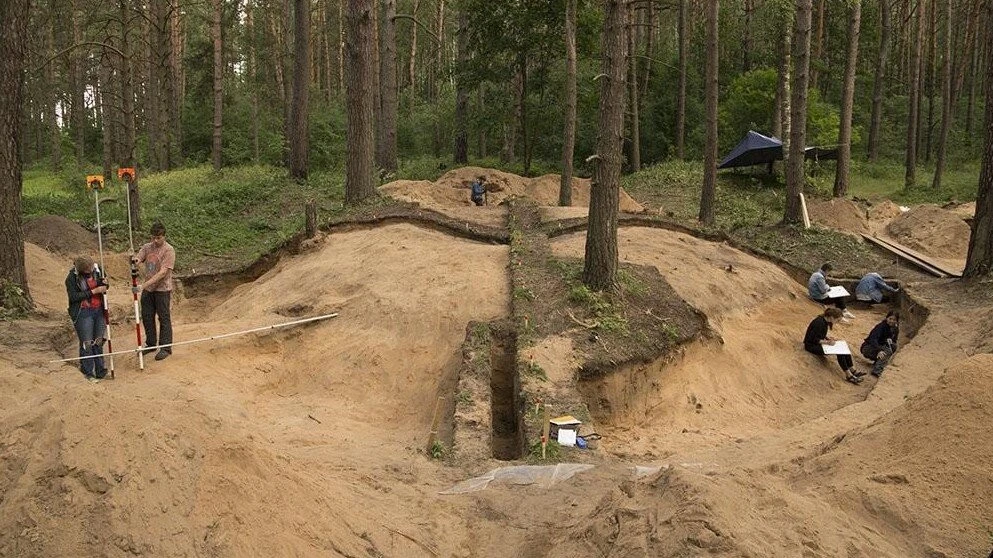
Excavations at Gnezdovo (https://proshloe.com/ubijstvennaya-krasota.html).
It's also noteworthy that it was found embedded in the ground, which experts believe is typical of the Scandinavian tradition. They also suggest that the ritual was performed in the first half of the 10th century. 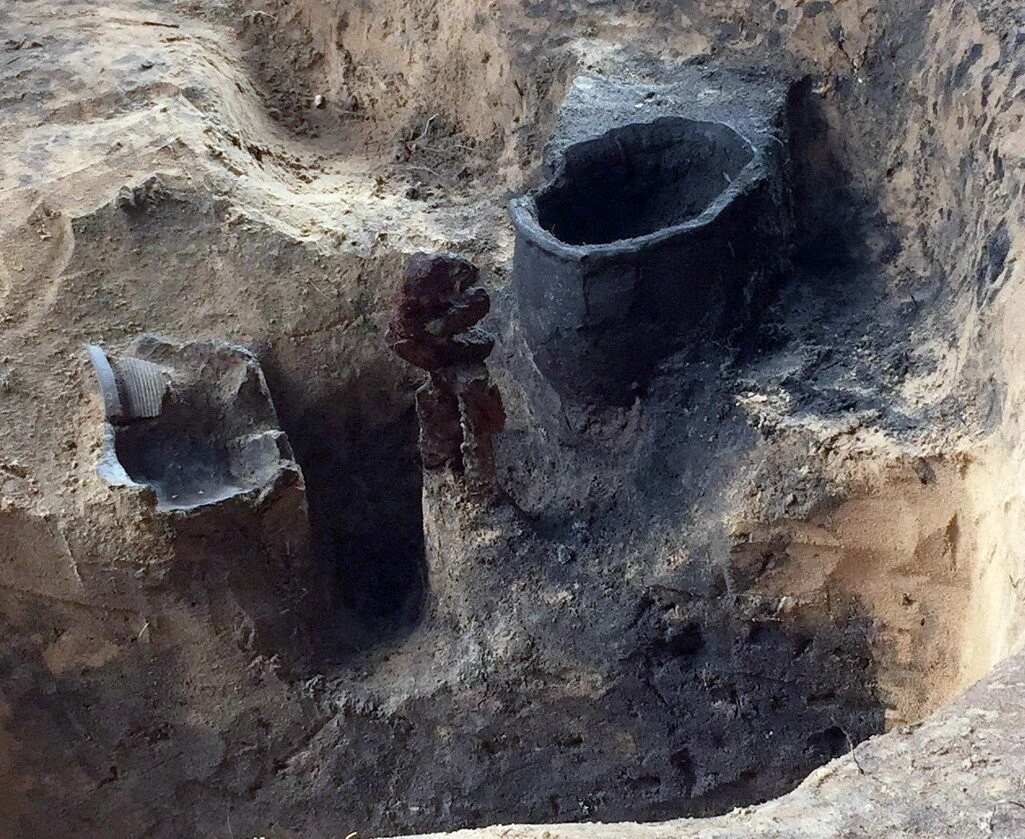
One of the swords found in Gnezdovo in a cremation burial complex.
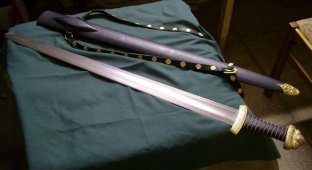
The weapon belongs to the so-called "Carolingian-type swords," which were common in Europe in the early Middle Ages (5th-11th centuries). These swords had double-edged blades ranging from 780 to 960 mm in length with deep, long fullers on the flats and a relatively short hilt with a small guard and a massive pommel. The average overall length of the weapon was approximately 1000 mm, and its weight was up to 1500 g. The sword was named after the French king Charlemagne, during whose reign (8th century) it was developed.
According to S. Kainov, senior researcher in the archeology department of the State Historical Museum, which currently houses this weapon,
"At the time of its discovery, the sword was covered in rust and scale from its exposure to a funeral pyre. In the 19th century, the sword was restored using electrolysis, which revealed it to be in very good condition. Now we can see almost the original surface in many areas." 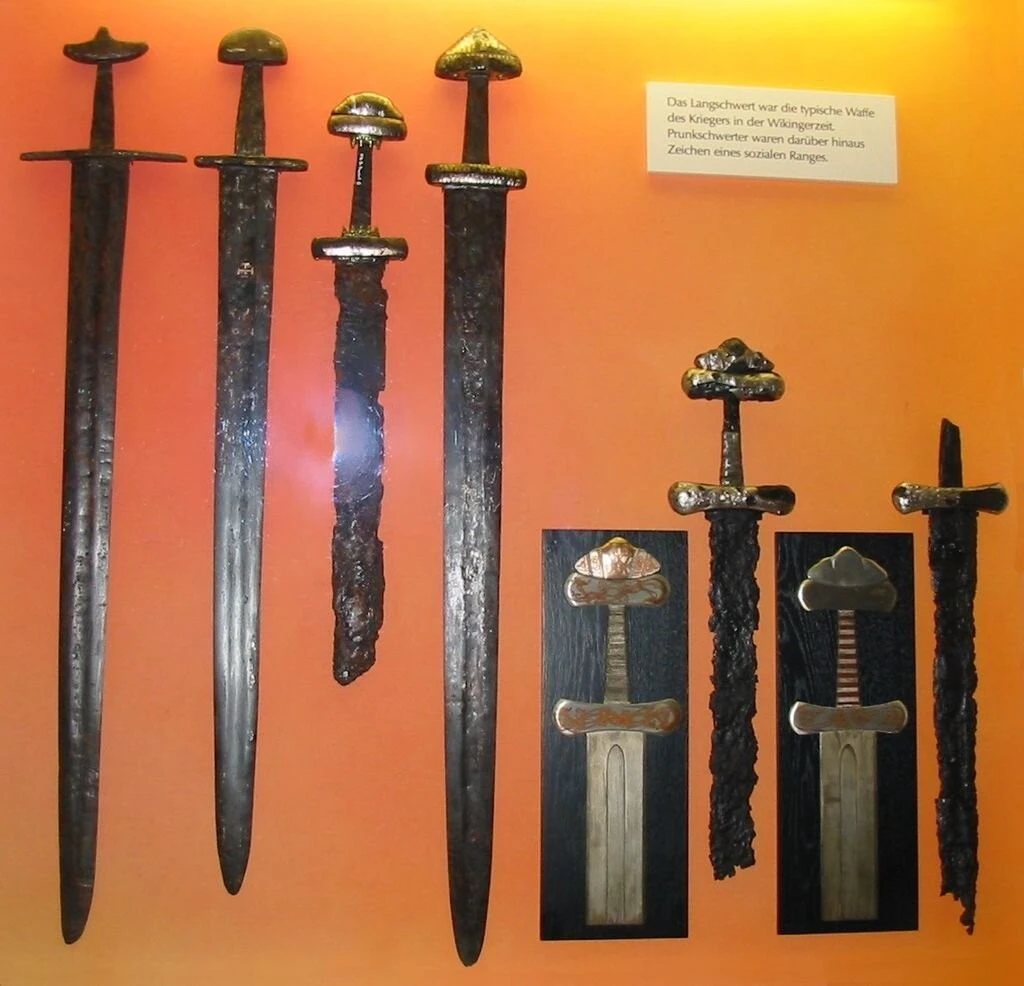
Carolingian-type swords from the Viking Museum
The sword's state of preservation is truly superb (for a weapon that was burned and then buried for several centuries): the blade retains its sharpening, and the handle details retain their adorning ornamentation. This is the best-preserved sword found in Gnezdovo during the entire period of excavations at the complex.
It should be noted that over the entire period of excavations (a century and a half), more than 30 swords were found in Gnezdovo, and according to S. Kainova,
"This is the largest concentration in the territory of Ancient Rus'." No other site, neither Kyiv nor Chernihiv, yields such a large number of swords, which is partly explained by the relatively good state of preservation of the Gnezdovo complex. 
General appearance of the sword 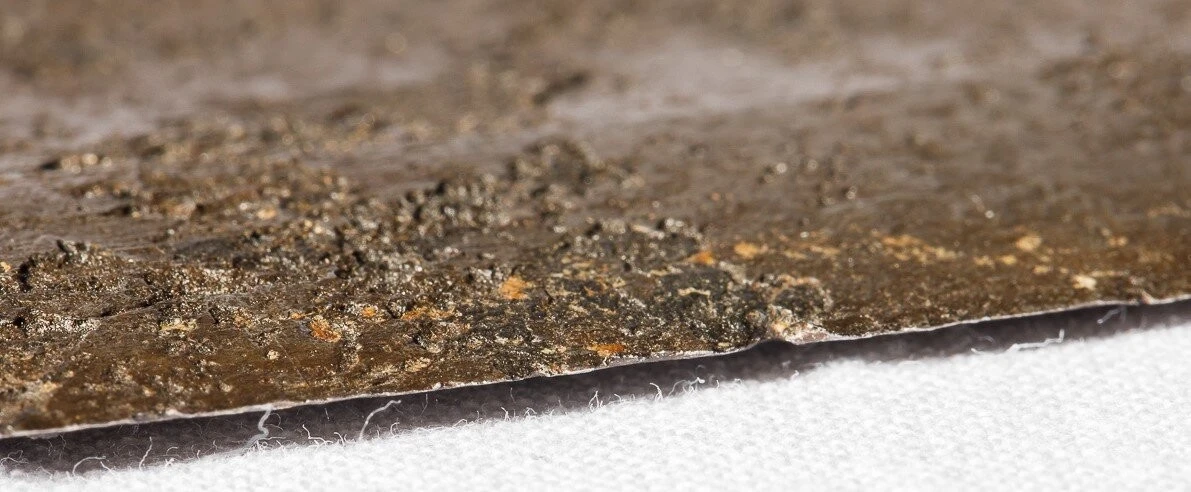
Blade sharpening
The overall length of the sword is approximately 990 mm, the blade length is 820 mm, the blade width at the crossguard is 64 mm, the thickness at the same place is approximately 5 mm, the distance between the pommel and the crossguard – 88 mm.
The sword's hilt consists of a crossguard and a two-piece pommel (the base of the pommel and the head of the pommel). Both parts of the pommel are hollow. The wooden handle has not survived. The hilt was attached by riveting to the pommel. Ornamentation was applied to the weapon's parts to decorate it. According to S. Canova, it was done in the following manner:
"They took a finished piece, made by forging, and notched its front surface with very thin vertical grooves. Then they hammered silver wire into these grooves. The density of the wire filling was up to 20 wires per 1 cm. All these procedures were carried out on cold metal." 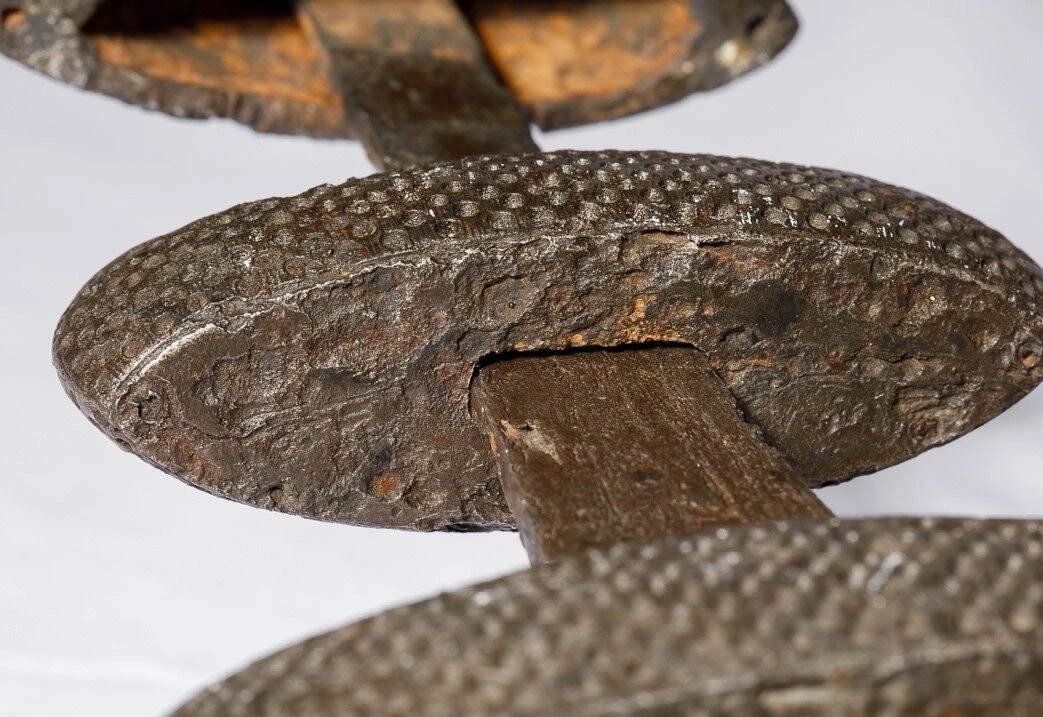
Handle 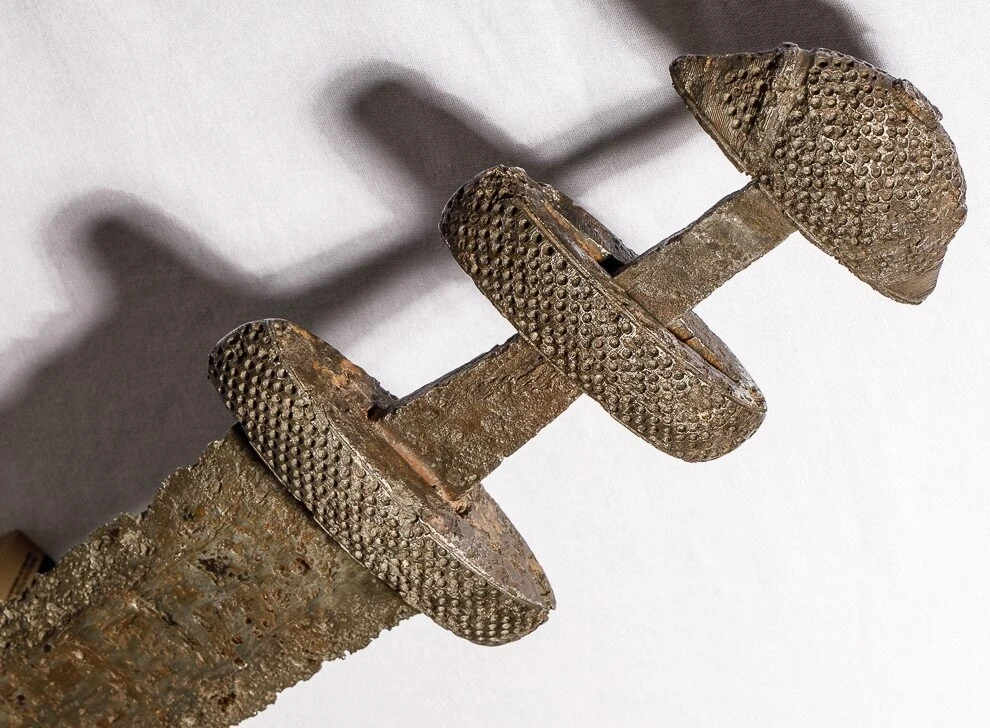
However, the wire could be copper or brass. In this case, the inlay gave the weapon a shimmering and more precious appearance. According to A. Kirpichnikov, creating such an ornament could require 10-15 meters. Wire.
According to the classification developed by the Norwegian scholar Petersen, this sword belongs to Type E. Petersen based his classification on differences in the pommels of the swords, as their blades are not significantly different: most are wide, flat, with wide fullers, tapering slightly toward the tip. Occasionally, blades with nearly parallel edges or narrower than usual are found. Restoration work on the blade revealed a maker's mark on it: ULFBERHT. Swords of this maker are well known to specialists: approximately 200 swords bearing this mark have been found to date. All of them are attributed to the 9th-10th centuries. As A. Kirpichnikov wrote,
"It can be said that of those found, every third or fourth blade created in the last quarter of the first millennium CE bore the aforementioned name mark (ULFBERHT - IO). This represents the largest-scale production of the most expensive and prestigious white weapon in European history."
Experts believe that we are not talking about a single craftsman, but rather a very large manufactory, which, moreover, had a clear division of labor. Moreover, it can be said that its products were intended for a wide market. This is evidenced by the nature of the decorations, executed in a strict, ethnically neutral, geometric style.
And, it must be said, the calculations of the "early medieval marketers" were entirely justified: ULFBERHT swords are found across a vast area - in Scandinavia, Volga Bulgaria, and throughout Rus' (in the southeastern Ladoga region (4 examples), the Yaroslavl and Smolensk regions (6 examples), and the Lower Dnieper region (4 examples)) 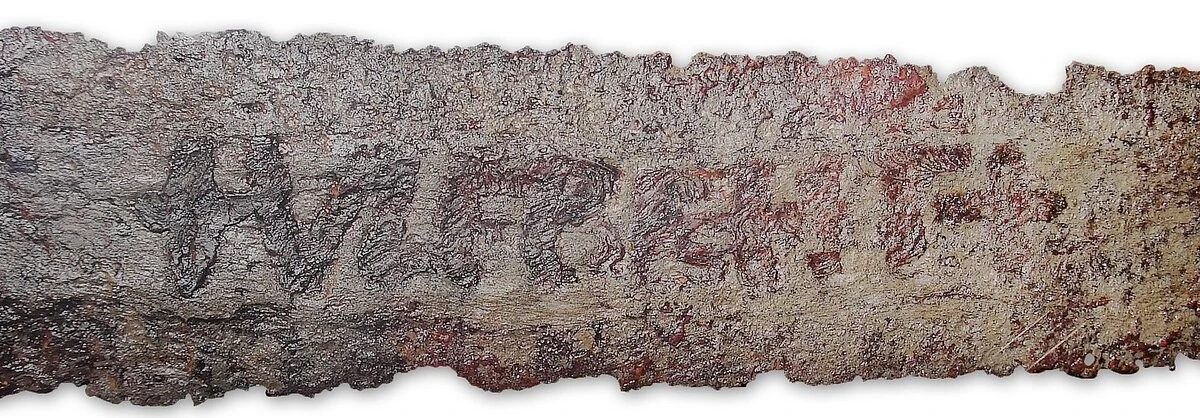
ULFBERHT inscription on a sword, 9th century
According to S. Kainov, the ULFBERHT mark could have been made in two ways:
"Usually, so-called damascus was used for this purpose." Wire twisted from wires with varying carbon content. The first option: grooves were first punched into the already finished surface, and then the letters were welded into them using a forge. The second option: this wire could have been welded directly into the blade, without pre-cutting channels.
On the reverse side of the "Gnezdovsky" sword was also a hallmark consisting of two omega-shaped symbols and vertical bars. Experts believe this manufacture was located in what is now Germany, in the Rhine region. Interestingly, swords with the ULFBERHT hallmark have not been found in this region. Apparently, they were not sold in this region (or were only exported, so to speak).