Without the ability to spin, you can't survive in the wild. 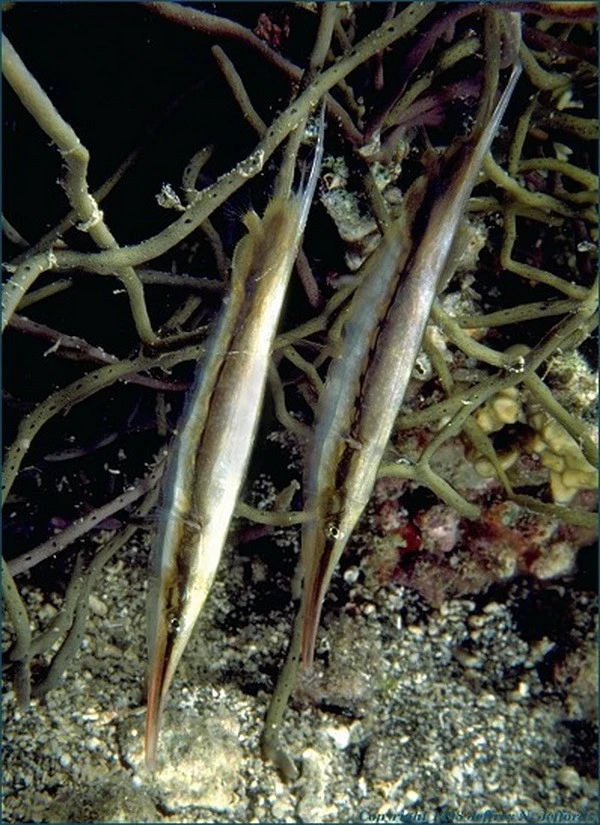
Without the ability to spin, you can't survive in the wild. Animals twist themselves this way and that, just to secure a place in the sun. The common crooktail is no exception, having had to turn its lifestyle upside down! And this isn't a far-fetched metaphor; it actually swims upside down.
The crooktail lives in the tropical waters of the Indian and Pacific Oceans. This place is truly dangerous: predators, competitors, curious two-legged tourists. In my opinion, swimming upside down in such a situation isn't the most viable idea... Especially when you're a tiny thing the size of a palm. But the crooktail executed the idea perfectly!
Let's start with the fact that the crooktail's head and back are indistinguishable at first glance: the beginning and end are narrow, and the middle is wide. The fish's coloring is also distinctive: a dark stripe runs right down the middle of its body, contrasting with its silver scales. If you were to sketch the crooktail's body, you'd get something resembling a leaf.
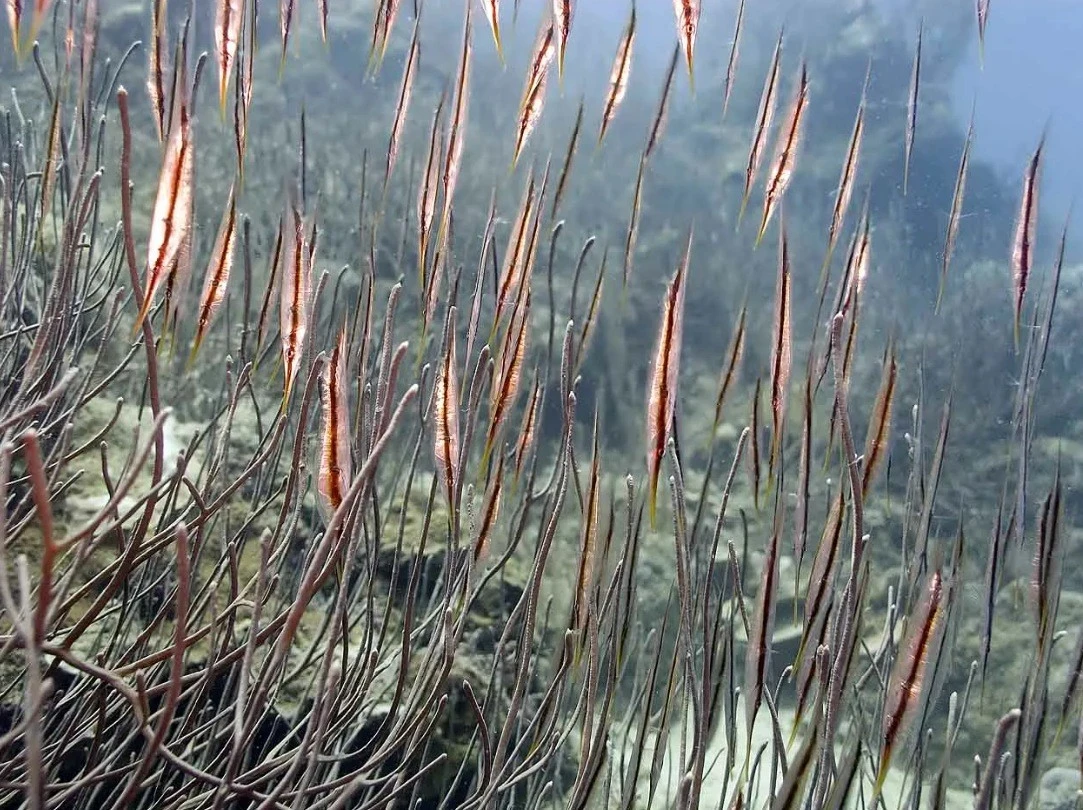
But to become seaweed, you have to think like seaweed and move like seaweed. Therefore, the crooktail has learned to perfectly imitate the swaying motion of currents and currents.
All these acrobatic feats are possible thanks to the special arrangement of its fins. Almost all of them are concentrated at the rear of the body. Together, they help the fish hover, swim up and down, and spin around its own axis. It's so natural that even Stanislavsky would believe it.
Now let's add a school of 20-100 other crooked-tailed fish to a single crooked-tailed fish. These upside-down fish swim not only in sync, but also with agility: they wag, turn instantly, and accelerate sharply. And before your very eyes, the school transforms into an underwater thicket, even on a lifeless wasteland. But there are no wastelands in coral reefs. This means the crooked-tailed fish blends perfectly with the lush vegetation of the shallows.
It feels especially comfortable among the spines of sea urchins. Slender and agile, it hangs between the spines and remains completely safe! Moreover, the crooked-tailed urchin isn't shy about snatching the urchins' dinner: it feeds on crustaceans, plankton, and other small organic matter. 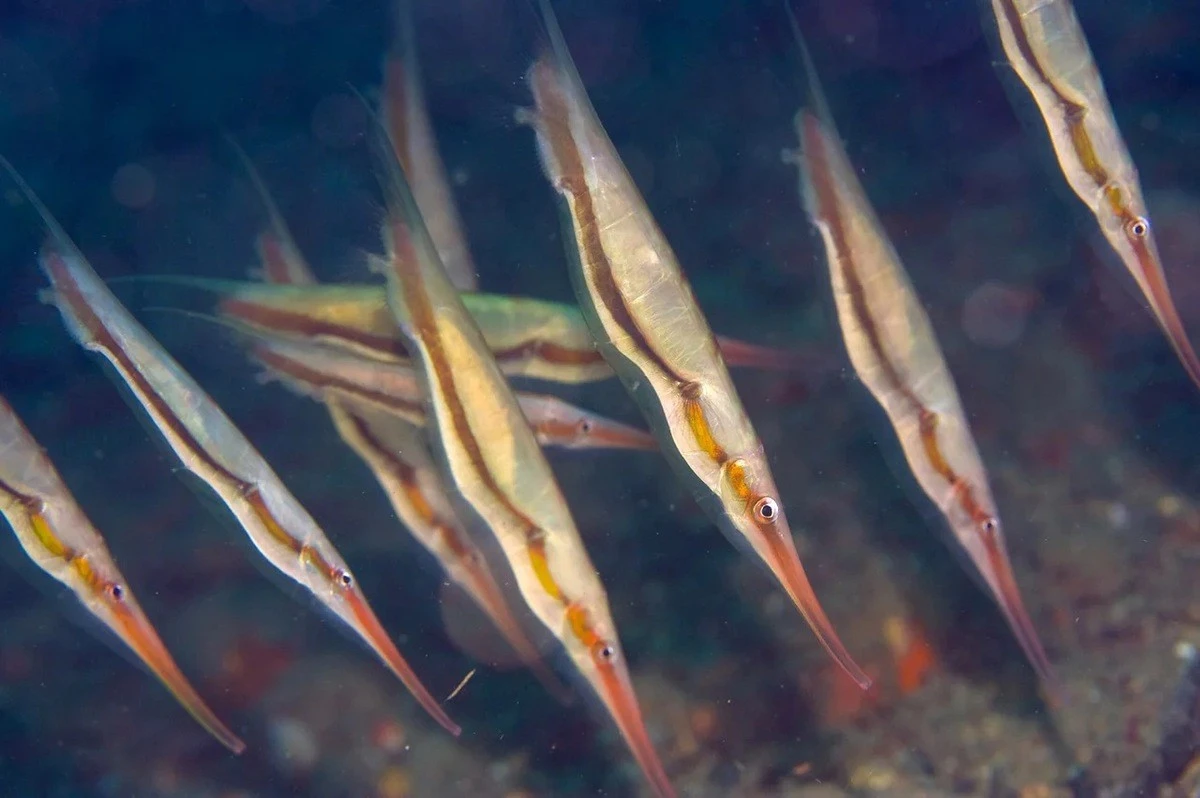
Add your comment
You might be interested in:












More than 20 people are stuck at an attraction in California

Wanted a motivational tattoo, but got a translation error

When she's the one (15 photos)

Chinese miniature replica Toyota Land Cruiser 300 (3 photos)

A cafe owner was criticized for cleaning tables with a broom

Unusual pocket pistol Palm pistol

Australian scientists recreate mammoth meat and make a

The next game of the year is Wild Terrain, where you play

American figure skater stuck his partner's head into the ice

Margaret Hamilton Dies at 90: The Story of the Moon
25 Incredibly Beautiful and Rare Stones (26 Photos)

16 Fascinating and Surprising Facts About Life in Sweden

"What Is This Thing?": 20+ Bizarre Objects That

13 "Healthy" Habits You Should Actually Quit (14

Cassini Spacecraft Reveals Saturn’s Rings (10 Photos)

How Germany Got a Mountain Made of Salt (6 photos)
30 Everyday Details That Will Change How You See the World

Hypnotic and Oddly Satisfying GIFs That Show How Food Is
