How Stefan Mandel Beat the Lottery 14 Times to Become a Millionaire (7 photos)
Winning a lottery jackpot is a dream shared by millions around the globe. Yet many spend a lifetime chasing fortune without ever striking it rich. Then there are those who seem to win over and over again. Is it sheer luck? Not quite. Romanian economist Stefan Mandel managed to beat the system using the queen of all sciences: mathematics. 
His story began in the 1960s. At the time, Romania was facing grim economic hardship, and many of its citizens lived in poverty. Among them was a young economist named Stefan Mandel. Earning a modest salary of 360 lei—around $10 a month—Mandel longed for a better life. Like any young person, he wanted to dress well, eat good food, and enjoy his youth. 
Realizing that honest labor under the regime offered no path to prosperity, and unwilling to turn to crime, Mandel set his sights on state lotteries. Most people viewed winning as an impossible long shot. But rather than blindly relying on luck and blowing his meager paycheck on tickets, Stefan turned to mathematics—a passion he had cultivated since his school days.
A Hobby That Paid Off
Mandel was fascinated by theoretical probability, delving deeply into the works of the medieval Italian mathematician Leonardo Fibonacci. Drawing on these concepts, Stefan developed a custom number-selection algorithm designed specifically for lotteries, which he dubbed "combinatorial condensation." 
While the name sounds intimidatingly complex, the logic was surprisingly straightforward. In a standard lottery where players pick 6 numbers out of 49, the odds of hitting the jackpot are 1 in 13,983,816. Selecting 15 numbers slashes those odds to 1 in 2,794—though covering every combination would require buying 5,005 separate ticket blocks. Mandel claimed his algorithm could condense those 5,005 combinations down to just 569, dramatically reducing the buy-in cost.
If the six winning numbers fell within his 15 chosen picks, the system guaranteed at least a second-tier prize, alongside potentially hundreds of smaller payouts. More importantly, the odds of hitting the grand jackpot jumped to 1 in 10—a massive improvement by any standard.
Stefan Mandel's Algorithm
Testing the formula alone was too big a task, so Stefan recruited four friends. Together, they bought 228 tickets for a single draw. The very first attempt paid off: Mandel won 72,783 lei—equivalent to roughly $15,000 at the time. 
Emboldened by his success, Mandel realized that communist Romania offered no room for his grander ambitions. After paying off his debts, he used the remainder of his winnings to bribe officials and secure permission to leave the country. For the next four years, he bounced around Europe looking for the right place to build his operation. Finding none, he widened his search and ultimately settled in Australia.
Down Under, Mandel set out to turn his method into serious wealth. He continually refined his system, finding as much joy in playing the numbers game as in the cash rewards. To scale his operation, he brought in investors and formed a full-fledged lottery syndicate. 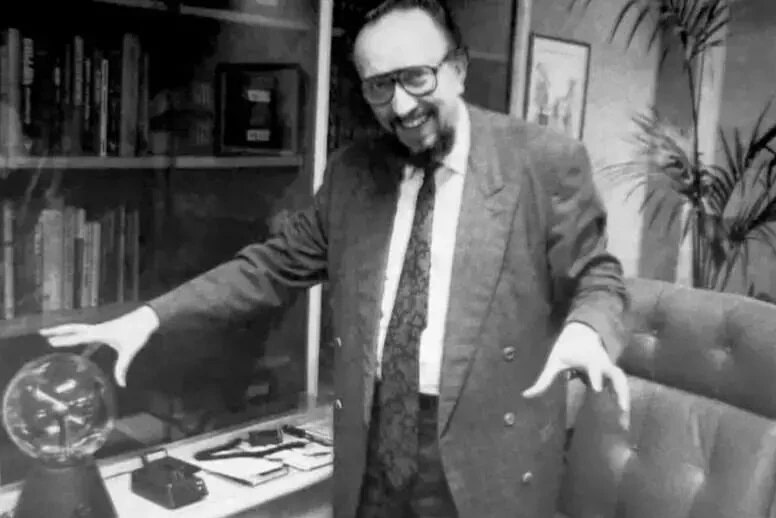
Before long, Mandel automated his manual calculations using early computers. The system generated the optimal number combinations automatically, leaving only the task of filling out the physical tickets. Powered by syndicate capital and technology, Stefan won 12 smaller lotteries and netted over $400,000 in secondary prizes. Then, in 1986, he hit his first major jackpot, taking home $1.1 million.
Millions from the Virginia Lottery
Australia soon proved too small for Mandel's ambitions, prompting him to scout for high-stakes lotteries overseas. He eventually set his sights on the Virginia State Lottery in the US, which featured a unique rule: players could buy an unlimited number of tickets and print them out at home. Mandel instantly recognized a goldmine. 
The prep work was massive and costly. Mandel and his partners set up a shell company to raise money to buy every conceivable combination. The syndicate bought dozens of computers and high-speed printers and hired staff to process the tickets. The gamble paid off spectacularly: they walked away with $27,036,142—the largest jackpot in Virginia Lottery history at the time.
Mandel was now a multi-millionaire, having achieved it completely legally. He had broken no laws, relying purely on his algorithm and investor capital. But lottery officials were loath to part with such a fortune. Claiming he had rigged the system, authorities launched a massive international investigation involving law enforcement agencies across 14 countries.
Among those scrutinizing his operation were the CIA, FBI, IRS, the Australian Crime Commission, and the Australian Securities Commission. Yet despite intense scrutiny, investigators found no evidence of wrongdoing, and Mandel was cleared. The ordeal turned him into an international celebrity—the man who beat the lottery—and a folk hero in Australia. 
Today, Stefan Mandel is retired from gambling. Having amassed the wealth he dreamed of as a young man, the nearly 90-year-old math wizard lives peacefully on a tropical island in Vanuatu—a tranquil paradise in the South Pacific.
Mandel isn't the only one who cracked the code. American retirees Jerry and Marge Selbee also figured out how to consistently beat the lottery system.