Was Einstein Really a Failing Student? Busting Myths About the Genius’s School Years (9 Photos)
To comfort parents whose children are struggling in the classroom, people often bring up legendary scientists who were supposedly poor students. Physicists Thomas Edison and Albert Einstein are usually top of mind. In Edison’s case, the story holds water—he genuinely struggled with traditional schooling. But the rumors about Einstein simply don’t stand up to scrutiny. In the mid-1980s, newly uncovered records finally laid this enduring myth to rest. 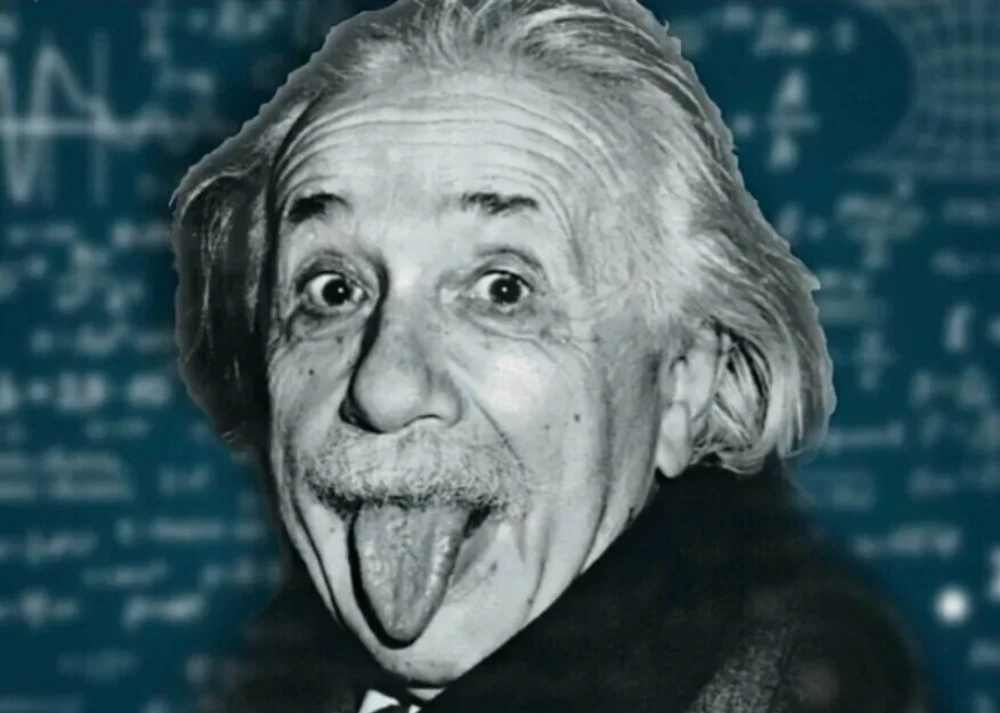
How School Tested the Future Genius
Albert Einstein was born on March 14, 1879, in the city of Ulm, in Baden-Württemberg. When he was just a year old, his family relocated to Munich, where the future luminary would spend his formative years. Though his parents, Hermann and Pauline Einstein, were Jewish, they decided to enroll their son in a nearby Catholic school. 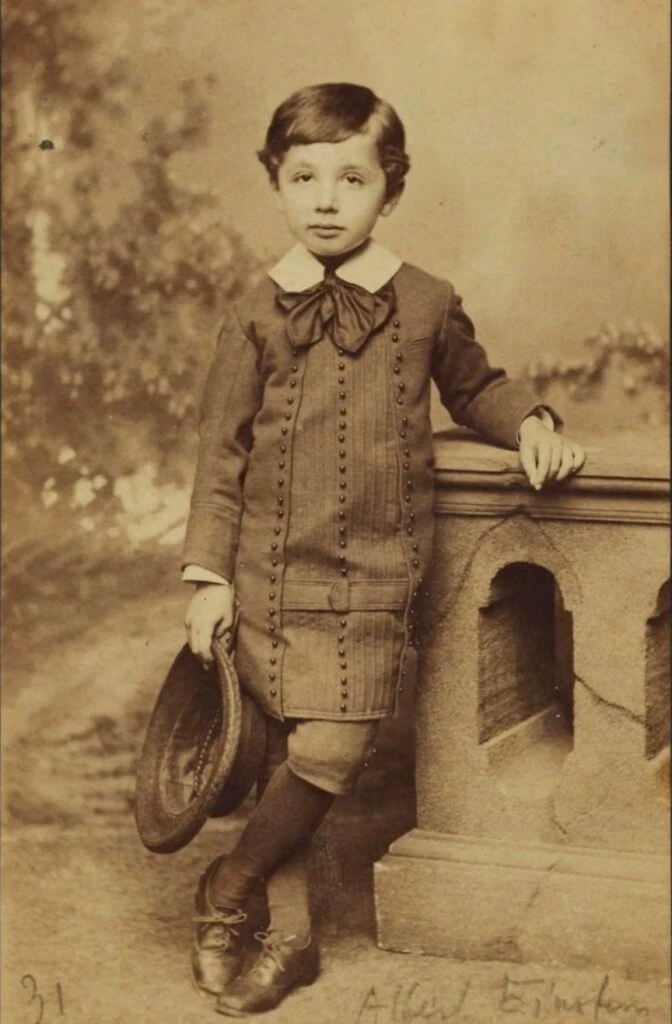
Five-year-old Albert Einstein, 1884
Albert loathed his Catholic schooling from day one. Classrooms in that era were run with iron-fisted discipline: pupils were forced to march in step, and the slightest infraction was met with a ruler across the knuckles. Nor did he find friendship among his peers. With antisemitic sentiment on the rise across Germany, classmates frequently taunted and baited him.
The boy soon left the school, and in 1888, at age nine, he enrolled at the Luitpold Gymnasium—a prestigious institution staffed by stellar mathematics and physics teachers. It also boasted one of the best physics and chemistry laboratories in Munich.
Physics over Football: Inside Einstein’s School Days
Unfortunately, Albert’s hopes for a better environment were dashed. Life at the gymnasium was hardly different from his previous school: the same rote memorization, the same barrack-room discipline, and the same condescending attitude from teachers. Young Albert had no interest in rough-and-tumble games or kicking a ball around with his peers. Instead, he possessed an innate grasp of complex machinery, effortlessly explaining the inner workings of a telephone or a phonograph. 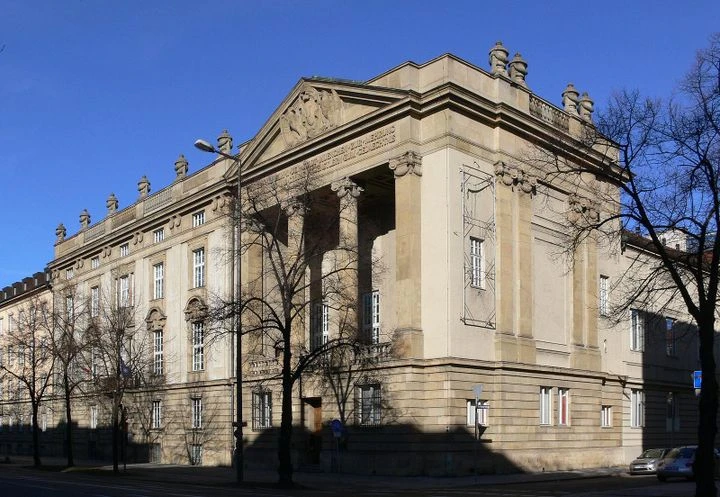
The Luitpold Gymnasium in Munich
His social life, however, improved. While classmates viewed Albert as an eccentric bookworm, they respected his immense knowledge. He earned straight A's and consistently ranked among the top pupils in his class. In 1984, archival records surfaced that confirmed what history had obscured: Einstein was, without question, a child prodigy.
By age 11, he was tackling physics at a college level. He played the violin with remarkable skill and received top marks in virtually every subject—French being the lone exception. In his spare time, Albert threw himself into independent study. His parents nurtured his insatiable curiosity, buying him science and math textbooks that he would devour over the course of his summer vacations.
From Math Puzzles to the Mysteries of the Cosmos
Albert’s uncle Jakob, an engineer and his father's business partner, often challenged the boy with tough mathematical problems. Albert took on every challenge with relish, refusing to leave the house until he cracked them. He also developed a close bond with Max Talmud, a medical student and family friend. Talmud visited every Thursday for dinner, always bringing fascinating reading material for the young prodigy. 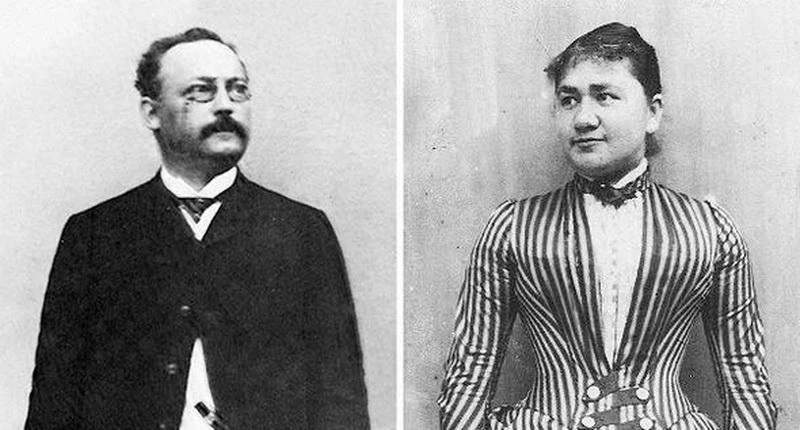
The genius's parents, Hermann and Pauline Einstein
Talmud’s mentorship proved pivotal in shaping Albert’s intellectual journey. It was he who introduced the teenager to Aaron Bernstein’s popular science series, *People's Books on Natural Science*. Bernstein was an influential polymath whose diverse research touched on the speed of light.
Bernstein’s books presented intriguing thought experiments—like what happens to a bullet fired through the window of a speeding train, or what an observer would experience traveling along a telegraph line alongside an electrical signal. 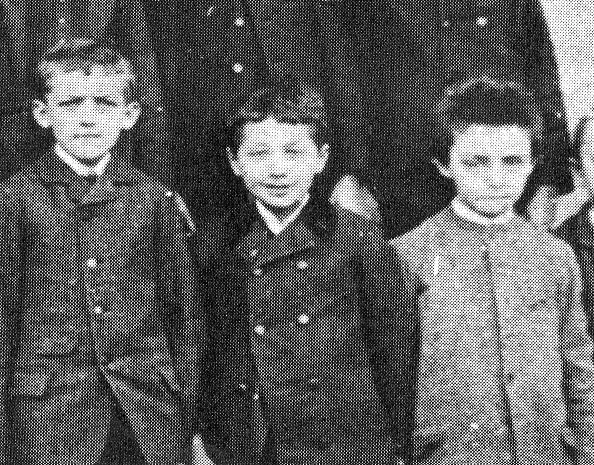
A 10-year-old Einstein (center)
These scenarios prompted Einstein to wonder what would happen to objects traveling through space at the speed of light, leading him to doubt that light was merely a wave. When Albert turned 12, Talmud brought him an advanced geometry textbook, which the boy mastered in a matter of days. Later, Talmud introduced him to philosophy, including the works of Immanuel Kant, who soon became Einstein’s favorite thinker.
Why the Prodigy Dropped Out
As an adolescent, the future Nobel laureate repeatedly clashed with his instructors. Einstein had zero patience for arrogance or narrow-minded authority and never hid his feelings. He was even thrown out of class simply for sitting at his desk with a wry, skeptical smirk. Infuriated by his insolence, teachers regularly warned him and his parents that he would never amount to anything. 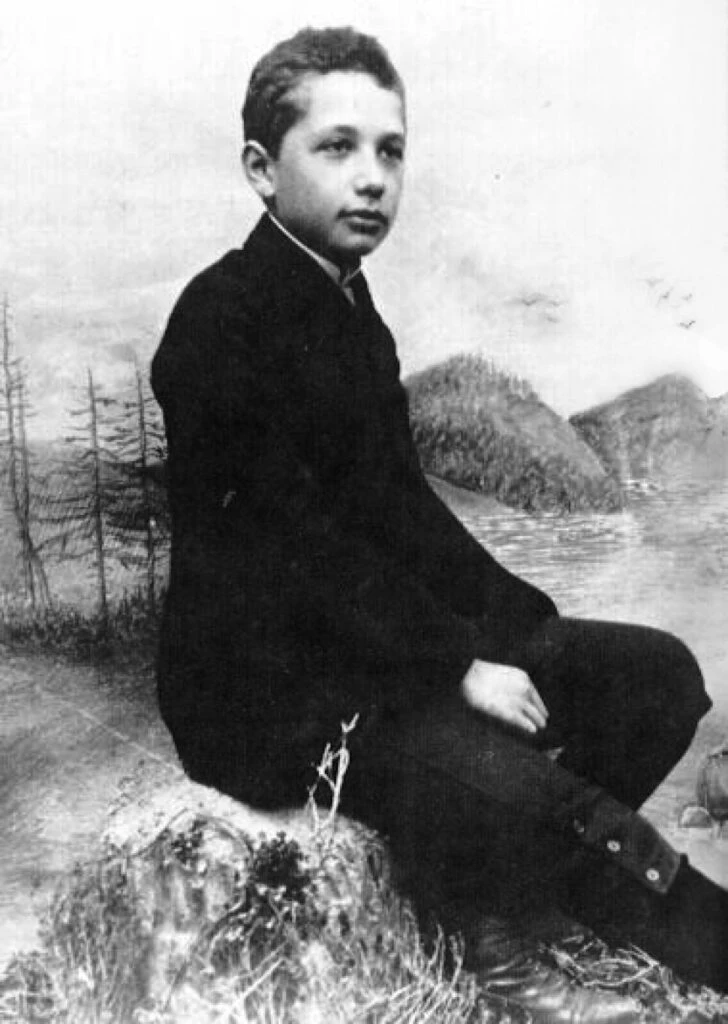
Albert Einstein at age 14
In 1894, the 15-year-old was left to fend for himself. When his father and uncle’s electrotechnical firm went under, the family moved to Milan. Albert had to stay behind in a boarding house in Munich to finish his diploma, but he lasted less than a year. Disillusioned and isolated, the young Einstein dropped out and boarded a train to join his family in Italy.
He was now not only without a diploma, but also at risk of being labeled a draft dodger. In Germany, military conscription began at age 17, and Albert could be summoned at any moment. His prospects looked bleak: his family was strapped for cash, and without formal qualifications, finding steady employment was nearly impossible. 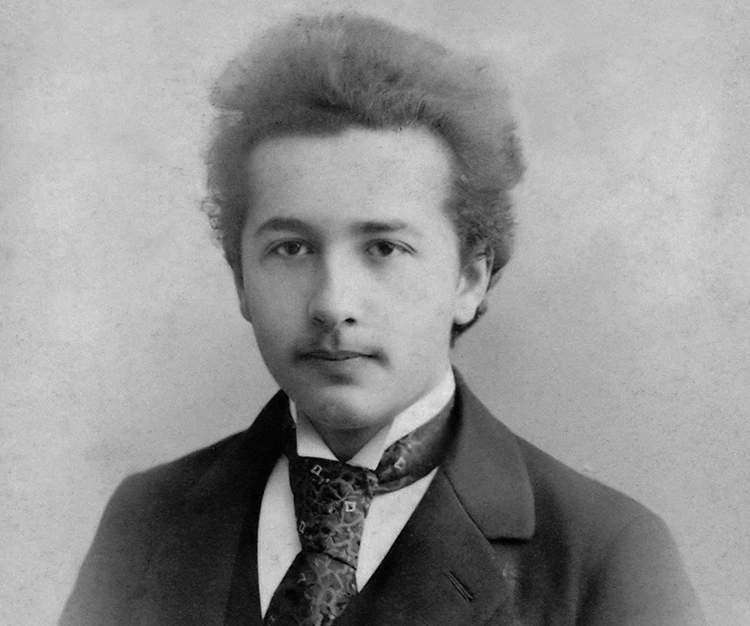
Albert Einstein at age 16
Einstein decided to apply to the Federal Polytechnic School in Zurich—one of the few universities in Europe that allowed applicants to sit for the entrance exam without a secondary school diploma. On the exam, he aced the mathematics and physics sections with flying colors, but failed the humanities and general subjects miserably.
How the Myth of Einstein the Bad Student Was Born
Despite the setback, the director of the polytechnic was struck by Albert’s remarkable aptitude in the exact sciences. He advised him to complete his secondary education and try again. By early 1896, Albert had renounced his German citizenship to avoid military service, remaining stateless for several years until acquiring Swiss citizenship. Later that year, at age 17, he successfully graduated from the Cantonal School of Aarau in Switzerland. 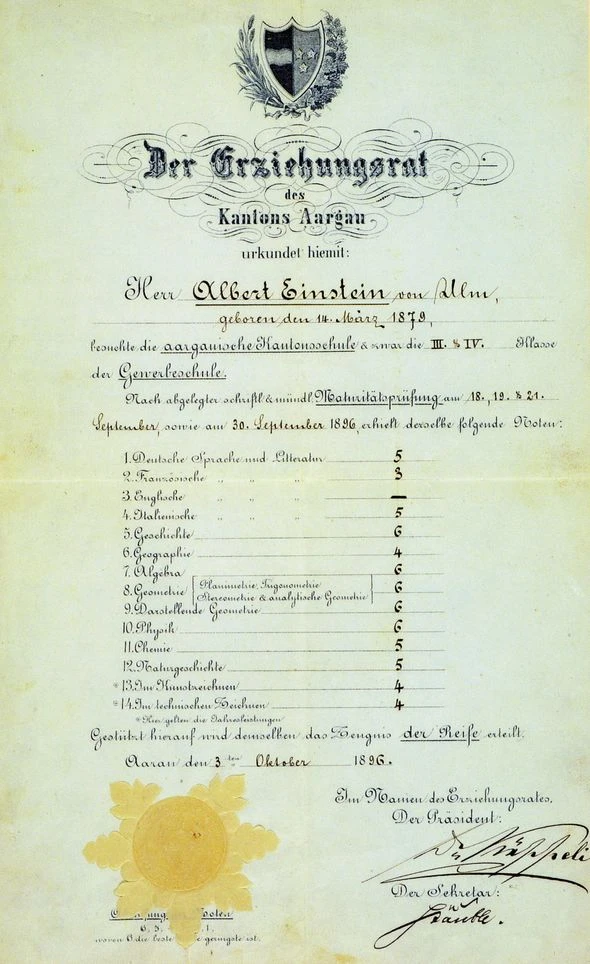
Albert Einstein’s high school diploma, graded on a six-point scale
Einstein’s diploma showed top marks in physics and mathematics, along with a 3 in French and 4s in geography and drawing. Notably, Switzerland used a six-point grading system where 6 was the highest mark. These records from Aarau likely misled later biographers into assuming he was an underachiever.
The confusion stems from a grading reform that occurred during his final term: previously, a “1” had been the highest mark and “6” the lowest, before the scale was reversed to make “6” the top grade. Unaware of the shift, later readers mistook his stellar 6s for failing grades—and so the myth of the struggling student was born. Throughout his life, Einstein remained a vocal critic of the German educational model, which he viewed as little more than indoctrination backed by barrack-room discipline. As he once put it:
“If a man can take any pleasure at all from marching in formation to the sound of a band, that is enough to make me despise him. He has been given his big brain only by mistake.” 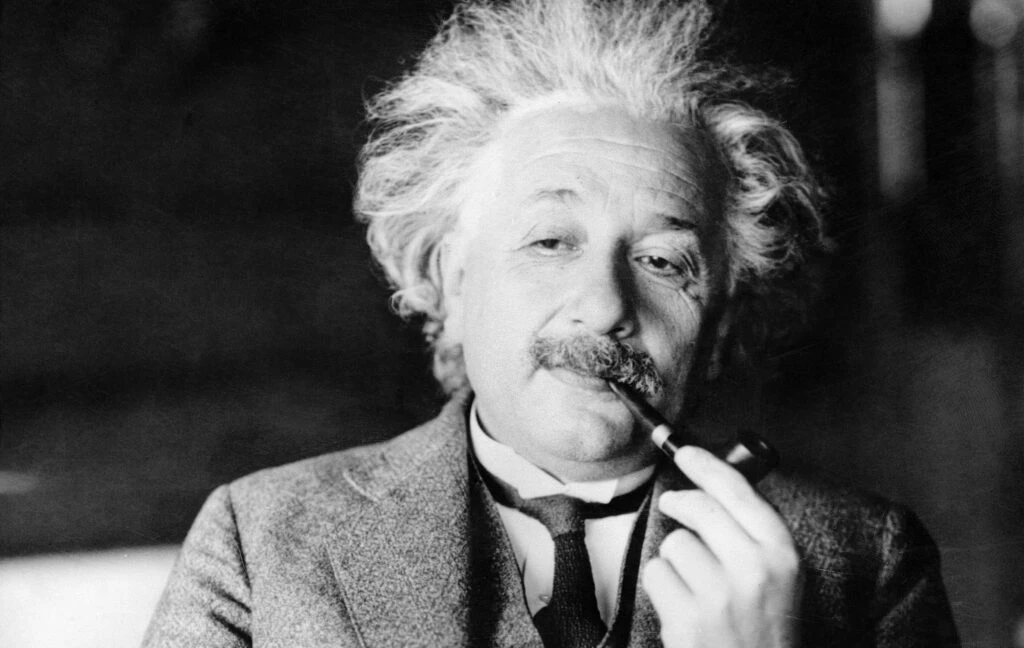
The story of young Einstein shows just how easily myth can eclipse reality. It also serves as a reminder that an unconventional path to knowledge rarely fits neatly into standard report cards. What do you think: should modern education adapt to out-of-the-box thinkers, or do rigor, discipline, and a standardized approach produce true brilliance?