The Hand of Glory: The Creepiest Exhibit in Britain's Whitby Museum (5 photos)
Human remains have long been used in dark magic and witchcraft. In the Middle Ages, the most infamous occult relic of this kind was the Hand of Glory—the severed, specially preserved hand of an executed criminal, believed to possess mystical powers. The world’s only surviving authentic Hand of Glory is preserved at the Whitby Museum, its secrets still shrouded in mystery. 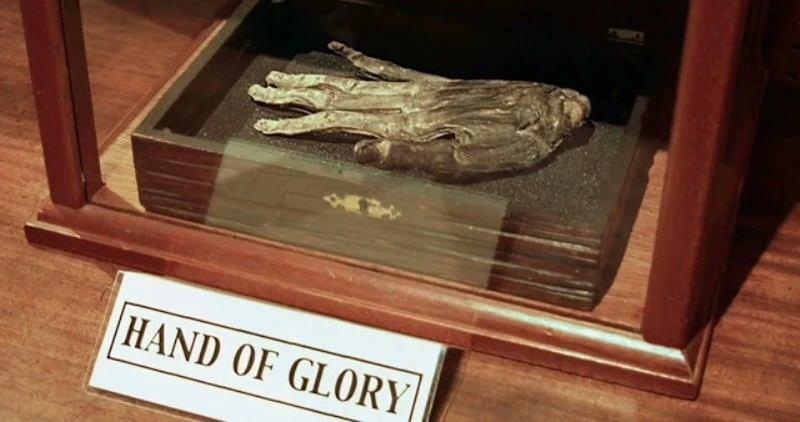
In the early 20th century, stonemason Joseph Ford was renovating the attic of an old cottage in Castleton when he stumbled upon a mummified human hand attached to a wall in a hidden alcove. Most tradesmen would have tossed the macabre discovery aside without a second thought, but Ford was also an enthusiastic local historian and decided to keep the gruesome artifact. 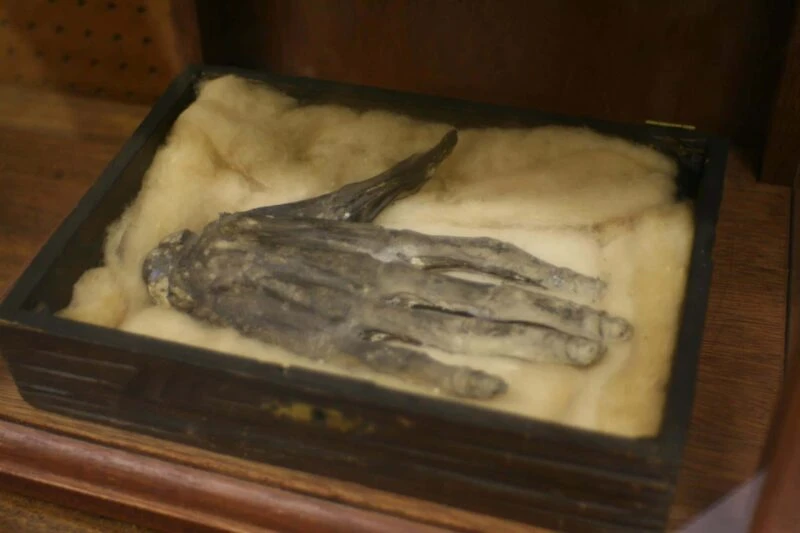
The Whitby Hand of Glory
The Hand of Glory—for that is precisely what the magical prop turned out to be—remained in Ford's home until his death. In 1935, his heirs donated it to the Whitby Museum. Since then, the dried human hand has become the museum's most popular display—reprehensible yet irresistibly fascinating.
It is believed to be the only surviving original Hand of Glory in Europe. This occult talisman was widely sought after by criminals well into the late 19th century, as superstitious thieves firmly believed in its supernatural attributes. Legend had it that bringing the hand into a house would cast a deep spell of sleep over everyone inside, allowing burglars to go about their business unnoticed. 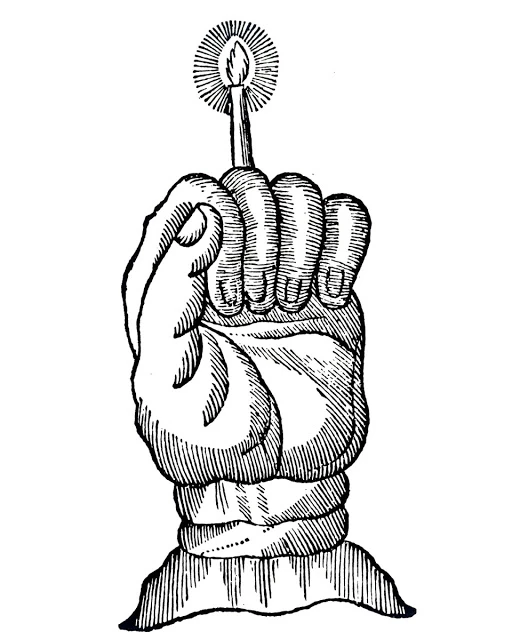
How the Hand of Glory was used as a candleholder
However, for the Hand of Glory to work, it had to be harvested correctly and prepared according to a precise, intricate ritual. The 1722 grimoire
Petit Albert
specifies that the hand must be severed while the criminal's body is still hanging from the gallows. The text then instructs:
"Take the right or left hand of an executed criminal hanging from a roadside gallows; wrap it in a piece of shroud and squeeze it tightly. Then place it in an earthenware vessel containing nitre, salt, and long pepper, all finely powdered. Leave the hand in the jar for two weeks, then take it out and expose it to full sunlight until thoroughly dry. If the sun is weak, place it in an oven with fern and vervain. Next, craft a candle from the fat of the hanged man, virgin wax, and sesame. Use the Hand of Glory as a candlestick to hold the lit candle. Wherever you go with this deadly instrument, those nearby shall remain paralyzed and unable to move."
The book also outlined a countermeasure against the spell. To ward off its magic, one had to rub the threshold of the home with an ointment made from black cat's gall, white hen's fat, and owl's blood. Whether the Hand of Glory ever "worked" is doubtful, but English thieves were willing to believe almost anything for a sense of impunity. 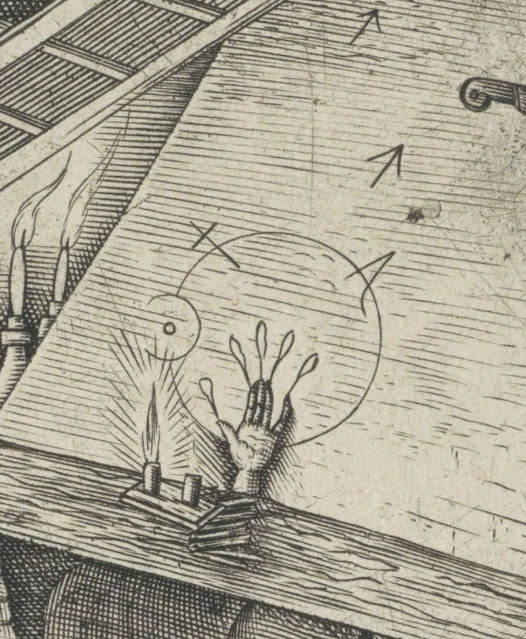
An illustration depicting the fingers of the Hand of Glory set alight
Until the mid-19th century, breaking and entering was a capital offense punishable by hanging, even if nothing was stolen. A burglar ran a very real risk of ending up on the gallows himself—and inadvertently supplying a pair of hands for his colleagues' future magic spells.
Accounts of how the Hand of Glory functioned vary widely across eras and regions. Most commonly, the severed hand served as a candleholder. As long as the candle burned, everyone in the room would fall into an unbreakable slumber, leaving the thief free to operate. According to some recipes, the candle had to be made from human fat, while darker variants specified the fat of an unbaptized infant.
Other traditions claimed that all five fingers of the hand were to be lit directly as wicks. If a finger refused to burn, it meant someone in the house was still awake and the spell had failed. Crucially, neither the candle nor the burning fingers could be extinguished with water or conventional means—only human blood or skimmed milk could snuff out the flame. 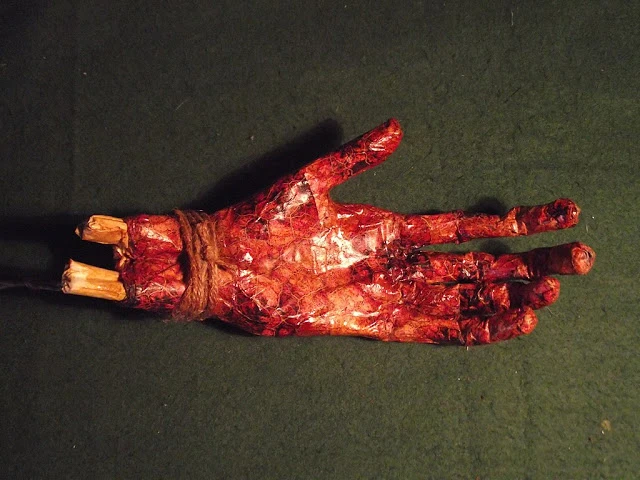
A papier-mâché replica of the Hand of Glory
Some believed the hand possessed the power to unlock doors and turn its owner invisible. Occult texts claimed that if lit with the proper incantations, the candle would burn indefinitely. Across medieval Europe, many also believed that the hand of a hanged or drowned man possessed potent healing properties capable of curing severe illnesses.
Simply passing the hand over an ailing person was thought to restore them to health. As a result, finding an intact corpse on a gallows in 14th-to-19th-century England, Germany, or France was quite rare, as healers and practitioners eagerly harvested these gruesome "medical" tools.