5 Surprising Facts About the Big Bang Theory (8 Photos)
In the early 20th century, astronomers Edwin Hubble and Milton Humason discovered that galaxies were steadily moving away from the Milky Way. More accurately, all galaxies were moving away from one another—meaning the universe is actively expanding. This implies that far back in time, our entire universe was much smaller, hotter, and denser than it is today.
This explanation—known today as the Big Bang theory—has stood the test of time, weathering new discoveries and competing theories throughout the past century. But what exactly is the Big Bang? 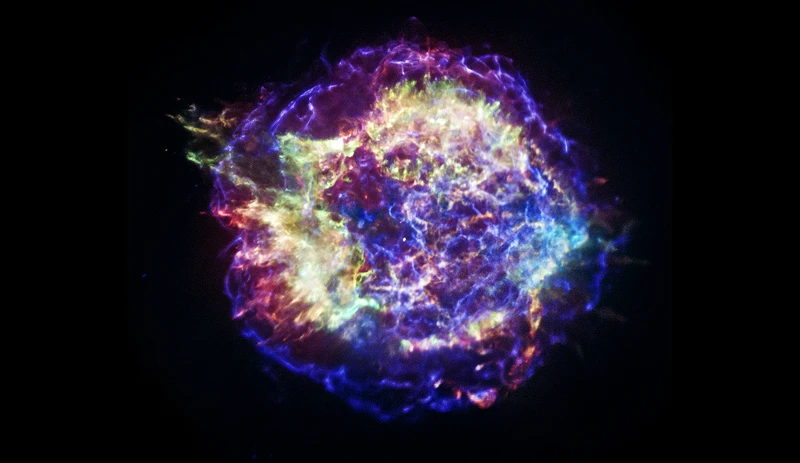
The Big Bang Happened Everywhere at Once
The universe has neither a center nor an edge. Every part of space is continuously expanding, which means that if we rewind the clock, we can pinpoint when everything was packed together—roughly 13.8 billion years ago. Since every point we map in the universe today occupied that same single spot back then, and our entire universe emerged from the Big Bang, the event itself had no specific location on a map. It happened everywhere simultaneously. 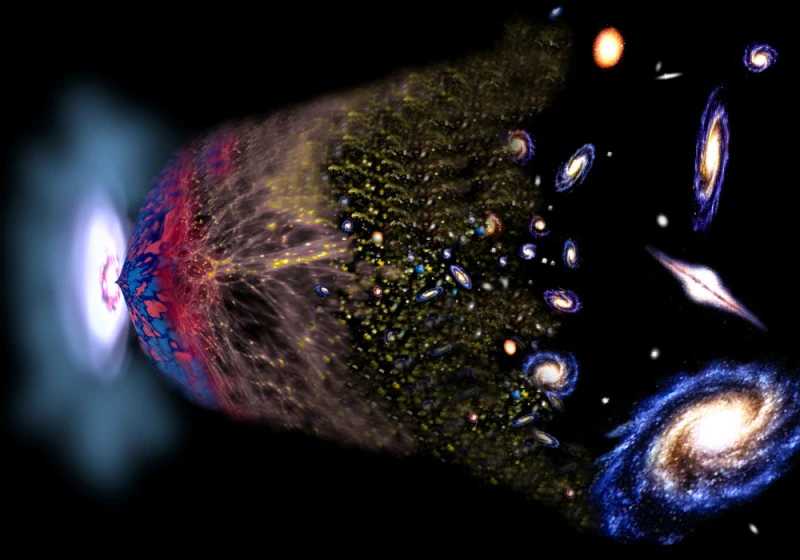
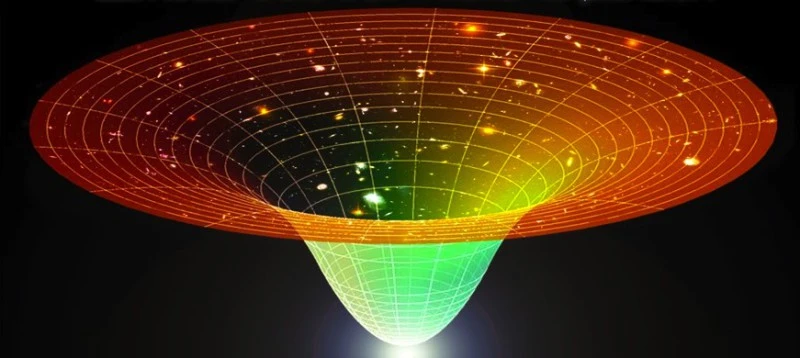
The Big Bang Doesn't Explain the Beginning of Everything
The Big Bang generally refers to cosmic expansion and the universe's hot early stage. Yet despite this, even scientists frequently misuse the term to describe the theoretical moment when everything was compressed into a single point. The problem is that we have no observations, nor even a cohesive scientific theory, for what actually occurred during that moment—commonly referred to as the cosmological singularity.
As Stephen Hawking—who mathematically proved in 1967 that such a singularity could exist when calculating cosmic expansion backward in time—once noted:
“The results of our observations confirm the idea that the universe had a beginning at a specific moment in time. However, the moment of creation itself—the singularity—does not obey any known laws of physics.”
Thus, while the cosmological singularity serves as the starting point for the universe we observe, something may well have existed before it.
The challenge is that the superheated state of the early universe and its incredibly rapid expansion following the singularity erased all traces of whatever might have preceded it. Today, scientists are attempting to find ways to detect clues of a pre-Big Bang universe—and while none have been found so far, ruling out the possibility would be premature. 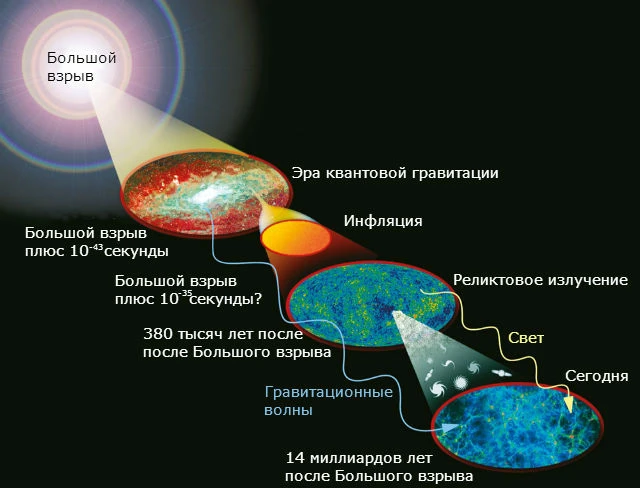
Diagram of the evolution of the universe
The Big Bang Is Chiefly About Hydrogen and Helium
What problem does the Big Bang theory actually solve? At its core, it primarily explains the chemical composition of our universe—which remains its most successful and precise prediction. It all started in the 1940s, when Ralph Alpher and George Gamow performed calculations proving that the early universe was hot and dense enough to forge the exact amounts of helium, lithium, and deuterium observed in space today. Subsequent observations later confirmed the origin of hydrogen as well. This milestone became known as Big Bang nucleosynthesis. 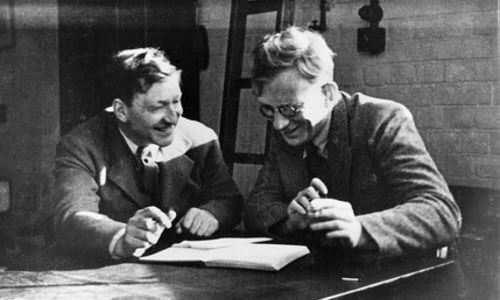
Ralph Alpher and George Gamow
A Catholic Priest Was One of the Theory's Key Pioneers
Oddly enough, one of the first people to lay the theoretical groundwork for the Big Bang—a scientific explanation for the creation of the universe—was a Catholic priest. In addition to his theological background, Georges Lemaître was a physicist who studied general relativity and calculated several conditions of the early cosmos in the 1930s. However, his proposed names for the theory never quite caught on; otherwise, you might be reading an article today about the "Cosmic Egg" or "Primeval Atom" theory. 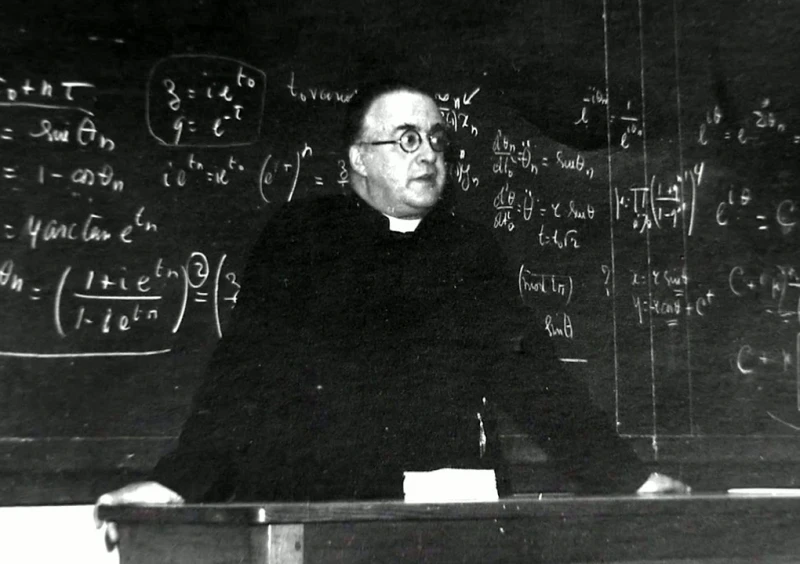
Georges Lemaître — priest and scientist 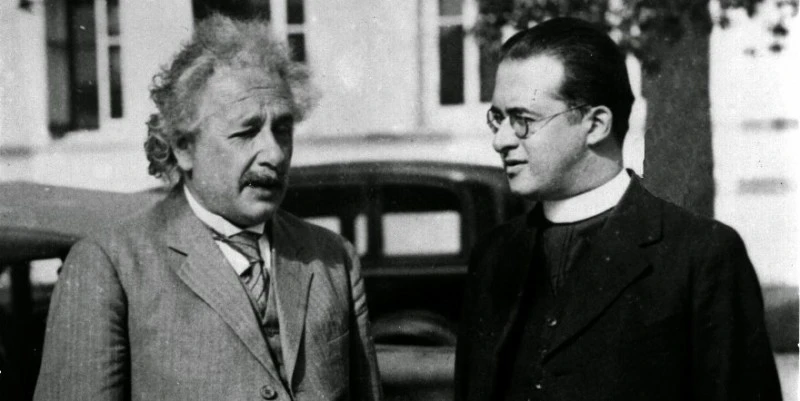
Albert Einstein and Georges Lemaître
Nobody Really Likes the Name "Big Bang"
Well into the 1960s, the idea of a universe with a distinct beginning in time was deeply controversial among physicists. "Big Bang"—originally a lighthearted jab at the theory—was coined by astronomer Fred Hoyle, a leading proponent of a rival theory that posited an eternal, unchanging universe.
Hoyle was attempting to mock the apparent simplicity of a universe popping into existence through an explosion. Ironically, the nickname stuck, and today the term "Big Bang theory" no longer strikes anyone as unusual or out of place. 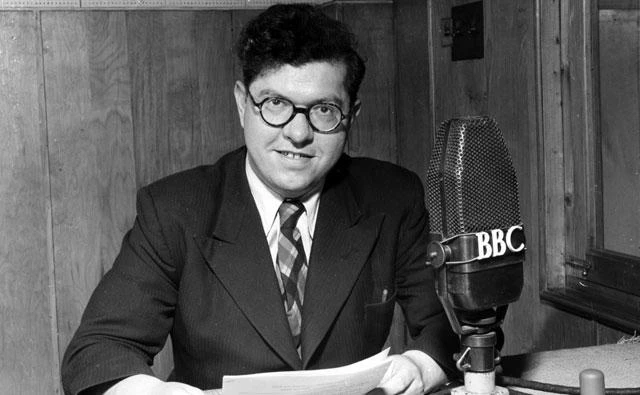
Physicist Fred Hoyle on BBC Radio in 1950