The Great Attractor was first discovered in 1980, when astronomers noticed that our Milky Way galaxy and hundreds of thousands of other galaxies were rushing toward a single region of space at about 600 kilometers per second. The Great Attractor is located approximately 150-250 million light-years away from us. What's most intriguing is that scientists speculate that the Attractor itself may be moving toward an even larger cluster.
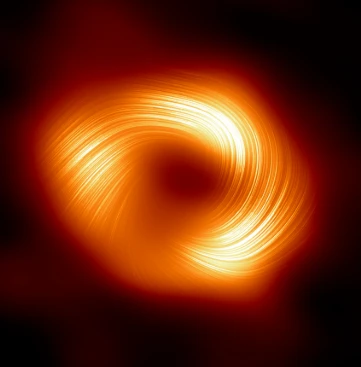
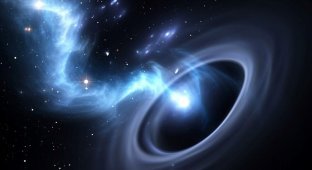
Sagittarius A is a supermassive black hole located at the very center of our galaxy (26,000 light-years from Earth). The mass of this black hole is comparable to 4 million Suns compressed to the size of our solar system. This monstrous mass creates a colossal gravitational field that pulls in everything around it, including light. At the center is the event horizon—the point of no return. Anything that crosses this boundary is absorbed forever, at a point where conventional models of reality cease to apply.
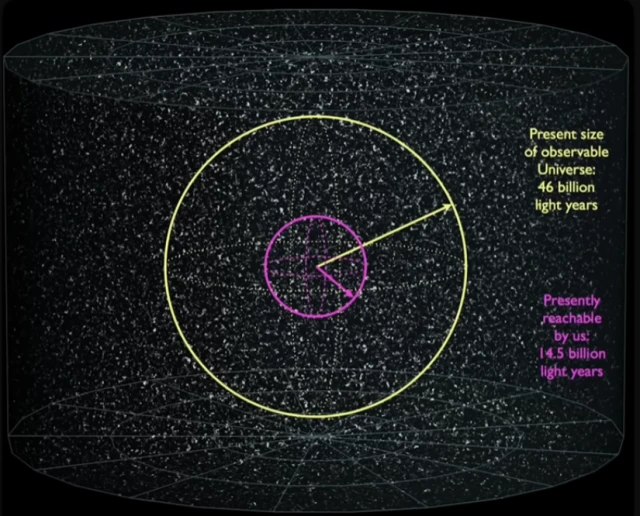
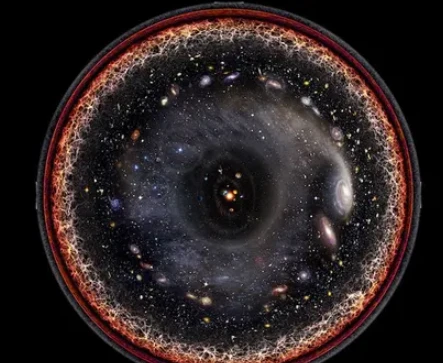
The edge of the observable universe is a boundary beyond which we can see nothing, simply because light from those regions has not yet had time to reach us since the universe's creation. The edge is believed to be 46 billion light-years from Earth. The most terrifying aspect of this boundary is the unknown, as it could conceal countless new galaxies, different laws of physics, or the true scale of the cosmos. Everything beyond the edge will never be seen. The edge of the observable universe is terrifying because it leaves us face to face with the limits of human perception. 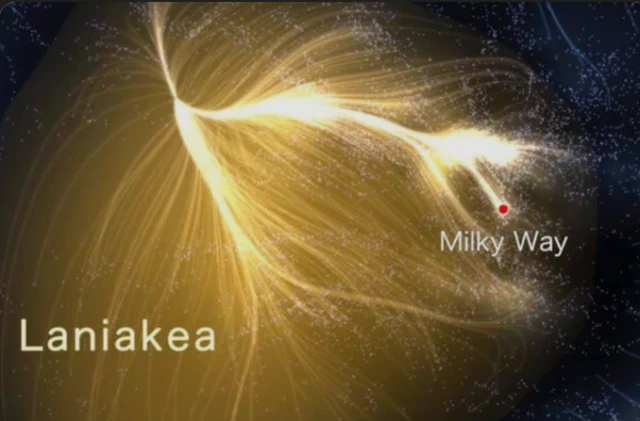
[thumb]https://cn22.nevsedoma.com.ua/p/29/2919/227_files/2 63863_3_nevsedoma_com_ua.webp[/thumb]
Add your comment
You might be interested in:













Margaret Hamilton Dies at 90: The Story of the Moon

25 Incredibly Beautiful and Rare Stones (26 Photos)

16 Fascinating and Surprising Facts About Life in Sweden

"What Is This Thing?": 20+ Bizarre Objects That

13 "Healthy" Habits You Should Actually Quit (14
Cassini Spacecraft Reveals Saturn’s Rings (10 Photos)

How Germany Got a Mountain Made of Salt (6 photos)

30 Everyday Details That Will Change How You See the World

Hypnotic and Oddly Satisfying GIFs That Show How Food Is
