Meet the Inca tern, one of the most fascinating birds in the world. What sets it apart is its dashing white mustache. It earned its name because its natural habitat remarkably aligns with the borders of Tawantinsuyu, the ancient Inca Empire that flourished from the 11th to the 16th centuries. 
The Inca tern (
Larosterna inca
) is a seabird in the tern family endemic to the Pacific coast of South America, nesting along the rocky shorelines from Peru to northern Chile. 
The Inca tern is an extraordinarily handsome bird. It sports a slate-gray head and body, white-edged wings, and a black tail, all highlighted by vivid red feet and a striking, bright-red beak. 
It is a medium-sized bird, measuring roughly 39 to 42 cm in length and weighing around 190 grams. Thanks to its broad wings and impressive wingspan, an Inca tern in flight can easily be mistaken for a much larger bird. 
The Inca tern has a distinctive call that vaguely resembles a kitten's meow. But its most famous feature is its mustache—tufts of white feathers starting at the base of its vibrant red beak, sweeping underneath its eyes, and curling stylishly forward. A single plume can reach up to 5 cm in length. 
Inca terns are highly social birds. Thousands can often be seen gathering together along sandy shores to rest and socialize, creating an absolute roar with their noisy chatter. 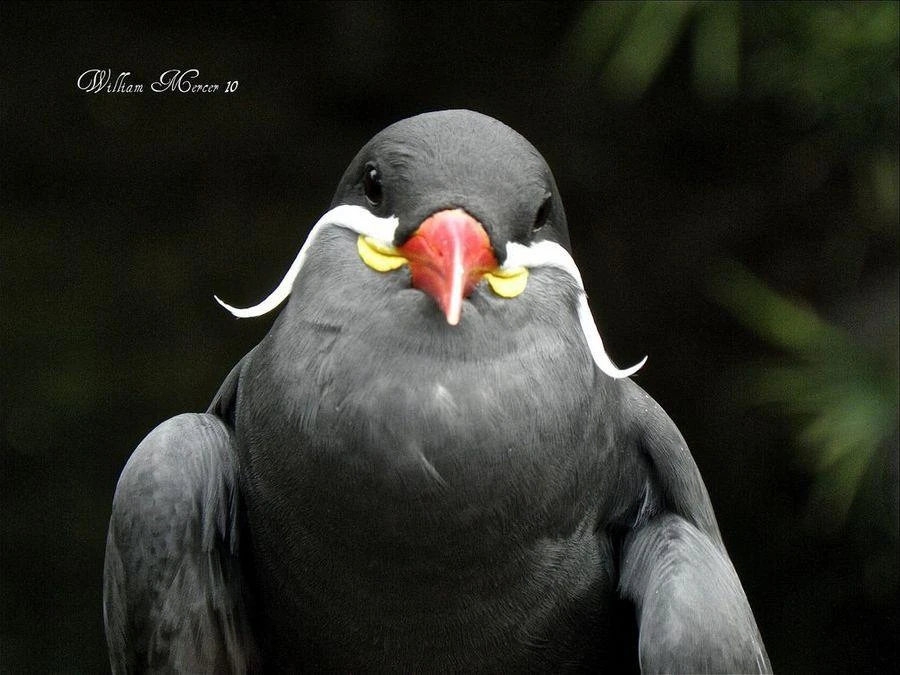
They prefer to nest on coastal cliffs and hunt in the chilly, fish-rich waters of the Humboldt Current. Clever opportunists, these birds frequently shadow sea lions, whales, and dolphins to snatch up fish scattered by the larger predators. 
When hunting, the Inca tern hovers momentarily in midair upon spotting a fish before diving down to pluck its prey right off the surface of the water. 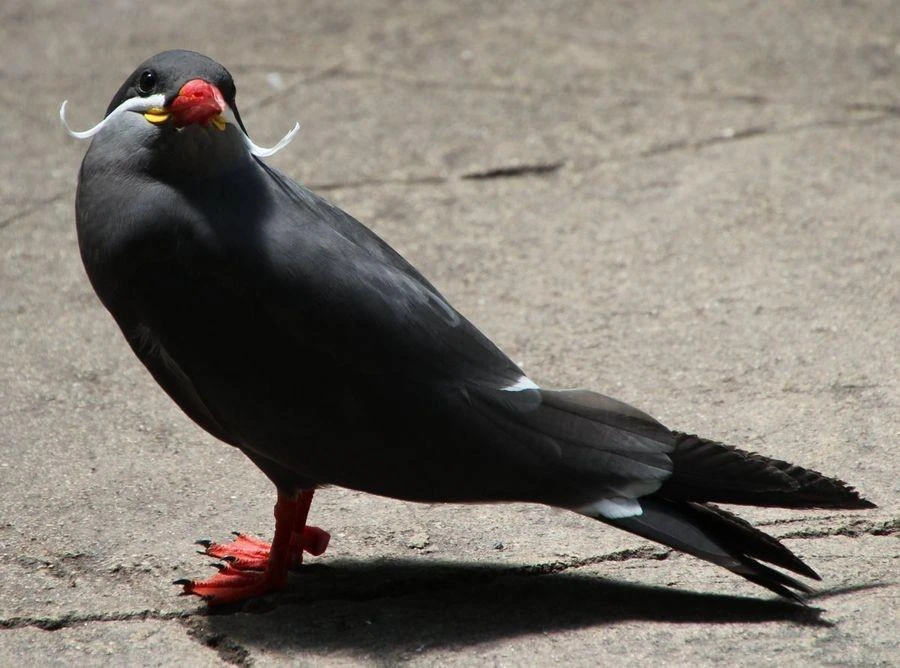
These birds nest in small rock crevices along the Pacific coast or move into abandoned burrows left by other seabirds. A clutch typically contains no more than two eggs, which are incubated for about four weeks. 
Today, the population of these feathered icons is declining rapidly, largely due to habitat loss. With only around 150,000 Inca terns left in the wild, the species is now considered near threatened. 
Add your comment
You might be interested in:















Margaret Hamilton Dies at 90: The Story of the Moon

"What Is This Thing?": 20+ Bizarre Objects That

25 Incredibly Beautiful and Rare Stones (26 Photos)

13 "Healthy" Habits You Should Actually Quit (14

16 Fascinating and Surprising Facts About Life in Sweden

Cassini Spacecraft Reveals Saturn’s Rings (10 Photos)

30 Everyday Details That Will Change How You See the World

Hypnotic and Oddly Satisfying GIFs That Show How Food Is

Behind-the-Scenes Feuds: Hollywood's Most Famous On-Set
