These 22 Archival Photos Share One Thing: Behind Each Lies a Story You Won't Find in History Books (23 photos)
Two women, two photographs, two worlds apart. In one, an American woman straightens her hair with a household clothes iron in the 1960s—a full decade before styling irons hit the market. In the other, a Mursi woman from Ethiopia browses through an issue of Vogue: adorned in sacred clay paint according to a millennia-old tradition, holding a glossy fashion magazine in her hands. Both portraits speak to beauty and the radically different ways people perceive it. There are 22 such photographs in this collection, each carrying its own backstory, date, and context hidden just beyond the frame. 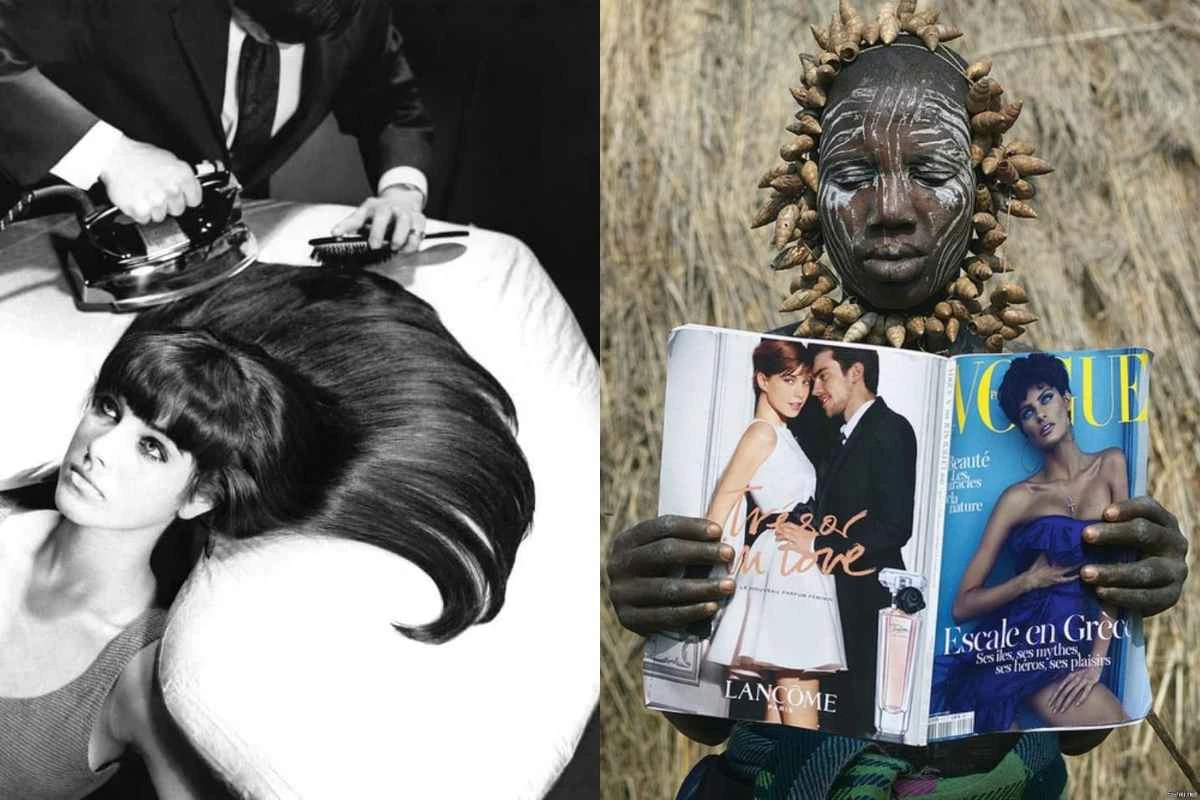
Performance artist Andrey Bartenev began crafting elaborate costumes from unconventional materials back in the Soviet era. By 1993, he had already made a name for himself in Moscow’s avant-garde art circles—though to the average passerby, a man striding down the street wrapped in paper sculptures was merely a bizarre spectacle. Bartenev referred to his wearable creations as "living sculptures." 
A Japanese-American family, Saitama Prefecture, Japan, 1947
Following Japan’s surrender in 1945, approximately 3,000 American servicemen married Japanese women. The McCarran–Walter Act, which finally permitted Japanese nationals to immigrate to the United States on a larger scale, was not passed until 1952. Until then, these mixed families existed in legal limbo, with children frequently left without citizenship in either country. 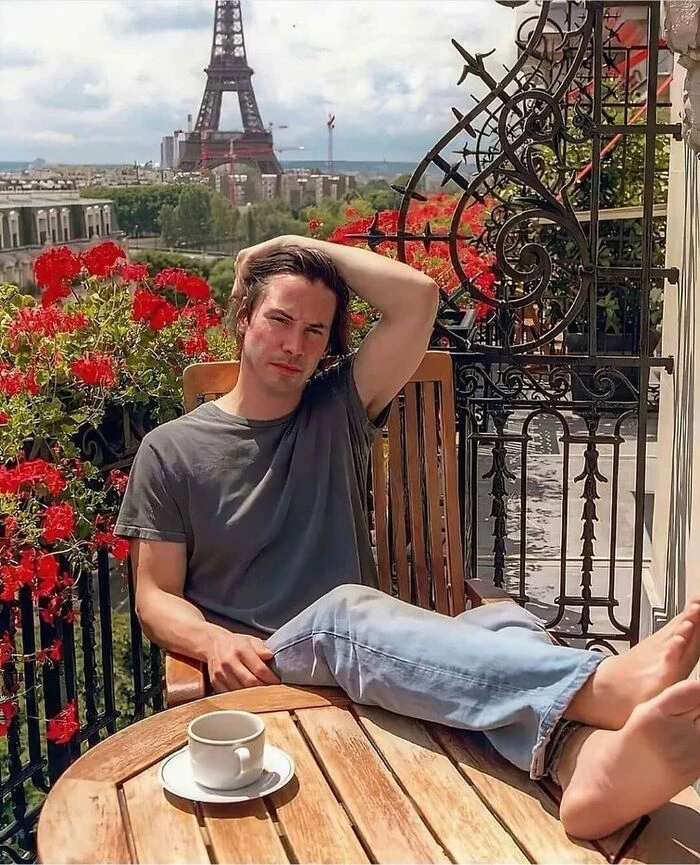
Keanu Reeves, Paris, 2003. Photo: Willy Rizzo
Willy Rizzo was an acclaimed Italian photographer who worked in Paris from the 1940s through the 2010s, capturing icons like Picasso, Hemingway, and Marlon Brando. In 2003, Keanu Reeves traveled to Paris to promote *The Matrix Reloaded*. Rizzo was 82 years old at the time—and still actively behind the lens. 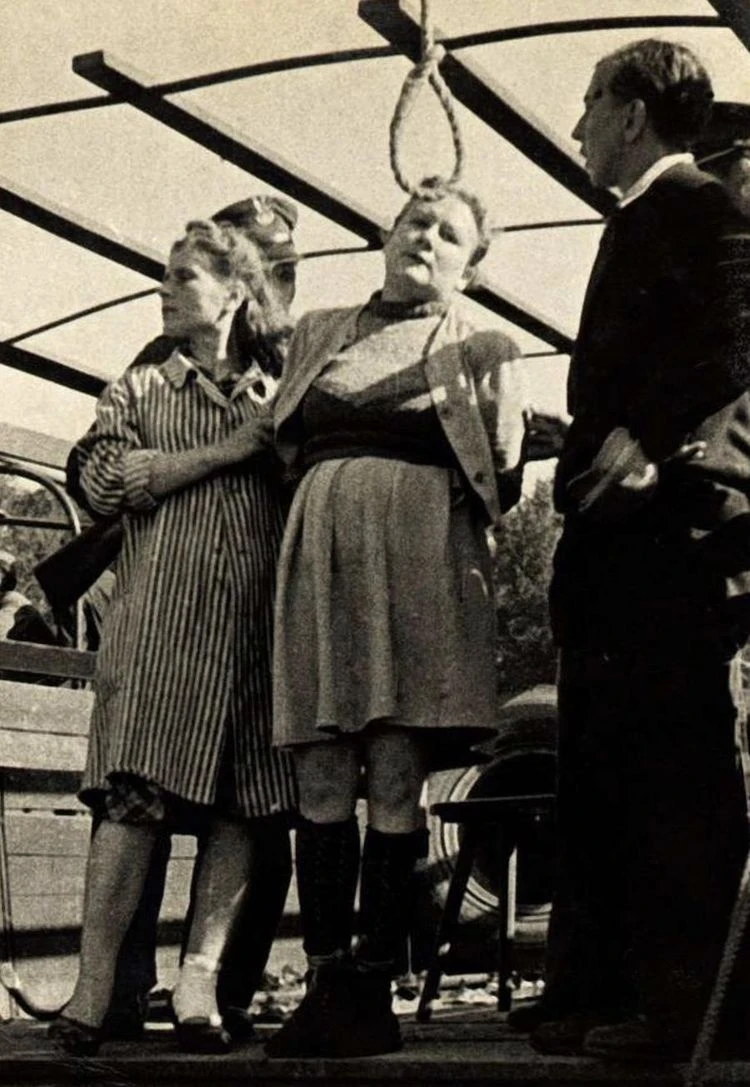
Wanda Klaff moments before her execution, Gdańsk, July 4, 1946
Wanda Klaff served as a guard at the Stutthof concentration camp beginning in 1943. At the Gdańsk trials, she was convicted of atrocities and the murder of prisoners. Her public execution by hanging took place on July 4, 1946. Stutthof was the only concentration camp on modern Polish soil where camp personnel were brought to justice so swiftly after the war. 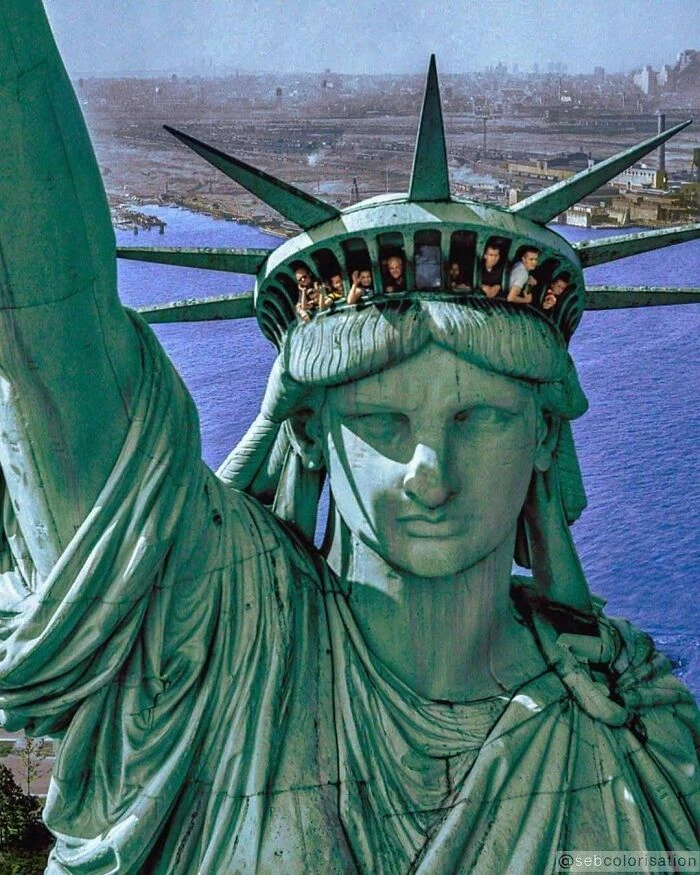
Tourists inside the crown of the Statue of Liberty, aerial shot from a helicopter, 1952. Photo: Margaret Bourke-White
Margaret Bourke-White was the first female photojournalist accredited by the U.S. armed forces. To capture this shot, she hovered in a helicopter above the statue’s torch at an altitude of roughly 300 feet (93 meters). While visitors had enjoyed access to the crown since 1886, the viewpoint was closed following the September 11 terrorist attacks in 2001, reopening only in 2009. 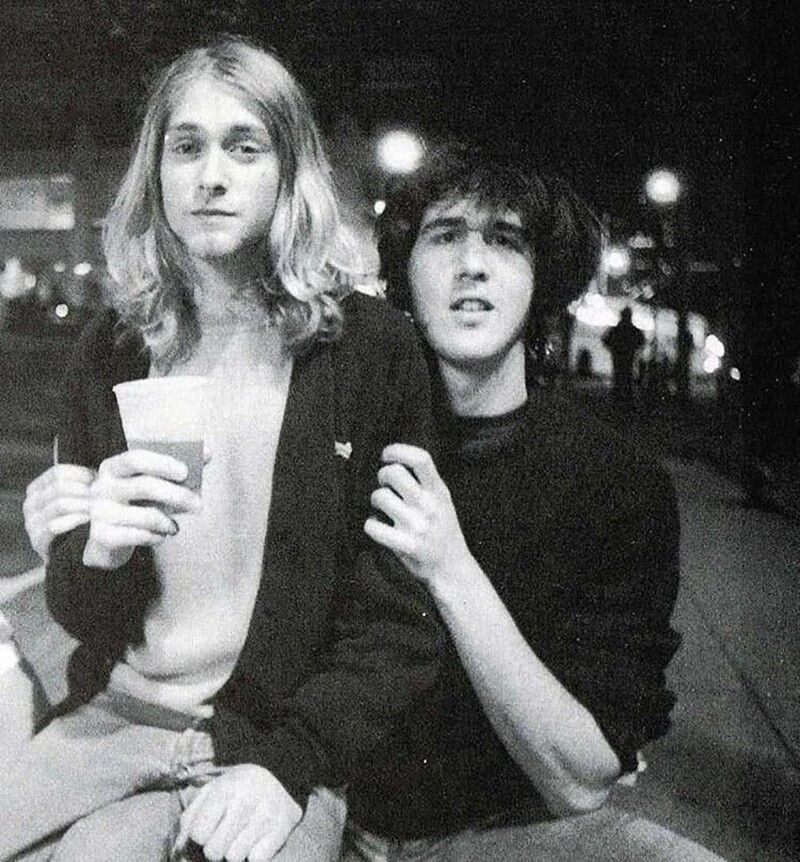
Kurt Cobain and Krist Novoselic after Nirvana’s first performance, Seattle, 1987
Nirvana played their first-ever show on March 27, 1987, at a friend’s house in Raymond, Washington. Cobain was 20 years old, Novoselic 21. Their debut album, *Bleach*, was still two years away. *Nevermind*, the record that would transform rock music forever, was four years out. Captured here is a band that absolutely no one knew yet. 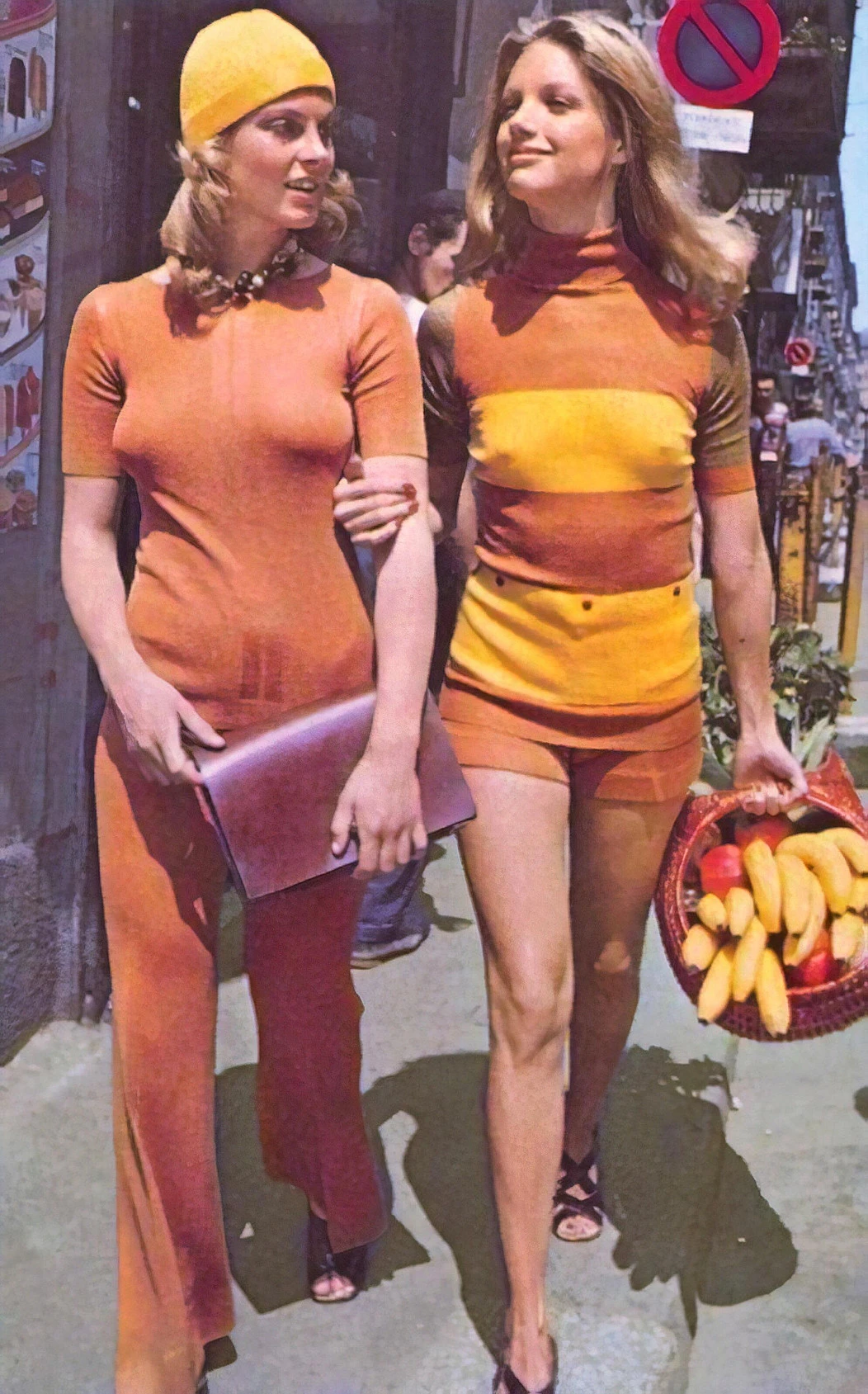
Supporters of the "braless" movement, USA, 1970s
The push to ditch brassieres grew out of the feminist protests of the late 1960s. In 1968, activists famously picketed the Miss America pageant in Atlantic City. The enduring myth of women burning their bras is precisely that—a myth: no bonfires were ever planned or lit. Even so, the phrase "bra-burning" became an iconic symbol of the era, largely coined by sensationalist reporters. 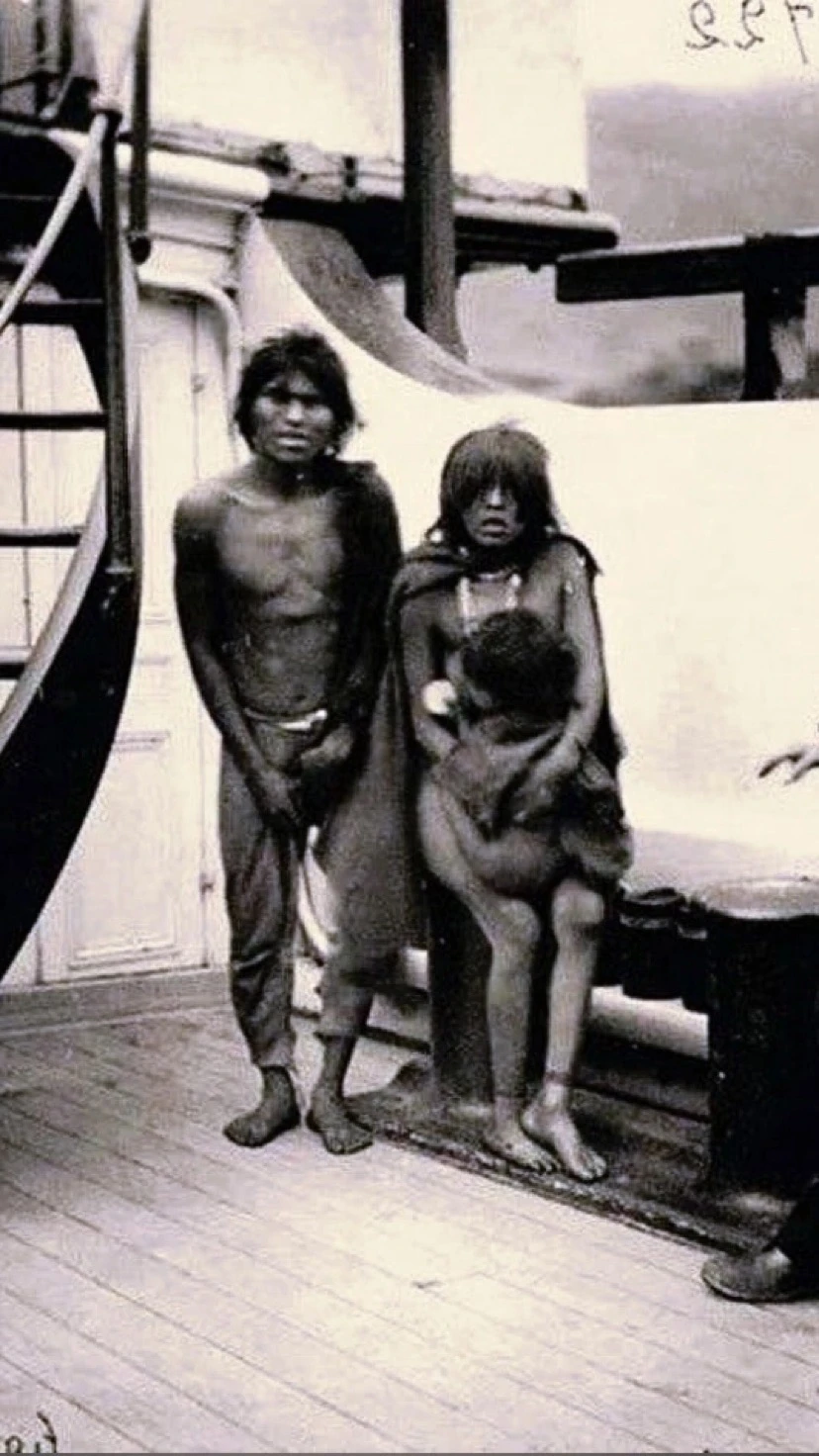
A Kawésqar family at the Exposition Universelle, Paris, 1889
The Kawésqar are an Indigenous people native to Tierra del Fuego. For the 1889 Paris Exposition, organizers brought over eleven tribal members, keeping them in fenced enclosures and forcing them to reenact "primitive life" for curious onlookers. Dubbed "human zoos," such exhibitions toured Europe from the 1870s well into the 1930s. The vast majority of the Kawésqar brought to Paris died shortly after returning home, succumbing to foreign diseases against which they had no immunity. 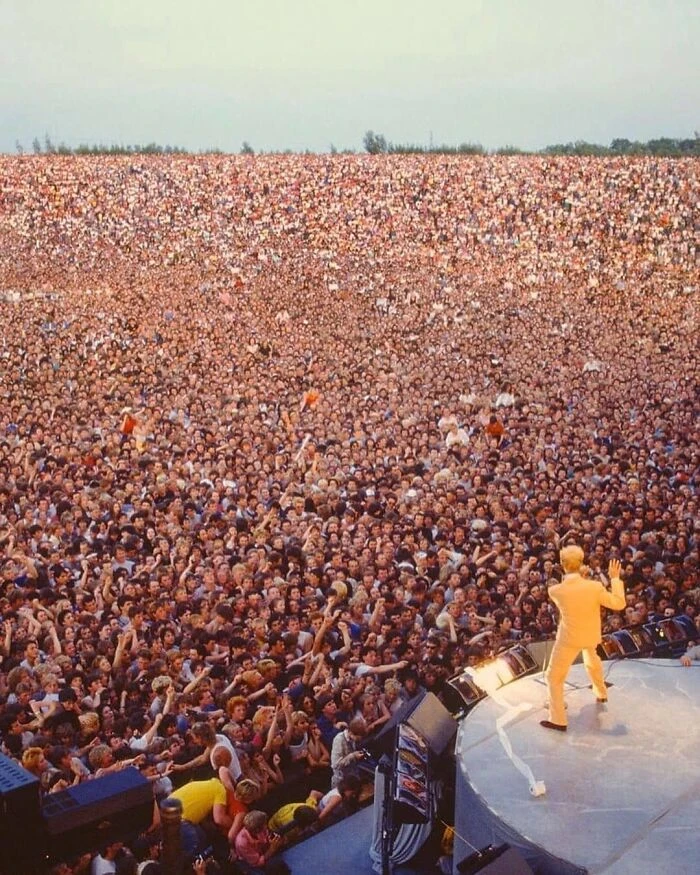
David Bowie in concert, 1983
The year 1983 brought the Serious Moonlight Tour in support of Bowie’s smash hit album *Let’s Dance*. It marked his first time headlining massive stadiums, spanning 96 shows across five continents and drawing more than 2.5 million attendees. It was the commercial peak of his career—and a period Bowie himself would later reflect on as being "too successful." 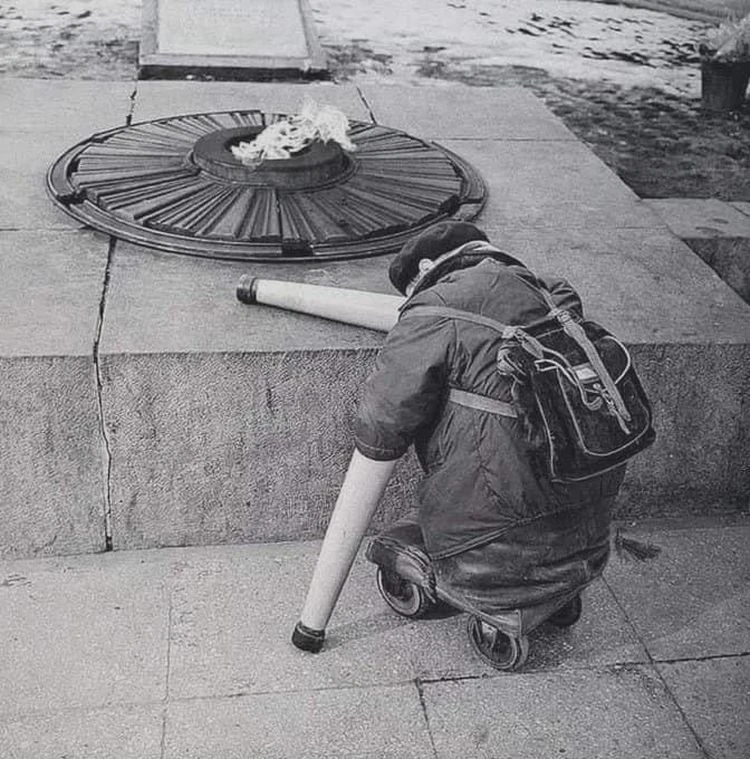
A disabled WWII veteran by the Eternal Flame at Communards Square, Sverdlovsk, 1966. Photo: Anatoly Grakhov
Anatoly Grakhov captured this poignant scene in Sverdlovsk (now Yekaterinburg) in 1966, an era when Eternal Flame memorials were being widely installed across Soviet cities. This veteran needed no reminders of what war was or what it cost. Grakhov titled the image *Memory*. It circulated across the globe and earned an international photography award in Amsterdam. 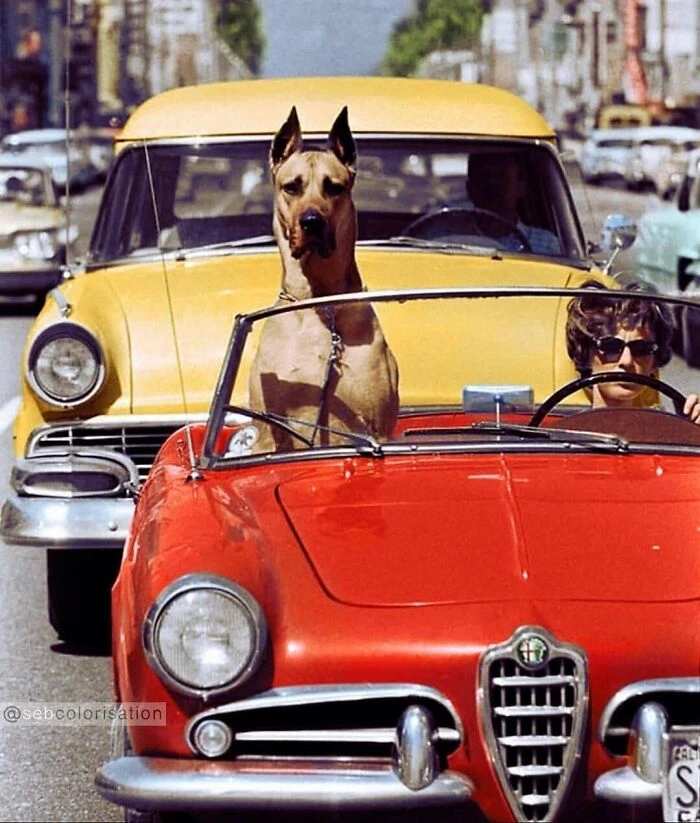
Thor the Great Dane riding shotgun in an Alfa Romeo Giulietta Spider, Hollywood, California, 1961. Photo: Ralph Crane
Ralph Crane photographed for *Life* magazine from the 1940s through the 1970s. Thor weighed roughly 155 pounds (70 kg)—about as much as an average adult man. Built between 1955 and 1962, the Giulietta Spider was among the most coveted convertibles of its generation. Crane snapped the portrait in Hollywood: pure California sunshine, a sleek red Alfa, and an utterly composed companion. 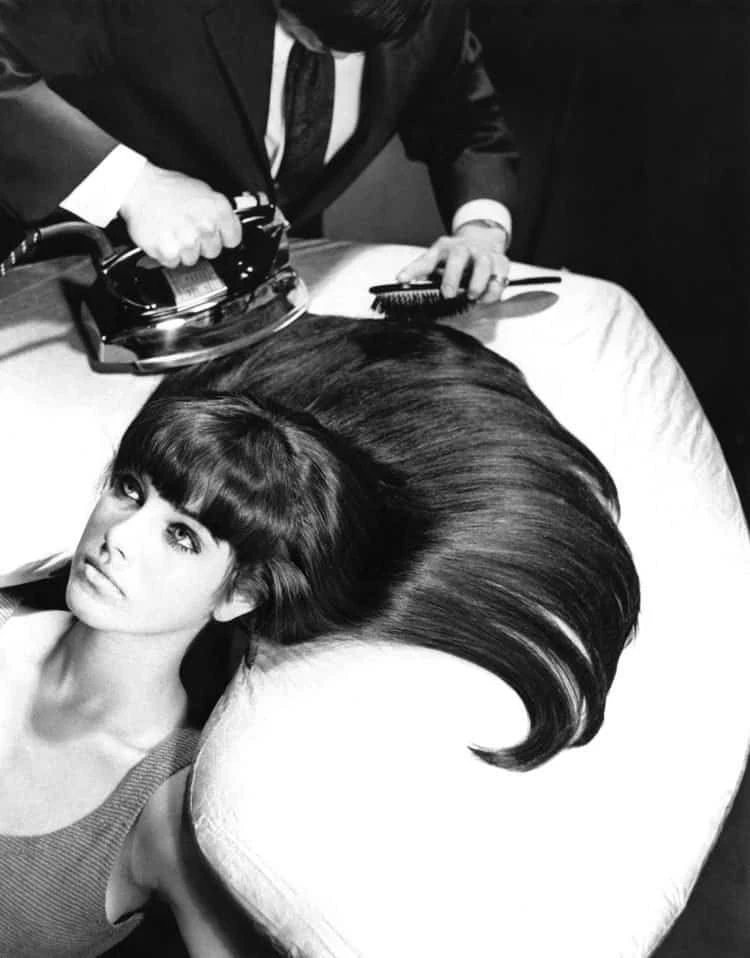
Straightening hair with a clothes iron, USA, 1960s
Before dedicated flat irons were invented, women made do with whatever household tools were at hand. A standard metal clothes iron was heated, cushioned with a towel, and pressed down sections of damp hair. The method worked, but it required a reliable partner and a great deal of patience. Commercial electric hair straighteners did not arrive on store shelves until the 1970s. 
A young boy watches television through a store display window, Erie, Pennsylvania, 1948
In 1948, a quality television set in the United States could fetch up to $500, at a time when the average worker earned $60 to $70 a week. Even more modest models remained an out-of-reach luxury, meaning most people watched the novel screens through shop windows rather than at home. By 1955, roughly two-thirds of American households owned a TV set. By 1960, that figure had climbed to nearly 90%. 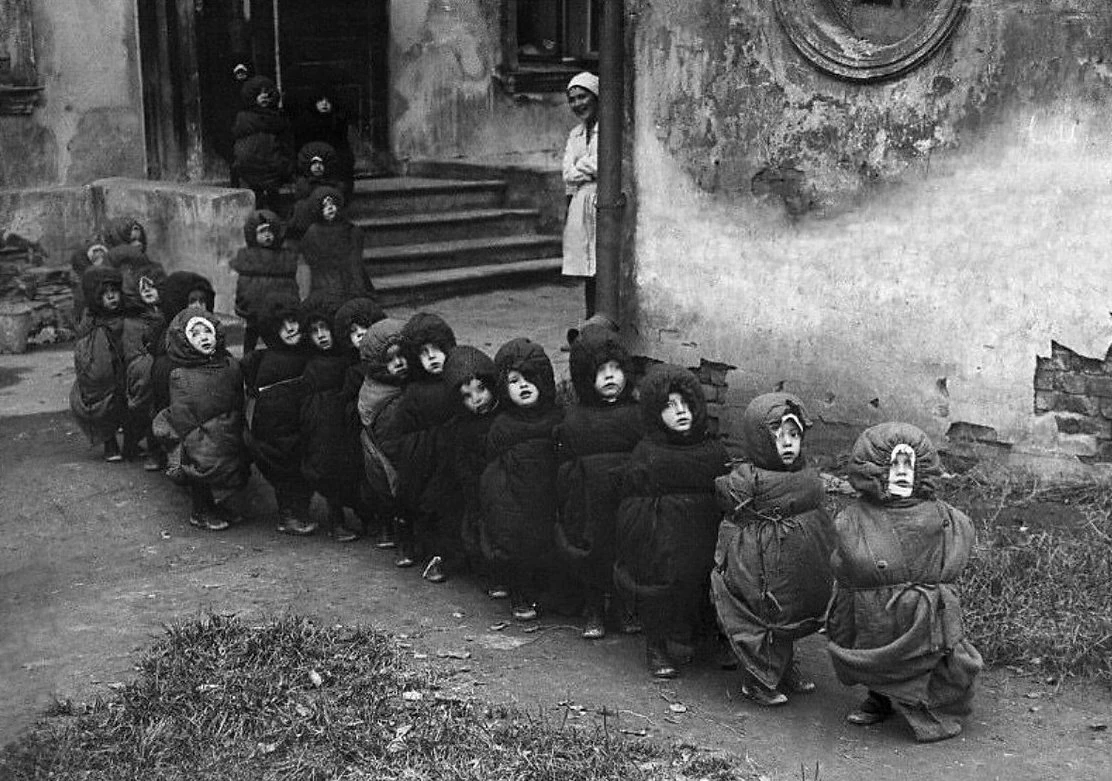
Children in sleeping bags head out for an open-air afternoon nap, USSR, 1930s
During the 1930s, Soviet early-childhood pedagogy championed cold-temperature conditioning and outdoor naps. Kindergartens bundled toddlers up and took them outside even in freezing weather, believing fresh air fortified the immune system and fostered resilience. Borrowed from Scandinavian practices, the routine remained a staple of Soviet preschools for decades. 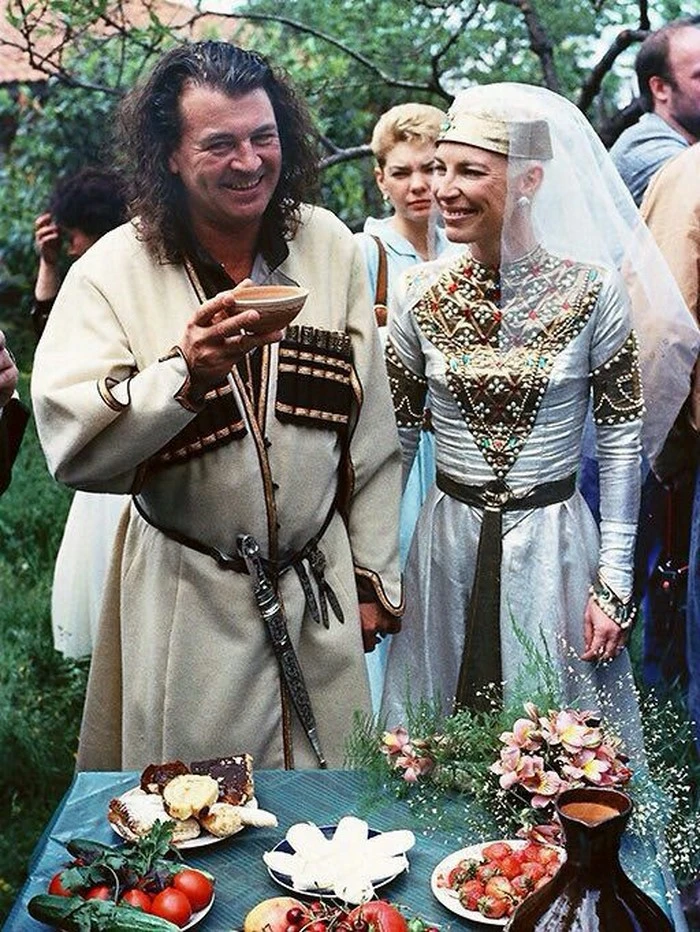
Ian Gillan and his wife Bron at their wedding blessing in Tbilisi, USSR, 1990
Deep Purple frontman Ian Gillan and his wife Bron held a wedding ceremony in Tbilisi in 1990 while touring the Soviet Union at the peak of Perestroika. The couple had originally married in 1984 and made a point of renewing their vows or celebrating weddings in various countries they toured. The Tbilisi celebration unfolded at the Wedding Palace, featuring traditional Georgian attire, a horse-drawn phaeton carriage, and festivities in Mtskheta. 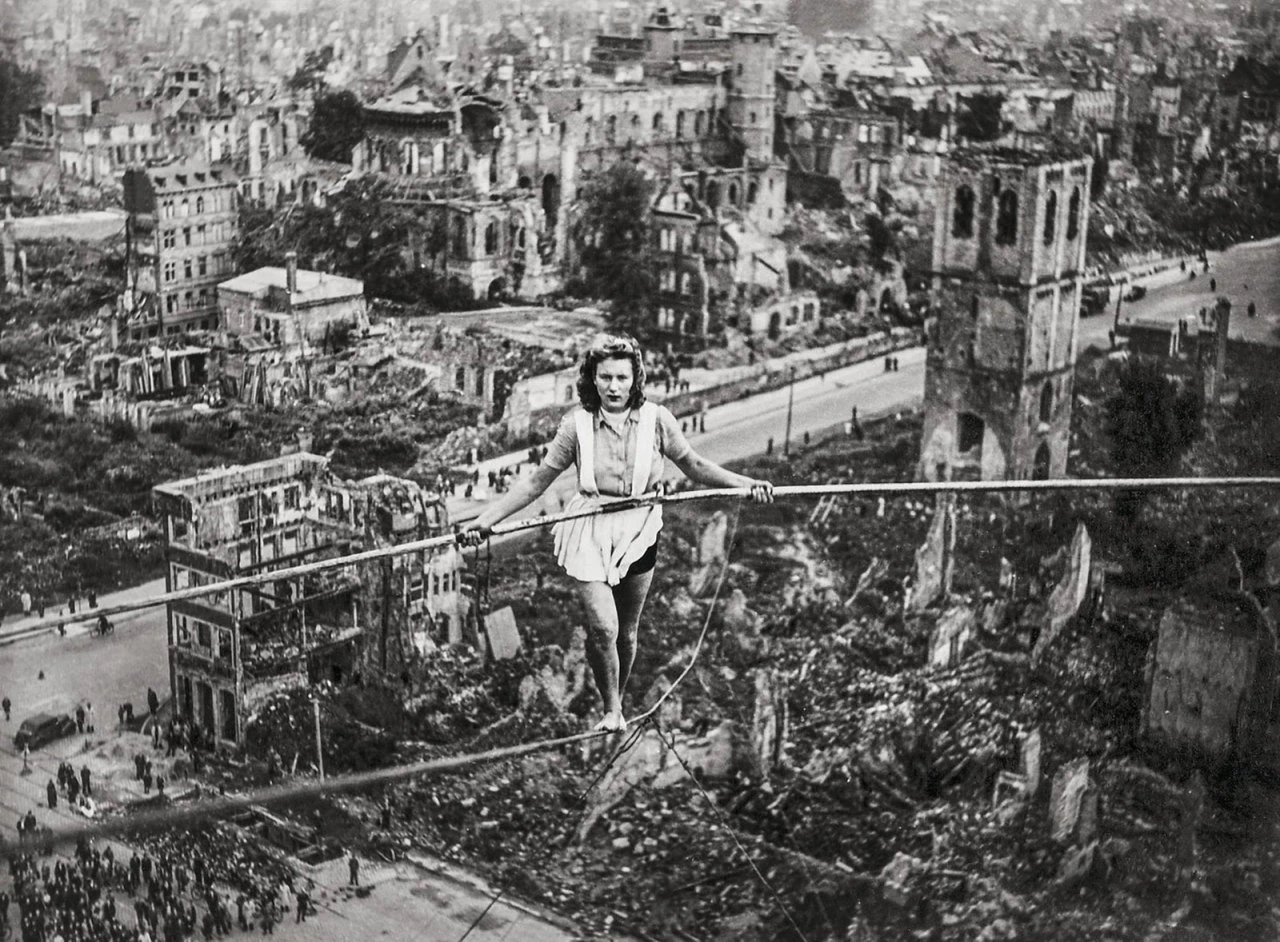
Margret Zimmermann on a tightrope above the ruins of Cologne, Germany, 1946
By the close of World War II, nearly 90% of Cologne had been reduced to rubble. Out of its 700,000 pre-war residents, only about 40,000 remained in the city by April 1945. Tightrope artist Margret Zimmermann walked a high wire suspended directly over the pulverized ruins—an image that quickly became an indelible symbol of postwar Germany: life carrying on, literally above the abyss. 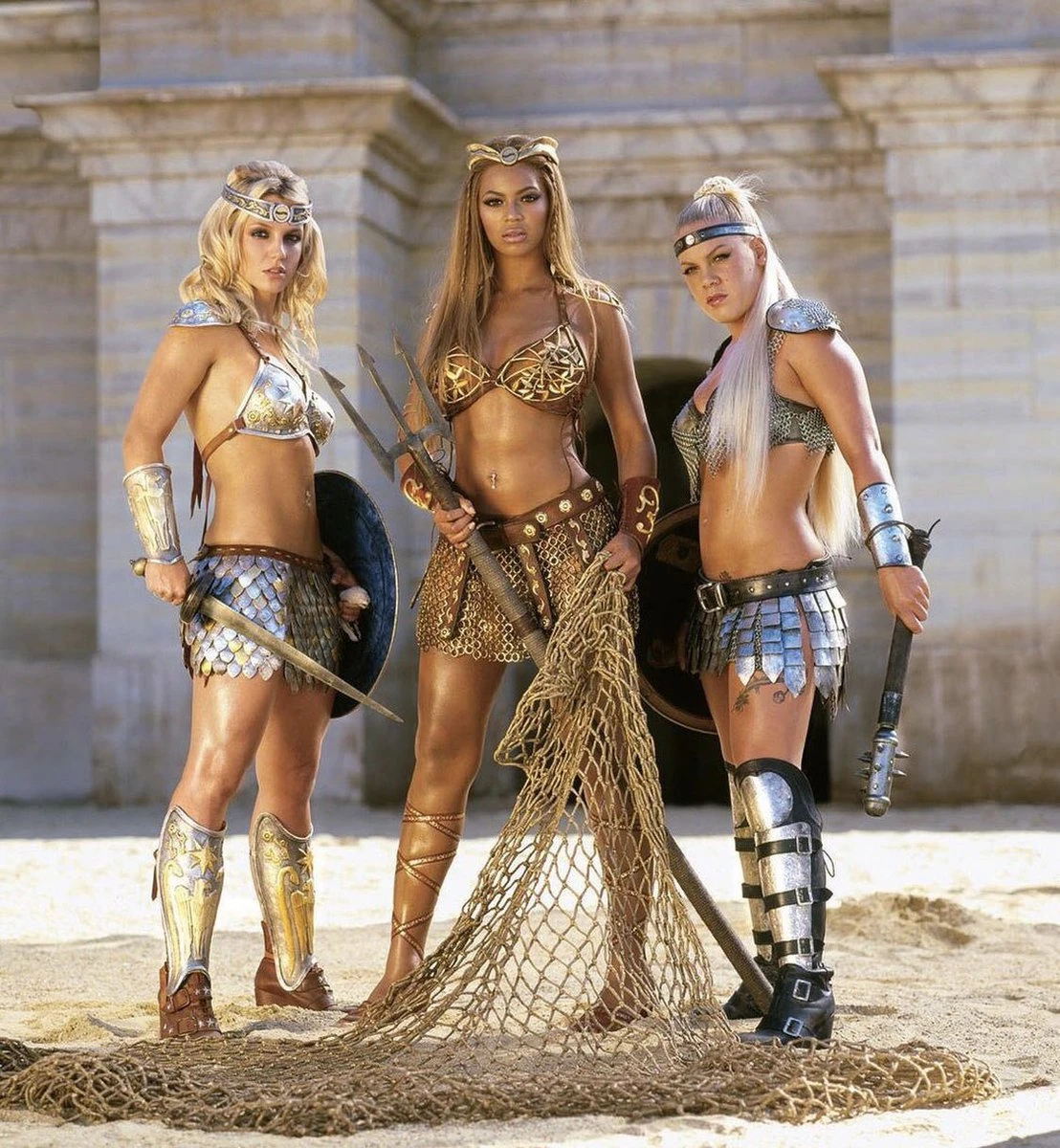
Britney Spears, Beyoncé, and Pink in a Pepsi advertising campaign, 2004
In January 2004, Pepsi debuted a star-studded three-minute gladiatorial commercial starring Britney Spears, Beyoncé, and Pink, complete with a Roman colosseum, battle armor, and an explosive cover of Queen’s "We Will Rock You." For Spears, this was another milestone in a brand partnership that started in 2001. Beyoncé filmed the spot riding the wave of her smash debut solo album, *Dangerously in Love*, which dropped in the summer of 2003. 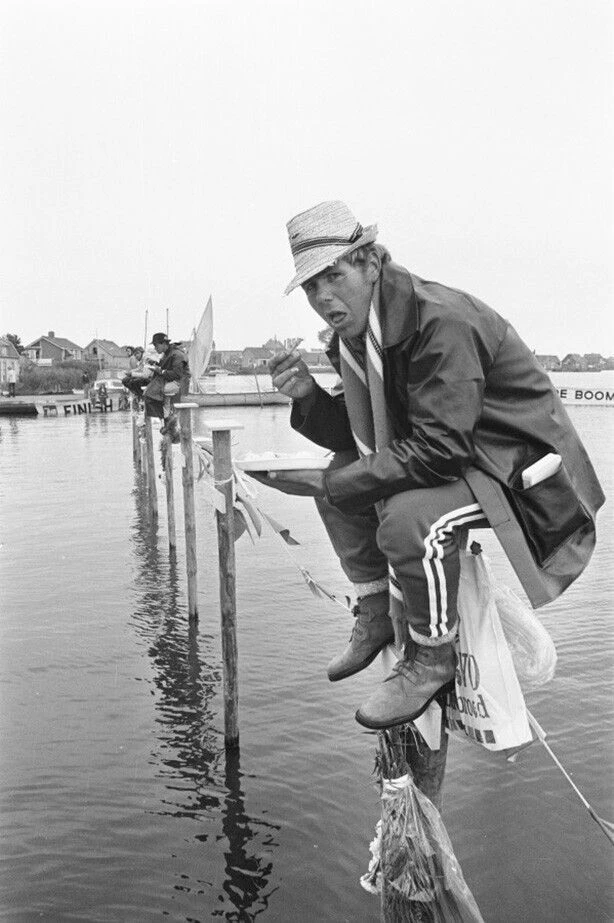
World Pole Sitting Championship, the Netherlands, August 9, 1971. Photo: Rob Mieremet
Flagpole sitting originated in the United States during the 1920s as a spectacle of pure novelty. The gold standard was set by Aloysius "Shipwreck" Kelly in 1930, who spent 49 days perched atop a pole. In 1971, the Dutch took the concept to the next level by organizing an official world championship—treating the bizarre endurance test with utter seriousness. 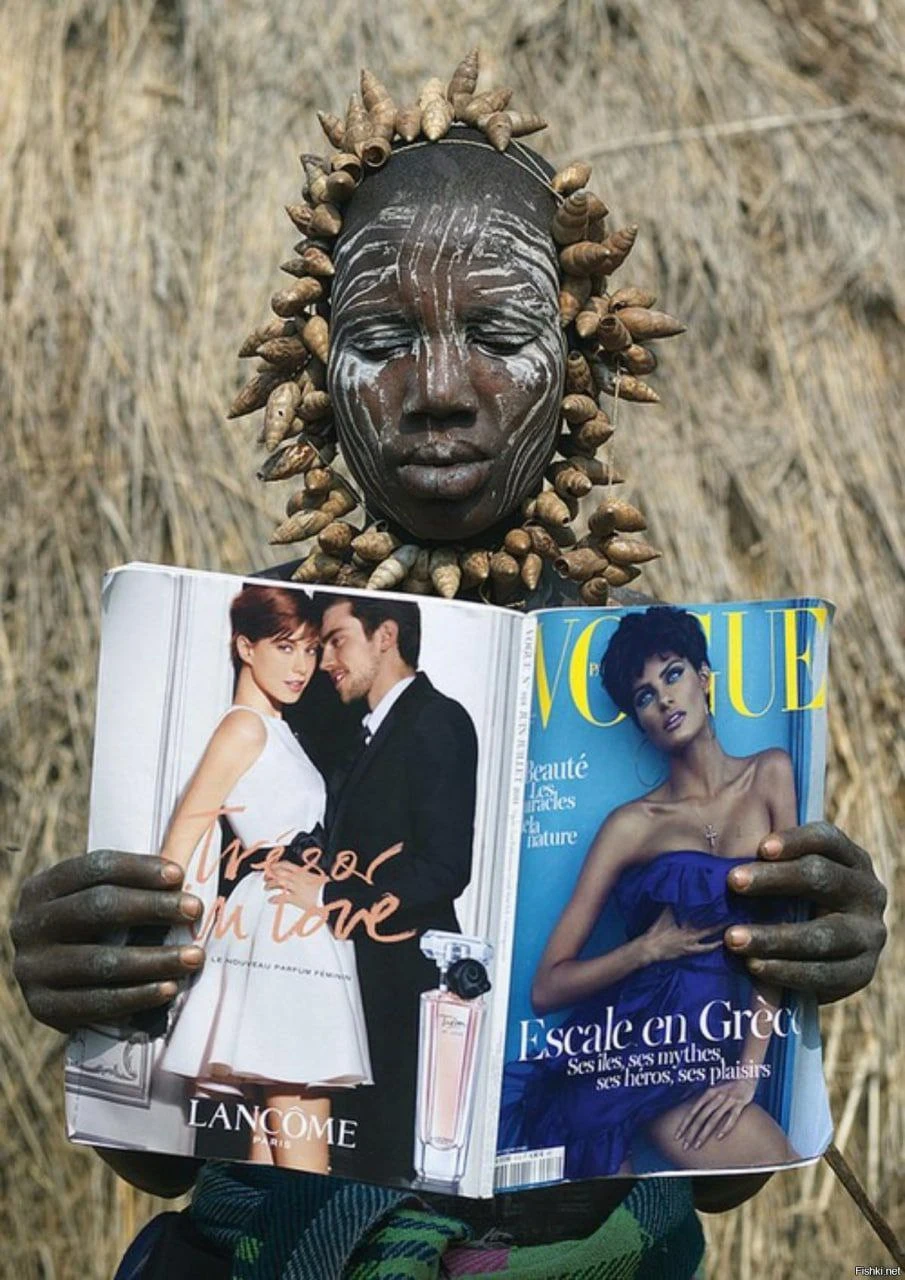
A Mursi woman with an issue of Vogue, Ethiopia. Photo: Eric Lafforgue
The Mursi reside in southwestern Ethiopia along the remote Omo River Valley, with an estimated population of 10,000. The woman’s face is painted with white mineral pigments, and her head is crowned with cowrie shells—traditional ceremonial dress. Photographer Eric Lafforgue led several expeditions to the Omo Valley to document Indigenous tribes that have minimal contact with the modern world. Exactly who brought the glossy fashion magazine into the valley—and how it ended up in her hands—remains a mystery. 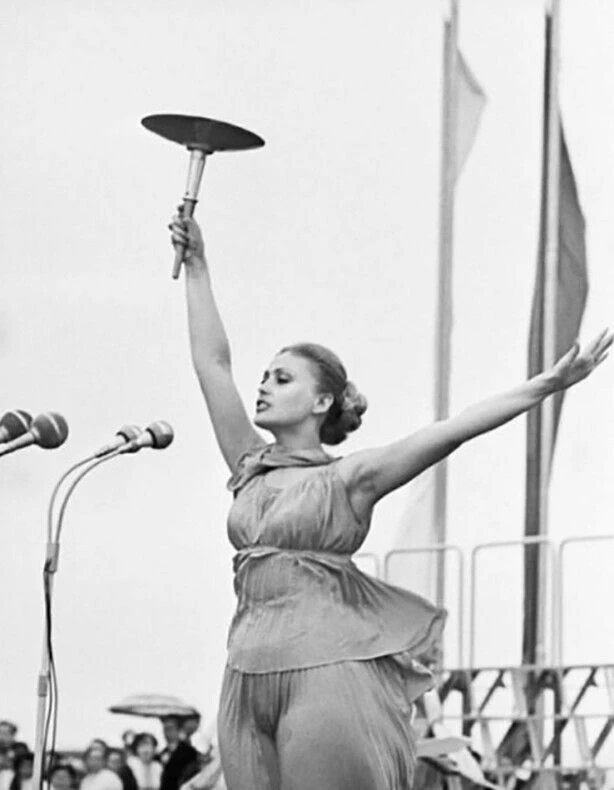
Handing over the Olympic torch at the border of Kharkiv and Belgorod Oblasts, 1980. Photo: V. Samokhotsky, M. Tur
The Olympic flame for the 1980 Summer Games was lit in Olympia on June 19, 1980, before traveling across multiple Soviet republics, carried by some 5,000 torchbearers. The United States, West Germany, Japan, and roughly 60 other nations boycotted the Moscow Games in protest of the Soviet invasion of Afghanistan in December 1979. Despite the massive international boycott, the Games officially opened on July 19, 1980.
The summer of 1992 marked the first year following the dissolution of the USSR. Street-level commerce erupted virtually overnight: children sold loose cigarettes on street corners, adults dispensed tea from samovars, and pensioners laid out treasured books from their personal libraries. Pepsi had first entered the Soviet Union back in 1972 through a historic barter deal exchanging syrup for Stolichnaya vodka. By 1992, it had become a vibrant symbol of a changing world. 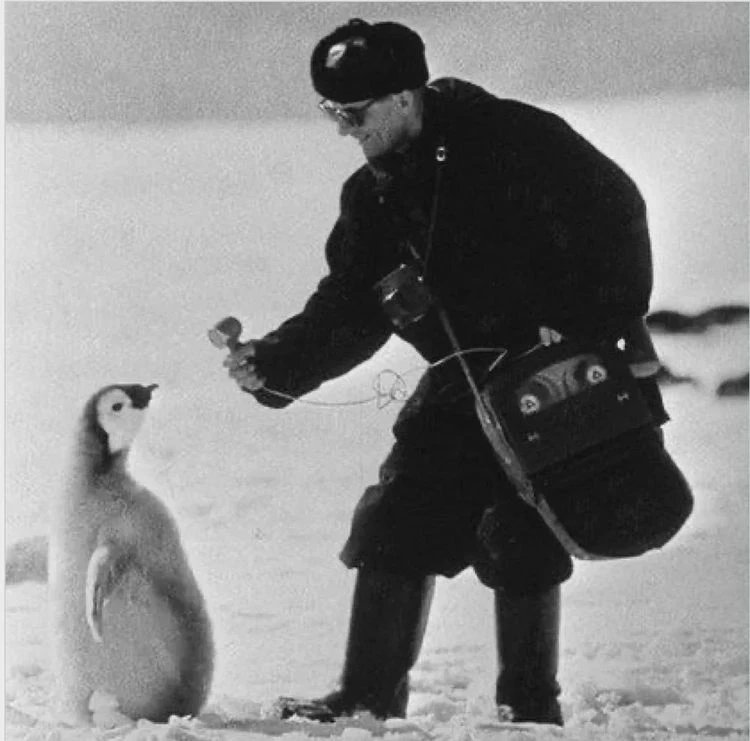
A Moscow journalist interviews a penguin, 1966
By 1966, Soviet Antarctic expeditions had been operating for over a decade, following the inaugural winter expedition at Mirny Station in 1956. Journalists frequently accompanied scientists to the frozen continent. The native penguins—primarily Emperor and Adélie—had virtually no fear of humans: with no land predators on the ice, they lacked any instinct to flee. Stepping up to offer a microphone wasn't an orchestrated gag, just an ordinary encounter in Antarctica.
Which of these photographs resonated with you the most? Did you already know the story behind any of them?