Orcas vs. Polar Bears: Who Is Really Hunting Whom in the Arctic (10 Photos)
There is a widespread zoological myth that killer whales prey on polar bears. In reality, the opposite is true: orcas effectively feed polar bears, making the story far more intriguing. Polar bears are frequently found near orcas, not as prey, but as scavengers—once the orcas leave, the bears move in to feed on the remains of whale kills. Science has yet to confirm a single documented case of orcas hunting polar bears. However, as Arctic ice melts, encounters between the two species are becoming increasingly common, leaving scientists uncertain about where this trend will lead. 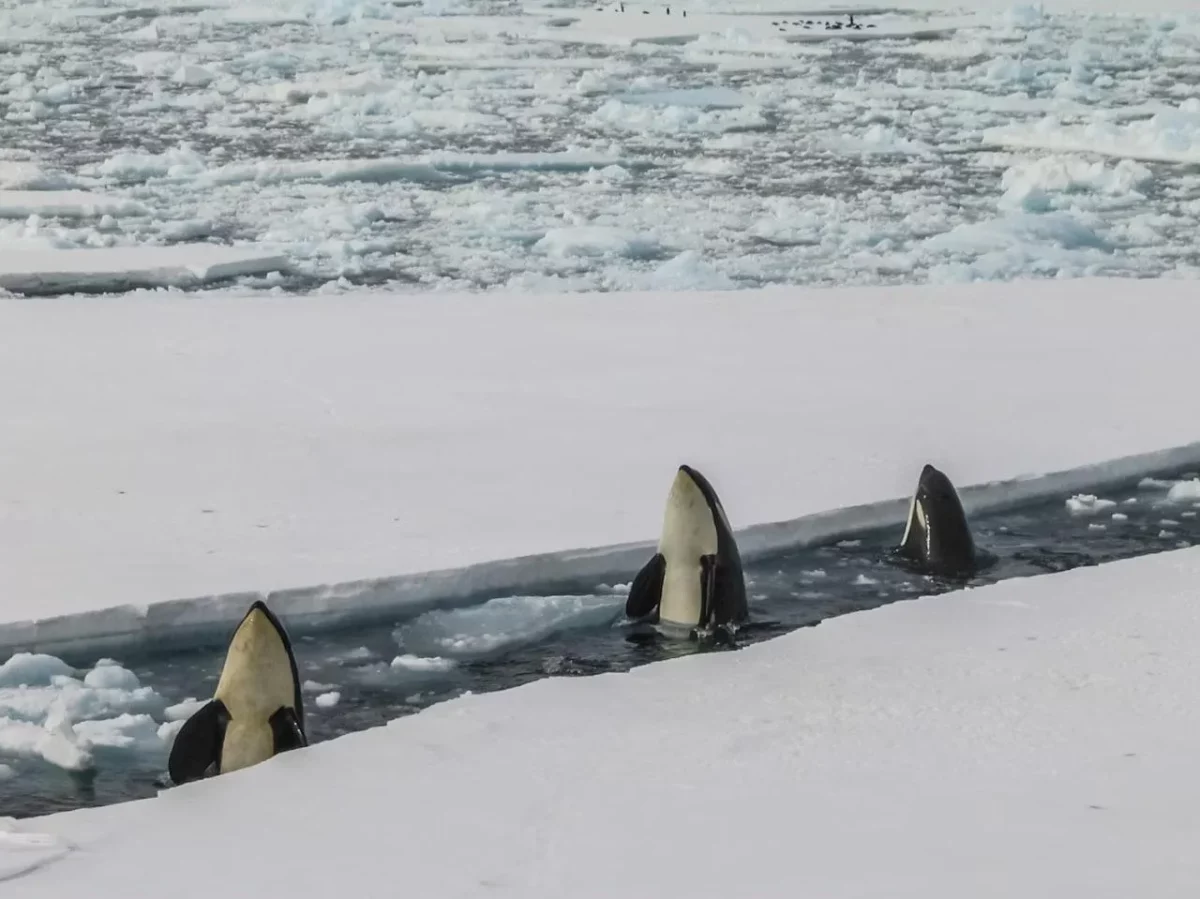
Who is Really Afraid of Whom?
The logic behind the myth is easy to see. The orca is the largest member of the dolphin family and one of the planet's apex predators. Males can reach up to 8 meters in length and weigh up to 6 metric tons. A polar bear, despite all its impressive strength, weighs between 400 and 700 kg—making an adult male orca eight to ten times heavier. On paper, the outcome seems obvious.
However, being an apex predator isn't just about raw size; it's about hunting behavior. Orcas hunt in coordinated pods, targeting specific, familiar prey. And polar bears simply aren't on their menu. 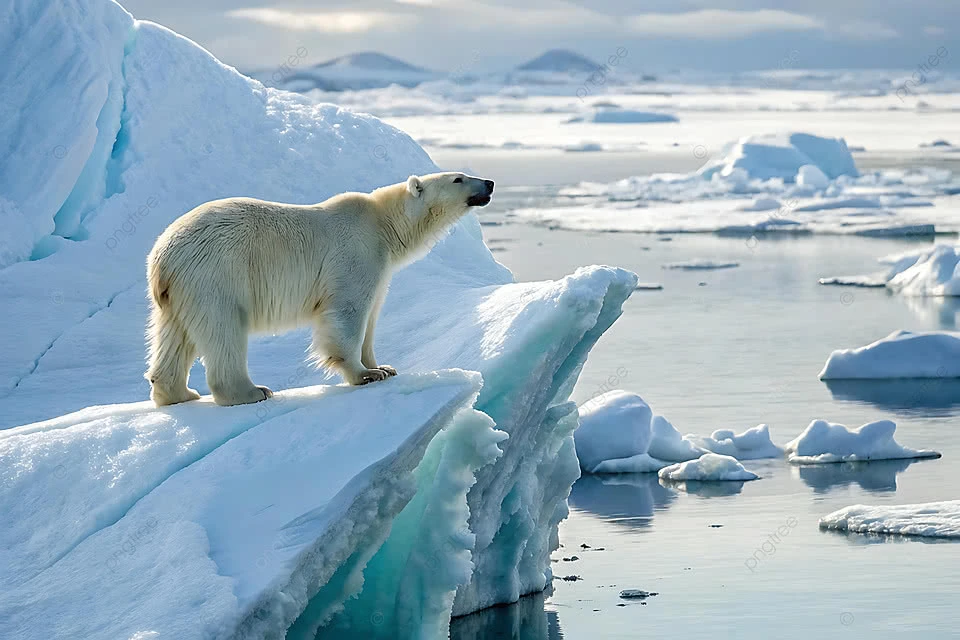
The polar bear is the world's largest land carnivore. An adult male can weigh up to 700 kg, but in the water, it is entirely outclassed by the orca.
The only documented direct encounter occurred in 2009. Inuit eyewitnesses in Hudson Bay observed three orcas tailing a swimming polar bear. The killer whales circled the bear and slapped their tails on the water surface. After about 10 minutes, the bear safely reached the shore. No attack took place. Whether this was a hunting attempt or merely curious investigation of an unfamiliar object remains unknown.
Dinner at Someone Else's Table
The real dynamic between the two species is entirely different. Polar bears are opportunistic feeders that won't pass up a free meal. Increasingly, that meal comes in the form of whale carcasses left behind by killer whales. 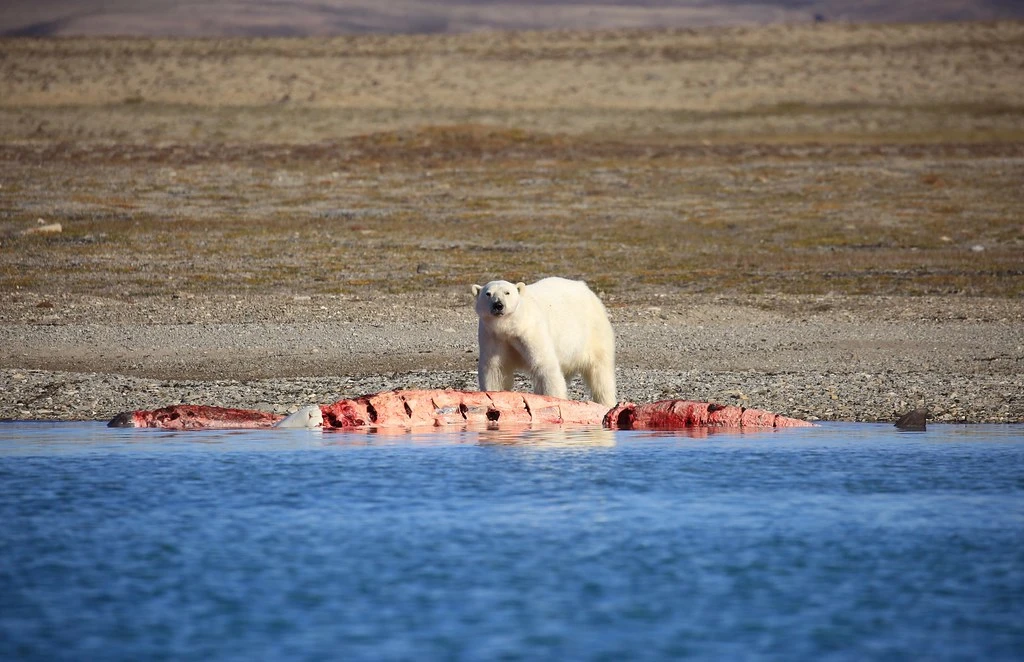
Polar bears regularly feed on bowhead whale carcasses left in the wake of orca hunts. A single large whale can sustain hundreds of bears.
Researchers from the University of Guelph analyzed fatty tissue samples from 103 polar bears harvested by Inuit hunters around Foxe Basin and Hudson Strait. The findings were surprising: bowhead whale tissue was present in the diet of 56% of bears in northern Foxe Basin and roughly half of those in Hudson Strait. Since a polar bear cannot hunt a bowhead whale on its own, they were clearly scavenging.
Bowhead whales weigh anywhere from 60 to 100 metric tons. When orcas kill one, the carcass eventually washes ashore, sparking a massive feast for local wildlife. In 2017 near Wrangel Island, more than 180 polar bears were spotted feeding on a single whale carcass at the same time.
Why Orcas Don't Eat Polar Bears
Orcas aren't just apex predators; they are highly specialized hunters. Different populations follow distinctly different diets, a trait passed down culturally through generations as calves learn specialized hunting techniques from older pod members. 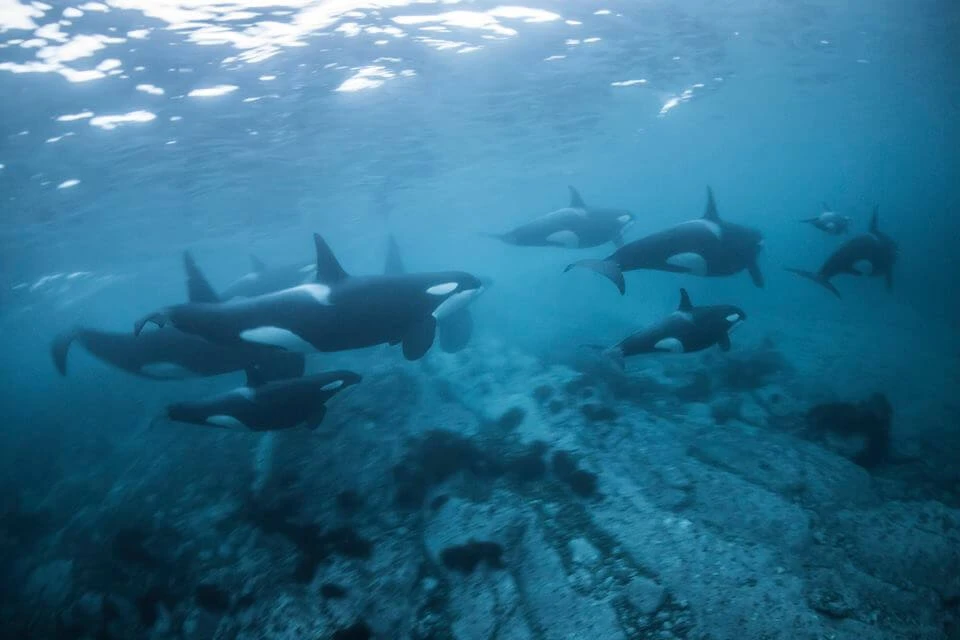
Orcas hunt in pods, passing down specialized tactics to future generations. Different populations have distinct diets that have evolved over millennia.
Resident orcas in the North Pacific feed exclusively on fish, primarily Chinook salmon. Meanwhile, transient orcas—also known as Bigg's killer whales—specialize in marine mammals such as seals, sea lions, and belugas. In theory, Bigg's orcas are the ones capable of targeting a polar bear, given their diet of large warm-blooded prey. But theoretical capability is very different from actual behavior. 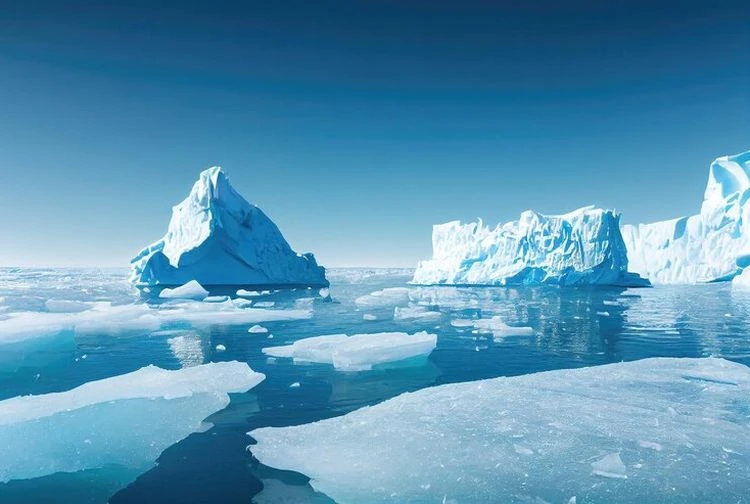
The Arctic is changing rapidly. The ice floe—the boundary separating the worlds of the polar bear and the orca—is melting faster with each passing decade.
To an orca, a polar bear is an unfamiliar target. Killer whales stick to prey they were taught to hunt, using techniques perfected over generations. Bears simply aren't part of that system. As one researcher put it, orcas aren't opportunistic scavengers—they are elite, highly specialized hunters.
Ice as a Natural Barrier
Historically, pack ice served as a natural wall between them. Orcas avoid dense ice cover: their dorsal fins can reach up to 1.8 meters in height, and contact with sharp ice edges can cause painful injuries. Polar bears, on the other hand, are perfectly at home on sea ice. 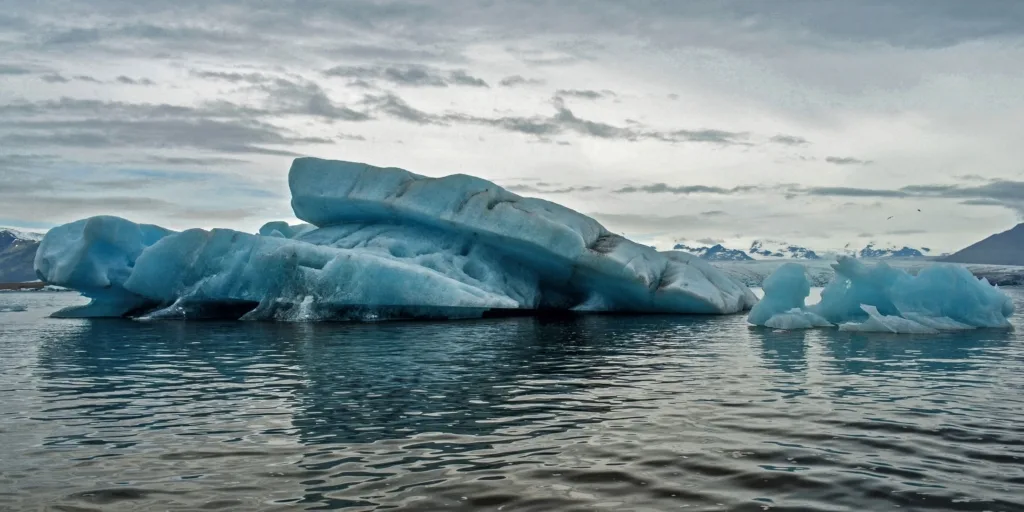
Pack ice served as a natural barrier for orcas for thousands of years. Since 1979, the Arctic has been losing roughly 78,000 square kilometers of sea ice per year.
Since the late 1970s, the Arctic has lost about 78,000 square kilometers of sea ice annually. This changes everything. A study published in Frontiers in Marine Science in 2025 analyzed 20 years of orca sightings in the Eastern Canadian Arctic (from 2002 to 2023). The conclusion: killer whales are not only pushing further north, but they are also staying up to 50 days longer than they used to. Acoustic monitoring off the coast of Alaska presented at a 2021 conference confirmed the exact same trend. 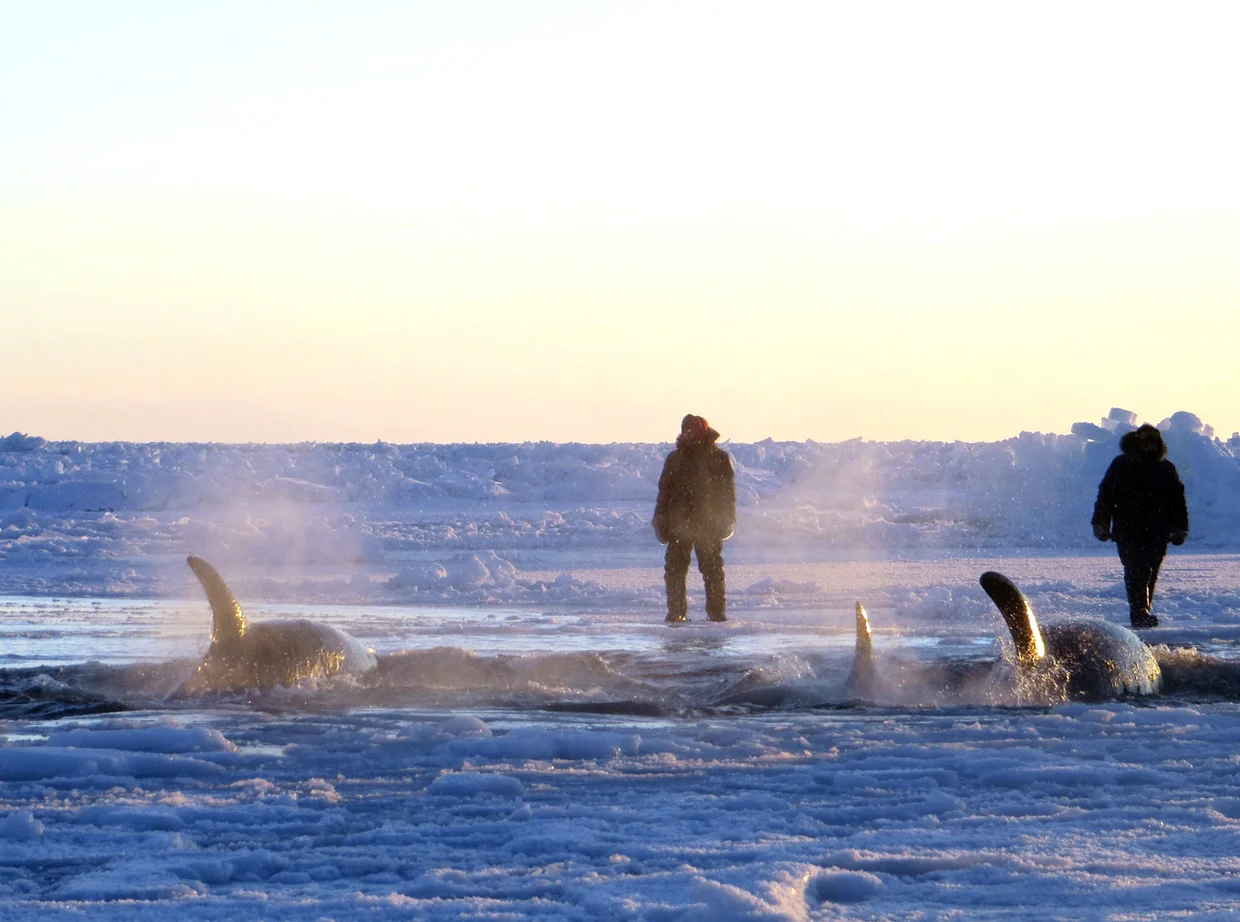
Orcas trapped in a lone ice hole in Hudson Bay, Quebec, January 2013. Until recently, sea ice kept them out—now it let them in, only to trap them for several days.
Today, killer whales are spotted in Hudson Bay every summer—a rare occurrence in the past. Inuit elders and hunters from 11 communities surveyed by University of Manitoba researchers reported that orca sightings have become routine. In 2013, 17 orcas became trapped under shifting ice in southern Hudson Bay and perished—a stark reminder that ice conditions can change faster than the whales can retreat.
Narwhals Under Threat, Polar Bears Win Big
The real ecological story here isn't a showdown between orcas and polar bears, but rather their combined impact on other Arctic wildlife.
Scientists estimate that orcas kill around 1,000 narwhals a year in the Canadian Arctic—roughly equal to the annual harvest by Inuit subsistence hunters. In response, narwhals are altering their routes, seeking shelter in ice-choked areas where orcas cannot follow. Bowhead whales are doing the same, retreating deeper into ice packs and shifting traditional migration paths. 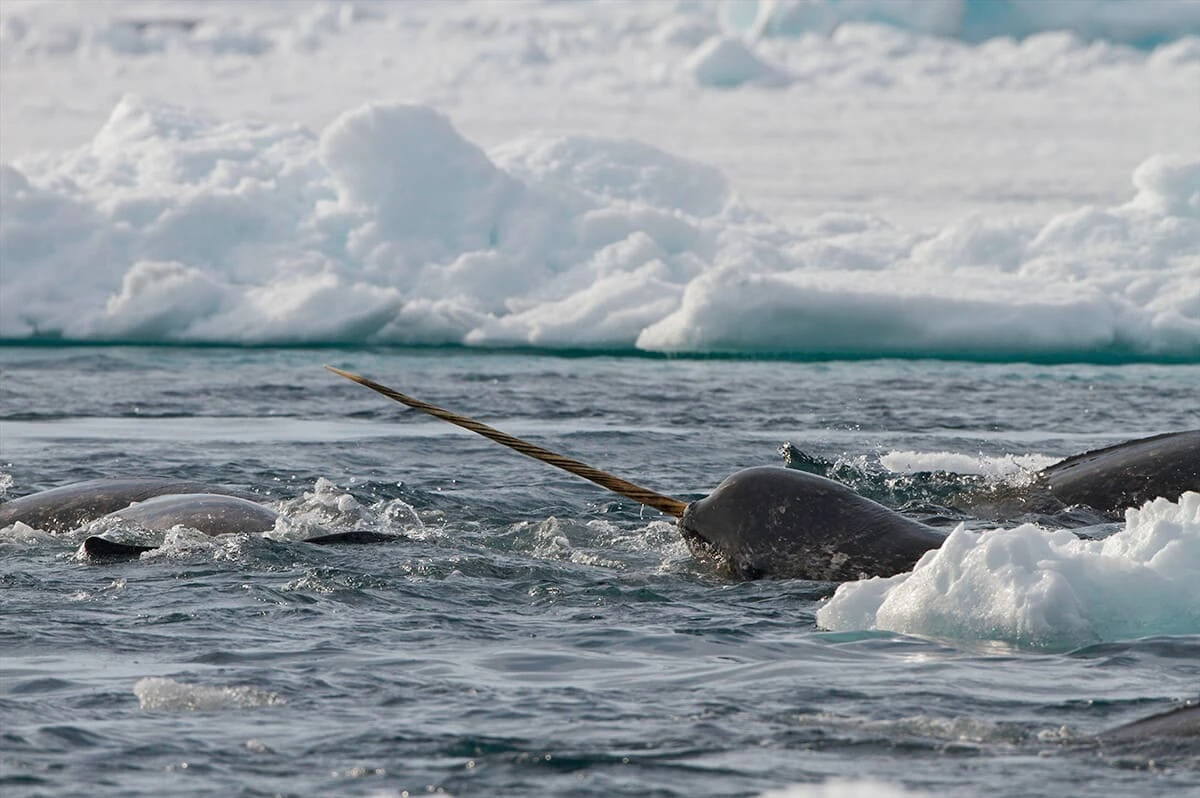
Narwhals are a primary target for orcas in Arctic waters. Researchers estimate that killer whales take around 1,000 narwhals annually in the Canadian Arctic.
Polar bears, meanwhile, are reaping an unexpected reward. More orcas in the Arctic mean more whale kills, which leads to more carcasses washing up on shore. As the authors of one study noted directly:
“The growing presence of killer whales and bowhead whales in the region may indirectly bolster the polar bear's food supply, despite the loss of sea ice.” 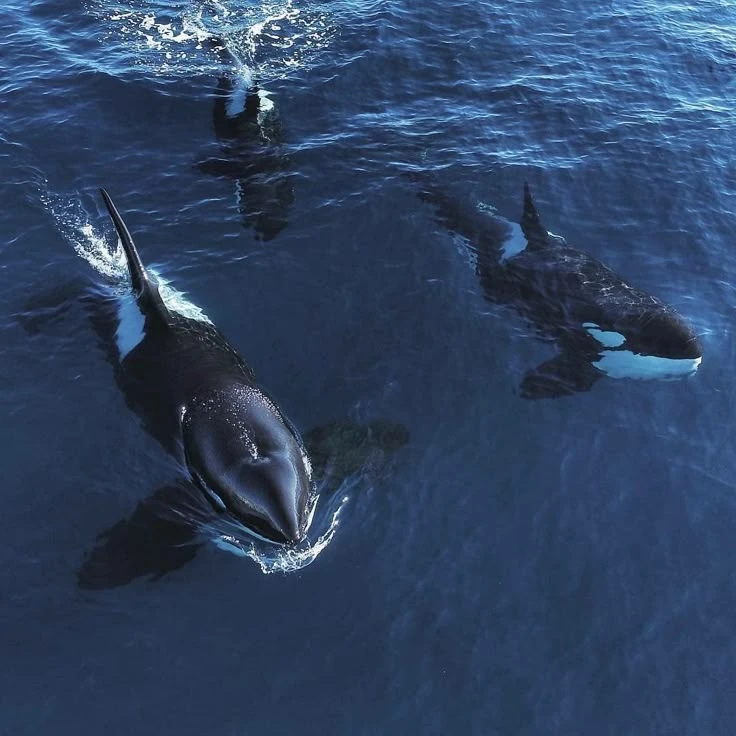
Orcas are key ecosystem engineers in the Arctic. Their presence is reshaping the migration routes of narwhals and bowhead whales, as well as the behavior of polar bears.
What Lies Ahead
No one knows for sure. That is the honest answer, and it is precisely why scientists remain fascinated by the question.
As long as sea ice remains, the two species occupy separate realms: the bear rules the ice, and the orca dominates the open water. If the ice vanishes, that boundary disappears with it. Polar bears are strong swimmers, capable of covering dozens of miles in open ocean—and that is precisely where they are most vulnerable. Marine-mammal-hunting orcas can create waves to wash seals off floes, coordinate tactical strikes, and drown prey three times their size. What happens when those skills meet a hungry polar bear stranded in the open sea remains an open question. 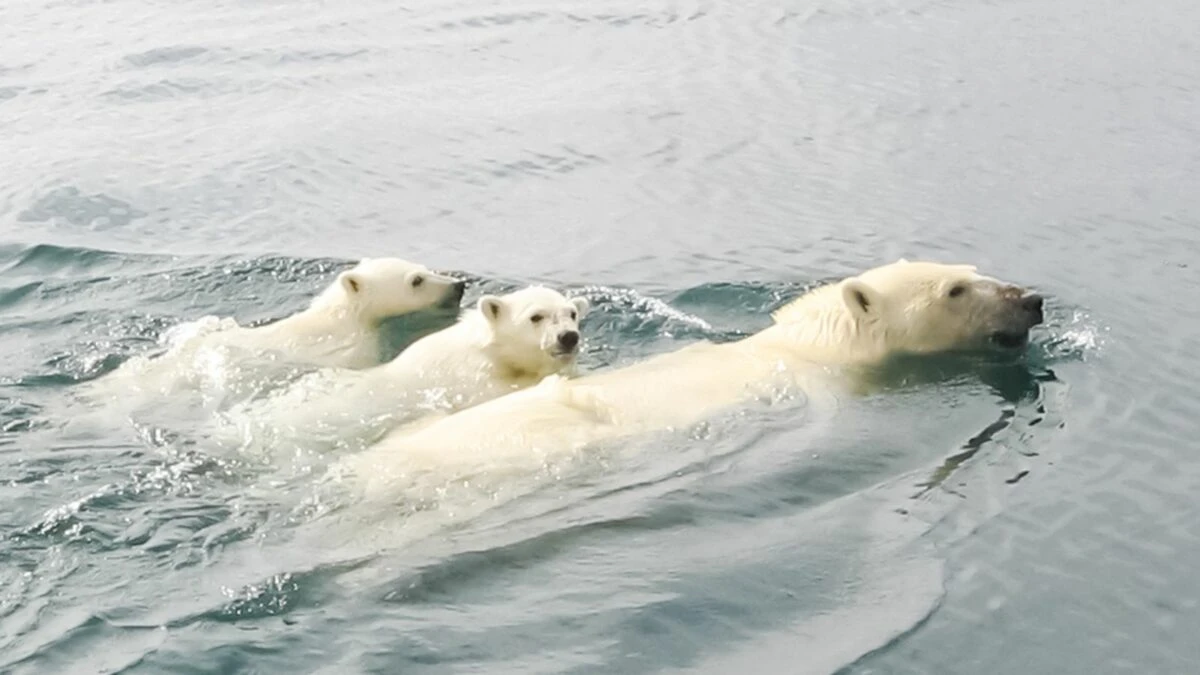
Polar bears can swim dozens of miles. Out in open water, far from ice, they are at their most vulnerable against large marine predators.
For now, current evidence tells a different story: encounters between the two species are almost always peaceful. Orcas don't recognize bears as food; polar bears don't fear orcas. They coexist in the changing Arctic landscape—sharing a table rather than turning each other into a meal.
Do you think killer whales will eventually start preying on polar bears as the ice continues to melt, or will these two titans find a way to share a changing Arctic?