Behind the Scenes of 'Blade Runner': A Tabletop Metropolis and Light from a Refrigerator (24 Photos)
The futuristic Los Angeles of
Blade Runner
was pieced together from aging facades, neon signs, and miniature models. In one of the film's quietest scenes, Harrison Ford was lit purely by the glow of an open refrigerator. Here is how Ridley Scott built that iconic world for his 1982 sci-fi masterpiece. 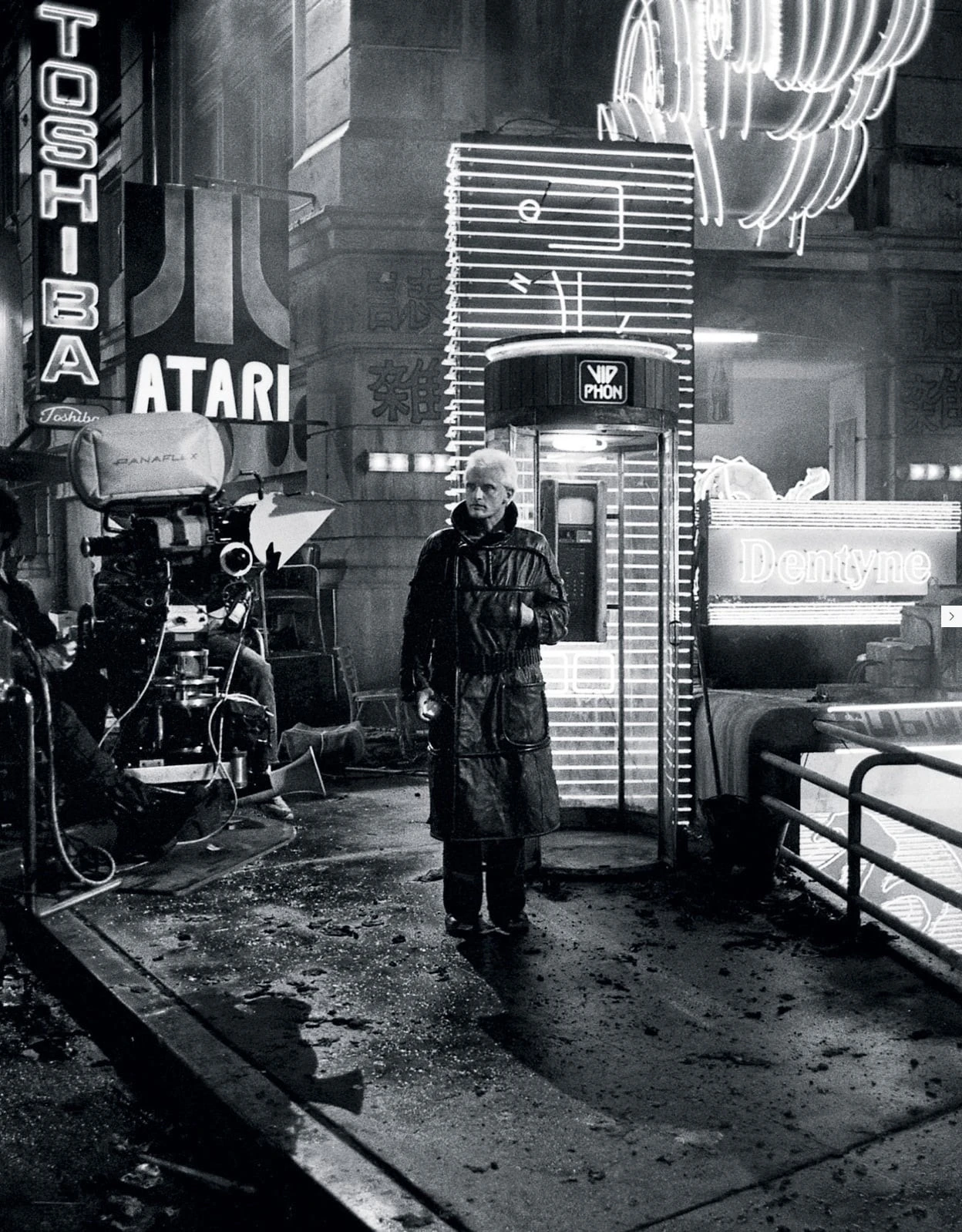
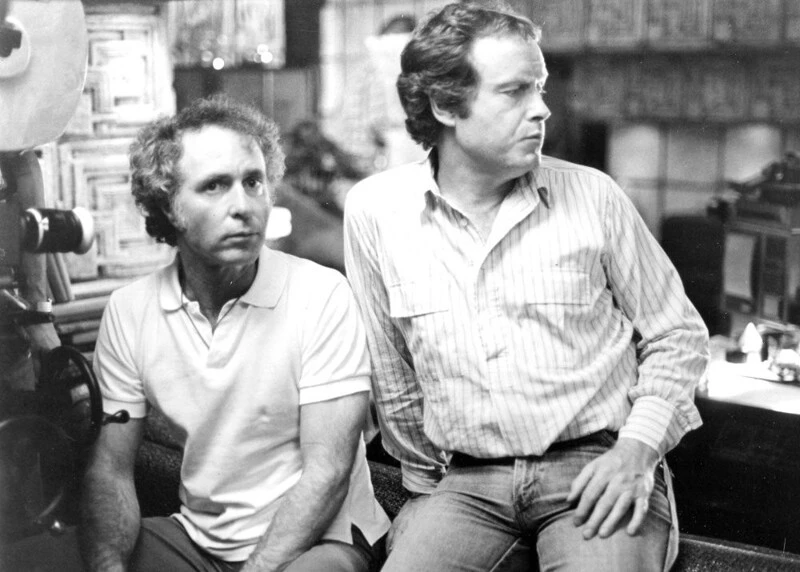
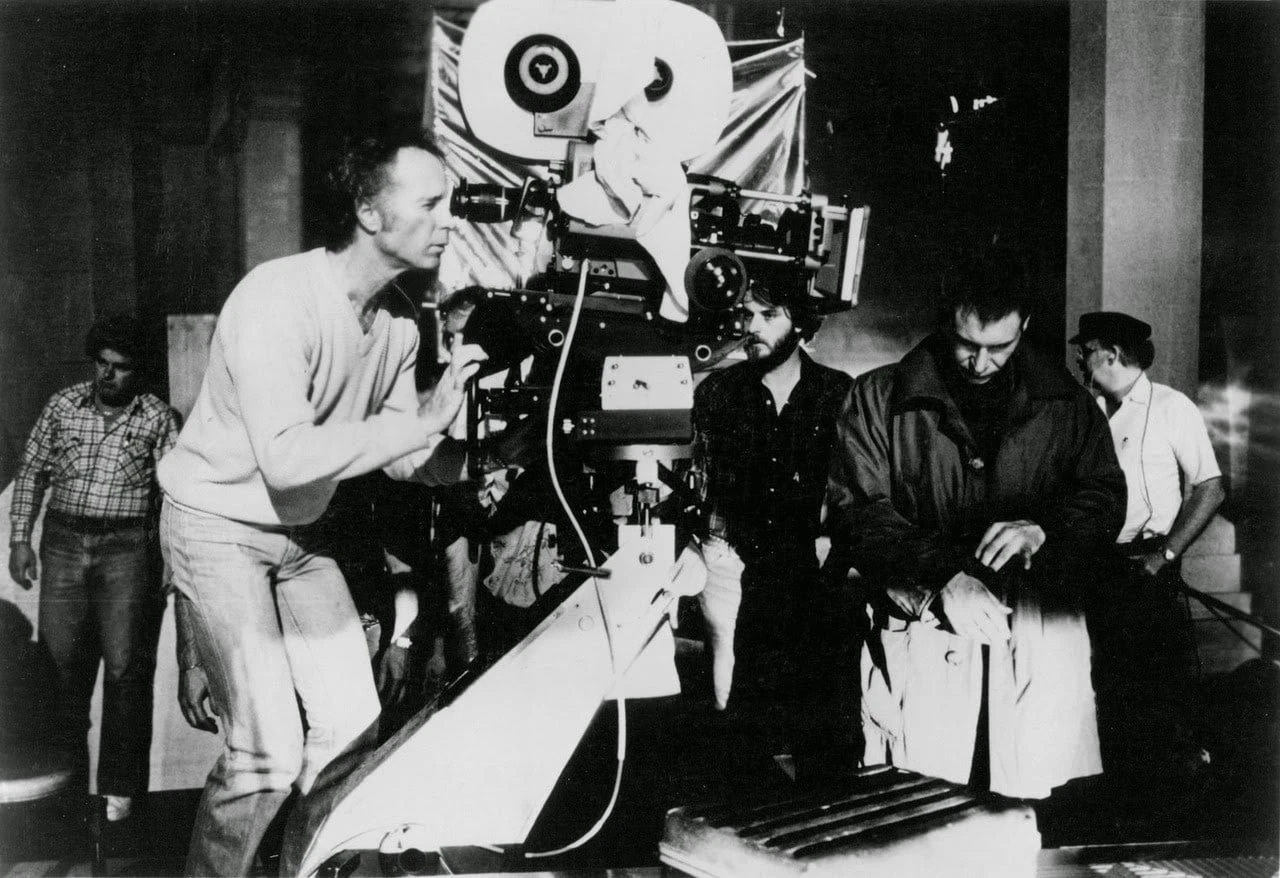
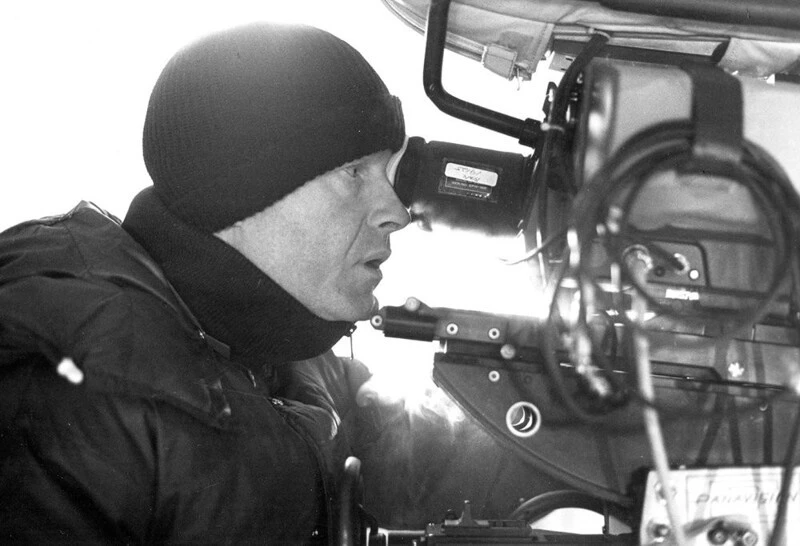
Cinematographer Jordan Cronenweth and director Ridley Scott.
Scott didn’t want the future to look like a pristine showroom of shiny new gadgets. He envisioned a city where tearing down old buildings was simply too expensive—it was far easier to retrofit them with another conduit, air conditioning duct, or tangle of cables. In this world, new technology doesn’t replace the old; it accretes on top of it.
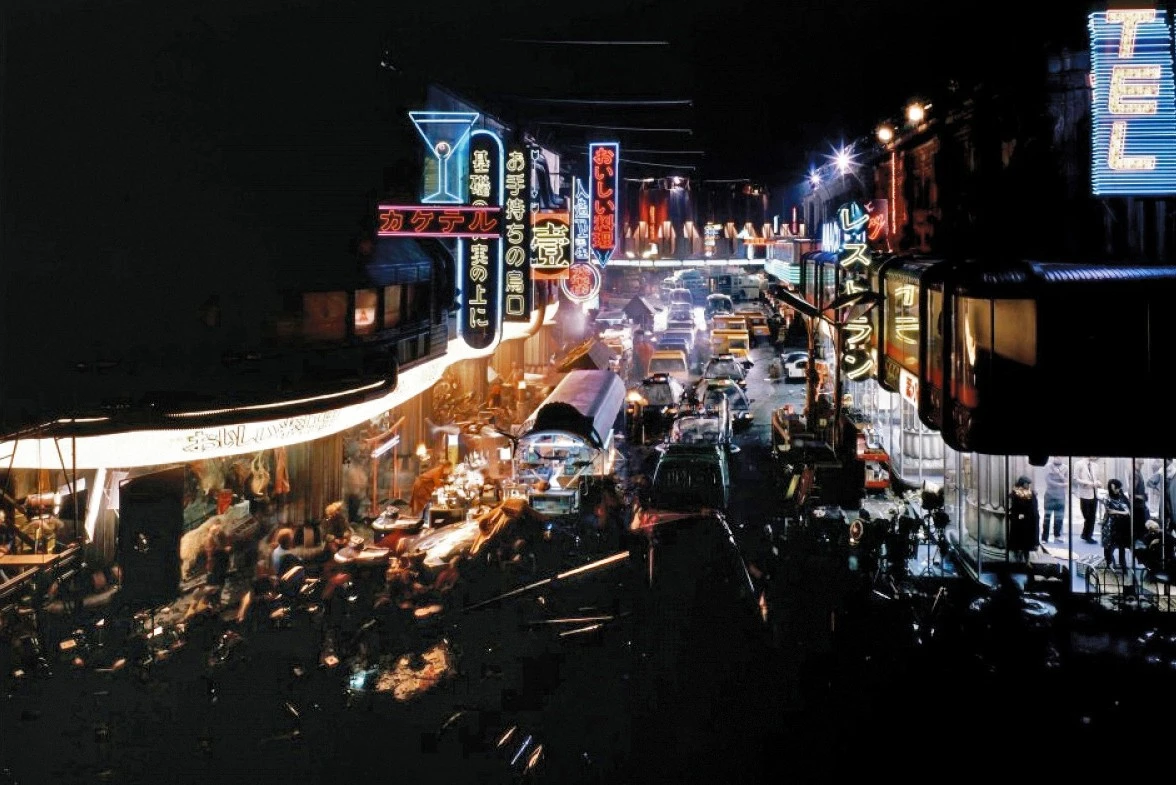
Syd Mead was originally brought on just to design the vehicles. But cars need a context. In his sketches, streets, facades, and an entire urban logic began to materialize around them. When the production settled on the Warner Bros. backlot's "New York Street," Mead was given photographs of the existing sets. Over those familiar walls, he sketched an intricate overlay of ducts, pipes, and signs. 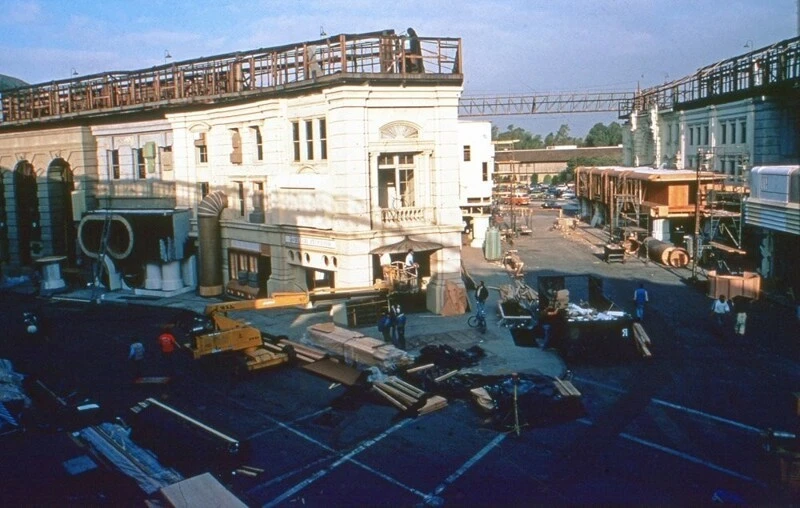
The interiors were given the same lived-in treatment. Deckard’s kitchen had to look altered and retrofitted dozens of times rather than new. Scott insisted on an unappealing yellowish tint that accentuated accumulated grime and grease. Mead designed appliances whose precise functions remained obscure to viewers, yet looked thoroughly convincing in a kitchen setting. 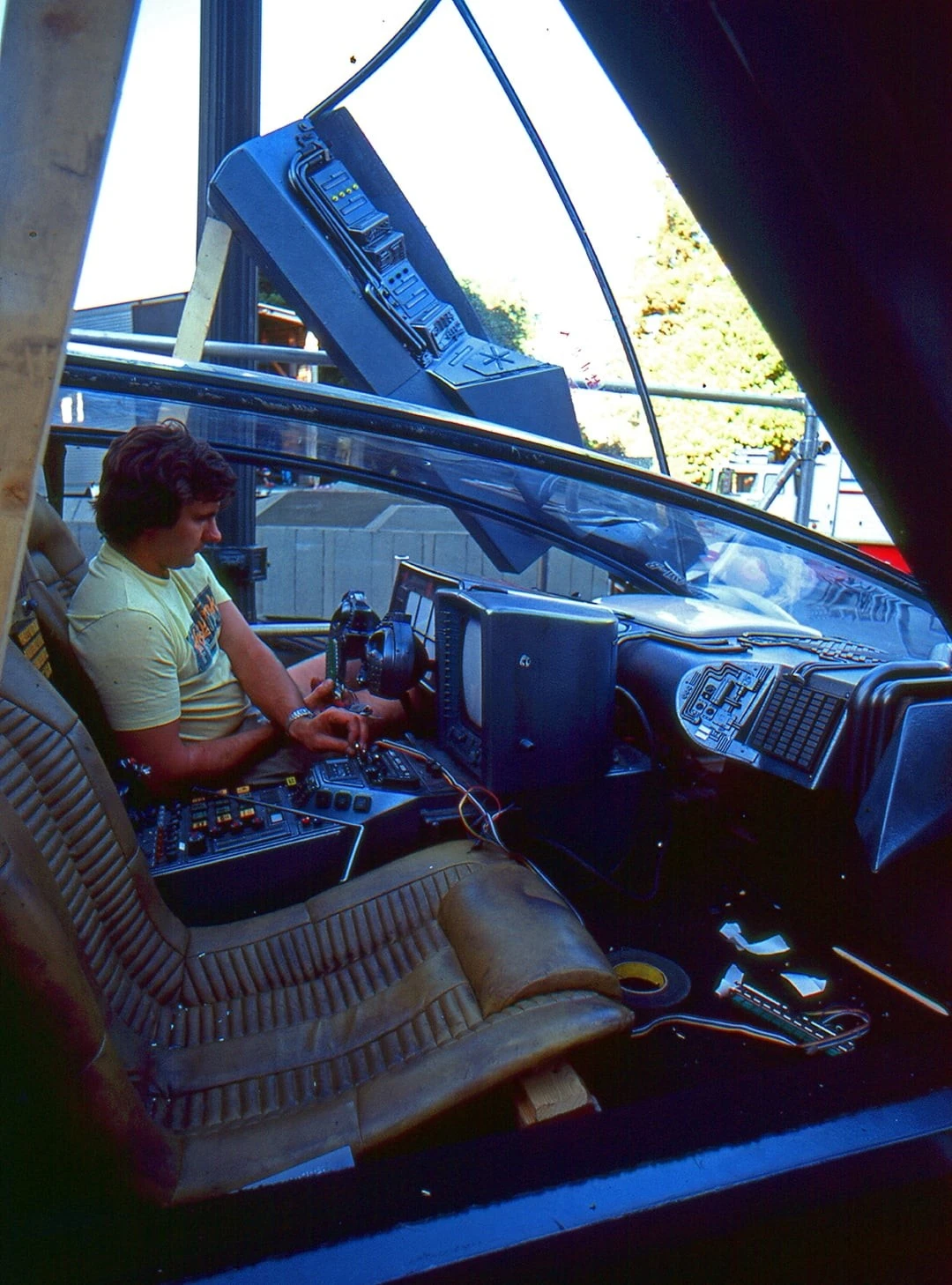
Out on the street, cinematographer Jordan Cronenweth faced a different challenge: making it all glow. Neon signage functioned simultaneously as set dressing and practical lighting. Fixtures that were on camera were dimmed, while those off-screen were cranked up to full blast. At one point, a dedicated seven-person crew did nothing but manage the neon.
For the chase through the storefronts, Scott had street signs relocated inside the shop windows. Shot at a higher frame rate, the neon began to strobe. They decided to keep the effect, making the flicker an integral part of the sequence. 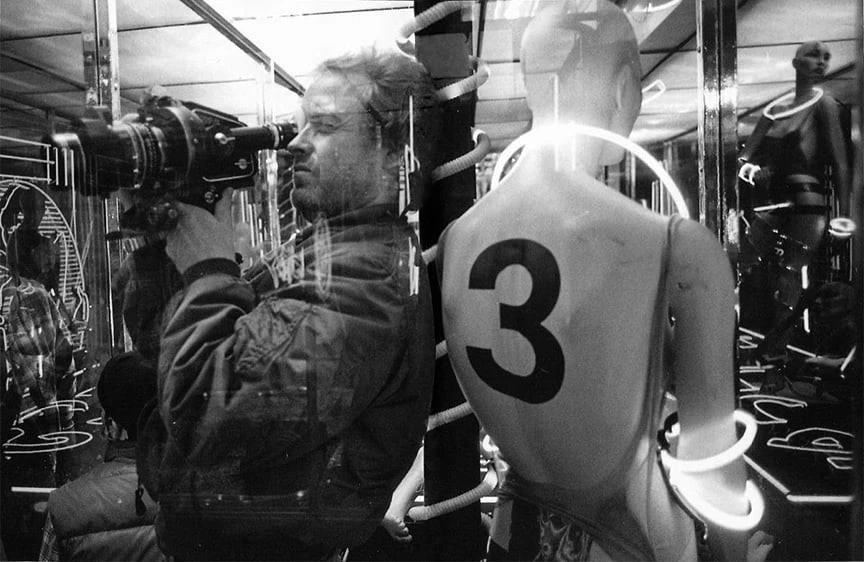
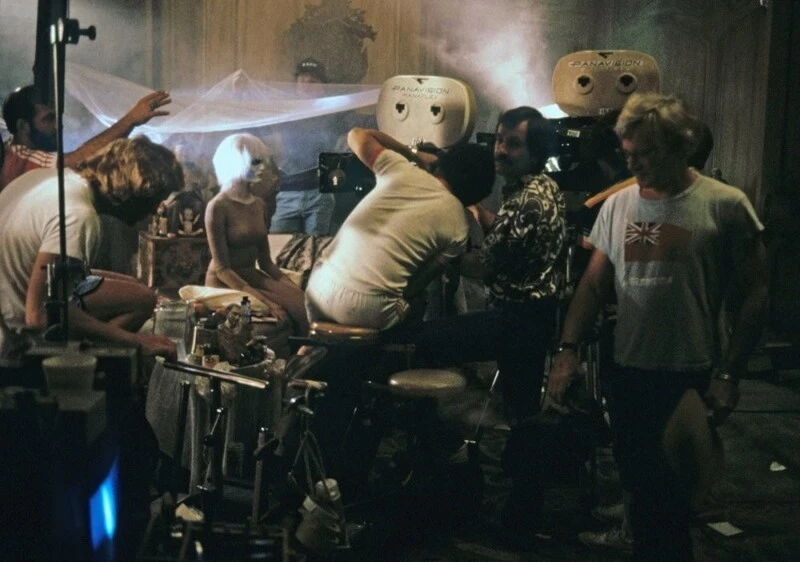
The film’s iconic shafts of light required smoke. Maintaining a consistent density was a constant battle, as even the slightest shift drastically altered the contrast. In Deckard’s apartment after the fight, the lighting scheme shifted completely. Ford stood beside a glass-door refrigerator; Sean Young stood by the sink, illuminated by dim light from the window mingled with spill from the kitchen. Every so often, a sweeping searchlight beam slashed across the room. 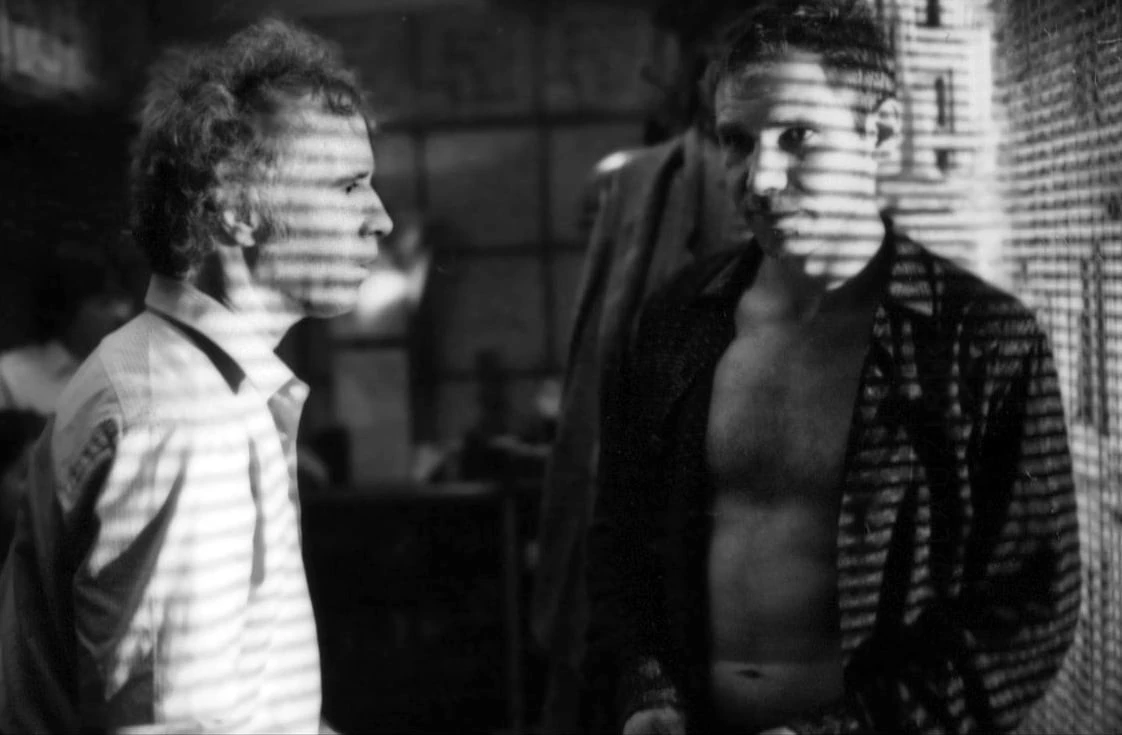
The "freeze room" was shot inside an actual cold-storage facility at temperatures around −22 °C. 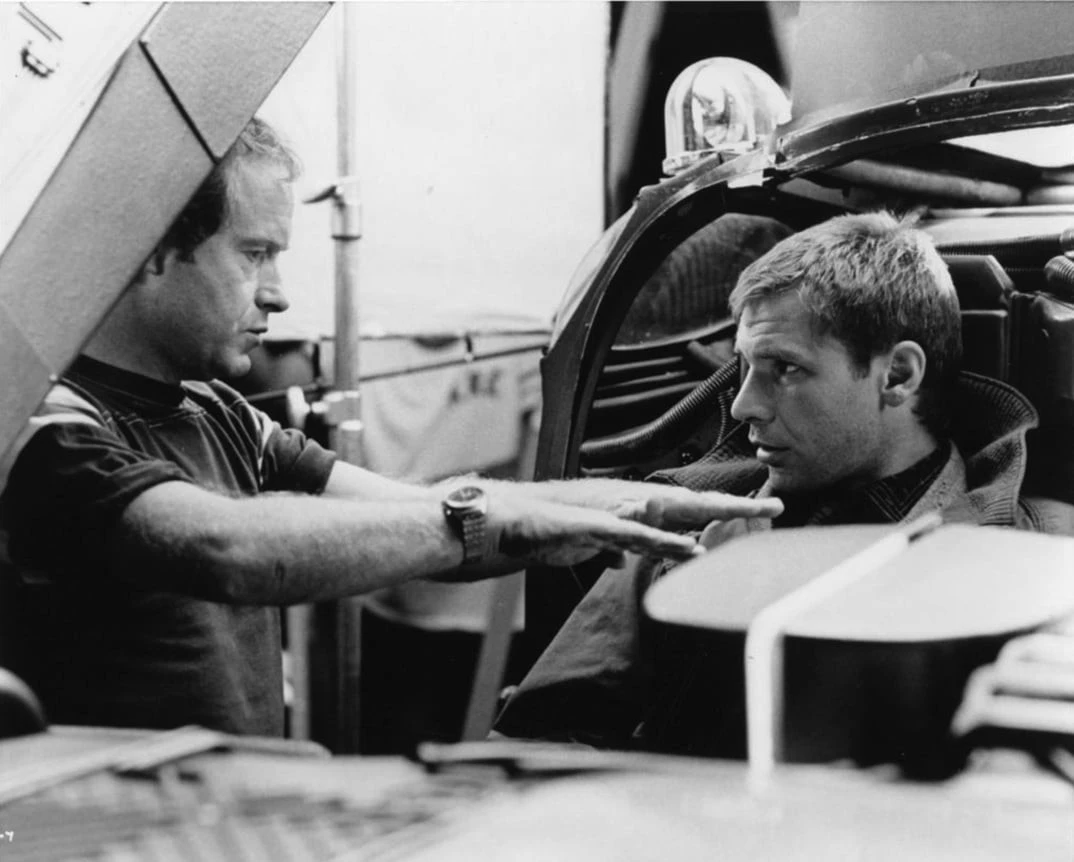
The visual effects team built their own city—on tabletops. Lighting alone wasn’t enough to sell miniature buildings as a towering metropolis; in clear air, their true scale was a dead giveaway. So the models were shrouded in smoke as well, causing distant details to lose sharpness and contrast, mimicking genuine atmospheric haze. 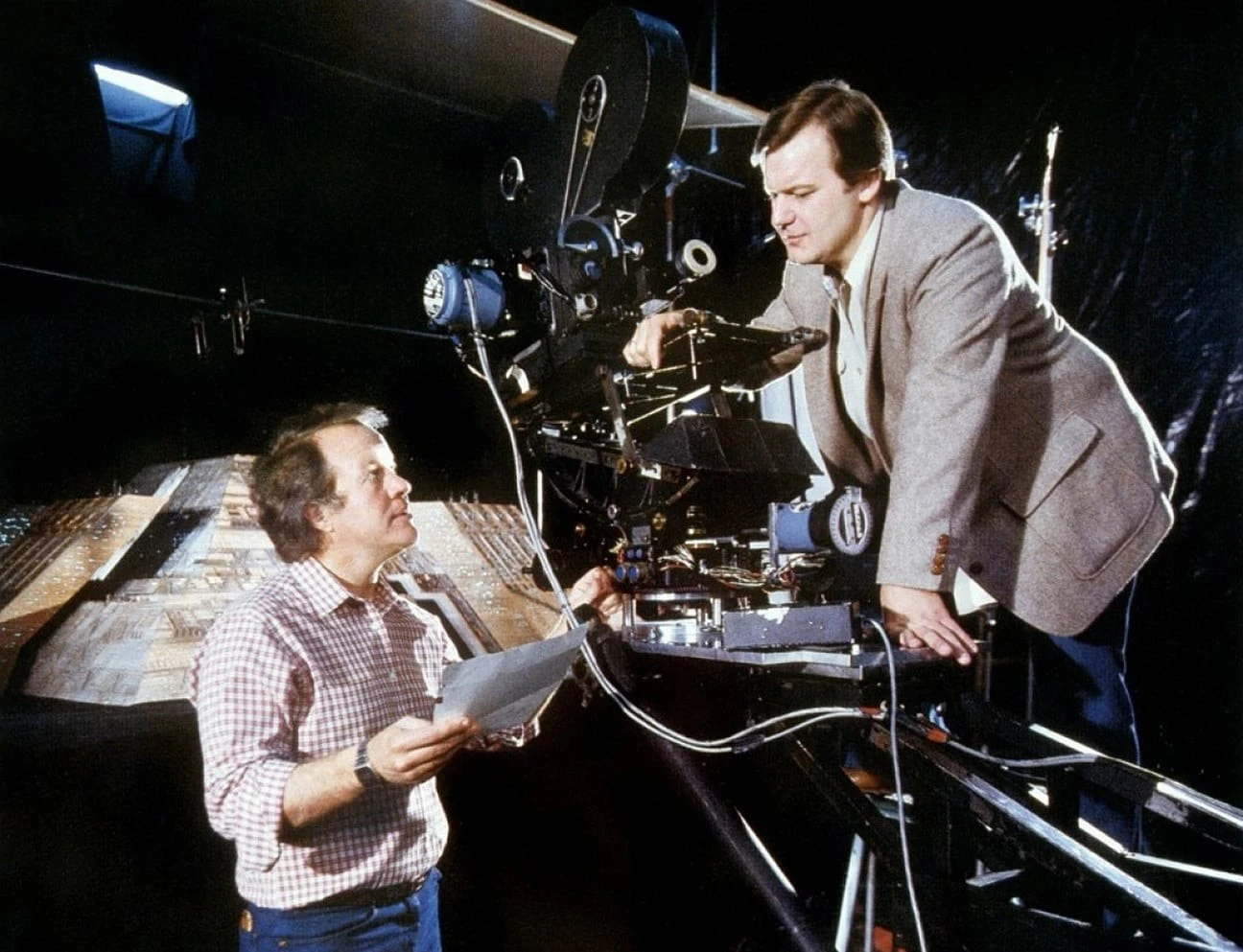
Douglas Trumbull and Richard Yuricich, co-supervisors of the special photographic effects team. 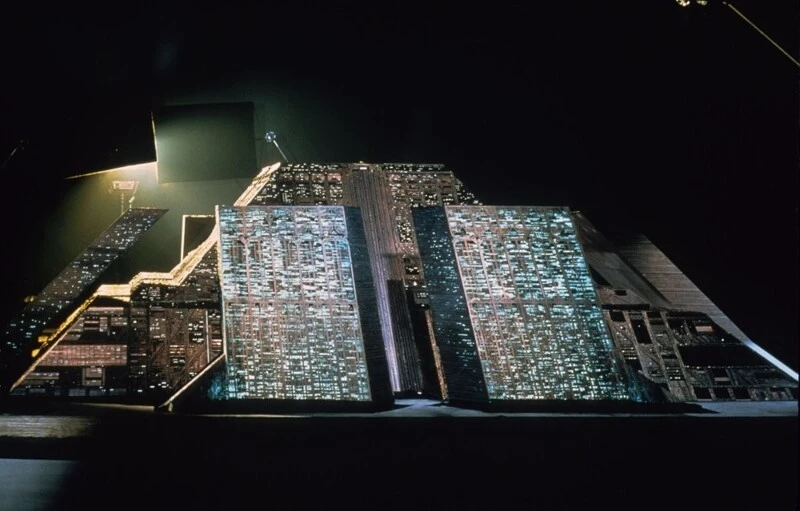
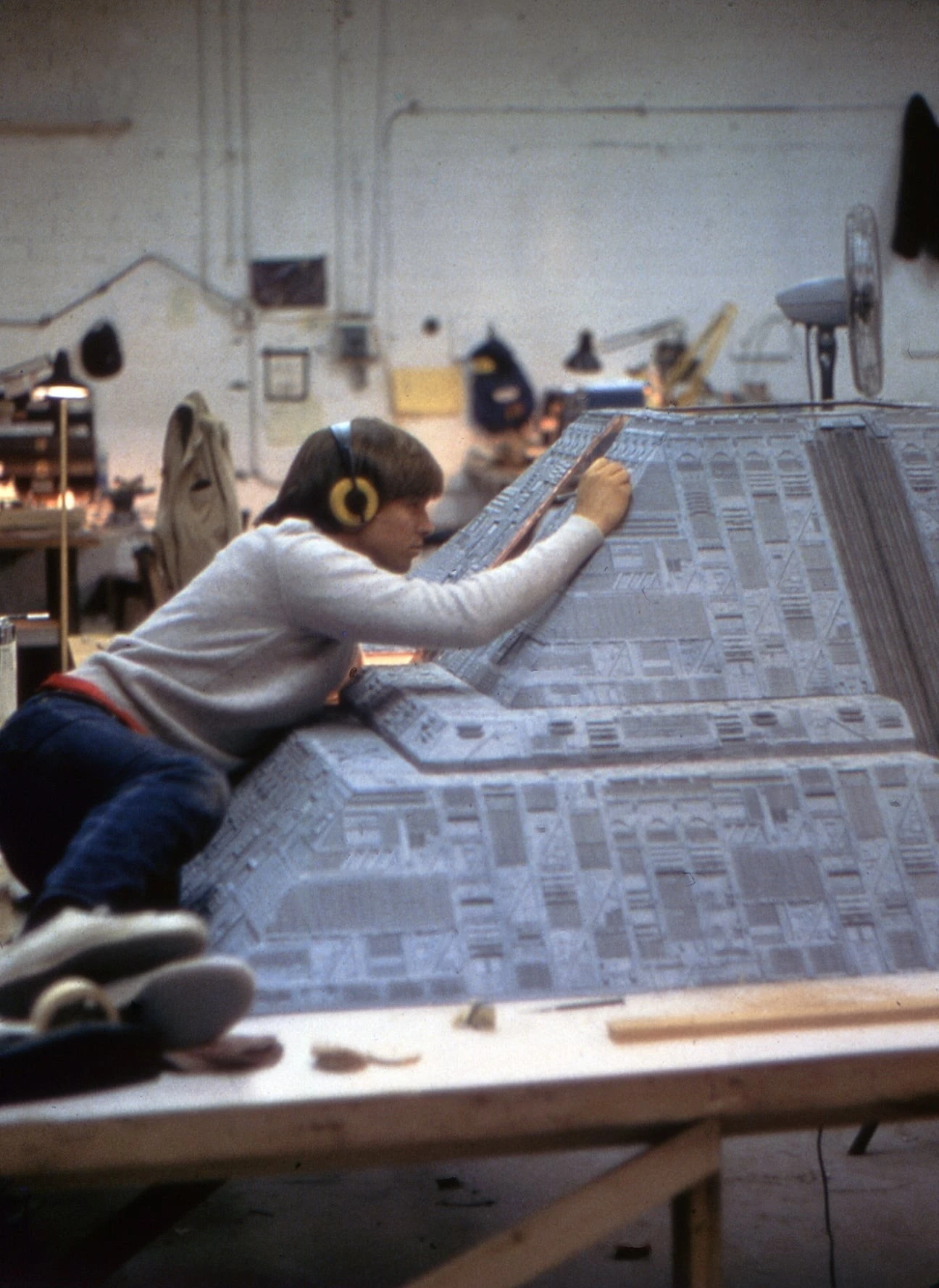
John Vidor at work on the details of the Tyrell pyramid. 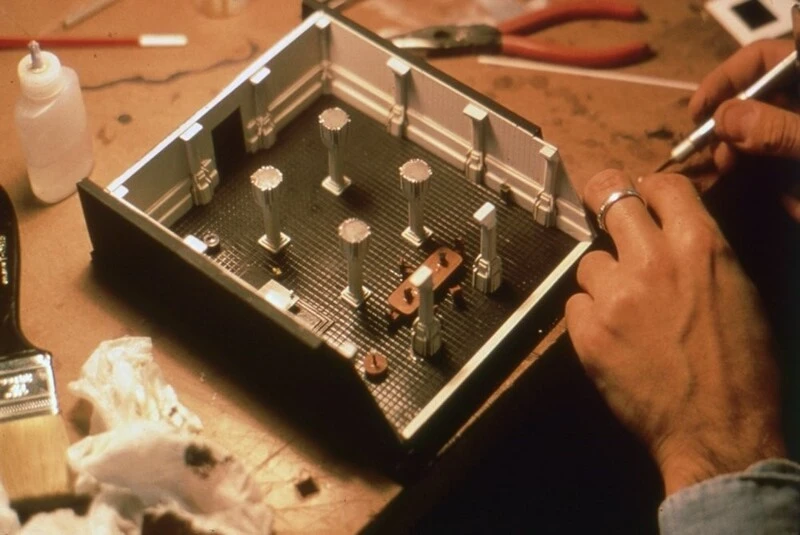
A miniature of the conference room, used to transition into the live-action scene.
A motion-control camera would repeat the exact same programmed path multiple times. Different visual elements were filmed on separate passes and then composited together. At times, the film stock remained loaded in the camera for days. As David Dryer recalled, a brief power outage once ruined an entire pass, forcing them to start the shot from scratch. 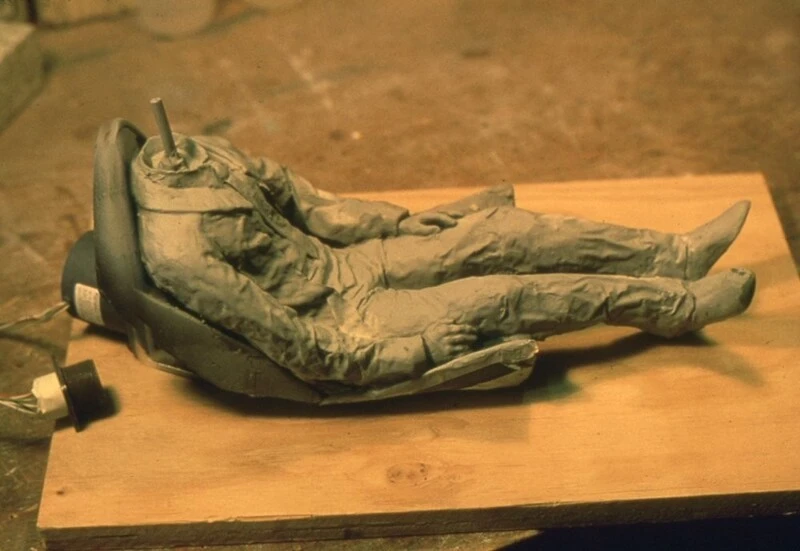
Bill George sculpted a miniature Deckard for the spinner. 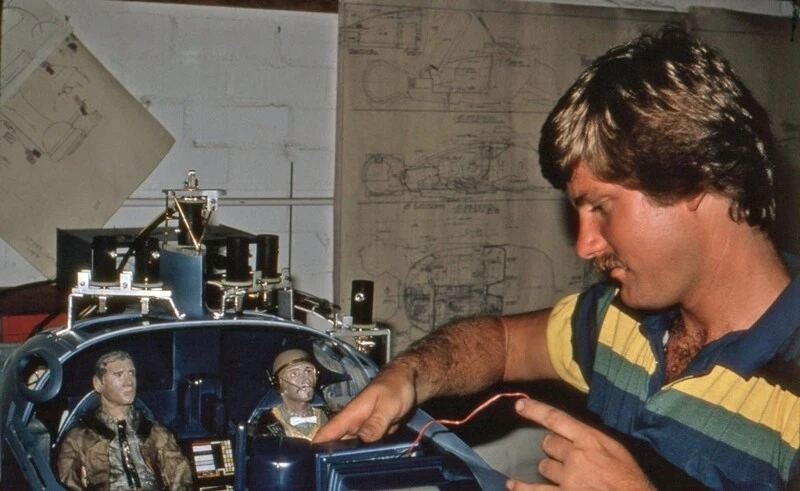
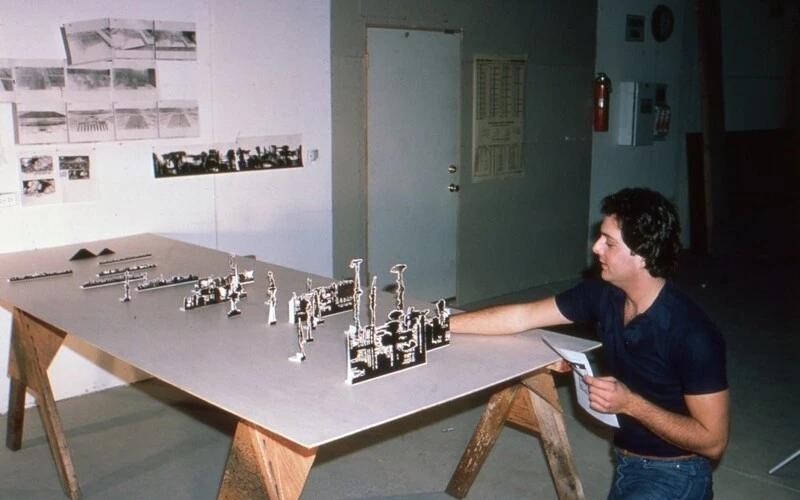
Christopher S. Ross alongside the city model, where fully detailed foreground layers gave way to flat silhouettes in the distance. 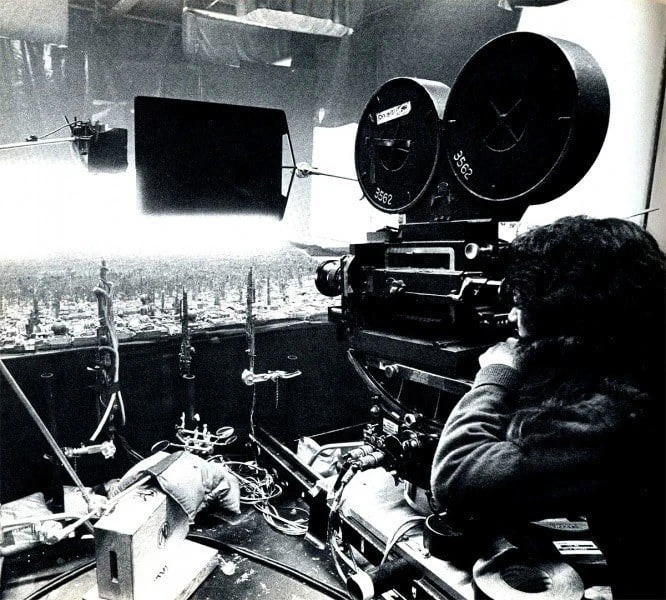
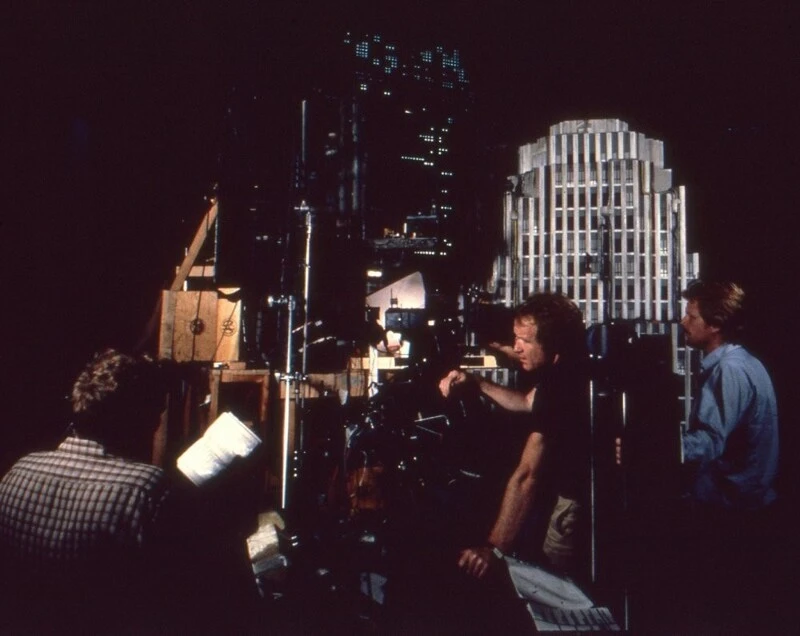
Alongside the live-action sets existed miniature vehicles, rooms, and rooftops. Rain couldn't simply be layered across the finished frame either, or it would look like a flat curtain hanging in front of the screen. When compositing, the team made sure drops only caught the light in illuminated areas, exactly as real rain would. 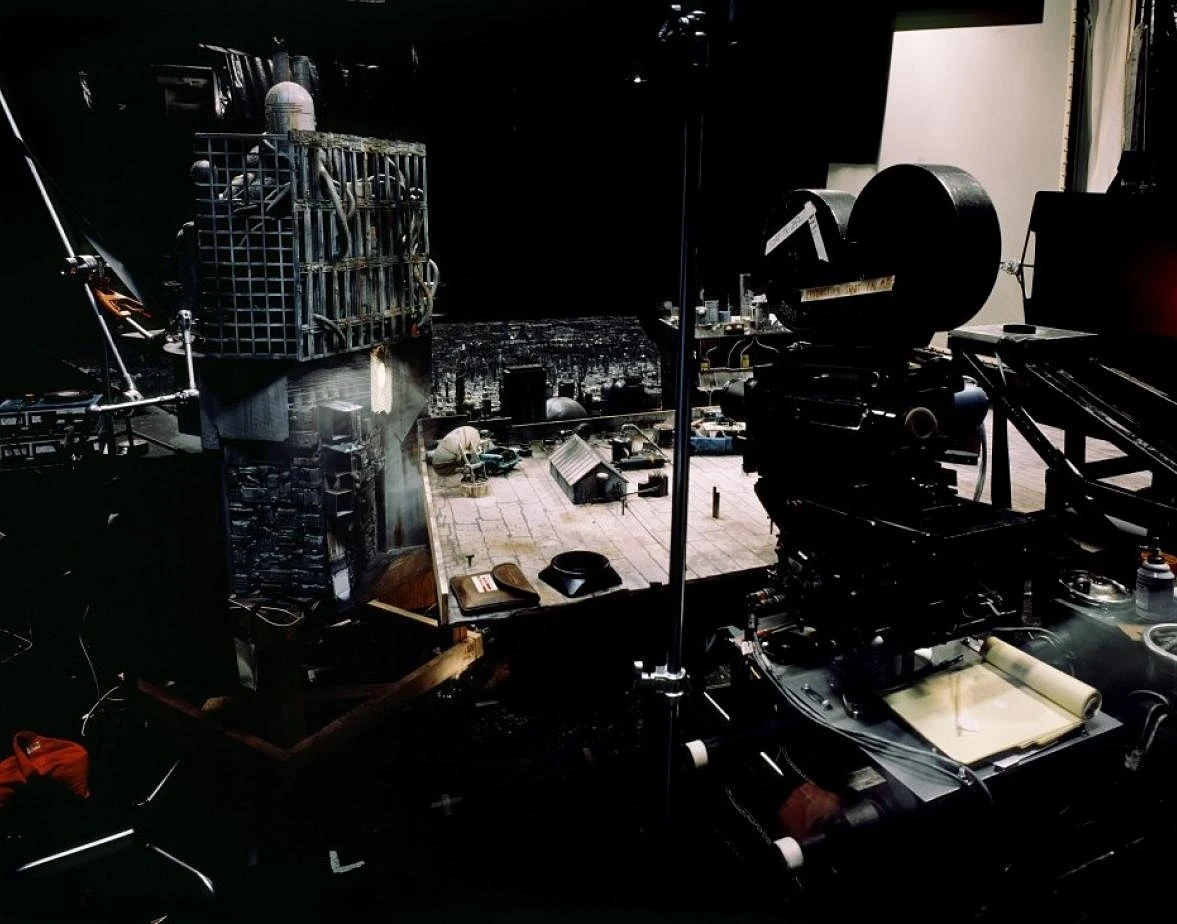
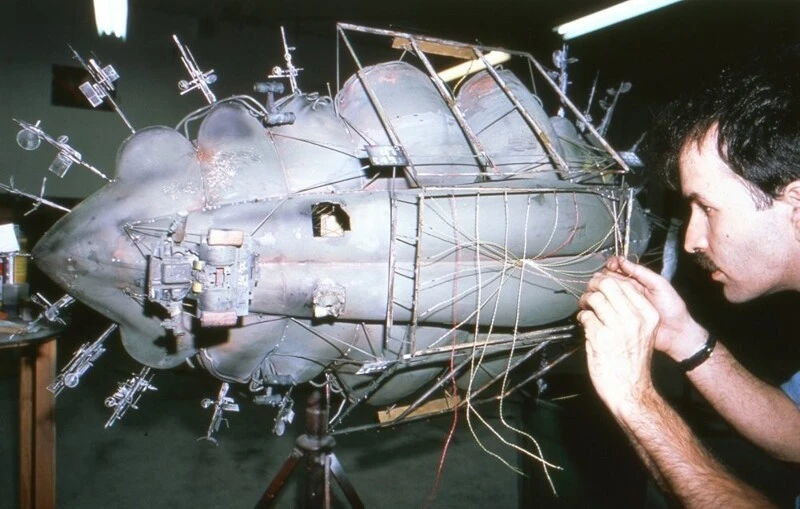
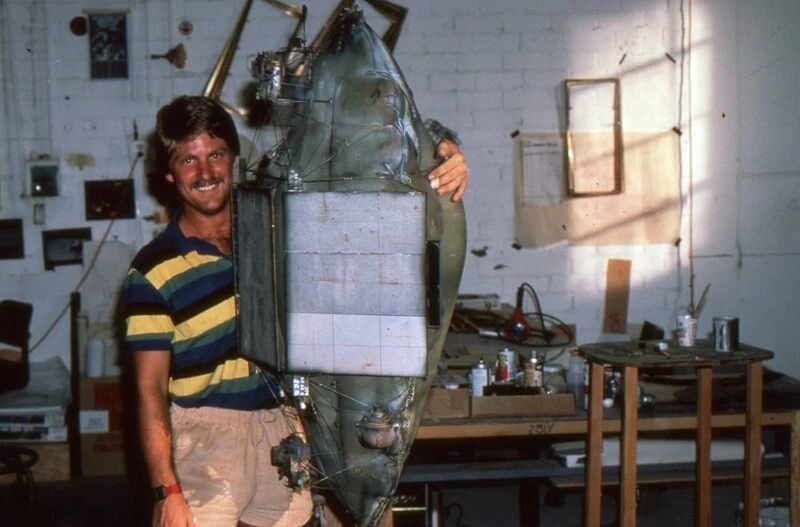
Bill George with the finished blimp model.
For the climax on the rooftops, the production used mobile stage sets roughly thirty feet tall. These were rotated to provide fresh angles and backdrops, with the cityscape matted in via visual effects. 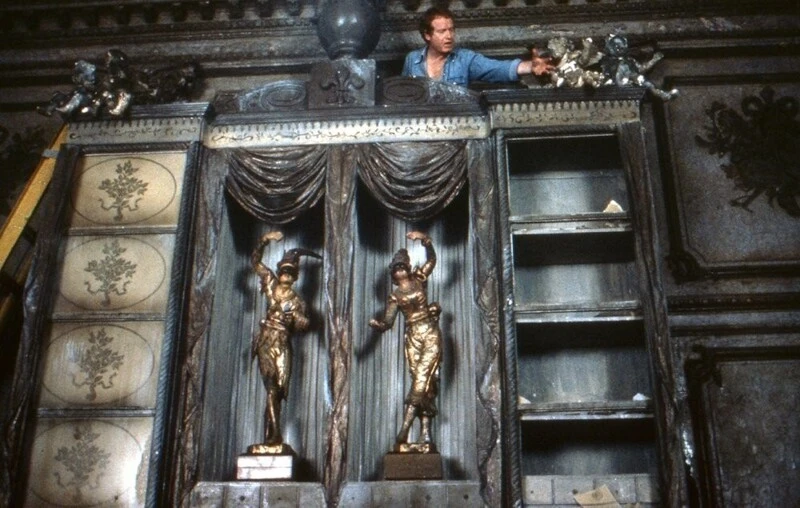
Ridley Scott stands in for Rutger Hauer on the rooftop set.
Cronenweth didn't see the finished film until its theatrical run. As cinematographer John Toll recalled, he and his colleagues bought tickets for an afternoon screening with barely twenty people in the theater. Cronenweth cheered aloud at certain scenes—thrilled not just with his lighting, but with how seamlessly everything came together as a narrative. According to Toll, the audience didn't seem to mind: they realized they were sitting alongside members of the crew.