How the World's First Seismograph Worked—And Why Zhang Heng's Secret Remains Unsolved (6 photos)
China is renowned for a unique civilization that flourished over thousands of years. The Chinese gifted the world paper, gunpowder, fireworks, and countless other inventions that humanity has relied on for centuries. Yet, some of their most remarkable creations were lost to time. Chief among these was the extraordinary device crafted by Zhang Heng, capable of detecting precisely where an earthquake had struck across the vast reaches of the Celestial Empire. 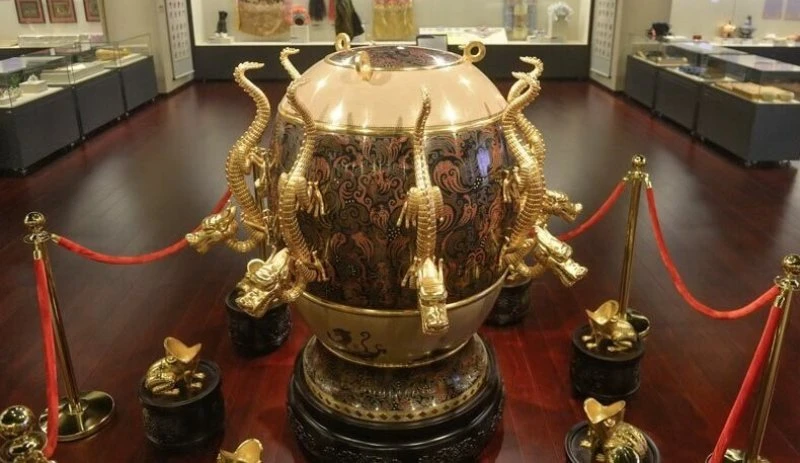
In 132 AD, a devastating earthquake struck one of China's provinces. Desperate for immediate aid, officials dispatched a messenger to the capital. Riding for days and exhausting several horses, the courier arrived at the imperial court even ahead of schedule—only to discover that the emperor had already known about the disaster for days. How was this possible centuries before the advent of radio communication? The answer was simple: Zhang Heng’s seismograph had alerted the emperor to the natural disaster. 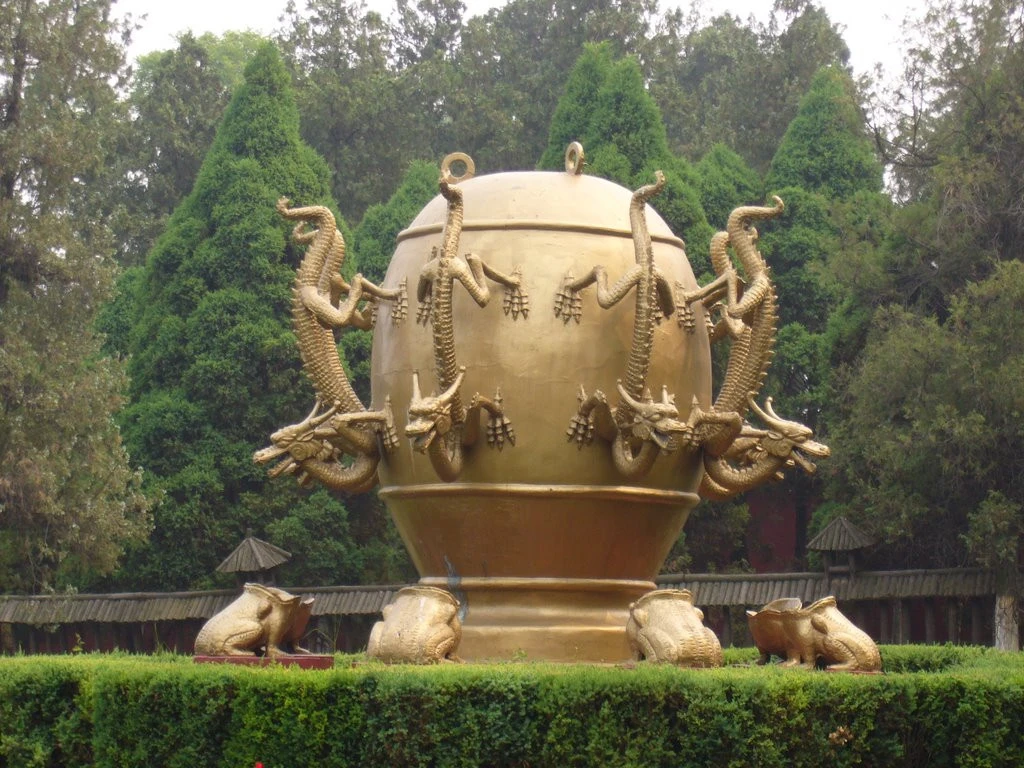
Much of China lies in seismically active zones, and historical chronicles record quakes that wiped entire cities off the map. For the Han Empire, these disasters carried a double threat: foreign enemies frequently exploited the chaos to launch attacks. Raids on stricken towns were commonplace, posing a serious headache for the ruling emperors.
When disaster struck, both relief supplies and military support needed to be dispatched without delay. To avoid relying solely on messengers—who were relatively slow and faced the constant risk of dying en route—a one-of-a-kind seismograph was built for the emperor. The instrument could pinpoint the exact direction of an earthquake across the empire.
The Story Behind the Invention
The seismograph was invented by the Chinese scholar Zhang Heng. Born in 78 AD to a humble family of a provincial official, he exhibited a passion for knowledge from an early age, dedicating all his time to study. His dedication paid off: by age 37, Zhang Heng had built a brilliant career, rising to the position of court astronomer and grand historiographer. 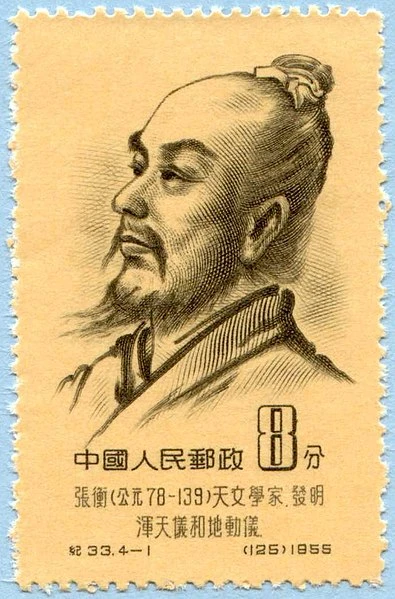
Zhang Heng on a modern Chinese postage stamp
The scholar left a profound mark on Chinese science. Zhang Heng improved the empire's geographic maps and made significant contributions to mathematics and astronomy, becoming the first to deduce that moonlight is merely reflected sunlight. Yet, his most monumental achievement was the seismograph.
The idea for the device struck after a powerful earthquake inflicted heavy damage on the capital, including the imperial palace itself. Zhang Heng labored on the seismograph for several years, and in 132 AD, the invention proved its remarkable capabilities. Skeptics doubted that an apparatus looking more like an ornate artwork than a scientific instrument could detect an earthquake hundreds of miles away—until it did. 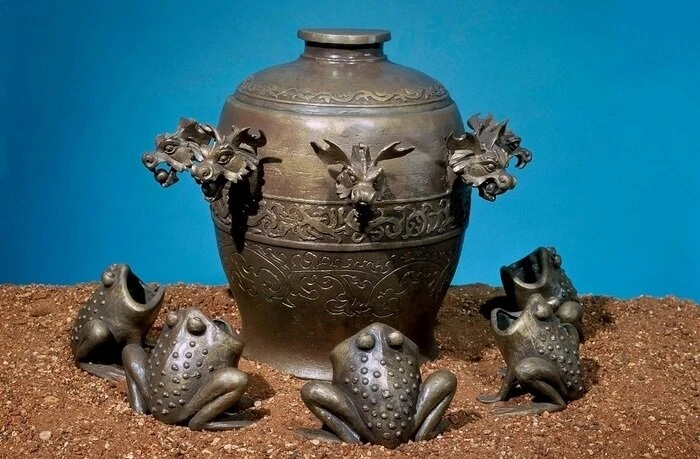
Zhang Heng's seismograph was an impressive bronze vessel decorated on the outside with eight dragons aligned to the cardinal points of the compass. Each dragon held a bronze ball in its mouth. At the base of the vessel sat eight toads with wide-open mouths, positioned directly beneath each dragon.
How the Device Worked
When the seismograph detected seismic tremors from a particular direction, the dragon corresponding to that cardinal point dropped the ball from its mouth. The ball fell into the open mouth of the toad below with a loud clang that echoed throughout the palace. The precise internal mechanics remain a mystery, as surviving historical accounts often contradict one another. Modern scholars suspect that inside the vessel hung a sensitive pendulum surrounded by eight levers connected to the dragons. 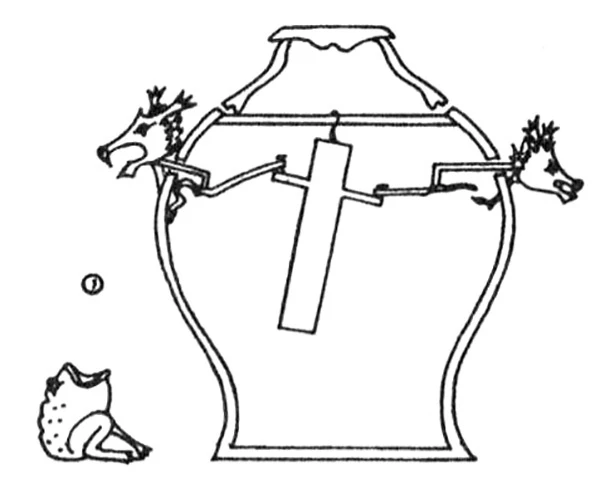
Earthquakes produce ground vibrations that travel hundreds or even thousands of miles. While imperceptible to humans at great distances, sensitive instruments can pick up the faintest tremors. The pendulum inside Zhang Heng's seismograph would sway off-center, tripping one of the eight levers. This triggered a spring mechanism that released the ball from the dragon's mouth.
The emperor praised the court scholar's invention immensely. From then on, the seismograph had a permanent place in the palace, reliably pointing toward distant earthquakes. Yet neither this remarkable device nor his many other achievements could shield Zhang Heng from envious rivals. Just four years after inventing the seismograph, court intrigue brought him out of favor, and he was exiled to govern a remote province. There he spent the rest of his days surrounded by books, maps, and intricate instruments.
Regrettably, Zhang Heng’s original seismograph has not survived. The numerous devices displayed in museums and collections today are modern replicas built from descriptions in ancient texts. Naturally, these replicas do not function, as the exact schematics of the sensitive internal mechanism were lost. 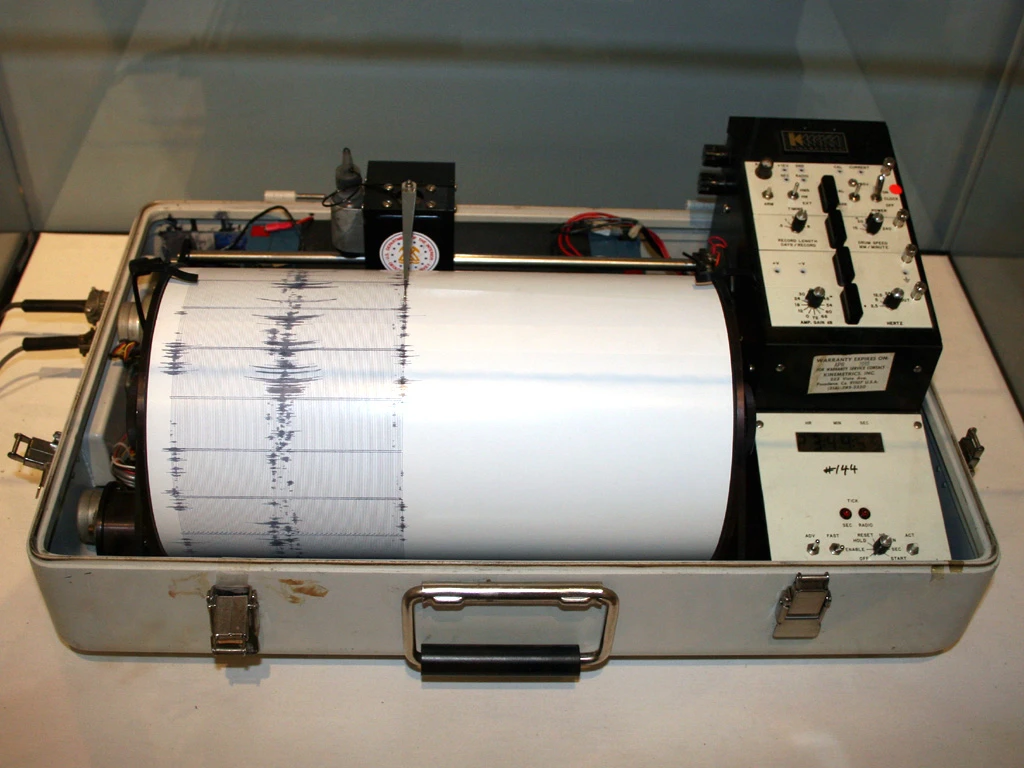
A modern replica of the seismograph
Enthusiasts have repeatedly tried to recreate the device using modern technology, but none of these mechanical reconstructions have succeeded in detecting even nearby seismic activity. At best, the balls fell at random, offering no indication of direction. As a result, the secret of China’s ancient seismograph appears to be lost forever.