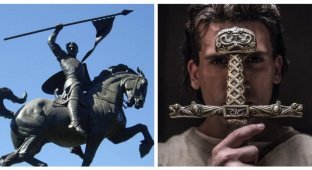
Pierre de Bayard: The Knight Without Fear and Beyond Reproach Who Fought an Army Alone (8 photos)
When we hear the word "knight," the phrase "without fear and beyond reproach" often comes to mind. But was that truly the case? Medieval knights were notoriously cruel, greedy, and unprincipled. Many engaged in outright banditry and would readily betray their lords whenever profit or danger called. Yet there were remarkable exceptions. The French knight Pierre Terrail, Lord of Bayard, was a man of impeccable honor, honesty, and extraordinary bravery. 
Pierre de Bayard was hailed as the knight "without fear and beyond reproach" during his own lifetime—a reputation recognized by friend and foe alike. Guided by his motto, "Do what you must, come what may," he lived by a strict personal code. The noble Lord of Bayard left behind a legacy of loyalty, generosity, and matchless valor. He always kept his word and remained steadfastly loyal to his sovereign, even when it cost him his life. 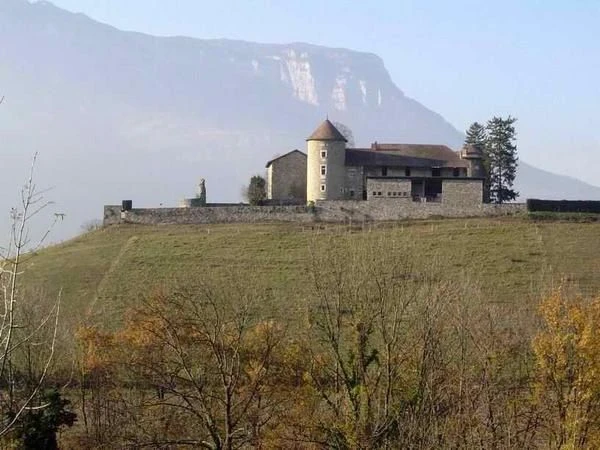
Château de Bayard near Pontcharra
The noble knight was born in 1476 at his family's ancestral castle near the town of Pontcharra, in southwestern France. He came from an ancient lineage renowned for heroic deeds. Pierre was the fourth and youngest son. To their father's dismay, his older brothers showed no interest in the art of war. Young Pierre, however, dreamed of military campaigns and battlefield glory.
Thanks to his father, by age 14 Pierre was proficient in weapons of all kinds and felt as comfortable in armor as in his own skin. His mother also played a vital role in his upbringing, instilling in him the values of honor, integrity, and generosity. "Respect your equals, always speak the truth, and protect widows and orphans," she instructed him.
In the Service of the King
At fourteen, Pierre entered the service of the Duke of Savoy as a page. Later, he was invited to join the household of King Charles VIII. The monarch took a genuine liking to the ambitious, straightforward young man and became his mentor. Bayard became a constant companion on the king’s military campaigns. France had been at war with Spain for decades, offering endless opportunities to display martial prowess. 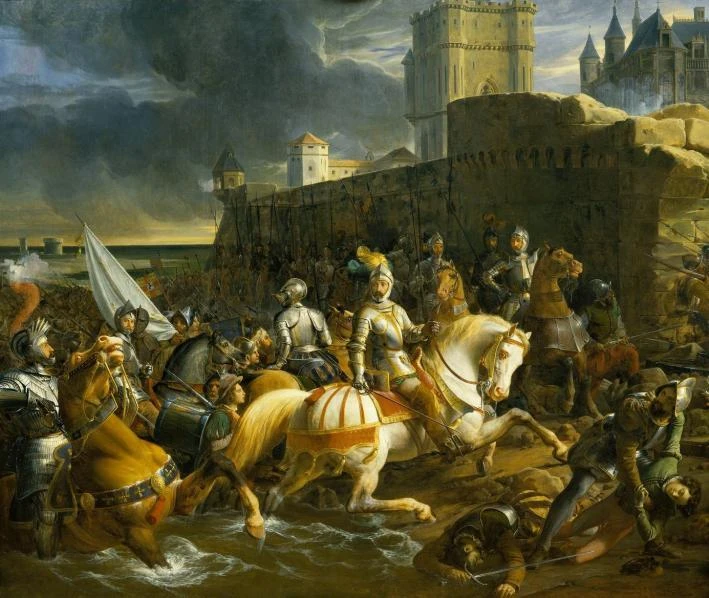
Early in his career, the young knight proved his noble character. During a raid, he and a companion captured a chest containing 15,000 gold coins from the Spanish. By the laws of the era, the spoils were rightfully his. Bayard split the bounty evenly with his partner, and then gave his own share away to common soldiers and the poor.
Above all, Bayard was renowned for his extraordinary combat skills. During a two-month truce, French and Spanish knights agreed to a contest of arms near the castle of Monerville. Each side fielded thirteen champions. The agreed rules strictly forbade striking horses; if a mount was accidentally injured, its rider was required to withdraw. The tournament was set to last all day until sunset. 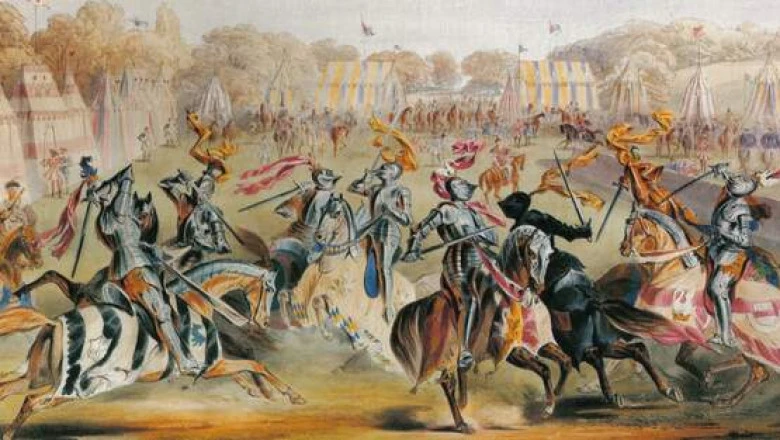
The Spanish immediately broke the cardinal rule, wounding eleven French horses. This left only Bayard and his friend Oroz to face all thirteen Spanish combatants. Protecting their own mounts, the pair personally unseated seven opponents. By nightfall, two Frenchmen were holding off six remaining foes. The bout ended in a draw, though the moral victory clearly belonged to the French. Yet Bayard's most legendary feat was still to come.
The Battle of the Bridge
In 1503, the French and Spanish armies faced each other across the Garigliano River. Bayard's forces held the right bank, while the enemy occupied the left. Both sides remained in a prolonged stalemate, hesitant to strike first. As food supplies dwindled in the French camp, commanders dispatched the bulk of their cavalry on a foraging mission. 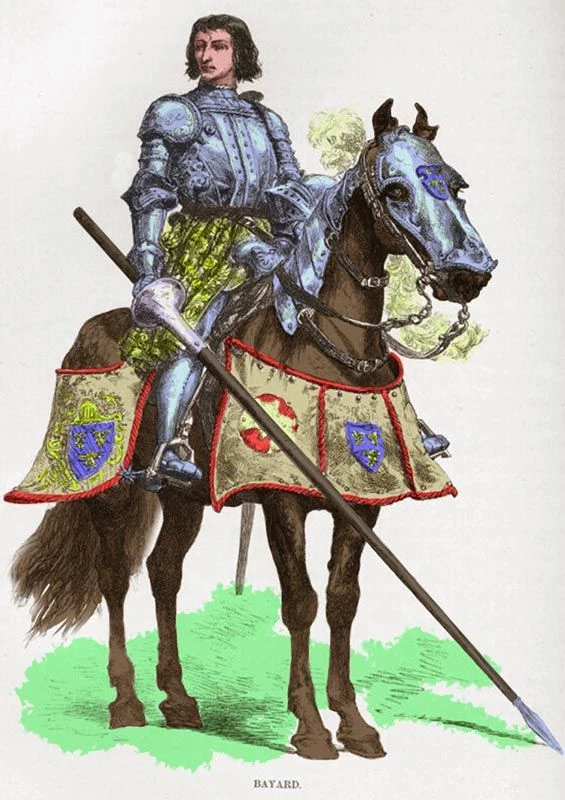
Learning that the French forces were depleted, the Spanish seized the opportunity to launch a surprise attack. Their commander, Gonzalo de Córdoba, devised a seemingly flawless plan to encircle the enemy. To execute it, however, a detachment of knights had to cross a narrow bridge where barely two horsemen could ride abreast.
The Spanish strategy almost succeeded, but at the critical moment, Pierre de Bayard appeared at the bridge alongside his squire, Le Basco. Outnumbered by dozens of Spanish soldiers, Bayard dispatched Le Basco to bring reinforcements, while he himself rode onto the bridge to hold the line alone. Though the enemy held a vast numerical advantage, the bottleneck allowed only two or three attackers to engage him at a time, forcing them to crowd and obstruct one another.
As the first enemy riders reached the span, Bayard spurred his horse and charged. He impaled the first two with his lance, casting them into the river below. Positioning his mount sideways to block the narrow passage, he struck down one attacker after another. When his lance eventually shattered, he drew his sword. Covering himself and his horse's head with his shield, the lone defender delivered swift, crushing blows.
Spanish knights fell dead into the river or retreated wounded to their bank. Yet there was no one to relieve the valiant Pierre. It seemed inevitable that his strength would eventually wane and he would fall. The Spanish anticipated this exact moment, even feigning a retreat to lure him onto their side of the river. But Bayard refused to take the bait, holding his ground firmly on the bridge. 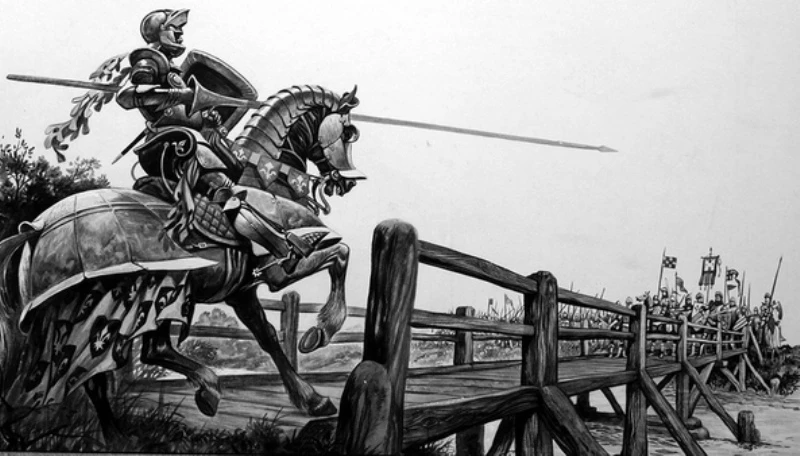
Though wounded, the brave warrior held the crossing until French relief arrived. Yet his comrades could not push forward initially, as Bayard's horse was completely blocking the narrow pass. Spurring his mount, Pierre surged forward, driving the enemy off the bridge. Fresh French troops poured onto the opposite bank behind him, securing a decisive victory.
The Death of Pierre de Bayard
Bayard enjoyed such immense prestige that after the Battle of Marignano, the new King Francis I asked the hero to dub him a knight. The modest Pierre initially resisted, but eventually conceded. Performing the accolade with three flat strikes of his blade on the monarch's shoulders, Bayard declared: "May God grant, Your Majesty, that you never know flight!" 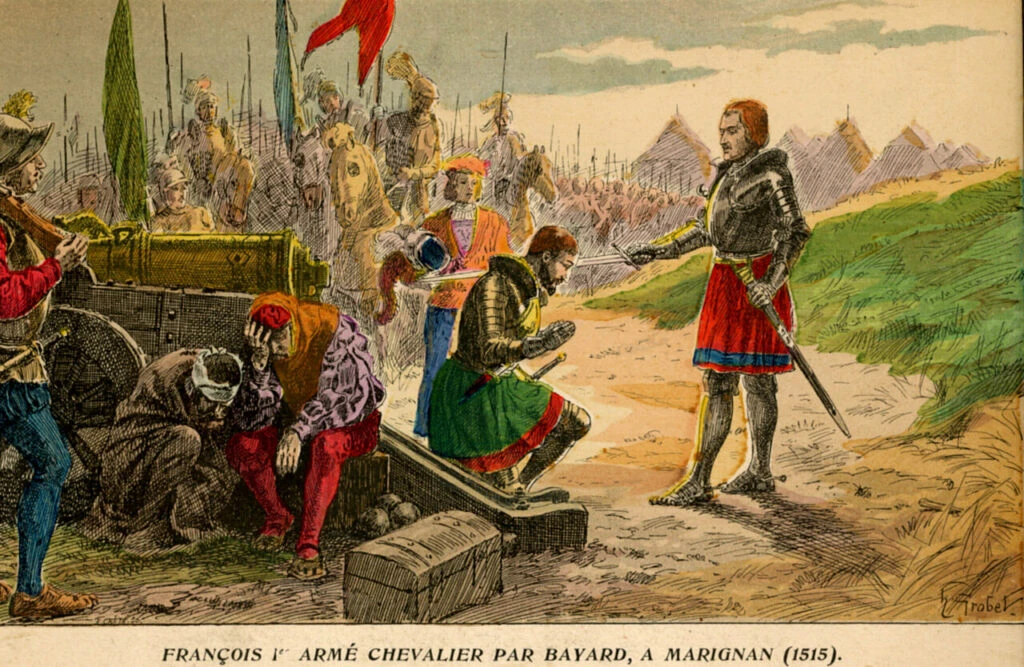
Bayard knighting King Francis I
The Knight Without Fear and Beyond Reproach met his end in 1524 during an Italian campaign. The French forces were led by an incompetent commander, Admiral Bonnivet, whose miscalculations led to defeat and a forced retreat toward the Alps. After being mortally wounded himself, the commander passed control of the army to Bayard.
A battle ensued shortly thereafter, with Bayard fighting at the front, as befitted a commander. A Spanish soldier shot him in the back with an arquebus. The heavy lead ball—resembling a small cannonball—shattered his steel armor and broke his spine. Legend has it that the dying knight requested to be propped up against a tree facing the enemy, stating: "I have always faced them, and in death, I refuse to turn my back." 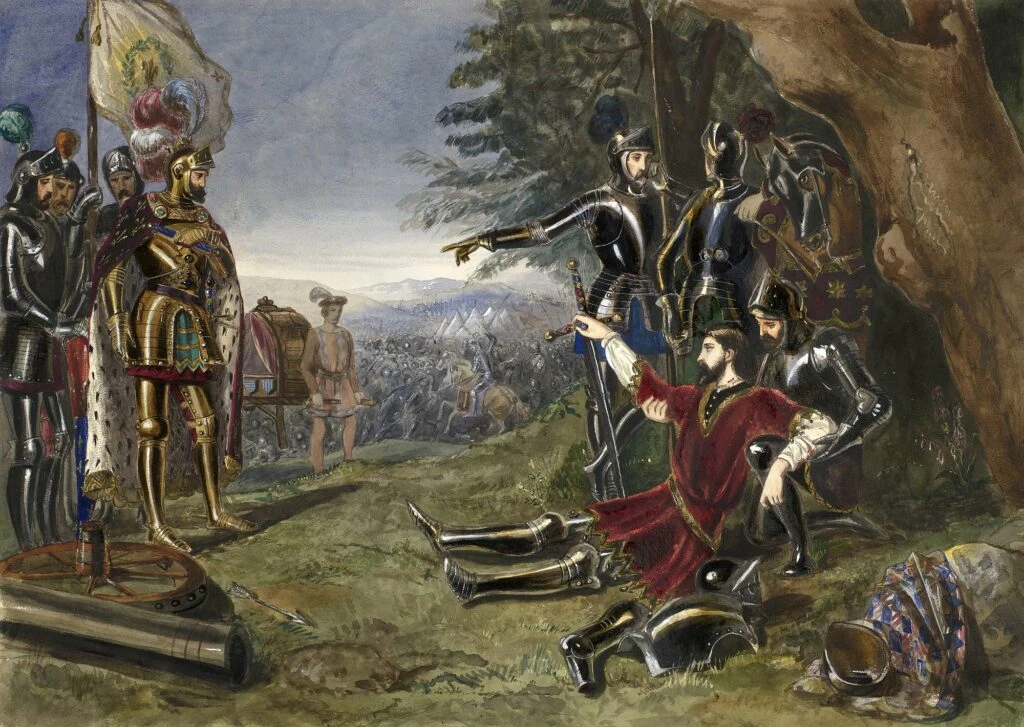
Spanish troops found the knight propped against the tree. Their commander, the Marquess of Pescara, remarked:
"Most noble Lord Bayard, would to God that I could have saved your precious life by shedding my own blood, even if it meant keeping you as my prisoner."
The Spanish carefully transported the wounded knight to their camp, but even their finest physicians could not save him. Thus passed one of the rare knights whose honor and valor were revered even by his enemies.