Prince Costentenus: How a Talented Impostor Made a Fortune Off His Tattoos (7 Photos)
These days, tattoos rarely turn heads. Over the past decade, even full-body ink has lost its shock value. A century ago, however, high-quality, full-color tattoos were an exotic novelty that never failed to draw a crowd. Such body art was reserved for extraordinary individuals who had traveled to far-off lands—sailors, explorers, and members of indigenous tribes. Naturally, opportunists eager for fame and fortune capitalized on this fascination. Among them was Captain George Costentenus, also known as Georgios Costentenus, a prominent circus and theater performer of the 19th century. 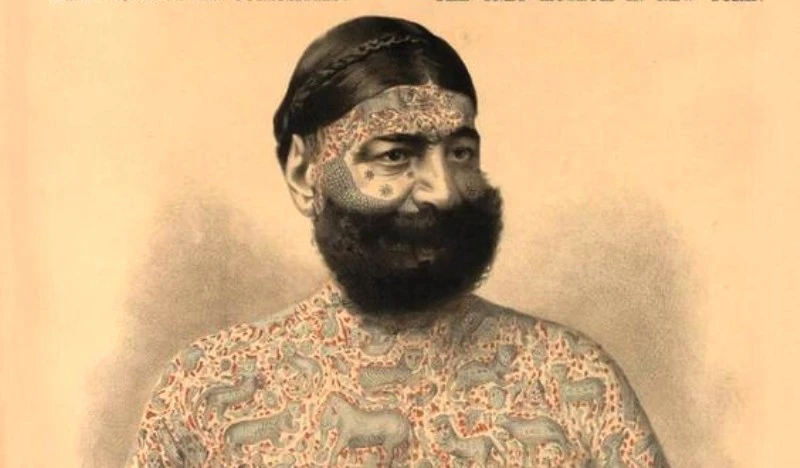
The Mysterious Patterned Prince
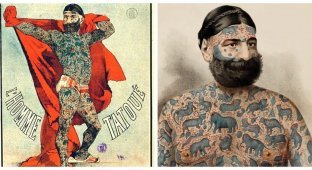
No one truly knew who he was or where he came from. He introduced himself variously as Captain or Prince Costentenus, dazzling audiences with his intellect and fluency in eight languages: Arabic, English, French, German, Greek, Italian, Persian, and Spanish. His appearance was unmistakable. From head to toe, his body was covered in dense, carpet-like color tattoos extending even to his face and palms. In total, 388 intricate designs in indigo and vermilion adorned his skin. Rumor had it that the ink covered everything—even his genitals—sparing only the soles of his feet and the skin around his ears. 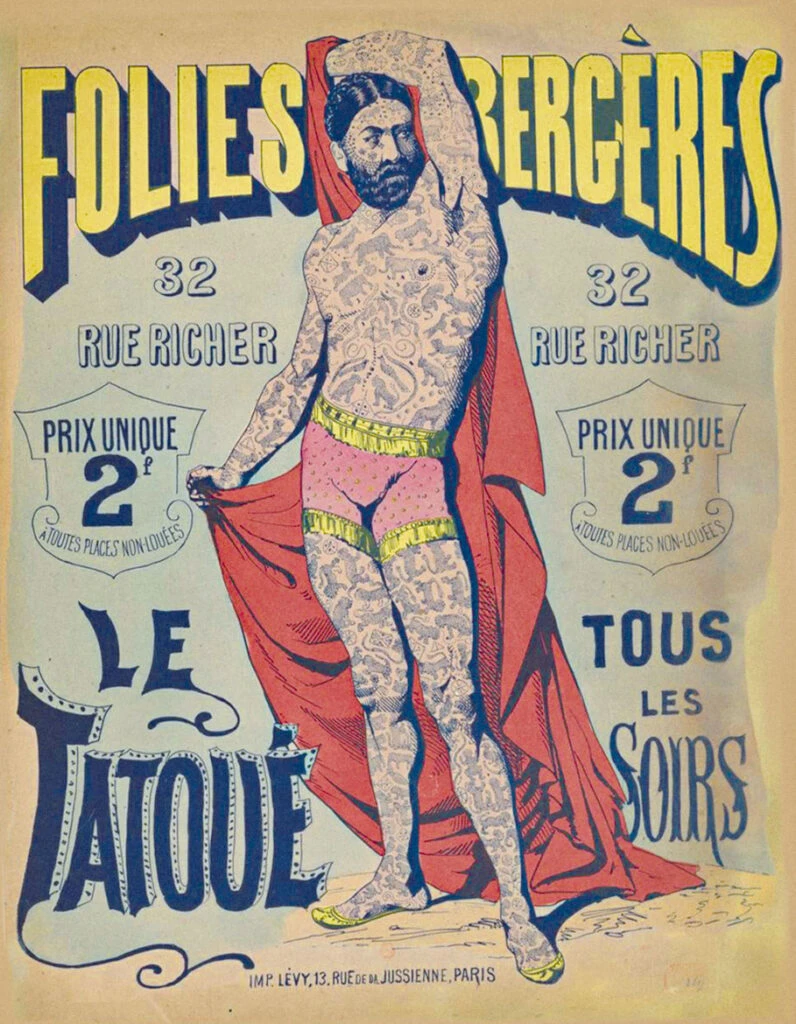
Prince Costentenus claimed to be a globe-trotting member of the Greek royal family. Fact-checking was impossible, as even his year of birth remained a secret. Depending on the source, he was born in Albania in either 1833 or 1842 and spent many years living in Asia. 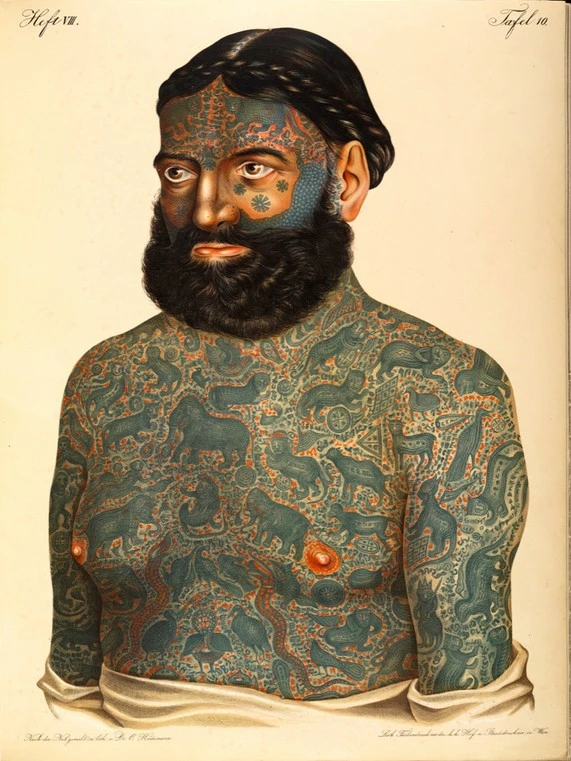
Costentenus spun endless, often contradictory tales about his origins. In one story, he claimed that Southeast Asian tribesmen forcibly tattooed him during an expedition. In another, he insisted Chinese authorities inked him as punishment for participating in a rebellion against a local ruler. In reality, his tattoos were easy to identify: the bold blue and red motifs were characteristic of traditional Burmese body art. 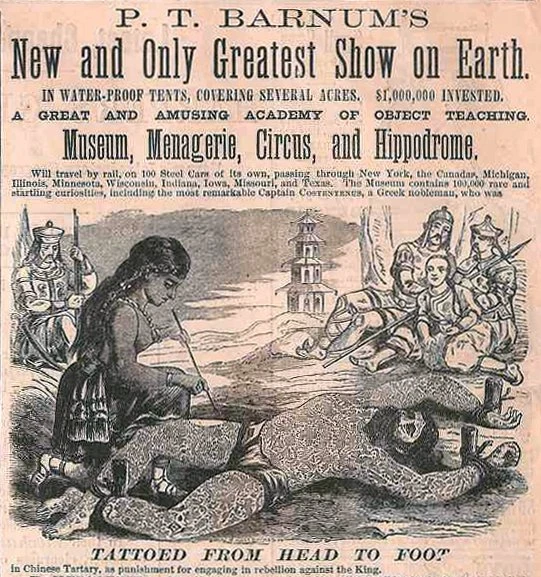
According to the performer, this was how he acquired his tattoos
His tattoos depicted wild and domestic animals, flora, and mythical creatures from Buddhist and pagan traditions, all crafted with extraordinary skill. Despite his grandiose claims, rumors persisted that the enigmatic aristocrat was merely an opportunistic drifter from an Albanian village who had inked himself to make a fortune.
Star of the Circus and Academia
Whatever his true origins, Costentenus’s strategy worked like clockwork. He launched his circus career in Europe alongside famous showman Carl Hagenbeck before heading to the United States in 1870. There, he secured a lucrative contract with Farini and Barnum's circus. The tattooed attraction pulled in a staggering $1,000 a week—an astronomical sum for the era. The job required little effort: he simply strutted around the ring in a loincloth, showing off his ink and rolling his eyes fiercely. 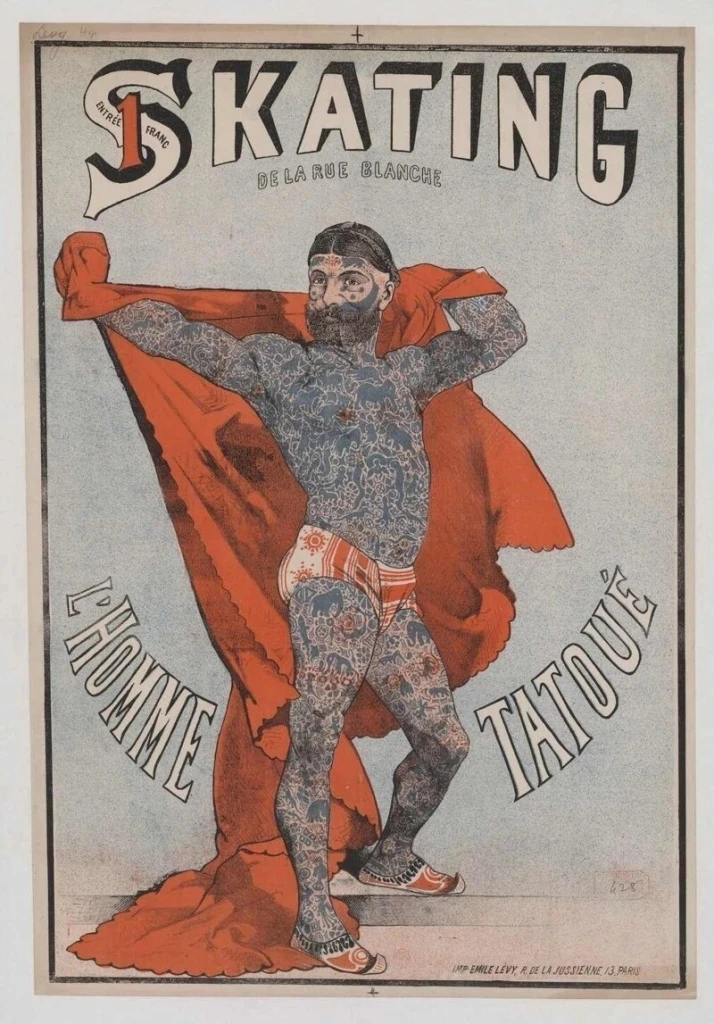
The resourceful performer supplemented his income by selling richly illustrated, fictionalized autobiographies. Dermatologists and anatomists also paid him handsomely for private examinations. During his European tours, he was invited twice to the University of Vienna, where top medical minds conducted detailed examinations of his skin. Unsurprisingly, buyers repeatedly offered him vast sums for his hide after death. 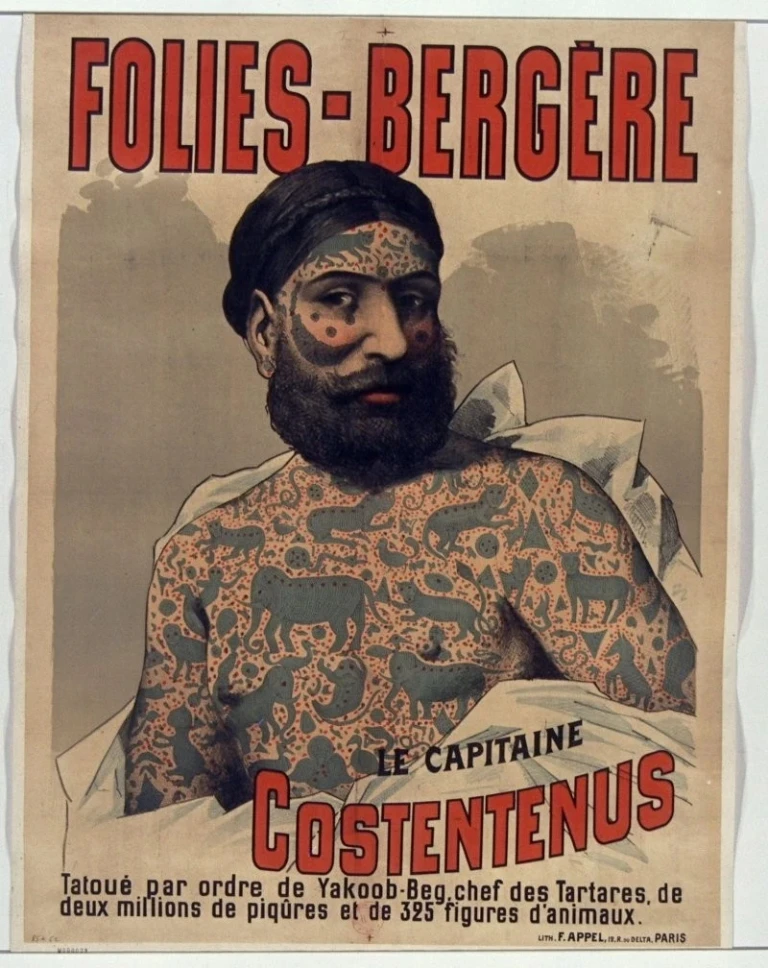
Audiences were enthralled by Costentenus’s striking look and sensationalized backstories. Posters proclaimed him the most heavily tattooed man on Earth. In reality, he wasn't. Even in the United States, he had a rival with even denser skin coverage: James F. O'Connell, who had begun performing back in 1842—a quarter-century before Costentenus. By then, however, O'Connell had retired, and the public's memory was short.
A Generous Soul
Regardless of his true identity, Costentenus achieved his goals. Following a long and prosperous circus career, he retired a very wealthy man, giving his final performance in 1894. Though details about his final years remain scarce, reports suggest he put his wealth to noble use. Having no family of his own, he left half his fortune to the Greek Church in London and split the remainder among his fellow circus performers. 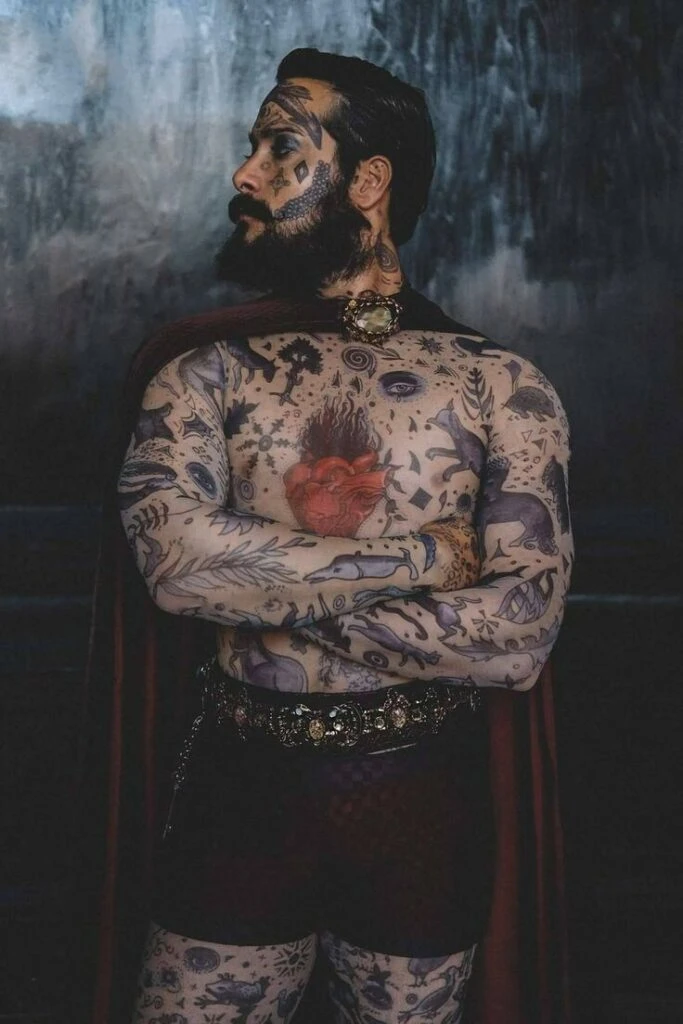
Shannon Holtzapffel in the 2017 film "The Greatest Showman"
Several books have been written about this extraordinary figure, and he has even graced the silver screen. The 2017 blockbuster "The Greatest Showman", based on the life of freak-show founder P. T. Barnum, features a character played by actor Shannon Holtzapffel who was inspired by Prince Costentenus.
Captain George Costentenus’s story remains a fascinating example of how 19th-century performers crafted elaborate personas to captivate audiences and guarantee box-office success. So, how would you describe Costentenus: a shameless fraud, a visionary performer, or a brilliant entrepreneur?