"The Lepers' Plot": The Fictional Coup That Cost Thousands of Innocent Lives (9 photos)
Leprosy is a dangerous and notoriously difficult disease to treat that has plagued humanity throughout history. While modern science understands the affliction well, it was once viewed as divine retribution and the "devil's mark." Lepers were stripped of all rights, persecuted wherever they went, and subjected to the wildest rumors. In the early 14th century, the alleged exposure of a "lepers' plot" led to the brutal massacre of thousands of sufferers across France and Spain. 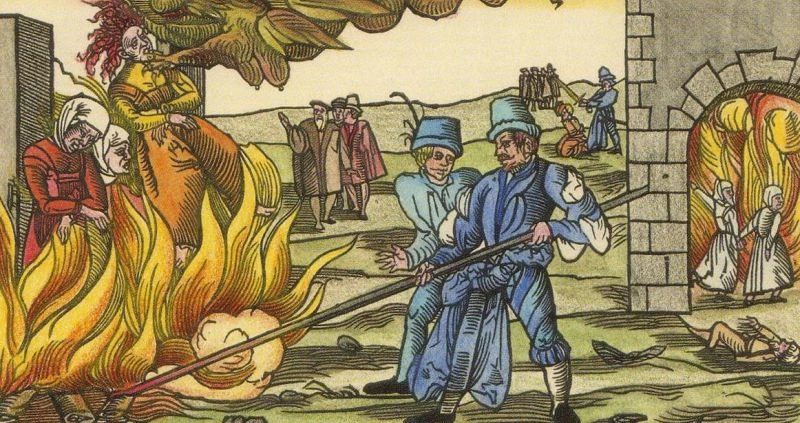
News of an alleged plot by lepers to infect every Christian in France and Spain began circulating in 1321. The exact origins of the rumor remain unknown, but its consequences were catastrophic. The French inquisitor Bernard Gui described the panic in his book,
The Life of John XXII
:
"In the year 1321, an insidious conspiracy of lepers against the healthy population was discovered and foiled in the Kingdom of France... These people, sick in body and diseased in mind, plotted to poison rivers, springs, and wells everywhere by dumping toxic mixtures and powders prepared in advance, so that healthy people drinking the water would contract leprosy, die, or be brought to the brink of death. Thus, the sick would multiply and the healthy would vanish." 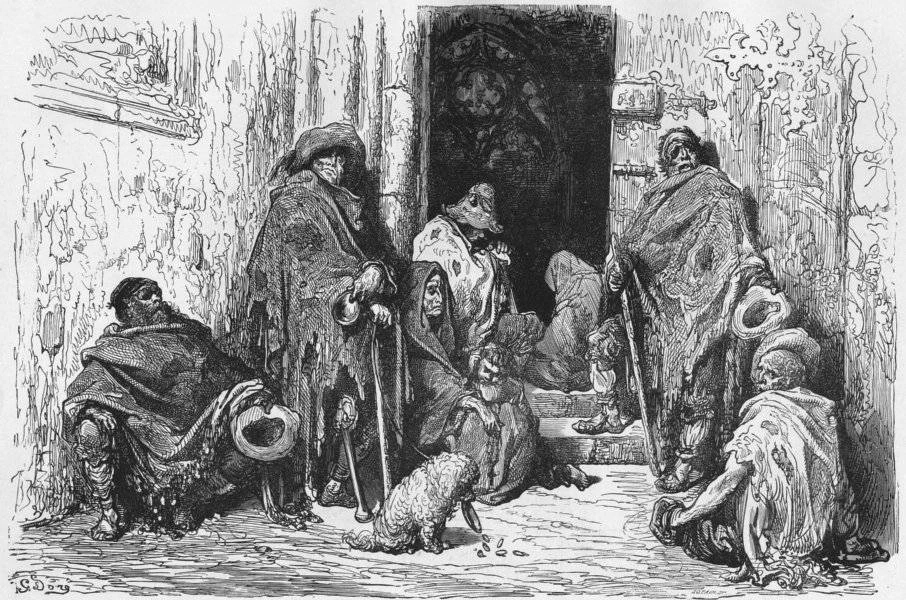
Lepers begging for alms
The inquisitor assured readers that the lepers' ambitions were deadly serious. At a secret assembly, they allegedly carved up the lands of the king, the Church, and local lords among themselves, even bestowing noble titles. According to Gui, the diseased rabble appointed their own princes, dukes, and archbishops.
The Hunt for Lepers
Today, such claims sound absurd. But in the spring and summer of 1321, mass hysteria swept through the towns and villages of France. Local authorities rounded up lepers and anyone suspected of conspiring with them. The unfortunates were executed as traitors and heretics—hanged along roadsides or burned alive at the stake. 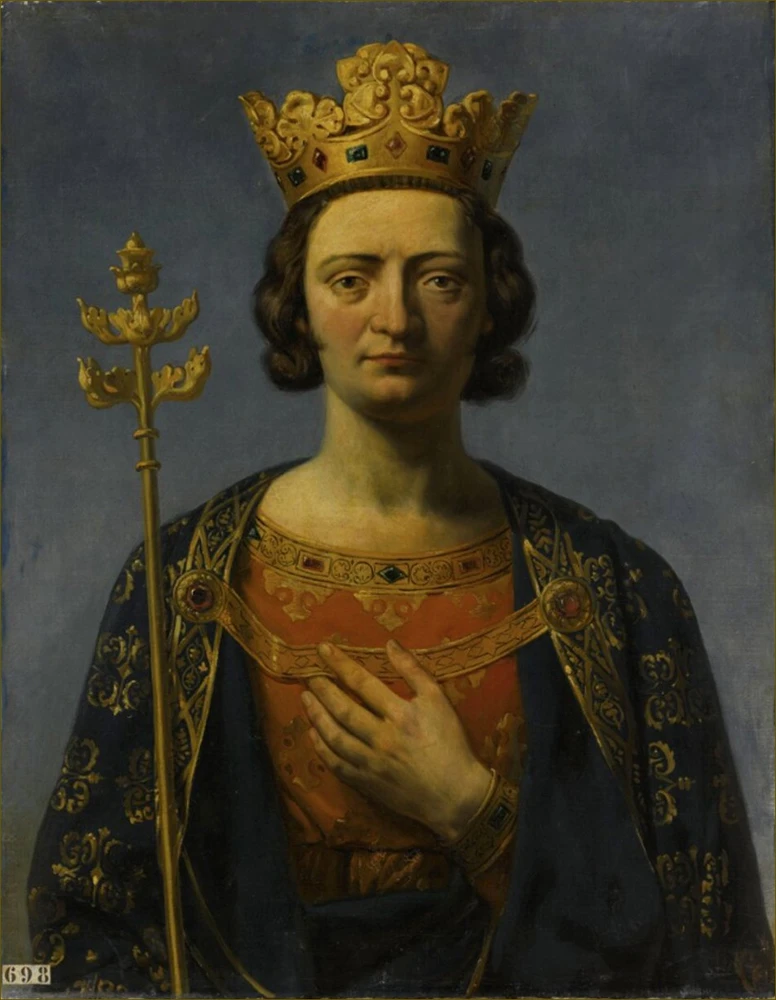
King Philip V
Before long, the panic reached the royal court. In June, King Philip V of France learned that lepers were being rounded up and burned alive across Aquitaine. Prior to execution, victims "confessed" to plotting the poisoning of wells, springs, and rivers to infect Christians. Naturally, these confessions were extracted under brutal torture, but that mattered little to contemporary authorities.
Fully convinced of the conspiracy, the king issued a special decree on June 21, 1321. It instructed officials to arrest all lepers and investigate their role in the plot. With royal backing, the campaign against these wretched victims escalated dramatically.
Surviving interrogation records provide vivid and chilling details of the trials. One suspect, for instance, claimed to have attended a secret gathering where the lepers' leader called for revenge against the healthy population, accusing them of despising the sick, trampling their rights, and committing various indignities against them.
"You see and hear how healthy Christians hold us, the sick, in disgrace and contempt, driving us from their gatherings and humiliating us..."
Life Outside the Law and Society
Medieval Europe lacked formal quarantine regulations, yet lepers were strictly segregated and systematically marginalized. Society believed the affliction was a divine punishment for sin, making victims worthy only of contempt. Fear of contagion also ran deep, as people already suspected that leprosy was transmissible. 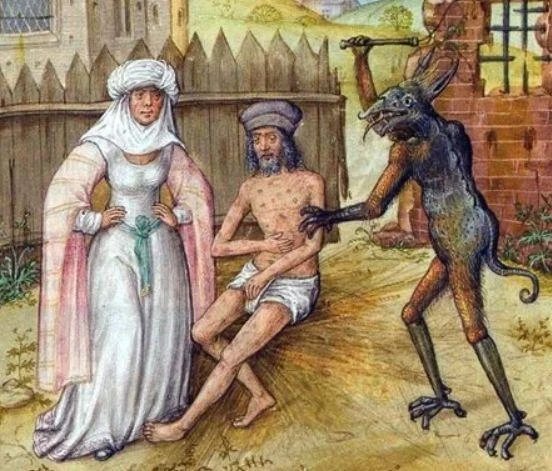
A leper and the devil
Lepers were denied the right to a home, a family, and gainful work, surviving entirely on charity. Condemned to roam the roads in hooded robes, face masks, and bearing handbells, their arrival was announced by ringing. Passersby fled at the sound, desperate to avoid breathing the same air as the "sinner." This harsh treatment was rooted in biblical tradition:
"The person with such a defiling disease must wear torn clothes, let his hair be unkempt, cover the lower part of his face and cry out, 'Unclean! Unclean!' As long as he has the infection he remains unclean. He must live alone; he must live outside the camp."
The only refuge for a leper was a leprosarium—specialized isolation facilities built far from towns and villages. The sheer number of sufferers was immense; throughout the 12th and 13th centuries, dozens of leper houses were established across Europe. 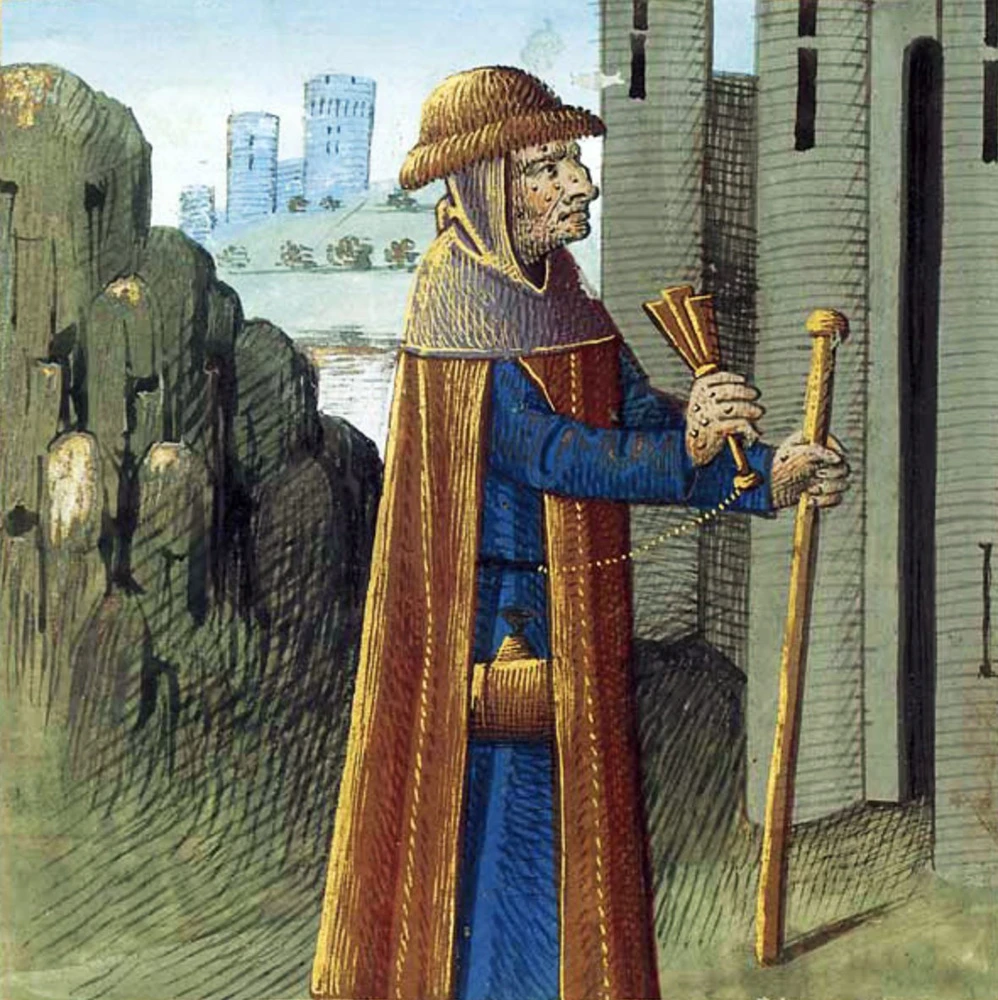
A leper with a clapper. 15th-century illustration
The Third Lateran Council of 1179 further codified their isolation. Lepers were required to worship in separate churches and be buried in segregated graveyards.
"...we decree that where a number of [lepers] are gathered together in a community, they may establish a church of their own with a churchyard and enjoy the services of their own priest."
King Philip V's ordinance of June 21, 1321, captures the sheer disgust felt toward victims, referring to the "rot of foul lepers" from which he sought to purge his realm.
Targets Beyond Lepers
The Church played a central role in driving this persecution. Because leprosy was viewed as a spiritual stain and a "disease of the soul," calling someone a leper was a grave insult. Under medieval law, sufferers were stripped of human legal standing altogether. 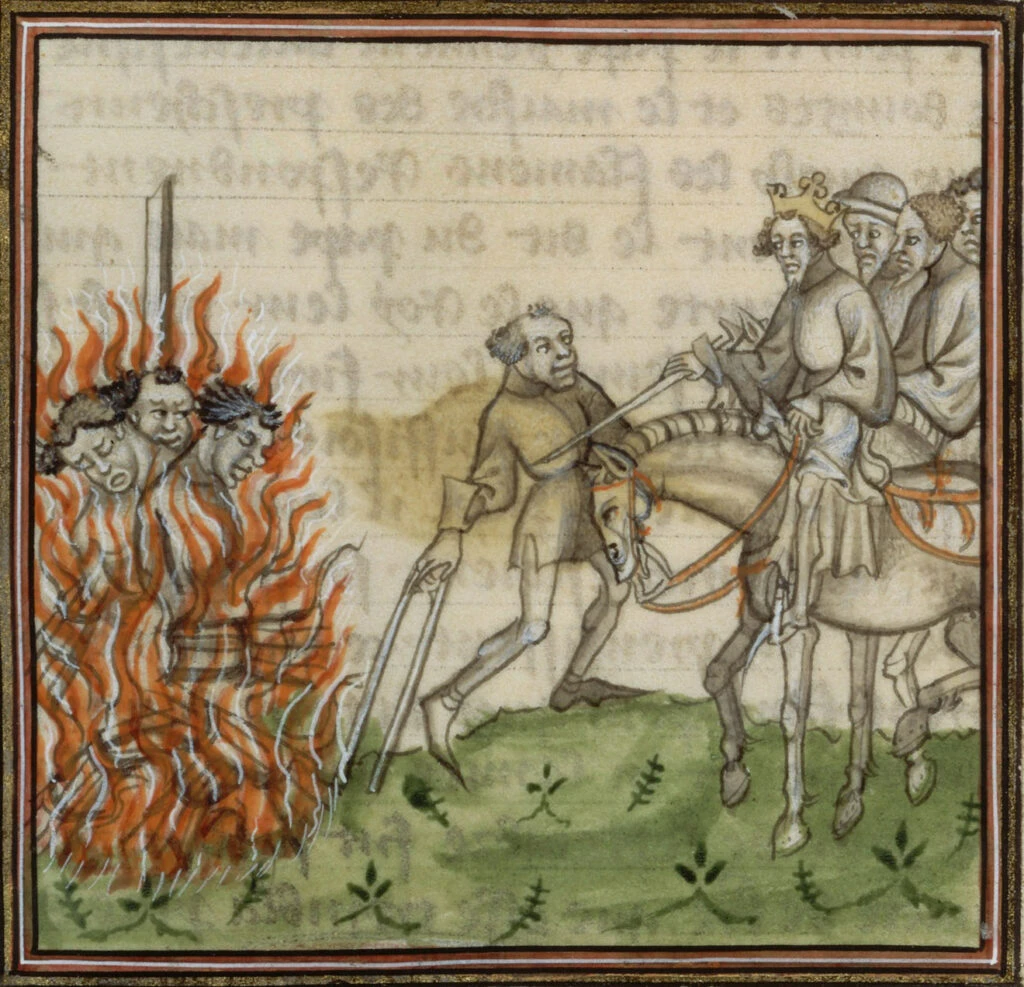
Execution of the conspirators in the presence of the king
Lepers were barred from transferring or gifting property, testifying in court, inheriting assets, making donations, or bringing property claims. Legally, they ceased to exist. Given such oppression, resentment was inevitable. Hypothetically, one could imagine how rumors of a revenge plot might take root.
However, lepers were not the only targets for long. At the height of the persecution, a local baron sent a letter to the king claiming that a noble-born leper had confessed to being recruited by... Jewish conspirators. The detainee alleged that a wealthy Jew had given him a bag of poison and ten livres to contaminate the water supply of a French town, promising further payments for every new recruit. 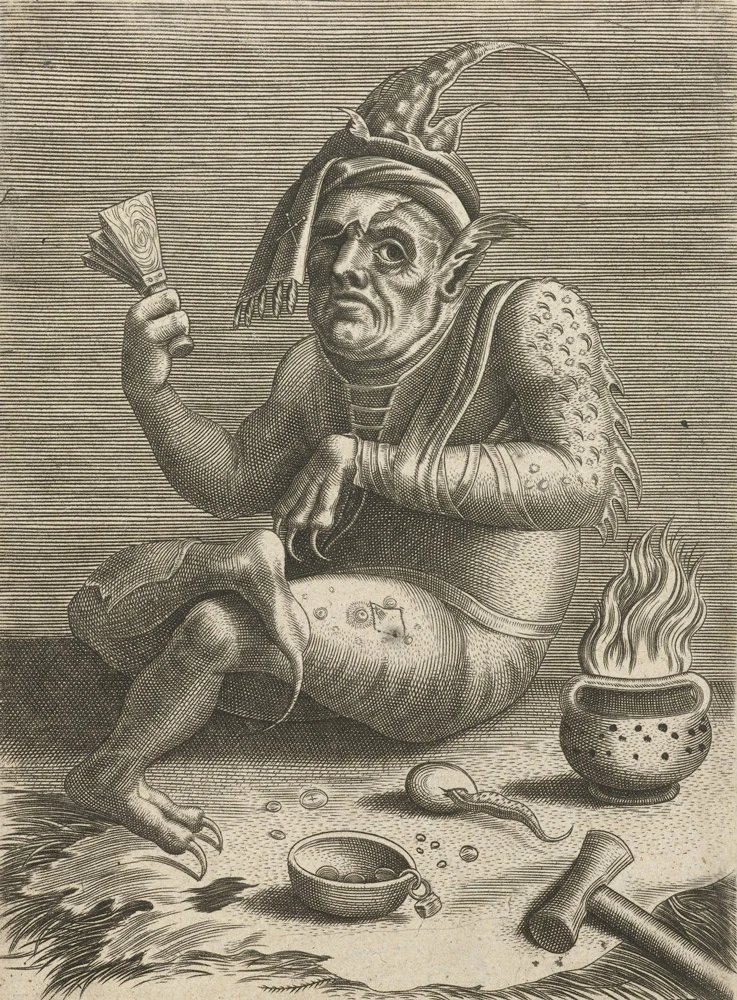
A leper depicted as a demon. 15th or 16th-century engraving
This accusation triggered a wave of anti-Semitic persecution. Fourteenth-century records detail numerous instances of Jewish citizens being tried, executed, or lynched based on false rumors. In Spain, harsh restrictions were imposed: Jewish residents were forbidden from entering Christian homes with wells and barred from touching market goods without immediately buying them.
Hysteria was further fueled by the observation that Jewish communities appeared to suffer lower rates of leprosy, leading to absurd claims that they could interact with outcasts without fear. Under torture, suspects routinely implicated Jewish accomplices, fabricating bizarre claims to satisfy their tormentors.
A No-Holds-Barred Crackdown
King Philip V's decree commanded that all lepers be interrogated; those who confessed were to be executed, while those who denied the charges were to be tortured until they confessed, then executed all the same. The accused stood virtually no chance of survival. 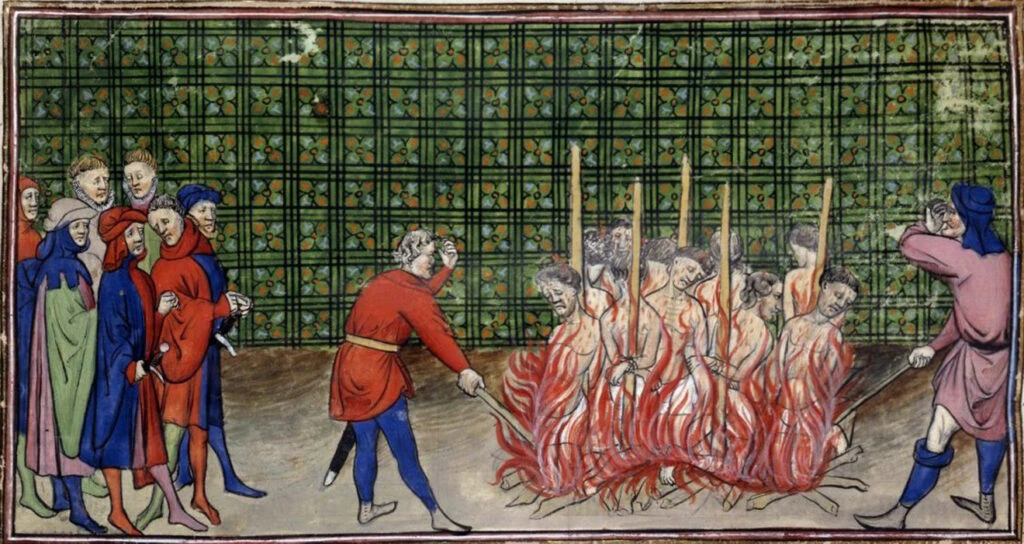
Burning of lepers. 14th-century manuscript miniature
Standardizing executions, the king ordered that conspirators—both men and women—be burned at the stake. The only leniency was granted to pregnant women, who were imprisoned until giving birth, only to be burned afterward. Children under 14 were jailed until reaching that age, whereupon they too were put to death.
Any property owned by the accused was confiscated by the crown, making wealthier victims primary targets. In many cases, mob violence bypassed official proceedings altogether, with vigilantes burning suspects inside their own homes. 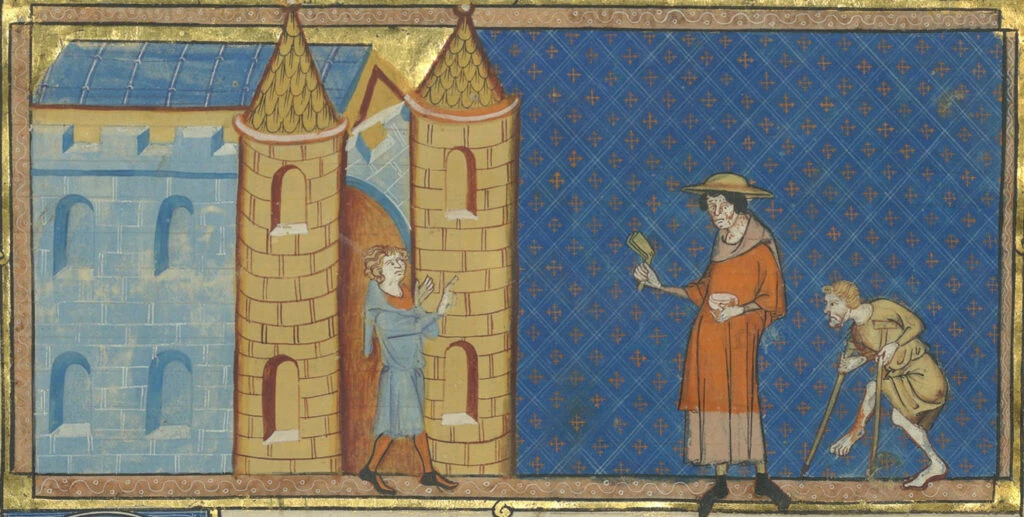
Two lepers turned away at a castle gate. 14th-century miniature
Remarkably, the frenzy ended as abruptly as it began. The "lepers' plot" yielded no actual political or social change beyond tightening isolation measures in parts of France. However, 1321 marked a turning point in European history, establishing a template for conspiracy panics that continues to resonate around the world today.