Cities Frozen in Time by Disaster: What Archaeologists Discovered in the Ruins of Lost Civilizations (14 photos)
August 15 marks Archaeology Day. Archaeology is usually a painstaking process of sifting through centuries of history—layer upon layer, house upon house, era upon era, with each era partially destroying what came before. But occasionally, history freezes a city in an instant. Mount Vesuvius buried Pompeii in a matter of hours. The volcano on Thera buried Akrotiri under ash before its residents could even retrieve their valuables. These are the cities that offer archaeologists the most authentic snapshot of past civilizations: not just ruins, but a moment frozen in time. Here is a look at what was discovered inside them—and why tragedy proved to be the ultimate preserver of history. 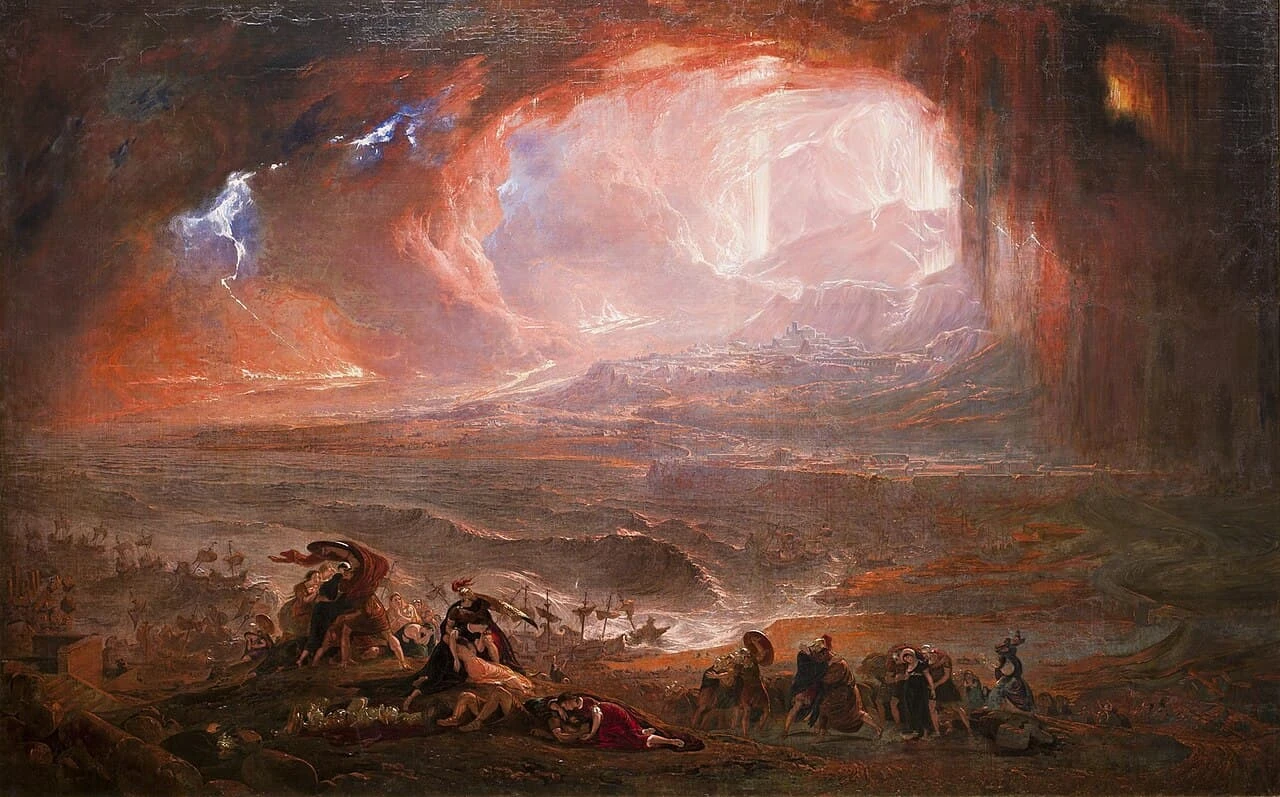
Pompeii: A Living City Still Being Unearthed
On August 24, AD 79, Mount Vesuvius buried Pompeii under a four-meter layer of ash. Between 2,000 and 5,000 people perished—those who were unable or unwilling to leave. The city was swallowed so rapidly that time stood still. 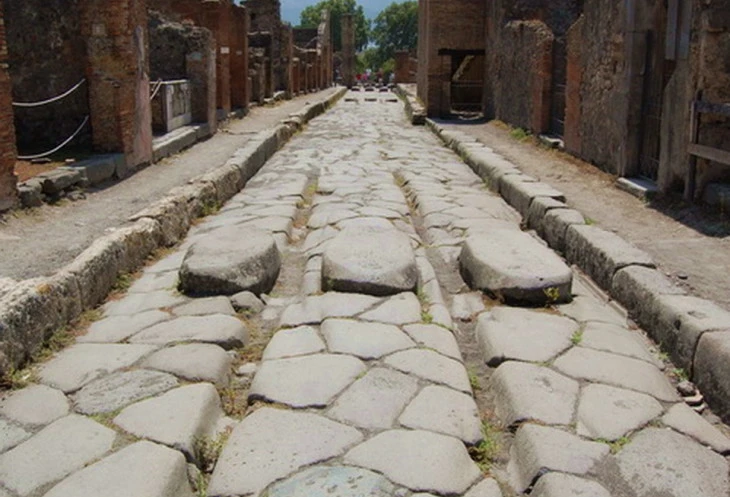
A street in Pompeii: time stopped here on August 24, AD 79, yet wagon wheel ruts are still visible in the stone today
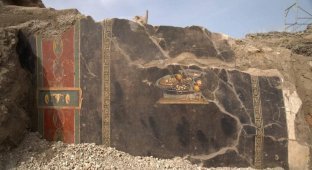
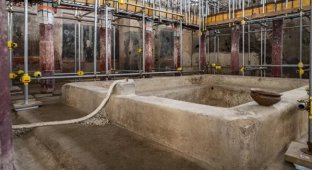
Excavations began in 1748 and continue to this day, with roughly 20% of the city still unexcavated. Every new season yields unexpected discoveries. Between 2019 and 2020, archaeologists fully uncovered a thermopolium in Region V—an ancient eatery that served as the Roman equivalent of a fast-food joint. Frescoes depicting ducks and fish—a literal menu of the establishment—remained vibrant on the painted counter. Traces of real food, including pork, beef, snails, and fish, were found preserved inside containers. One fresco even featured a playful scribbled inscription: "Nicias, shameless user!" 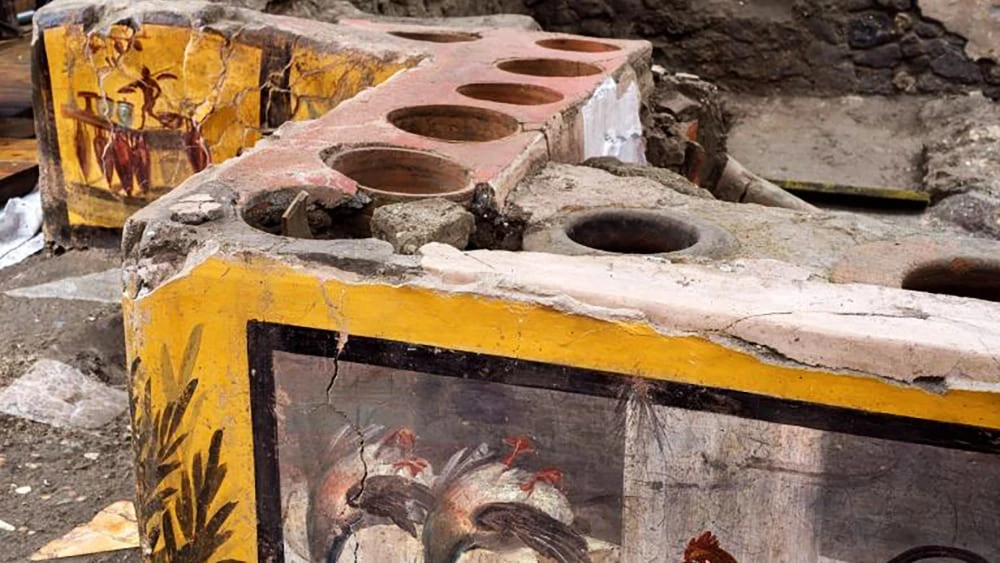
A thermopolium in Pompeii: frescoes depicting the food on offer remain preserved on the counter
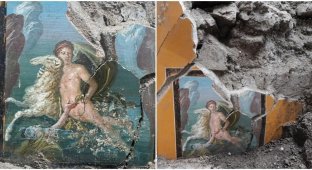
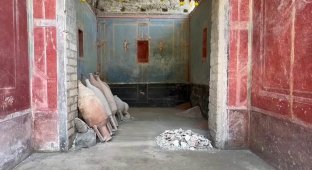
In 2024, archaeologists uncovered a banquet hall adorned with frescoes depicting heroes of the Trojan War. Graffiti throughout the city provides another unique glimpse into daily life: scribbles on the walls include insults, declarations of love, political campaign slogans, and announcements for gladiatorial games. Deep wheel ruts worn into the stone paved streets testify to heavy urban traffic.
Herculaneum: Lesser Known, Better Preserved
Nearby Herculaneum met a similar fate, though under different circumstances. Rather than falling ash, it was hit by superheated pyroclastic surges traveling at hundreds of miles per hour with temperatures reaching nearly 500 degrees Celsius (930°F). While this killed everyone left in the city instantly, it simultaneously sealed and preserved the town from within. 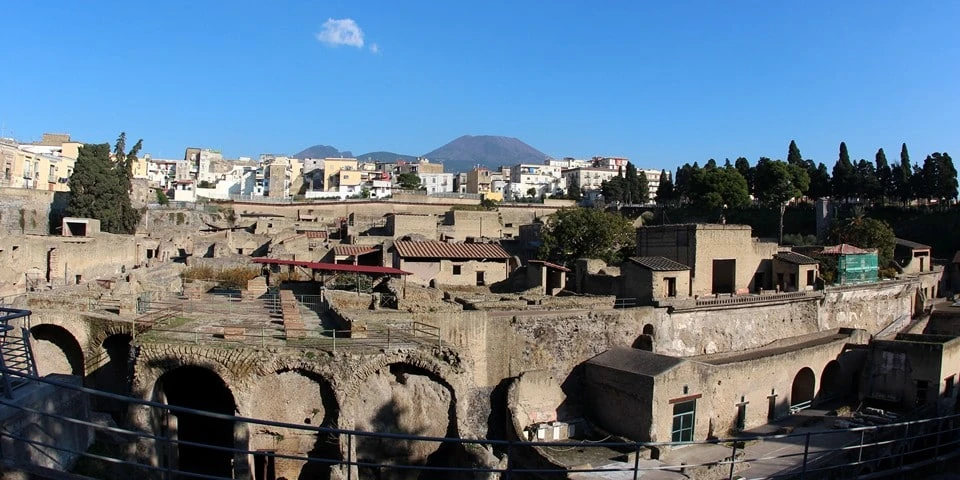
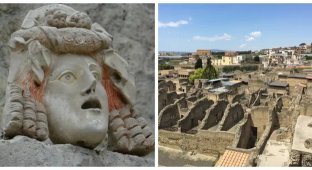
Herculaneum has been only partially excavated: part of the ancient town lies buried beneath modern Ercolano
Thanks to these unique conditions, items that rotted away long ago in Pompeii survived in Herculaneum: wooden doors, furniture, beams, and window shutters remain intact, along with textiles and foodstuffs. The crown jewel of the site is the Villa of the Papyri, where a library of carbonized scrolls was discovered in 1752. Most contain works by the Epicurean philosopher Philodemus. Scholars continue to decipher the delicate scrolls using X-rays and neural networks as part of the ongoing international Vesuvius Challenge. 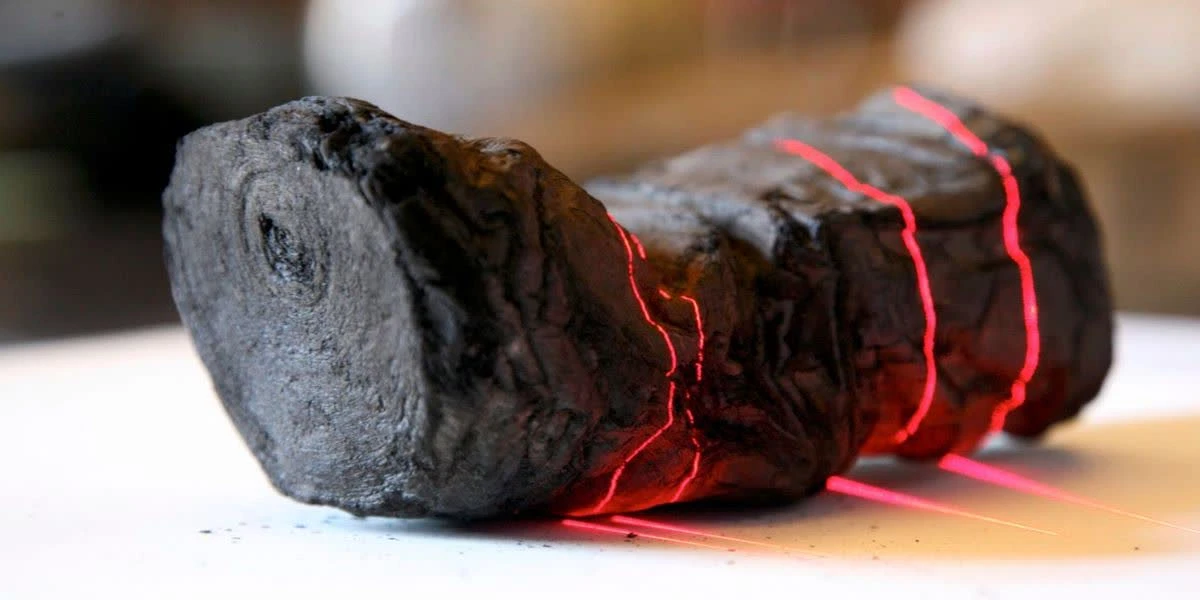
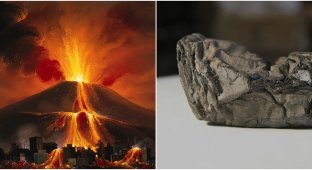
The Herculaneum papyri—the only intact library surviving from classical antiquity
Akrotiri: The Pompeii of the Aegean
A millennium and a half before the eruption of Vesuvius, a similar catastrophe struck the Aegean Sea. Around 1600 BC, the volcano on the island of Thera (modern Santorini) erupted with catastrophic force, burying the prosperous trading port of Akrotiri under a thick layer of ash. The city was a major hub of Cycladic culture, closely tied to Minoan Crete. 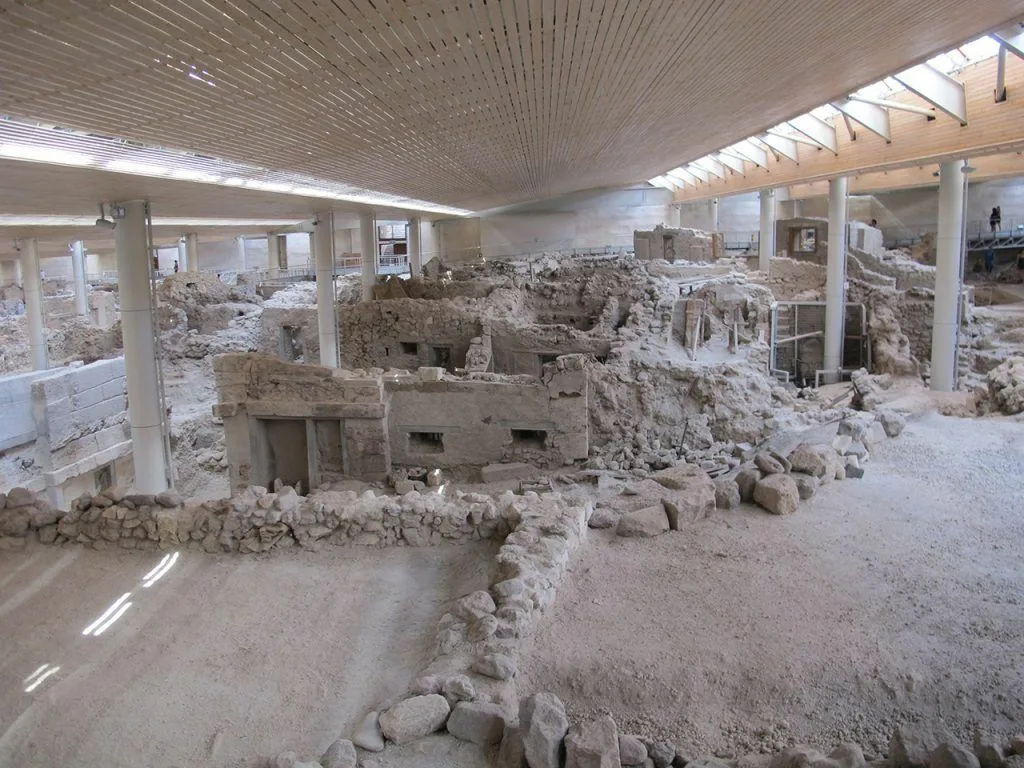
Excavations at Akrotiri take place under a protective enclosure to shield the frescoes from sun and rain
Excavations led by Greek archaeologist Spyridon Marinatos began in 1967, revealing a surprisingly advanced city complete with three-story buildings, complex drainage systems, and sophisticated plumbing. The walls were decorated with stunning frescoes portraying swallows, antelopes, and blue monkeys. Researchers believe the blue monkeys depict Hanuman langurs, primates native to the Indian subcontinent. 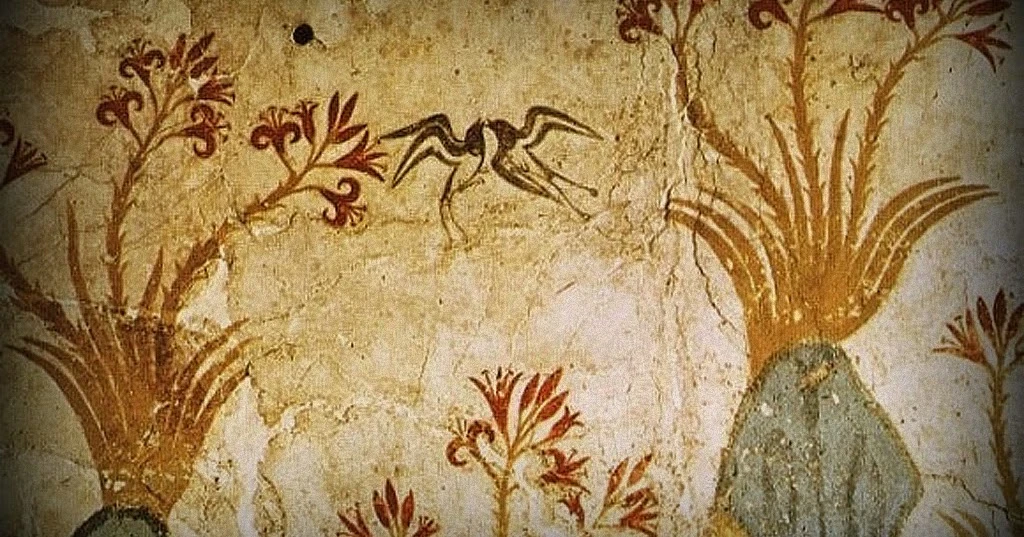
The "Spring" (or "Swallows") fresco from Akrotiri—one of the few Bronze Age frescoes preserved in its original colors
Crucially, no human remains have been found at Akrotiri. Earthquakes likely heralded the eruption, giving residents enough warning to evacuate. This turns Akrotiri into something rare: a time capsule without victims. Some researchers have pointed to Akrotiri as the inspiration for Plato's Atlantis, though most scholars remain skeptical.
Çatalhöyük: A City Without Streets
In modern-day Turkey's Konya Province, a settlement thrived from 7400 to 5600 BC that defies conventional ideas of urban design. Çatalhöyük is the largest known Neolithic settlement, once home to up to 10,000 people. Yet it had no streets. 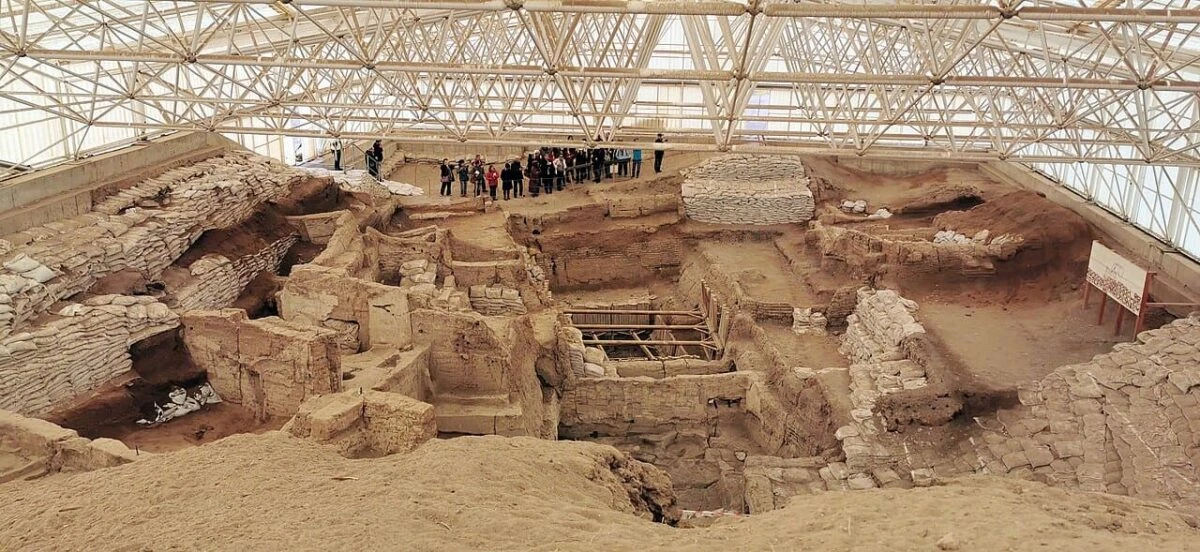
Excavations at Çatalhöyük in Turkey: mud-brick houses were built right against each other, with entryways through the roof
Mud-brick homes were packed tightly together like honeycomb. Residents entered their homes through openings in the roof using wooden ladders, walking across rooftops that doubled as the settlement's "streets." The dead were buried directly beneath the floors of living spaces, often under sleeping platforms. Skulls were sometimes removed and stored separately, likely for ritual purposes. In 2012, Çatalhöyük was designated a UNESCO World Heritage site. 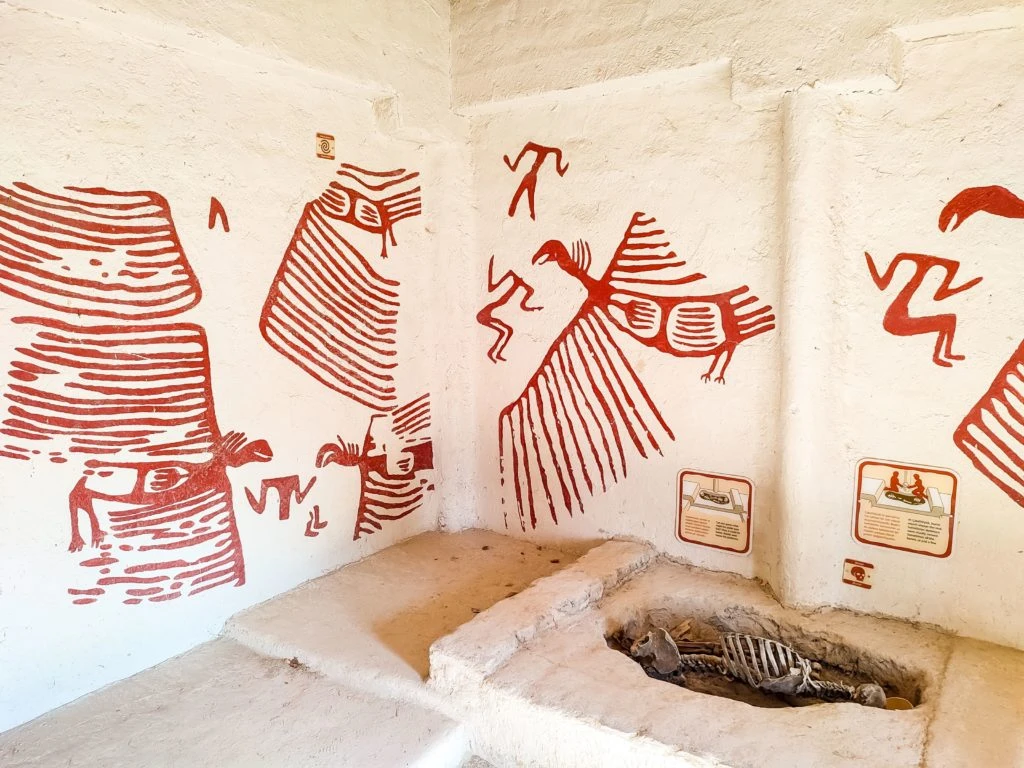
A reconstructed interior of a Çatalhöyük home, featuring underfloor burials and wall paintings of birds of prey
No catastrophe occurred here; the settlement was simply abandoned around 5600 BC. However, the gradual accumulation of layers—house built upon house—resulted in astonishing preservation, leading archaeologists to describe it as an "archaeological supernova."
Mohenjo-daro: An Ideal City with an Unknown Fate
Around 2500 BC, one of the ancient world's largest cities flourished in the Sindh province of modern-day Pakistan. Mohenjo-daro—meaning "Mound of the Dead" in Sindhi—was a major center of the Indus Valley Civilization (or Harappan Civilization), housing up to 35,000 residents. 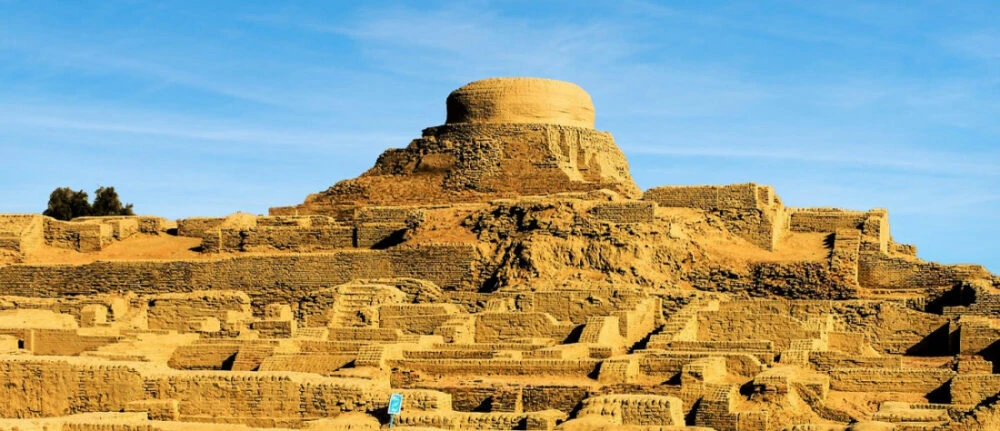
The ruins of Mohenjo-daro: straight streets and baked-brick buildings reveal meticulous urban planning
The city was remarkably organized. Straight streets intersected at right angles, built using standardized bricks of uniform dimensions throughout the site. Every neighborhood featured a covered drainage system, wells, and granaries. Mohenjo-daro was among the first cities in history with public sanitation and urban water supply systems—infrastructure that Europe would not replicate for another four millennia. 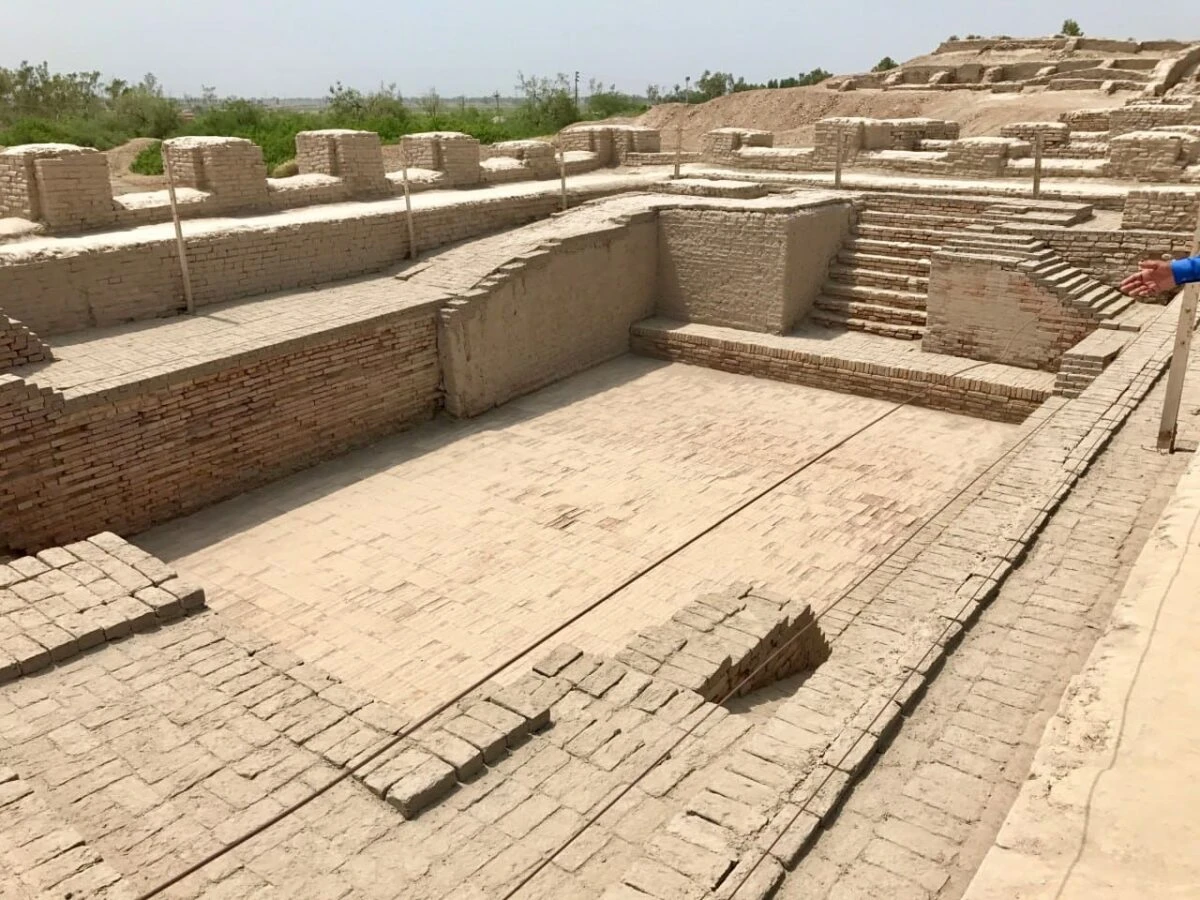
The "Great Bath" of Mohenjo-daro—a likely ritual bathing facility unparalleled in the ancient world
The city vanished mysteriously. Theories range from shifting Indus River courses and rising sea levels to epidemics or foreign invasions. Excavations indicate that city life faded gradually rather than ending in a single catastrophic moment. The sparse human remains—fewer than 40 skeletons found across the vast site—offer few answers, and the Indus script remains undeciphered to this day.
Tiwanaku: The High-Altitude Capital at the Edge of the World
Nearly 13,000 feet (4,000 meters) above sea level and just 10 miles from Lake Titicaca stand the ruins of a city that once served as the heart of a powerful pre-Inca empire. Tiwanaku flourished from the 6th to the 10th century AD, covering roughly 2.3 square miles (6 sq km) and housing between 20,000 and 40,000 residents. 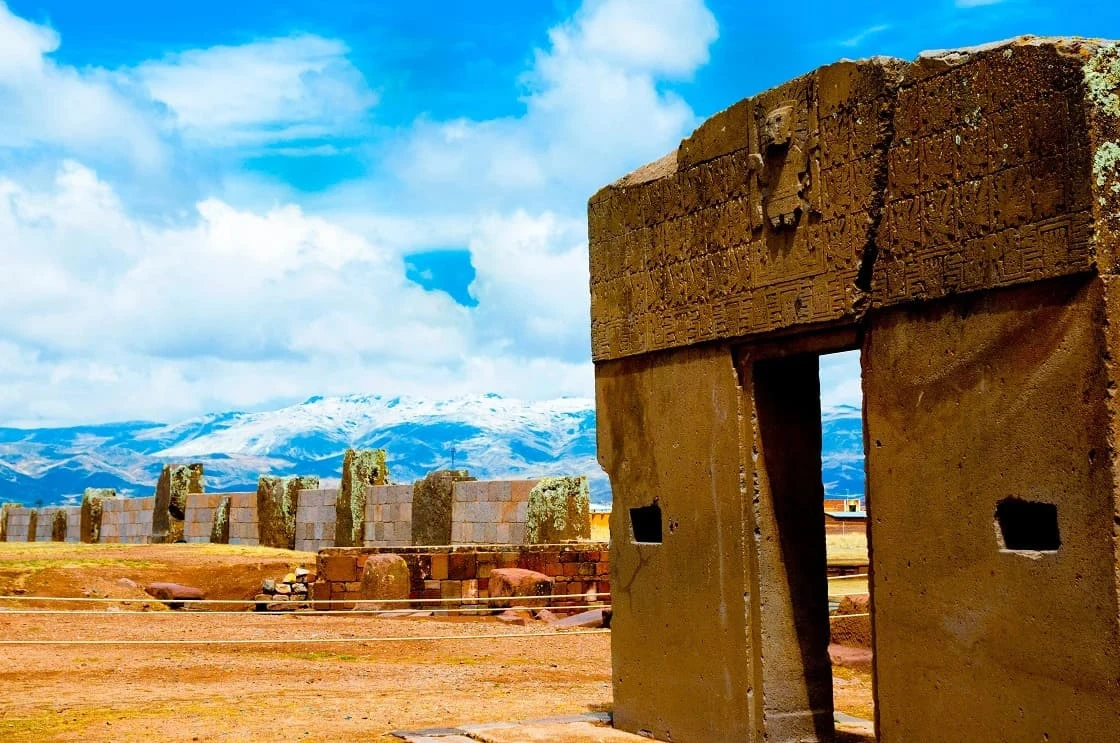
The Gate of the Sun at Tiwanaku was carved from a single block of andesite weighing at least 44 tons
The site's primary monument is the Gate of the Sun, carved from a monolithic block of gray-green andesite. The identity of the figure carved into its surface remains unknown, as does how massive stone blocks weighing tens of tons were transported to this high plateau. Evidence of large-scale ritual ceremonies and sacrifices has been uncovered throughout the site. 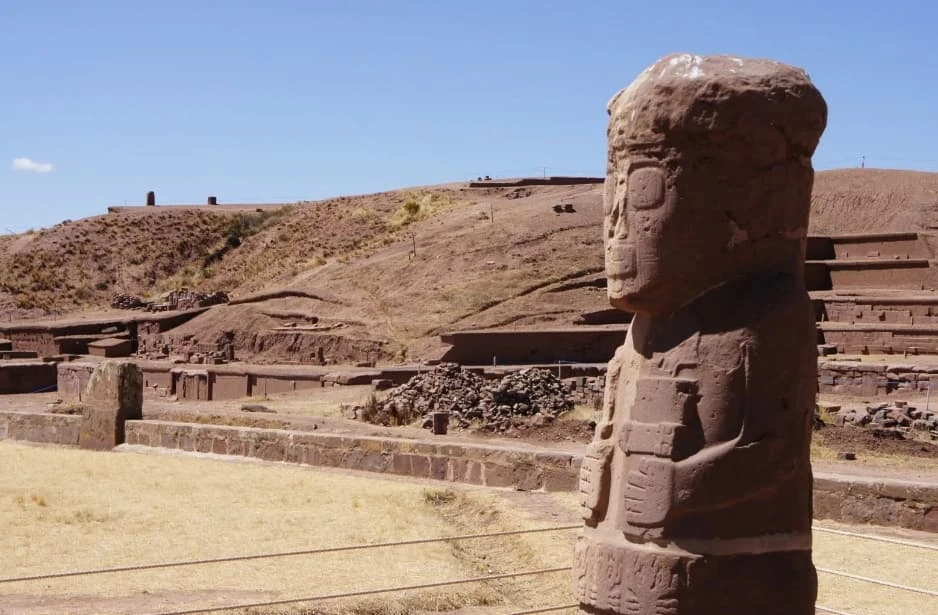
The El Fraile ("The Monk") monolith—one of Tiwanaku's stone statues depicting unknown rulers or priests
Around AD 1100–1180, Tiwanaku was abandoned. Researchers attribute its downfall to a prolonged drought. Agriculture on the Altiplano plateau relied entirely on rainfall; when the rains ceased, the city could no longer sustain itself. The Incas who arrived centuries later found only silent ruins, naming the site Tiwanaku—"The Dead City" in Aymara.
Why Disaster is History's Best Preserver
The paradox is simple: where life continued, history was erased. Rome was rebuilt countless times; Athens was dismantled for building blocks. Great cities disappeared not because they were destroyed, but because they were continuously remade. 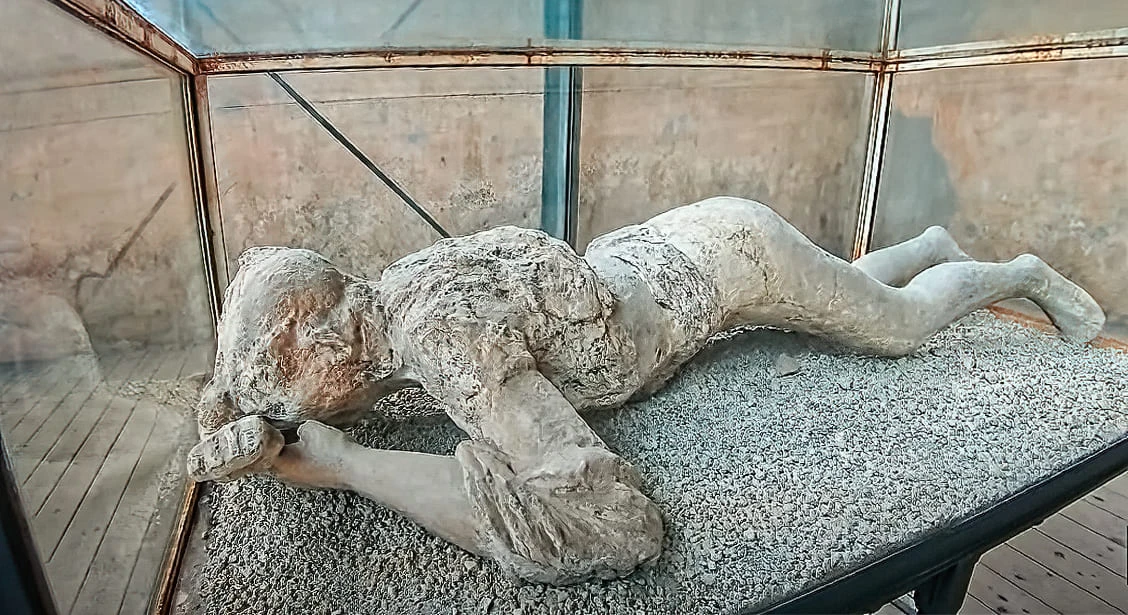
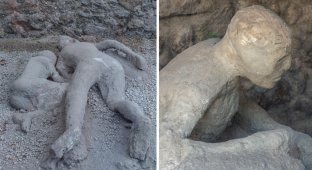
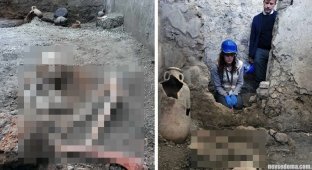
Plaster casts of Pompeii's victims have been produced since 1863: hardened ash preserved void spaces where bodies decayed
Time-capsule cities offer something else. Pompeii revealed more about daily Roman life than Rome itself ever could: what people ate, how they traded, and what slogans they painted on walls. Akrotiri preserved the brilliant pigments of Bronze Age frescoes; Herculaneum kept safe classical antiquity's only surviving library; Mohenjo-daro demonstrated that sophisticated urban infrastructure existed two millennia earlier than previously thought.
Each of these cities is a clock stopped in mid-tick. That is precisely what makes them priceless: not the aesthetic beauty of their ruins, but the exactness of the captured moment. Archaeology is not just about unearthing the past; it is the art of reading what history accidentally failed to destroy.
Roughly 20% of Pompeii remains unexcavated, meaning some of its most extraordinary secrets are yet to be uncovered.
Which of these ancient cities do you find most fascinating? And which discovery strikes you as the most remarkable?
How the inhabitants of Pompeii died
Take a virtual tour of the Pompeii excavations
20 famous lost cities