Lacewing: they didn't seem to exist before... so who are they? (9 photos)
She doesn't buzz brazenly like a fly, doesn't swoop down on your ear like a mosquito, doesn't pretend to be dangerous like a wasp. She's just there—a green, translucent fairy. And she sits on our window every evening, although I don't recall seeing this insect so often before. 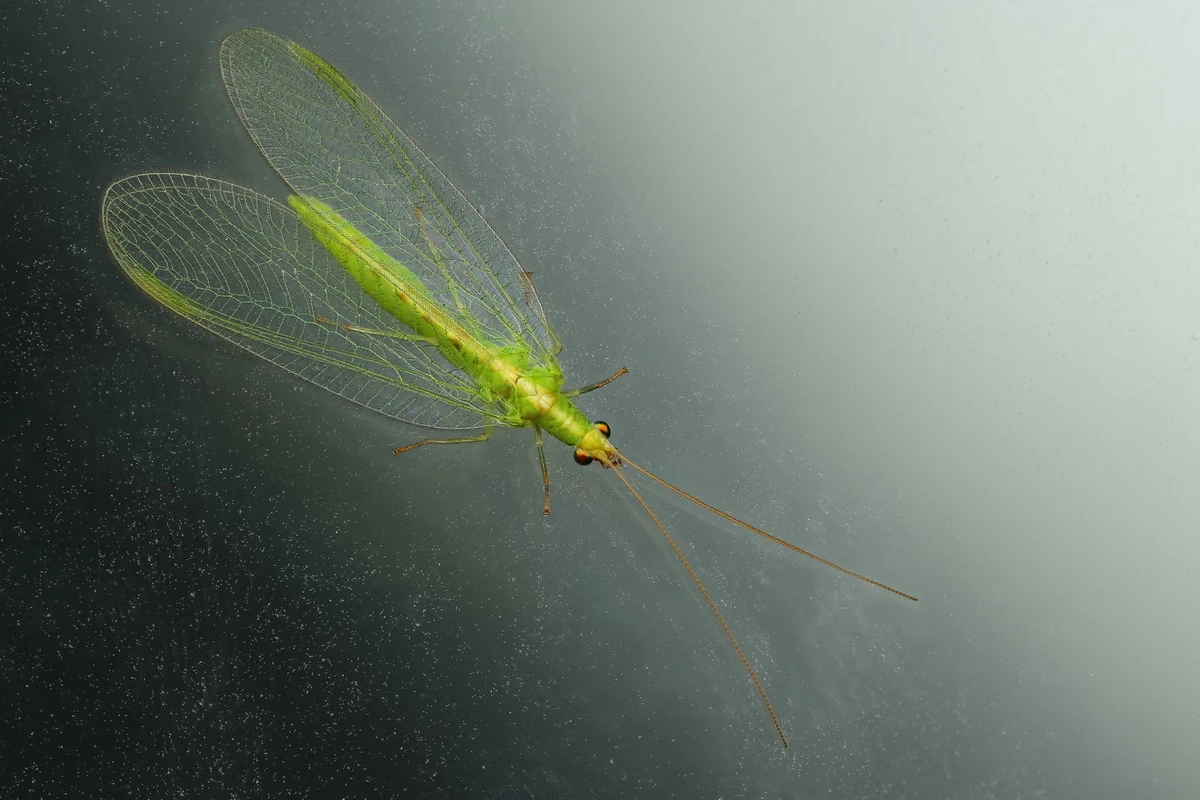
It seems like free parking... Only some giants are staring at me on the other side...
It's a lacewing. And, contrary to appearances, it leads a far more intense and predatory life than one might suspect from this pose of eternal contemplation of the windowsill.
The lacewing's name speaks for itself—most species do have eyes that shimmer with a golden or coppery sheen, especially if the light angle is just right. Adult lacewings are peaceful creatures, feeding primarily on nectar, pollen, and honeydew. Although they do have occasional episodes of predation. 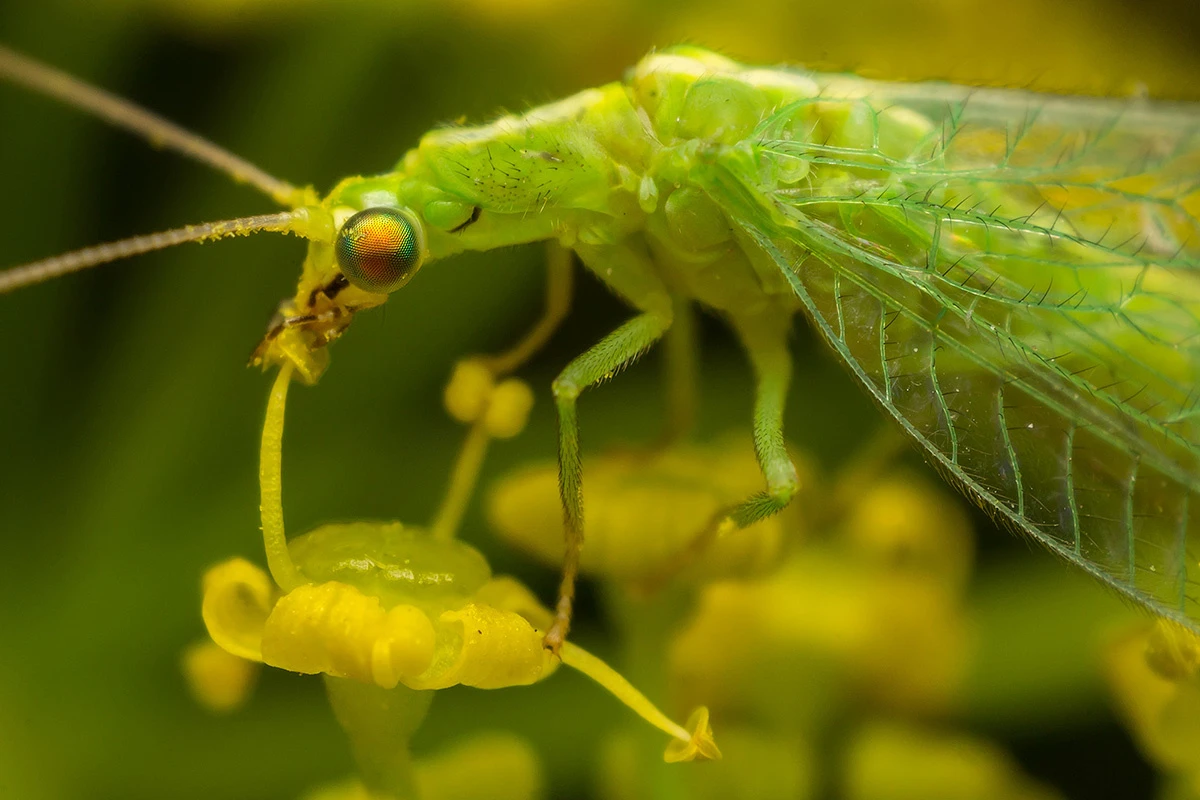
Drank. 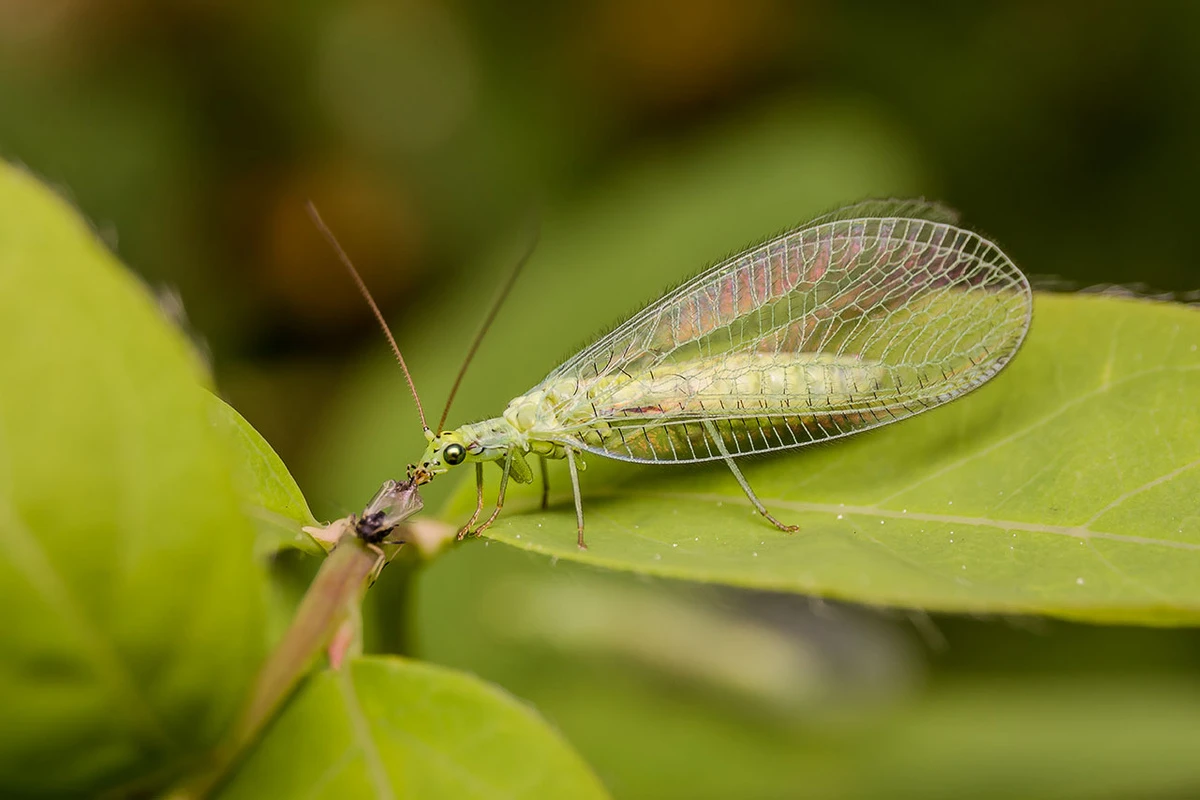
He's had a bite.
But its larva is a whole different story. The larva is called the "aphid lion." A tiny, spindly creature with disproportionately large, curved jaws, it uses to pierce its prey, inject digestive enzymes, and suck out the contents—alive, 150 aphids a day! 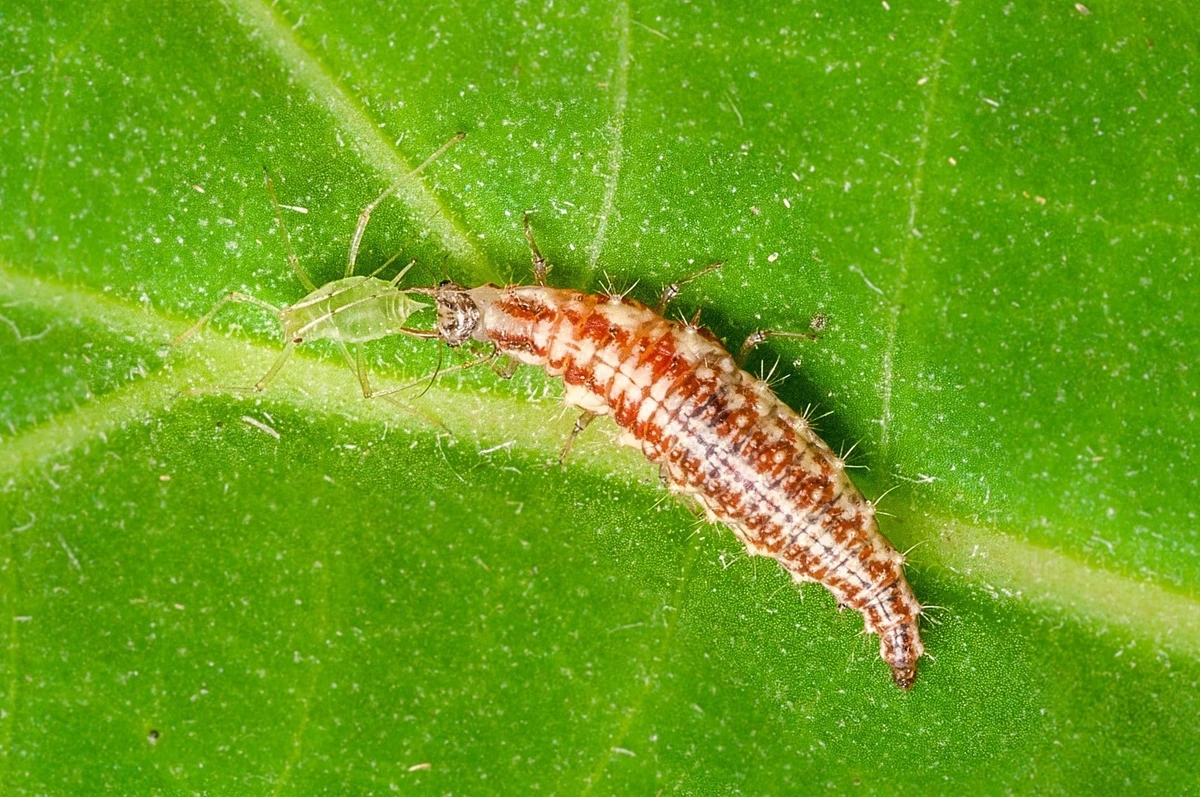
The trap snapped shut.
Some species camouflage themselves after a meal by slinging the corpses of eaten aphids and trash onto their backs—the result is a sort of mobile trash heap with jaws inside, perfect camouflage from predators and the vigilant shepherd ants that guard the aphids. 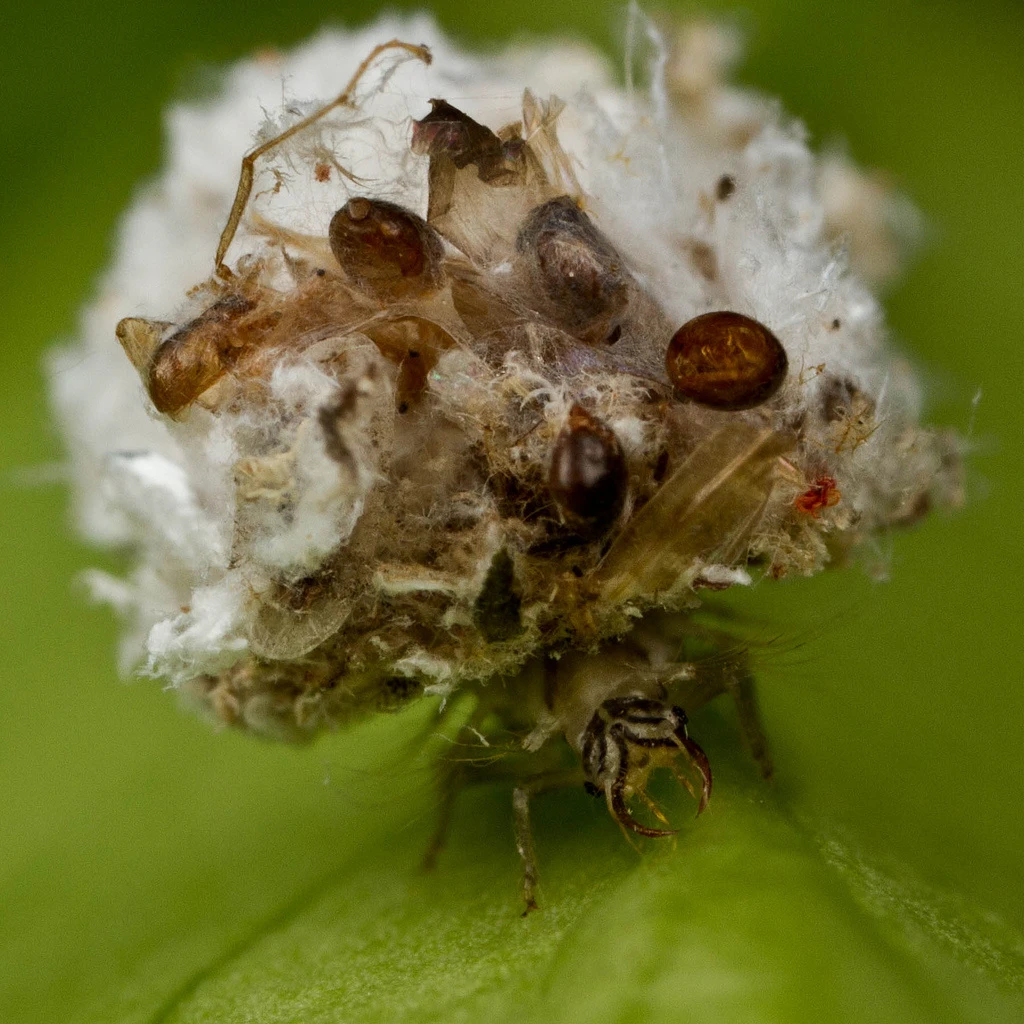
A lacewing larva carries a whole graveyard on its back.
So, what you're looking at isn't just a "window bug," but the adult stage of one of the most effective natural aphid killers in the temperate zone. In greenhouses and gardening facilities, lacewing larvae are specially bred and released as a biological pest control method—a purchased bag of eggs is cheaper than a crop damaged by chemicals. And this is the real reason why their numbers have increased so much recently. These insects are actively bred and released across the country to destroy pests. 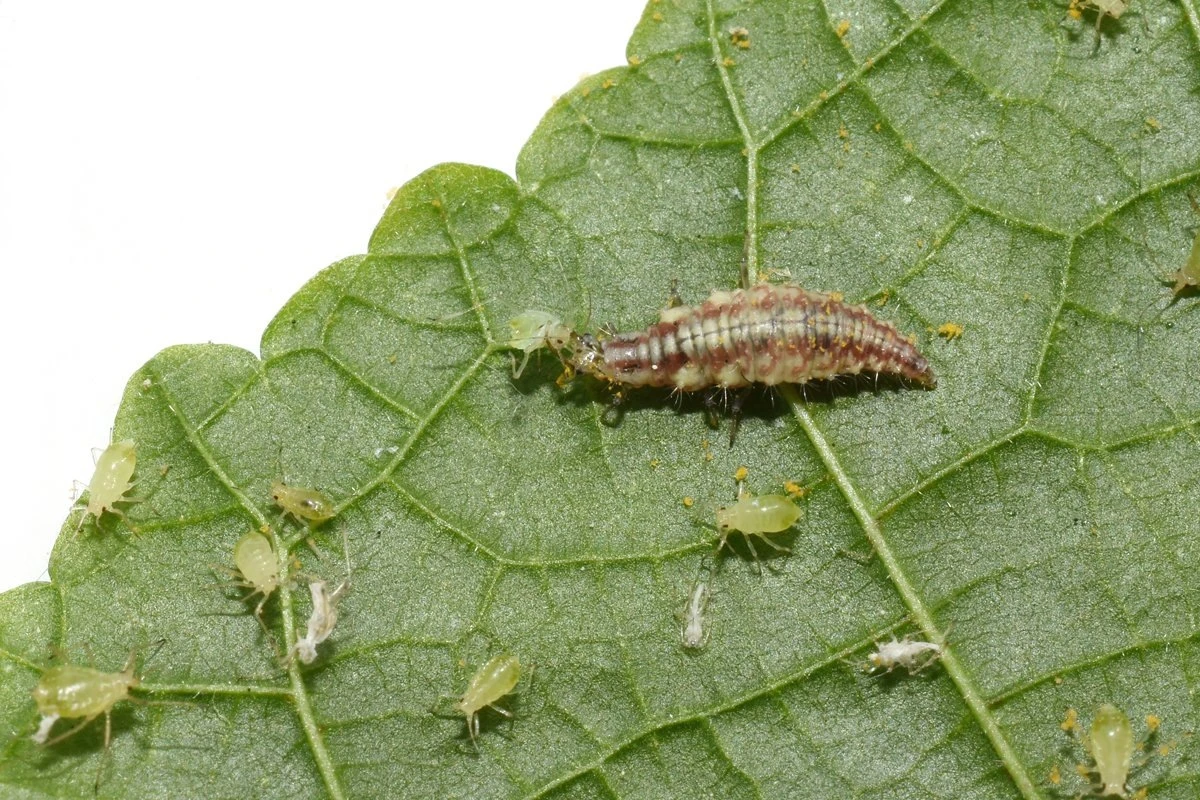
Even ladybugs can hardly compare to these chitinous terminators in efficiency.
Hmm... Why is it climbing onto our windows?
Lacewings are insects with pronounced positive phototaxis; simply put, they fly toward light. This is common for many insects—orienting themselves by the moon at night to find their way out of thick grass or something similar. However, this mechanism malfunctions, and the insects simply hang out on the transparent texture of the window, unsure what to do next. There's a second reason. A lacewing's home is also a suitable place to overwinter. In autumn, when temperatures begin to drop, adults of many species seek shelter—cracks in window frames, spaces between frames, attics, sheds—and enter a state similar to diapause, a torpor in which they can survive the cold. An interesting detail: before hibernation, the green pigment of some species breaks down, and the insect turns brown, changing color from bright green to dull brown or reddish. This is associated with adaptation to hibernation, possibly due to changes in pigment metabolism in the cold. So, if you find a brownish lacewing on your windowsill in late autumn, rather than a green one, it's not a different species or a sick individual; it's already preparing to wait out the cold. 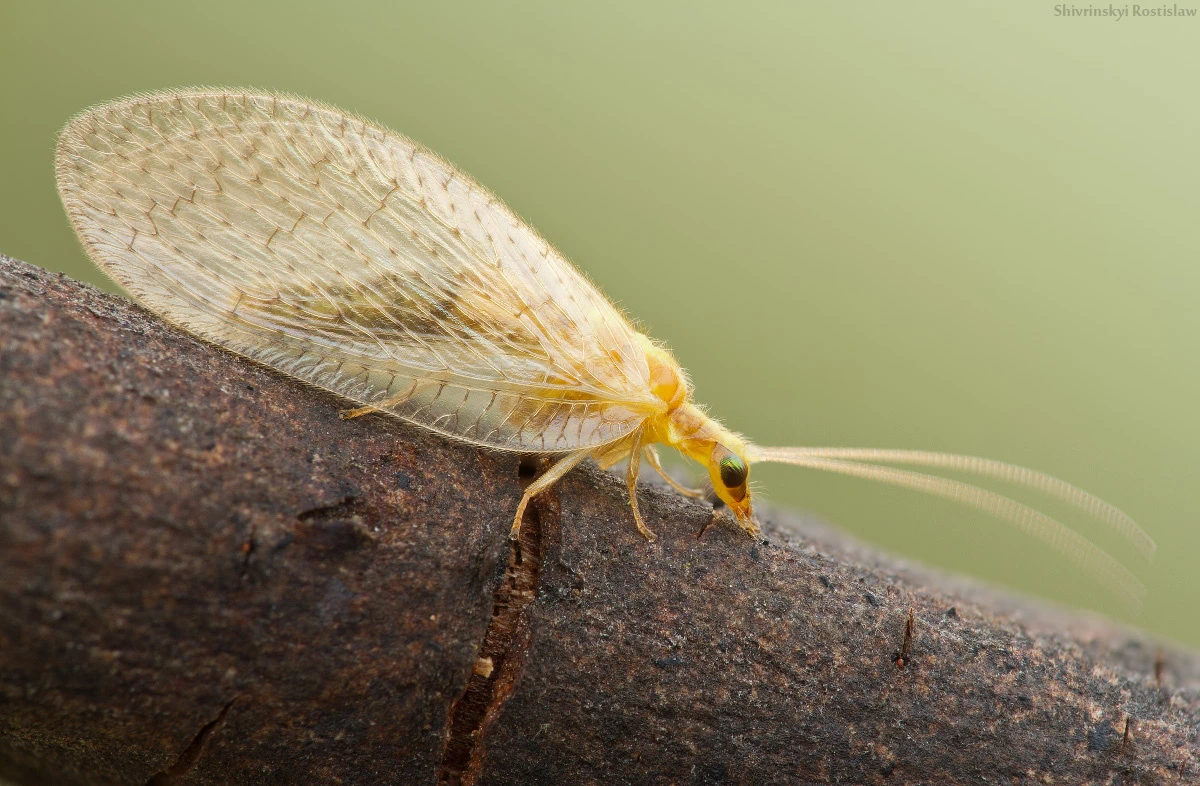
The "beige mother" trend has also taken over lacewings...
The female lays eggs in an unusual way, worth seeing at least in a photograph: each egg is attached to a hair-thin stalk protruding from a leaf or branch. 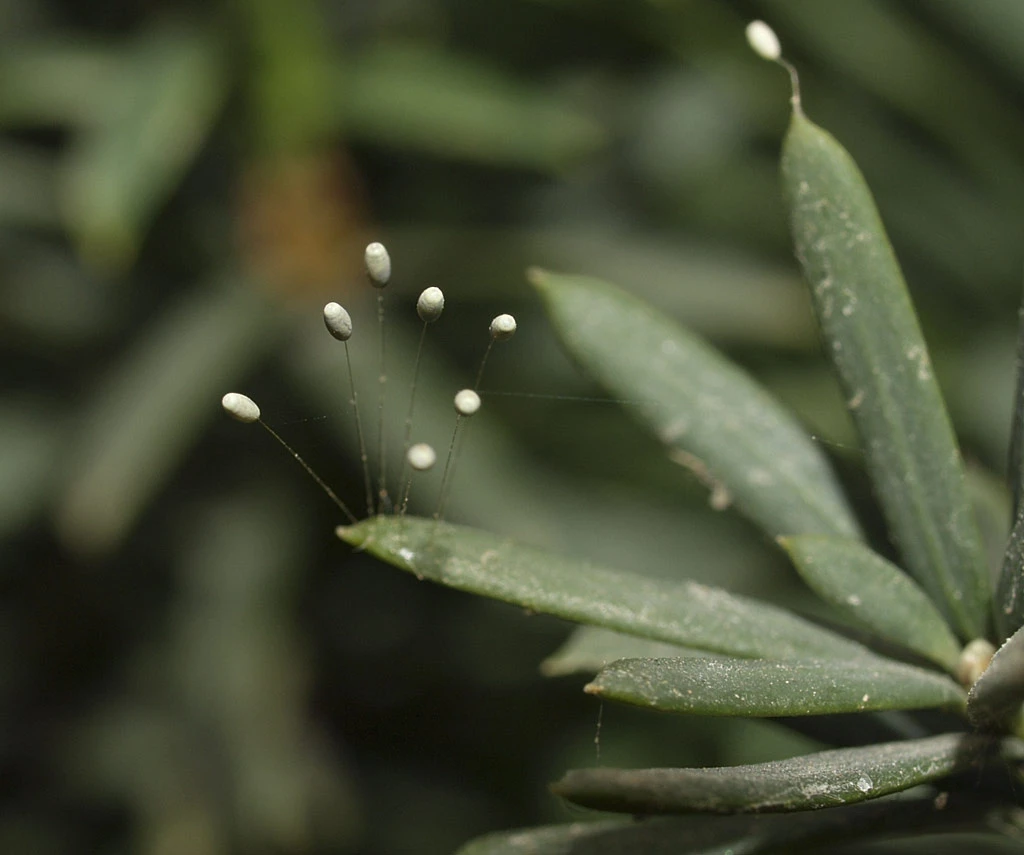
A slightly alien landscape.
It looks like a tiny forest of strings with beads on top. The idea is simple and evolutionarily pragmatic: lacewing larvae are cannibals; the first to hatch will readily eat the next egg if it can reach it, and the stalk creates physical distance, preventing them from reaching the clutch prematurely. The larva goes through several instars, actively hunts, pupates in a silken cocoon, and after one or two generations per season, emerges as an adult, which flies again into the light of your windows. 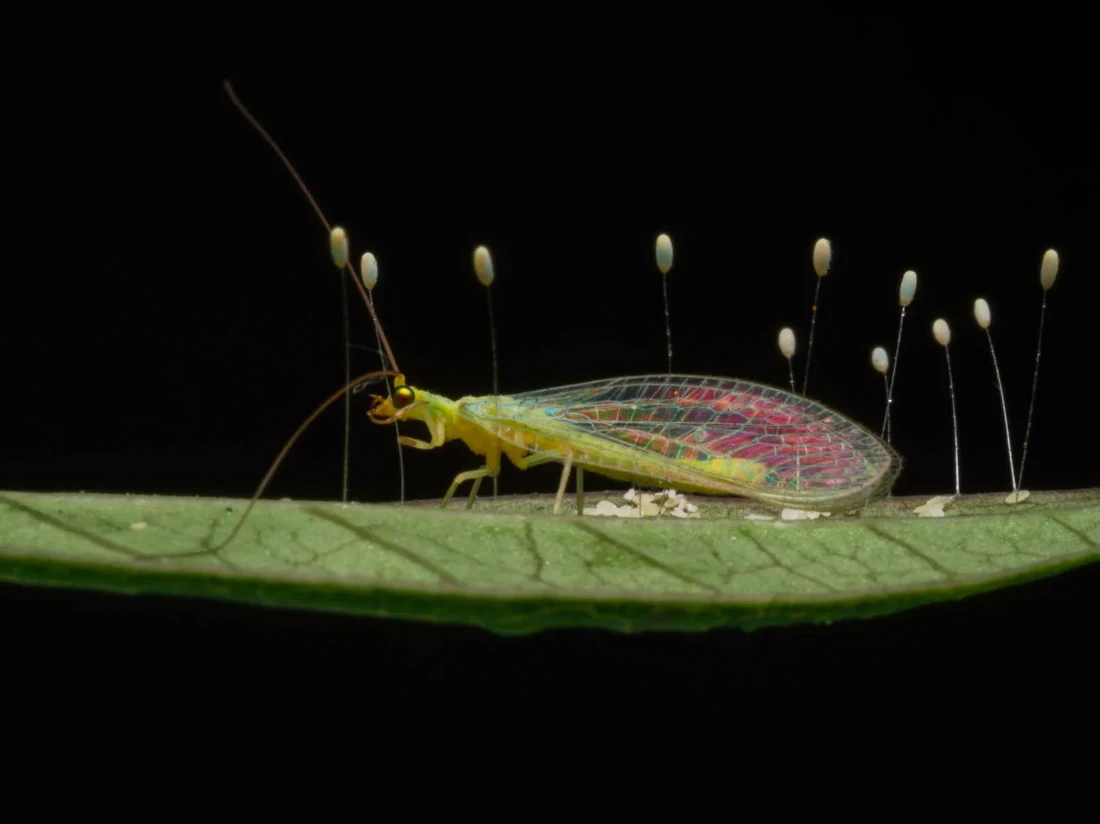
It's a shame these aren't balloons, that would be cute! )
In short, the lacewing is our friend. A harmless and beneficial insect. And quite beautiful, by the way. But don't touch them, by the way. Their bodies are very delicate and easily damaged by touch. And when frightened, they emit a stinky odor—you'll have to wash your hands or endure the pungent, unpleasant odor on your fingers.